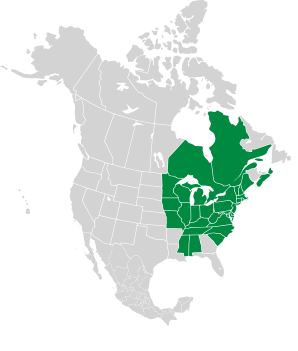
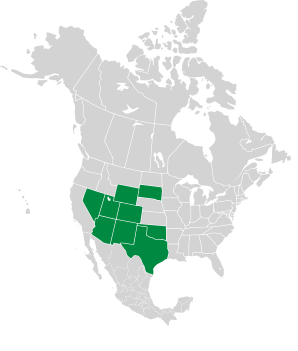
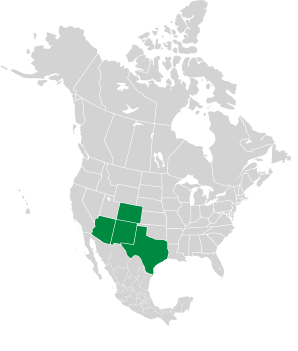
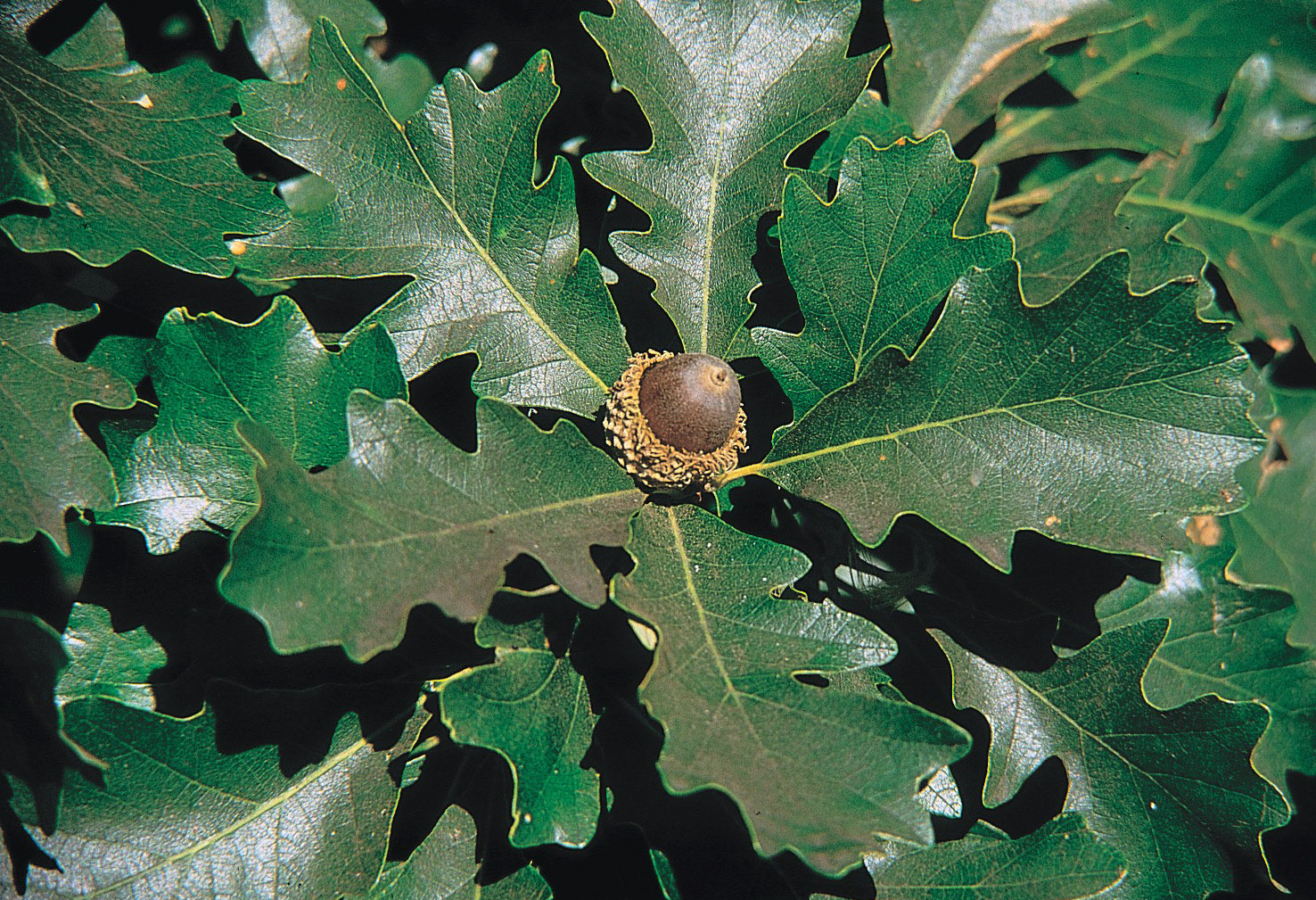
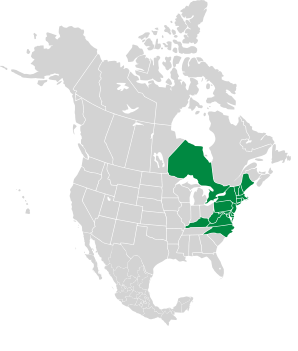
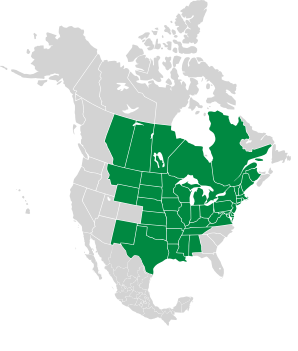
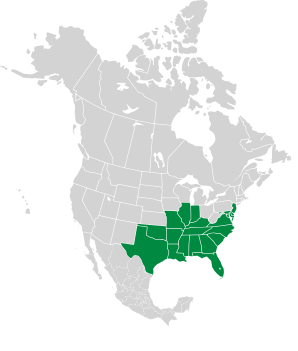
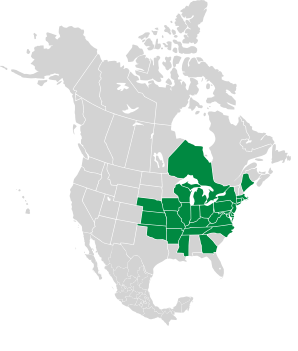
These evergreens reach 20–82′ (6–25 m), with trunks up to 4′ (1.2 m) around. Trunks are short and the crowns are wide. Bark is smooth and gray-brown when the tree is young, becoming darker and somewhat furrowed later.
Trees reach heights of 65–80′ (19–24 m), with a maximum recorded height of 182′ (55 m). These trees live 200-300 years or more. Under the right conditions they have a very wide crown, with some branches growing sideways, almost parallel to the ground. Trunks, though not white, are light gray, with slightly peelable bark.
Trees reach a height of 70′ (21 m), with the largest known at 108′ (32 m). Bark is dark brown, and flaky. These tree live up to 300 years.
Leaves
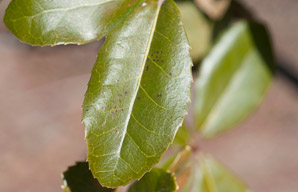
Dark green, thick, glossy, oval in shape, alternating, edged with sharp fibers. They are ¾–2½″ (2–7 cm) × ⅜–1½″ (1–4 cm).
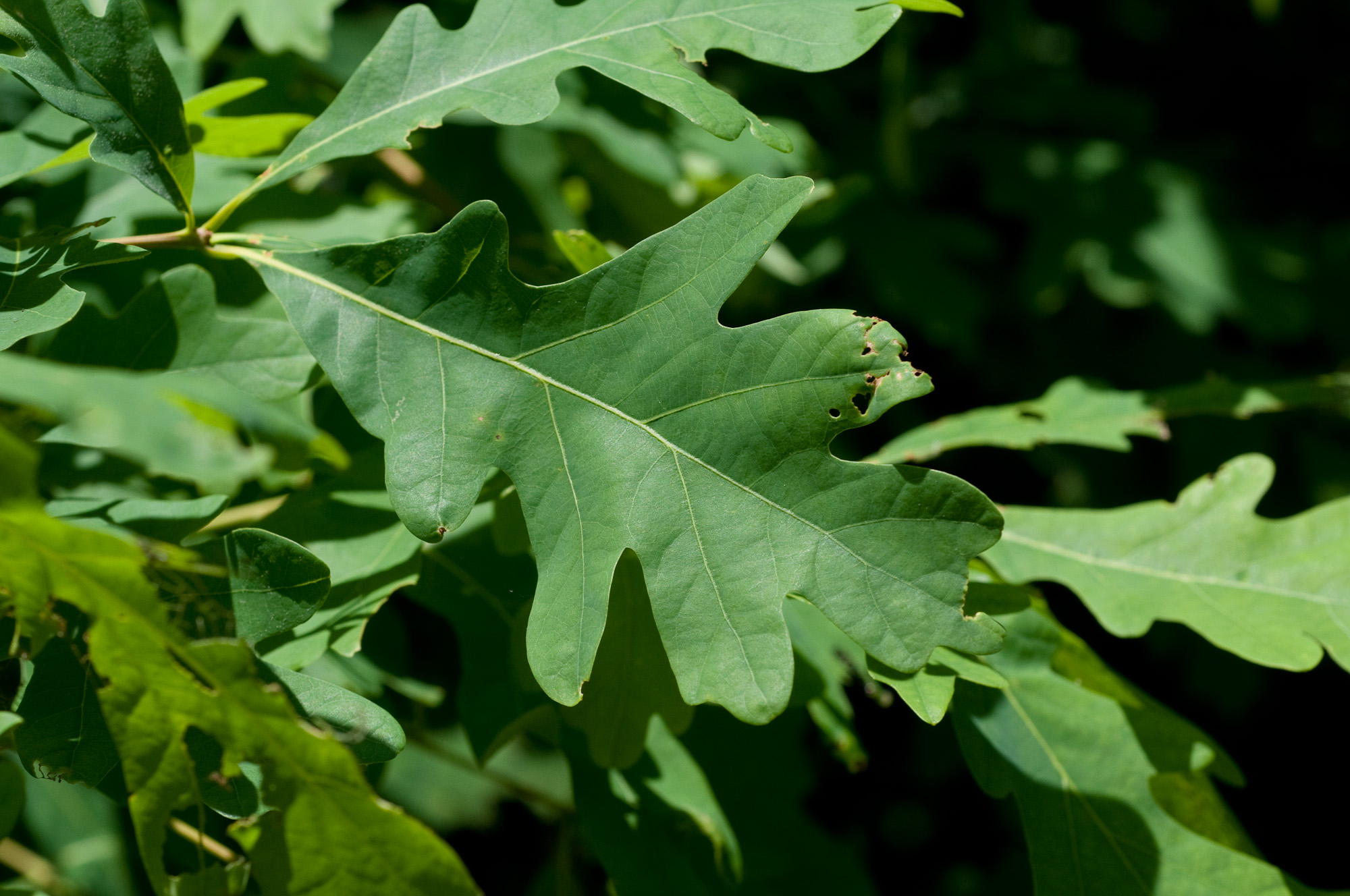
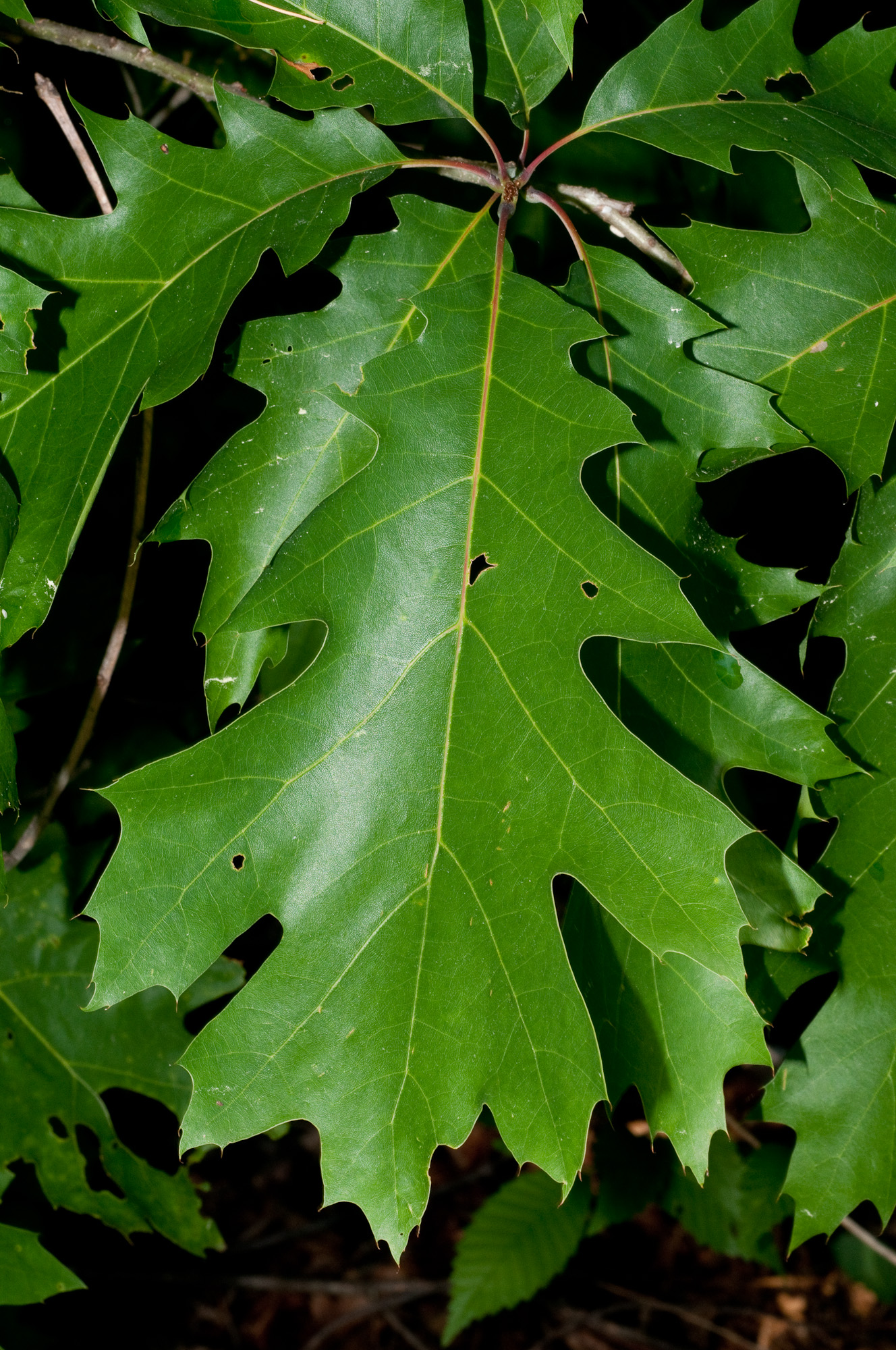
Alternate, 4–9″ (10–22 cm) long, with 5-9 deep lobes with rounded edges (vs. sharp edges for red oak). Leaf petioles are ⅜–⅞″ (1–2.5 cm) long. Leaf tops are dull or shiny gray-green in color. In the fall, leaves turn purple-red.
Leaves have many small lobes that may be rounded or somewhat sharp; they are 4½–7 ⨉ 2½–4″ (12–18 ⨉ 7–11 cm). Leaf undersides are whitish. In the fall, leaves have an orange-brown or red color.
Flowers
Male flowers are catkins 1¾–4″ (5–10 cm) long. Female flowers are ⅛″ (5 mm) long, in clusters of one to three, barely noticeable.
Trees are monoecioous: one tree contains both male and female flowers. Staminate (male) flowers are greenish yellow catkins 2–3½″ (5–8.9 cm) long, developing at old branch tips. Pistillate (female) flowers are reddish-green, ⅛″ (3.2 mm) in size, and appearing on new branch tips. Flowers appear in mid to late spring.
Small and easy to miss, in separate male and female catkins, appearing in the spring
Fruit
Acorns are 1–1½″ (2.5–3.8 cm) long and ⅜–½″ (1–1.5 cm) wide, conical in shape.
Acorns are ¾–1″ (1.9–2.5 cm) long, brown, with a lumpy cap that covers about a quarter of the acorn.
An acorn, ½–¾″ long ⨉ ⅜–¾″ around (1.5–2 ⨉ 1–2 cm), on a short stalk. Trees don't produce acorns until they reach 20 years of age.
Range/ Zones
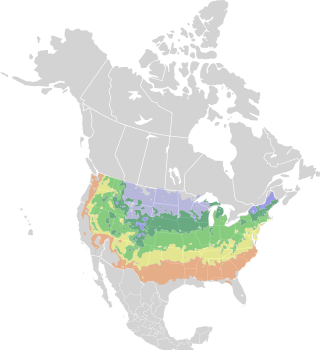
USDA Zones: 3-9
USDA Zones: 3-8
Habitats
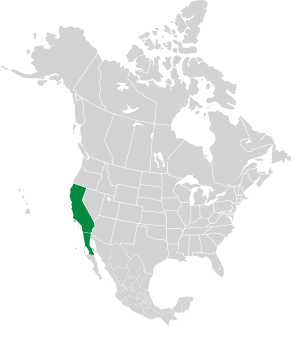
Mixed evergreen forests, foothill woodlands, southern oak woodlands
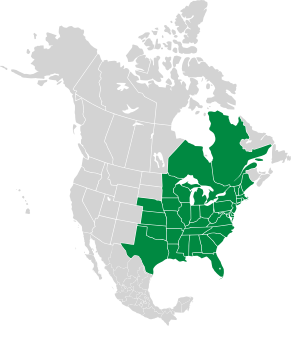
Uplands, bottomlands, dry slopes, and areas along streams, in dry to mesic conditions.
Broad stream valleys, low-lying fields, and the margins of lakes, ponds, or sloughs—places which are sometimes, but not always, wet.
Trees reach 80′ (24 m), with the maximum reported height of 181′ (55 m).
Trees are 9½–30′ (3–9 m), though in ideal conditions, they can reach double this height. The largest recorded specimen, in Arizona, is 115′ (35 m) tall. Bark is red-brown to gray.
A tree or multistemmed shrub, with trees reaching up to 66′ (20 m) in height, and a trunk up to 2′ (60 cm) in diameter.
Leaves
Deeply lobed, even more so than eastern black oak, and sharp-tipped.
2½–4½ ⨉ 1½–2″ (7–12 ⨉ 4–6 cm), deeply or moderately lobed. They are obovate to oblong-obovate. Leaf stalks (petioles) are ½–¾″ (1.3–1.9 cm) long. The upper surface is glossy and dark green, while the lower surface is pale and velvety.
Alternate, leathery, ¾–3″ (2–7.6 cm) long, elliptical to ovate, and either untoothed or with a few coarse teeth. Leaves are grayish green above and felted beneath, due fine hairs. Leaves are evergreen, or drought deciduous[Glossary("[Glossary(drought deciduous)]")].
Flowers
Staminate (male) flowers are borne on slender yellow-green catkins; pistillate (female) flowers are borne on very short axilliary spikes. Both are brown, and inconspicuous.
Insignificant greenish or brownish staminate (male) or pistillate (female) catkins. Flowers appear from April to June.
Male catkins are yellowish-green. Female flowers are in small spikes in the leaf axils.
Fruit
Acorns are ovate, ⅝–1¼″ long ⨉ ¼–½″ around (1.7–3.1 cm ⨉ 7–13 mm). The cap usually covers a third to half of the nut.
Light brown acorns are ⅜–¾″ (1–2 cm), with ⅓ to ½ covered by a cap. They may be single or in small clusters.
Acorn cups are scaly, covering about half of each acorn. Acorns are single or paired. Each acorn is about ½″ (1.3 cm) long.
Range/ Zones
USDA Zones: 3-9
Habitats
Dry to somewhat dry well-drained, acidic soil, in full sun.
At elevations of 3281–9843′ (1–3 km), on sunny hillsides with thin, rocky, alkaline soil. They appear on slopes, in canyons and foothills.
In valleys and on ridges, on rocky slopes and on the banks of streams, at elevations of 3937–8858′ (1.2–2.7 km).
These deciduous oaks are generally found as gangly shrubs less than 15′ (4.6 m) high, with a maximum height of 20′ (6.1 m).
This oak reaches 98′ (30 m) in height, rarely up to 164′ (50 m). Trunk diameter can approach 9½′ (3 m). These oaks easily reach 200-300 years and can sometimes approach 400 years in age. It is very drought-resistant.
Trees reach about 80′ (24 m).
Leaves
Alternate, 1¾–6 ⨉ 1–4″ (5–15 ⨉ 3–10 cm). The leaves look significantly different from those of most other oaks that occur in the same range. They are 2–5″ (5–12 cm) long.
3 ⨉ 1¾–5″ (7.5 ⨉ 5–13 cm), and very deeply divided. Typically, each leaf is wider toward the tip, with shallower lobes. They are yellow-brown in the fall.
4–11 ⨉ 2–7″ (10–27 ⨉ 5–17 cm), with many small, rounded indentations rather than lobes. They turn dark red in the fall.
Insignificant greenish-yellow catkins, both staminate (male), and pistillate (female), occur on the same tree (“monoecious”). Flowers appear in April.
Staminate (male) flowers are slender yellow catkins 2–4″ (5–10 cm) long, and pistillate (female) flowers appear as very short few-flowered reddish spikes. Flowers appear from April to May.
Fruit
Acorns are ⅜–¾″ (1–2 cm) long, egg shaped, dark brown, with the saucer-shaped cap covering about a third of the nut.
This species has the largest acorns of any oak, ⅞–1¾″ long ⨉ ¾–1½″ broad (2.5–5 ⨉ 2–4 cm), half to ¾ covered by the cap. The cap has large overlapping scales, and often, a mossy fringe at the edge of the cup.
Acorns are ⅞–1¼″ long ⨉ ¾–⅞″ around (2.5–3.5 ⨉ 2–2.5 cm), bright chestnut brown, with a thin, warty cap that covers about ⅓ to ½ of each nut. Acorns form every several years.
Range/ Zones
USDA Zones: 3-8
USDA Zones: 5-9
Habitats
These sun-loving tree/shrubs are early colonizers after fires. They prefer dry to medium-dry habitats.
Bottomland, limestone soils are preferred.
Bottomlands, silty floodplains, swampy areas, and other wetlands.
59–72′ (18–22 m) tall, with a trunk up to 3′ (1 m) around. Bark is smooth and gray. The tree’s crown is roughly pyramidal, with the curious property that upper branches are ascending, mid-level branches roughly straight, and lower branches descending. In forests, lower branches may die off, breaking and leaving behind projections, hence the name “pin oak.”
50–60′ tall ⨉ 12–15′ around (15–18 ⨉ 3.7–4.6 m). Bark is smooth and gray. The tree’s crown is upright, narrow, and columnar.
These deciduous trees are up to 131′ (40 m) tall, with a trunk up to 36′ (11 m) in diameter. Bark is gray-brown and finely fissured, with vertical plates.
Leaves
1¾–6 ⨉ 1¾–4½″ (5–16 ⨉ 5–12 cm), with 5-7 lobes. Each lobe has 5-7 teeth. The sinuses—indented areas—are U-shaped and very deep. Leaves are hairless, apart from a distictinve tuft of pale orange-brown down on the lower leaf surface where lobe veins join the central vein. Leaves are glossy and dark green, becoming deep red in the fall.
1¾–6 ⨉ 1¾–4½″ (5–16 ⨉ 5–12 cm), with 5-7 lobes. Each lobe has 5-7 teeth. The sinuses—indented areas—are U-shaped and very deep. Leaves are hairless, apart from a distictinve tuft of pale orange-brown down on the lower leaf surface where lobe veins join the central vein. Leaves are glossy and dark green, becoming deep red to scarlet in the fall.
1¾–8 ⨉ ¾–4″ (5–20 ⨉ 2–10 cm), on short stalks, with 3-7 blunt lobes. They are dark green above, and pale or blue green below.
Inconspicuous green catkins, both male and femalel, appear on the same tree (“monoecious“) in the spring,
Inconspicuous male (staminate) and female (pistillate) catkins are yellowish-green. Both appear on the same tree.
Fruit
Acorns are rounded, to ½″ (1.3 cm), with caps that cover ¼ to ⅓ of the fruit. Acorn production begins when the three is 15-20 years old.
Acorns are rounded, to ½″ (1.3 cm), with caps that cover ¼ to ⅓ of the fruit. Acorn production begins when the three is 15-20 years old.
Acorns are 1″ (2.5 cm), on stalks 1–3″ (2.5–7.6 cm) long. Acorn caps cover about ⅓ of the fruits. Trees are typically 25-30 years old before they begin bearing acorns.
Trees reach 90′ (27 m), exceptionally 165′ (50 m). Trunks are usually 1½–3′ (50–101 cm) around, but they can reach 6′ (1.8 m). Ridges on bark appear to have shiny stripes down the center.
Trees reach 66′ (20 m).
This shrub reaches 6½–16′ (2–5 m) in height. Occasionally it takes on a tree-like form and may be taller. New twigs are densely hairy.
Leaves
5–8″ (12–20 cm) long, with 7-11 lobes and sharp-tipped leaves.
Alternate, 1½–2½″ (4–7 cm) long, roughly oval, with a few rounded serrations. Leaf tops are light green, while the bottoms are whitish due to the presence of dense, minute hairs.
Alternate, simple, leathery, oblong to elliptic. Leaves are ½–1 ⨉ ¼–⅞″ (1.5–3 cm ⨉ 7–24 mm), gray green, with spiny, coarsely toothed leaves resembling holly and short stalks. New leaves are dark reddish brown. Leaf undersides may be covered with stellate and glandular hairs. Leaves persist through the winter.
Flowers
Trees are monoecious: male and femaile flowers appear on the same tree. Staminate (male) flowers are drooping yellow-green cylindrical catkins, 2–4 ⨉ ⅛″ (5–10 cm ⨉ 3.2 mm) in size. Usually there are three catkins per group. Pistillate (female) flowers are ⅛″ (3.2 mm) in size, and ovoid. Both types of flowers are inconspicuous.
Staminate (male) flowers are catkins that develop on the leaf axils of young branches. They are bright red and erect, fading to yellow and hanging downward later. Pistillate (female) flowers are ⅛–1″ (5–30 mm) long, with two to five separate flowers. Trees are monoecious—male and female flowers appear on the same tree.
Greenish, unisexual, with male (staminate) and female (pistillate) flowers on the same shrub. Female flowers may be solitary or in small groups.
Fruit
Acorns about 1″ (2.5 cm) long, with shallow caps that cover about a fifth of the nut.
Fruits form in clusters of 2-8 acorns. Acorns are ¾–1¾″ long ⨉ ⅜–⅝″ in diameter (2–4.5 ⨉ 1–1.8 cm). A cupule (cap) ¾–⅞″ (2–2.5 cm) around encloses about ⅓ to ½ of each acorn.
Acorns are ½–⅞″ (1.3–2.5 cm), with turbinate caps. That is, the caps are shaped like a spinning top.
Range/ Zones
USDA Zones: 4-8
Habitats
Mesic slopes and well-drained uplands, lower and middle slopes, coves, ravines, or valley floors.
In native habitats, cork oak grows in a wide variety of soils in warm climates, in acid to neutral soils with medium rainfall.
In both dry or moist areas of desert slopes, at elevations of 1969–7546′ (600–2300 m).
This tree is 65–80′ (19–24 m) tall, with bark that is almost black. Inner bark is yellow to orange.
The evergreens are really “mostlygreens,” dropping last year’s leaves shortly before growing new ones in the spring. Bark is dark, thick, with vertical furrows. The bark darkens almost to black, becoming blocky, in order trees. Trees are 40–80′ (12–24 m) tall, with broad crowns up to twice the height of the tree. Trees are often festooned with Spanish moss.
Leaves
Alternate, 4–10″ (10–25 cm) long, each with 5-7 lobes. Sun-facing leaves have deeper lobes than shade leaves. Mature leaves are dark green, and shiny; reddish-brown in the fall. Leaf undersides are yellowish-brown.
The staminate (male) flowers develop from leaf axils of the previous year and the catkins emerge in April or May. Pistillate (female) flowers are borne in the axils of the current year's leaves and may be solitary or occur in two- to many-flowered spikes. Both flowers are yellowish-green, and insignificant.
Cylindrical male (staminate) and female (pistillate) flowers appear from March to April.
Fruit
Acorns are ½–¾″ (1.3–1.9 cm) long, with caps that cover ⅓ to ½ of the nut. They occur in clusters of 1-5.
Acorns are ellipsoidal, ¾–1″ (1.9–2.5 cm) in length, with warty caps that cover ⅓ of the nut.
Range/ Zones
USDA Zones: 3-9
USDA Zones: 8-10
Habitats
Sandy, silty clay, or loam soils in cool moist settings, at elevations below 3937′ (1.2 km).
Coastal plains and woods.
Quercus description by Thomas H. Kent, not updated.