Quercus virginiana Mill.
Southern live oak, live oak
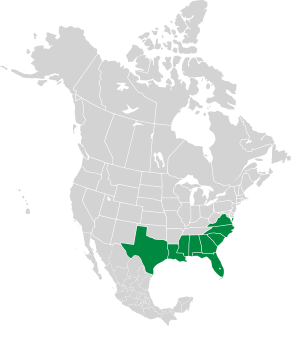
Southern live oak is native to the southeastern United States. Though not huge, these trees are majestic, and iconic in the deep south.
Plants: These evergreens are really “mostlygreens,” dropping last year’s leaves shortly before growing new ones in the spring. Bark is dark, thick, with vertical furrows. The bark darkens almost to black, becoming blocky, in older trees. Trees are 40–80′ (12–24 m) tall, with broad crowns up to twice the height of the tree. Trees are often festooned with Spanish moss.
Leaves: Alternate, elliptic to obovate, leathery, with smooth or spiny edges and pale, hairy undersides. Leaves lack the lobes and sinuses common to so many other oaks.
Flowers: Cylindrical male (staminate) and female (pistillate) flowers appear from March to April.
Fruits: Acorns are ellipsoidal, ¾–1″ (1.9–2.5 cm) in length, with warty caps that cover ⅓ of the nut.
Habitats: Coastal plains and woods.
Online References:
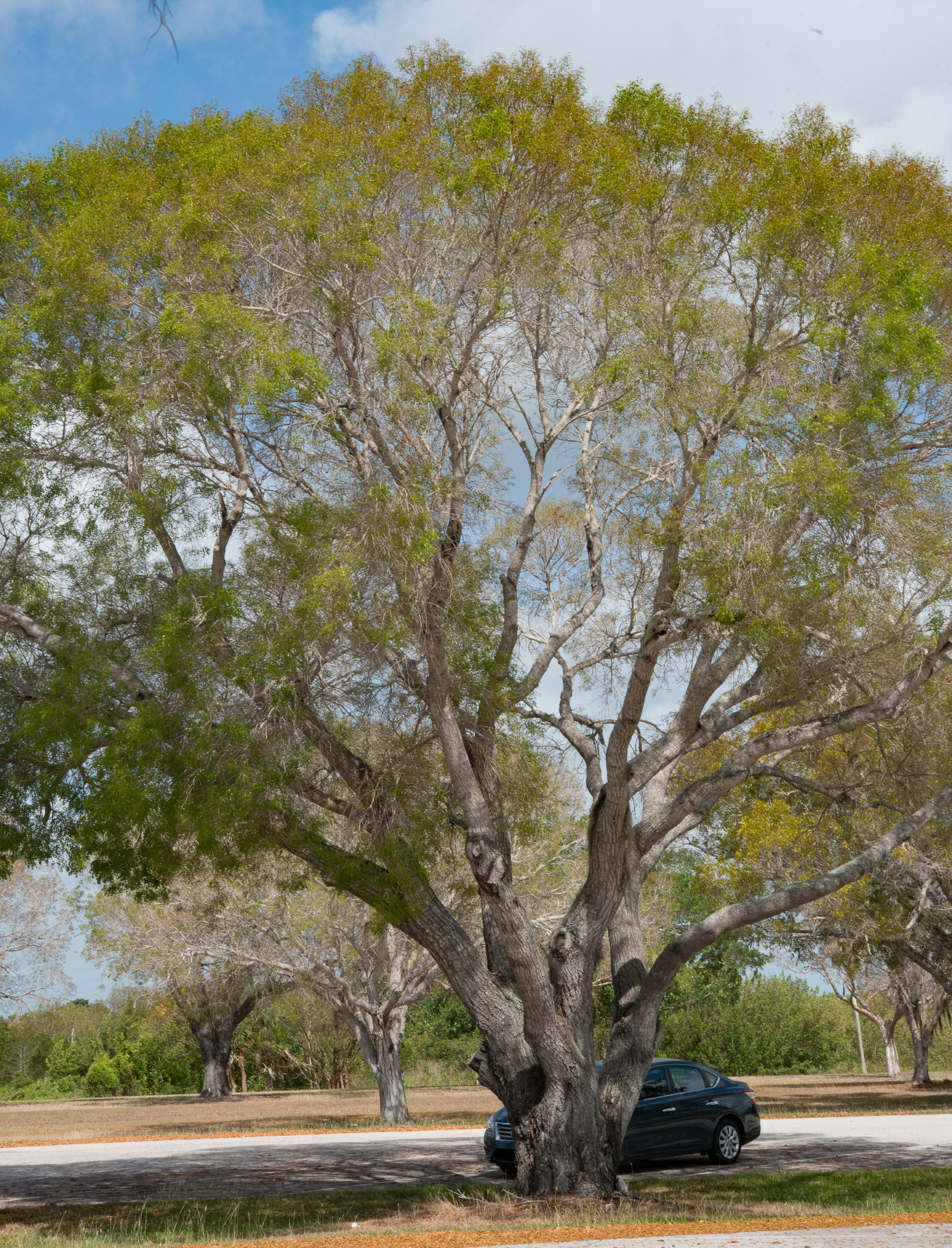
4/13/2015 · Flamingo Campground, Everglades National Park, Florida 
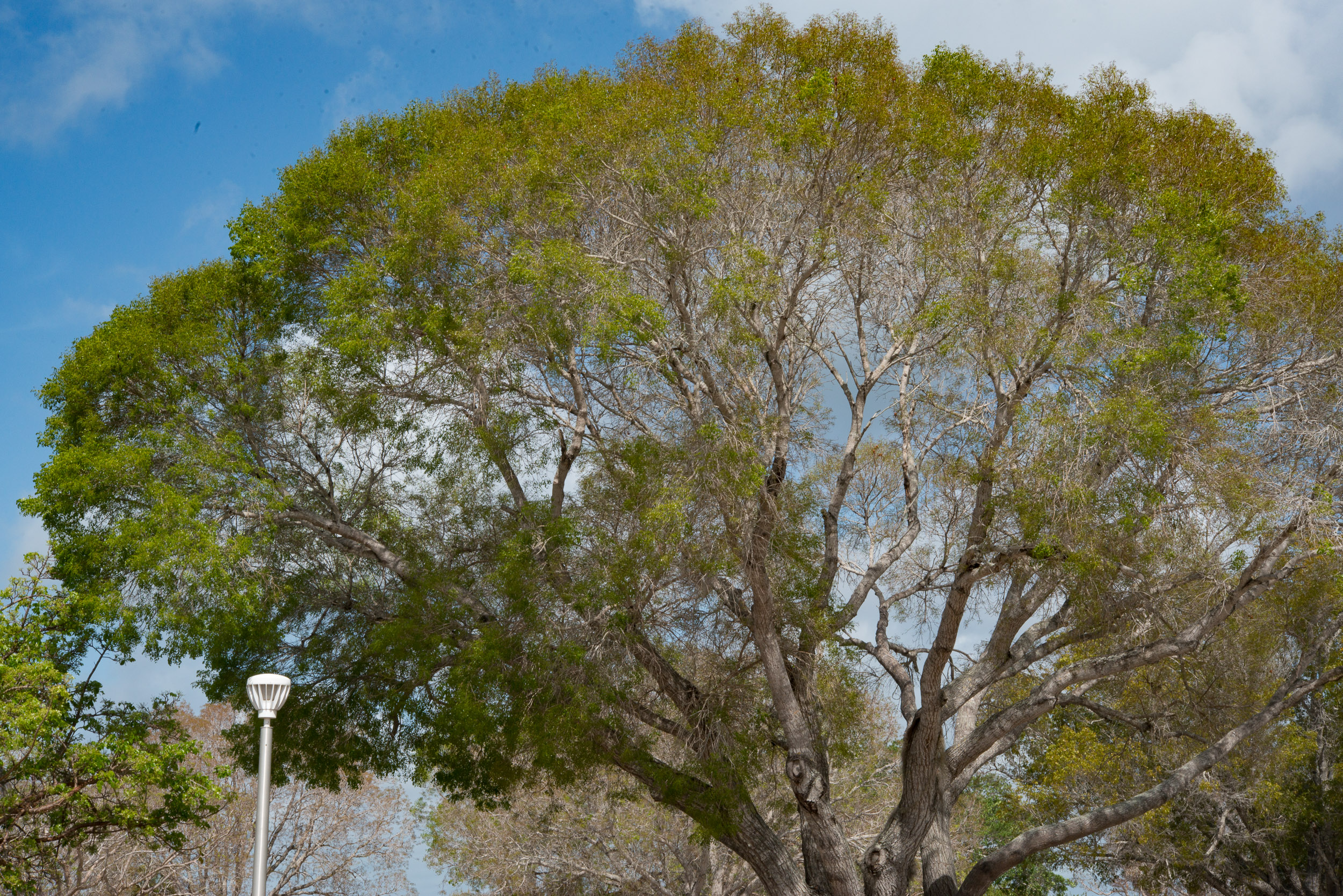
4/13/2015 · Flamingo Campground, Everglades National Park, Florida 
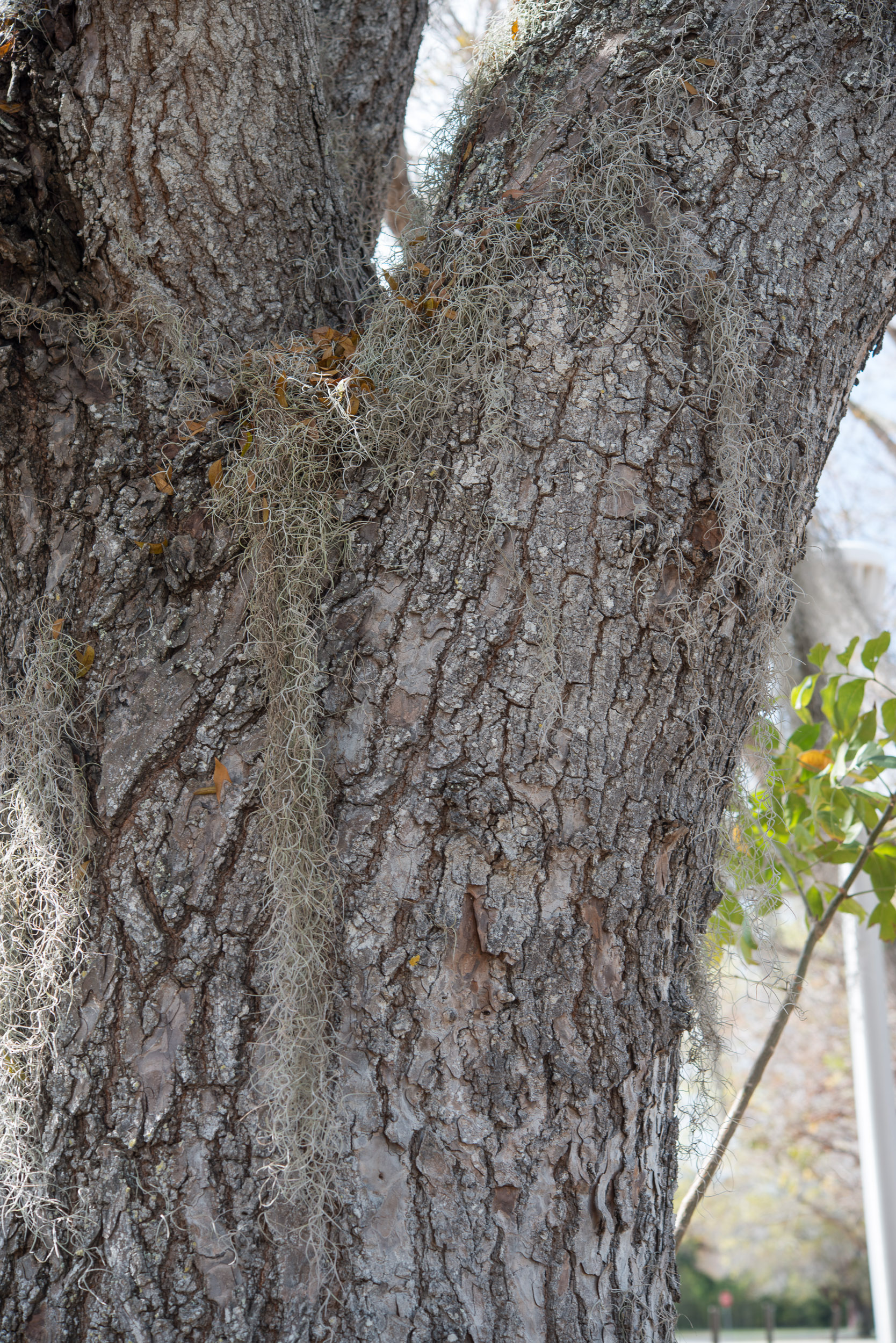
4/13/2015 · Flamingo Campground, Everglades National Park, Florida 
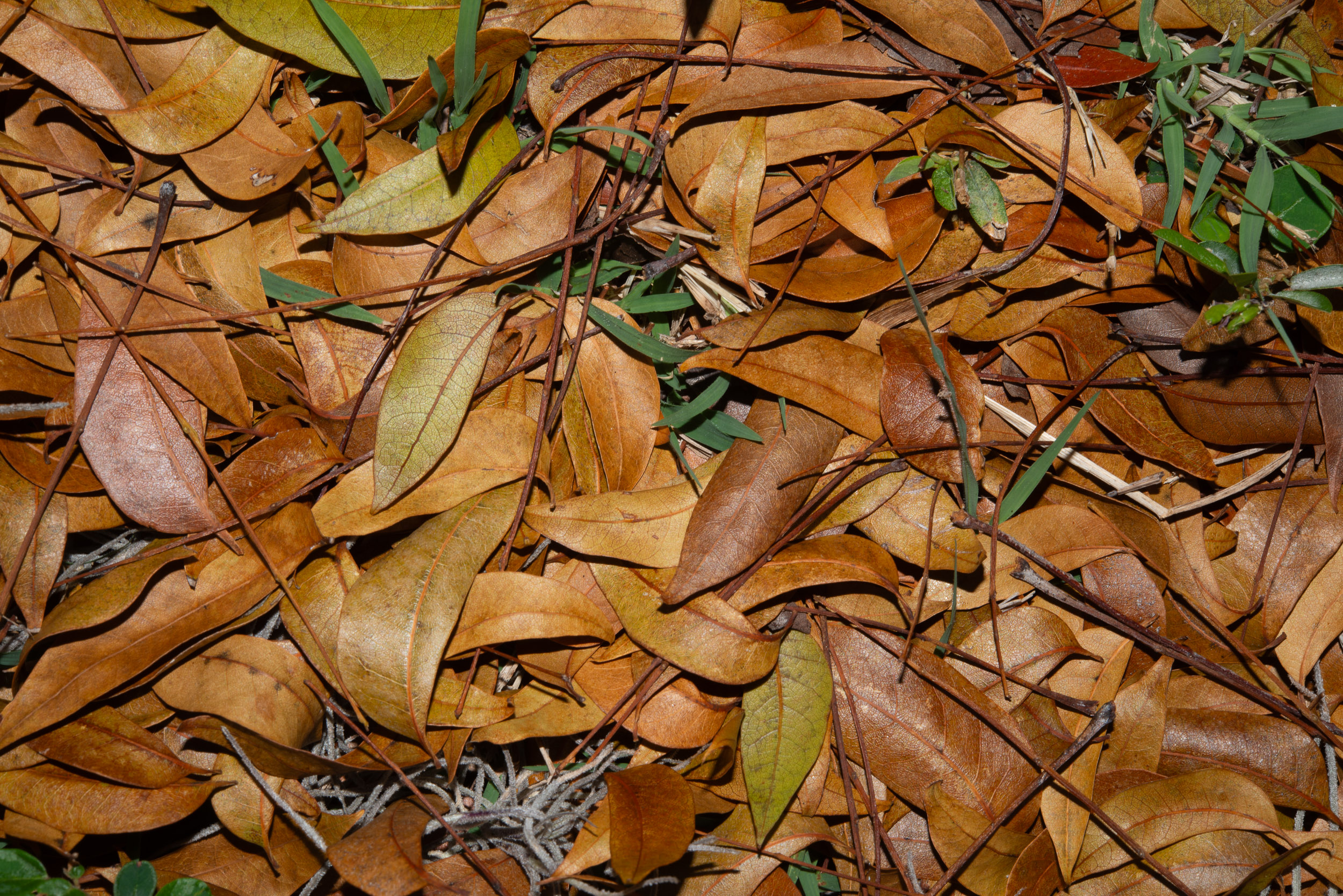
4/13/2015 · Flamingo Campground, Everglades National Park, Florida · ≈ 10 × 7″ (25 × 16 cm) 

4/11/2015 · Big Cypress Bend, Fakahatchee Strand Preserve State Park, Florida · ≈ 1½ × 2½′ (53 × 79 cm) 
| Kingdom | Plantae | Plants, but not fungi, lichens, or algae (from Stearn's Botanical Latin) |
| Subkingdom | Tracheobionta | Vascular plants—plants with a “circulatory system” for delivering water and nutrients |
| Division | Magnoliophyta | Flowering plants, also known as angiosperms |
| Class | Magnoliopsida | Dicotyledons—plants with two initial seed leaves |
| Subclass | Rosidae | Roses, legumes, proteas, dogwoods, hydrangeas, mistletoes, euphorbias, grapes, many more |
| Order | Fagales | Birch, she-oak, beech, walnut, bayberry, others |
| Family | Fagaceae | Beech familhy |
| Genus | Quercus | Latin for “oak” |
| Species | virginiana | From or referring to Virginia |
Quercus virginiana description by Thomas H. Kent, not updated.

© FloraFinder.org. All rights reserved.