Quercus macrocarpa Michx.
Bur oak, blue oak, mossy-overcup oak, scrub oak
Bur oaks are natives of North America.
Plants: This oak reaches 98′ (30 m) in height, rarely up to 164′ (50 m). Trunk diameter can approach 9½′ (3 m). These oaks easily reach 200-300 years and can sometimes approach 400 years in age. It is very drought-resistant. See the Quercus comparison table.
Leaves: 3 ⨉ 1¾–5″ (7.5 ⨉ 5–13 cm), and very deeply divided. Typically, each leaf is wider toward the tip, with shallower lobes. They are yellow-brown in the fall.
Flowers: Insignificant greenish-yellow catkins, both staminate (male), and pistillate (female), occur on the same tree (“monoecious”). Flowers appear in April.
Fruits: This species has the largest acorns of any oak, ⅞–1¾″ long ⨉ ¾–1½″ broad (2.5–5 ⨉ 2–4 cm), half to ¾ covered by the cap. The cap has large overlapping scales, and often, a mossy fringe at the edge of the cup.
Habitats: Bottomland, limestone soils are preferred.
Online References:
References:

9/7/2010 · New England Botanic Garden at Tower Hill, Boylston, Massachusetts 

5/22/2010 · Garden in the Woods, Framingham, Massachusetts · ≈ 2½ × 1½′ (85 × 56 cm) 
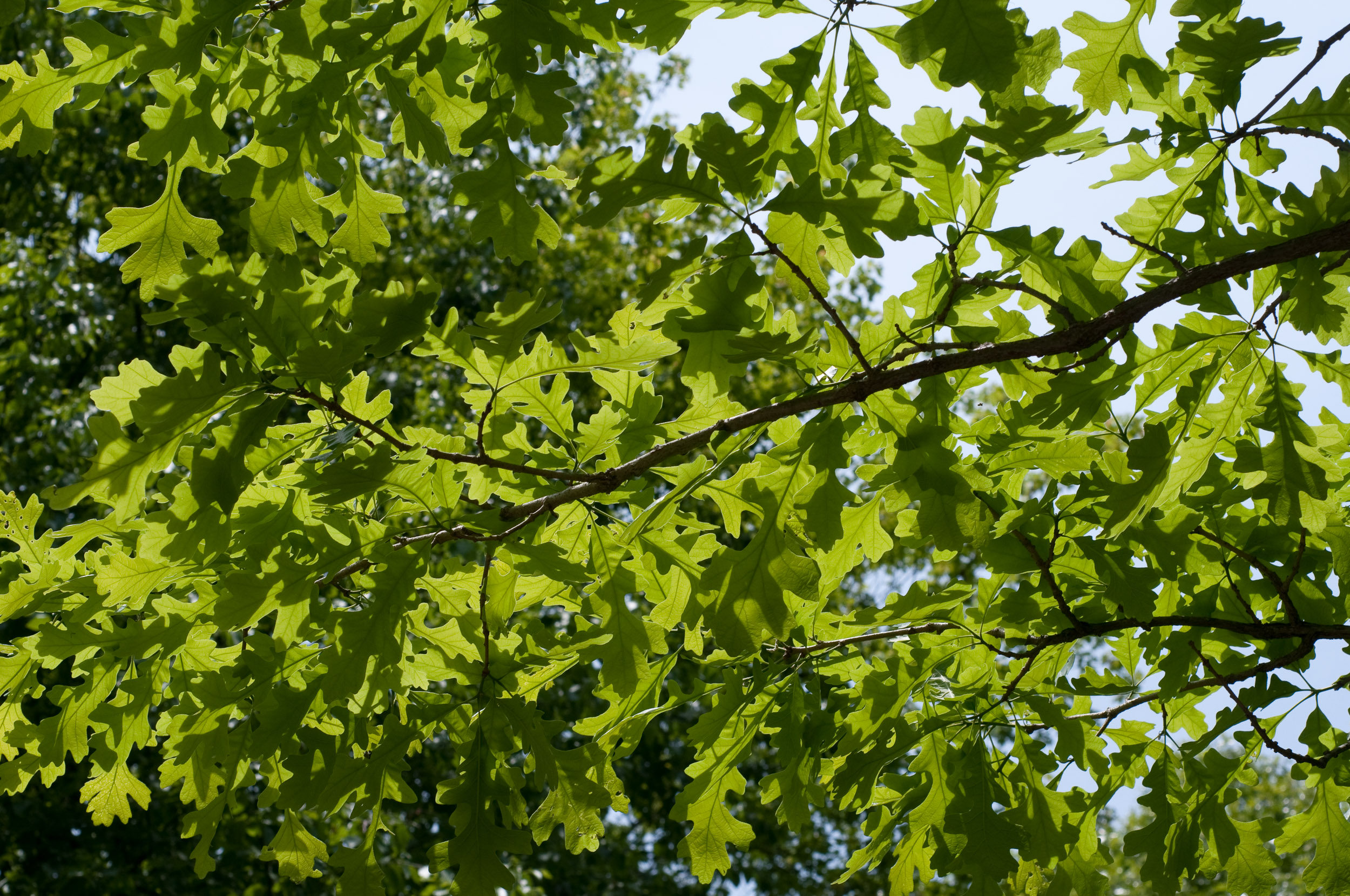
5/22/2010 · Garden in the Woods, Framingham, Massachusetts 
| Kingdom | Plantae | Plants, but not fungi, lichens, or algae (from Stearn's Botanical Latin) |
| Subkingdom | Tracheobionta | Vascular plants—plants with a “circulatory system” for delivering water and nutrients |
| Division | Magnoliophyta | Flowering plants, also known as angiosperms |
| Class | Magnoliopsida | Dicotyledons—plants with two initial seed leaves |
| Subclass | Rosidae | Roses, legumes, proteas, dogwoods, hydrangeas, mistletoes, euphorbias, grapes, many more |
| Order | Fagales | Birch, she-oak, beech, walnut, bayberry, others |
| Family | Fagaceae | Beech familhy |
| Genus | Quercus | Latin for “oak” |
| Species | macrocarpa | “With large fruits or seed pods” |
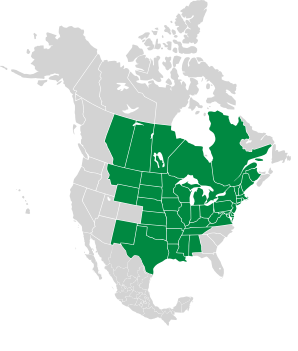
Quercus macrocarpa description by Thomas H. Kent, not updated.

© FloraFinder.org. All rights reserved.