Quercus coccinea Münchh.
Scarlet oak
Scarlet oak is a native of the eastern United States, named for bright red colors of its leaves in the fall.
Plants: Trees reach 80′ (24 m), with the maximum reported height of 181′ (55 m). See the Quercus comparison table.
Leaves: Deeply lobed, even more so than eastern black oak, and sharp-tipped.
Flowers: Staminate (male) flowers are borne on slender yellow-green catkins; pistillate (female) flowers are borne on very short axilliary spikes. Both are brown, and inconspicuous.
Fruits: Acorns are ovate, ⅝–1¼″ long ⨉ ¼–½″ around (1.7–3.1 cm ⨉ 7–13 mm). The cap usually covers a third to half of the nut.
Habitats: Dry to somewhat dry well-drained, acidic soil, in full sun.

Photo by Jean-Pol GRANDMONT, from the Arboretum Robert Lenoir, Rendeux, Belgium, on 4/10/2008. 
Online References:
References:
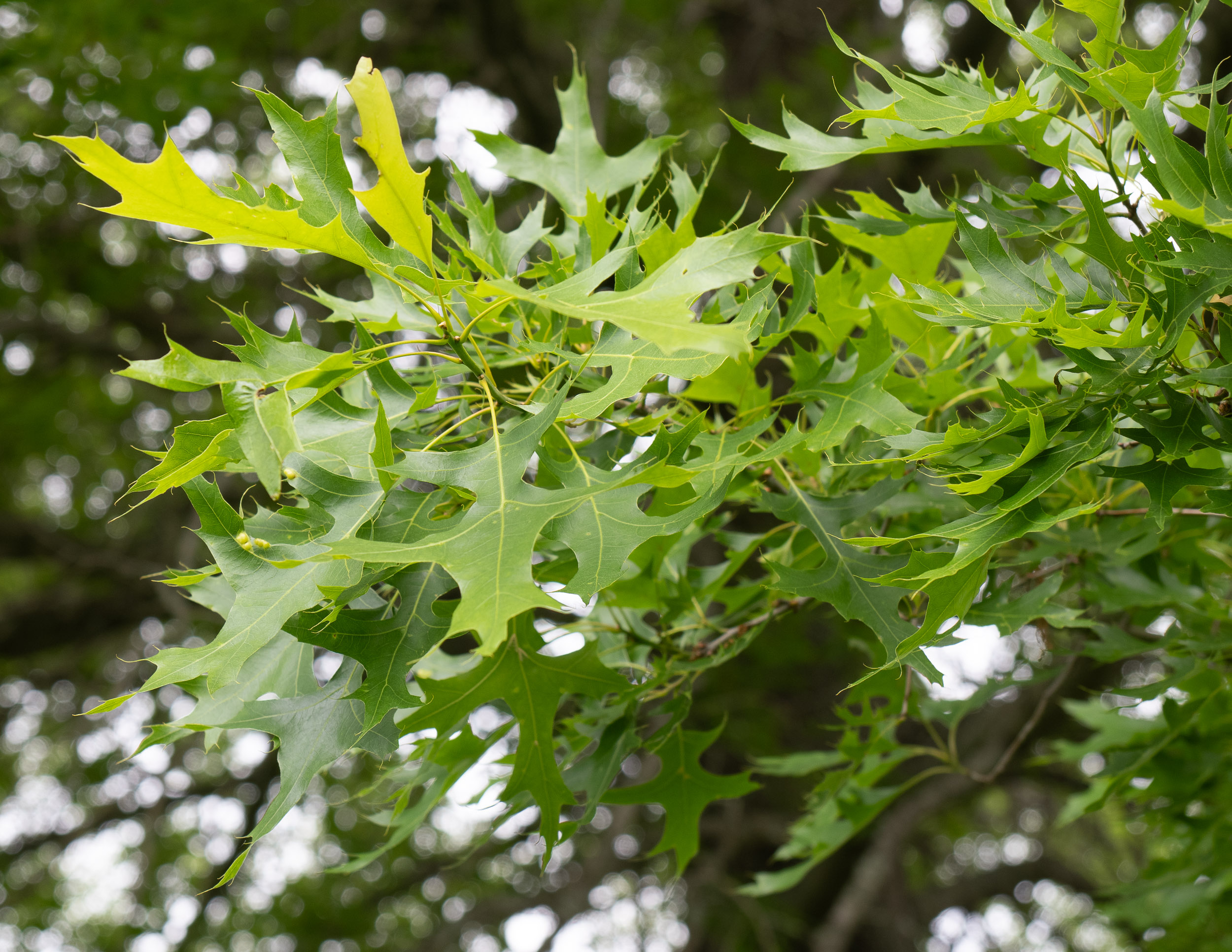
6/12/2023 · Viles Arboretum, Augusta, Maine 
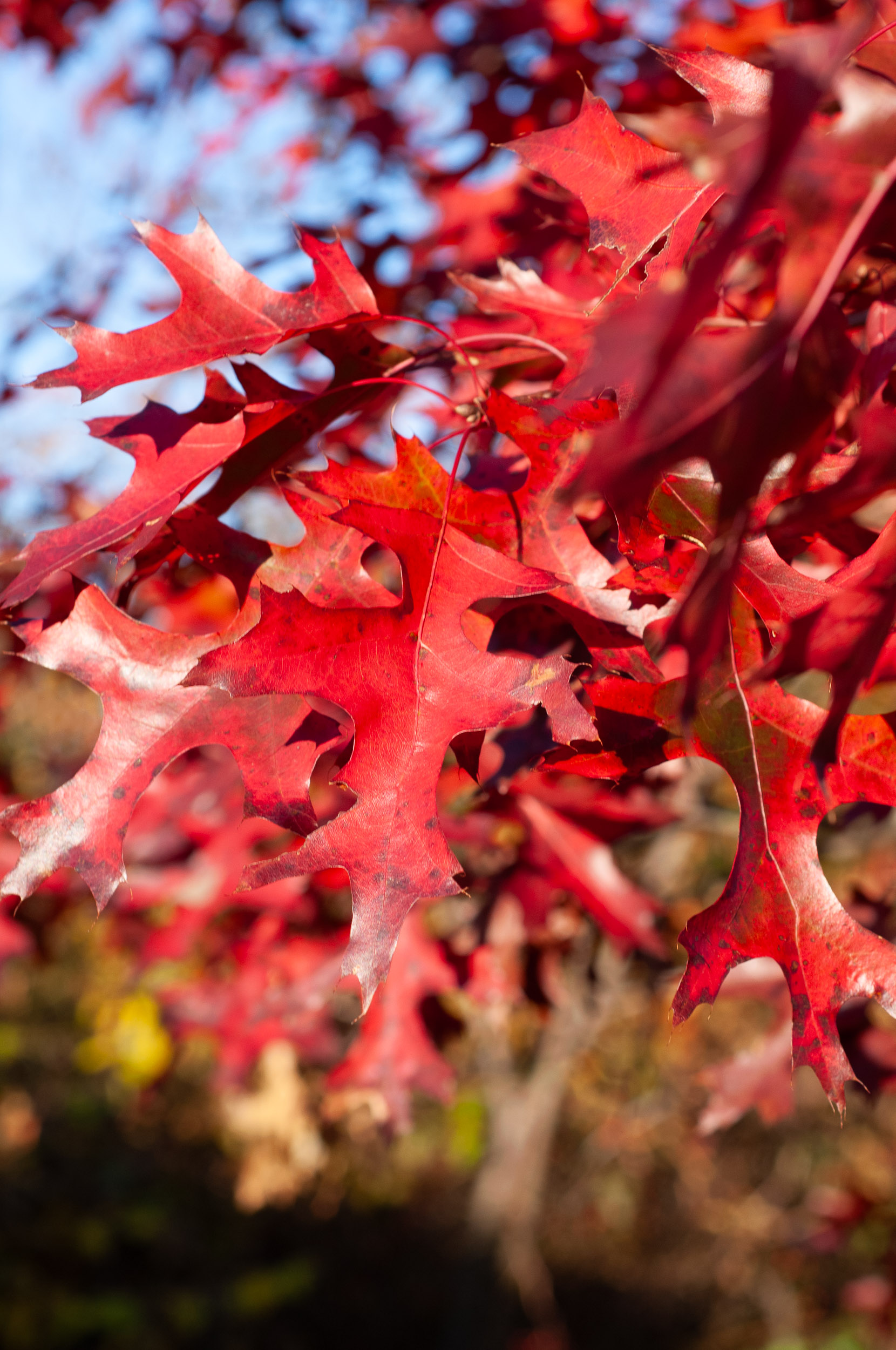
May be Quercus palustris · 10/29/2010 · Nashua River Rail Trail, Groton Center, Groton, Massachusetts · ≈ 9 × 14″ (23 × 35 cm)  ID is uncertain
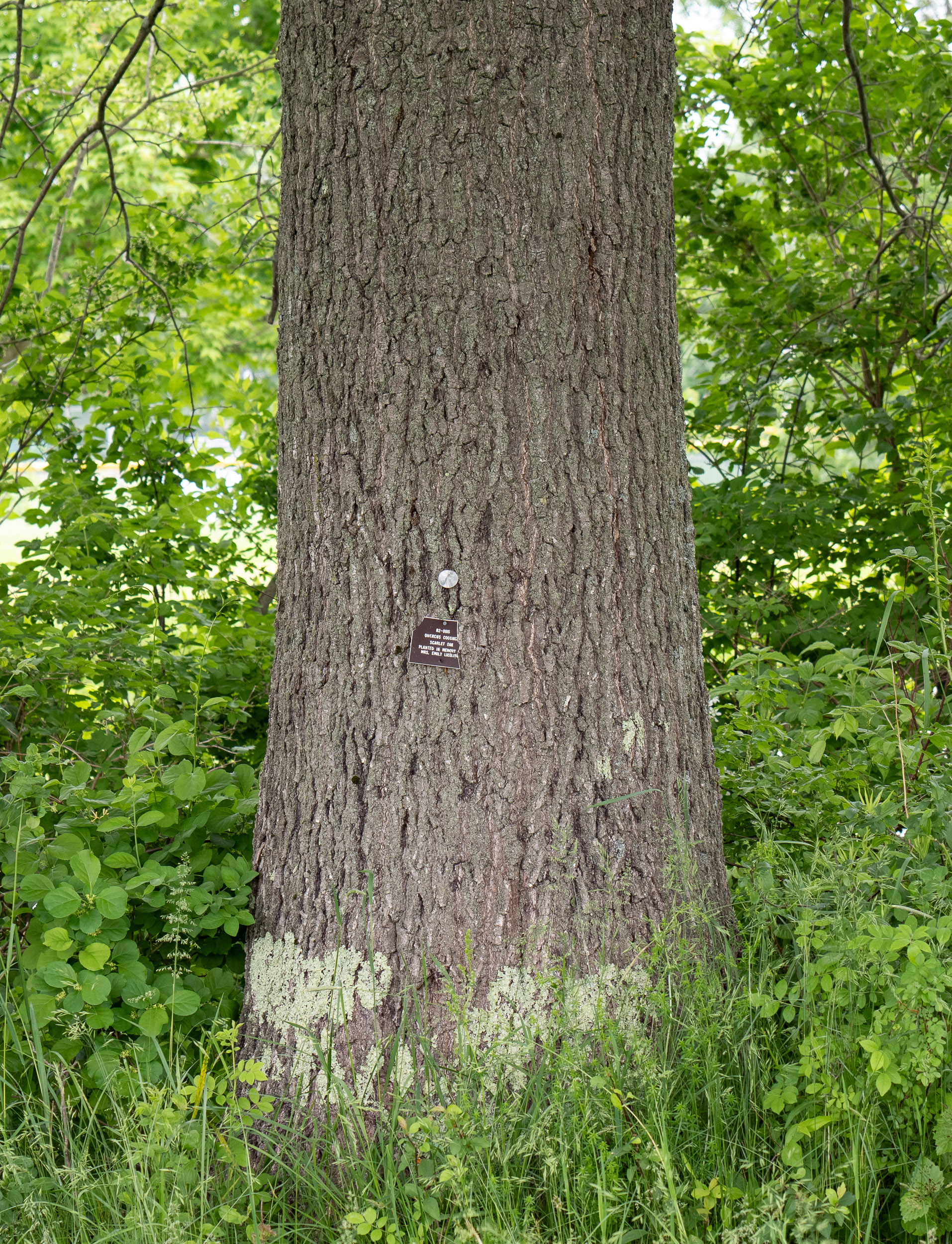
6/12/2023 · Viles Arboretum, Augusta, Maine 
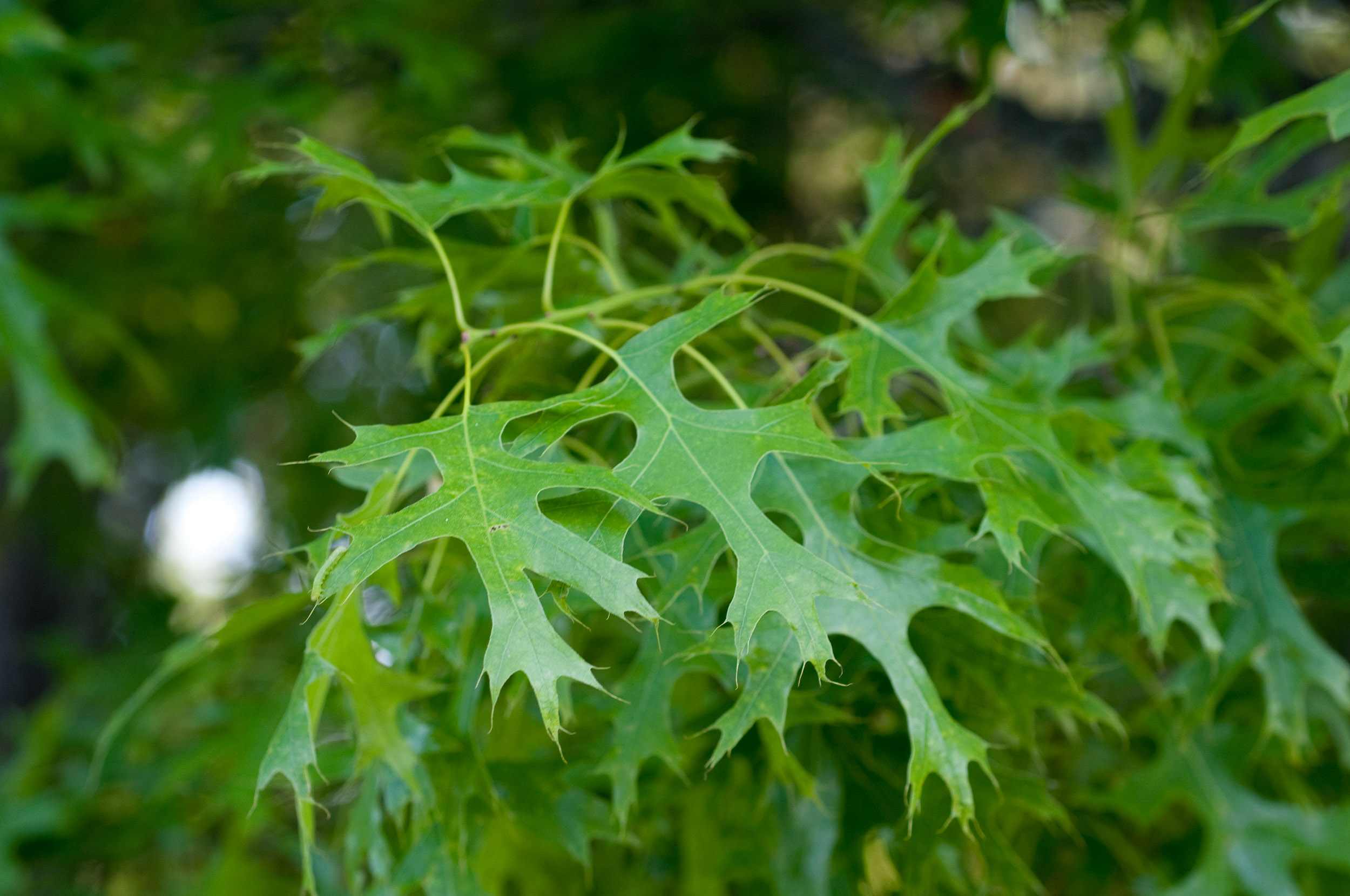
or Black Oak? · 5/25/2010 · Nashua River Rail Trail, Ayer, Massachusetts · ≈ 12 × 8″ (31 × 20 cm) ID is uncertain 

or Black Oak? · 5/25/2010 · Nashua River Rail Trail, Ayer, Massachusetts · ≈ 6 × 9″ (14 × 22 cm) ID is uncertain 
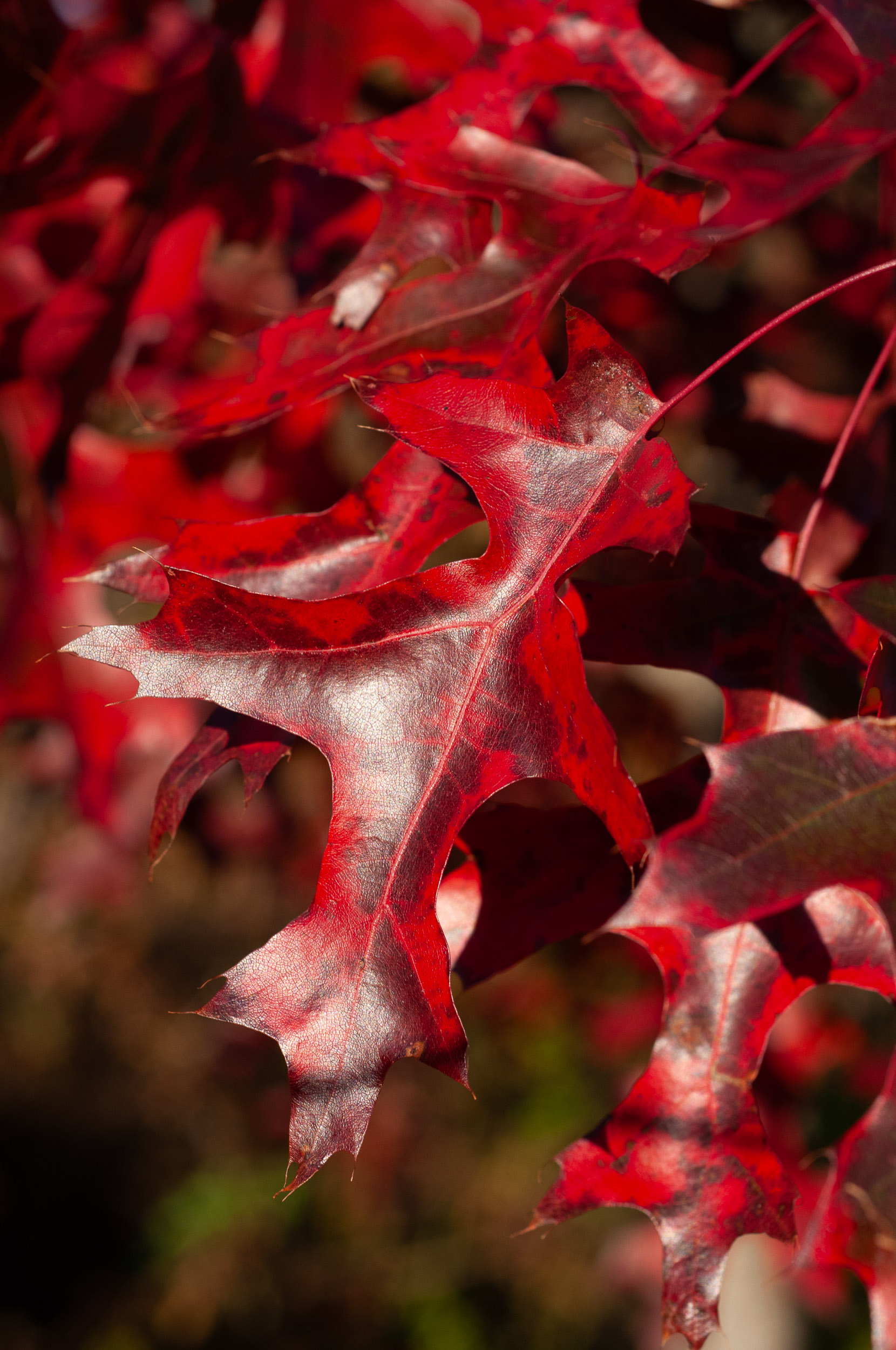
May be Quercus palustris · 10/29/2010 · Nashua River Rail Trail, Groton Center, Groton, Massachusetts · ≈ 6 × 9″ (14 × 22 cm) ID is uncertain 
| Kingdom | Plantae | Plants, but not fungi, lichens, or algae (from Stearn's Botanical Latin) |
| Subkingdom | Tracheobionta | Vascular plants—plants with a “circulatory system” for delivering water and nutrients |
| Division | Magnoliophyta | Flowering plants, also known as angiosperms |
| Class | Magnoliopsida | Dicotyledons—plants with two initial seed leaves |
| Subclass | Rosidae | Roses, legumes, proteas, dogwoods, hydrangeas, mistletoes, euphorbias, grapes, many more |
| Order | Fagales | Birch, she-oak, beech, walnut, bayberry, others |
| Family | Fagaceae | Beech familhy |
| Genus | Quercus | Latin for “oak” |
| Species | coccinea | “Scarlet or bright, deep pink” |

Quercus coccinea description by Thomas H. Kent, not updated.

© FloraFinder.org. All rights reserved.