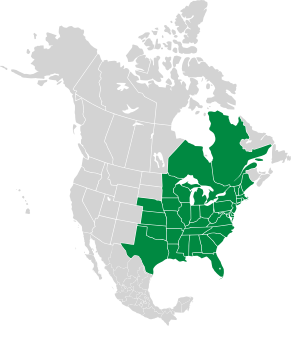
Quercus alba L. var. subflavea A.L. Pickens & M.C. Pickens
Quercus alba L.
Eastern white oak, white oak
White oak is one of the most prominent native trees of North America. “White” is because the wood is lighter in color than pink-tinged red oak. This robust hardwood is often used for furniture-making, along with red oak. White oak has finer pores than red oak. Both are durable, strong woods, with good dimensional stability.
See the Quercus comparison table.
Plants: Trees reach heights of 65–80′ (19–24 m), with a maximum recorded height of 182′ (55 m). These trees live 200-300 years or more. Under the right conditions they have a very wide crown, with some branches growing sideways, almost parallel to the ground. Trunks, though not white, are light gray, with slightly peelable bark.
Leaves: Alternate, 4–9″ (10–22 cm) long, with 5-9 deep lobes with rounded edges (vs. sharp edges for red oak). Leaf petioles are ⅜–⅞″ (1–2.5 cm) long. Leaf tops are dull or shiny gray-green in color. In the fall, leaves turn purple-red.
Flowers: Trees are monoecioous: one tree contains both male and female flowers. Staminate (male) flowers are greenish yellow catkins 2–3½″ (5–8.9 cm) long, developing at old branch tips. Pistillate (female) flowers are reddish-green, ⅛″ (3.2 mm) in size, and appearing on new branch tips. Flowers appear in mid to late spring.
Fruits: Acorns are ¾–1″ (1.9–2.5 cm) long, brown, with a lumpy cap that covers about a quarter of the acorn.
Habitats: Uplands, bottomlands, dry slopes, and areas along streams, in dry to mesic conditions.
Online References:
References:
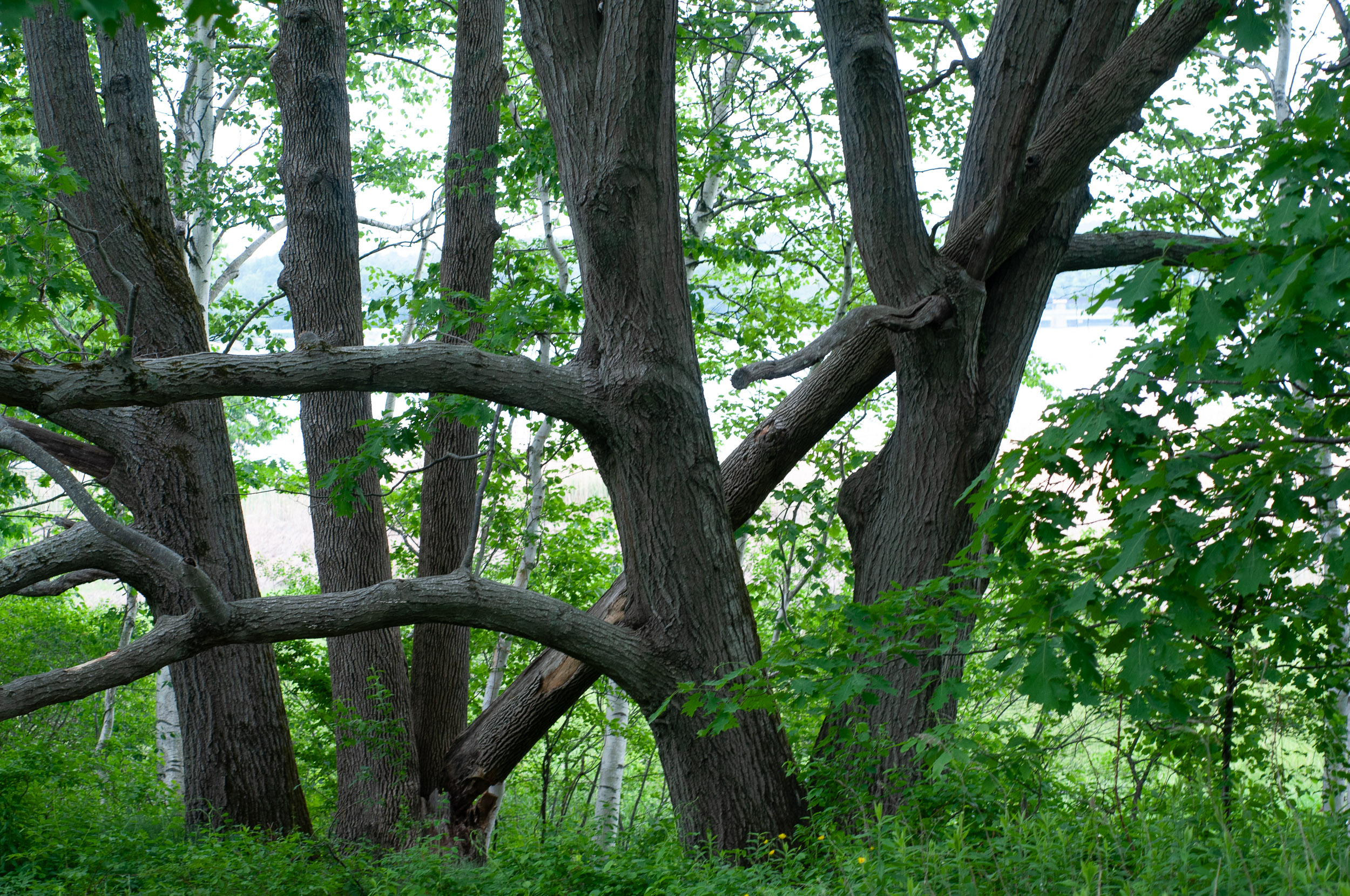
5/29/2010 · Maine Audubon Gilsland Farm Audubon Center, Falmouth, Maine  ID is uncertain
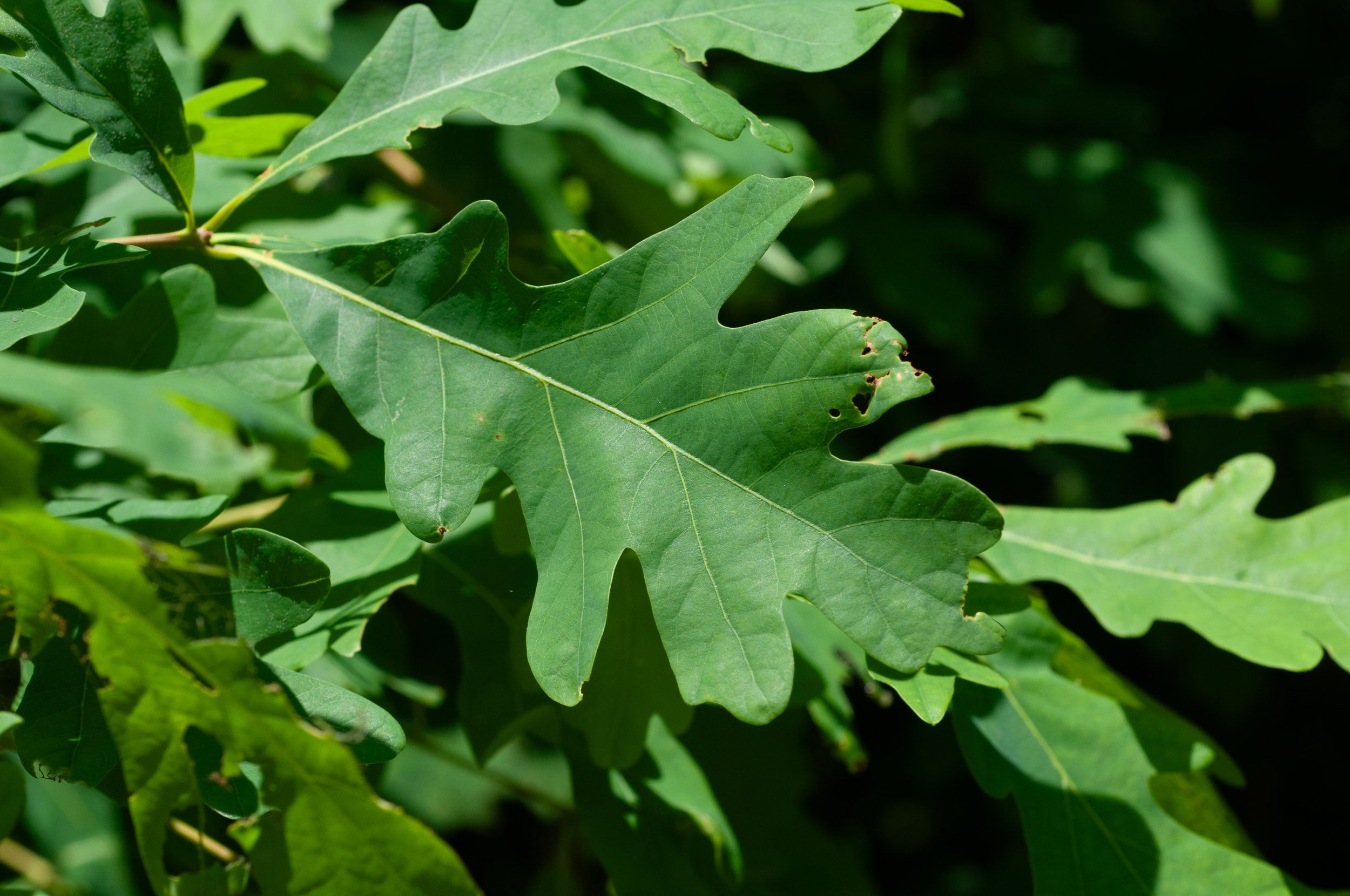
5/27/2010 · Tom and Susan’s, Pepperell, Massachusetts · ≈ 9 × 6″ (22 × 14 cm) ID is uncertain 
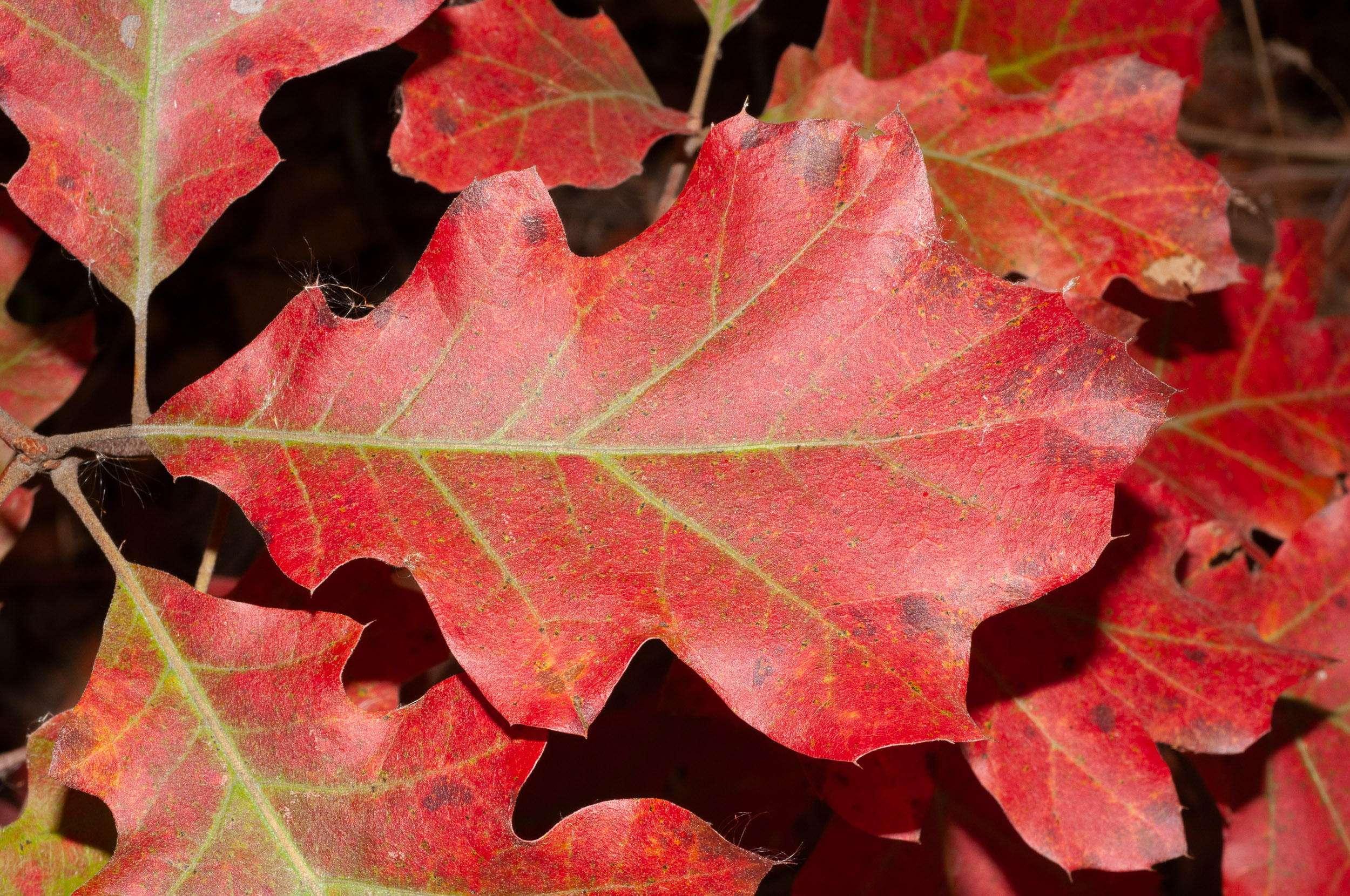
9/25/2010 · Nashua River Rail Trail, Groton Center, Groton, Massachusetts · ≈ 9 × 6″ (22 × 14 cm) 

5/20/2023 · Knight’s Pond Preserve, Cumberland, Maine 

8/27/2015 · Beaver Brook Conservation Area, Hollis, New Hampshire · ≈ 7 × 6″ (18 × 16 cm) 

5/24/2026 · Mid-Lothian Mines Park, Midlothian, Virginia · ≈ 11 × 8″ (28 × 19 cm) 

8/14/2013 · Beaver Brook Conservation Area, Hollis, New Hampshire · ≈ 1 × 2′ (39 × 59 cm) 
| Kingdom | Plantae | Plants, but not fungi, lichens, or algae (from Stearn's Botanical Latin) |
| Subkingdom | Tracheobionta | Vascular plants—plants with a “circulatory system” for delivering water and nutrients |
| Division | Magnoliophyta | Flowering plants, also known as angiosperms |
| Class | Magnoliopsida | Dicotyledons—plants with two initial seed leaves |
| Subclass | Rosidae | Roses, legumes, proteas, dogwoods, hydrangeas, mistletoes, euphorbias, grapes, many more |
| Order | Fagales | Birch, she-oak, beech, walnut, bayberry, others |
| Family | Fagaceae | Beech familhy |
| Genus | Quercus | Latin for “oak” |
| Species | alba | Latinalba, “white” |
Quercus alba description by Thomas H. Kent, not updated.

© FloraFinder.org. All rights reserved.