Plants form dense, bushlike clusters up to 5′ (1.5 m) in height.
Plants are 1½–6½′ (50–200 cm) high. Stems are green, sometimes purple or yellowish-brown.
Plants are typically 12–35″ (30–90 cm) tall. A single, erect stem, mostly hairless except at the base, supports the flowers.
Leaves
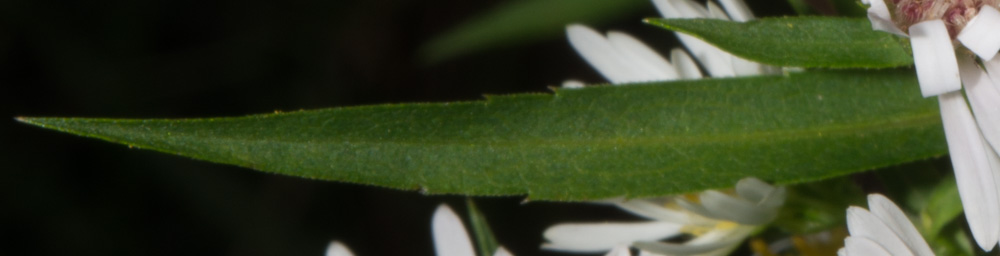
Leaves decrease in width until they form wings on their stems ("decurrent"). They are up to 6″ (15 cm) long, and linear or lanceolate.
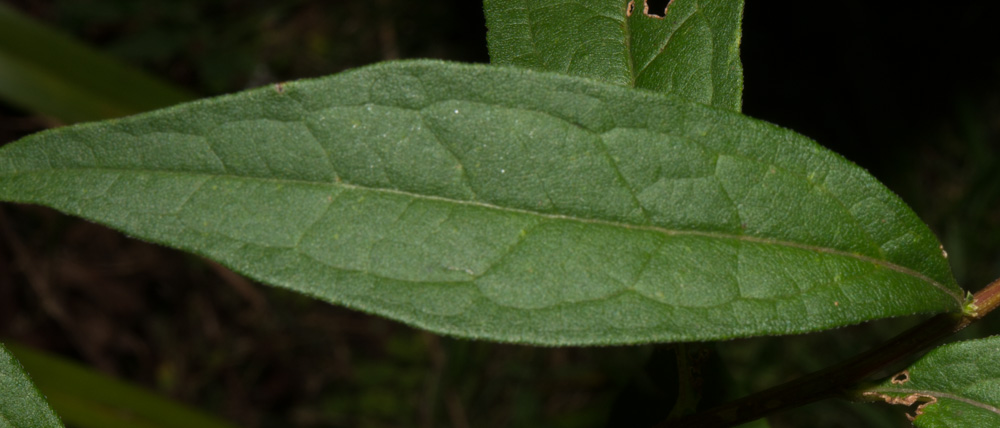
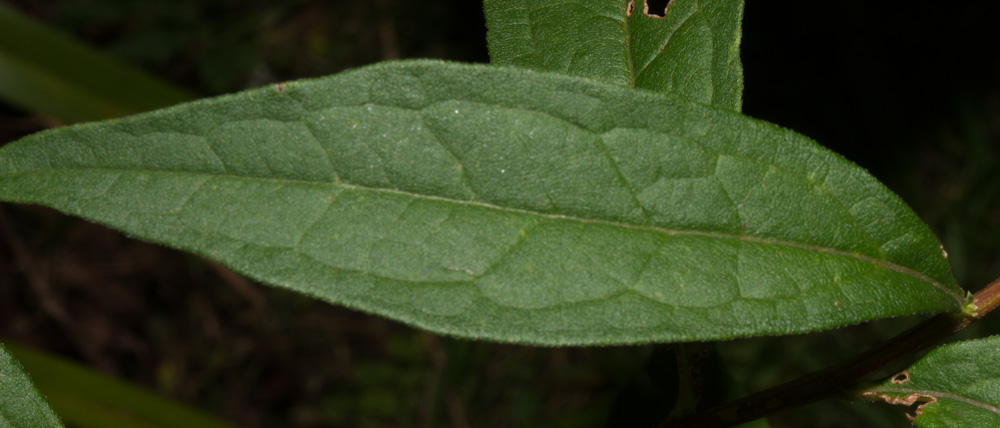
2–4″ (6–11 cm) long by ½–⅞″ (1.3–2.5 cm) wide. They are smooth when rubbed in one direction, rough in the other, elliptic or lanceolate-elliptic. They have prominent veins, and pale or whitish green undersides.
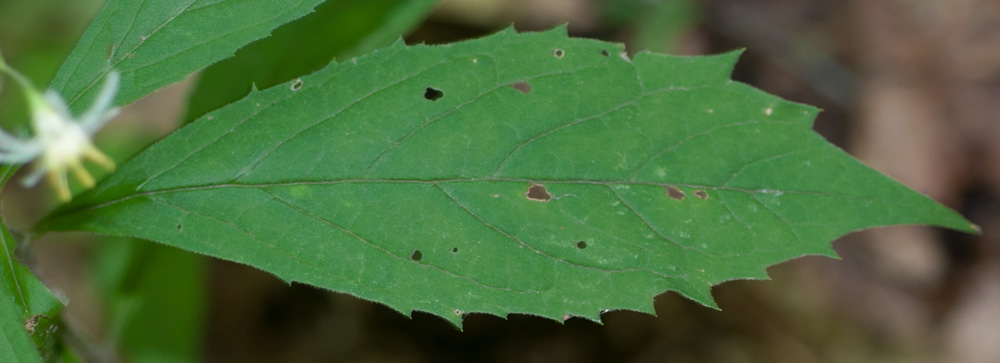
The leaves are a bit complicated. All the leaf types are sharply serrated, with 6-15 teeth per side, and small hairy projections along the leaf margins. But:
Basal leaves are ovate, or egg-shaped, with heart-shaped (cordate) bases. These leaves are ¾–2½ ⨉ ⅝–2″ (1.9–6.5 ⨉ 1.7–6 cm), with petioles from ¾–2½″ (2–7 cm).
Cauline leaves, appearing on the stem starting about halfway up, are ovate, with cordate (heart-shaped) or rounded bases. They are ¾–8 ⨉ ⅜–4″ (2–20 ⨉ 1–10 cm)—much longer—with petioles that are also ¾–2½″ (2–7 cm) long. The petioles are winged.
Finally, distal leaves, at the plant extremities, are ovate to lanceolate, and usually sessile, with rounded bases. They are ⅛–¾ ⨉ 1/32–¼″ (5–20 ⨉ 1–8 mm) in size.
Flowers
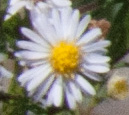
Each flower is a composite flower, composed of a central yellow disc with 230-400 tiny disc florets, surrounded by 45-60 white or pale purple rays. Flowers are up to 1¾″ (5 cm) across, occurring in dense panicles or corymbs. They appear from August to September.
Panicles are 3–12″ (7.6–30 cm) around. Individual flowers are about ½″ (1.3 cm) across, with 5-12 white rays and 12-25 tiny florets in the central disc. The disc is yellow, aging to tan-colored.
Flowerheads are corymbs of 4 to 50 dense white flowers with yellow or red centers. Flower stalks are up to ½″ (1.5 cm) long, and densely hairy.
Fruit
Dry seeds with miniature parachutes.
Cypselae are brown in colour, and roughly cylindrical or egg-shaped. They are 1/16–⅛″ (2.6–3.8 mm) long, with stiff bristly hairs, and 7-10 ribs. The pappi—parachutes for wind distribution, have reddish to cream-coloured bristles.
Range/ Zones
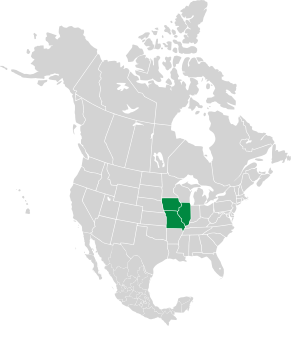
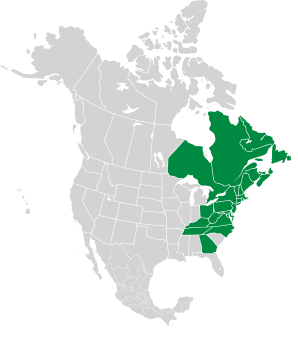
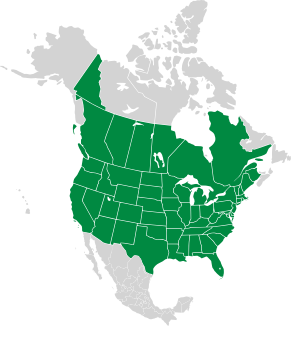
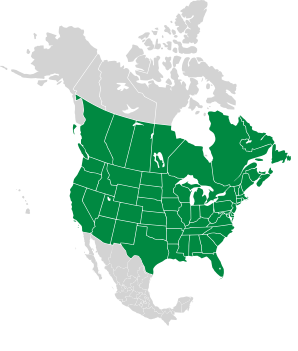
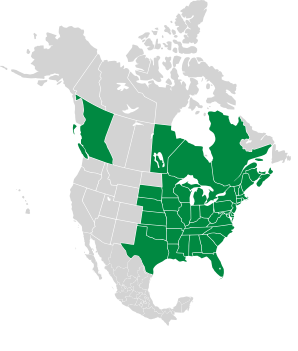
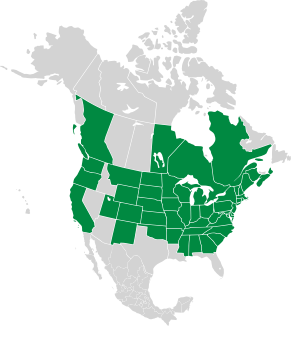
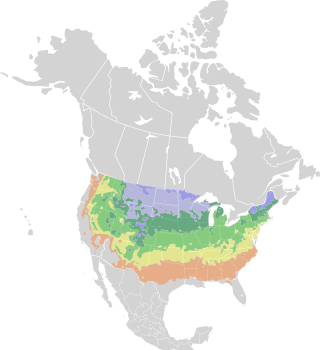
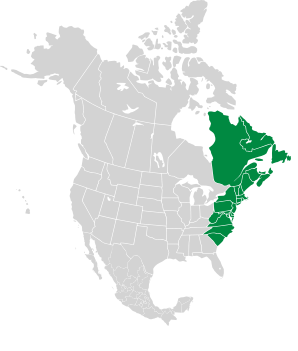
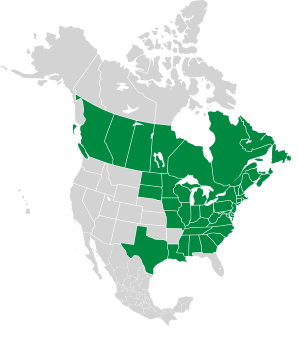
USDA Zones: 4-8
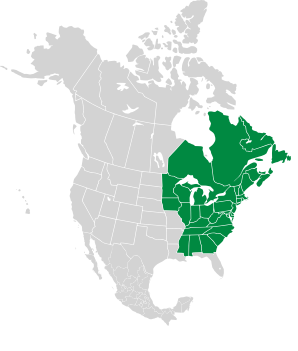
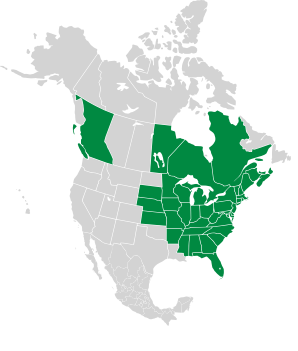
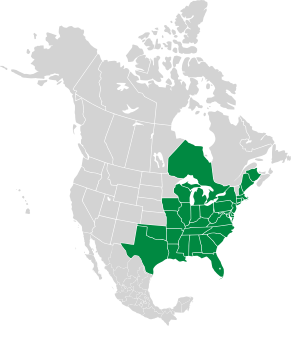
USDA Zones: 3-8
Habitats
Moist thickets, meadows, swamp edges
Dry open woods, edges of woods, and clearings, in partial shade.
These perennials begin as a basal rosette of leaves about 6–12″ (15–30 cm) in size. They reach heights of 3′ (91 cm) rarely, but are usually half that. They often form colonies of basal leaves with no flowers.
Plants are 4–35″ (10–90 cm) tall, with stiff stems and sticky hairs, often branching toward the top.
Plants are 4–20″ (10–50 cm) tall, with one or multiple mostly unbranched stems emerging directly from the ground, though branching may occur in the flowering portion. Stems vary from light green to tan to dark reddish brown. Plants may be upright or listing just above the ground.
Leaves
Basal leaves are up to 8 ⨉ 6″ (20 ⨉ 15 cm), and cordate (heart-shaped), simple (unlobed), rough-textured, on petioles up to 6″ (15 cm) long. Upper leaves become progressively smaller and more ovate in shape. Stems are light green, sometimes tinged with red, with few if any branches and alternate leaves. Leaves are coarsely serrated or crenate, and leaf bases are winged, the wings becoming more prominant further up the stalk.
Alternate, unlobed, mostly toothless, rough or hairless, and ⅜–6″ (1–16 cm) × ⅛–1½″ (3–40 mm). Their shapes are lanceolate or elliptic to ovate- or obovate-elliptic or spatulate. This translates roughly to rounded or spoon-shaped. Leaves may be attached directly to the stem (sessile), or on short winged petioles.
Alternate leaves are ¾–1½″ (1.9–3.8 cm) × ⅛″ (3.2 mm), shiny, sessile, linear, and pointed, like spruce needles. They lack teeth, but leaf edges are rough.
Flowers
Corymbs of flowerheads are about 3–8″ (7.6–20 cm) around. Each flower is a composite flower, with violet to pale blue ray flowers and a center comprised of yellow disc flowers that darken to reddish brown as they age. They are on short-haired pedicels up to 1½″ (3.8 cm) long. Clusters of up to 90 flowers are known, but 11 to 50 are more common. Flowers appear from July to October.
Flowerheads are a flat-topped corymb. Individual flowers are up to 1½″ (3.8 cm) across, with 15-35 blue to purple rays and 25-55 tiny flowers in the central disc.
Solitary or in panicles. Flowers are ½–1″ (1.3–2.5 cm) across, with 10-20 rays that are lavendar-colored, and yellow central disks that become red-brown with age. They appear Aug-Oct.
Fruit
Dry seeds—cypselae—have small tufts of pappi, yellow-brown to orange-brown, for wind distribution.
Moist to dry soils in hemlock–northern hardwood, beech–maple, pine, or Appalachian spruce–fir forests. It occurs in thickets, clearings or along roadsides, in partial shade.
Dry, sandy woods and clearings, especially in coastal pine barrens.
Full or partial sun, sandy or rocky soil with good drainage.
Plants are 12–31″ (30–80 cm) high, found in wooded areas.
Plants are 6–48″ (15–121 cm) high, with mostly hairless stems below the flowerheads. Stems are green, reddening with age.
Plants are 1–4′ (30–121 cm) high, branching rather sparsely into long branches. Stems vary from hairless at the base to more hairly toward stem tips.
Leaves
Oval, coarsely toothed, pointed leaves form a whorl around the stem. The arrangement of leaves resembles a pinwheel when viewed from above.
Alternate, on petioles (stalks). 1½–6″ (3.8–15 cm) long, heart-shaped with deeply cleft bases, pointed, sharply toothed, rough on top, hairy on the underside.
In a roughly spherical cluster at the top, of flowers that are ⅞–1½″ (2.5–4 cm) in diameter. Flowers are composed of disheveled-looking white ray flowers surrounding a central disc that is yellow or purplish in color. Ray flowers are bent backward, not straight as in most other aster family flowers, and composed of about 15 (9-18) rays.
Flowerheads are panicles, roughly cone-shaped. Individual flowers are ½–¾″ (1.5–1.9 cm) across, with 8-20 (usually 10-16) blue to blue-purple ray petals. Sometimes they are pale, almost white. Central disc flowers are yellow, reddening with age. They appear from Aug to Nov.
Blooms appear from Aug to Oct. There are many flowers, but each tips a separate branch with its own leaflets and they are spread along branches, not clustered at major branch ends. The flowers therefore look evenly distributed, not densely clustered as in most asters. Individual flowers are white or pale blue/purple, ½–¾″ (1.3–1.9 cm) in diameter, with 13-30 rays. Central disks are yellow, reddening with age.
Fruit
Achenes are ⅛ ⨉ 1/32″ (3 ⨉ 0.5 mm), and have many glands.
Seed heads have tufts of light brown to pinkish hairs, distributed by wind. The seeds are light brown to purplish, up to 1/16″ (2.5 mm) long, and angled.
Range/ Zones
USDA Zones: 3-8
USDA Zones: 8a-11
Habitats
Woodlands; tolerates lower light levels than many flowering plants.
1½–3′ (50–100 cm) in height. Stems are waxy and smooth, green with a whitish covering, sometimes purple.
Plants are 12–59″ (30–150 cm) in height, rarely up to 6½′ (2 m). They consist of a single main stem that branches in the flowering region. The stem may be hairy or hairless.
Leaves
Smooth, bluish in color, thick and firm, usually toothless, usually hairless, and clasping.
Leaves are ⅜–3″ (1–8 cm) × ⅛–¾″ (5–20 mm), with serrated or scalloped edges, oblanceolate or lanceolate. Dead leaves tend to curl a lot.
Flowers
Bluish to purple (rarely white), ¾–1¼″ (1.9–3.2 cm) across, appearing from August to October. Central disc flowers are yellow, aging to purple. There are 13-23 (rarely up to 11-34) rays on each flower. The appear in loose panicles.
Flowerheads are panicles that may be heavily branched and densely or quite sparsely flowered. Flowers are white to pinkish or pale blue-violet, ⅜–¾″ (1–2 cm) across, with 16-50 rays and usually 20-40 tiny disc florets. Central disks are yellow, aging to purple.
Fruit
A dry seed with a tuft of dull white to yellowish hairs, distributed by wind.
Range/ Zones
USDA Zones: 3-8
USDA Zones: 4a-8b
Habitats
Fields, praries, rocky glades, roadsides, open woods, disturbed soils
Moist open ground: river banks and shores, forest edges, swamps, meadows, fields, roadsides.
Up to 4′ (1.2 m) high. Stems are erect, strong, and hairy.
Up to 4′ (1.2 m) high. Stems are erect, strong, and hairy.
7–39″ (17–100 cm) high, occurring in colonies, with branching stems that are often reddish. Stems lack hairs near the bottom, but toward the top, small hairs, typically lying against the stem, occur in rows along the stem.
Leaves
Alternate, hairy, spatula-shaped, lanceolate or oblong, with their bases slightly wrapped around the stem ("clasping"). They are usually smooth, but may have shallow teeth, and are ¾–3″ (2–8 cm) × ⅛–⅞″ (5–25 mm).
Alternate, sparsely hairy, spatula-shaped, with their bases slightly wrapped around the stem. They are usually smooth, but may have shallow teeth, and are ¾–2″ (2–6 cm) × ⅛–½″ (5–15 mm).
Thick, unlobed, ovate to lanceolate, sessile (attached directly to stems) or clasping, ⅝–2″ (1.7–6 cm) × ⅛–⅜″ (6–11 mm). Leaves near the bottom are already drying out and falling by flowering time, while those higher on the stem remain, becoming smaller further up. Leaves sometimes have teeth.
Flowers
In dense, highly branched clusters atop the plants. Each flower is ¾–1½″ (1.9–3.8 cm) around, with a yellow-orange disk flower in the center, surrounded by 45-100 thin ray flowers that are deep, vibrant purple, pale purple, or pink. They flower from Aug to Sep.
In dense, highly branched clusters atop the plants. Each flower consists of a yellow disk flower in the center, surrounded by 45-100 thin ray flowers that are a deep, vibrant purple.
The central disc has 28-68 tiny florets and is yellow, aging to reddish brown or purple. Flowers have 15-35 rays that are bluish to purple, rarely pink or white, are about 1–1¼″ (2.5–3.2 cm) in diameter, and appear from Aug to Oct. New York aster tends to be paler in color than New England aster.
Fruit
Seeds, technically cypselae, are dull purple or brown, oblong, 1/16–⅛ ⨉ ~1/32″ (1.8–3 ⨉ 0.6–1 mm), with 7-10 nerves. Seeds have tufts of hair and are distributed by the wind.
Dry achenes with pappi (hairy tufts) for wind distribution.
Range/ Zones
USDA Zones: 4-8
USDA Zones: 3-8
Habitats
Full to partial sun, in meadows, prairies, preferring sandy or loamy soils
Stems are hairy and rough to the touch. Plants are 3–8′ (1–2.5 m) tall, rarely up to 9½′ (3 m), with stout stems up to ⅜″ (1.1 cm) around.
Plants are 12–35″ (30–90 cm) tall.
Leaves
Oblanceolate, with small teeth that are usually widely spaced and may not be present, and bases that clasp the stems. They are up to 6″ (15 cm) long and 2½″ (7.0 cm) wide, with an easily visible central vein.
Alternate, sometimes toothed, unlobed, ⅛–1½″ (5–40 mm) × ⅛–½″ (5–15 mm) in size.
Flowers
Openly branched panicles. Individual flowers are ⅞–1½″ (2.5–3.8 cm) across, and pale to dark blue-purple, sometimes almost white, with 20-50 rays. Central discs are yellow or cream-colored, with 30-50 tiny florets (as many as 90), aging to pink or purple. They appear Aug-Nov.
Numerous flowers are clustered along long stems in racemes. The central disk is yellowish, aging to a pinkish color. Ray flowers are white to pink, with 16-20 rays, rarely as few as 12. Flowers are about ½″ (1.3 cm) across, and they tend to cluster along one side of each branch. They appear from August to October.
Range/ Zones
USDA Zones: 2-9
Habitats
Wet, marshy areas.
Floodplains, swamps and marshes, wet to moderate clearings, fields, meadows, roadsides.
Symphyotrichum description by Thomas H. Kent, not updated.