Symphyotrichum puniceum (L.) Á. Löve & D. Löve
Purple-stemmed aster, red-stem aster, swamp aster
Purple-stemmed aster is native to North America, found in marshy habitats.
Plants: Although these asters are named for their purple stems, they aren’t always purple, especially on younger plants. Stems are hairy and rough to the touch. Plants are 3–8′ (1–2.5 m) tall, rarely up to 9½′ (3 m), with stout stems up to ⅜″ (1.1 cm) around.
Leaves: Oblanceolate, with small teeth that are usually widely spaced and may not be present, and bases that clasp the stems. They are up to 6″ (15 cm) long and 2½″ (7.0 cm) wide, with an easily visible central vein.
Flowers: Flowerheads are openly branched panicles. Individual flowers are ⅞–1½″ (2.5–3.8 cm) across, and pale to dark blue-purple, sometimes almost white, with 20-50 rays. Central discs are yellow or cream-colored, with 30-50 tiny florets (as many as 90), aging to pink or purple. They appear August through November.
Fruits: Dry seeds with pappi for wind dispersion.
Habitats: Wet, marshy areas.
See our aster comparison table here.
Online References:
References:
Clemants, Steven; Gracie, Carol, Wildflowers in the Field and Forest, Oxford University Press, 2006, p. 20

9/17/2021 · Woodward Point Preserve, Brunswick, Maine · ≈ 7 × 4½″ (16 × 11 cm) 

9/19/2023 · Denny Reed Trail, Phippsburg, Maine · ≈ 7 × 5″ (18 × 13 cm) 

9/11/2013 · Nashua River Rail Trail, Groton Center, Groton, Massachusetts · ≈ 8 × 6″ (20 × 14 cm) 

8/25/2013 · Casalis State Forest, Elm Hill Rd, Peterborough, New Hampshire · ≈ 4½ × 6″ (12 × 16 cm)  ID is uncertain


8/22/2012 · Squannacook River Wildlife Area, Townsend, Massachusetts · ≈ 11 × 7″ (27 × 18 cm) ID is uncertain 

8/25/2013 · Casalis State Forest, Elm Hill Rd, Peterborough, New Hampshire · ≈ 7 × 4½″ (16 × 11 cm) ID is uncertain 

8/25/2013 · Casalis State Forest, Elm Hill Rd, Peterborough, New Hampshire · ≈ 8 × 6″ (21 × 16 cm) ID is uncertain 
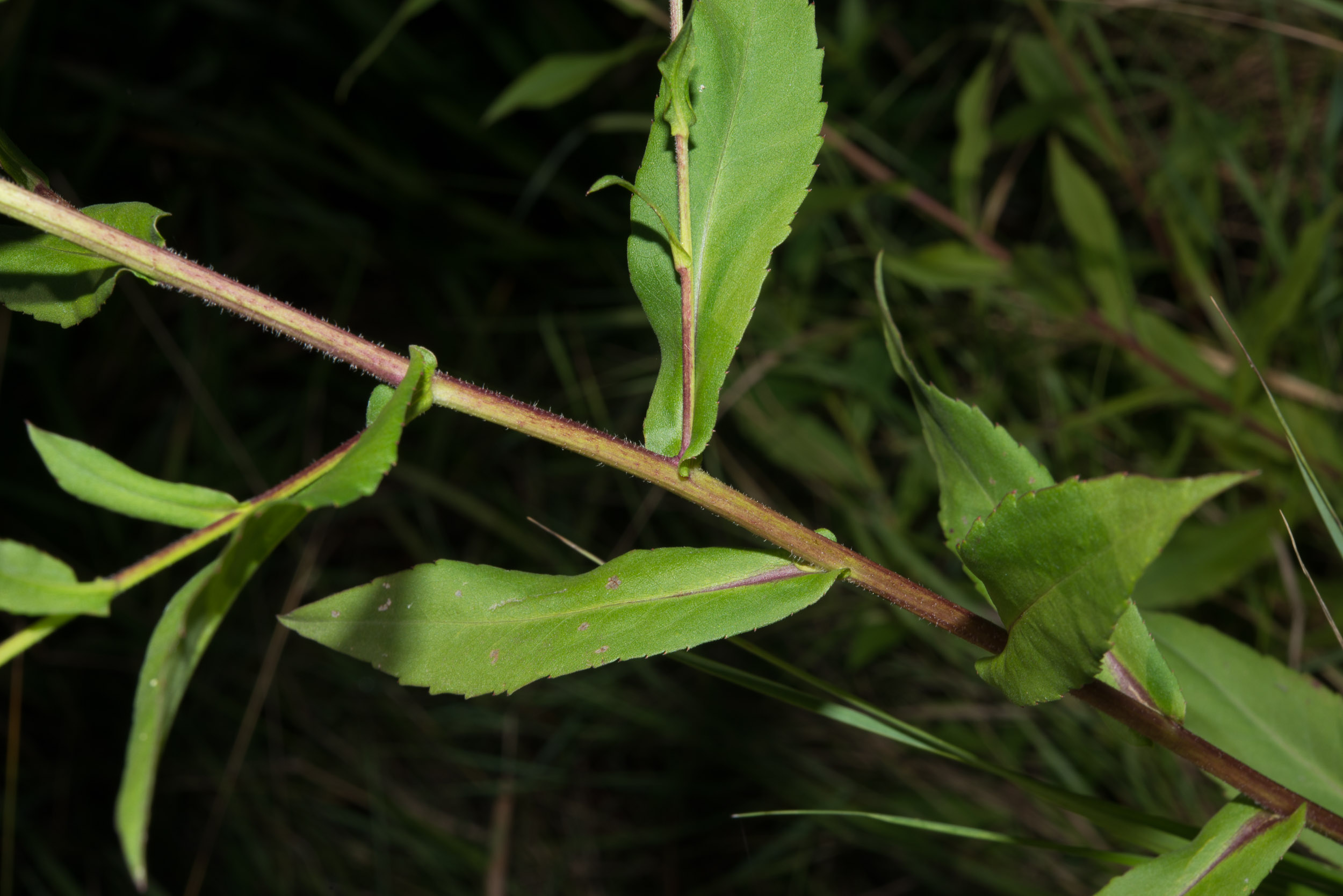
9/11/2013 · Nashua River Rail Trail, Groton Center, Groton, Massachusetts · ≈ 8 × 6″ (20 × 14 cm) 

9/17/2021 · Woodward Point Preserve, Brunswick, Maine · ≈ 6 × 4″ (15 × 10 cm) 
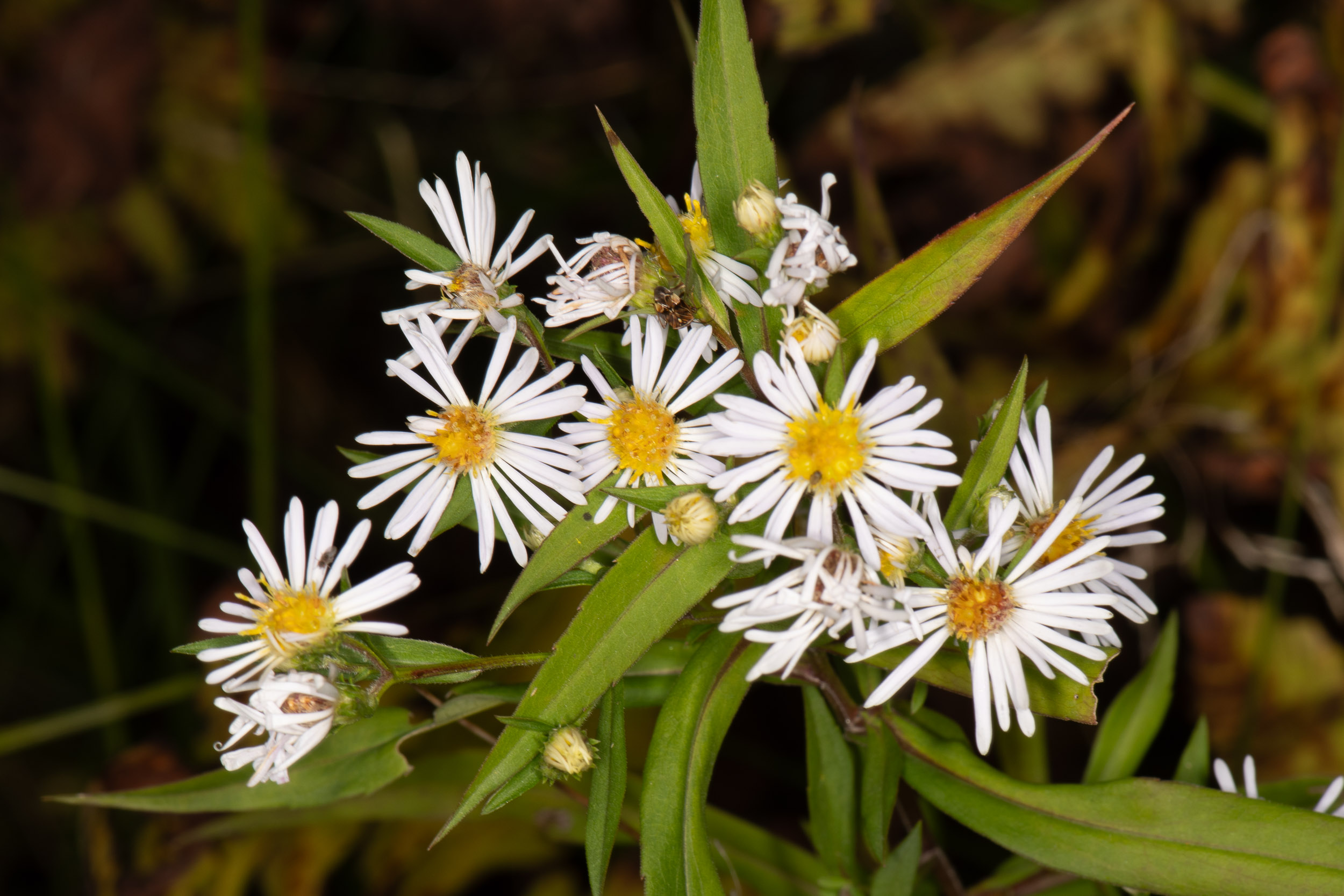
9/17/2021 · Woodward Point Preserve, Brunswick, Maine · ≈ 6 × 4″ (16 × 10 cm) 

8/22/2012 · Squannacook River Wildlife Area, Townsend, Massachusetts · ≈ 9 × 6″ (23 × 15 cm) ID is uncertain 

8/25/2013 · Casalis State Forest, Elm Hill Rd, Peterborough, New Hampshire · ≈ 8 × 6″ (19 × 15 cm) ID is uncertain 

8/22/2012 · Squannacook River Wildlife Area, Townsend, Massachusetts · ≈ 8 × 5″ (19 × 13 cm) ID is uncertain 

8/17/2014 · Bald Mountain, Franconia Notch Area, White Mountains, New Hampshire · ≈ 5 × 6″ (12 × 16 cm) 

9/19/2023 · Denny Reed Trail, Phippsburg, Maine · ≈ 4½ × 7″ (12 × 18 cm) 

8/22/2012 · Squannacook River Wildlife Area, Townsend, Massachusetts · ≈ 4½ × 3½″ (11 × 9.4 cm) ID is uncertain 

8/25/2013 · Casalis State Forest, Elm Hill Rd, Peterborough, New Hampshire · ≈ 2½ × 2½″ (6.6 × 6.6 cm) ID is uncertain 
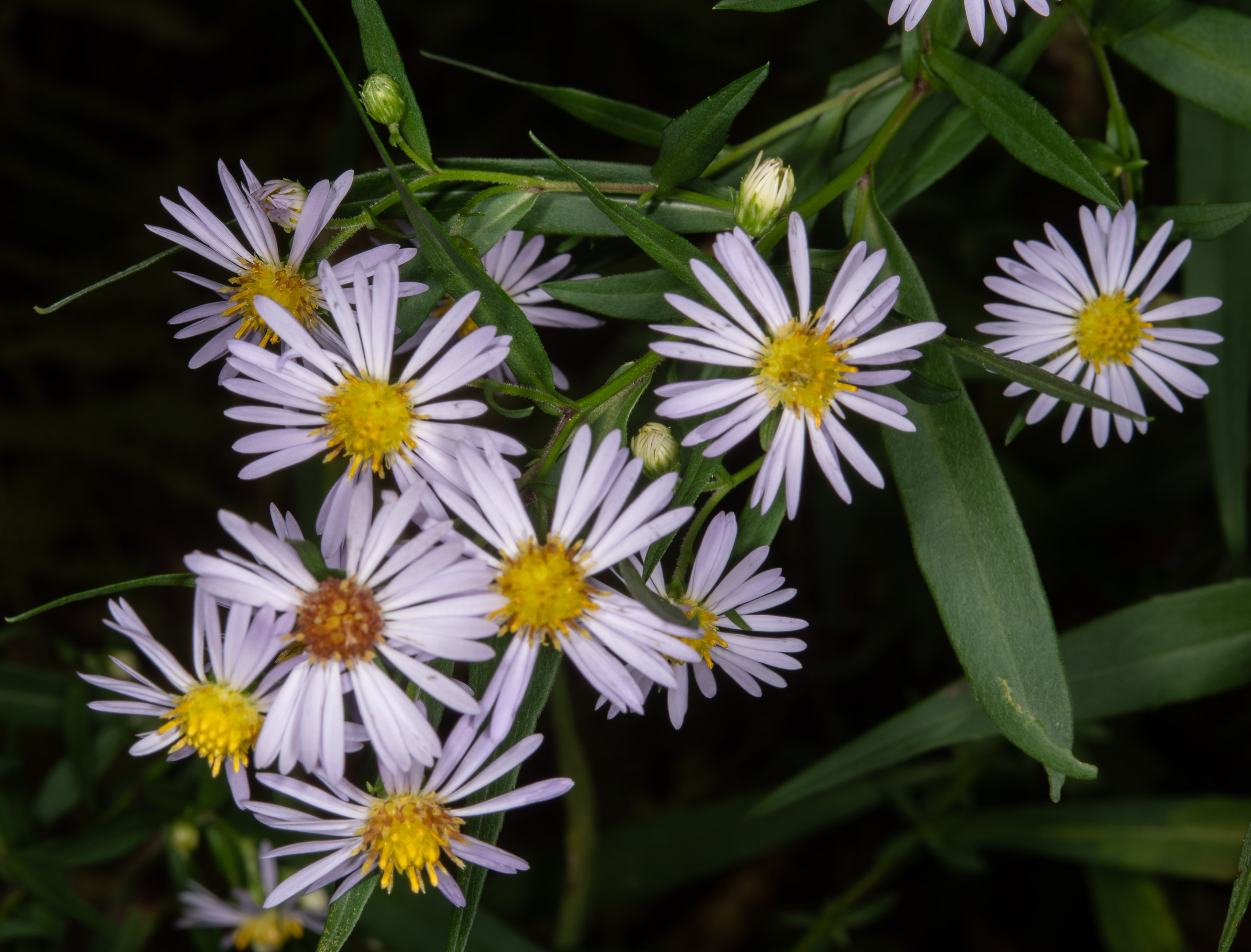
9/19/2023 · Denny Reed Trail, Phippsburg, Maine · ≈ 6 × 4″ (14 × 11 cm) 

9/11/2013 · Nashua River Rail Trail, Groton Center, Groton, Massachusetts · ≈ 6 × 4½″ (14 × 11 cm) 
| Kingdom | Plantae | Plants, but not fungi, lichens, or algae (from Stearn's Botanical Latin) |
| Subkingdom | Tracheobionta | Vascular plants—plants with a “circulatory system” for delivering water and nutrients |
| Division | Magnoliophyta | Flowering plants, also known as angiosperms |
| Class | Magnoliopsida | Dicotyledons—plants with two initial seed leaves |
| Subclass | Asteridae | A large class that encompasses asters |
| Order | Asterales | Flowering plants with a central disk flower and surrounding petals, like daisies |
| Family | Asteraceae | The aster family, which also includes daisies and sunflowers; from the Greek ἀστήρ, “star,” for the star-shaped flowers |
| Genus | Symphyotrichum | From Greek symphysis, “borne together or growing together, coalescing,” and trichinos, “hair, a single hair” |
| Species | puniceum | “Reddish purple” |
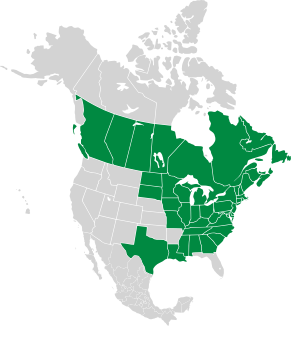
Symphyotrichum puniceum description by Thomas H. Kent, not updated.

© FloraFinder.org. All rights reserved.