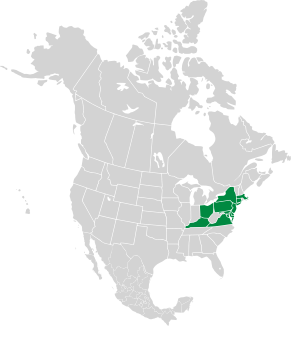
Shrubs are 4–6′ (1.2–1.8 m) tall and 3–4′ (91–121 cm) around.
A densely-branched shrub that is 6–10′ (1.8–3 m) around. (Rarely, plants can reach 15′ (4.6 m).)
Irregular bush 6–12′ (1.8–3.7 m) high. Bark is gray-brown and warty, later becoming furrowed.
Leaves
Leaves are dark green, three-lobed, 2–4″ (5–10 cm) long, occurring in opposite pairs. Their maple-like leaf shape distinguishes this species from other viburnums.
Often shiny, roughly oval, toothed, strongly textured (“pleated”) and veined, somewhat rough to the touch, and 2–4½″ (5–11 cm) long. In the fall, leaves may turn yellow or reddish purple.
Heart-shaped, prominently veined, 4–8″ (10–20 cm) long, with serrated edges.
Flowers
White flowers are in ball-shaped, flat-topped, or spike-shaped clusters. Individual flowers are less than ¼″ (6.3 mm) across.
Cream-colored corymbs (flat-topped flower clusters) 1–4″ (2.5–10 cm) across consist of tiny flowers about ⅛″ (3.2 mm) across. Flowers smell mildly unpleasant.
Flowerheads up to 5″ (12 cm) across, with a central region with fertile ⅛″ (3.2 mm) flowers edged with ¾″ (1.9 cm) sterile white-to-pink flowers, each with five petals.
Fruit
Berries go from green to red to blue-purple to almost black in color; they are about ¼″ (6.3 mm) around.
Blue-black berries ¼″ (6.3 mm) around appear in flattened clusters.
Oval berry clusters are first red, ripening to black.
A large, often irregular shrub or small tree up to 30′ (9 m) tall, but usually 12–15′ (3.7–4.6 m). If it has a single trunk, it is up to 10″ (25 cm) in diameter. Multiple trunks are smaller.
These shrubs are 5–12′ (1.5–3.7 m) high and around, and often found in wet areas.
This shrub reaches 8–12′ (2.4–3.7 m) in size.
Leaves
2½–4″ (6.3–10 cm) long, medium- to dark green, shiny, roughly oval to elliptical in shape, with serrated edges. In the fall, colors are muted, and include green, red, purple, and yellow.
Shiny, oval in shape, with pointed ends and slightly serrated edges, 1½–3½″ (3.8–8.9 cm) long, very colorful in the fall.
Three-lobed, coarse-veined, somewhat maple-like leaves are 1¾–4″ (5–10 cm) in size. Leaves are opposite, with course serrations.
Flowers
Flowerheads are cream-colored, flat-topped, fragrant, and up to 5″ (12 cm) in diameter.
Flat-topped clusters (”corymbs”) of white flowers consist of larger, sterile flowers around the perimeter, and smaller, fertile flowers within. Flowers appear from May to June.
Flowerheads are 1½–4″ (4–11 cm) around. Each head has an outer ring of sterile, white- or cream-colored flowers ½–¾″ (1.5–2 cm) around, with five petals. Within this ring is a large number of very small, fertile flowers, also white, about ⅛″ (5 mm) around.
Fruit
Berries turn from light green to purple, red, and yellow; eventually to blue-black, and are often a mixture of several colors.
Fruits are iridescent pink, becoming dark blue-black.
Brilliant red when ripe, ¼–⅜″ (7–10 mm) in diameter, round or somewhat oval, containing a single seed.
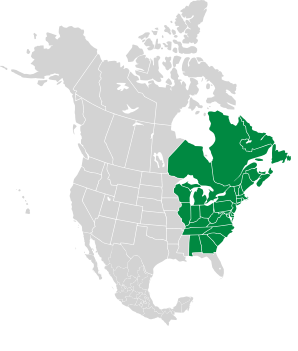
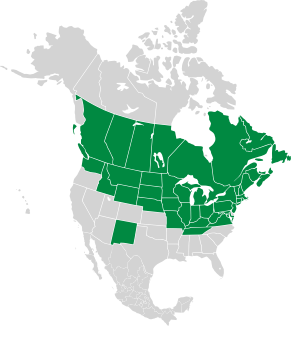
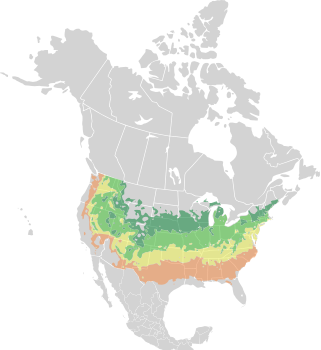
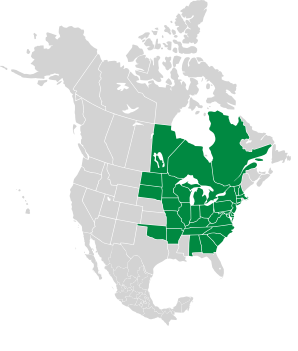
Range/ Zones
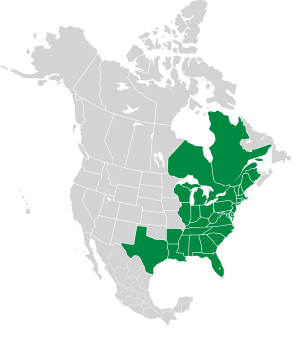
USDA Zones: 2-8
USDA Zones: 3-8
USDA Zones: 3-8
Habitats
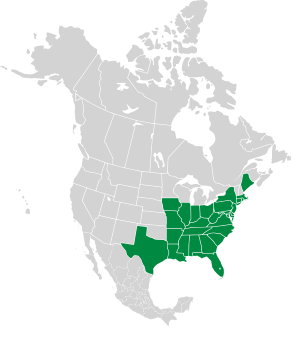
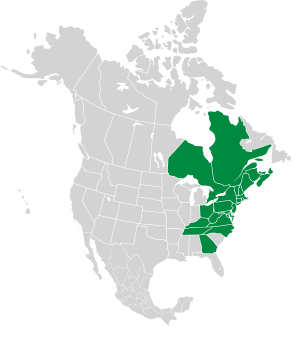
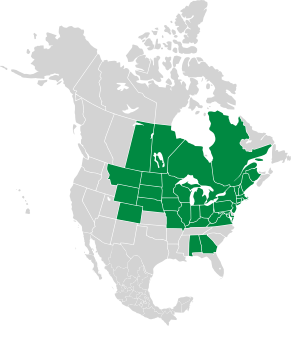
Moist areas with rich loam to clay-loam soil, such as low woods, swamp borders, or near stream banks.
Low woods, fields, swamps, marshes, pond peripheries and bogs.
Wet woods, along streams, and on moist wooded hillsides of northern USA and Canada.
These shrubs are 8–10′ (2.4–3 m) tall and usually somewhat wider than they are tall, and densely branched. Branches are distinctly layered. Bark is gray-brown with orange lenticels.
This shrub, or sometimes small tree, is 15–20′ (4.6–6.1 m) high (rarely 30′ (9.1 m)) and 10–15′ (3–4.6 m) around. It is rounded but fairly sparse.
Leaves
Roughly oval-shaped, rounded at the bottom and pointed at the top, 2–4″ (5–10 cm) long and 1¼–2″ (3.2–5 cm) wide, with serrated leaf edges. In the fall, leaves are dark reddish purple.
Opposite, obovate, thick, dark, 2–6 ⨉ 1½–3″ (5–15 ⨉ 3.8–7.6 cm), with serrated edges and prominent veins. Sometimes the leaves become red or purple in the fall.
Flowers
White, up to 4″ (10 cm) in diameter, in the form of flat flowerheads, with an outer ring of infertile flowers about ½″ (1.3 cm) around and an interior region filled with ⅛″ (3.2 mm) fertile flowers.
Flowerheads 3–6″ (7.6–15 cm) in size have many tiny creamy white blossoms. Each flower is about ¼″ (8.5 mm) around, with 5 petals.
Fruit
Egg-shaped, red, ripening to black.
Oval, ½″ (1.3 cm), pink, darkening to blue-black. They extend beyond the foliage, inviting birds. The fruit is on bright red stems.
Range/ Zones
USDA Zones: 5-8
USDA Zones: 3-8
USDA Zones: 5-7
Habitats
Open forests, forest edges, hedgerows, landscaping.
Viburnum description by Thomas H. Kent, not updated.