Metasequoia glyptostroboides Hu & W.C. Cheng
Dawn redwood
Dawn redwood is native to China—and has been around for 50 million years!. It is the only member of genus Metasequoia, and one of only three living species of redwoods. It was believed extinct until living specimens were discovered in an isolated part of China, in 1944. It remains critically endangered. The rather unhappy-looking specimen in photo 9 was planted in 1981, not far from Redwood National and State Parks. The other photos here are of a robust tree planted about 30 years ago at a friend’s home in MA.
Plants: Trees reach 148′ (45 m). Bark on mature trees is deeply fissured. Develops a broad, rounded crown. This tree is deciduous, while the other two varieties of redwood are evergreens.
Leaves: Leaves remind me of hemlocks. Small branchlets about 3″ (7.5 cm) long consist of many linear needle-like leaves, each about ¼–½ ⨉ 1/32–1/16″ (8–15 ⨉ 1.2–2 mm). Needles go from light green in spring to dark green in summer and red-brown in the fall.
Fruits: Pollen cones are ovoid, 1/16–⅛ ⨉ 1/16–⅛″ (2.5–5.5 ⨉ 2–3.8 mm); with bracts that are triangular-ovate or obovate. Seed cones appear at the ends of leafy shoots ¾–1½″ (2–4 cm) long. They are purplish black when young, maturing to roughly spherical and ½–⅞ ⨉ ⅝–⅞″ (1.4–2.5 ⨉ 1.6–2.3 cm).
Habitats: Moist valley floors, or in deep ravines and other areas with seepage and hence constant moisture, at elevations of 2461–4921′ (750–1500 m).
 |
Some redwoods. |
Online References:

1 · 3/22/2011 · Hoyt Arboretum, Portland, Oregon · By Heather Kent, Evan Griffith 

2 · 8/4/2013 · Barry’s, Acton, Massachusetts · ≈ 6 × 4½″ (14 × 11 cm) 
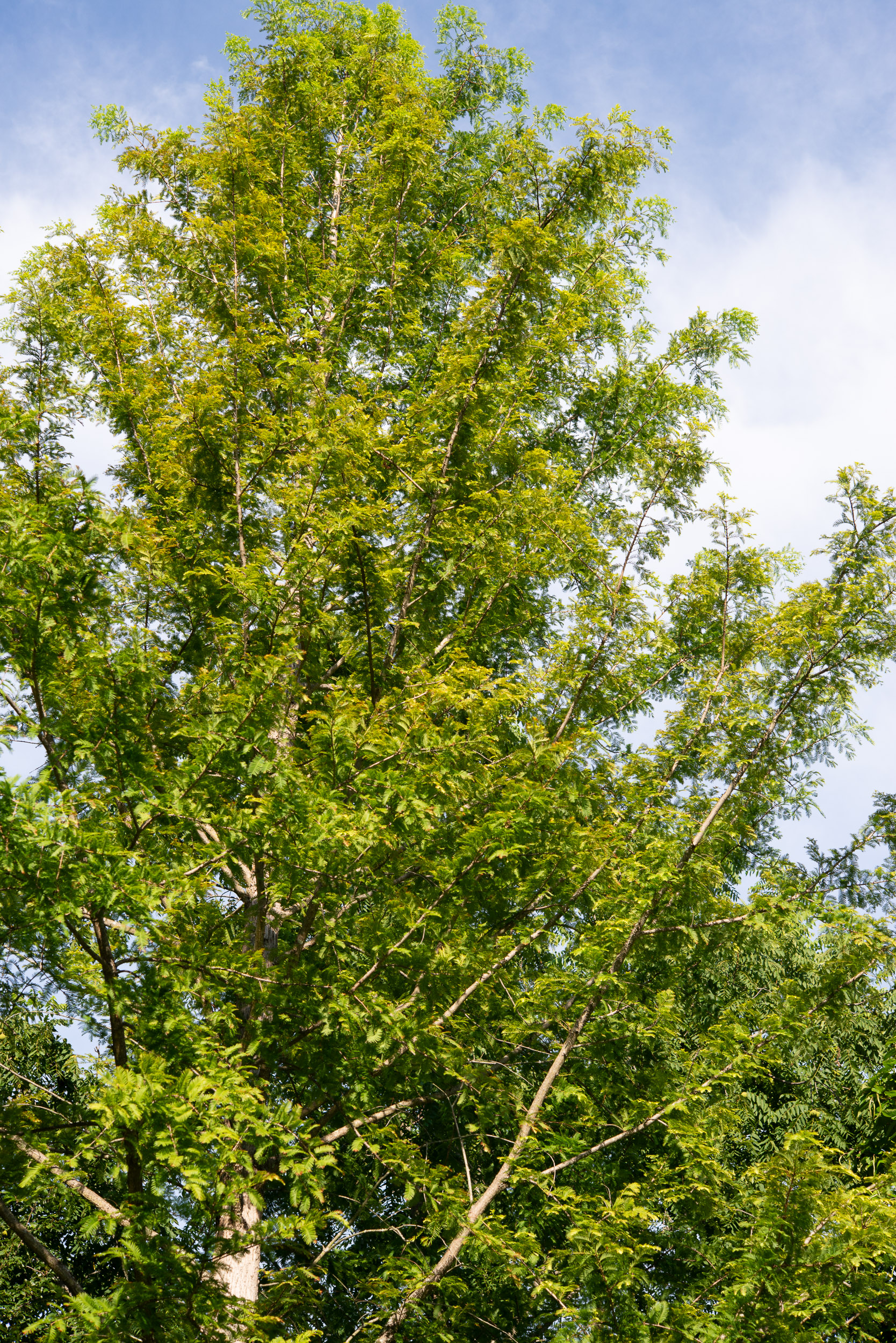
3 · 8/4/2013 · Barry’s, Acton, Massachusetts 
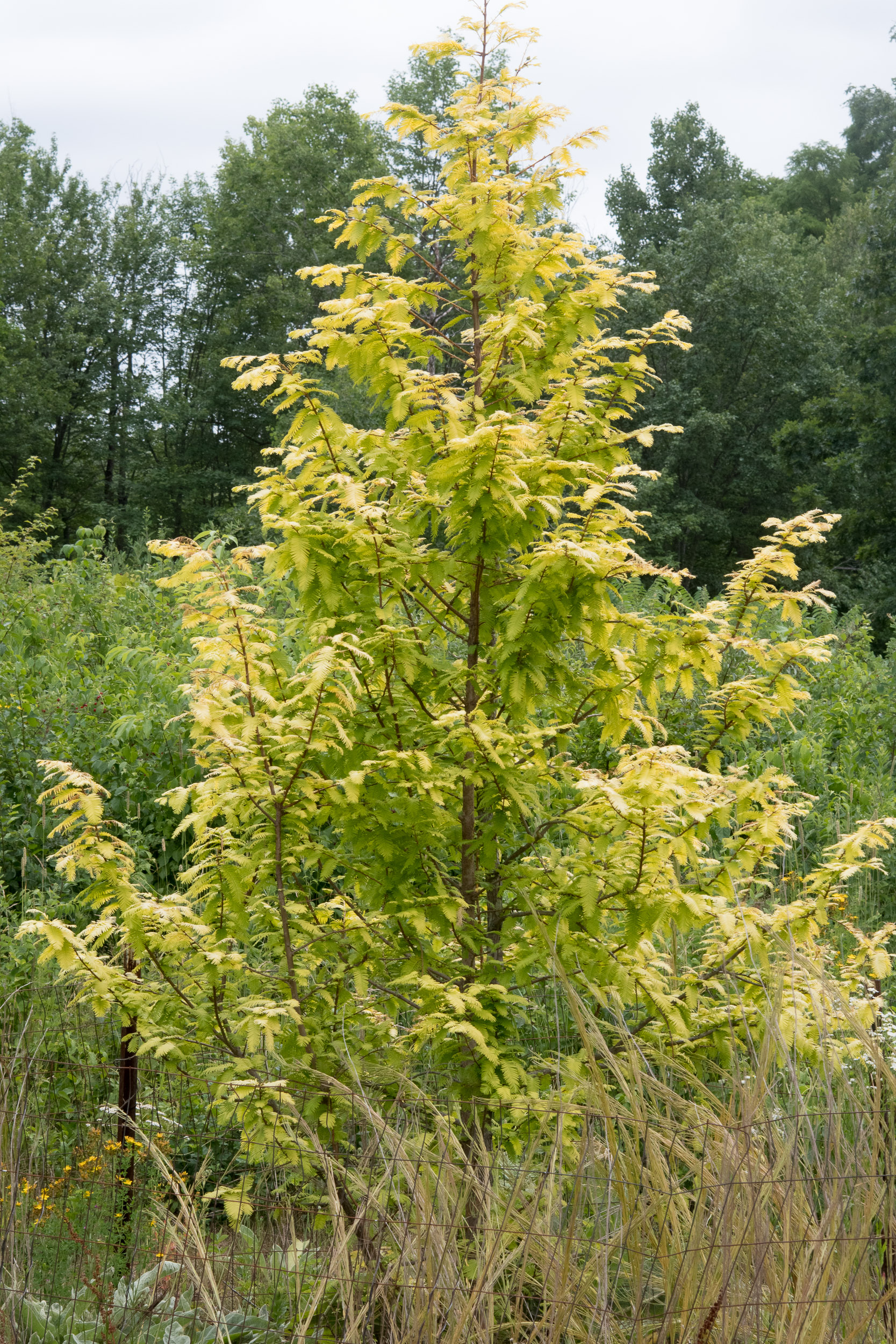
4 · An experimental planting. · 7/8/2016 · Dunstable Rural Land Trust, Dunstable, Massachusetts 
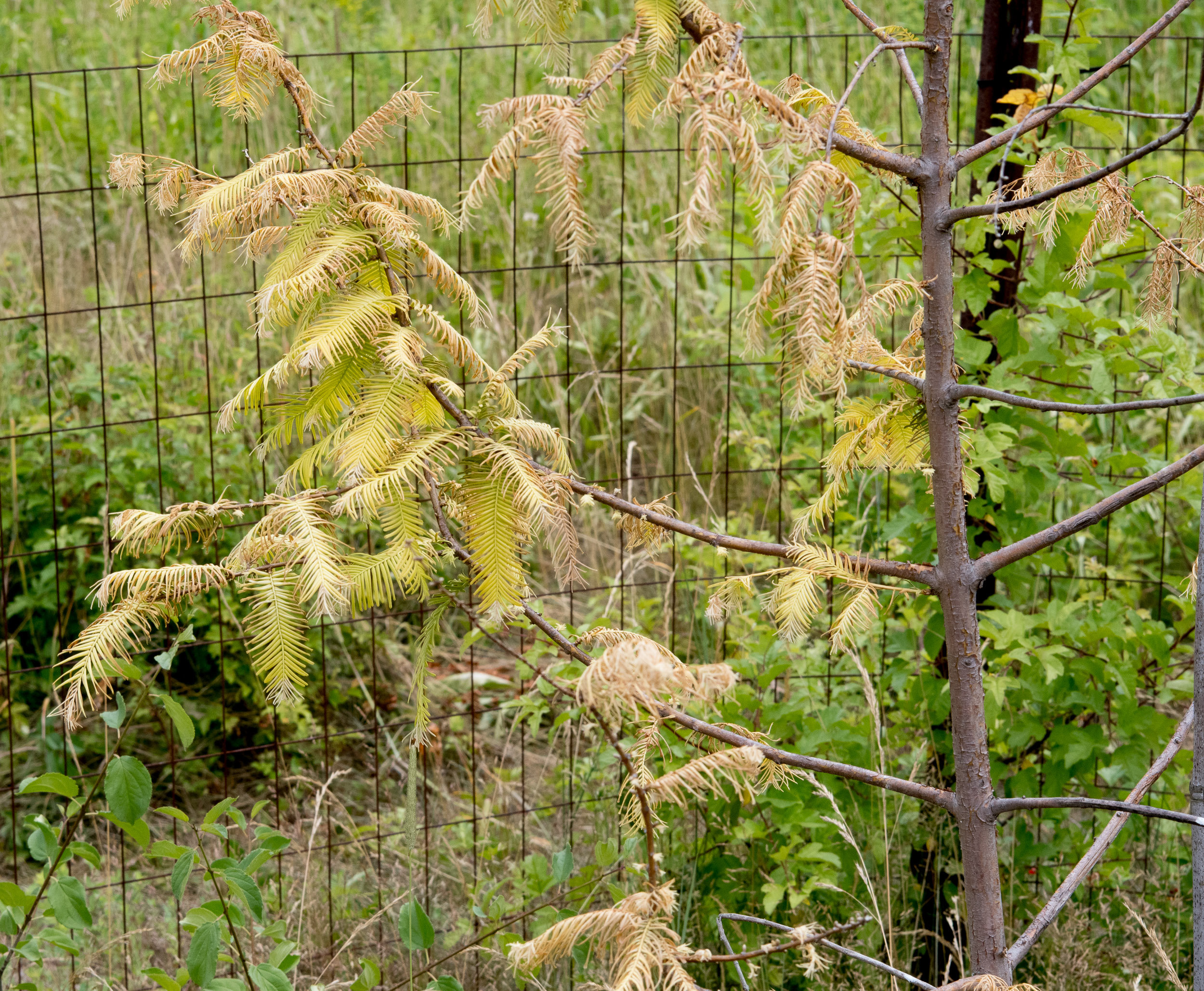
5 · An experimental planting. · 7/8/2016 · Dunstable Rural Land Trust, Dunstable, Massachusetts 
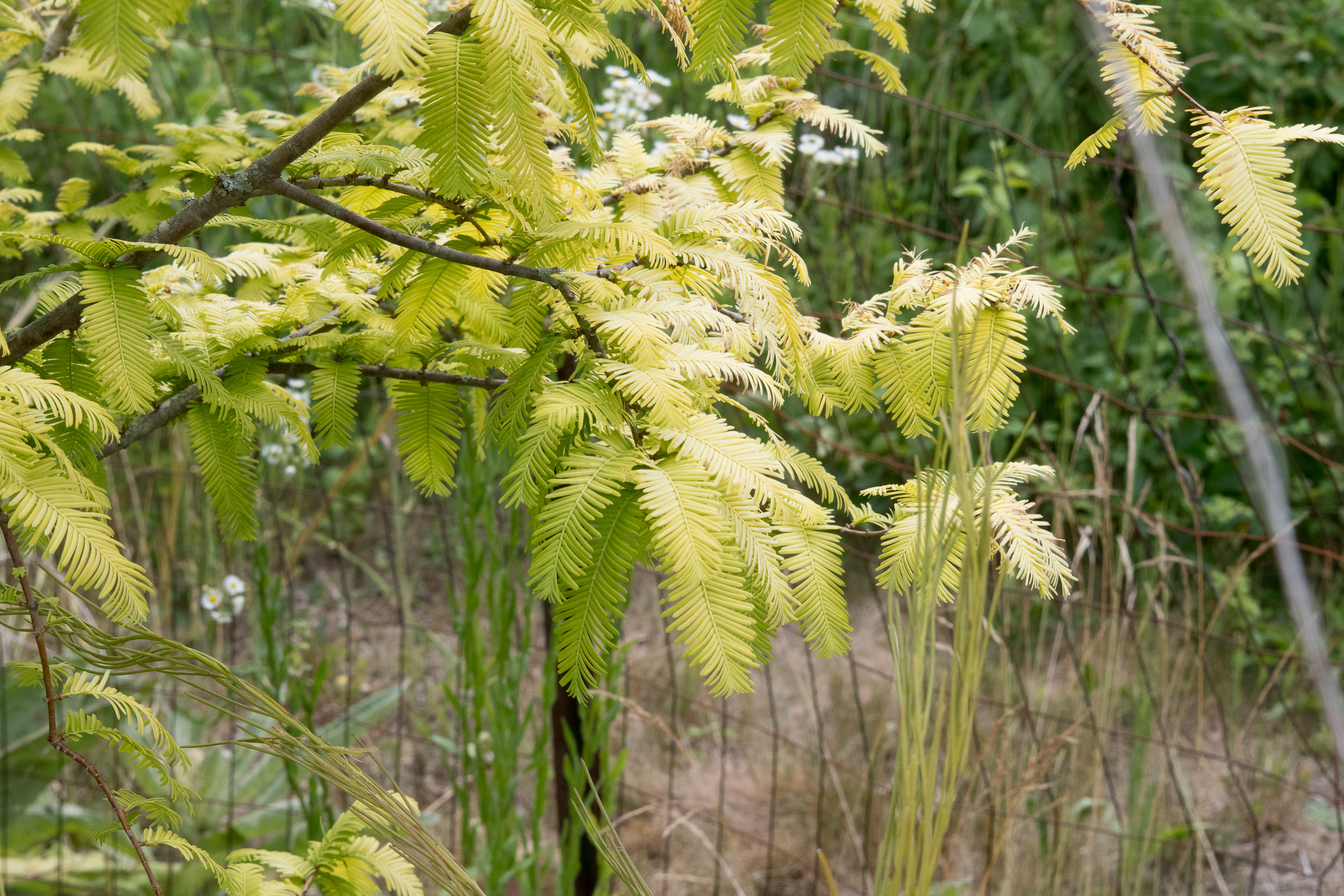
6 · An experimental planting. · 7/8/2016 · Dunstable Rural Land Trust, Dunstable, Massachusetts · ≈ 1½ × 1′ (52 × 34 cm) 

7 · An experimental planting. · 7/8/2016 · Dunstable Rural Land Trust, Dunstable, Massachusetts 
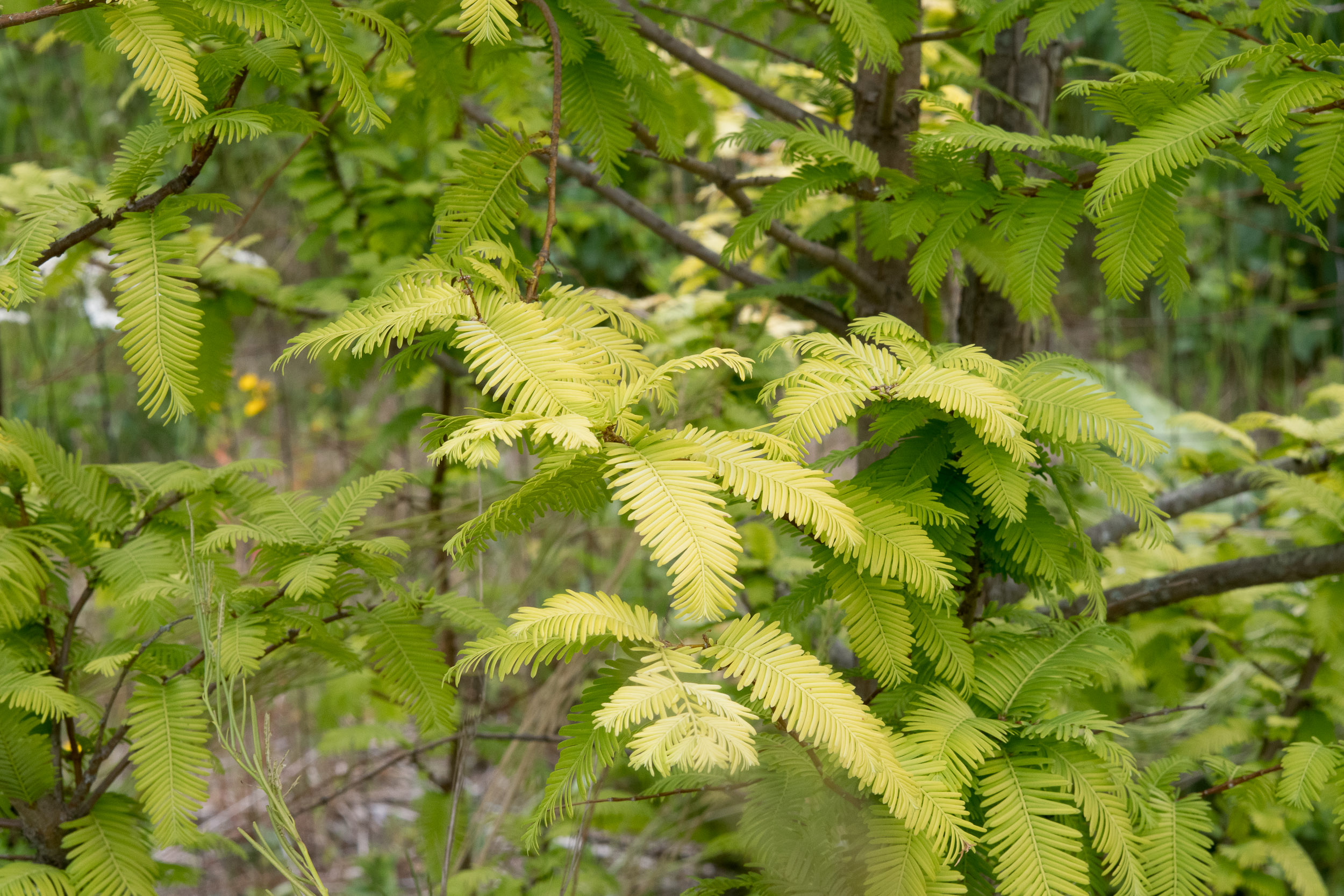
8 · An experimental planting. · 7/8/2016 · Dunstable Rural Land Trust, Dunstable, Massachusetts · ≈ 1½ × 1′ (52 × 34 cm) 
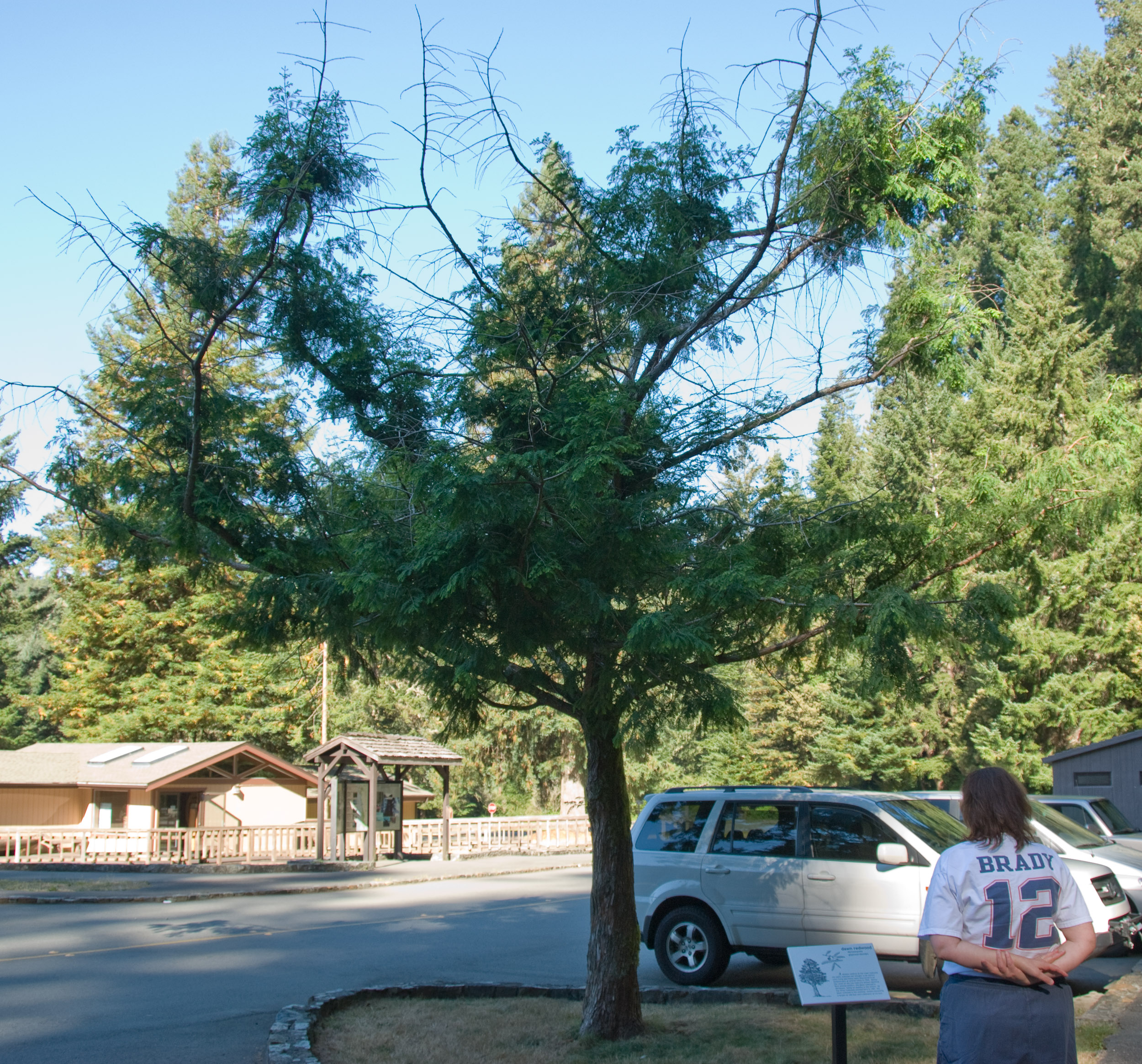
9 · On a sign at the rest stop: A distant relative of the coast redwood, the dawn redwood was thought to be extinct until living specimens were discovered in an isolated part of China in 1944. Rare among conifers, the dawn redwood is deciduous. Of three redwoods planted in 1981, the dawn redwood is the smallest, seldom exceeding a height of 140 feet and a diameter of six feet. · 8/28/2007 · Rte 199 State Park Info Place, Crescent City, California 
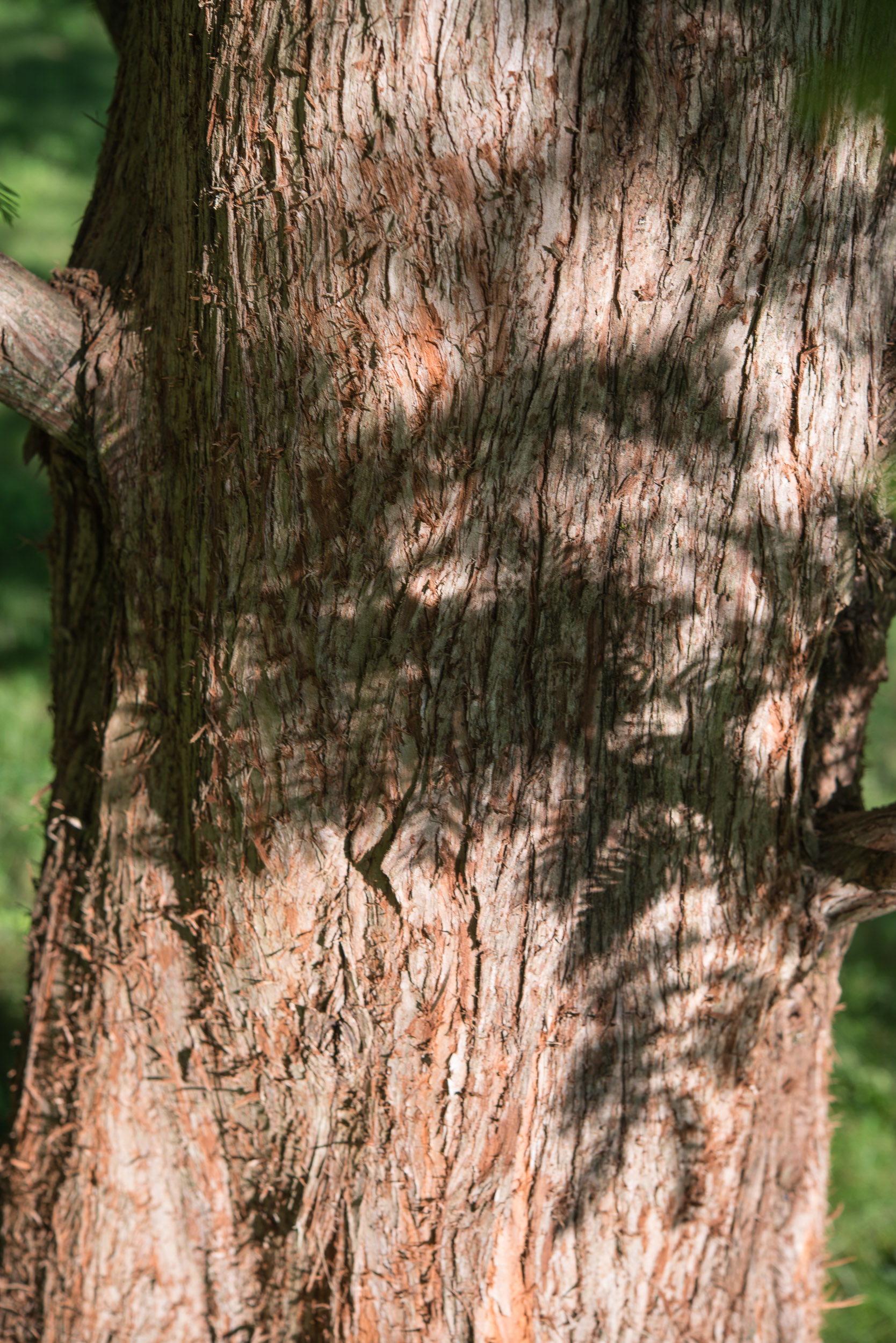
10 · 8/4/2013 · Barry’s, Acton, Massachusetts · ≈ 1 × 2′ (39 × 59 cm) 
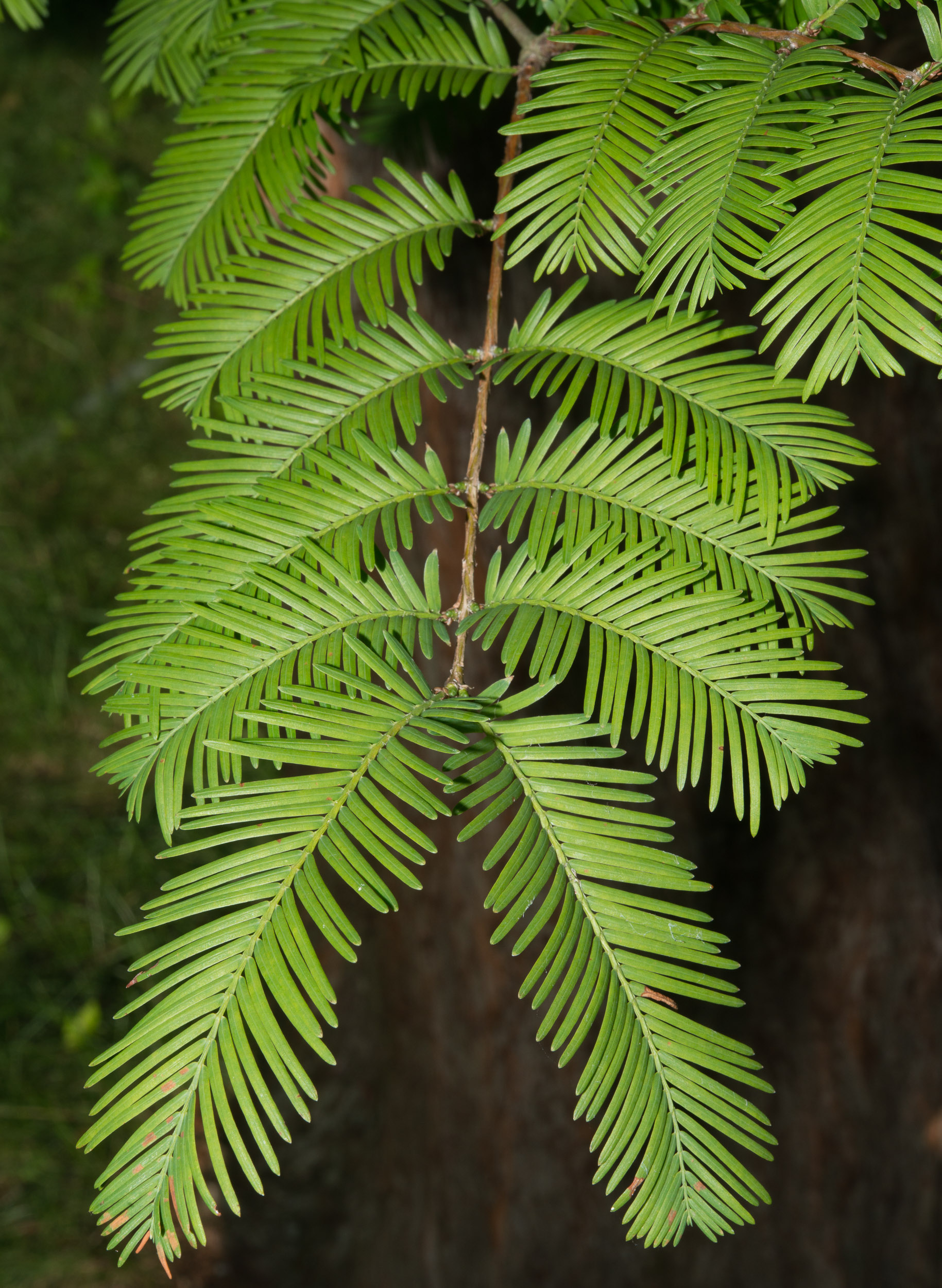
11 · 8/4/2013 · Barry’s, Acton, Massachusetts · ≈ 7 × 9″ (16 × 22 cm) 
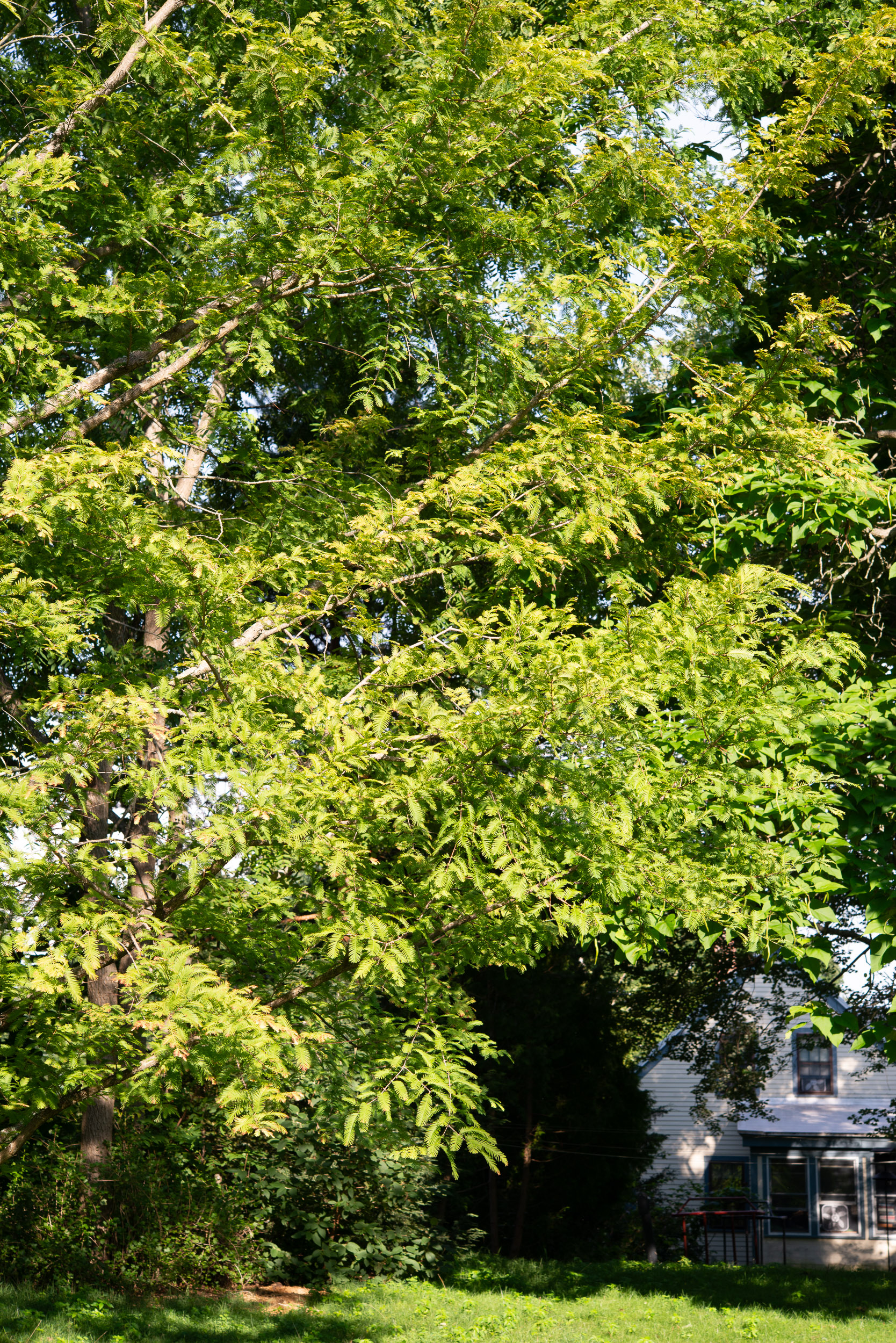
12 · 8/4/2013 · Barry’s, Acton, Massachusetts 
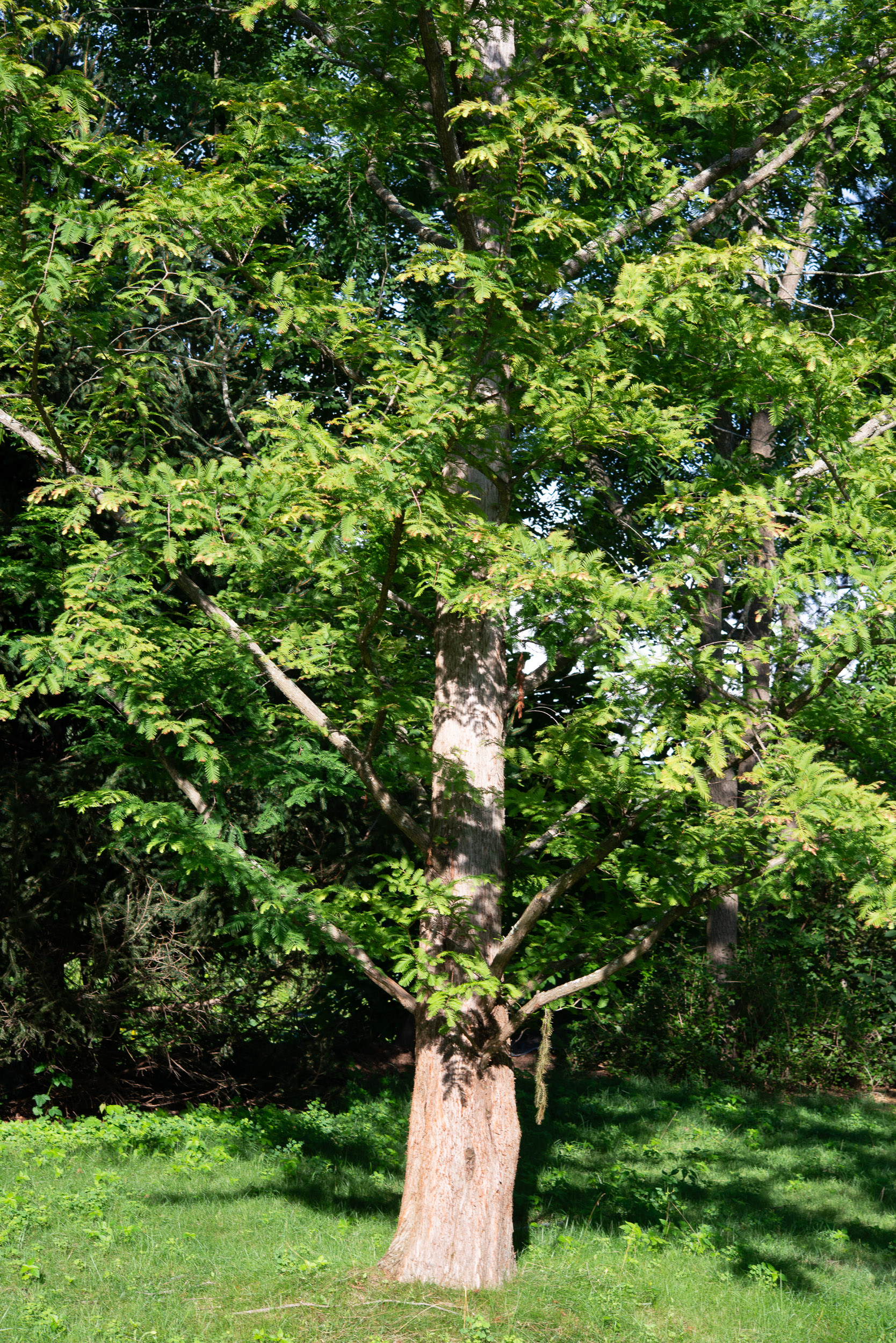
13 · 8/4/2013 · Barry’s, Acton, Massachusetts 
| Kingdom | Plantae | Plants, but not fungi, lichens, or algae (from Stearn's Botanical Latin) |
| Subkingdom | Tracheobionta | Vascular plants—plants with a “circulatory system” for delivering water and nutrients |
| Division | Coniferophyta | Conifers—cone-bearing trees (and a few shrubs) |
| Class | Pinopsida | Gymnosperms such as cedars, Douglas-firs, cypresses, firs, junipers, kauri, larches, pines, hemlocks, redwoods, spruces, and yews |
| Order | Pinales | Cone-bearing plants: cedar, cypress, fir, juniper, larch, pine, redwood, spruce, yew, and others |
| Family | Cupressaceae | Cypres family, including junipers and redwoods |
| Genus | Metasequoia | From the Greek metra, “changed in nature,” and Sequoia, to which it is related and to which fossil specimens were first referred |
| Species | glyptostroboides | Resembling the genus Glyptostrobus |
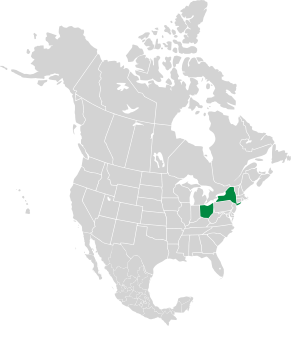
Metasequoia glyptostroboides description by Thomas H. Kent, not updated.

© FloraFinder.org. All rights reserved.