Scaevola sericea Vahl var. taccada (Gaertn.) Thieret & B. Lipscomb
Naupaka kahakai, beach cabbage, sea lettuce, beach naupaka, naupaka
Naupaka is native to the Indo-Pacific, including Hawaii. It is a vigorous, fast-spreading shrub that is invasive in some habitats.
Plants: Densely branched shrub, with yellowish-green stems, typically 3′ (91 cm) high, but up to 10′ tall ⨉ 15′ wide (3 ⨉ 4.6 m).
Leaves: Waxy, thick, succulent, obovate, 8 ⨉ 2″ (20 ⨉ 5 cm), with smooth edges. They may be on stalks, or sessile (stalkless).
Flowers: Flowerheads are cymes with 1-7 stalkless, with white or greenish corollas ⅜–7/16″ long ⨉ ⅛″ around (1–1.2 cm ⨉ 3 mm). The most recognizable feature of this shrub is its half-flowers, looking like splayed fingers, a source of legends like the one below.
Fruits: Blue or black, ⅜–½″ (1–1.5 cm) in diameter.
Habitats: Mangrove swamps and rocky or sandy coastal locations in the tropical areas of the Indo-Pacific.
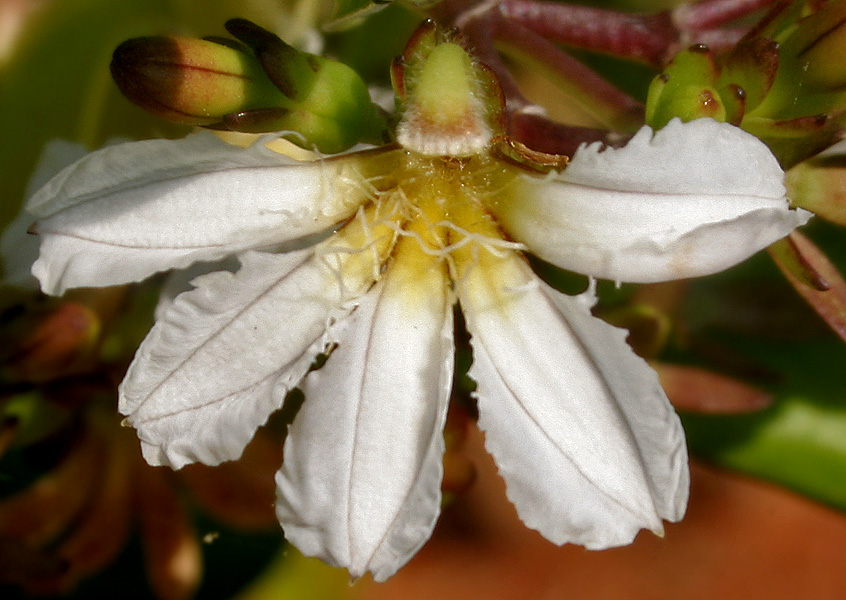
Photo by J.M.Garg. 
A beautiful woman, a stranger to the village believed to be from the mountains, fell in love with a village youth. When he rejected her and went back to his sweetheart, the beautiful woman followed him and tore him from his sweetheart’s embrace. Anger blazed about the beautiful woman, and the villagers knew she was Pele, Goddess of Volcanoes. Pele pursued the youth into the mountains, hurling lava after him. There the gods took pity on the youth and transformed him into a half flower, the ‘mountain naupaka.’ Pele shrieked with rage and fled on a river of lava to the ocean. She overtook the maid, whom the gods turned into a beach naupaka. The lovers are forever separated, for the half flowers of the youth still bloom alone in the mountains, and the half flowers of the maiden blossom alone on the beach. |
Online References:
Scaevola taccada (Gaertn.) Roxb.

7/21/2007 · Guam · By Jacquelyn Boyt 
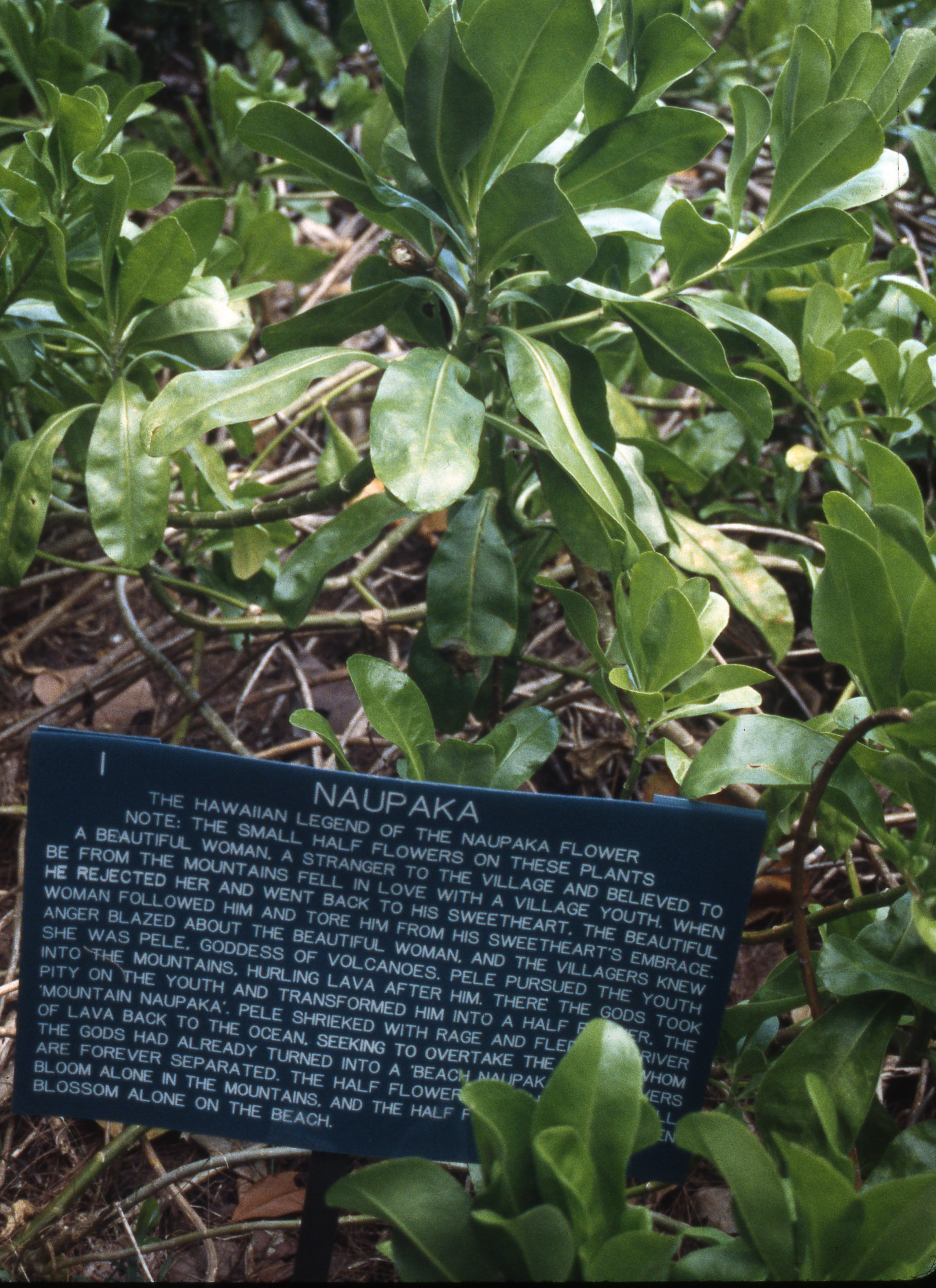
3/15/2001 · Hawaii Tropical Botanical Gardens, Papaikou, Hawaii  ID is uncertain

6/8/2024 · Anguilla · By Heather A. Kent 

6/8/2024 · Anguilla · By Heather A. Kent 
| Kingdom | Plantae | Plants, but not fungi, lichens, or algae (from Stearn's Botanical Latin) |
| Subkingdom | Tracheobionta | Vascular plants—plants with a “circulatory system” for delivering water and nutrients |
| Division | Magnoliophyta | Flowering plants, also known as angiosperms |
| Class | Magnoliopsida | Dicotyledons—plants with two initial seed leaves |
| Subclass | Asteridae | A large class that encompasses asters |
| Order | Asterales | Flowering plants with a central disk flower and surrounding petals, like daisies |
| Family | Goodeniaceae | About 404 species of predominantly Australian flowering plants |
| Genus | Scaevola | From Greek scaeva, “left-handed,” for the hand-like appearance of the flowers |
| Species | sericea | Silky |
| var. | taccada | From Sinhala tākata, “power, strength, ability, capability.” (Speculative.) |
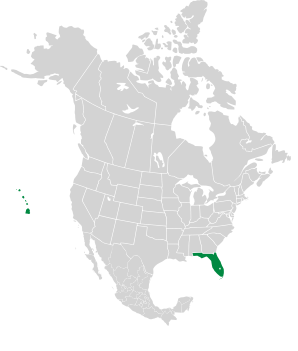
Scaevola sericea var. taccada description by Thomas H. Kent, not updated.

© FloraFinder.org. All rights reserved.