Laurus sassafras L.
Sassafras albidum (Nutt.) Nees var. molle (Raf.) Fernald
Sassafras officinale Nees & Eberm.
Sassafras sassafras (L.) Karst., nom. inval.
Sassafras variifolium (Salisb.) Kuntze
Sassafras albidum (Nutt.) Nees
Sassafras, white sassafras, ague tree, cinnamon wood, smelling stick, saloop, gumbo file, mitten tree
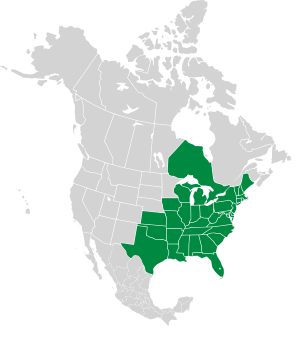
Sassafras is native to eastern North America. The bark from its roots is processed for sassafras oil, used in perfumes; its leaves produce a spice called gumbo filé.
Plants: Up to 60′ (18 m) tall and 40′ (12 m) around, with an irregular trunk and brown bark that is light brown on the inside. The bark develops coarse ridges and furrows over time.
Leaves: Alternate, most often split into three lobes, sometimes without lobes, and 3–7″ (7.6–17 cm) long. The three-lobed leaves look a little like three-fingered mittens. They are very colorful in the fall. The leaves have a fragrant smell when they are crushed, resembling that of eucalyptus or, by some accounts, Juicy Fruit gum.
Flowers: Bright yellow-green color, appearing in April to May.
Fruits: Dark blue, shiny, oval in shape, ¼″ (8.5 mm) long, attached to a red petiole (stem) with a cup-shaped tip.
Habitats: Woodlands, abandoned fields, groves, and along fences and roadsides.
Edibility: Bark from young sassafras roots is mostly used now to perfume soaps, but in the past it has been used to flavor tea and root beer. However, the active ingredient, safarole, is mildly toxic and weakly carcinogenic: it has been banned by the U.S. Food and Drug Administration. The ground, dried leaves are used to produce gumbo filé, used to flavor and thicken Cajun and Creole gumbos. Filé has, according to spice purveyor McCormick, “a flavor similar to thyme and savory” and “a characteristic citrus flavor.”
Online References:
References:
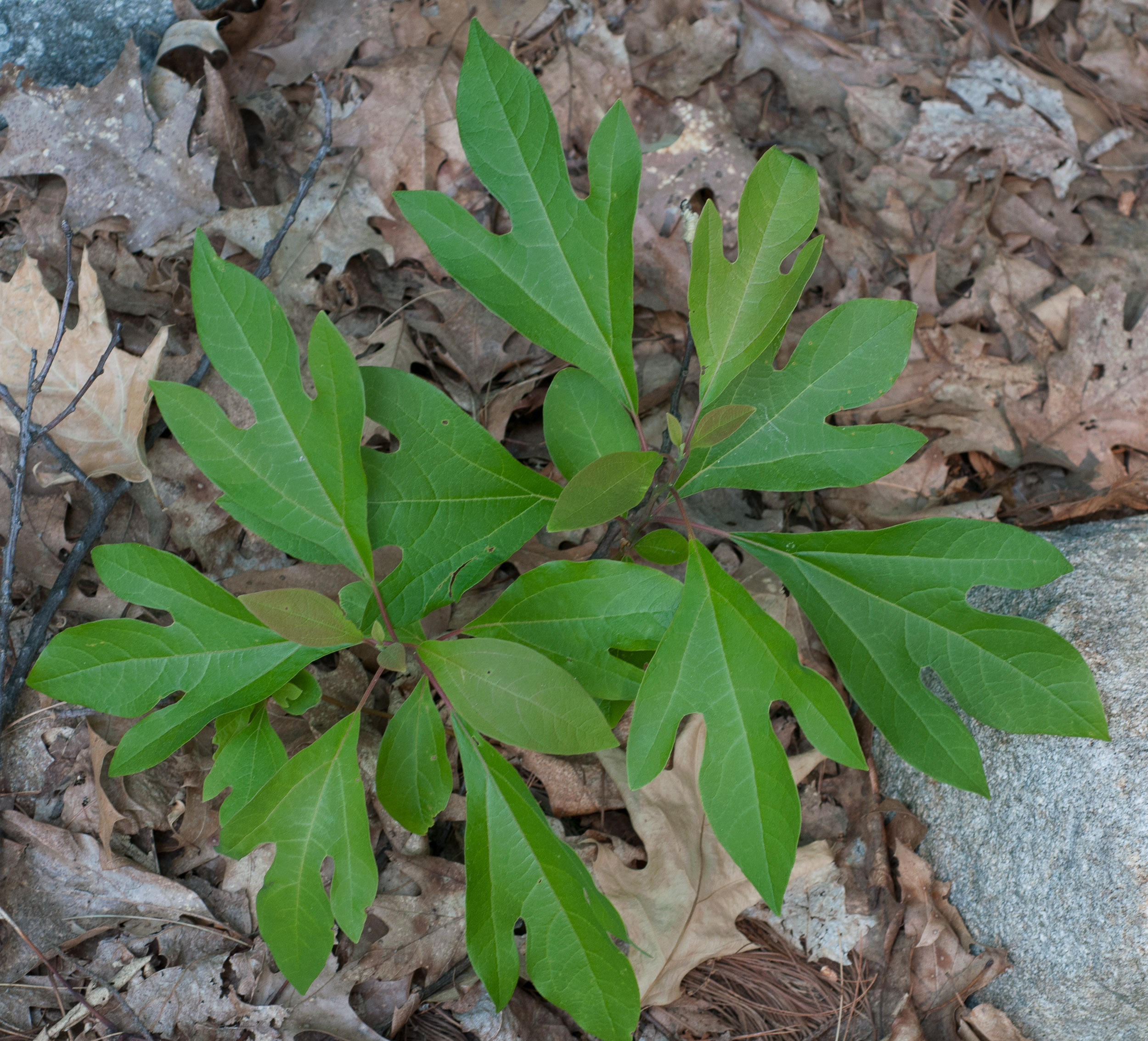
5/31/2010 · Mt. Lebanon St., Pepperell, Massachusetts · ≈ 1½ × 1′ (44 × 40 cm) 
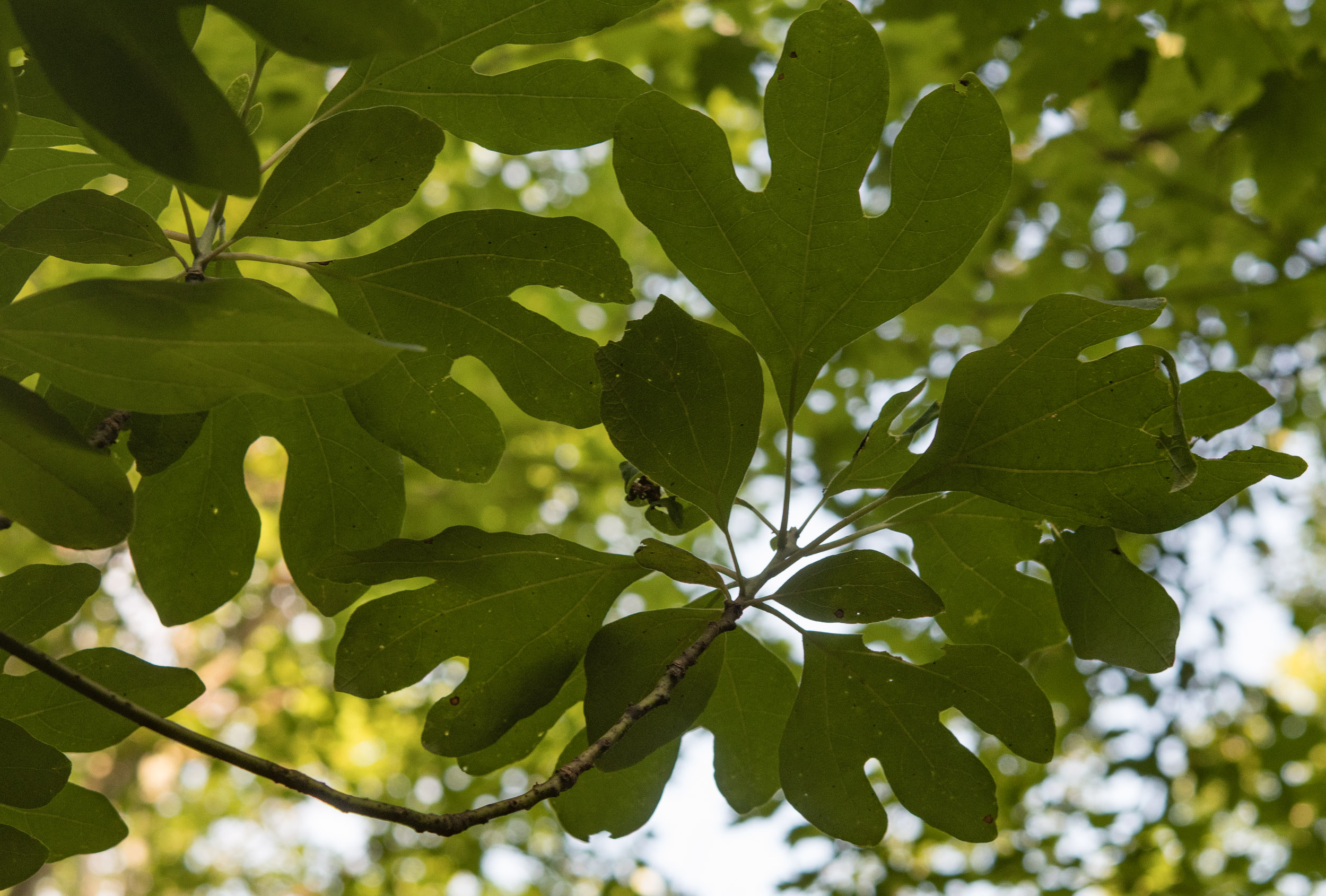
7/27/2016 · Michaux State Forest, Caledonia State Park, Fayetteville, Pennsylvania · ≈ 1½ × 1′ (45 × 31 cm) 

6/29/2023 · Harpers Ferry National Historical Park, Harpers Ferry, West Virginia 

10/15/2006 · Bedford, New Hampshire 
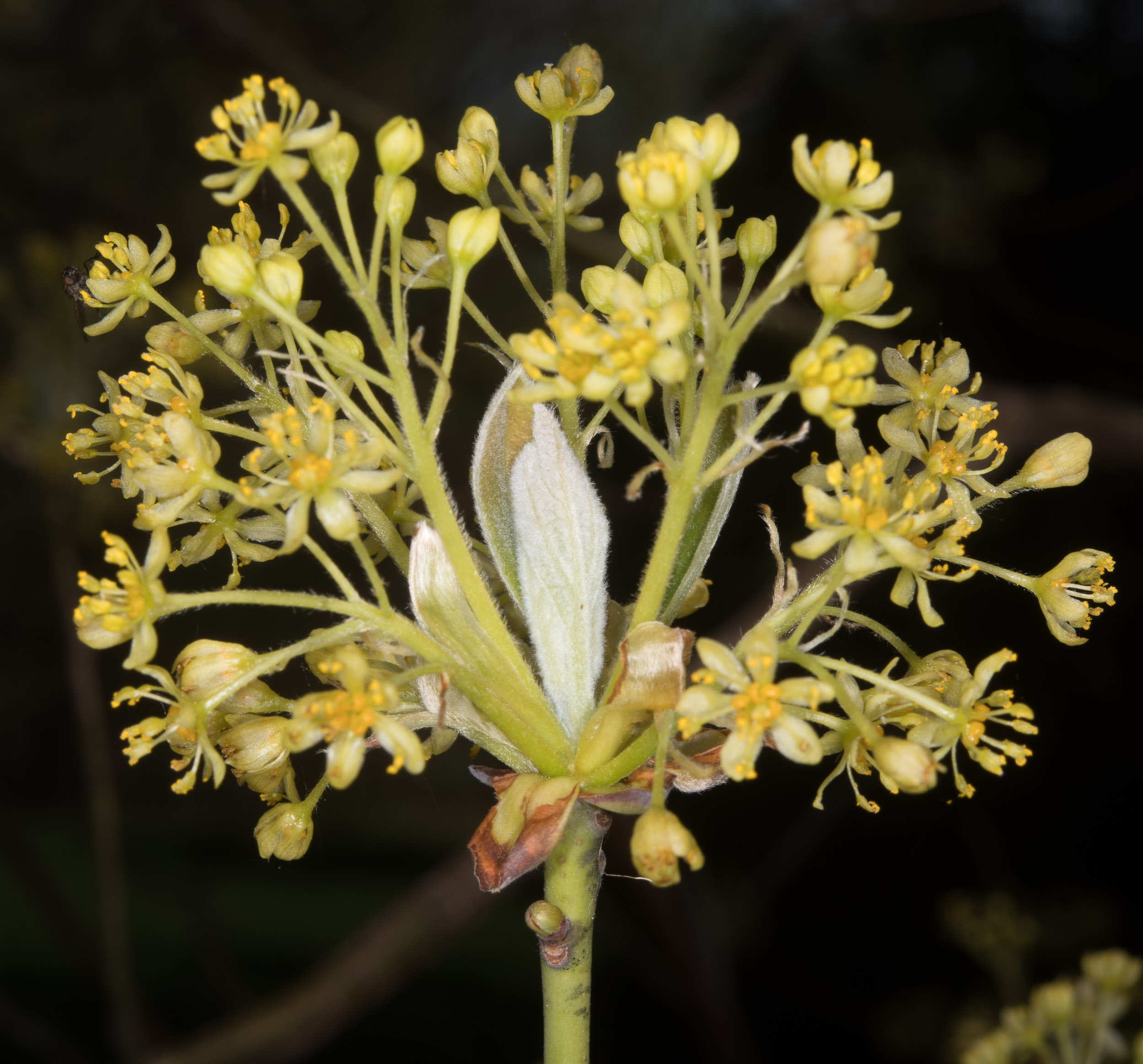
5/4/2017 · Tom and Susan’s, Pepperell, Massachusetts · ≈ 4 × 4″ (11 × 10 cm) 
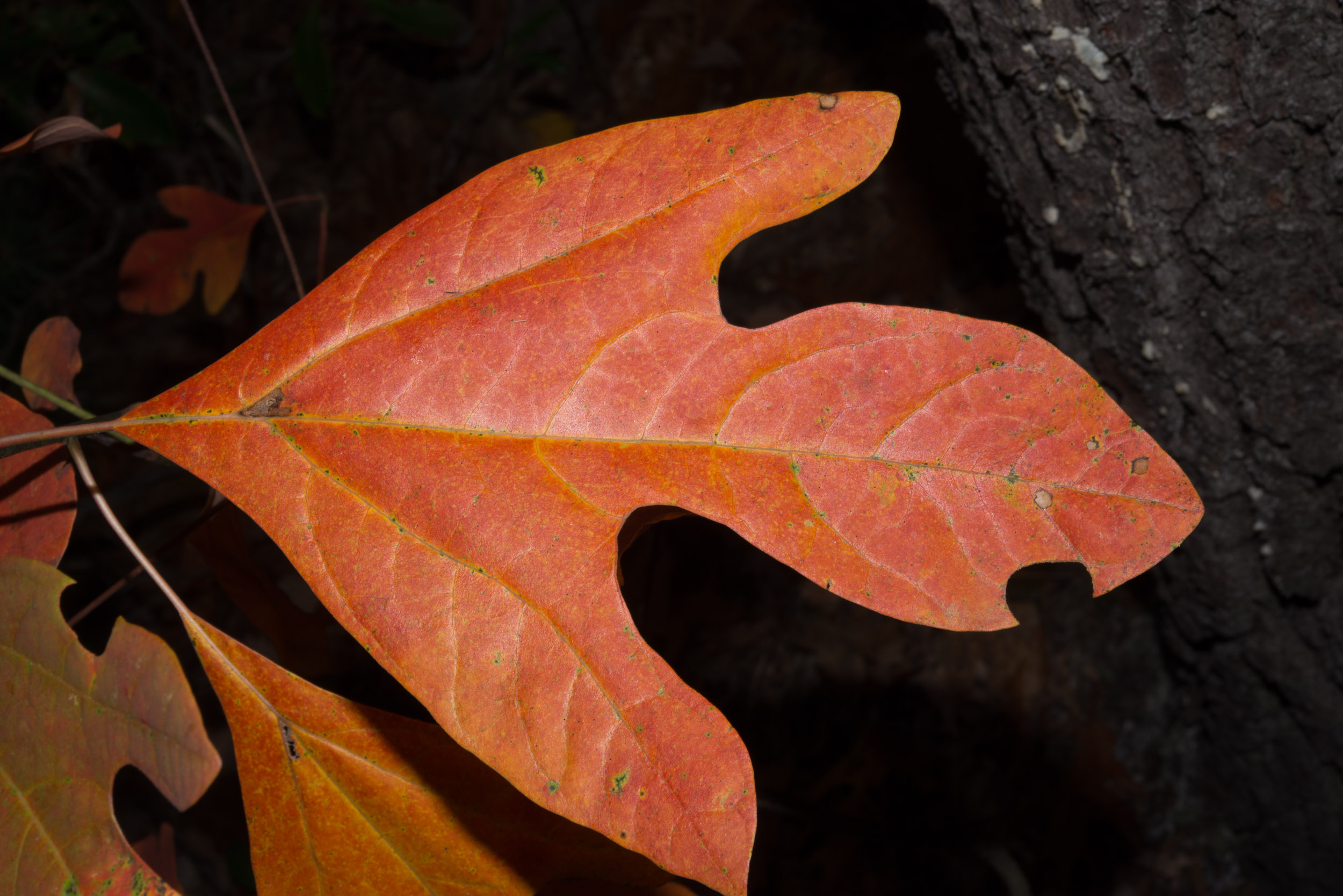
10/20/2013 · Barrett Park, Leominster, Massachusetts · ≈ 11 × 7″ (28 × 18 cm) 
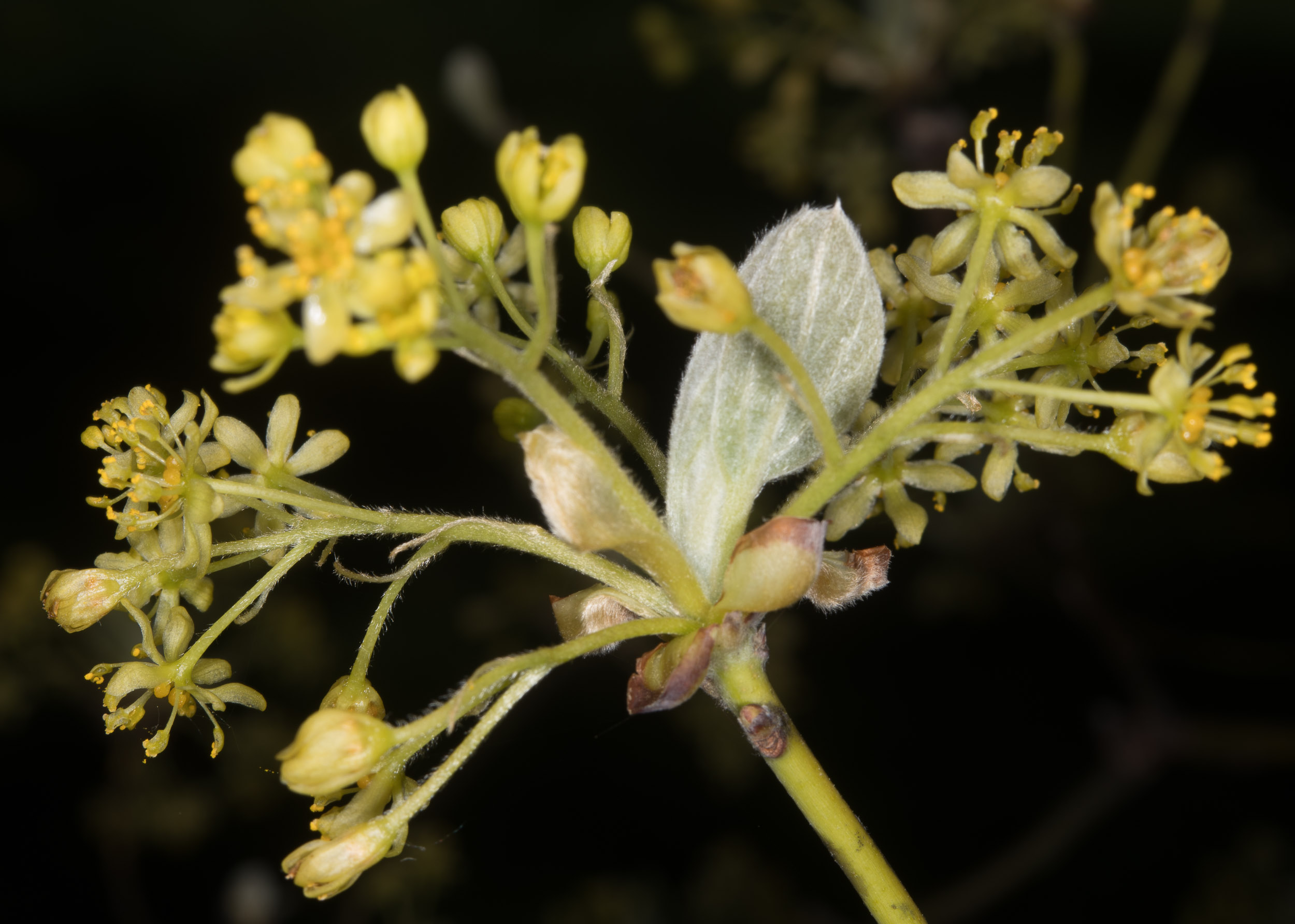
5/4/2017 · Tom and Susan’s, Pepperell, Massachusetts · ≈ 4 × 3″ (11 × 7.8 cm) 
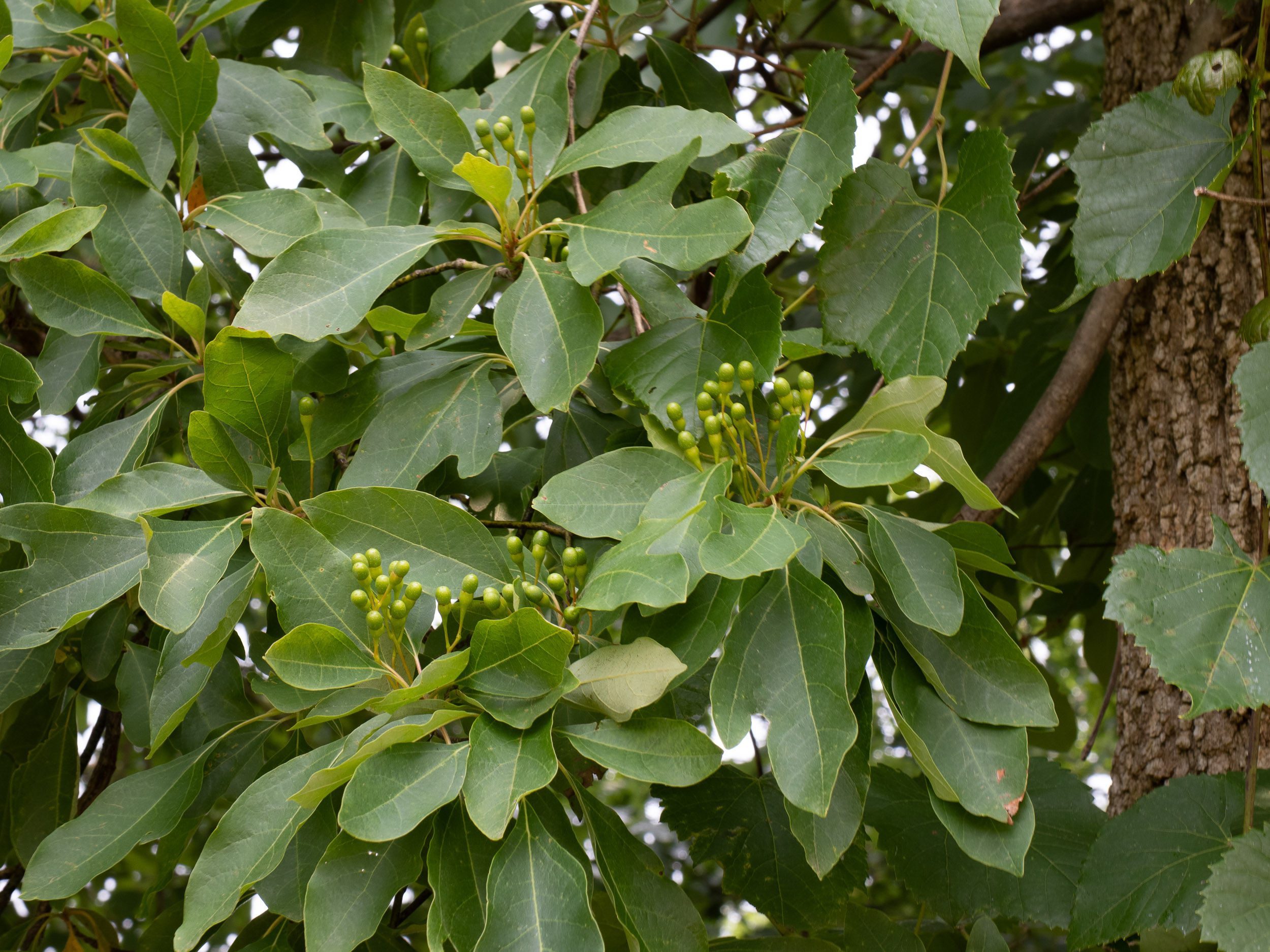
6/29/2023 · Harpers Ferry National Historical Park, Harpers Ferry, West Virginia 
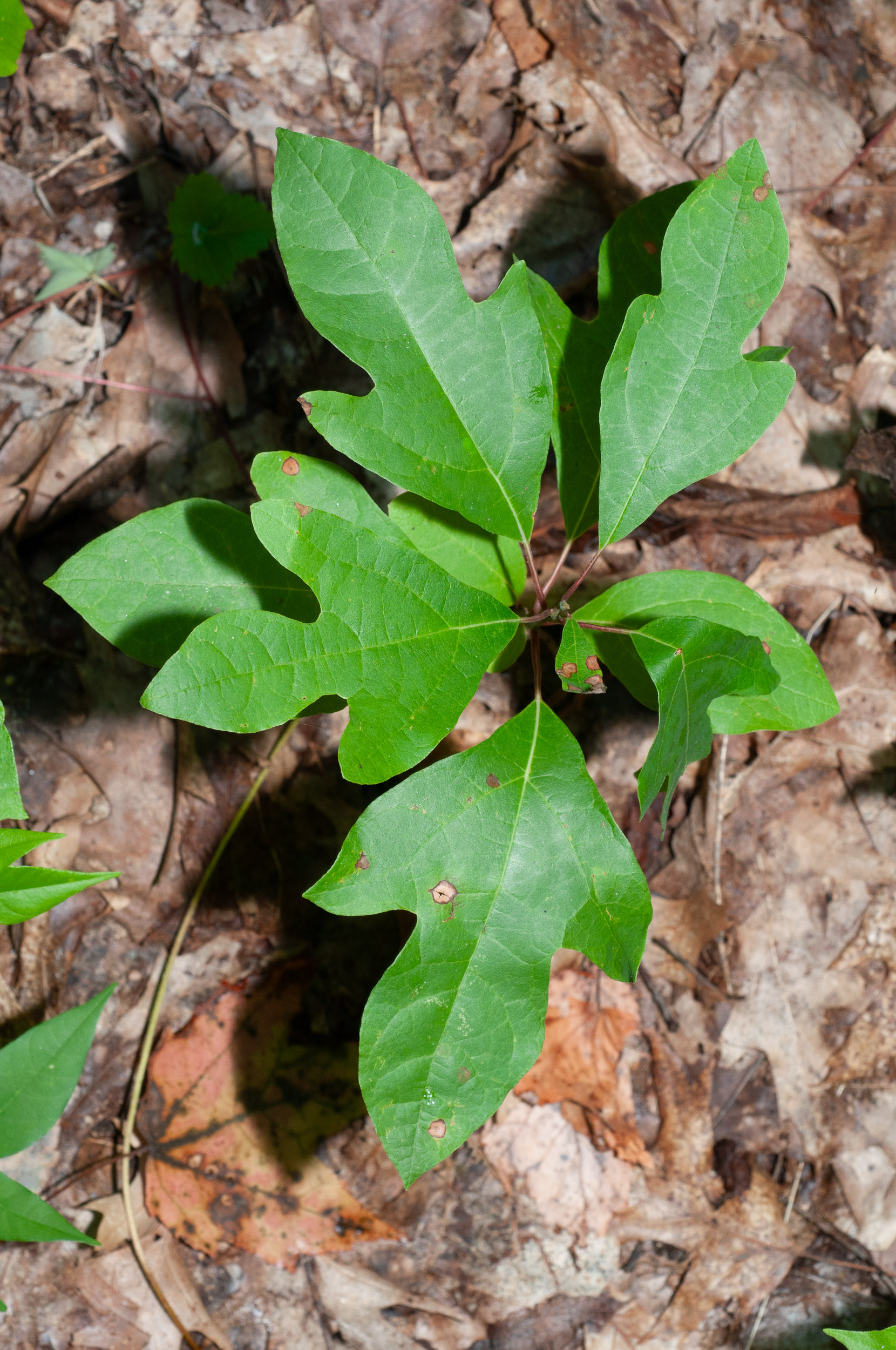
8/14/2009 · Nashua River Rail Trail, East Pepperell, Massachusetts · ≈ 10 × 15″ (26 × 39 cm)  ID is uncertain
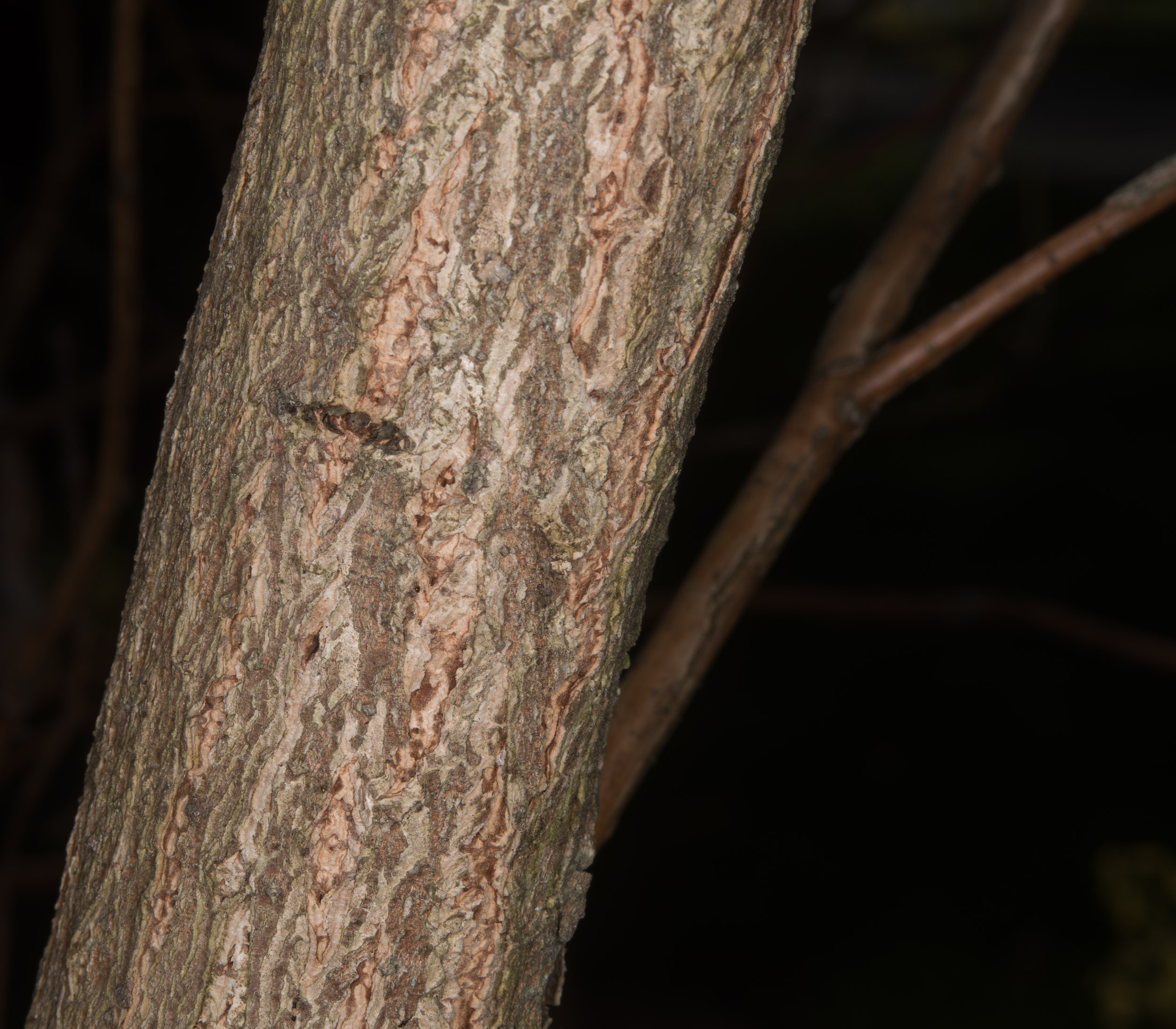
5/4/2017 · Tom and Susan’s, Pepperell, Massachusetts · ≈ 4½ × 4″ (12 × 10 cm) 

7/27/2016 · Michaux State Forest, Caledonia State Park, Fayetteville, Pennsylvania · ≈ 15 × 10″ (39 × 26 cm) 
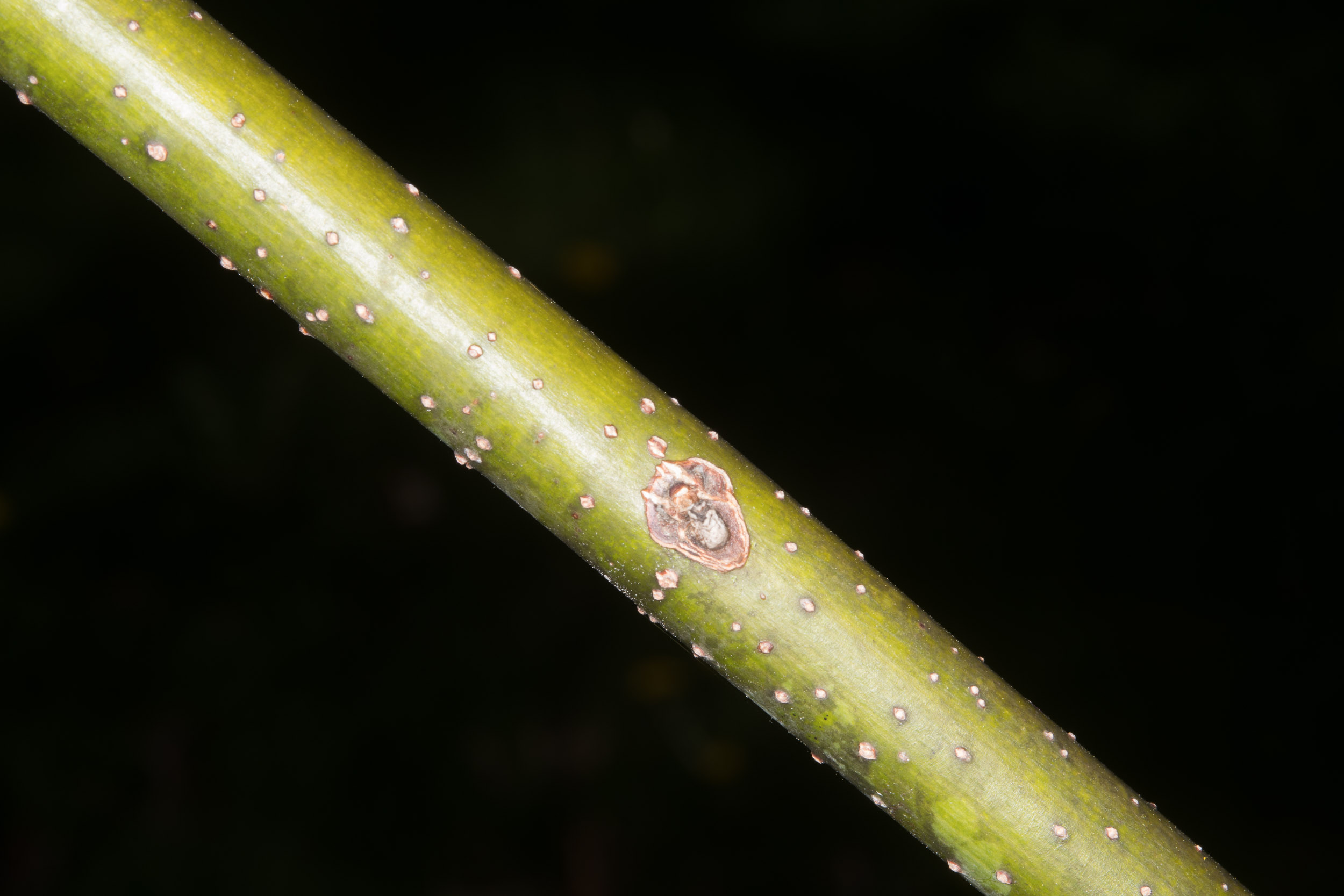
5/4/2017 · Tom and Susan’s, Pepperell, Massachusetts · ≈ 5 × 3½″ (13 × 9.2 cm) 

5/4/2017 · Tom and Susan’s, Pepperell, Massachusetts · ≈ 5 × 4″ (12 × 11 cm) 
| Kingdom | Plantae | Plants, but not fungi, lichens, or algae (from Stearn's Botanical Latin) |
| Subkingdom | Tracheobionta | Vascular plants—plants with a “circulatory system” for delivering water and nutrients |
| Division | Magnoliophyta | Flowering plants, also known as angiosperms |
| Class | Magnoliopsida | Dicotyledons—plants with two initial seed leaves |
| Subclass | Magnoliidae | Includes magnolias, nutmeg, bay laurel, cinnamon, avocado, black pepper, and many others |
| Order | Laurales | Trees and shrubs, including bay laurels, cinnamon, avocado, sassafras and others |
| Family | Lauraceae | Laurel family, mostly tropical evergreens |
| Genus | Sassafras | Probably this is a corruption of the Spanish word for saxifrage |
| Species | albidum | “White” |
Sassafras albidum description by Thomas H. Kent, not updated.

© FloraFinder.org. All rights reserved.