Sanicula canadensis L.
Canadian black snakeroot, Canadian blacksnakeroot
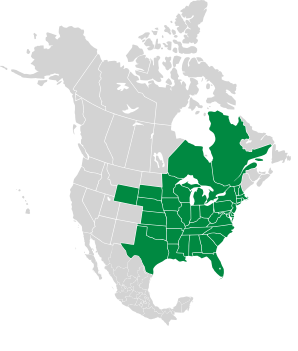
Canadian black snakeroot is a native North American plant.
Plants: 1–2′ (30–60 cm) high. Stems are light green, sometimes furrowed.
Leaves: Alternate, usually trifoliate. Lower leaves often appear more palmlike, with five leaflets. Leaflets and ovate, obovate, or broadly elliptic. Leaf margins are doubly serrated.
Flowers: In small clusters, greenish-white, not especially interesting.
Fruits: Seed pods, about ½″ (1.3 cm) in diameter, have hooked, Velcro-like bristles.
Habitats: Rich mesic woods, open rocky woods, thickets.
Don’t confuse black snakeroot with the unrelated plant, Canadian black snakeroot. Both of these plants are found in eastern Canada and the eastern United States.
 |
Similar species. |
Online References:

7/27/2009 · Nashua River Rail Trail, Groton, Massachusetts · ≈ 4 × 2½″ (10 × 7 cm)  ID is uncertain
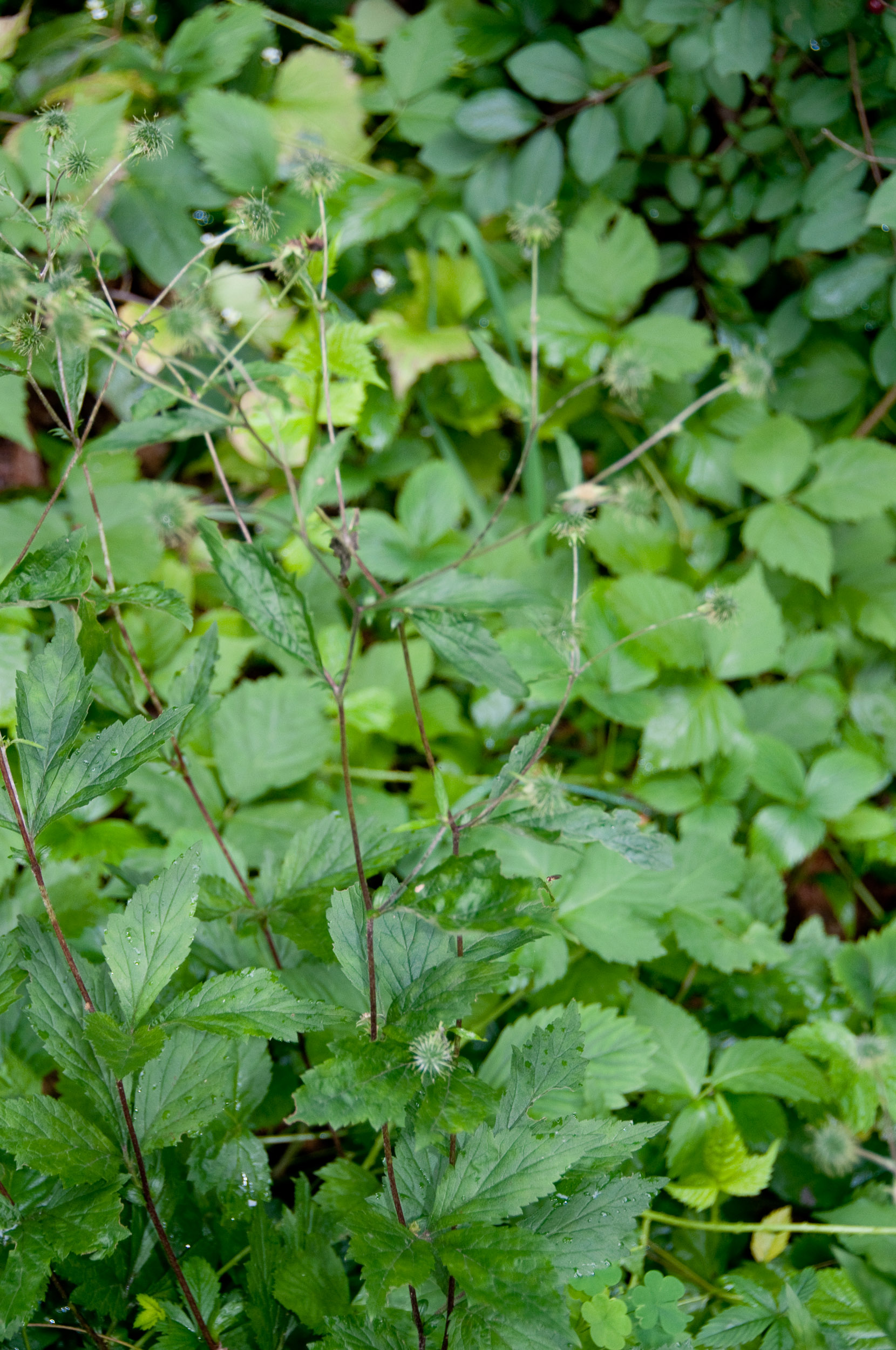
7/27/2009 · Nashua River Rail Trail, Groton, Massachusetts · ≈ 11 × 17″ (28 × 42 cm) ID is uncertain 
| Kingdom | Plantae | Plants, but not fungi, lichens, or algae (from Stearn's Botanical Latin) |
| Subkingdom | Tracheobionta | Vascular plants—plants with a “circulatory system” for delivering water and nutrients |
| Division | Magnoliophyta | Flowering plants, also known as angiosperms |
| Class | Magnoliopsida | Dicotyledons—plants with two initial seed leaves |
| Subclass | Asteridae | A large class that encompasses asters |
| Order | Apiales | Includes carrots, celery, parsley, and ivy |
| Family | Apiaceae | Carrot or parsley family, also includes angelica, anise, caraway, celery, chervil, cicely, coriander/cilantro, cumin, dill, fennel, hemlock, lovage, Queen Anne’s Lace, parsnip |
| Genus | Sanicula | From Latin sanare, “to heal” |
| Species | canadensis | “From Canada” |
Sanicula canadensis description by Thomas H. Kent, not updated.

© FloraFinder.org. All rights reserved.