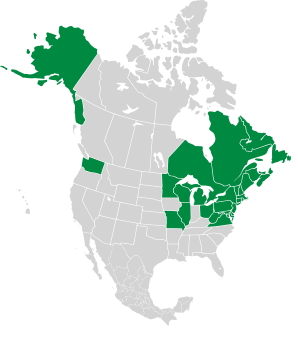
Rosa rugosa Thunb. var. albiflora Koidz.
Rosa rugosa Thunb.
Rugosa rose, Japanese rose, Ramanas rose
The rugosa rose is native to eastern Asia, northeastern China, Japan, Korea, and southeastern Siberia. Introduced as an ornamental plant in the 1800s, it is well established now, common along the seacoasts because it is tolerant of salt spray.
Plants: Rugosa rose is easy to identify. It is a shrub 3–6′ (1–1.8 m) high, with stems that have, to use the precise scientific term, zillions of thorns. Big scary ones, tiny insignificant ones. Far more than on any rose I have ever seen. The thorns are straight or nearly so, varying from ⅛–⅜″ (3–10 mm) in length.
Leaves: Odd pinnate clusters of 5-9 leaflets, usually 7. The clusters are 3–6″ (8–15 cm) long, and the individual leaflets are 1–1½″ (3–4 cm) long. While most rose leaves have relatively smooth surfaces, these leaves are shiny, dark green, and deeply veined (technically, rugose, hence the species name). Leaf undersides are light green from dense feltlike hairs.
Flowers: Flowers are white or pink, 2½–3½″ (6.3–8.9 cm) around, with five petals. They may be solitary on in clusters, and appear from June to August.
Fruits: Glossy “rose hips” up to 1″ (2.5 cm) around, ball-shaped but somewhat flattened, orange to deep red.
Habitats: Seacoasts, sandy roadsides, beaches, dunes.
See our wild rose comparison guide for further information.
Edibility: Rugosa rose hips are edible raw, and used for jams and to make tea. They are high in vitamin C.
Online References:
References:

6/26/2024 · Morse Mountain, Phippsburg, Maine · ≈ 8 × 5″ (20 × 13 cm) 

4/3/2010 · Owl’s Head Lighthouse, Owl’s Head, Maine · ≈ 8 × 5″ (19 × 13 cm)  ID is uncertain
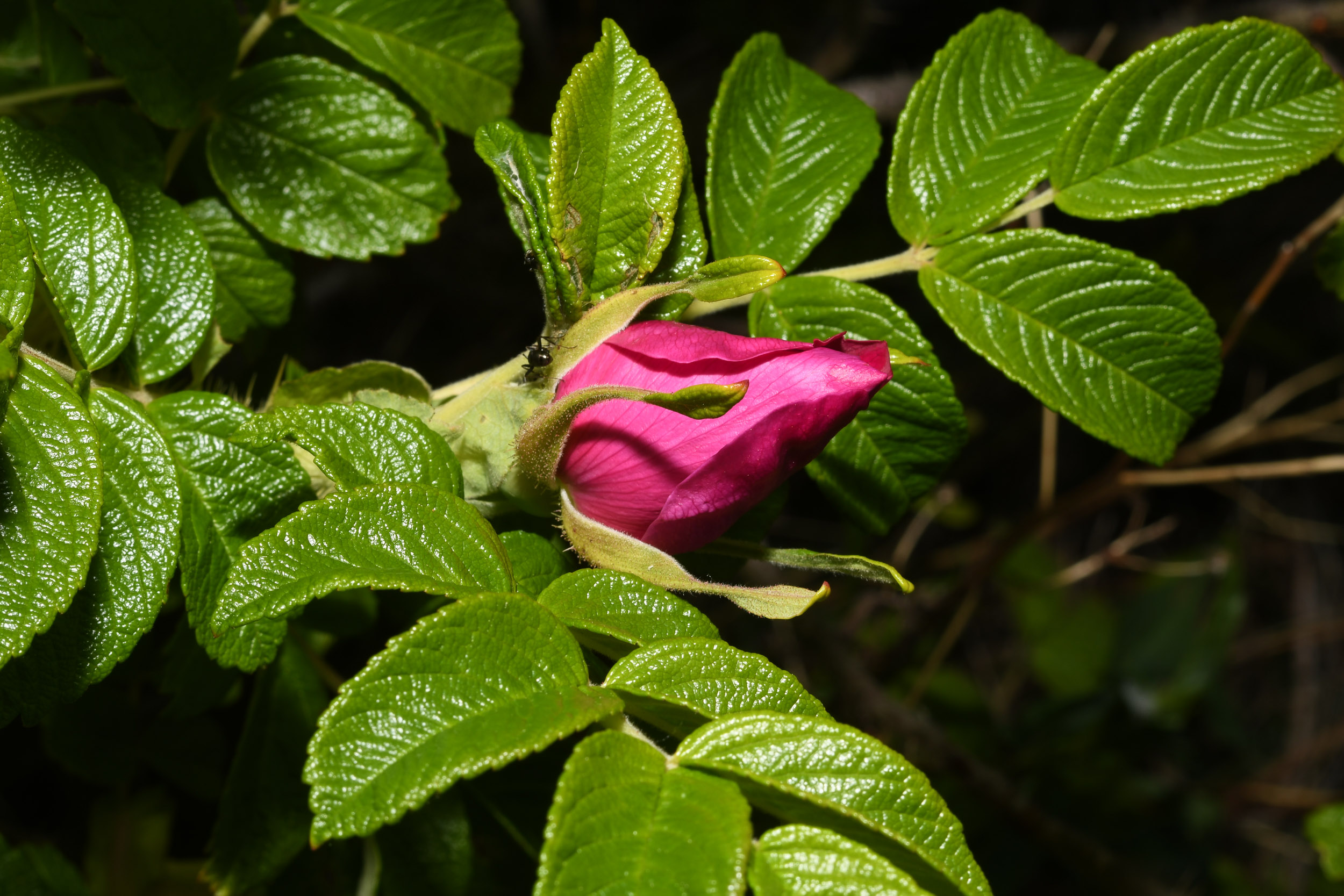
6/10/2016 · Lobster Cove Trail, Monhegan Island, Maine 
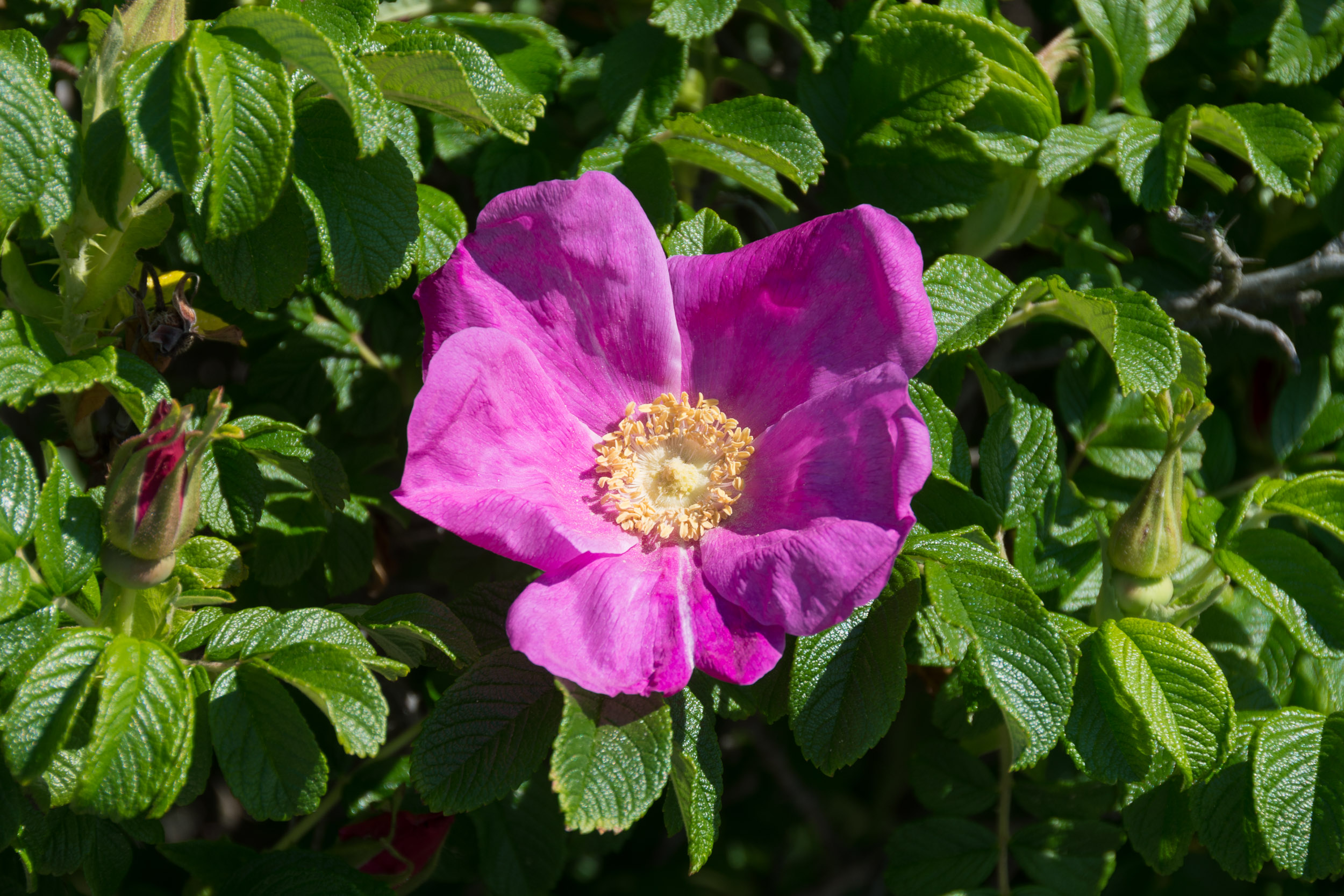
6/16/2013 · Birch Point State Park, Owl’s Head, Maine · ≈ 10 × 7″ (25 × 16 cm) 

8/20/2025 · Peaks Island, Maine · ≈ 8 × 8″ (21 × 20 cm) 
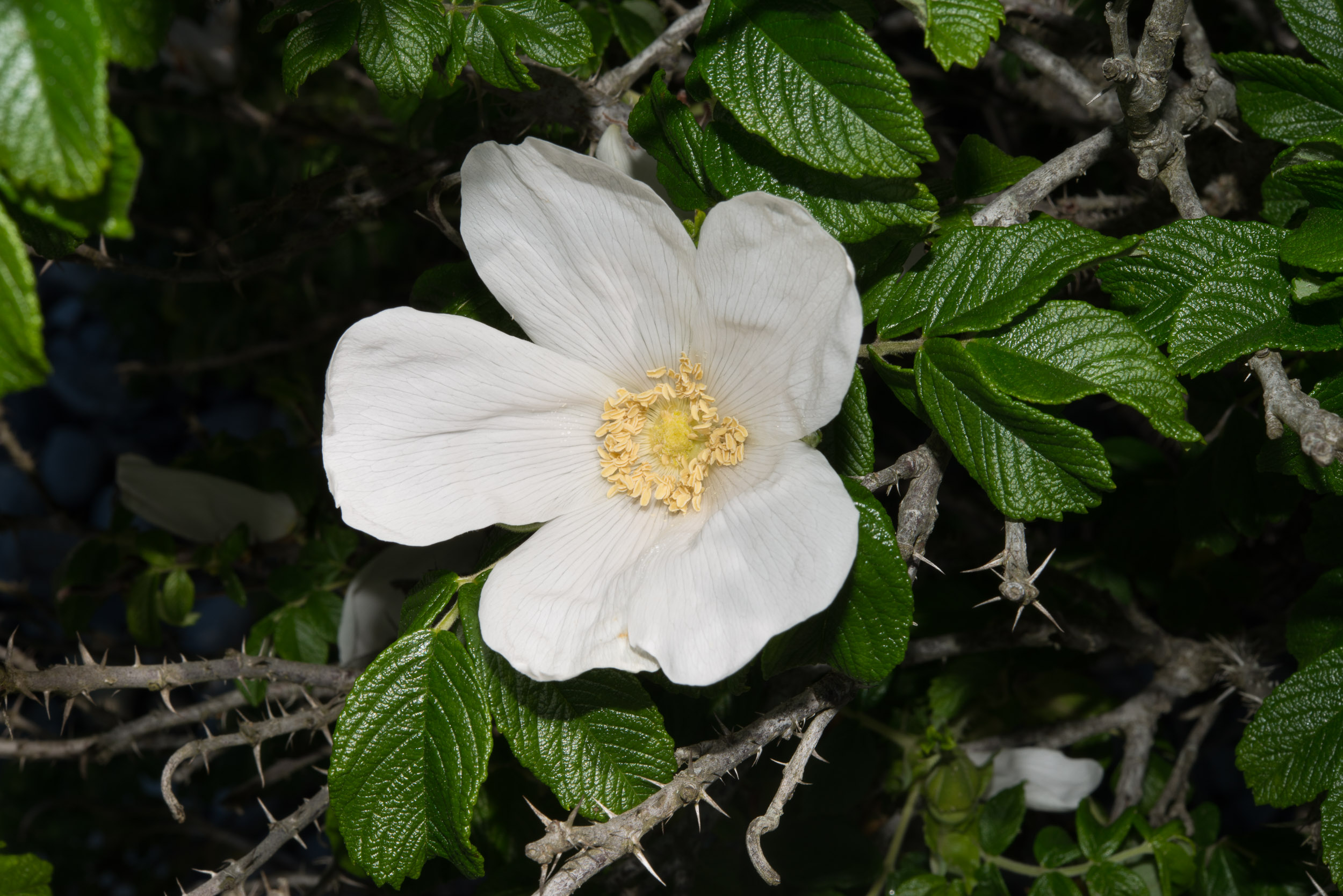
6/16/2013 · Birch Point State Park, Owl’s Head, Maine · ≈ 10 × 7″ (25 × 16 cm) 
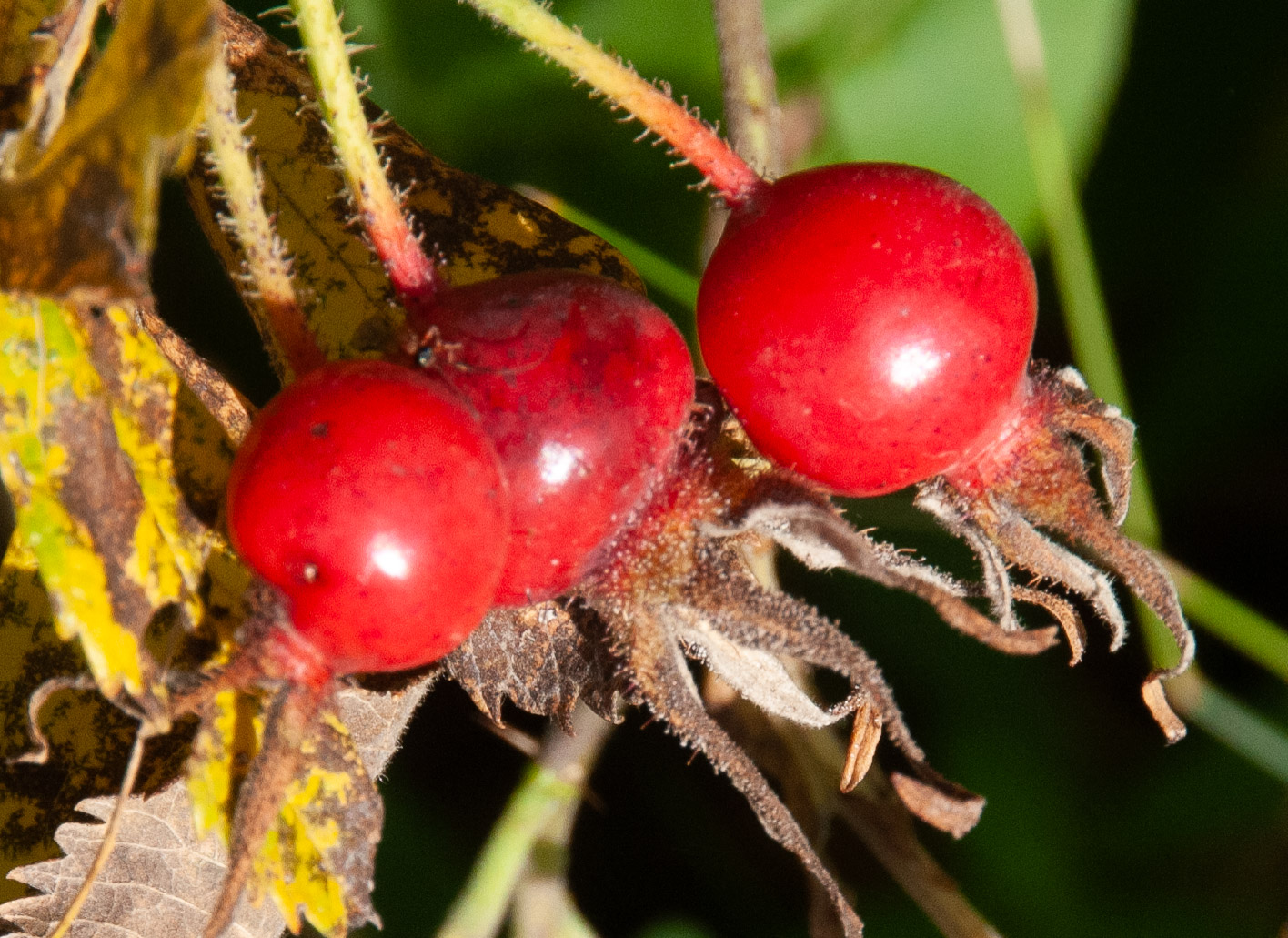
Rose hips · 9/18/2009 · Acadia National Park, Bar Harbor, Maine · ≈ 1¼ × ⅞″ (3.5 × 2.5 cm) 
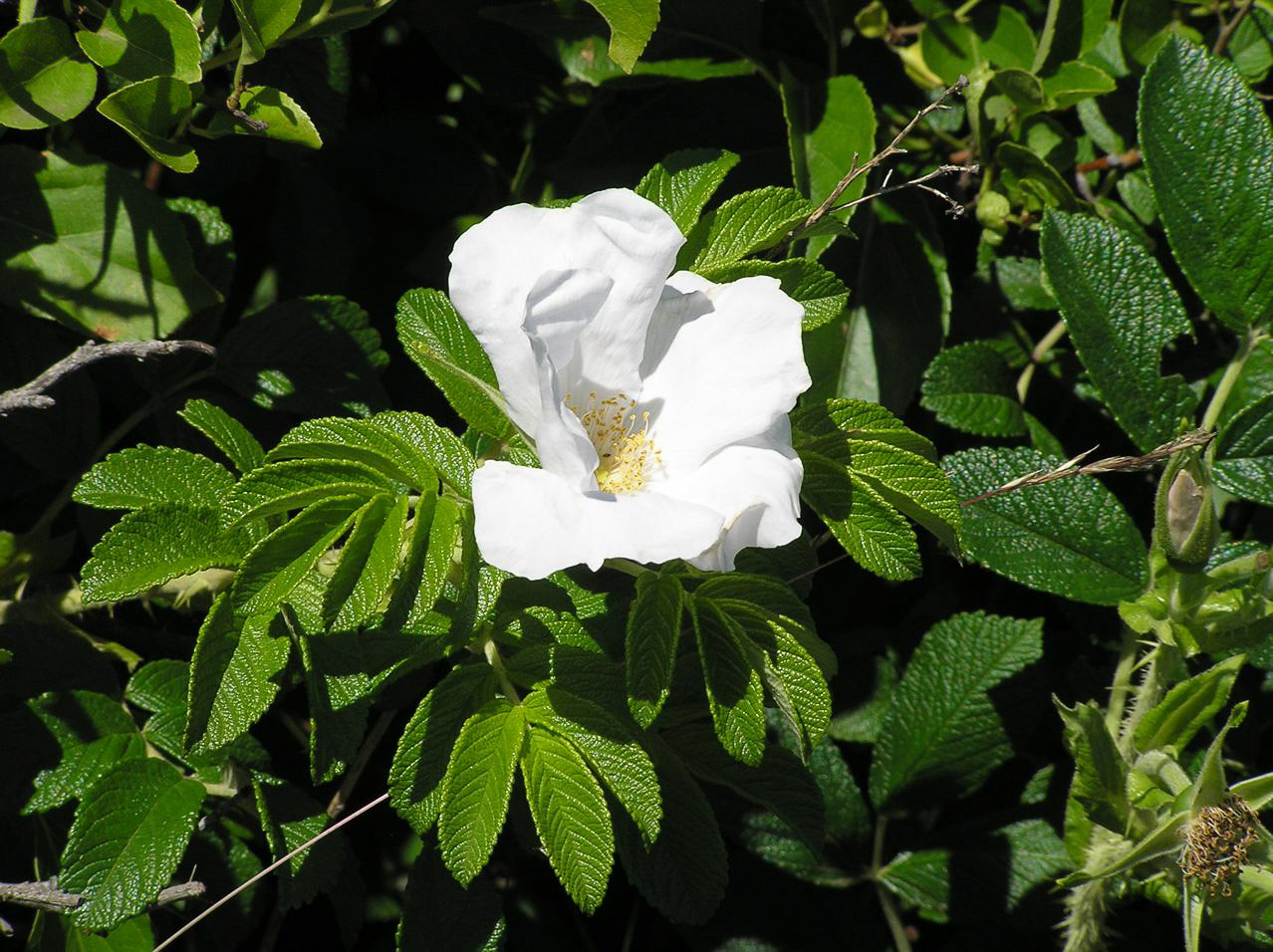
1/5/2026 · By Constance B. Kent 
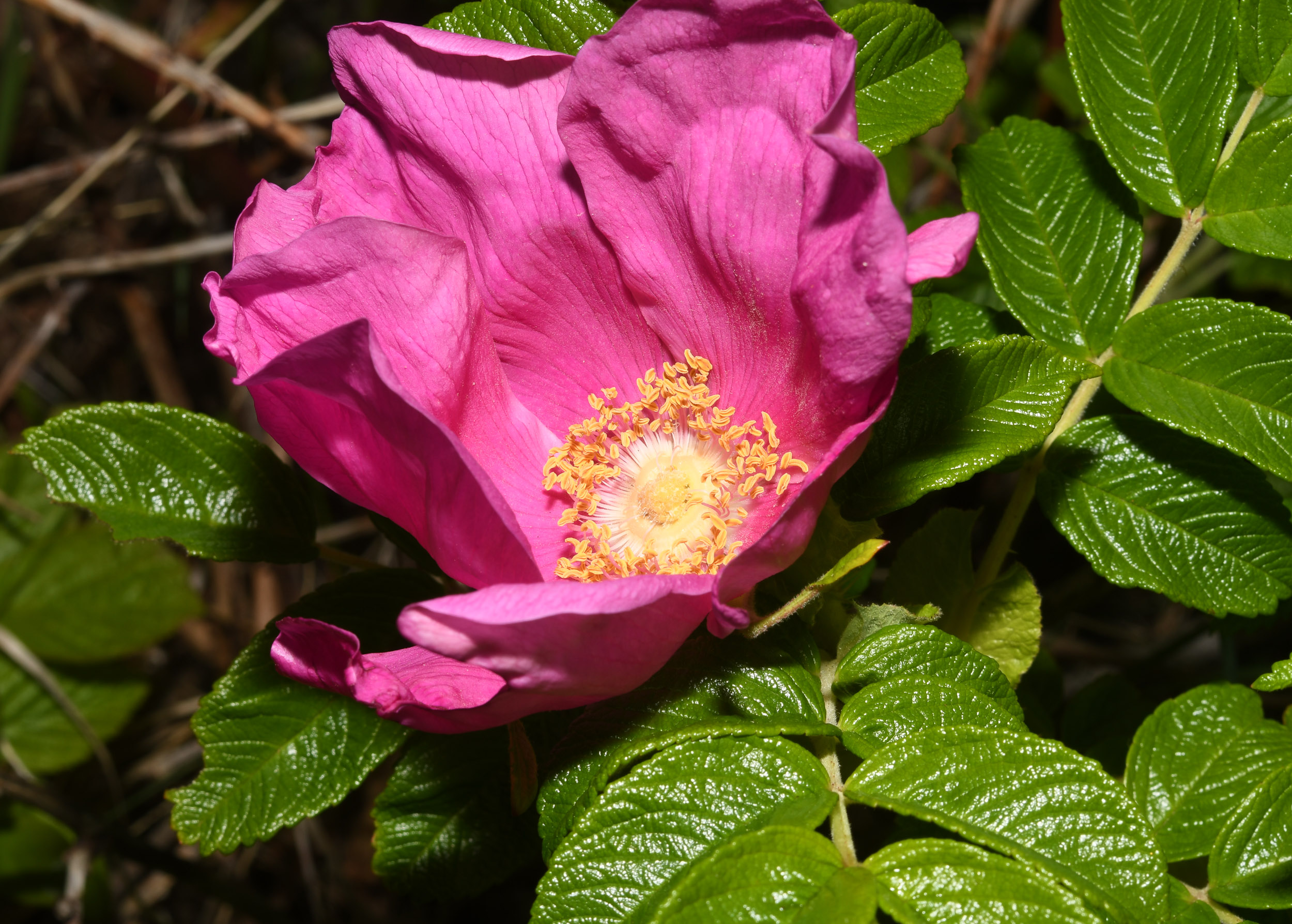
6/10/2016 · Lobster Cove Trail, Monhegan Island, Maine 

9/18/2009 · Acadia National Park, Bar Harbor, Maine · ≈ 6 × 4″ (15 × 10 cm) ID is uncertain 

6/16/2013 · Birch Point State Park, Owl’s Head, Maine · ≈ 8 × 5″ (19 × 13 cm) 
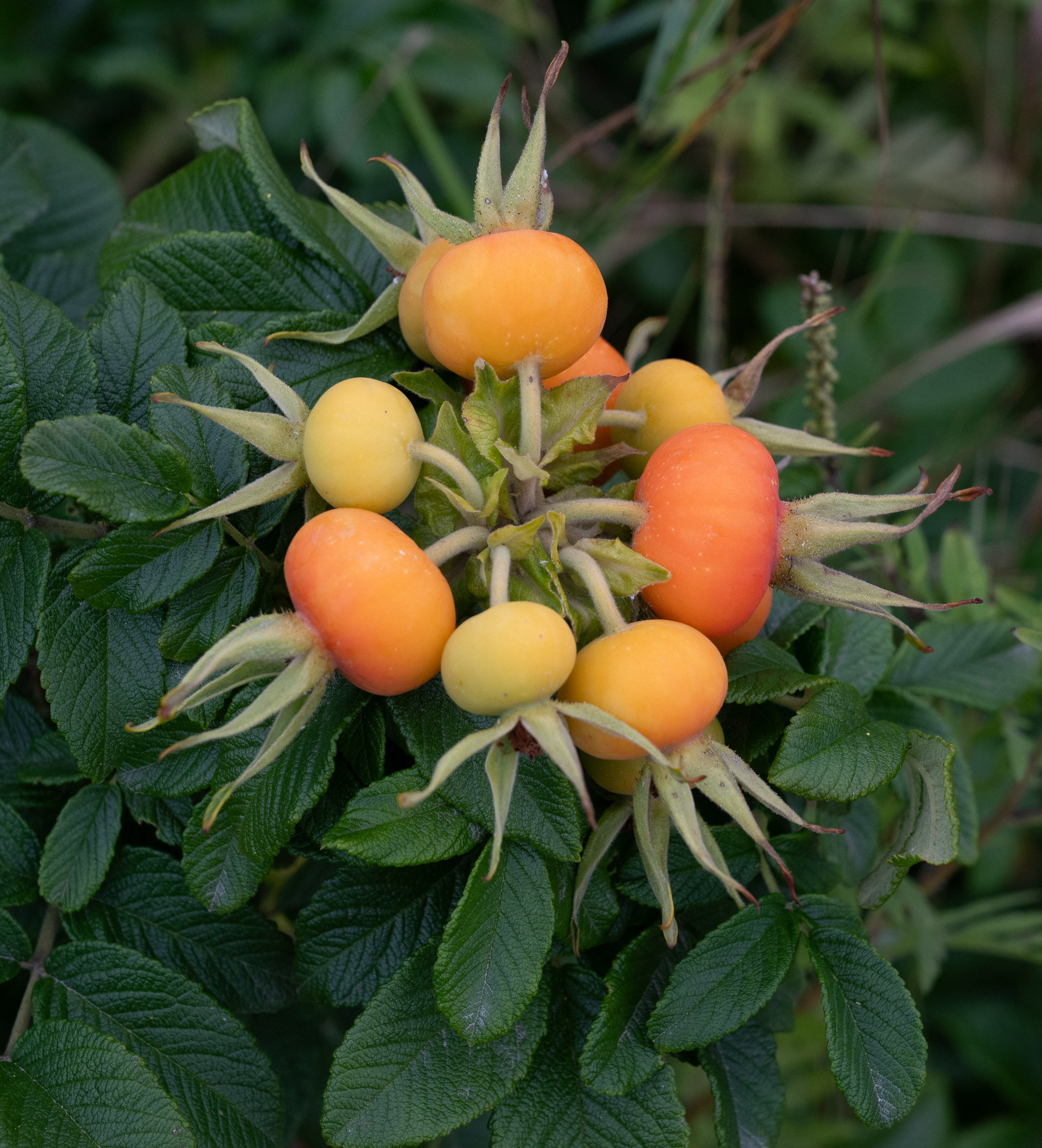
8/20/2025 · Peaks Island, Maine · ≈ 6 × 7″ (15 × 17 cm) 
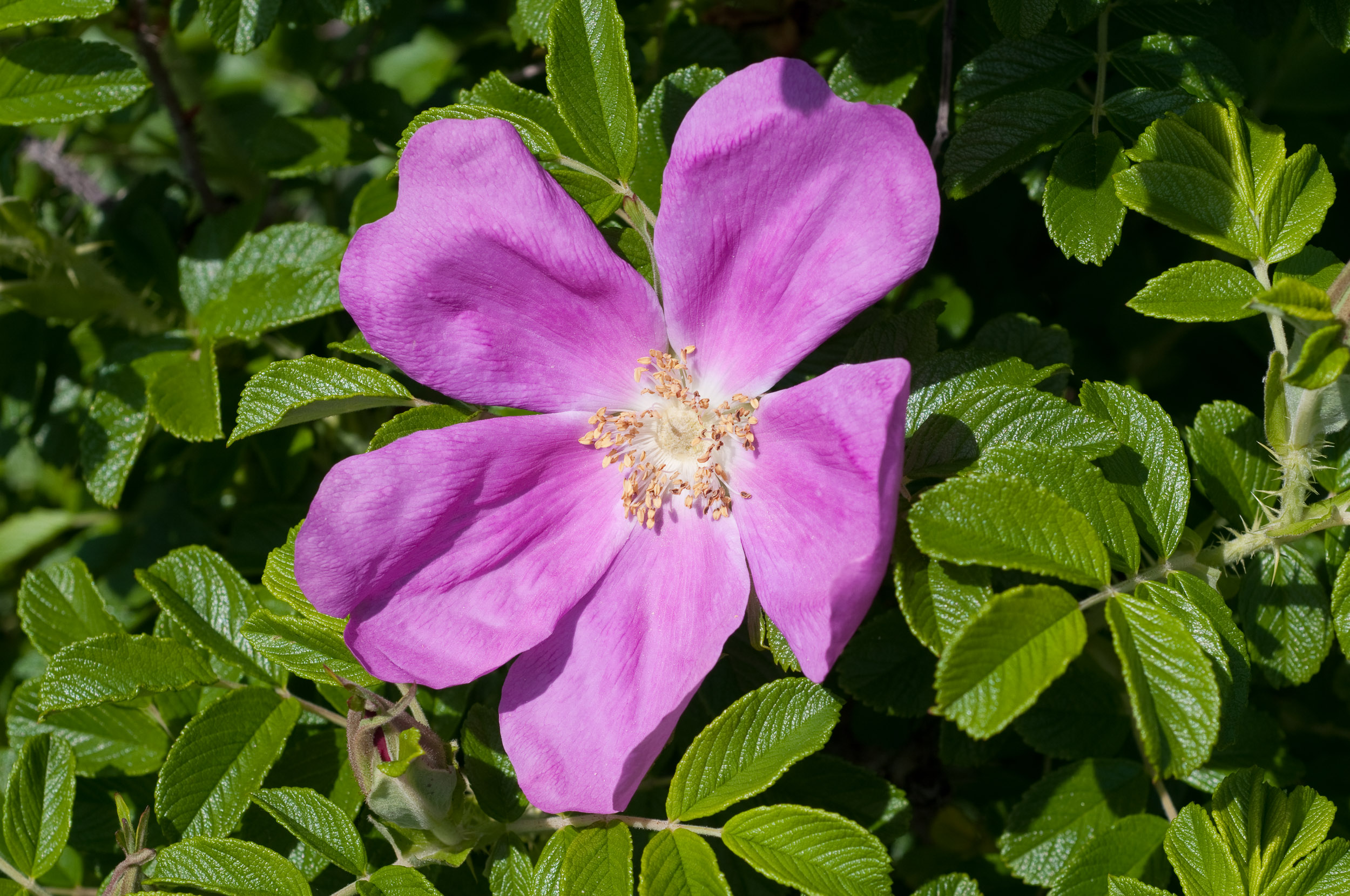
5/24/2010 · Eastern Promenade, Portland, Maine · ≈ 9 × 6″ (23 × 15 cm) ID is uncertain 
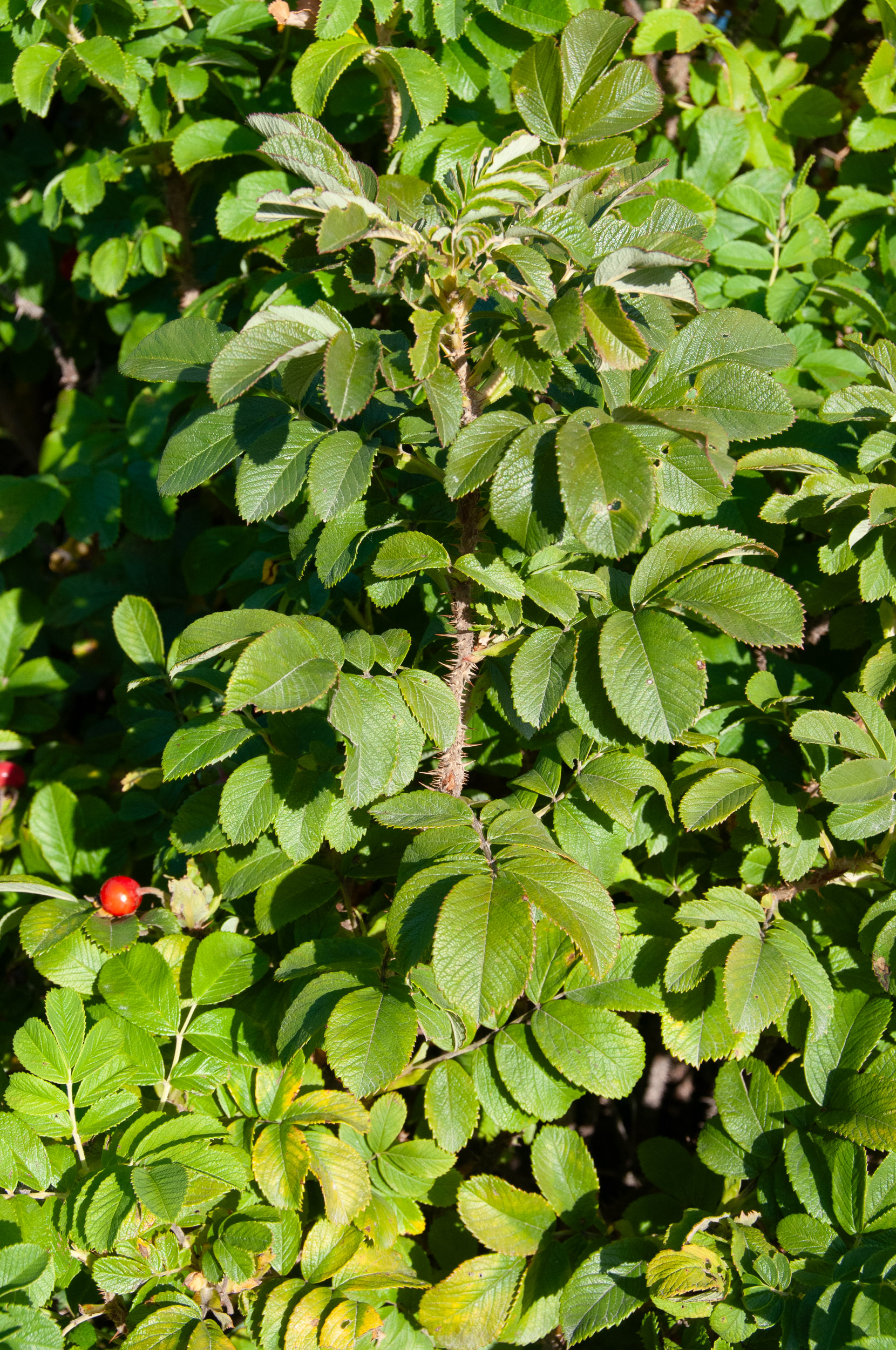
9/18/2009 · Acadia National Park, Bar Harbor, Maine · ≈ 10 × 15″ (25 × 38 cm) ID is uncertain 
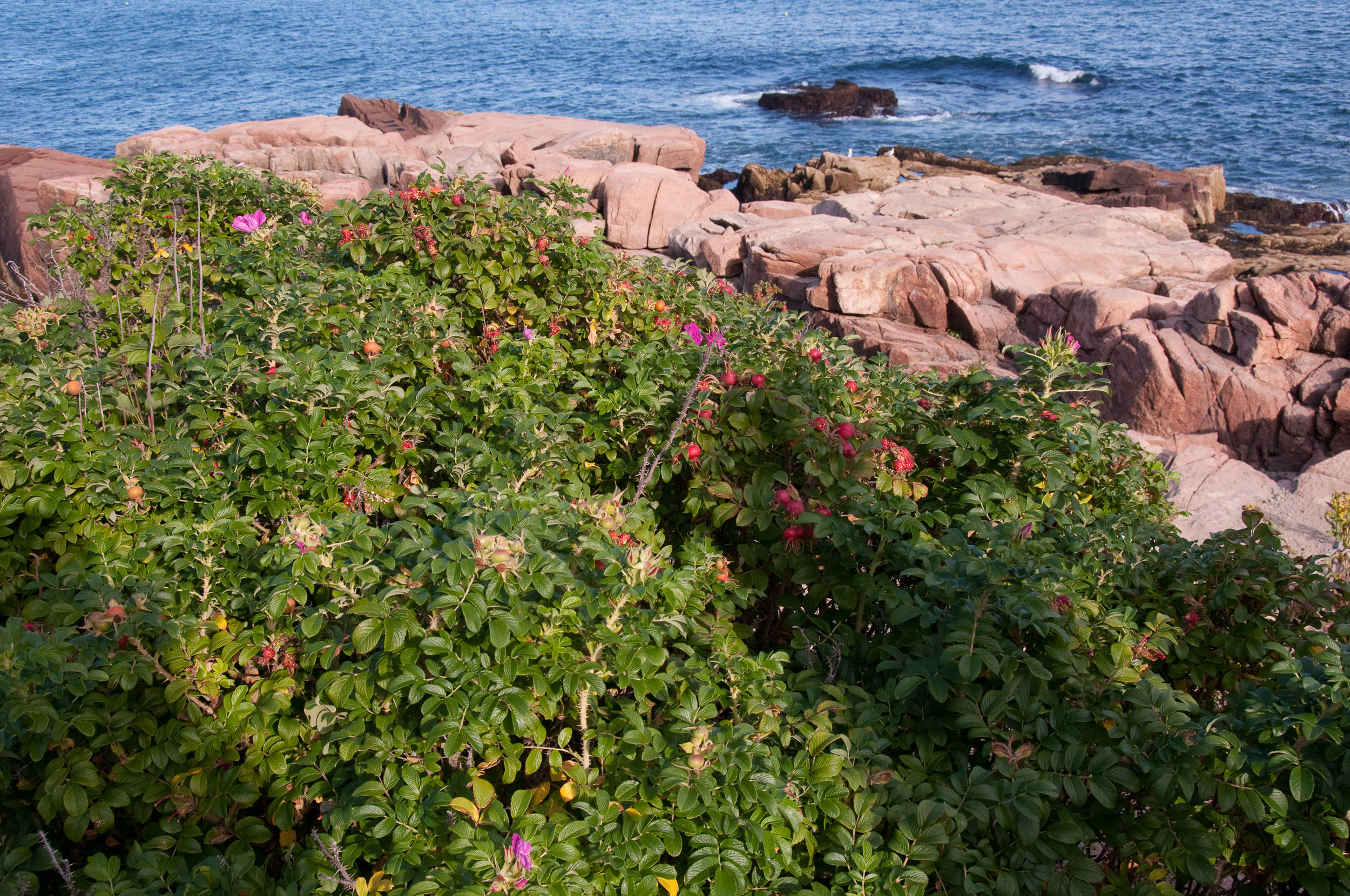
9/18/2009 · Acadia National Park, Bar Harbor, Maine ID is uncertain 
| Kingdom | Plantae | Plants, but not fungi, lichens, or algae (from Stearn's Botanical Latin) |
| Subkingdom | Tracheobionta | Vascular plants—plants with a “circulatory system” for delivering water and nutrients |
| Division | Magnoliophyta | Flowering plants, also known as angiosperms |
| Class | Magnoliopsida | Dicotyledons—plants with two initial seed leaves |
| Subclass | Rosidae | Roses, legumes, proteas, dogwoods, hydrangeas, mistletoes, euphorbias, grapes, many more |
| Order | Rosales | Rose family and eight others |
| Family | Rosaceae | Includes apples, apricots, plums, cherries, peaches, pears, raspberries, strawberries, almonds, roses, meadowsweets, photinias, firethorns, rowans, and hawthorns; many others |
| Genus | Rosa | From a Latin name so old its meaning is no longer known |
| Species | rugosa | “Wrinkled” |
Rosa rugosa description by Thomas H. Kent, not updated.

© FloraFinder.org. All rights reserved.