Rosa lancifolia Small
Rosa palustris Marshall var. dasistema (Raf.) Palmer & Steyerm.
Rosa palustris Marshall
Swamp rose
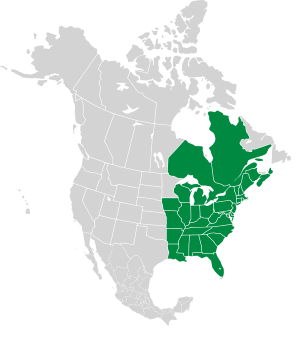
Swamp rose is a North American native. They have a preference for wet areas.
Plants: Shrubs are 6–8′ (1.8–2.4 m) tall, with multiple, thorny stems. Thorns are widely spaced, single or sometimes paired, and hooked, curving backward
Leaves: Dark green, 1¼–2½″ (3.2–6.3 cm) long, roughly oval with pointed tips, with finely serrated edges. They occur in odd pinnate groups, most commonly with 7 leaflets, sometimes with 5, rarely with 9.
Flowers: 1½–2″ (3.8–5.8 cm) in diameter, solitary (or in small clusters), light to dark pink, with five petals and strong rose fragrance. They appear from June to July.
Fruits: Red rose hips, with glandular hairs, are less than ½″ (1.3 cm) around.
Habitats: Wet habitats: stream banks, swamps, marshes.
Edibility: Rose hips are not edible.
See this wild rose comparison guide for further information.
Online References:
References:
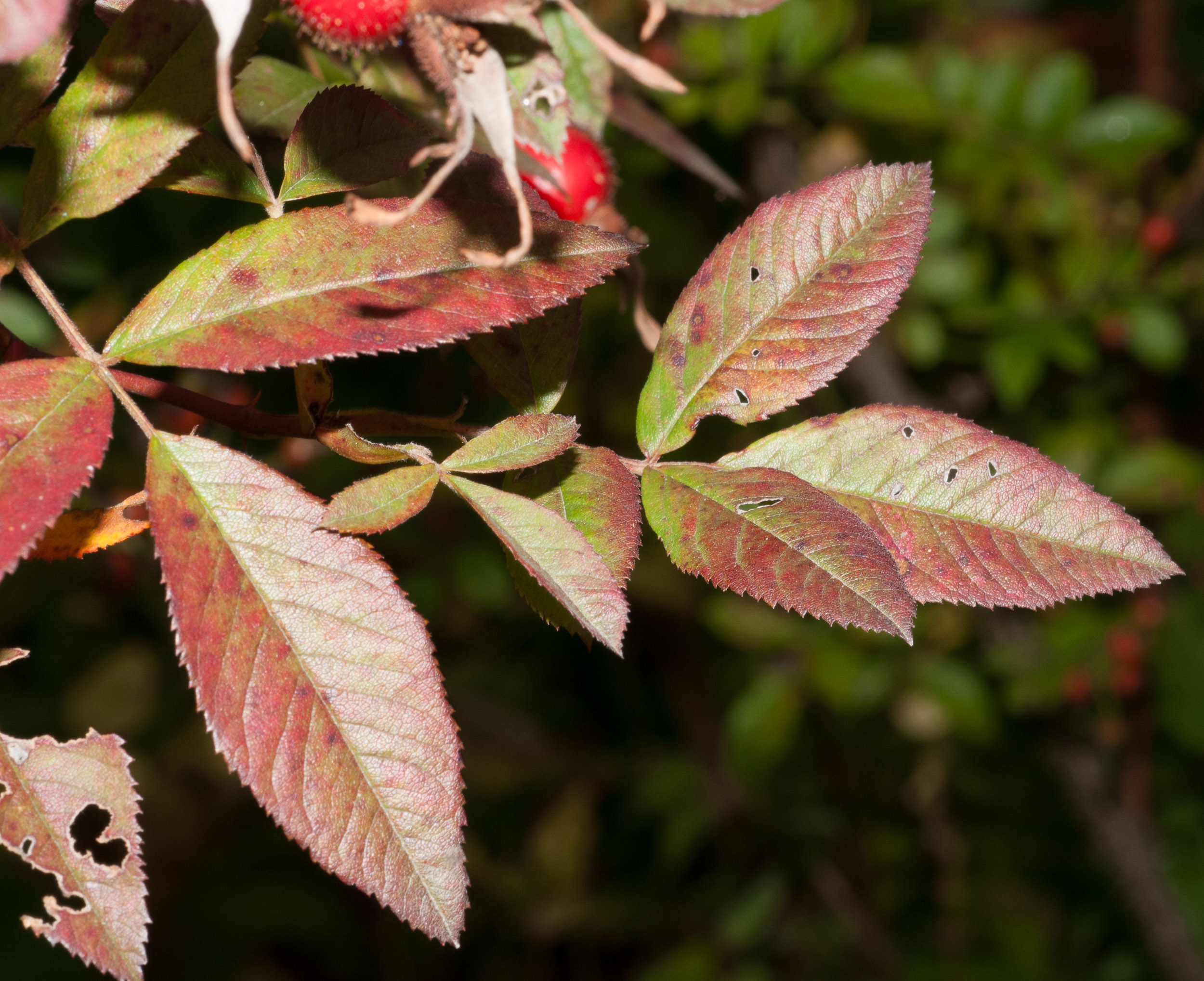
9/25/2010 · Nashua River Rail Trail, Groton Center, Groton, Massachusetts · ≈ 5 × 4″ (12 × 10 cm)  ID is uncertain
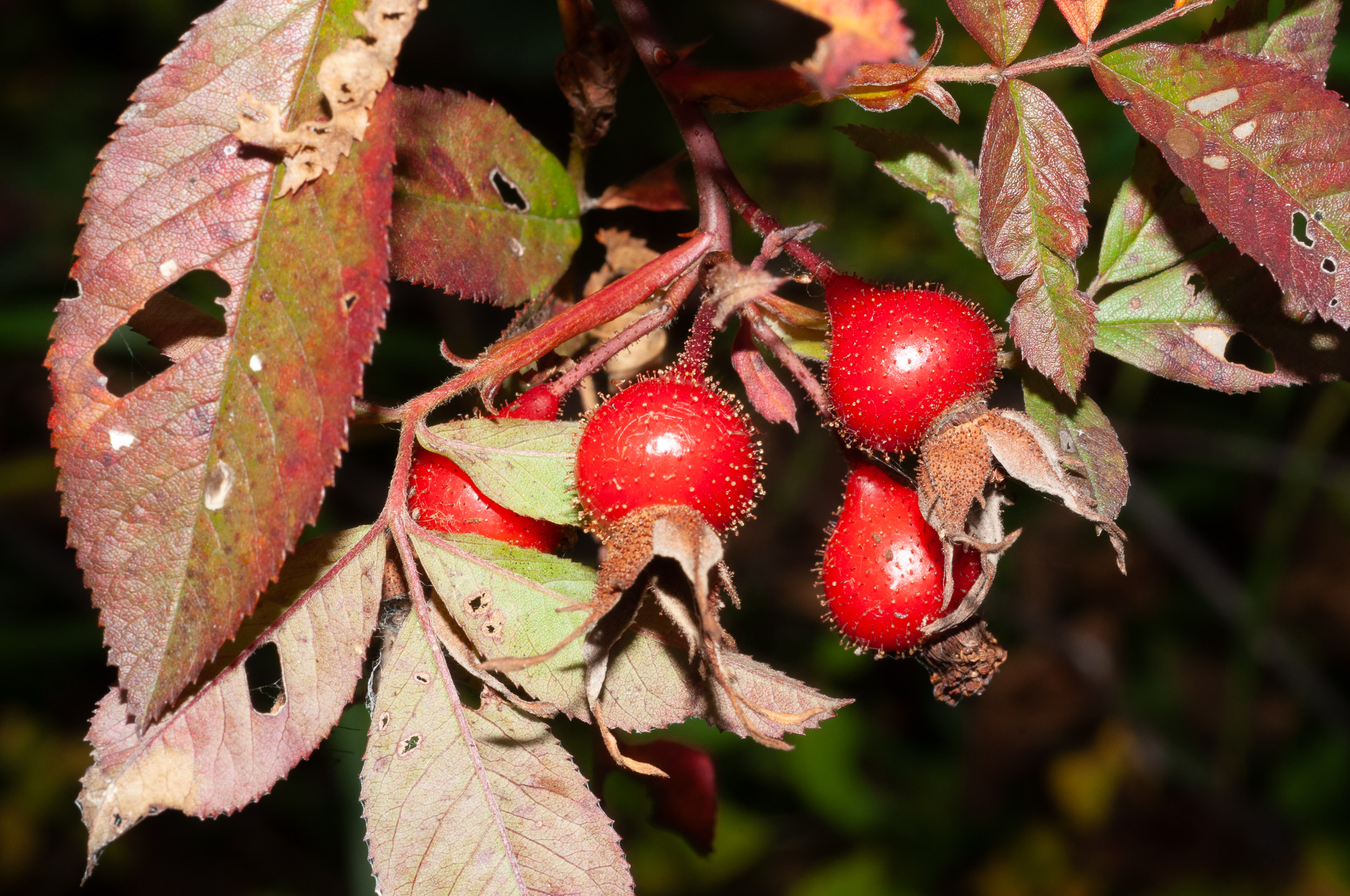
9/25/2010 · Nashua River Rail Trail, Groton Center, Groton, Massachusetts · ≈ 5 × 3½″ (13 × 9.2 cm) ID is uncertain 
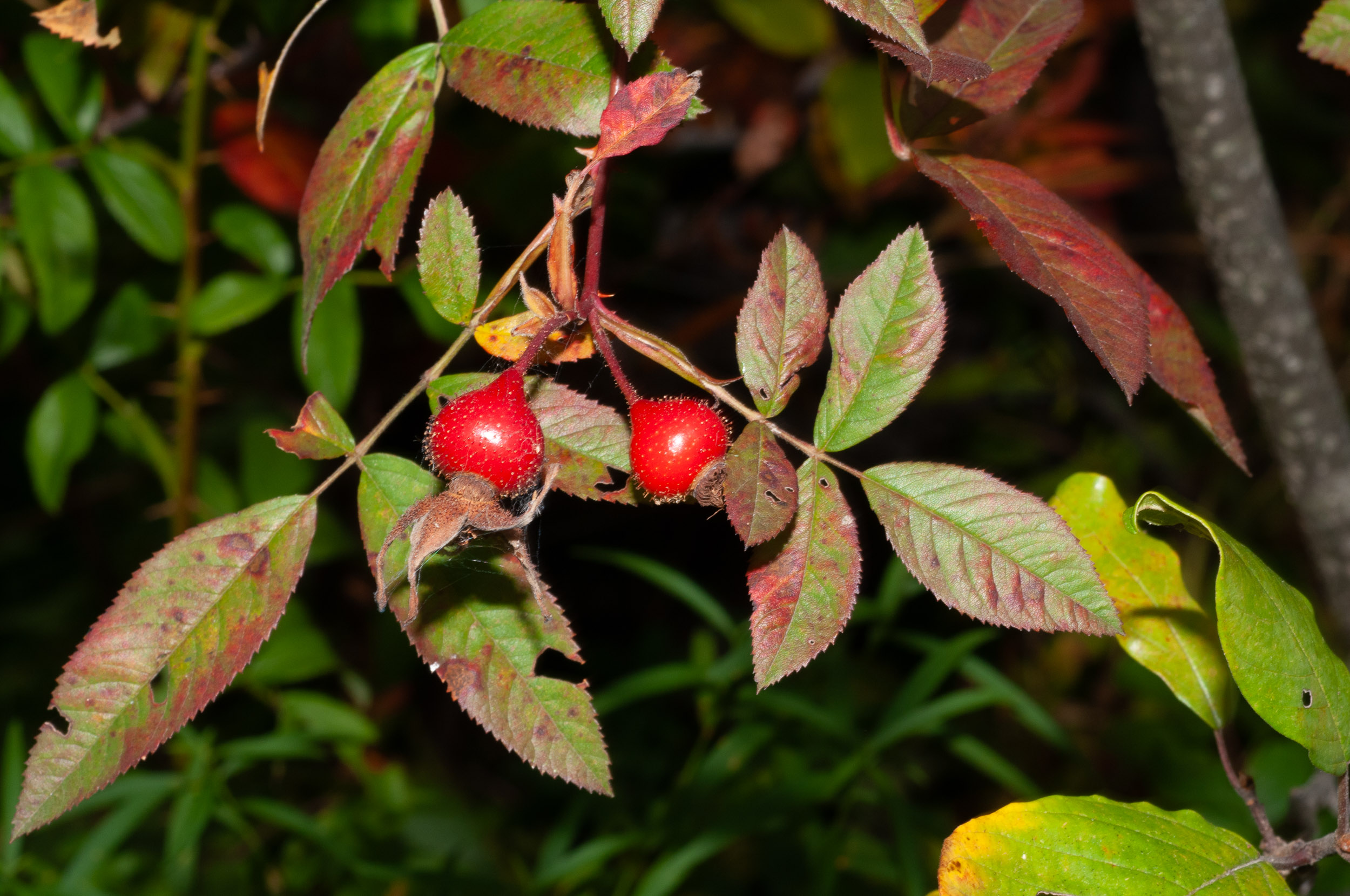
9/25/2010 · Nashua River Rail Trail, Groton Center, Groton, Massachusetts · ≈ 7 × 4½″ (17 × 11 cm) ID is uncertain 

9/28/2013 · Wild Gardens of Acadia, Acadia National Park, Bar Harbor, Maine · ≈ 7 × 11″ (18 × 28 cm) 
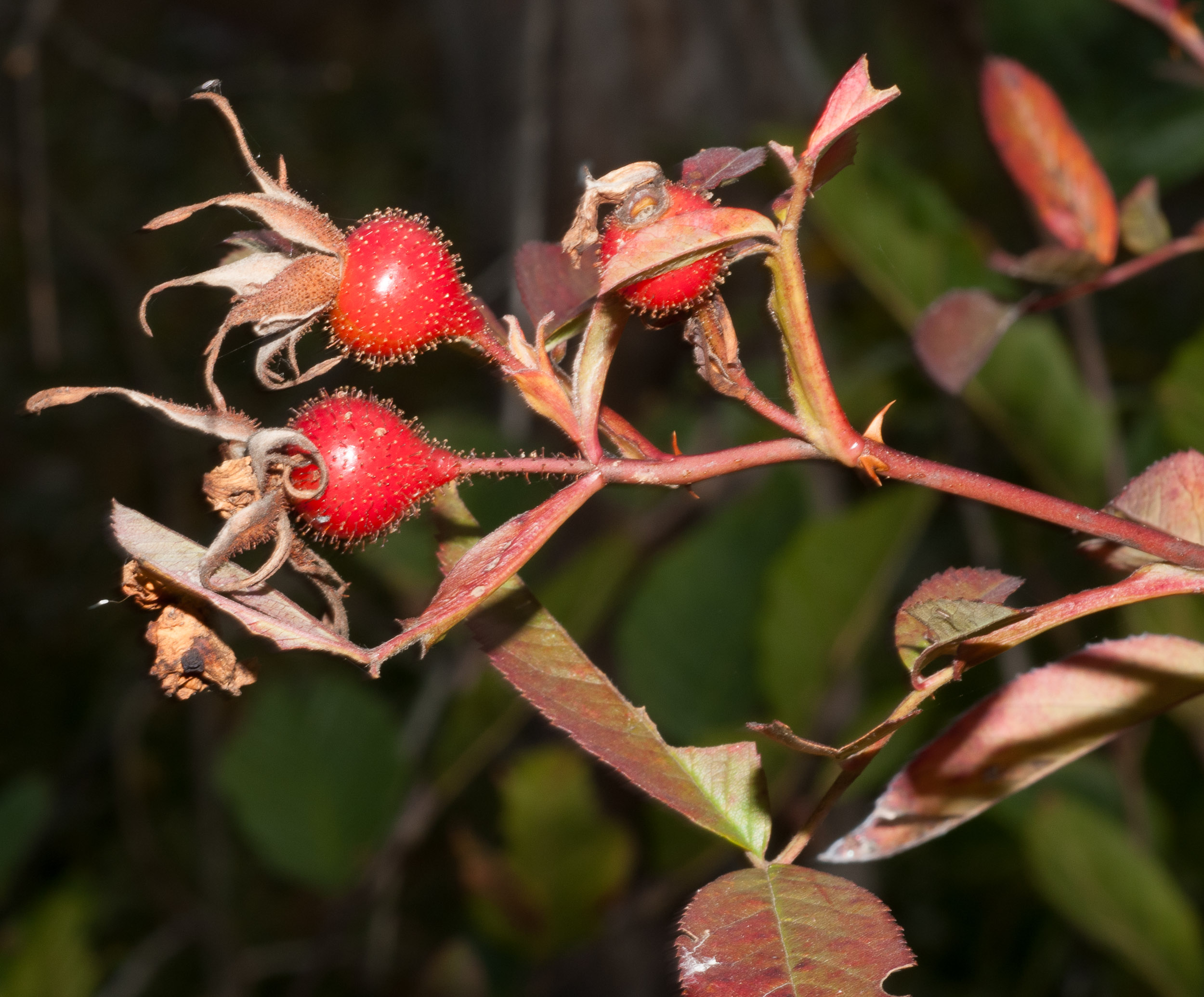
9/25/2010 · Nashua River Rail Trail, Groton Center, Groton, Massachusetts · ≈ 5 × 4½″ (13 × 11 cm) ID is uncertain 
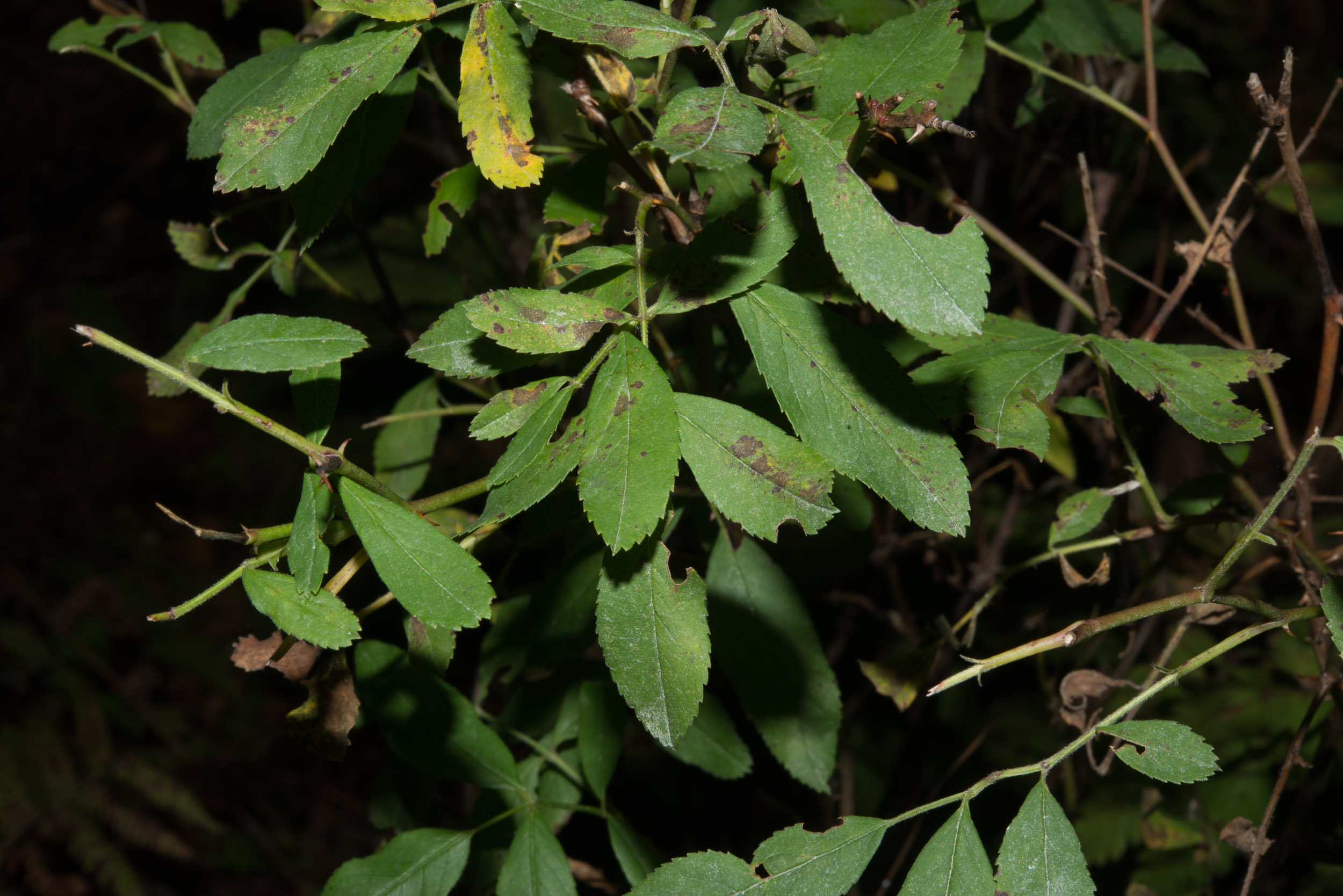
9/28/2013 · Wild Gardens of Acadia, Acadia National Park, Bar Harbor, Maine · ≈ 8 × 6″ (20 × 14 cm) 

9/30/2013 · Moose Point State Park, Searsport, Maine · ≈ 6 × 5″ (14 × 12 cm) 
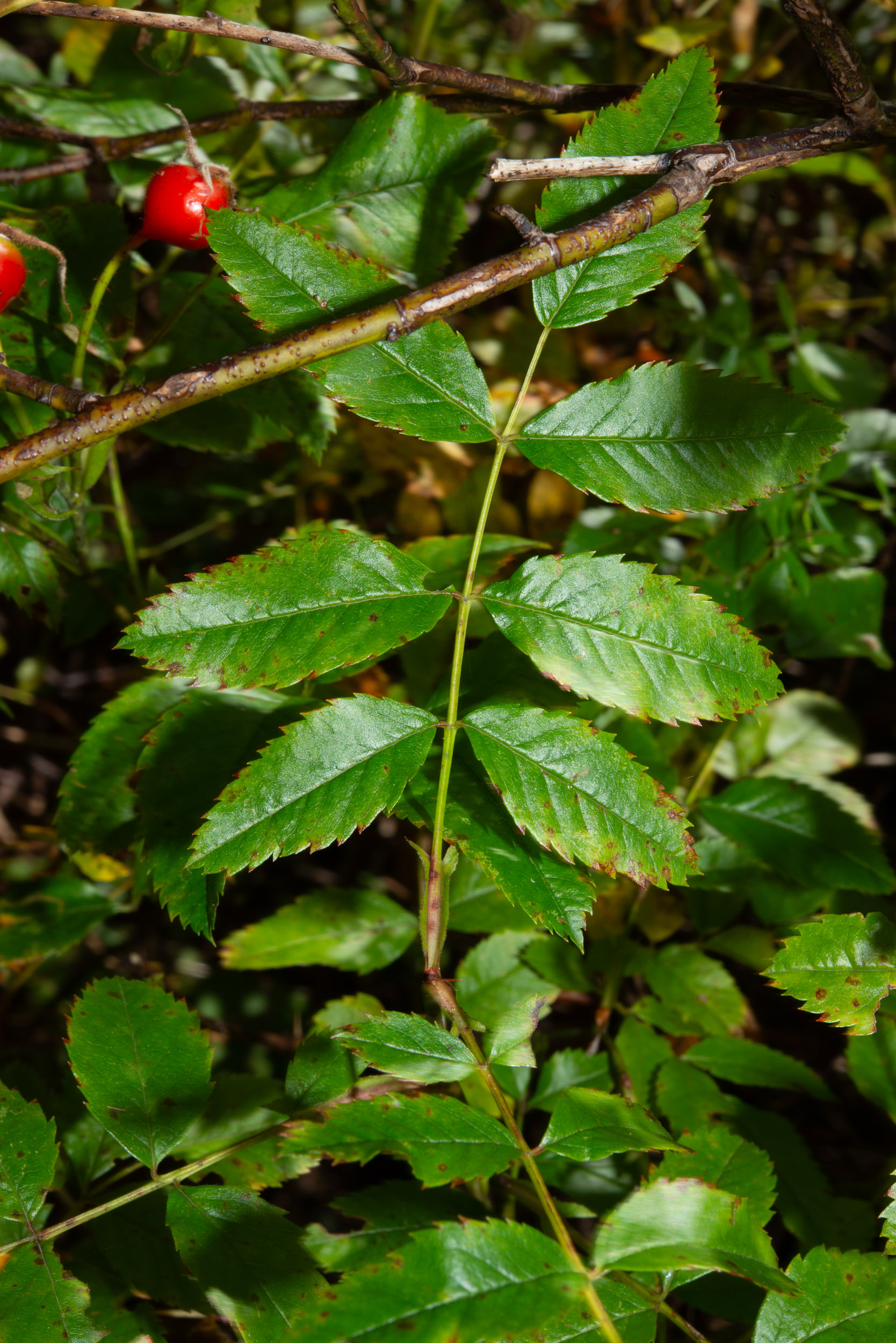
9/30/2013 · Moose Point State Park, Searsport, Maine · ≈ 5 × 8″ (13 × 19 cm) 
| Kingdom | Plantae | Plants, but not fungi, lichens, or algae (from Stearn's Botanical Latin) |
| Subkingdom | Tracheobionta | Vascular plants—plants with a “circulatory system” for delivering water and nutrients |
| Division | Magnoliophyta | Flowering plants, also known as angiosperms |
| Class | Magnoliopsida | Dicotyledons—plants with two initial seed leaves |
| Subclass | Rosidae | Roses, legumes, proteas, dogwoods, hydrangeas, mistletoes, euphorbias, grapes, many more |
| Order | Rosales | Rose family and eight others |
| Family | Rosaceae | Includes apples, apricots, plums, cherries, peaches, pears, raspberries, strawberries, almonds, roses, meadowsweets, photinias, firethorns, rowans, and hawthorns; many others |
| Genus | Rosa | From a Latin name so old its meaning is no longer known |
| Species | palustris | From Latin palustre, “growing in marshes” |
Rosa palustris description by Thomas H. Kent, not updated.

© FloraFinder.org. All rights reserved.