Punica granatum L.
Pomegranate
[An article has not been written yet.]
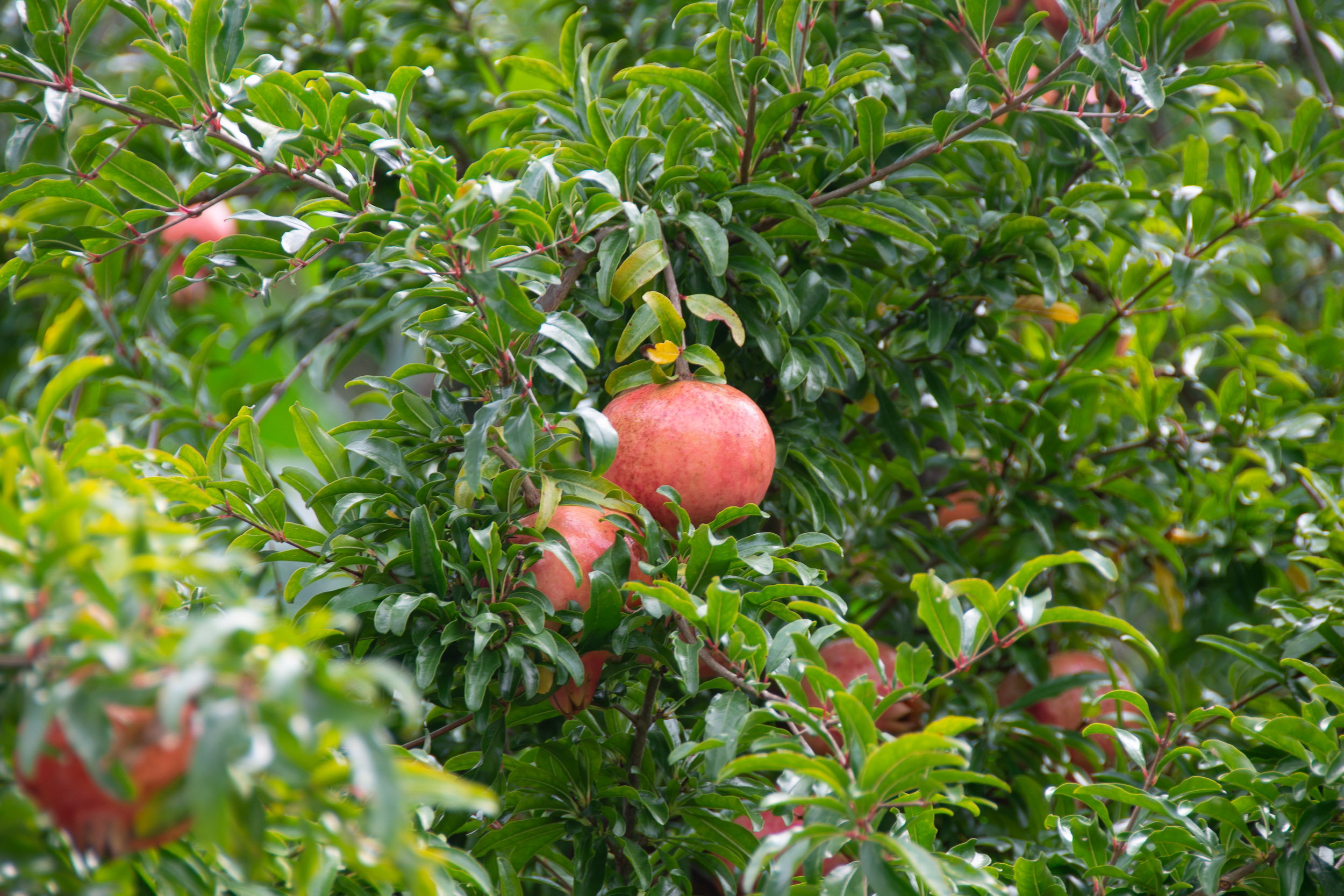
9/1/2013 · Colonial Williamsburg, Williamsburg, Virginia 

9/1/2013 · Colonial Williamsburg, Williamsburg, Virginia 
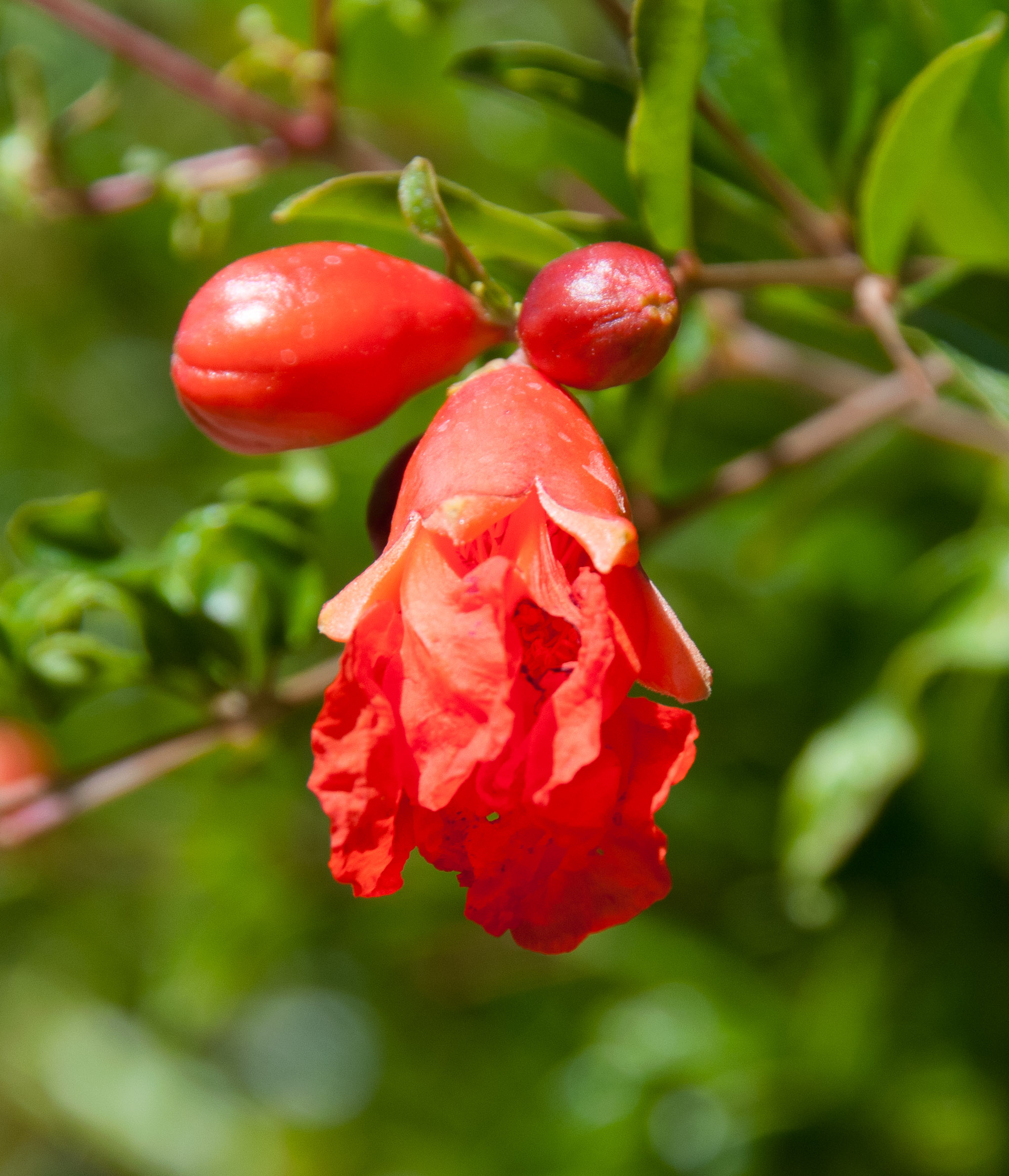
5/25/2009 · Boyce Thompson Arboretum, Superior, Arizona · ≈ 1 × 1¼″ (2.8 × 3.3 cm) 
| Kingdom | Plantae | Plants, but not fungi, lichens, or algae (from Stearn's Botanical Latin) |
| Subkingdom | Tracheobionta | Vascular plants—plants with a “circulatory system” for delivering water and nutrients |
| Division | Magnoliophyta | Flowering plants, also known as angiosperms |
| Class | Magnoliopsida | Dicotyledons—plants with two initial seed leaves |
| Subclass | Rosidae | Roses, legumes, proteas, dogwoods, hydrangeas, mistletoes, euphorbias, grapes, many more |
| Order | Myrtales | Includes myrtles, leadwoods, loosestrifes, pomegranates, evening primroses, many others |
| Family | Punicaceae | From the genus name Punica, ”of Carthage“ or ”Phoenician“ |
| Genus | Punica | Stearn’s Dictionary of Plant Names says: “The Latin name contracted from punicum malum, Carthaginian apple, in turn derived from Poenus, ‘a Carthaginian,’ or Phoinikes, ‘Phoenicians,’ “ this is the generic name of the pomegranate, Punicum granatum |
| Species | granatum | Many-seeded |
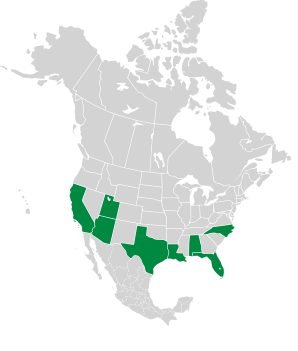
Punica granatum description by Thomas H. Kent, not updated.

© FloraFinder.org. All rights reserved.