Potentilla simplex Michx. var. calvescens Fernald
Potentilla simplex Michx. var. typica Fernald
Potentilla simplex Michx.
Common cinquefoil, old-field five-fingers, oldfield cinquefoil
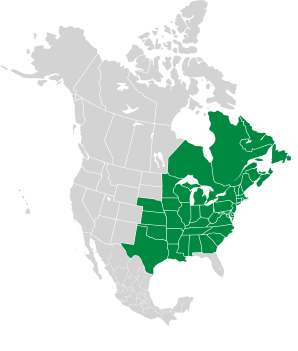
Common cinquefoil is native to eastern and southeastern North America.
Plants: Low, sprawling plants root at nodes, forming colonies. They start out erect, up to 1′ (30 cm) high, but tend to lie flat later. Stems are green, aging to red, and may be covered with spreading white hairs.
Leaves: Leaves are alternate, palmate, with five leaflets—shaped a bit like the fingers of a hand, except that the central leaflet is largest and the two edgemost leaves are smallest. Leaflets are up to 3 ⨉ ¾″ (7.6 ⨉ 1.9 cm), narrowly ovate with blunt tips, and sharply serrated except near the base. Upper leaf surfaces are hairless, while lower surfaces may have hairs.
Flowers: Leaf nodes produce a stalk that supports a single flower about ½″ (1.3 cm) in diameter, with five heart-shaped petals and 20-35 stamens and five green sepals. Stamens are yellow, aging to red. Flowers appear from spring to mid-summer.
Fruits: Dry achenes are ~1/32″ (0.9–1.2 mm) long, and do not have tufts of hair.
Habitats: Prairies, upland forests, savannas, gravelly seeps, and dormant fields, in full sun.
Online References:

6/9/2025 · Curtis Farm Preserve, Harpswell, Maine · ≈ 6 × 5″ (15 × 12 cm) 

1/8/2012 · Groton Place and Sabine Woods, Groton, Massachusetts · ≈ 6 × 6″ (14 × 14 cm) 
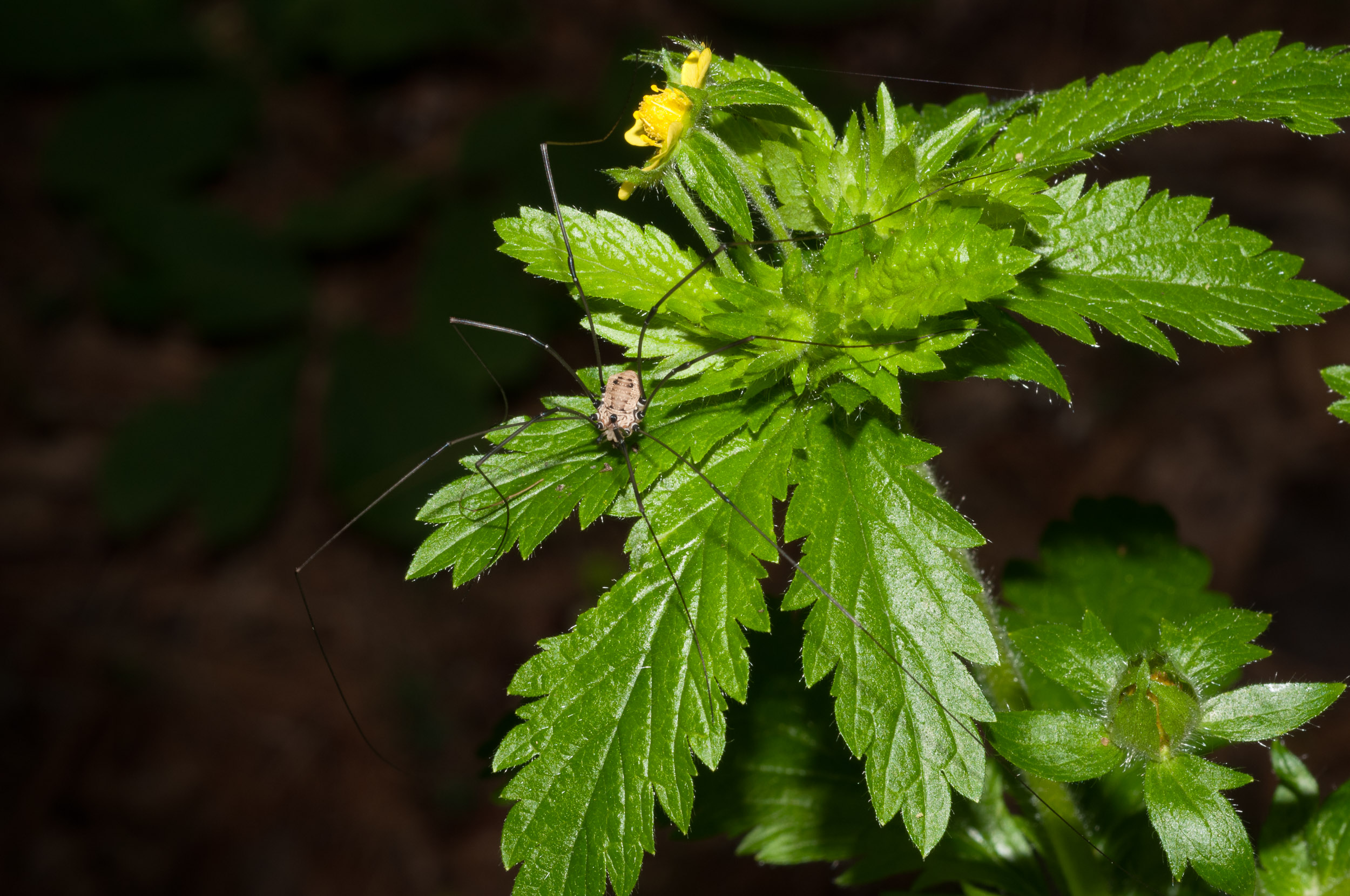
Resting place for a daddy longlegs. · 6/17/2010 · Mt. Lebanon St., Pepperell, Massachusetts · ≈ 6 × 4″ (15 × 10 cm) 

6/10/2026 · Livermore, Waterville Valley, New Hampshire · ≈ 10 × 6″ (24 × 16 cm) 
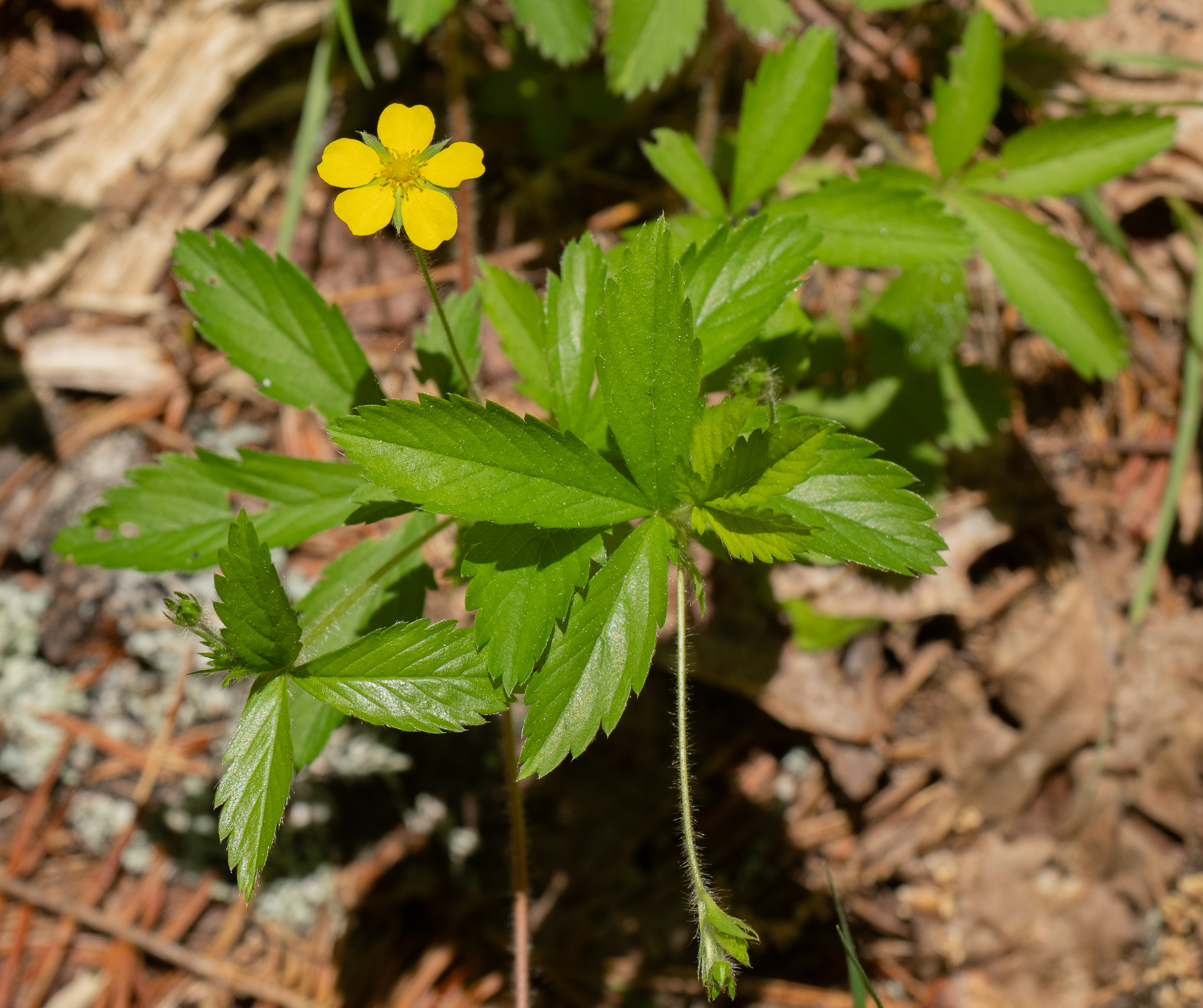
6/2/2023 · Ovens Mouth West, Blue Trail, Boothbay, Maine 
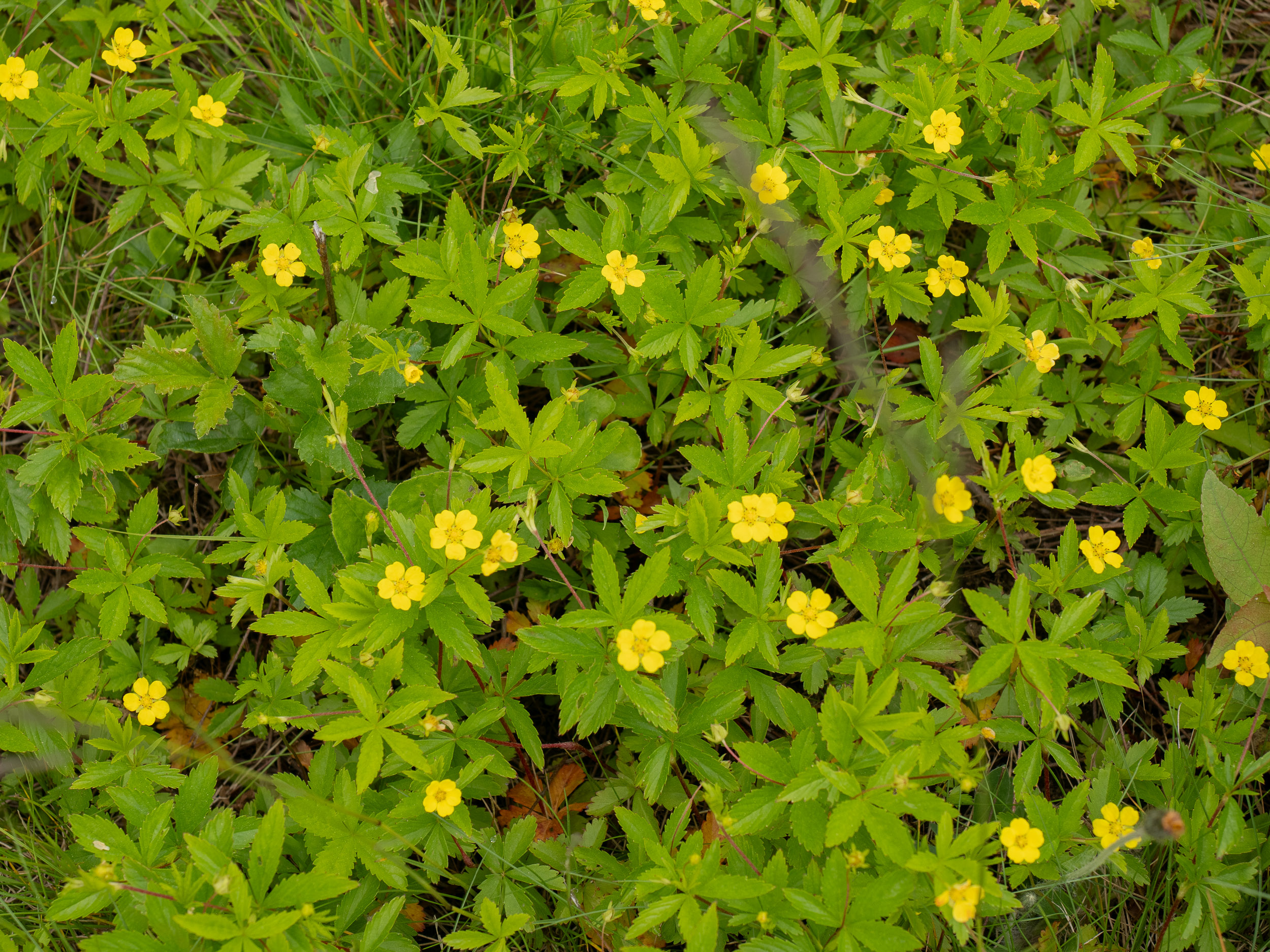
6/12/2023 · Viles Arboretum, Augusta, Maine 

6/15/2025 · Morse Mountain Preserve, Phippsburg, Maine · ≈ 8 × 6″ (21 × 15 cm) 
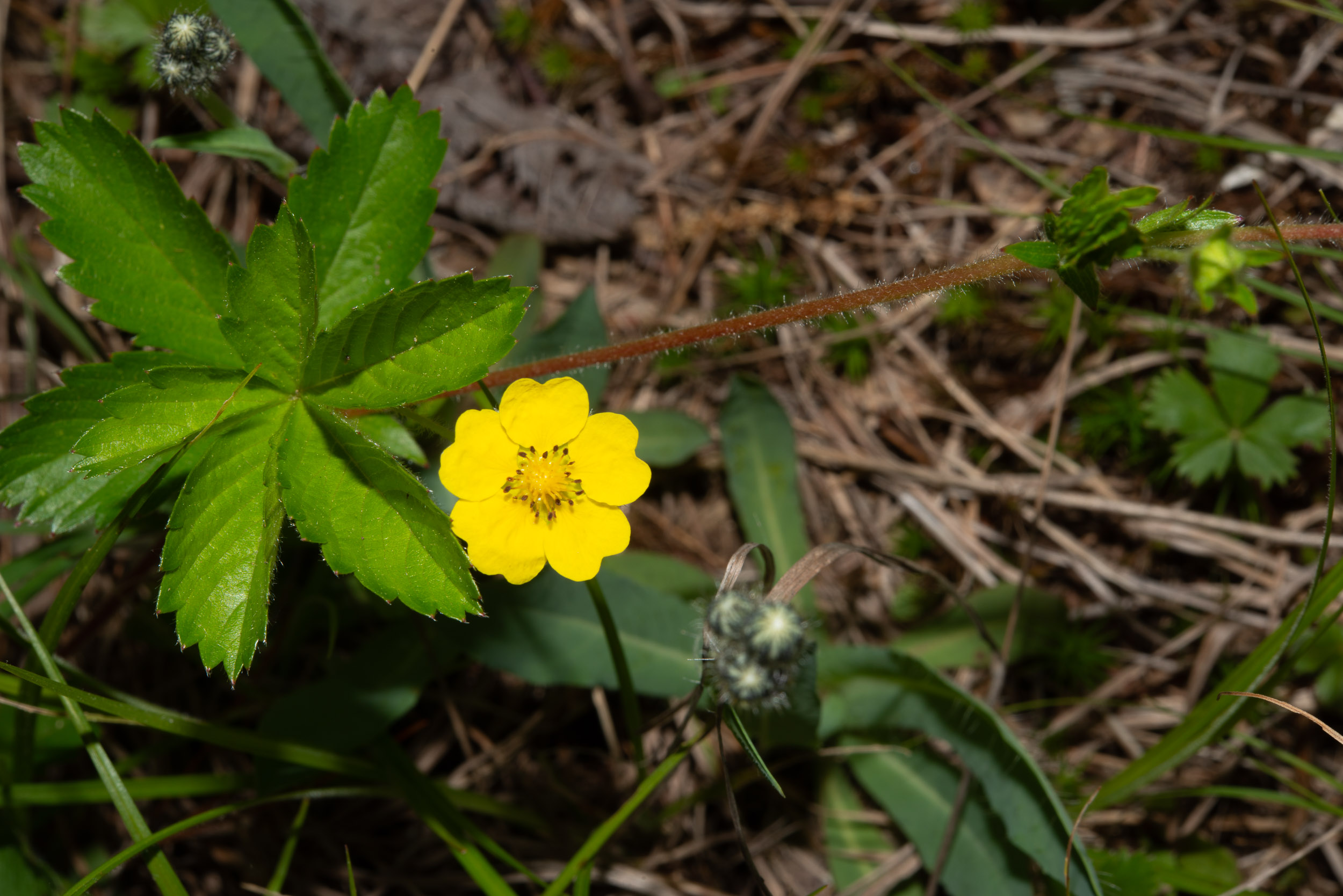
5/27/2014 · Dunstable Rural Land Trust, Dunstable, Massachusetts · ≈ 7 × 4½″ (16 × 11 cm) 
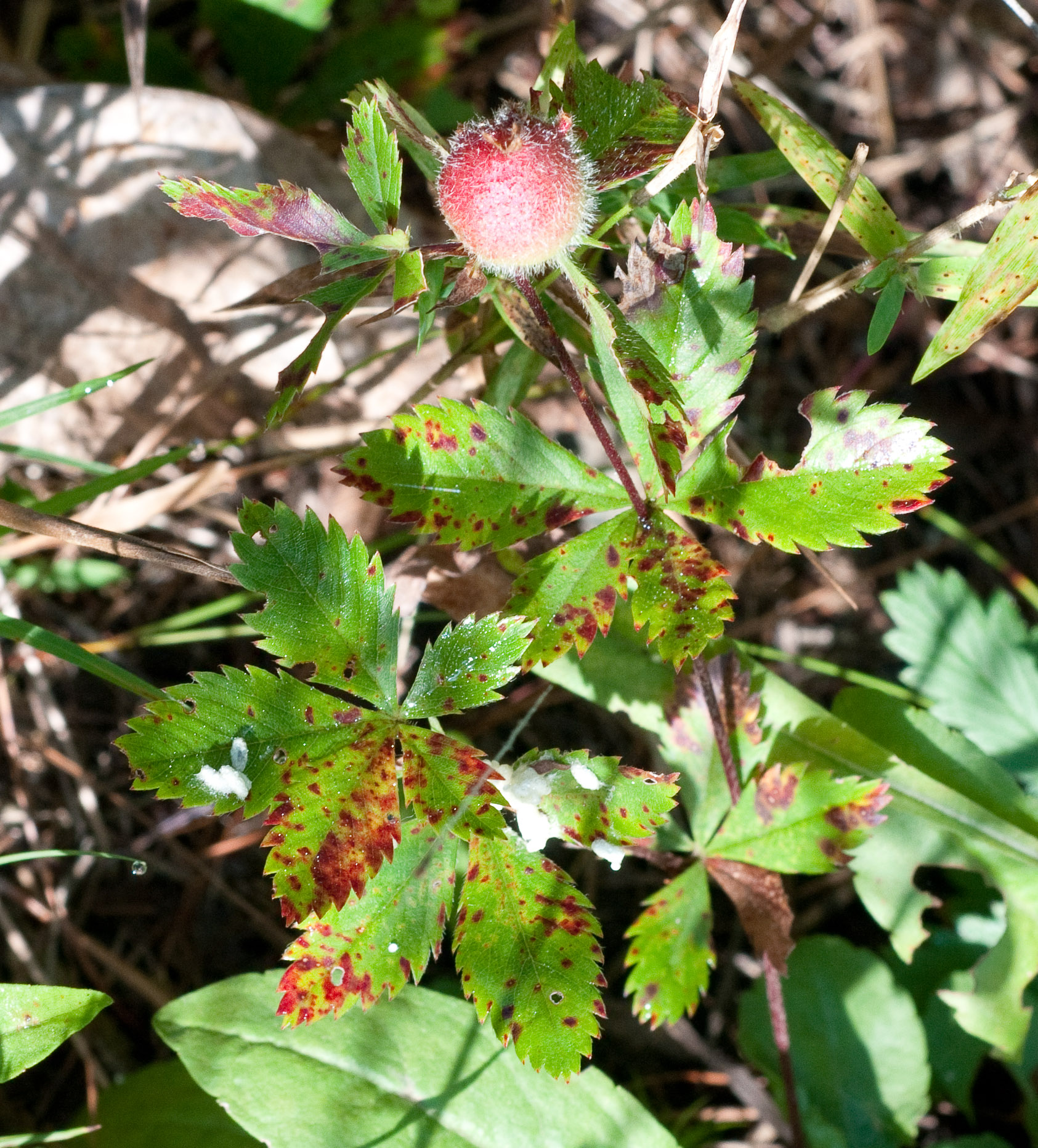
8/25/2009 · Nashua River Rail Trail, East Pepperell, Massachusetts · ≈ 4 × 4½″ (11 × 12 cm)  ID is uncertain
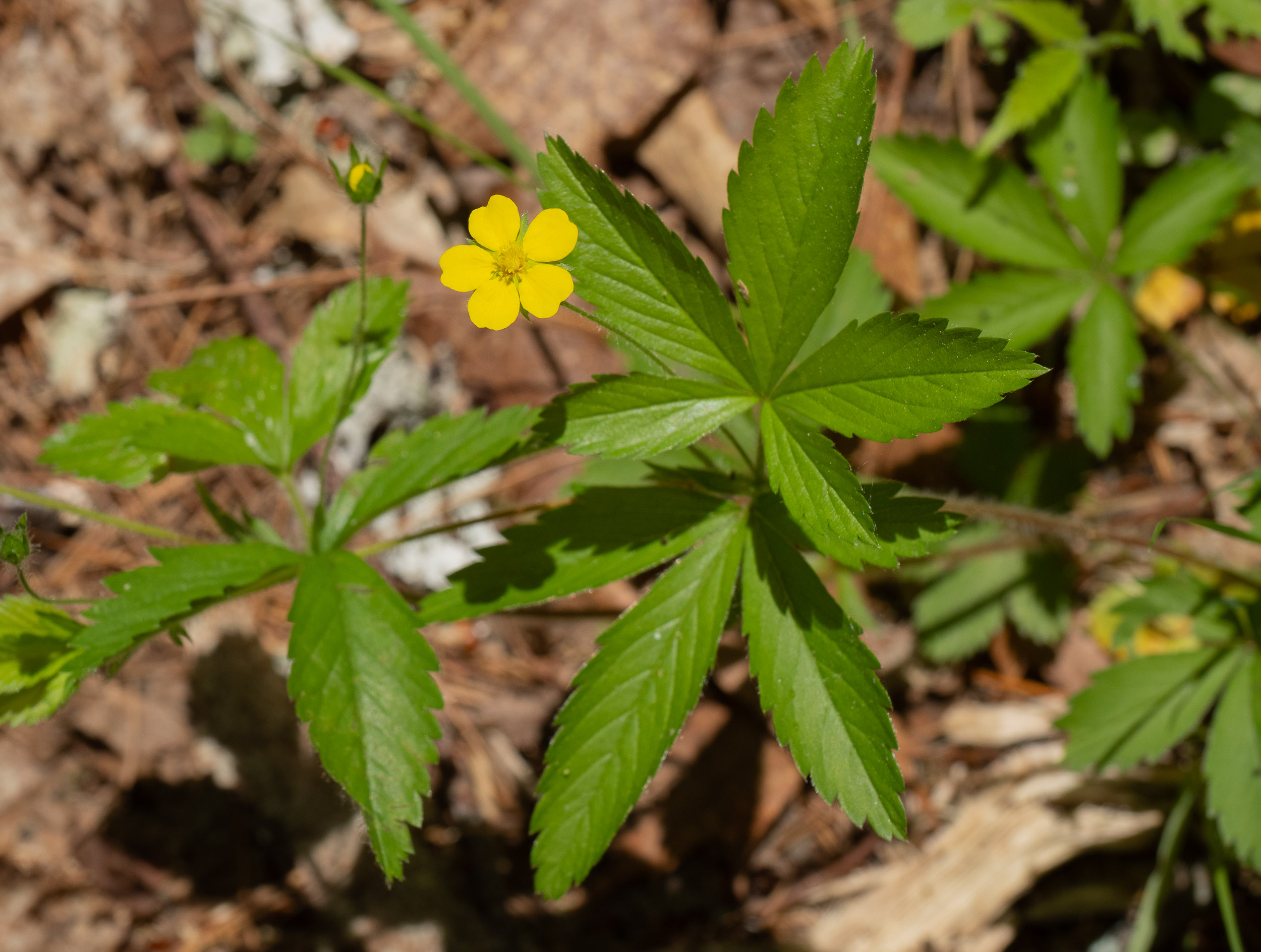
6/2/2023 · Ovens Mouth West, Blue Trail, Boothbay, Maine 
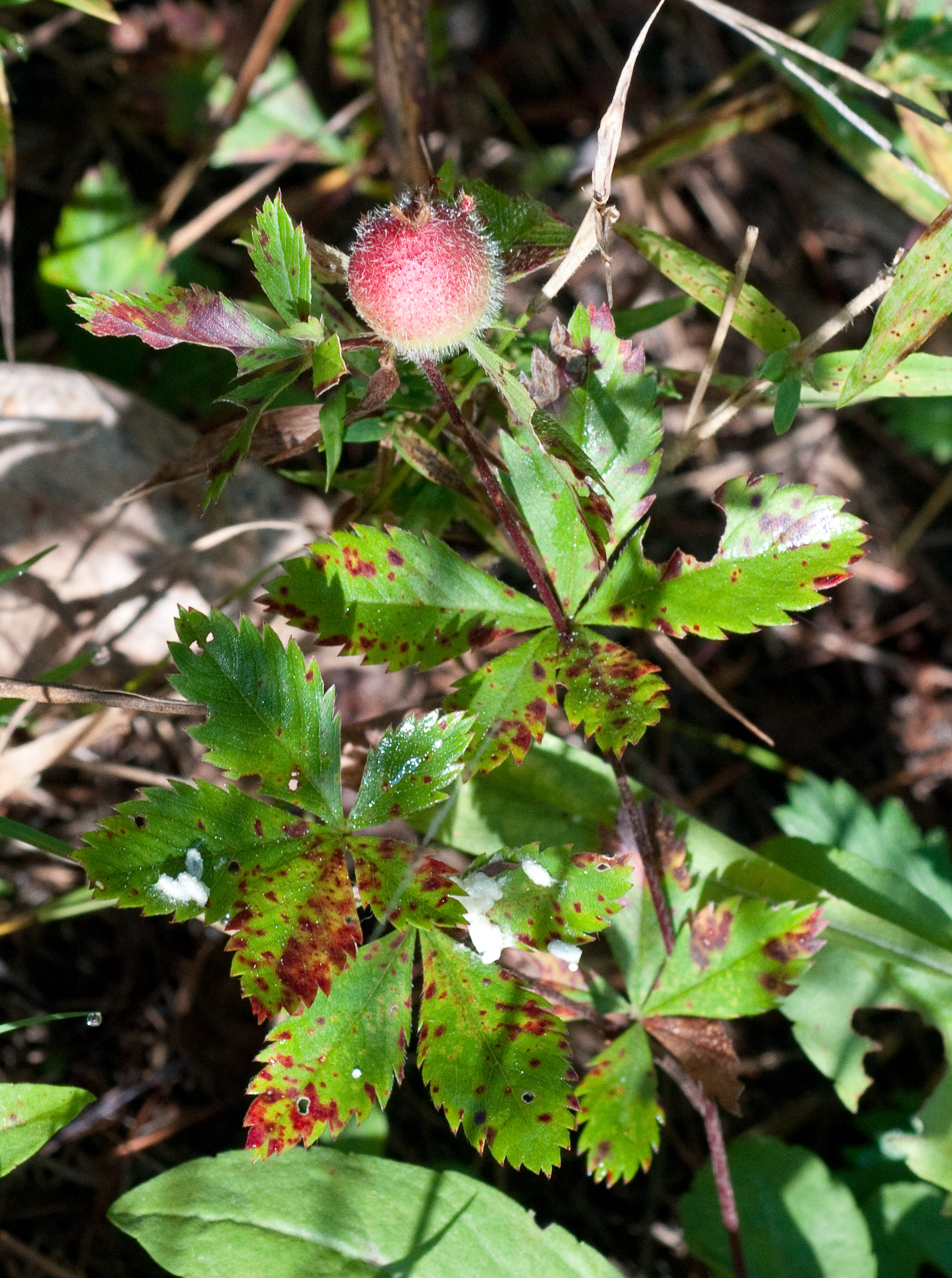
8/25/2009 · Nashua River Rail Trail, East Pepperell, Massachusetts · ≈ 5 × 4″ (13 × 10 cm) ID is uncertain 
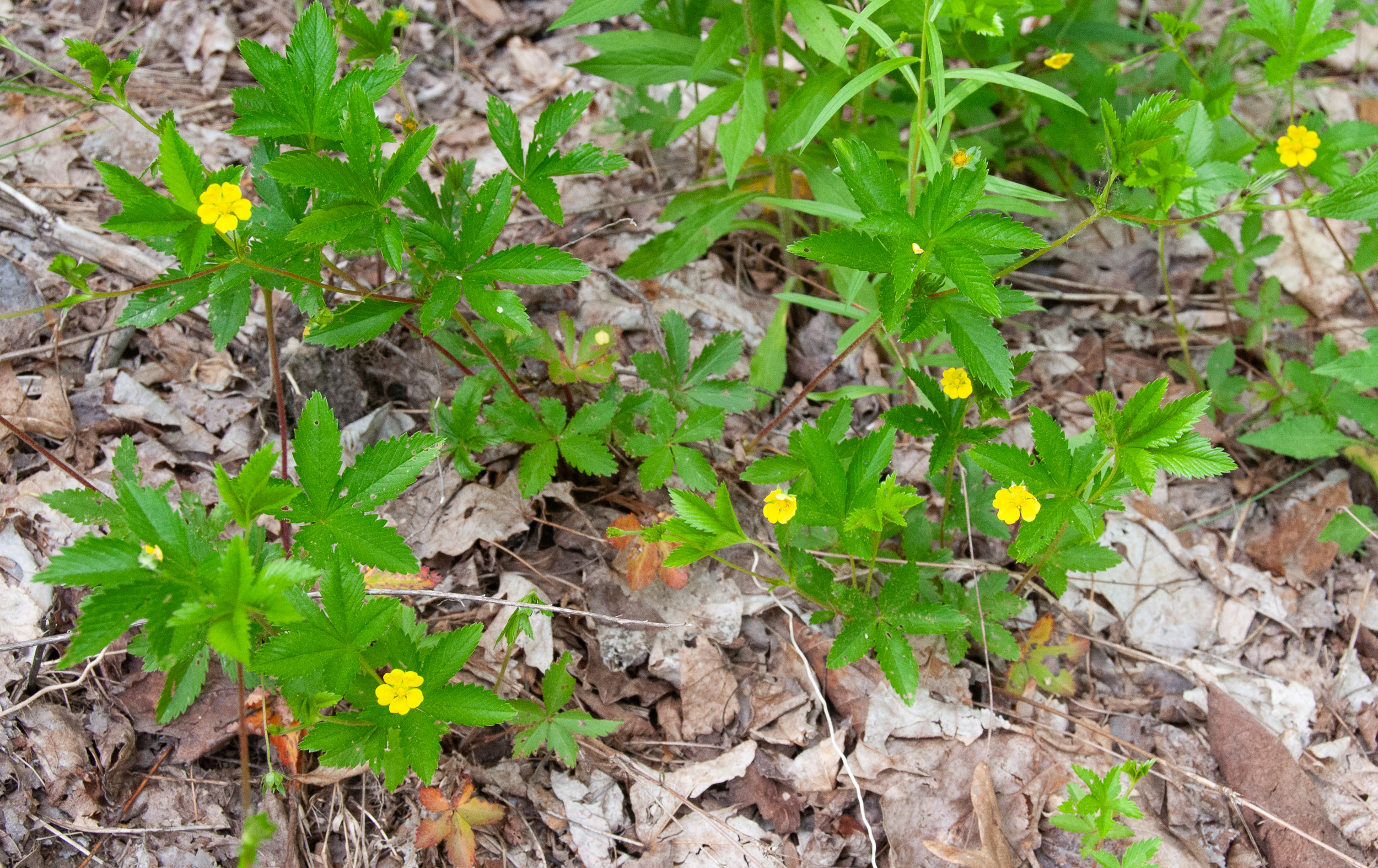
6/2/2008 · Tom and Susan’s, Pepperell, Massachusetts · ≈ 17 × 11″ (43 × 27 cm) ID is uncertain 

6/26/2024 · Morse Mountain, Phippsburg, Maine 

6/9/2025 · Curtis Farm Preserve, Harpswell, Maine · ≈ 8 × 5″ (20 × 13 cm) 
| Kingdom | Plantae | Plants, but not fungi, lichens, or algae (from Stearn's Botanical Latin) |
| Subkingdom | Tracheobionta | Vascular plants—plants with a “circulatory system” for delivering water and nutrients |
| Division | Magnoliophyta | Flowering plants, also known as angiosperms |
| Class | Magnoliopsida | Dicotyledons—plants with two initial seed leaves |
| Subclass | Rosidae | Roses, legumes, proteas, dogwoods, hydrangeas, mistletoes, euphorbias, grapes, many more |
| Order | Rosales | Rose family and eight others |
| Family | Rosaceae | Includes apples, apricots, plums, cherries, peaches, pears, raspberries, strawberries, almonds, roses, meadowsweets, photinias, firethorns, rowans, and hawthorns; many others |
| Genus | Potentilla | Latin for “powerful,” for the medicinal qualities of some species |
| Species | simplex | “Simple, undivided, unbranched” |
Potentilla simplex description by Thomas H. Kent, not updated.

© FloraFinder.org. All rights reserved.