x
FloraFinder uses cookies only for correct operation. More info. Okay


Portulaca oleracea L.

Common purslane, pussley, pursley, pressley, wild portulaca, little hogweed

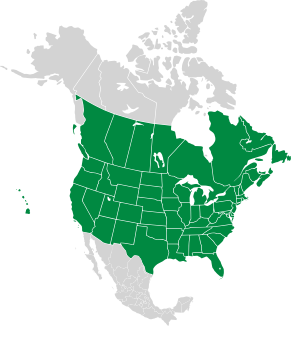
Common purslane is a native of North Africa through the Middle East, and the Indian subcontinent to Malesia and Australesia. It is now a widespread weed in North America. About 40 varieties of this species are cultivated for food. Depending upon your point of view, purslane is an aggressive weed (one of the ten worst in the world by some standards); an amazing plant that can prosper in almost any climate; a great ingredient for salads, soups, or stir fries; or a medicine and health food.

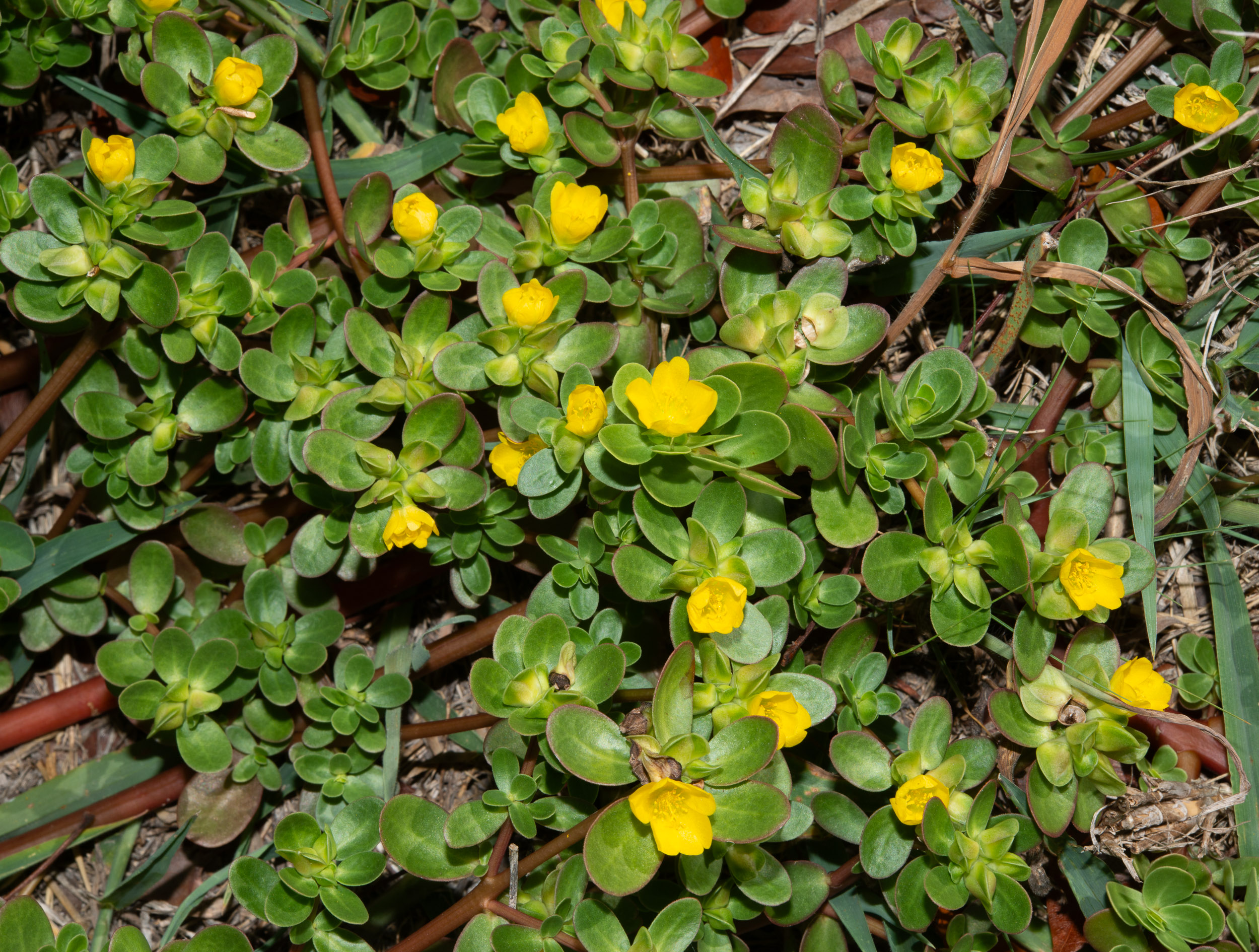
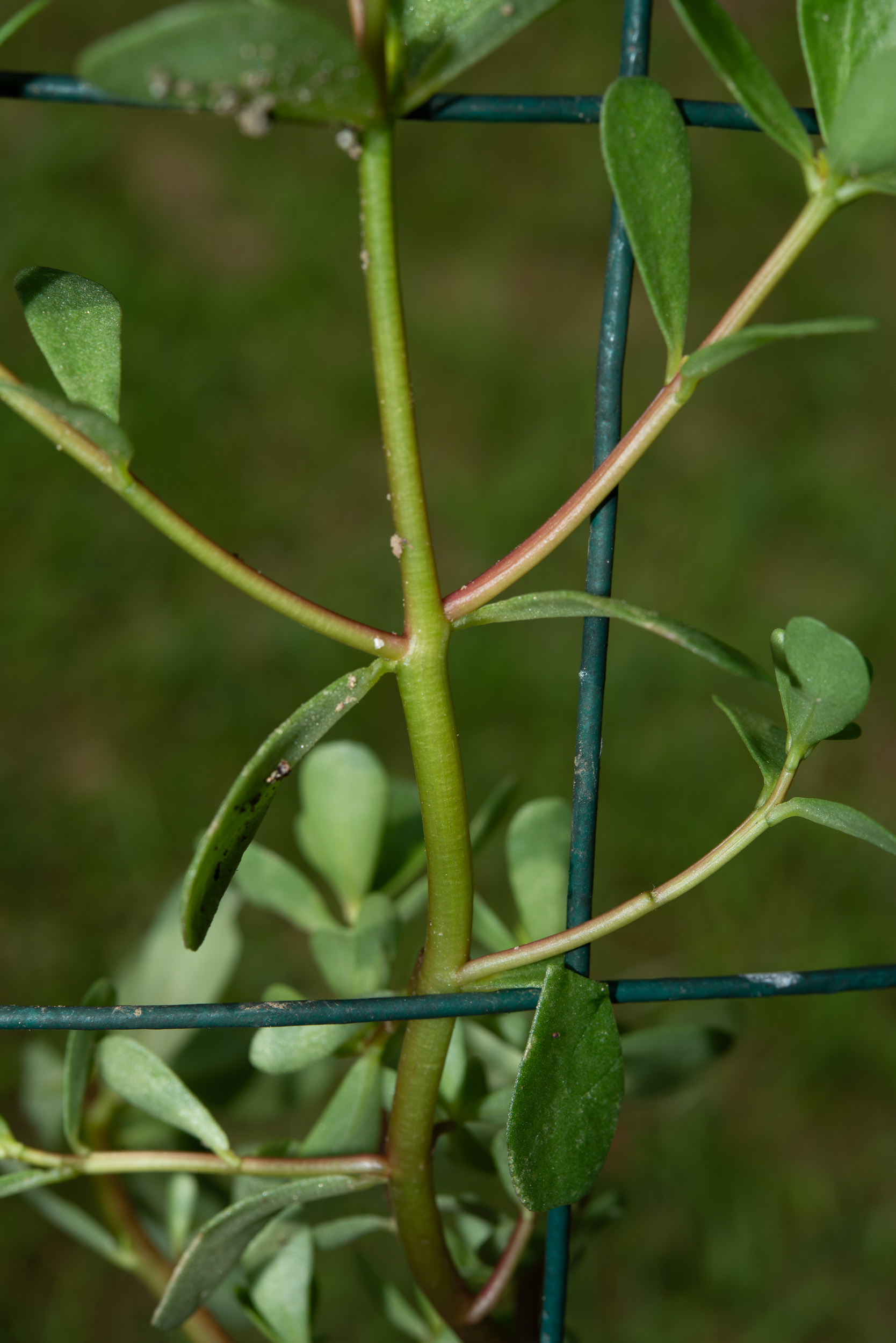
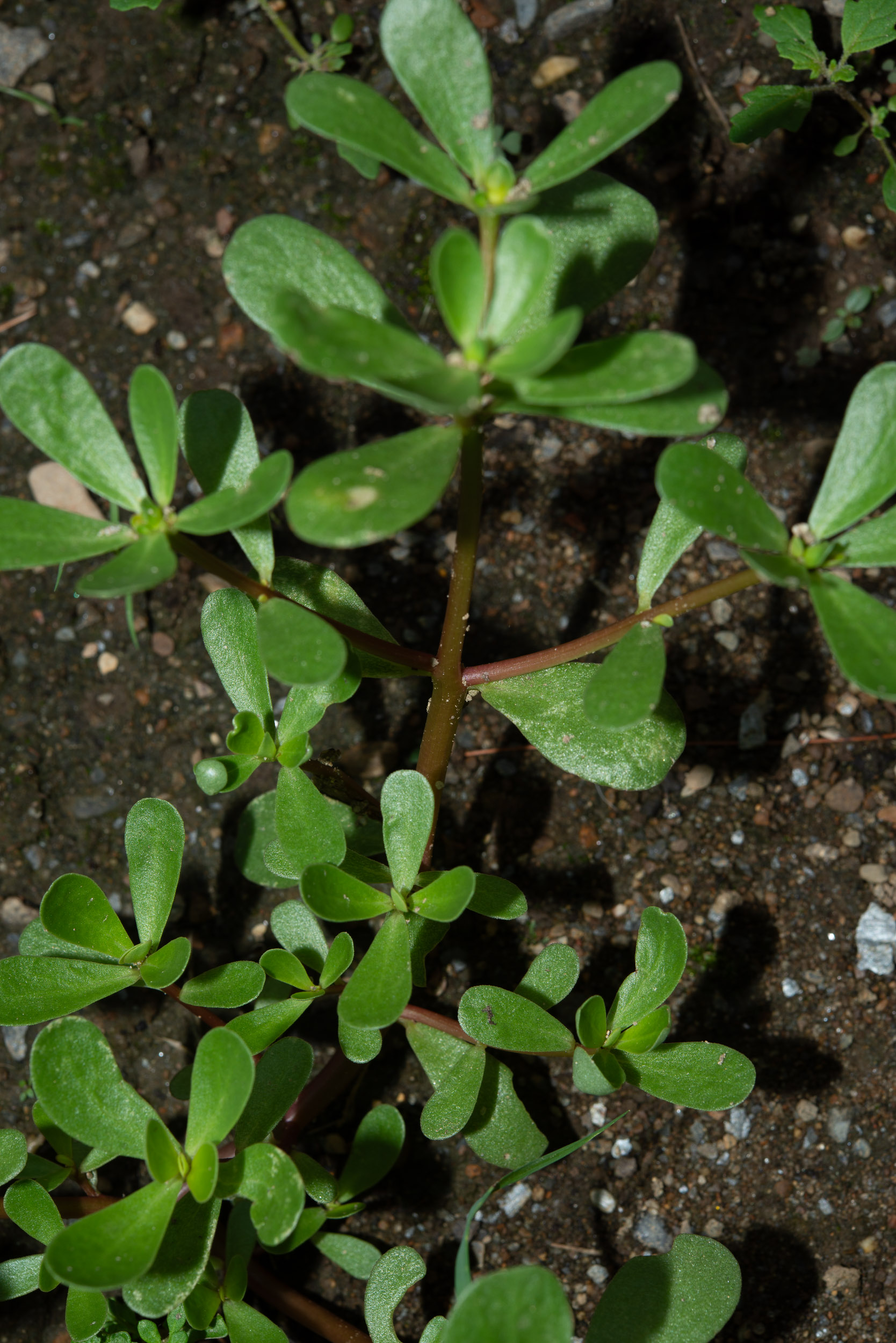
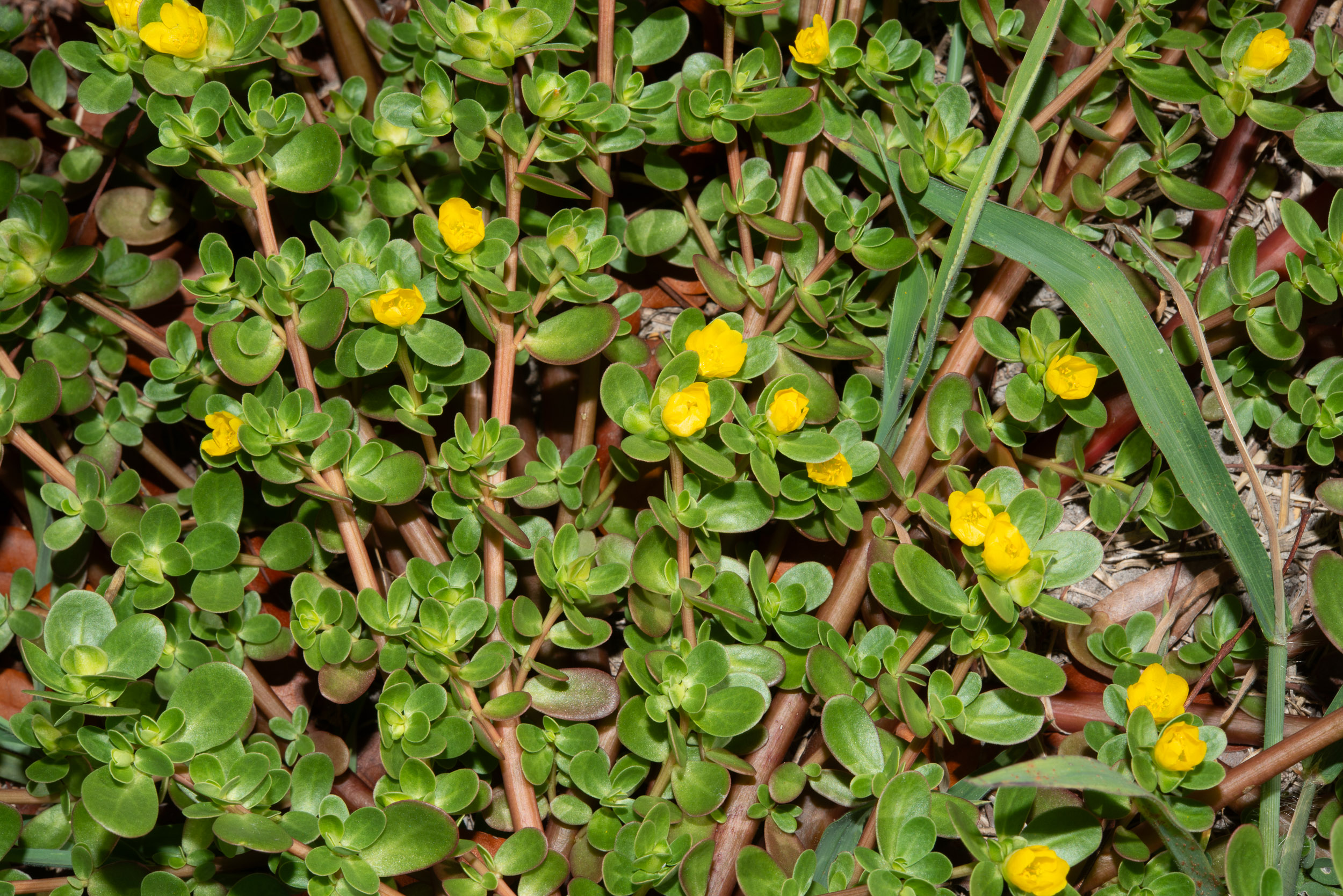
Plants: Green or red stems and are low-growing, mostly prostrate, spreading in a circular growth pattern up to 2′ (60 cm).

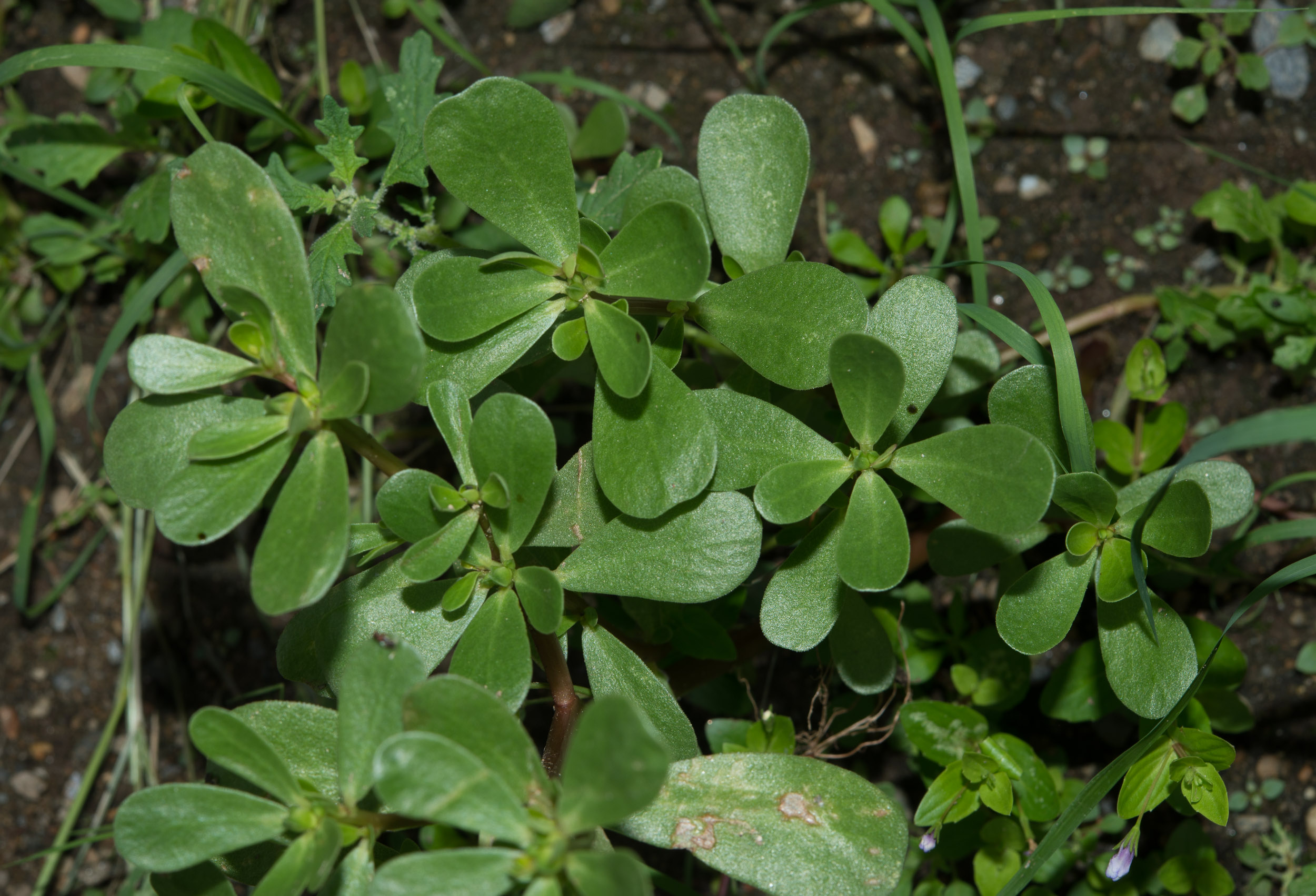
Leaves: succulent—thick, fleshy, and storing water—a trait usually found only in arid climate plants. They are ⅜–1¼″ (9.5–31 mm) long, alternate (occasionally opposite) and sessile or very short-stemmed, roughly oval but thicker on the end away from the stem, and (oblanceolate to obovate).

Flowers: Pale or deep yellow, with five notched petals, ⅛″ (4 mm) across, appearing July to September.

Fruits: Many-seeded capsules. A single plant can produce nearly 200,000 seeds.

Habitats: Rich, sandy soils; disturbed or compacted soils; nearly any climate.

Edibility: Leaves and stems may be added raw to salads. Like okra, they contain a think gel-like substance and may be used to thicken soups or stews. Leaves are described by different sources as sour, salty and spicy, lemon-like, or mushroom-like. Seeds, which have fairly high fat and protein content and are high in iron, are ground into a powder and mixed with cereals.

Medical: Like many common plants, purslane has a long history of medical applications. Purslane is said to be antibacterial, antiscorbutic, depurative, diuretic and febrifuge. Leaves are rich in omega-3 fatty acids, higher than any other leafy green vegetable. Omega-3s are presently believed to have beneficial effects for the immune system, blood pressure, cholesterol levels, and even a range of psychological disorders. Plant juices are applied to the skin to aid in the treatment of skin irritations, diseases, or insect stings; they have also been used to treat coughs. Many other uses are known; see Plants for a Future for additional details.

Online References:

Southeastern Arizona Wildflowers and the Plants of the Sonoran Desert

Plants for a Future

The Lady Bird Johnson Wildflower Center

Flora of North America

References:

del Tredici, Peter, Wild Urban Plants of the Northeast: a Field Guide, Comstock Publishing Associates, a division of Cornell Universty Press, 2010, p. 268

Clemants, Steven; Gracie, Carol, Wildflowers in the Field and Forest, Oxford University Press, 2006, p. 150

Portulaca neglecta Mack. & Bush
Portulaca oleracea L. ssp. granulatostellulata (Poelln.) Danin & Baker
Portulaca oleracea L. ssp. impolita Danin & Baker
Portulaca oleracea L. ssp. nicaraguensis Danin & Baker
Portulaca oleracea L. ssp. nitida Danin & Baker
Portulaca oleracea L. var. oleracea
Portulaca oleracea L. ssp. papillatostellulata Danin & Baker
Portulaca oleracea L. var. parvifolia (Haw.) Griseb.
Portulaca oleracea L. ssp. stellata Danin & Baker
Portulaca retusa Engelm.


Portulaca oleracea (common purslane, pussley, pursley, pressley, wild portulaca, little hogweed)

4/13/2015 · Flamingo Campground, Everglades National Park, Florida · ≈ 9 × 7″ (22 × 16 cm)

Portulaca oleracea (common purslane, pussley, pursley, pressley, wild portulaca, little hogweed)

Purslane is just a few inches tall. It is on this fence only for a photo-op. · 7/25/2013 · Tom and Susan’s, Pepperell, Mass­a­chu­setts · ≈ 4½ × 7″ (12 × 18 cm)

Portulaca oleracea (common purslane, pussley, pursley, pressley, wild portulaca, little hogweed)

7/25/2013 · Tom and Susan’s, Pepperell, Mass­a­chu­setts · ≈ 9 × 6″ (22 × 15 cm)
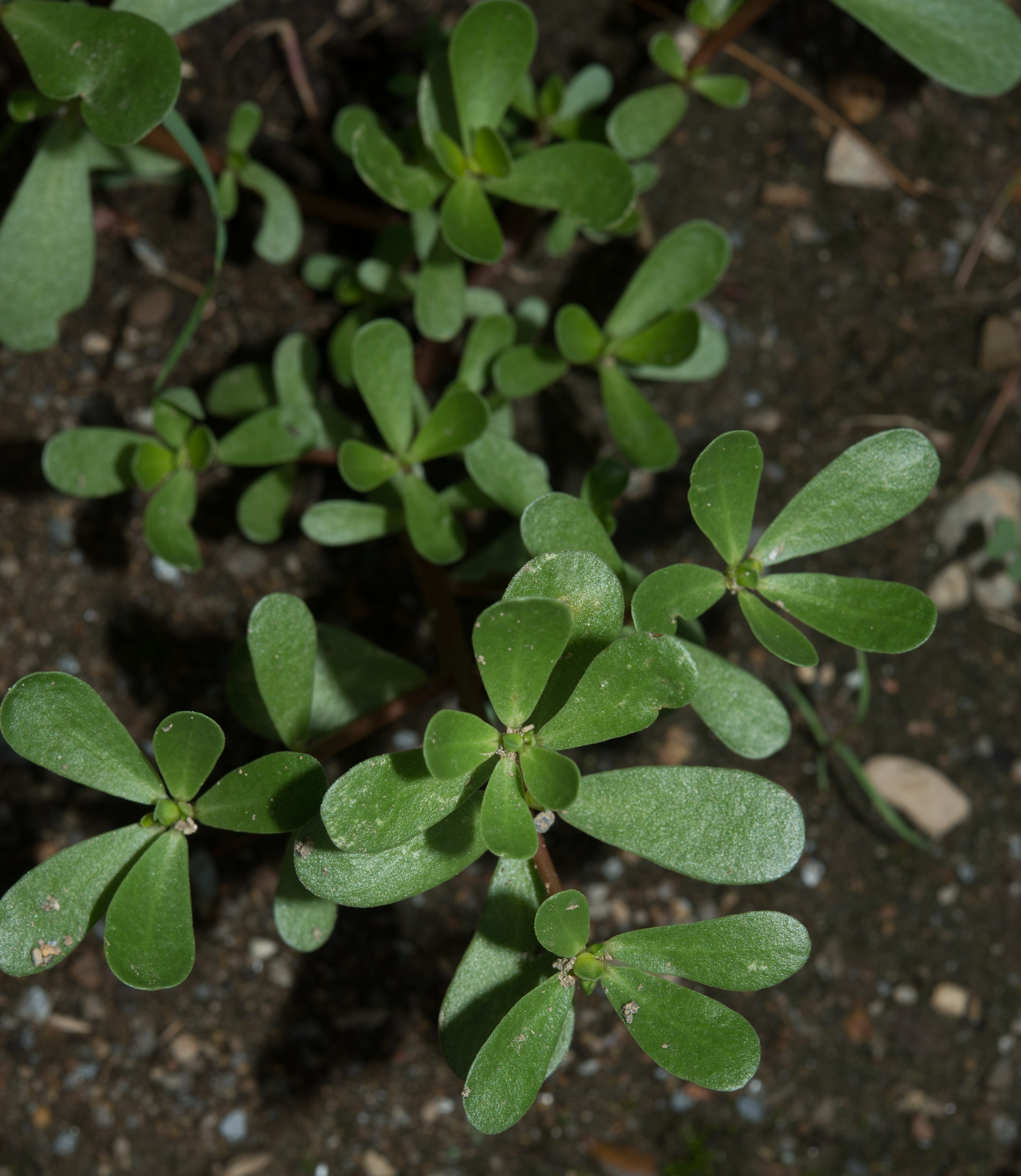
Portulaca oleracea (common purslane, pussley, pursley, pressley, wild portulaca, little hogweed)

4/13/2015 · Flamingo Campground, Everglades National Park, Florida · ≈ 15 × 10″ (37 × 25 cm)

Portulaca oleracea (common purslane, pussley, pursley, pressley, wild portulaca, little hogweed)

7/25/2013 · Tom and Susan’s, Pepperell, Mass­a­chu­setts · ≈ 6 × 9″ (16 × 23 cm)

Portulaca oleracea (common purslane, pussley, pursley, pressley, wild portulaca, little hogweed)

7/25/2013 · Tom and Susan’s, Pepperell, Mass­a­chu­setts · ≈ 6 × 7″ (15 × 17 cm)

Portulaca oleracea (common purslane, pussley, pursley, pressley, wild portulaca, little hogweed)

4/1/2025 · Tagus Cove, Isabella, Galápagos Islands, Ecuador

Portulaca oleracea (common purslane, pussley, pursley, pressley, wild portulaca, little hogweed)

4/13/2015 · Flamingo Campground, Everglades National Park, Florida · ≈ 11 × 7″ (28 × 18 cm)

KingdomPlantaePlants, but not fungi, lichens, or algae (from Stearn's Botanical Latin)
SubkingdomTracheobiontaVascular plants—plants with a “circulatory system” for delivering water and nutrients
DivisionMagnoliophytaFlowering plants, also known as angiosperms
ClassMagnoliopsidaDicotyledons—plants with two initial seed leaves
SubclassCaryophyllidaeCacti, many other succulents, carnivorous plants, and leadworts
OrderCaryophyllalesIncludes cacti, carnations, amaranths, ice plants, and many carnivorous plants
FamilyPortulacaceaeThe purslane family, including mostly succulent plants such as portulaca
GenusPortulacaPossibly from portula, “little gate,” in reference to a lid on the fruit capsule
SpeciesoleraceaMeans “of the vegetable garden” because it is edible

About plant names...

Range:

About this map...

Portulaca oleracea description by Thomas H. Kent, not updated.

© FloraFinder.org. All rights reserved.