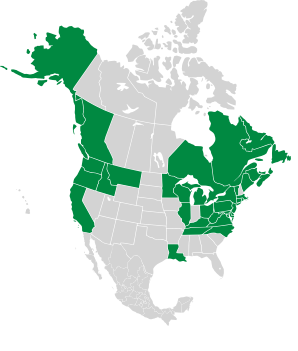
Reynoutria sachalinensis (F. Schmidt ex Maxim.) Nakai
Polygonum sachalinense F. Schmidt ex Maxim.
Giant knotweed, Sakhalin knotweed, Japanese bamboo
Giant knotweed is related to the more common and smaller Japanese knotweed. It is Asian in origin, introduced to North America as an ornamental plant. Both knotweeds spread rapidly, and are considered invasive species.
Plants: Giant knotweed spreads via their root systems, which may extend 50 feet or more and have roots up to 3″ (7.6 cm) in diameter. Stems are hollow, and thickly clustered, closely resembling bamboo. Plants reach 13′ (4 m) in height.
Leaves: Alternate, ovate (oval, wider at the bottom), cordate (heart-shaped), up to 1′ (30 cm) long, with crenate (wavy) edges.
Flowers: groups of slender cone-shaped panicles, white or greenish in color, appearing from July to October.
Fruits: Three winged, with dark and glossy seeds dispersed by wind and water.
Habitats: Rivers, swamps, and other wetland regions.
 |
Two knotweeds. |
Online References:
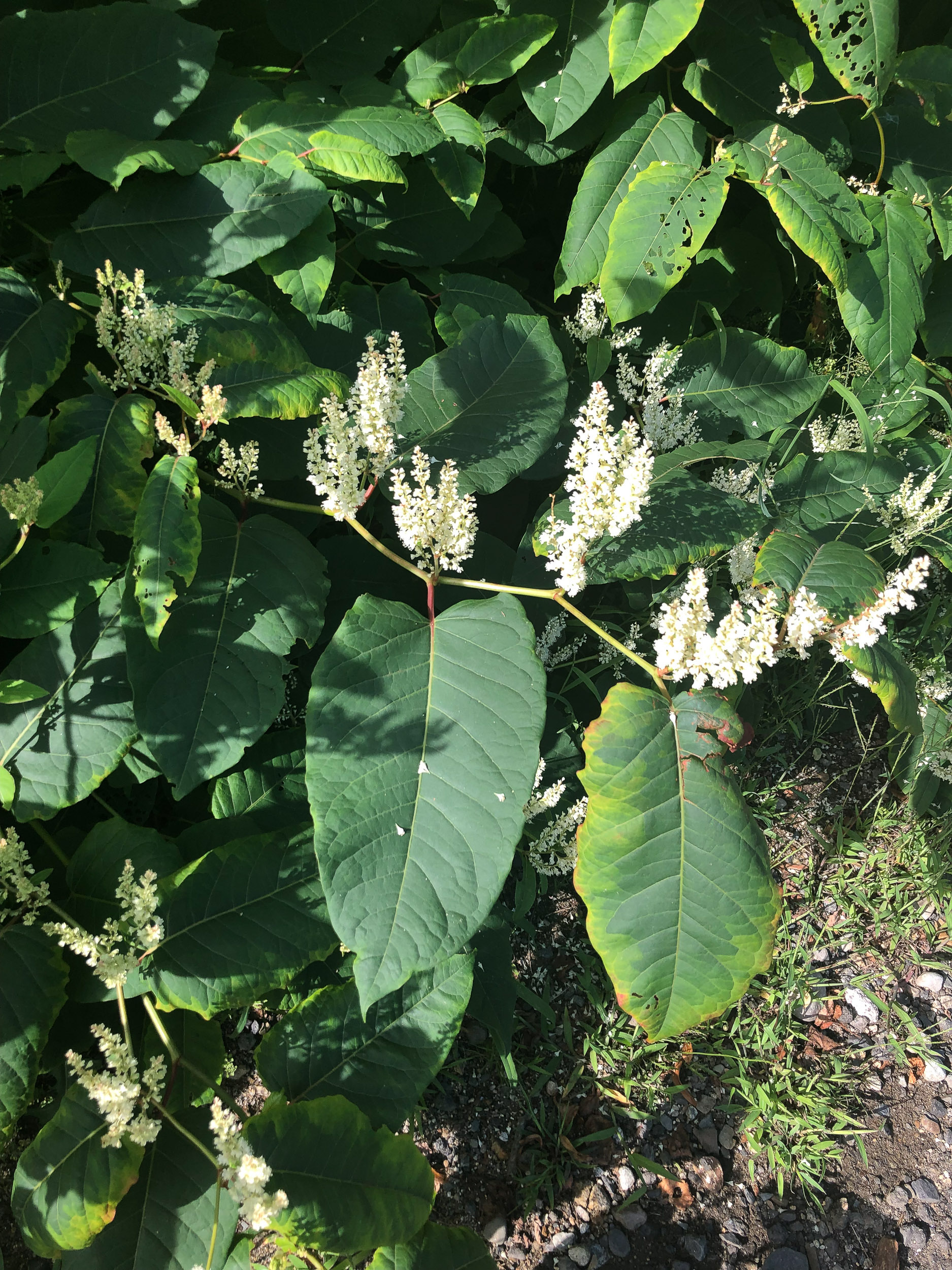
8/23/2019 · Mackworth Island, Falmouth, Maine 
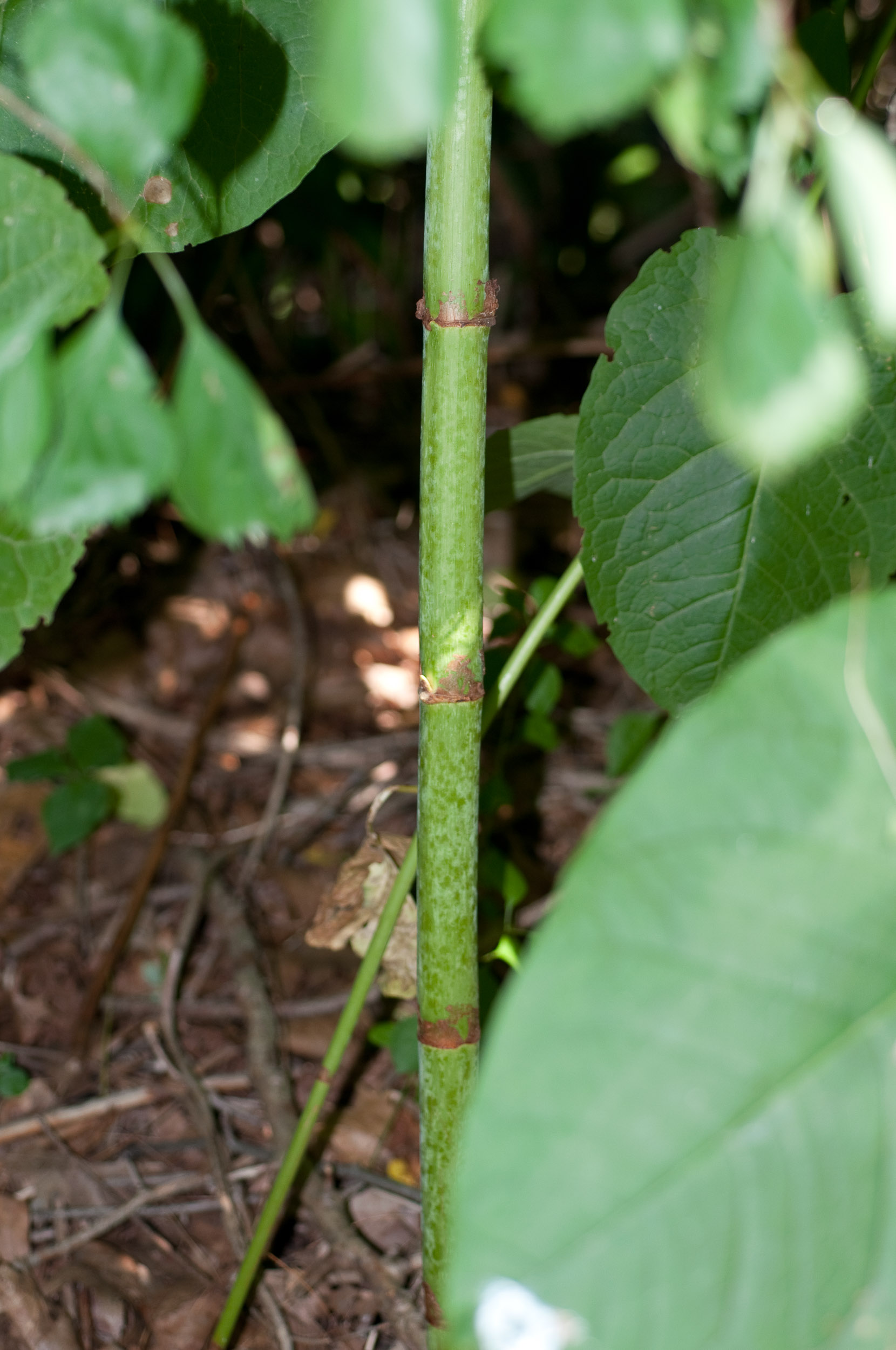
7/17/2010 · Mackworth Island, Falmouth, Maine · ≈ 1 × 2′ (41 × 62 cm) 
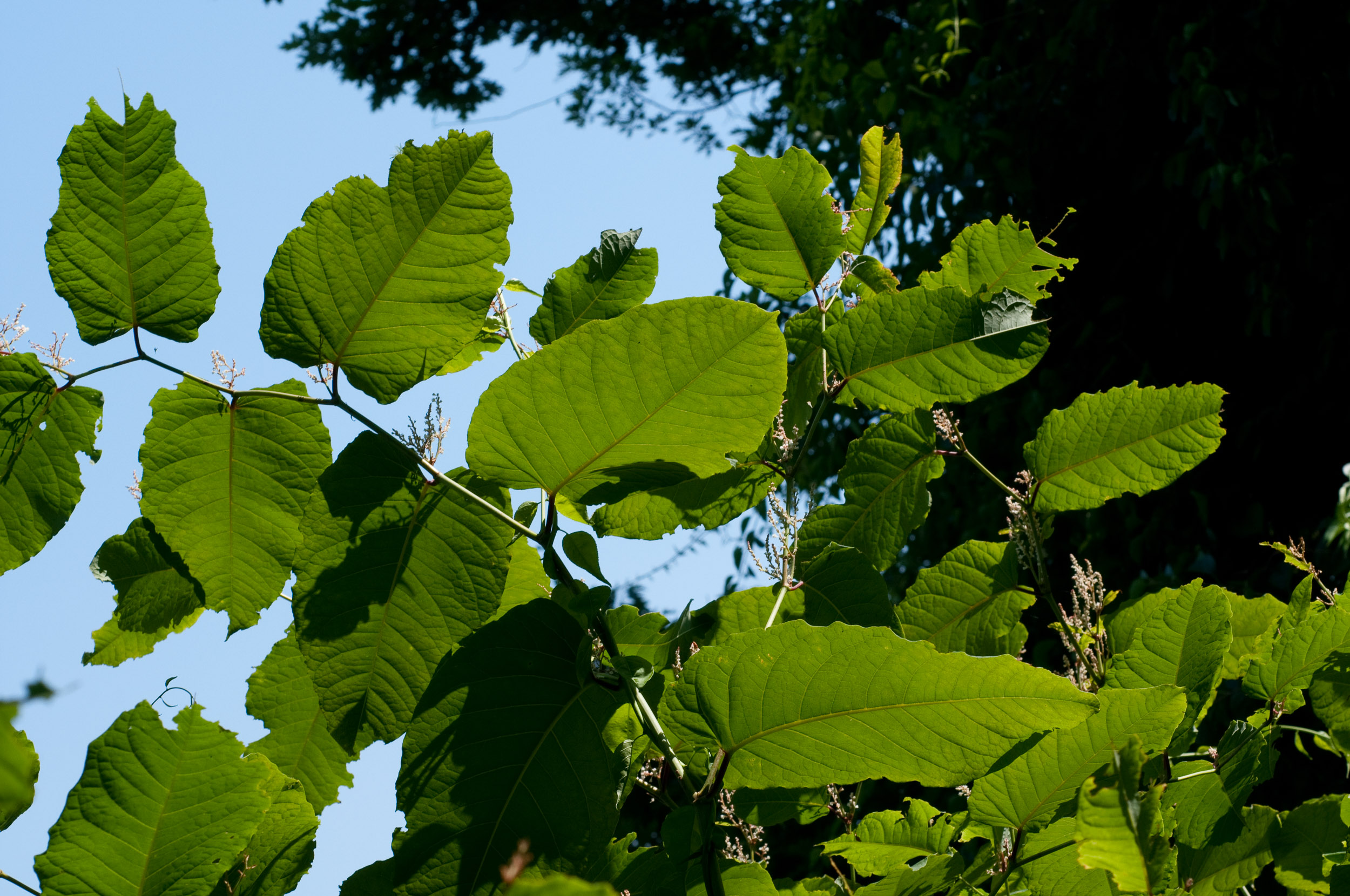
These plants are about 10' high. · 7/17/2010 · Mackworth Island, Falmouth, Maine 
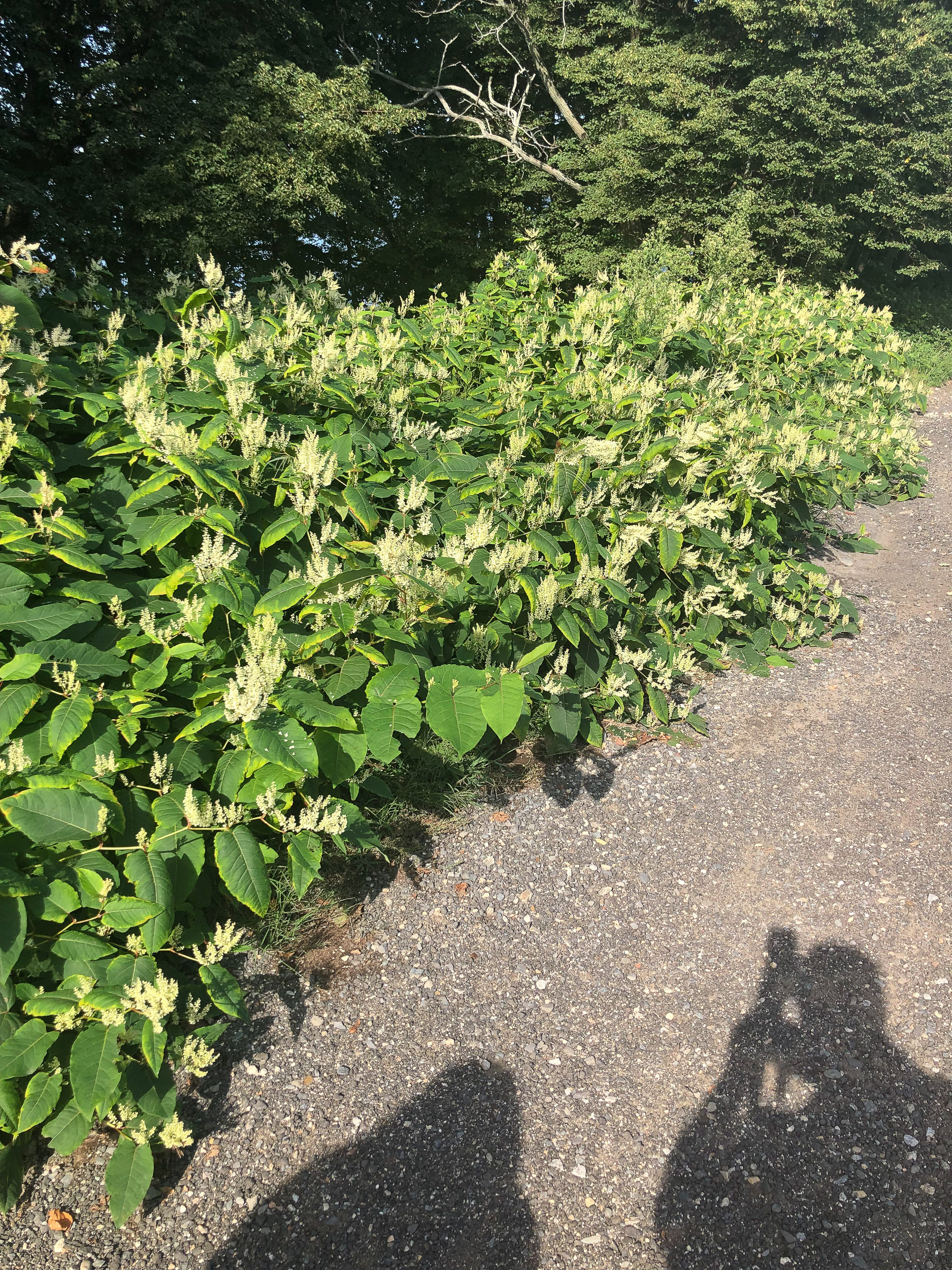
8/23/2019 · Mackworth Island, Falmouth, Maine, United States of America 
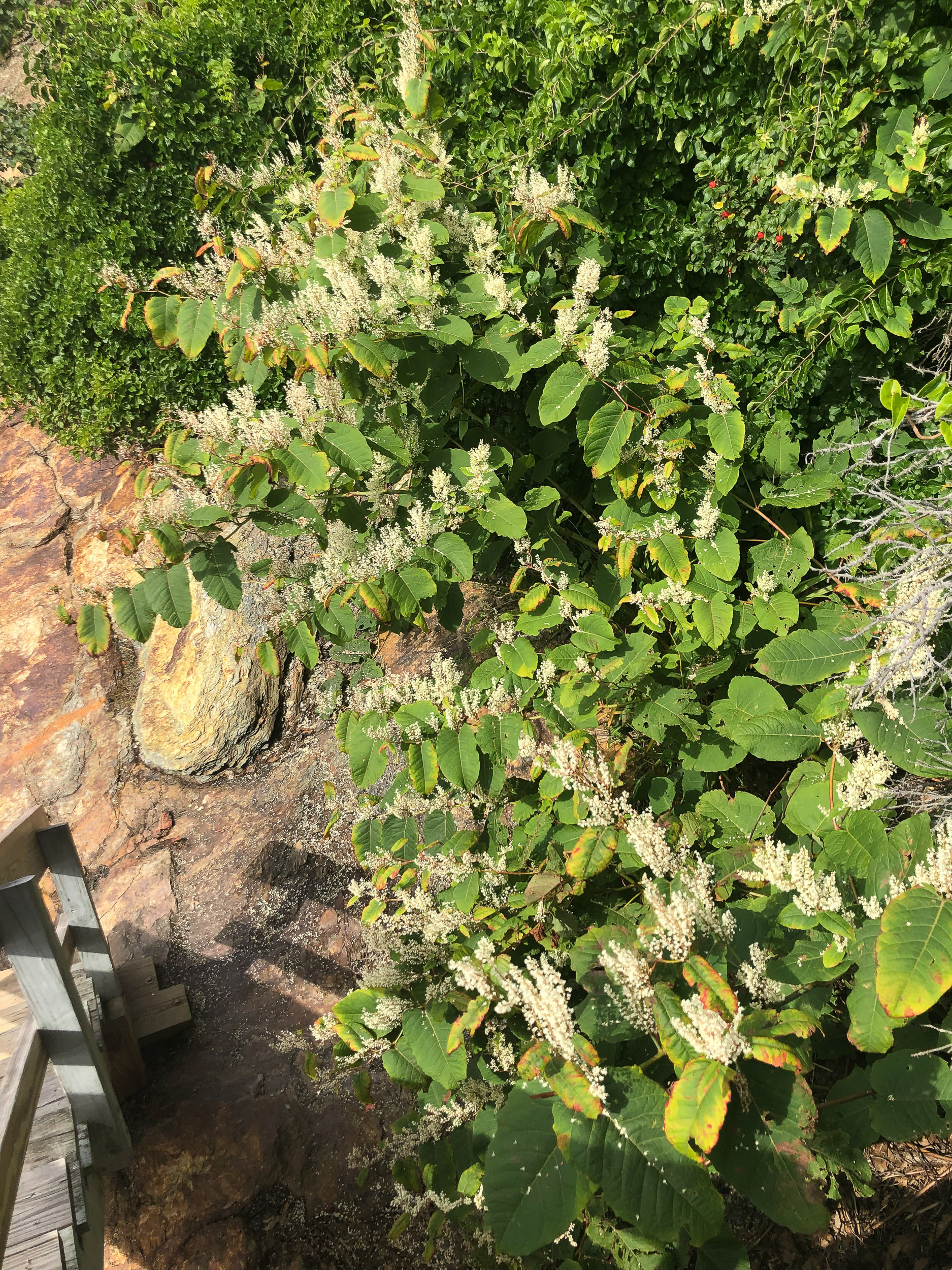
8/23/2019 · Mackworth Island, Falmouth, Maine, United States of America 
| Kingdom | Plantae | Plants, but not fungi, lichens, or algae (from Stearn's Botanical Latin) |
| Subkingdom | Tracheobionta | Vascular plants—plants with a “circulatory system” for delivering water and nutrients |
| Division | Magnoliophyta | Flowering plants, also known as angiosperms |
| Class | Magnoliopsida | Dicotyledons—plants with two initial seed leaves |
| Subclass | Caryophyllidae | Cacti, many other succulents, carnivorous plants, and leadworts |
| Order | Caryophyllales | Includes cacti, carnations, amaranths, ice plants, and many carnivorous plants |
| Family | Polygonaceae | Knotweed or smartweed family |
| Genus | Polygonum | Greek poly, “many,” and gonu, “knee,” for the swollen jointed stems |
| Species | sachalinense | From the Sakhalin Islands north of Japan |
Polygonum sachalinense description by Thomas H. Kent, not updated.

© FloraFinder.org. All rights reserved.