Pinus taeda L.
Loblolly pine, North Carolina pine, oldfield pine, bull pine, rosemary pine
Loblolly pine is native to southeastern North America. It prefers hot, humid summers and mild winters.
Plants: Trees are 60–90′ (18–27 m) tall, with a typically straight trunk 1–5′ (40–150 cm) in diameter. The bark on mature trees has furrows. The largest known tree is 182′ (55 m) tall.
Leaves: Needles occur in groups of three, and are 4½–9″ (12–22 cm) long.
Flowers: The trees are monoecious (they bear both male and female flowers). Male flowers are groups of red to yellow cylinders at branch tips, each ½–1½″ (1.3–3.8 cm) long.
Fruits: Female cones are green aging to pale brown, conical in shape, 2½–5 ⨉ ¾–1″ (7–13 ⨉ 2–3 cm), with sharp spines 1/16–3/16″ (3–6 mm) long.
Habitats: Hot, humid summers and mild winters.
Online References:
References:

5/6/2011 · Chesapeake Bay Environmental Center, Chester, Maryland · ≈ 12 × 8″ (31 × 20 cm)  ID is uncertain

5/6/2011 · Chesapeake Bay Environmental Center, Chester, Maryland · ≈ 8 × 5″ (19 × 13 cm) ID is uncertain 
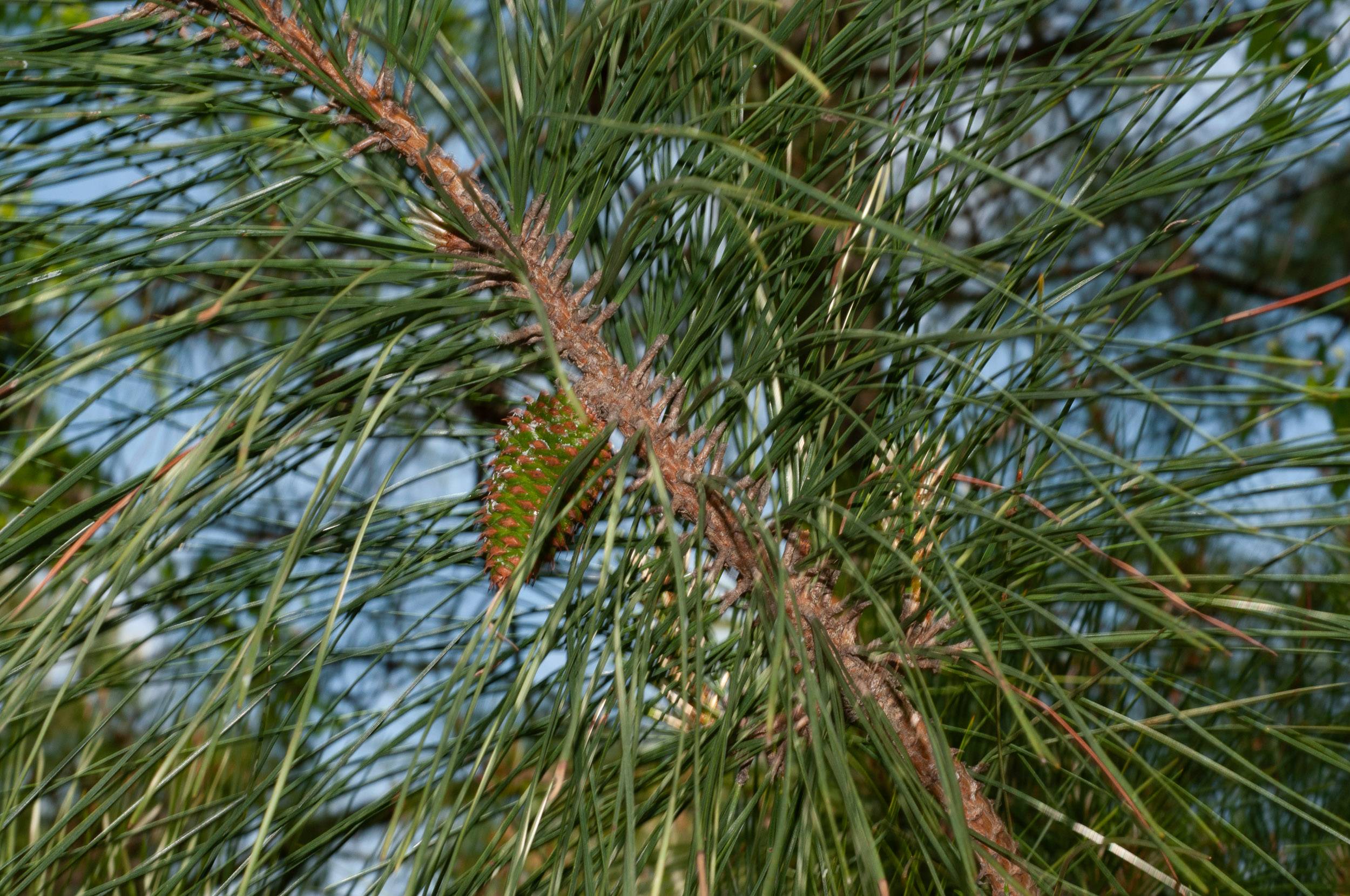
5/6/2011 · Chesapeake Bay Environmental Center, Chester, Maryland · ≈ 15 × 10″ (39 × 26 cm) ID is uncertain 
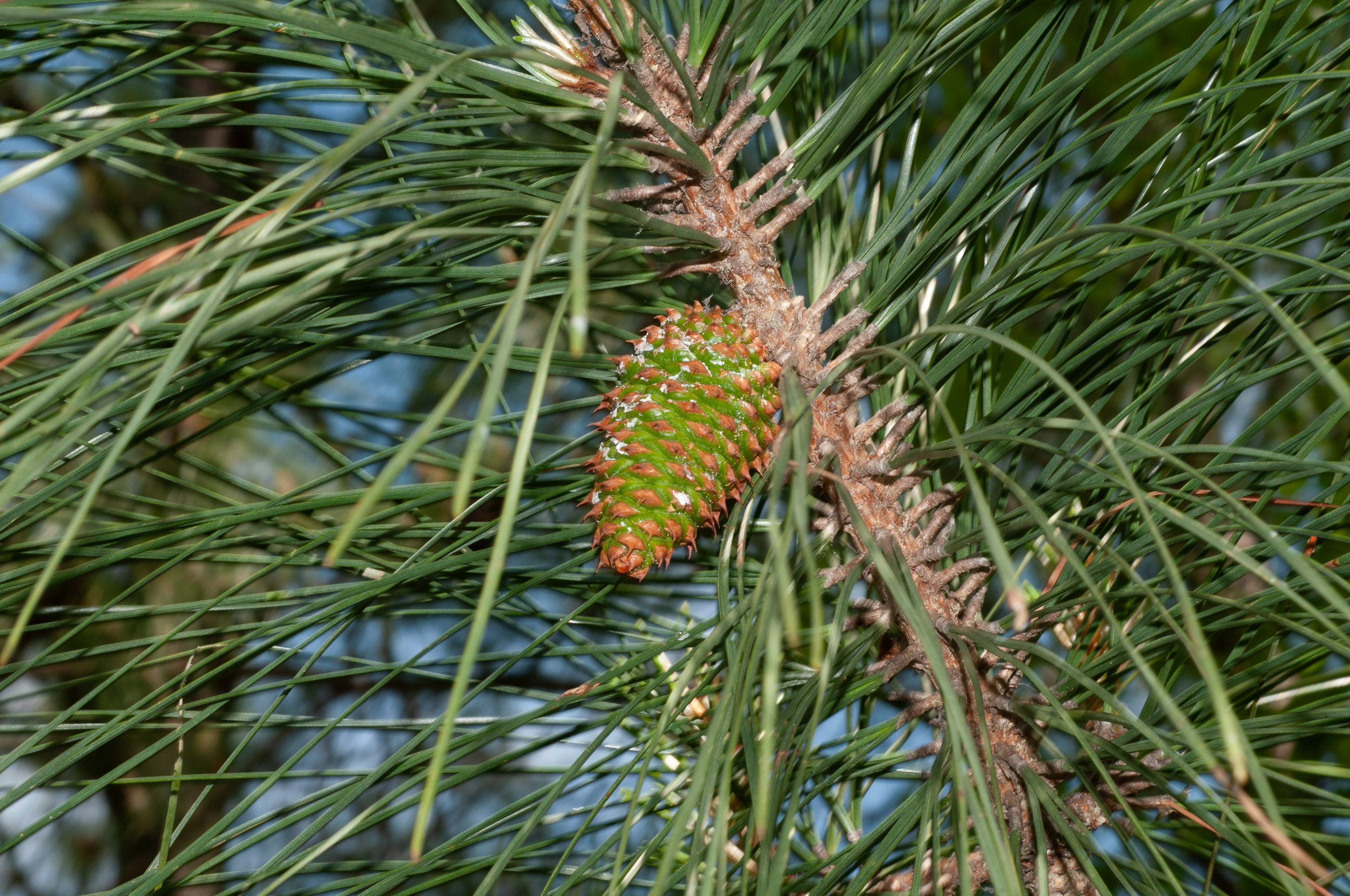
5/6/2011 · Chesapeake Bay Environmental Center, Chester, Maryland · ≈ 11 × 7″ (27 × 18 cm) ID is uncertain 
| Kingdom | Plantae | Plants, but not fungi, lichens, or algae (from Stearn's Botanical Latin) |
| Subkingdom | Tracheobionta | Vascular plants—plants with a “circulatory system” for delivering water and nutrients |
| Division | Coniferophyta | Conifers—cone-bearing trees (and a few shrubs) |
| Class | Pinopsida | Gymnosperms such as cedars, Douglas-firs, cypresses, firs, junipers, kauri, larches, pines, hemlocks, redwoods, spruces, and yews |
| Order | Pinales | Cone-bearing plants: cedar, cypress, fir, juniper, larch, pine, redwood, spruce, yew, and others |
| Family | Pinaceae | Pine family: cedars, firs, hemlocks, larches, pines and spruces |
| Genus | Pinus | Latin for “pine” |
| Species | taeda | Ultimately from Ancient Greek δᾰΐς (daḯs), resinous pinewood |
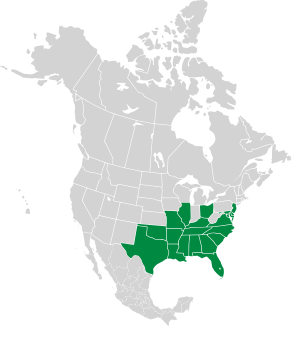
Pinus taeda description by Thomas H. Kent, not updated.

© FloraFinder.org. All rights reserved.