Ostrya virginiana (Mill.) K. Koch
Eastern hophornbeam, ironwood, hophornbeam, hop-hornbeam
Hornbeam vs. the unrelated hophornbeam
Ostrya virginiana
Carpinus caroliniana


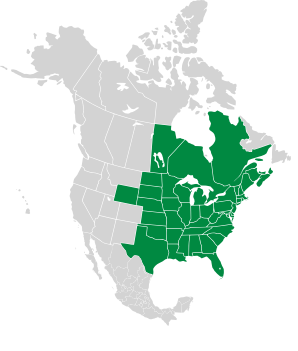
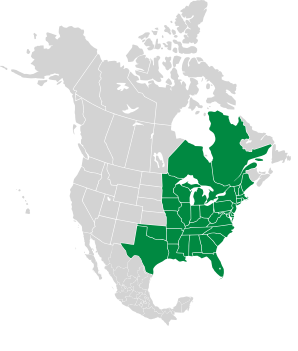
|
Ostrya virginiana (Mill.) K. Koch Eastern hophornbeam, ironwood, hophornbeam, hop-hornbeam Hornbeam vs. the unrelated hophornbeam | ||
| You are here Ostrya virginiana |
Carpinus caroliniana |
|
|---|---|---|
| Common Name | |
|
| Plant | Small tree, to 20–30′ (6.1–9.1 m). Bark reddish brown to gray brown, in loose strips. | Trees reach 33–49′ (10–15 m), and often have multiple stems. Bark is smooth, dark bluish gray, furrowed near the base in older trees. The trunks are often fluted with vertical depressions that look a little like rippling muscles. |
| Leaves | Unlobed, alternating, 1¾–5″ (5–13 cm) × 1½–2″ (4–6 cm), with double serrations on the edges. Tops are yellow-green, bottoms are pale green. | Dark green, alternate, 1–4½″ (3–12 cm) long, with prominent parallel veins and fine serrations or double serrations. |
| Flowers | Male catkins are ¾–1¾″ (2–5 cm) long; female catkins are ¼–½″ (8–15 mm) long | Female flowers are white; male are green—both occur on the same tree. |
| Fruit | Brown nuts 1/16–3/16″ (3–5 mm) long, in conelike drooping clusters enclosed in white papery sacs. | A small ribbed nut ¼–5/16″ (7–8 mm) long, surrounded by a three- to seven-pointed leaf group called an involucre, ¾–1″ (2–3 cm) long. The involucres occur in clusters, and remain on the tree after other leaves drop. |
| Range/ Zones |
|
|
| Habitats | River banks, swamp edges, flood plains, in fertile soil, both moist and dry | Rich wet soils such as floodplains, swamps, or mucks |
Ostrya virginiana description by Thomas H. Kent, not updated.
© FloraFinder.org. All rights reserved.