FloraFinder uses cookies only for correct operation. More info. Okay
Opuntia humifusa (Raf.) Raf.
Indian fig, Indian fig prickly pear, mission cactus, Nopal de Castilla, smooth mountain prickly pear, smooth prickly pear, tuberous prickly pear, tuna de Castilla, tuna mansa, Eastern prickly pear, devil’s-tongue
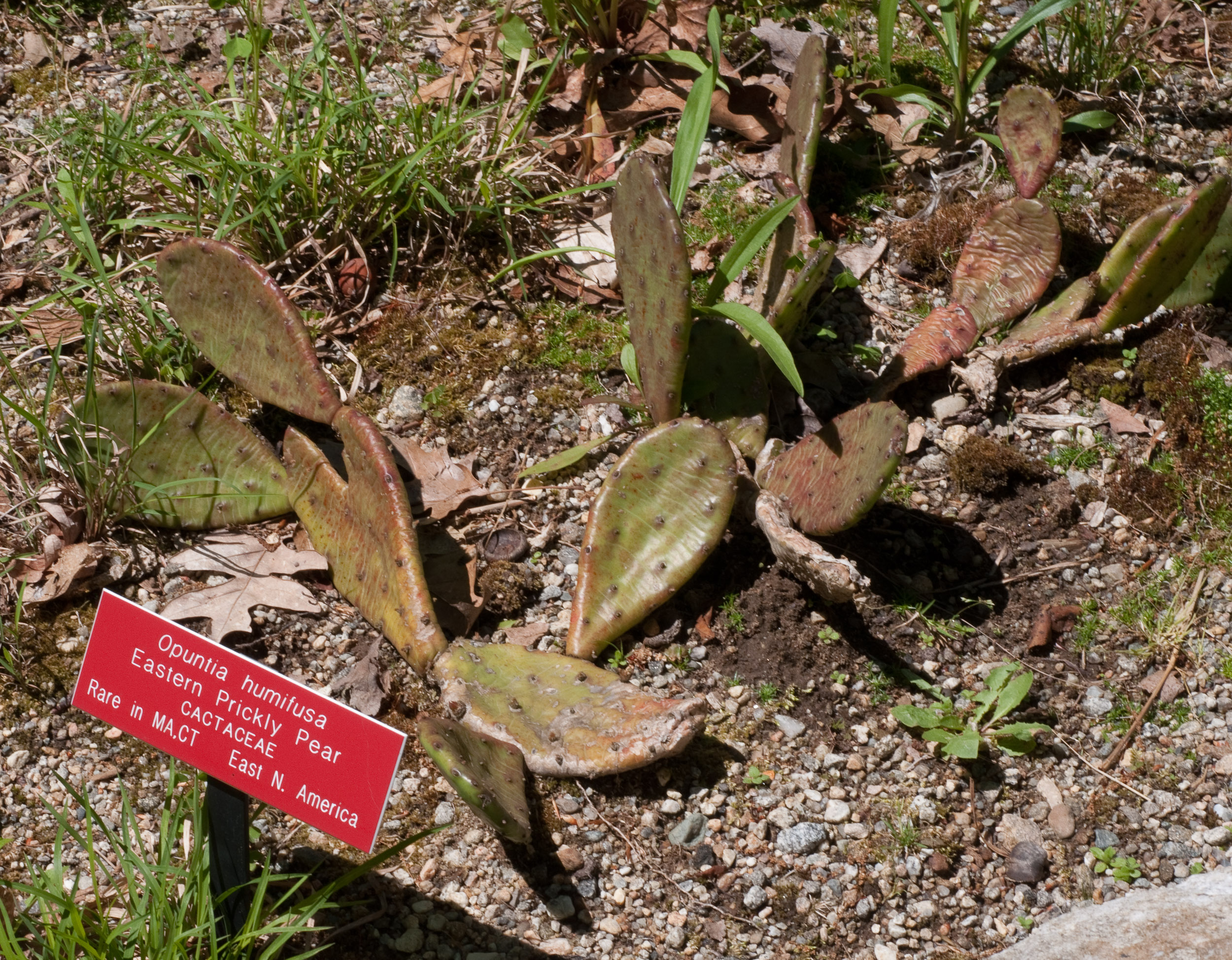
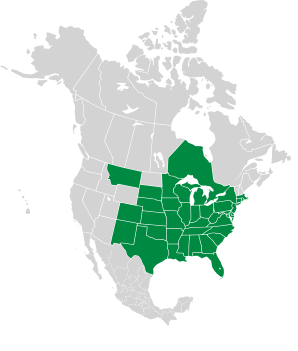
Eastern prickly pear is widespread in eastern North America. I first encountered these in an outdoor botanical
garden in Massachusetts (I have since seen them on sandy soil in urban environments), and I was amazed to learn that there are cacti that grow that far north.
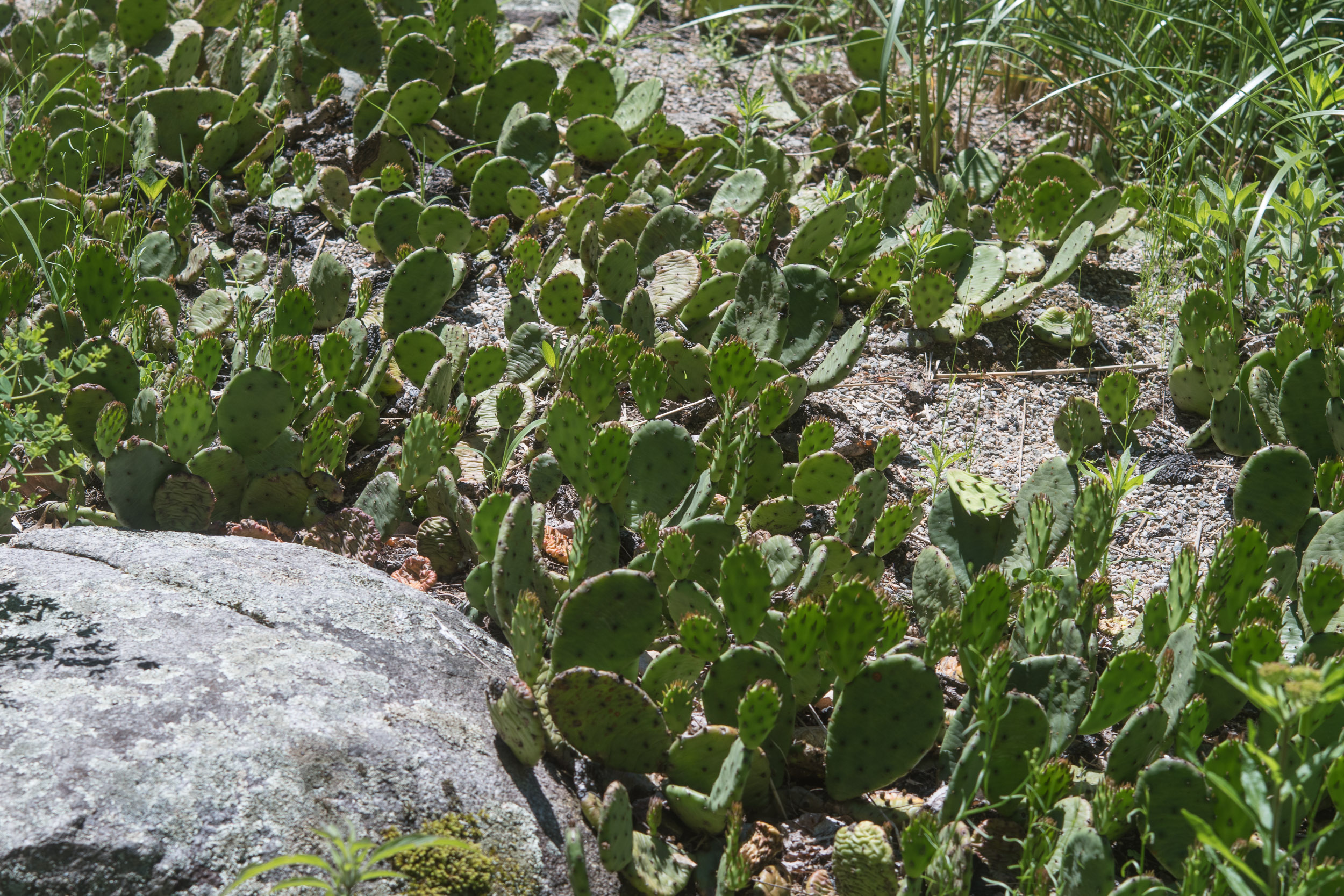
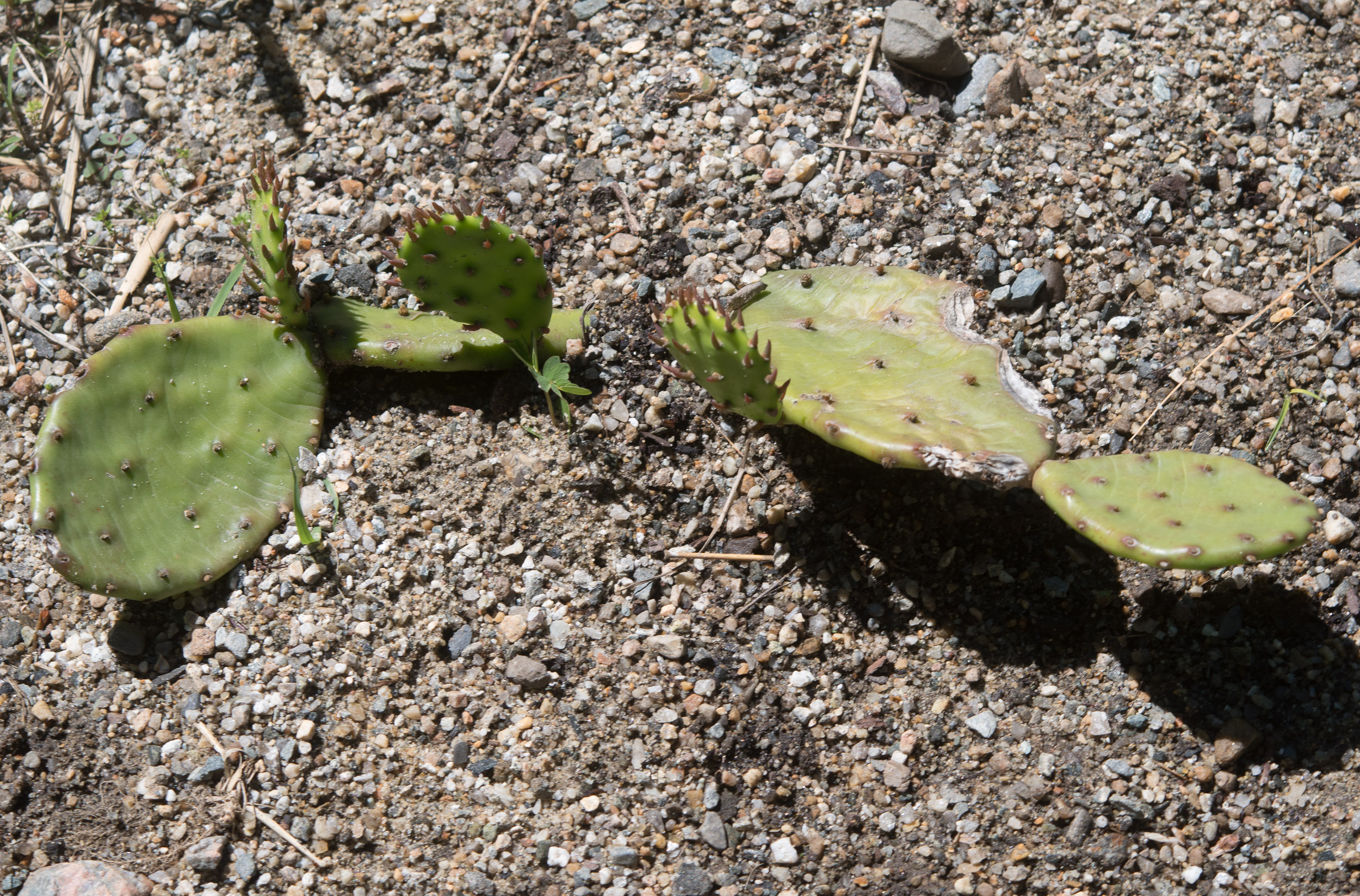
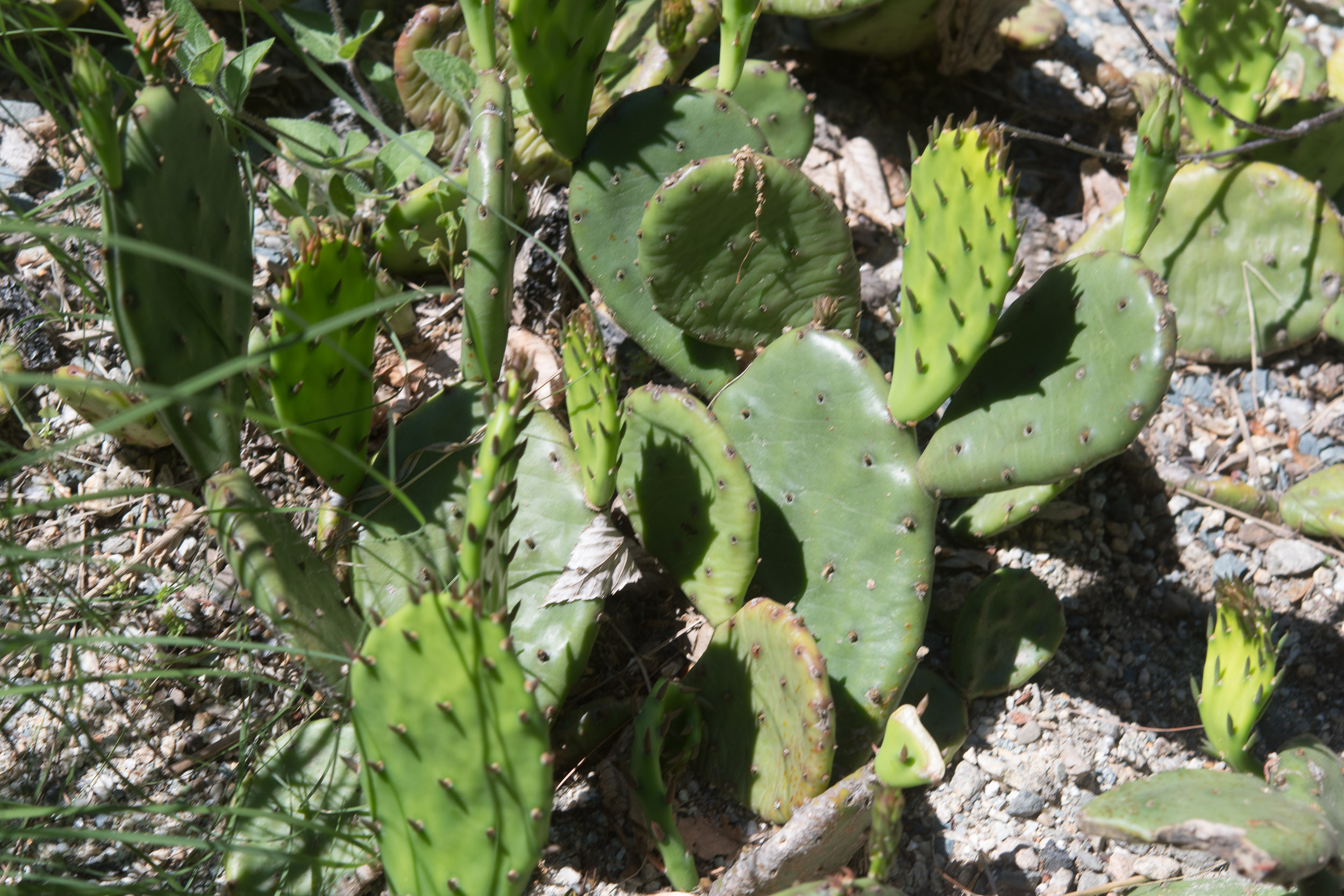
Plants: These cacti form low shrubs, sometimes
lying very close to the ground and looking rather unhealthy. Oval stem segments resembling Mickey
Mouse ears are green to red-purple, 1½–4″ (4–10 cm) by 1½–2″ (4–6 cm), and about ⅜″ (1 cm)
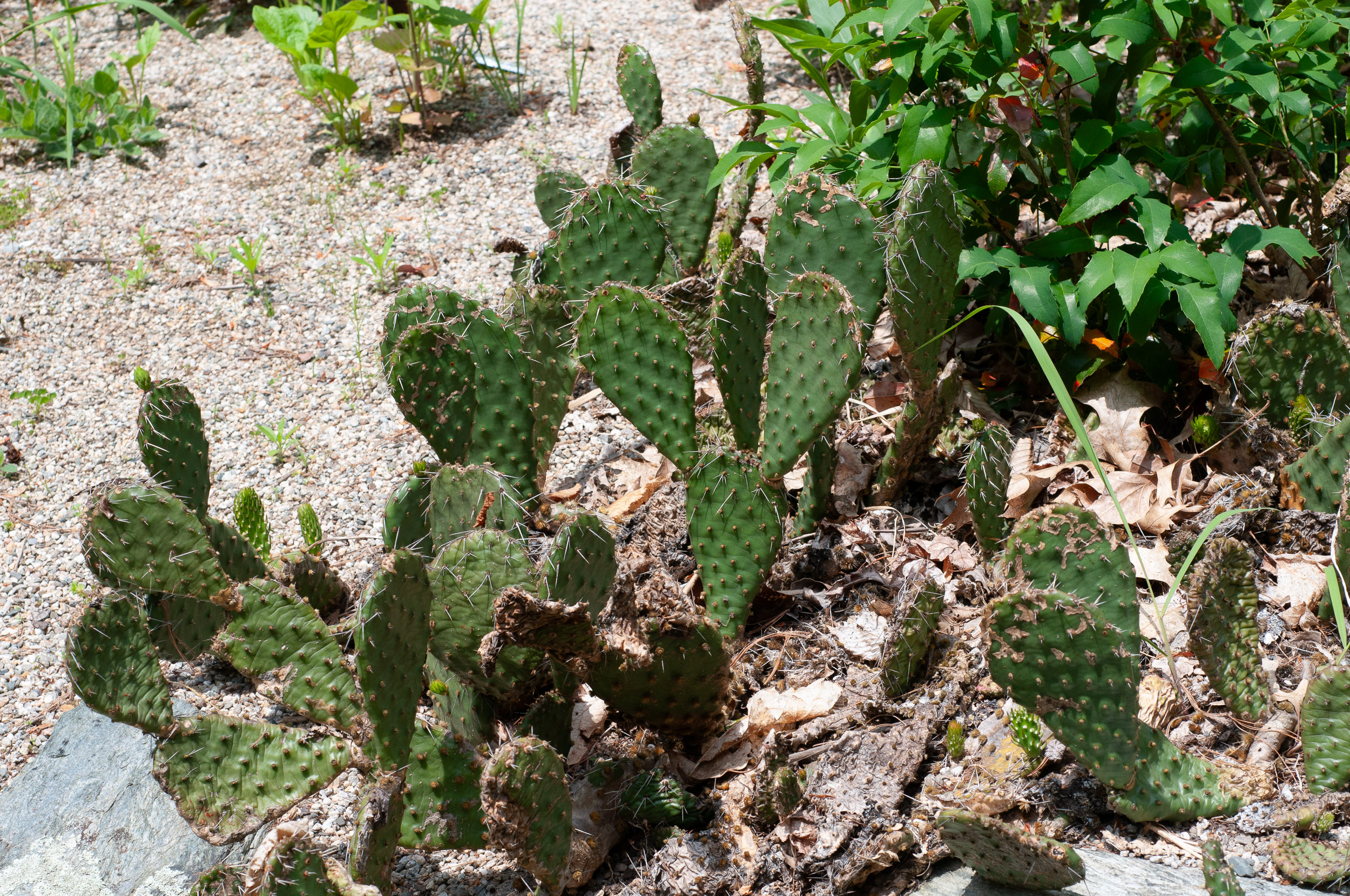
thick. Only the upper areoles have spines, which are gray or brownish and
¾–1¾″ (2–5 cm) long. (Sometimes there are no spines.)
Flowers: Yellow flowers are up to 1″ (3 cm) in diameter. The purplish or reddish fruits, called tunas, are ½–1½″ (1.5–4 cm) long.
Fruits: Mature fruits are 1½–2″ (3.8–5 cm) long and ½–¾″ (1.3–1.9 cm) across,
dull red to reddish brown, and oblanceoloid-oblongoid in shape. They contain 6-33
flat, light-colored seeds.
Habitats: Hot, sunny locations with thin soil that does not hold water, such as shale barrens, which are accumulations of thin, flat, eroded sedimentary rock on steep slopes with southern exposures.
Edibility: The egg-shaped fruits are edible, and
taste a little like watermelon.