Morella pensylvanica (Mirb.) Kartesz
Bayberry, northern bayberry, candleberry
Bayberry is native to temperate parts of eastern North America. These shrubs collaborate with nitrogen-fixing bacteria, actinomycetes, enabling them to tolerate nitrogen-poor soils, even contributing excess nitrogen to the soil.
Plants: Shrubs are 5–10 ⨉ 5–10′ (1.5–3 ⨉ 1.5–3 m) in size, densely branched, with a rounded appearance.
Leaves: Alternate, broadly oblanceolate, leathery, glossy, serrated, dark grayish-green leaves are ⅞–2½ ⨉ ½–1″ (2.5–7 ⨉ 1.5–2.7 cm). If you look closely, there are tiny dots of resin that exude bayberry’s characteristic odor when leaves are crushed.
Flowers: Plants are mostly dioecious, with male and female flowers in the form of catkins on separate plants. Catkins are ⅛–⅝″ (3–18 mm) long, resembling small cones. Male flowers are a drab yellow-green color, and female flowers are even less showy. Flowers appear in May.
Fruits: Female flowers become clusters of grayish-white, mottled drupes, each 1/16–3/16″ (3–5 mm) around. The waxy, aromatic coating on the fruits is used to make bayberry candles, sealing wax, and soap.
Habitats: Prefers full sun, and moist, sandy or peaty, acidic soils, but tolerates many other conditions. Common along east coast seashores, because it tolerates salt spray well.
Online References:
Myrica pensylvanica Mirb.
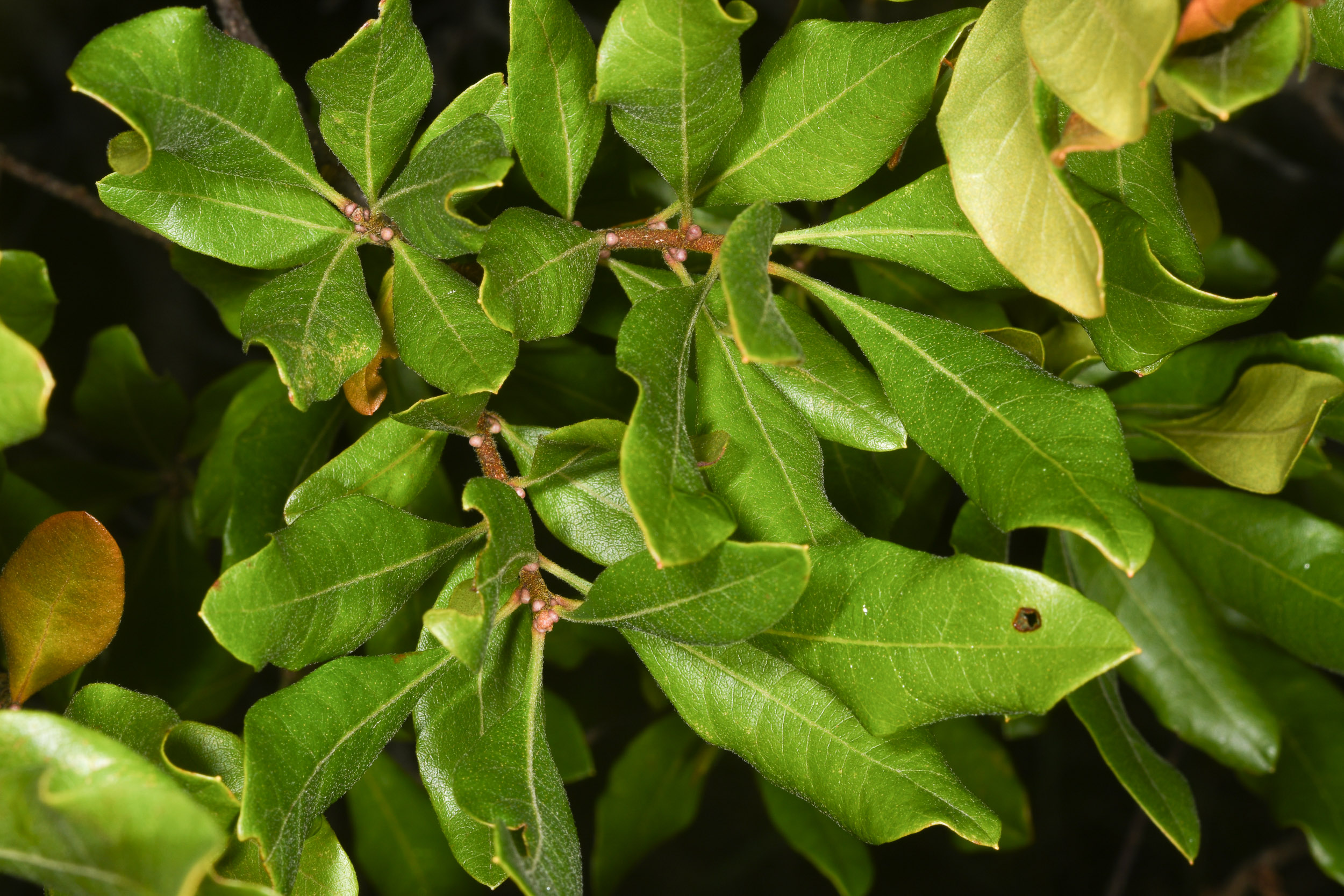
9/18/2016 · Deer Isle, at Water’s Edge 
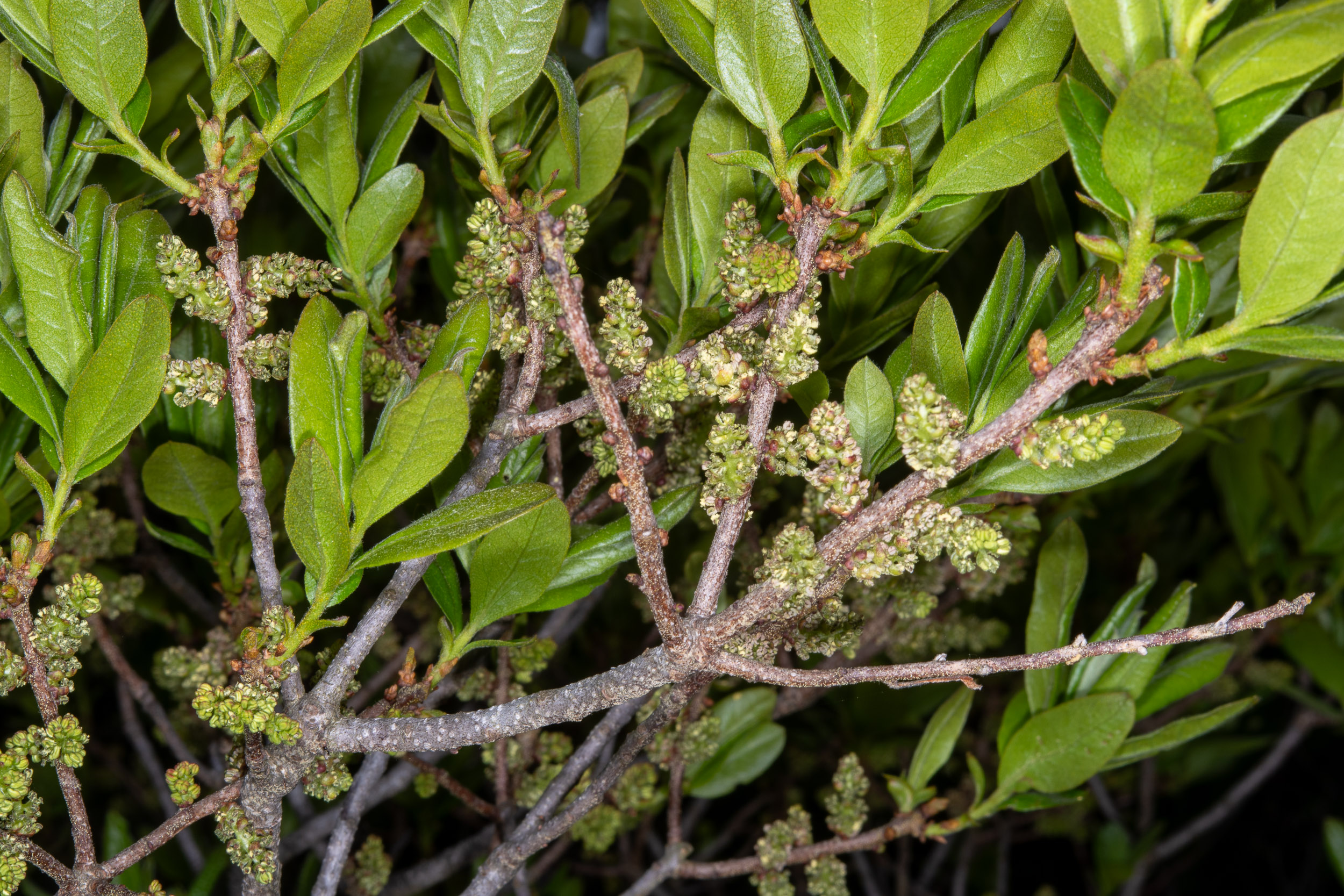
6/9/2025 · Curtis Farm Preserve, Harpswell, Maine · ≈ 8 × 5″ (20 × 13 cm) 
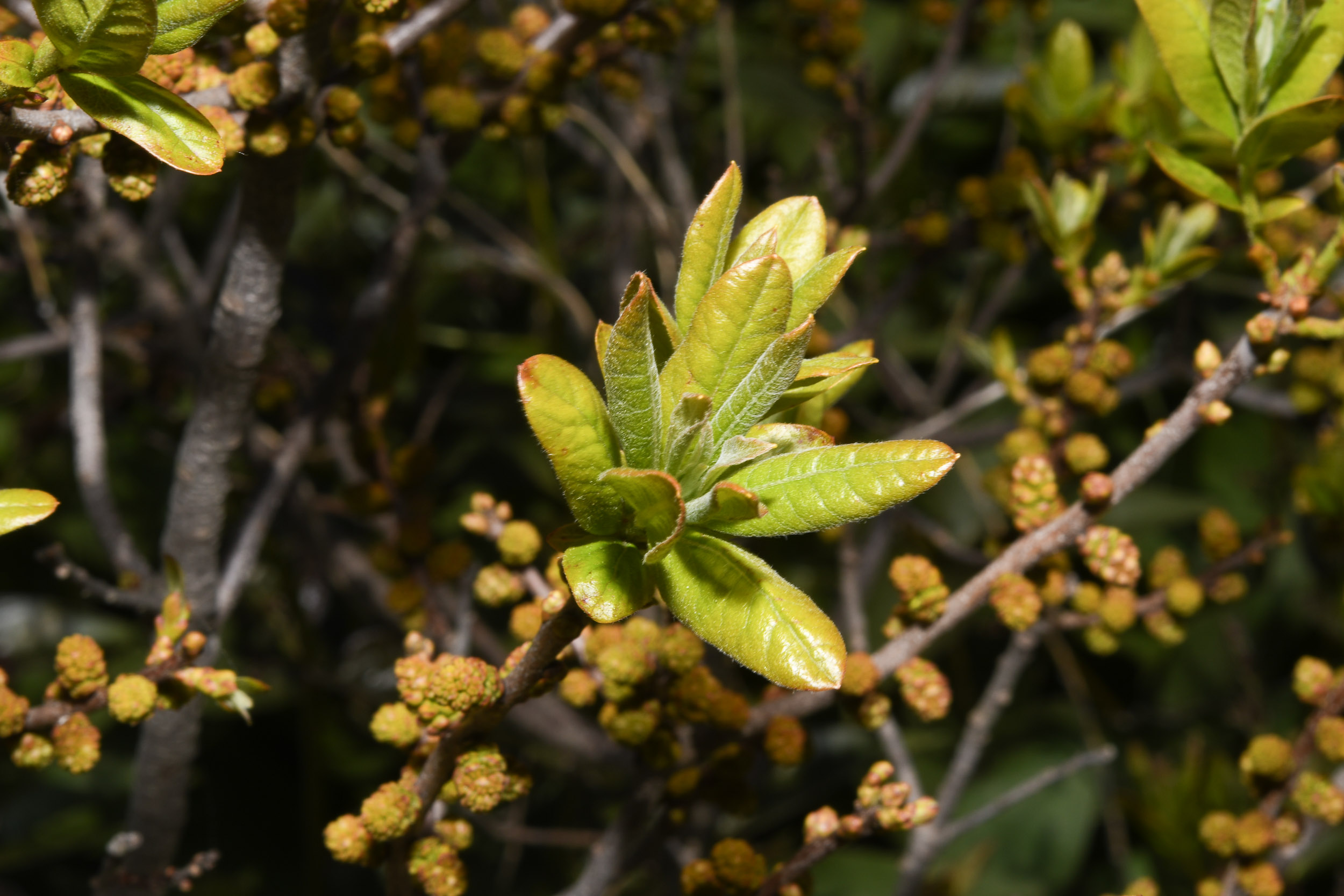
6/9/2016 · Monhegan Island, Maine 

6/26/2024 · Seawall Beach, Morse Mountain, Phippsburg, Maine · ≈ 6 × 10″ (16 × 24 cm) 
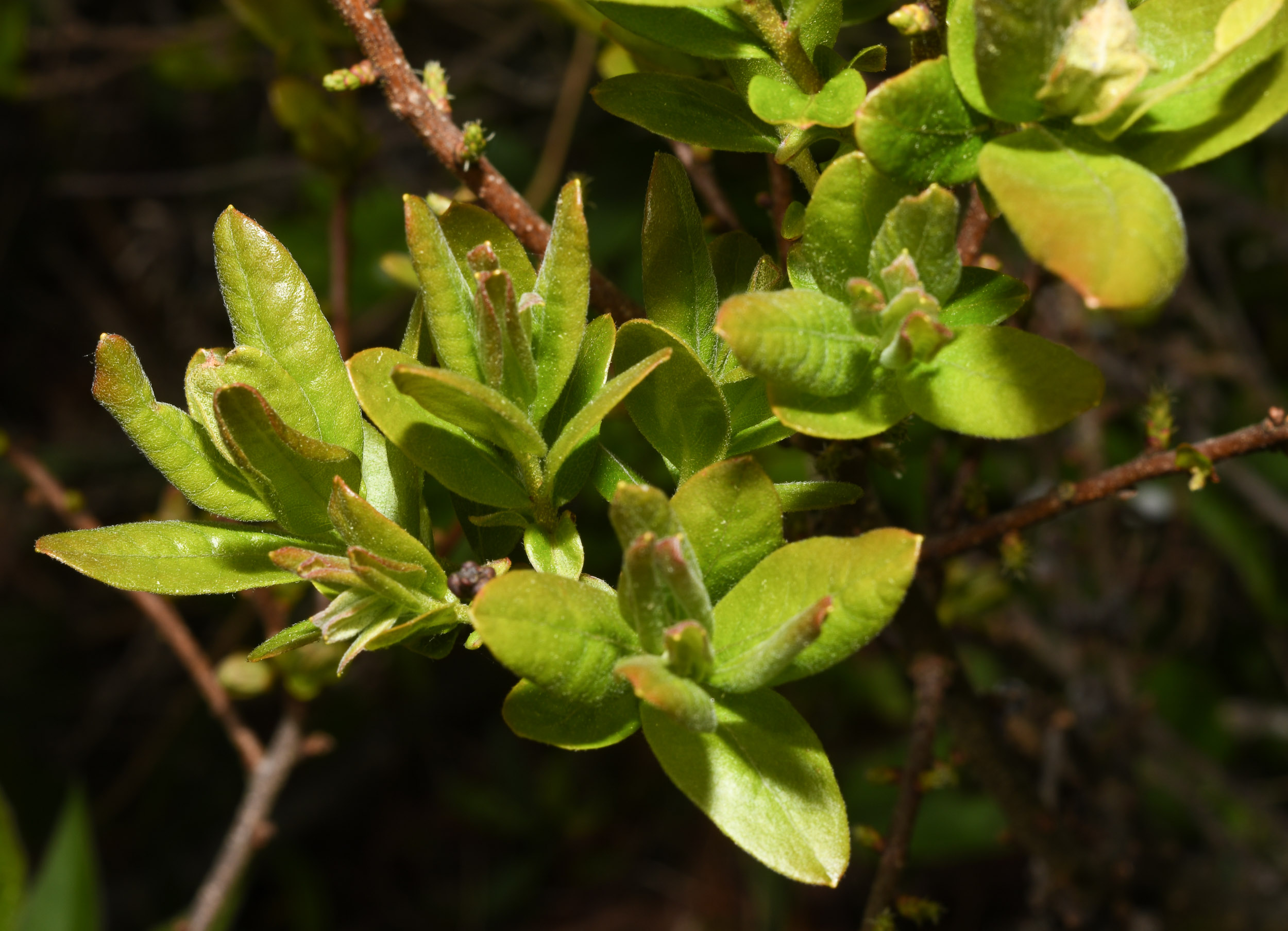
The small green shoots at top left are female (pistillate) flowers. · 6/10/2016 · Monhegan Island, Maine 
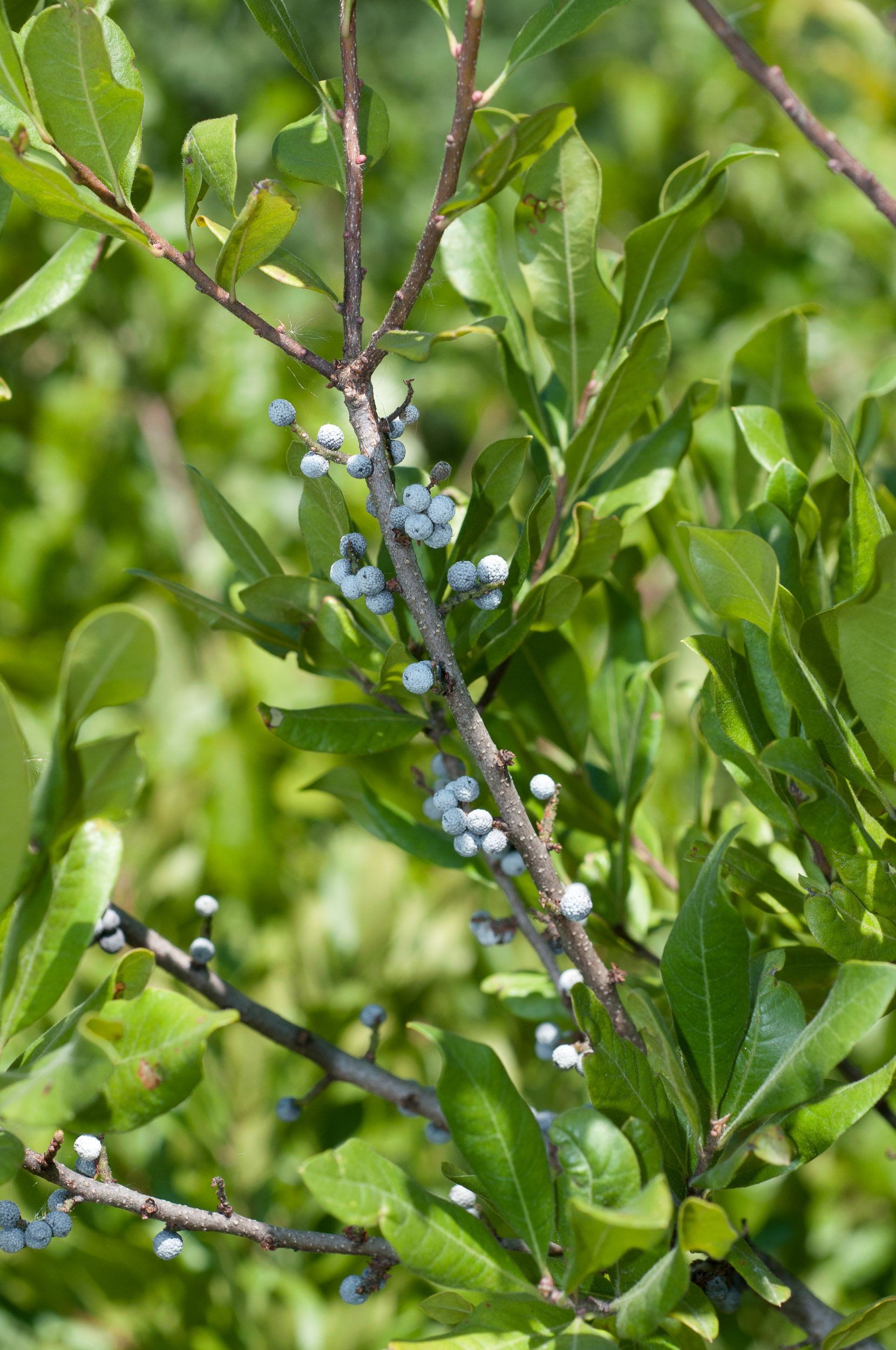
9/7/2010 · New England Botanic Garden at Tower Hill, Boylston, Massachusetts · ≈ 7 × 11″ (18 × 27 cm) 
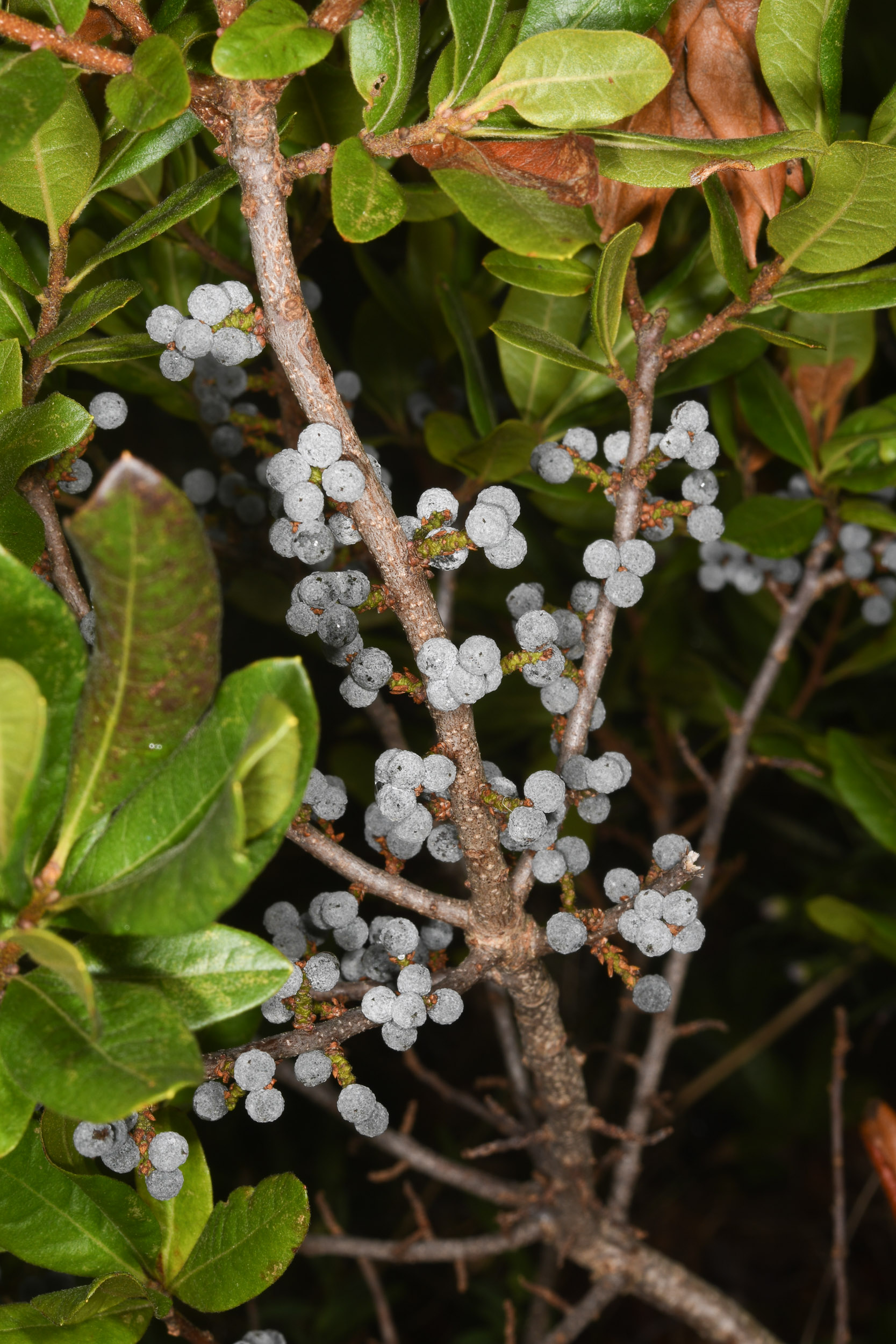
9/18/2016 · Deer Isle, at Water’s Edge 
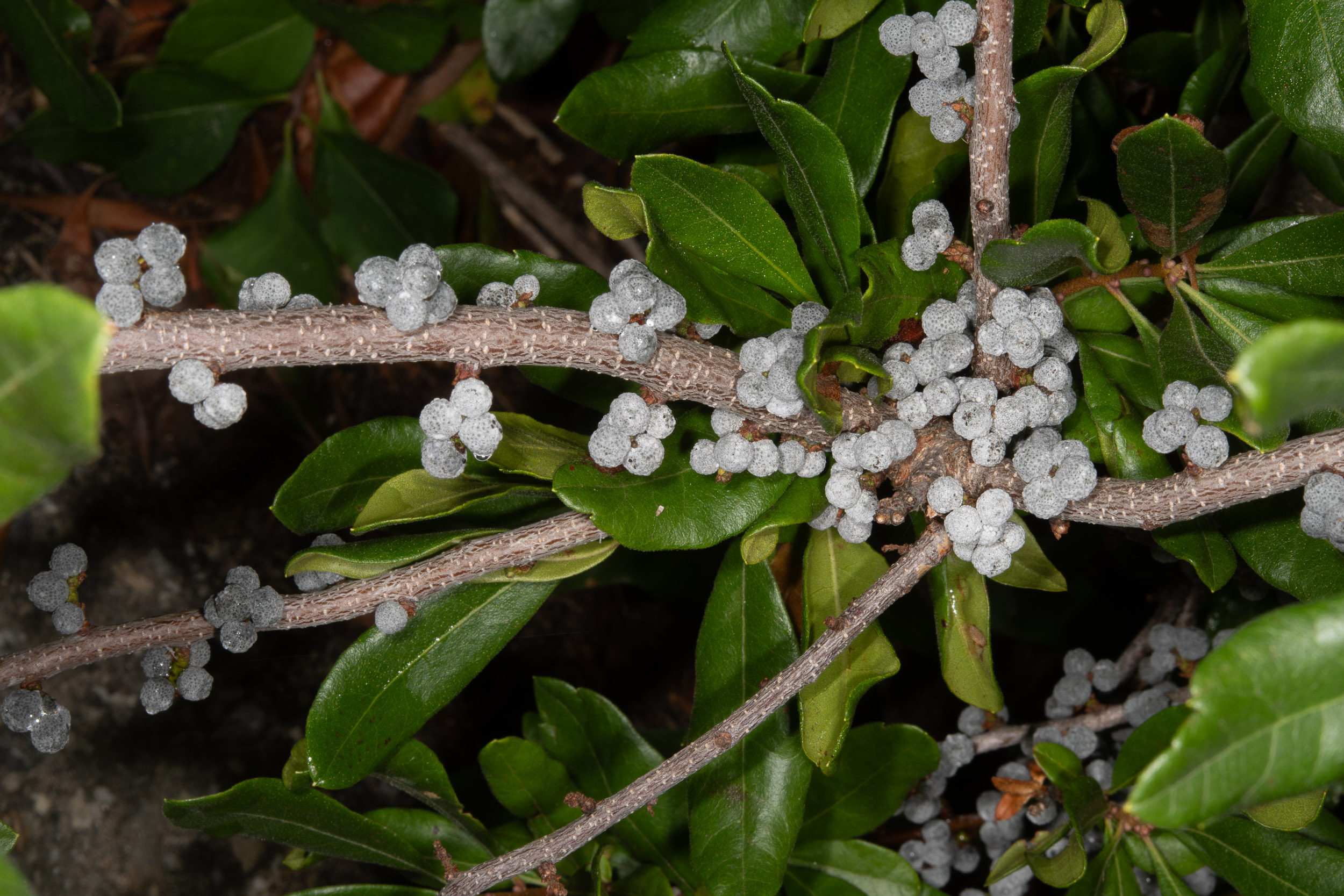
9/3/2020 · Mitchell Field, Harpswell, Maine · ≈ 5 × 8″ (13 × 20 cm) 
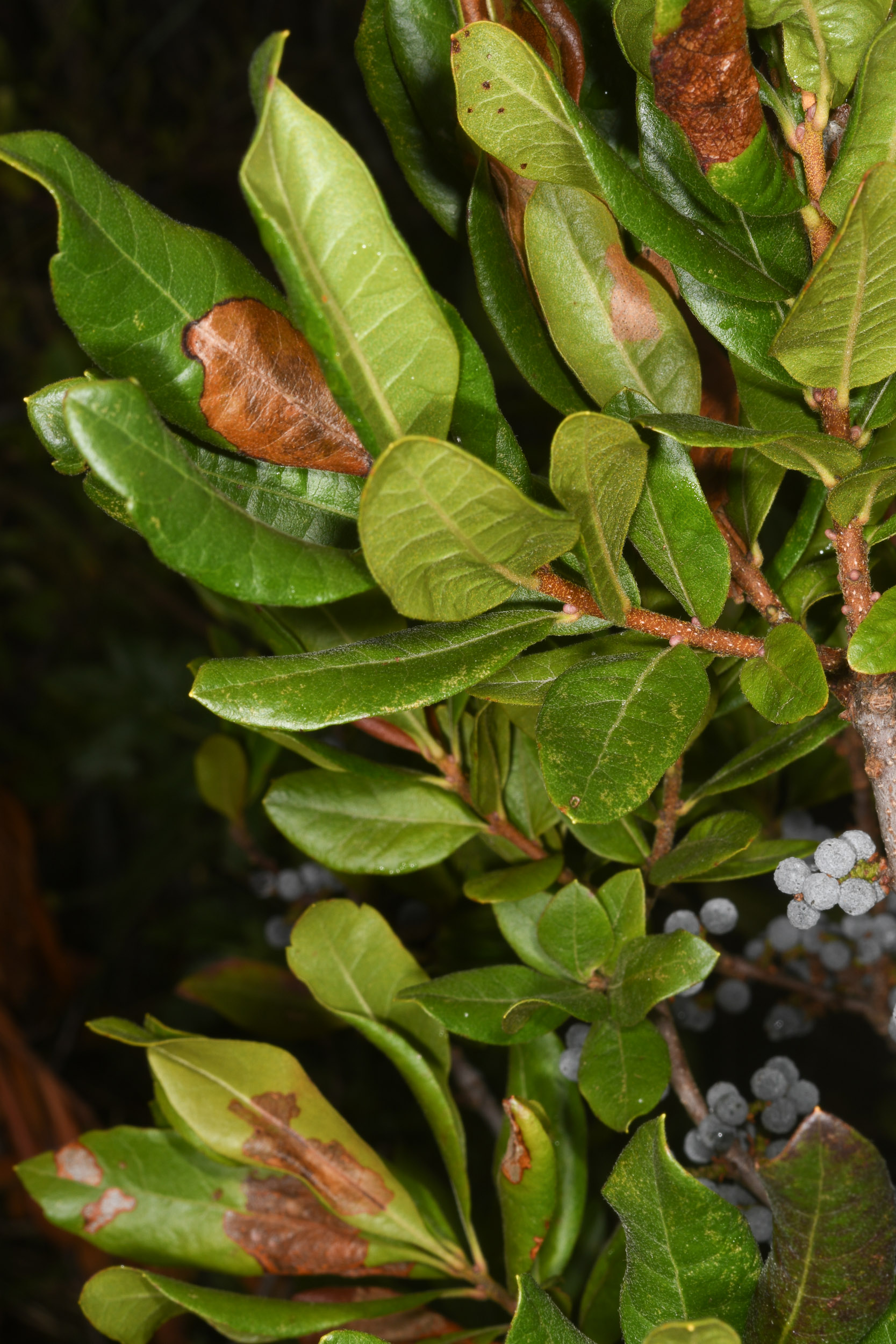
9/18/2016 · Deer Isle, at Water’s Edge 

6/26/2024 · Seawall Beach, Morse Mountain, Phippsburg, Maine · ≈ 8 × 5″ (20 × 13 cm) 
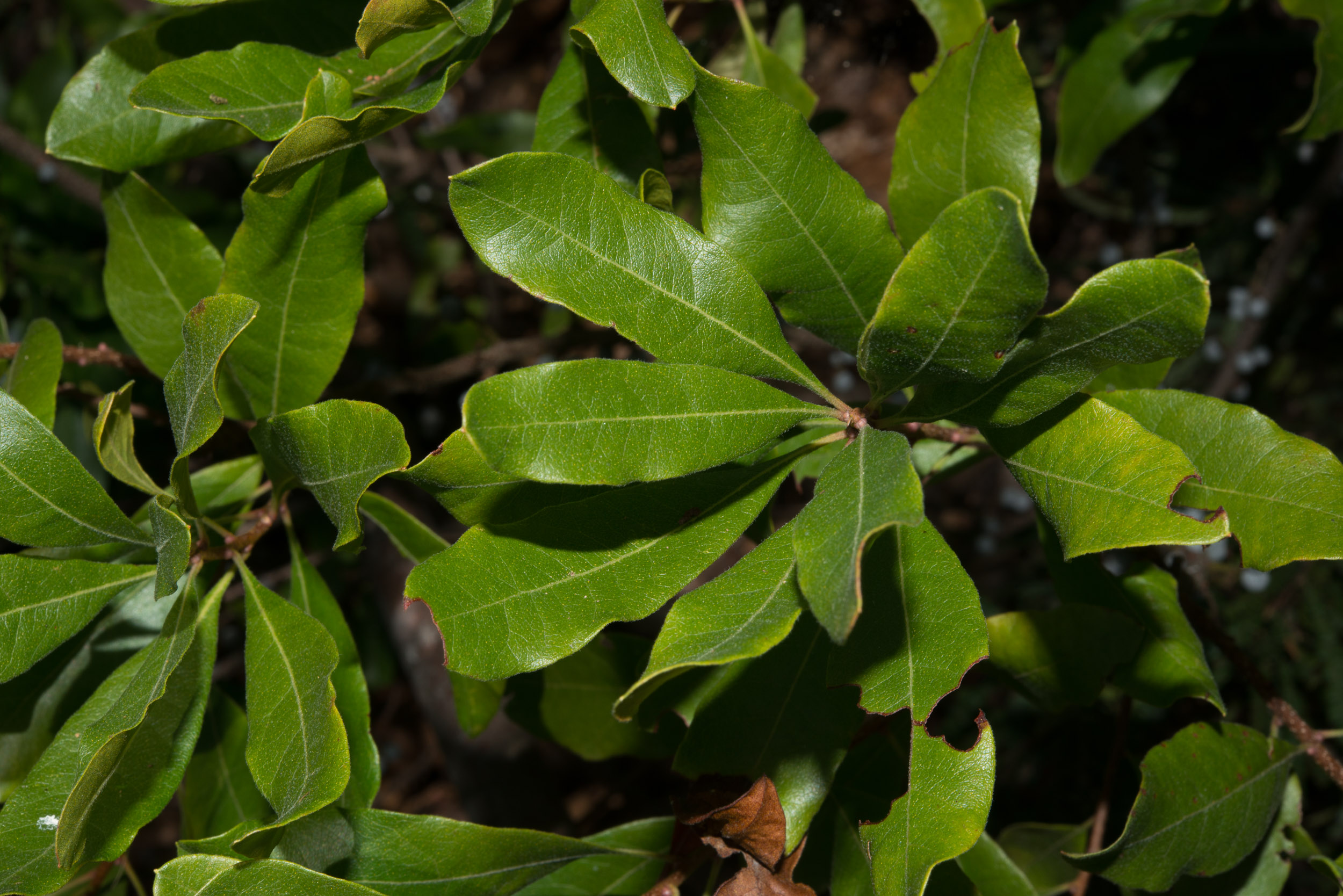
8/17/2013 · Hopkinton State Park, Hopkinton, Massachusetts · ≈ 9 × 6″ (22 × 15 cm) 
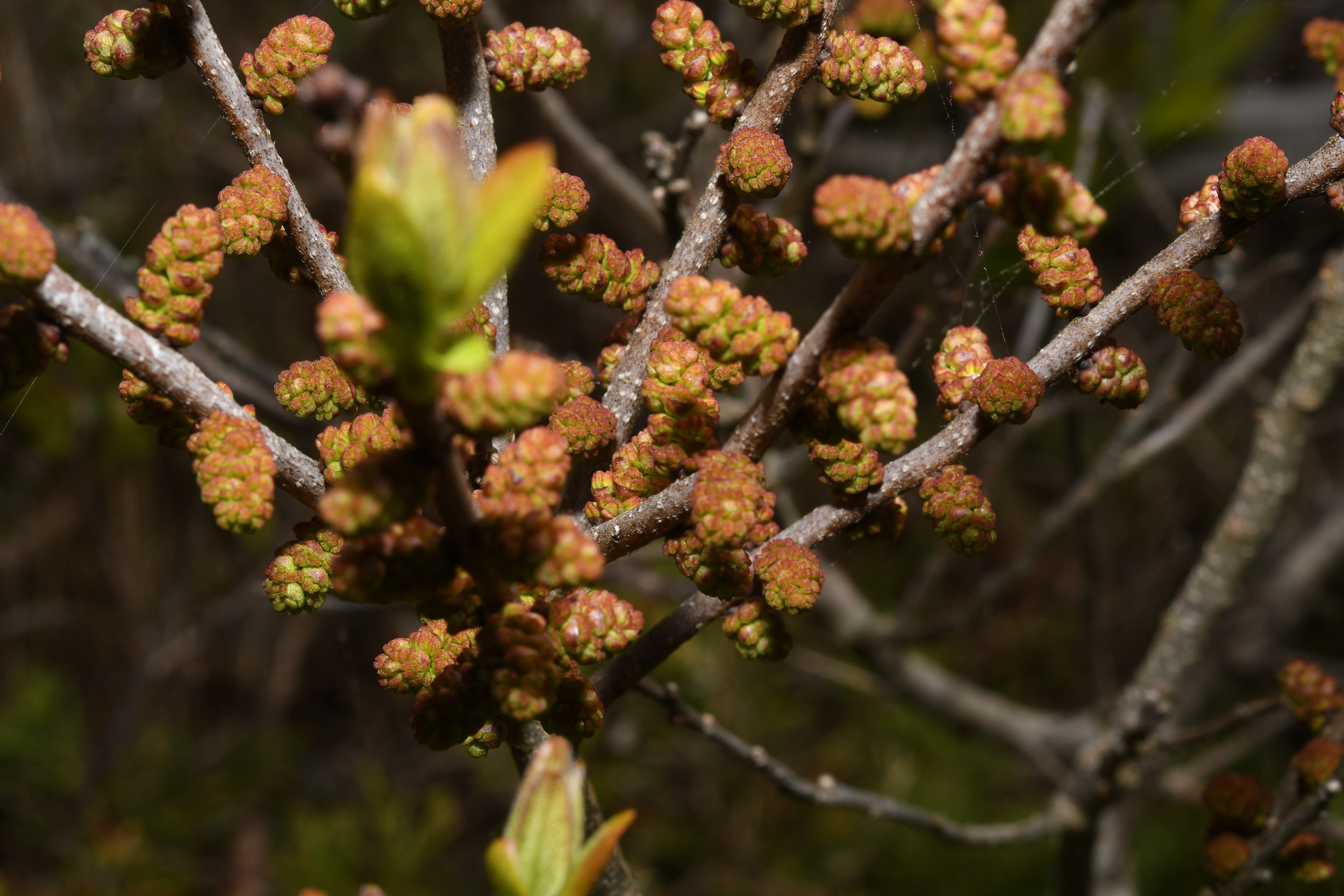
Male (staminate) flowers. · 6/10/2016 · Monhegan Island, Maine 
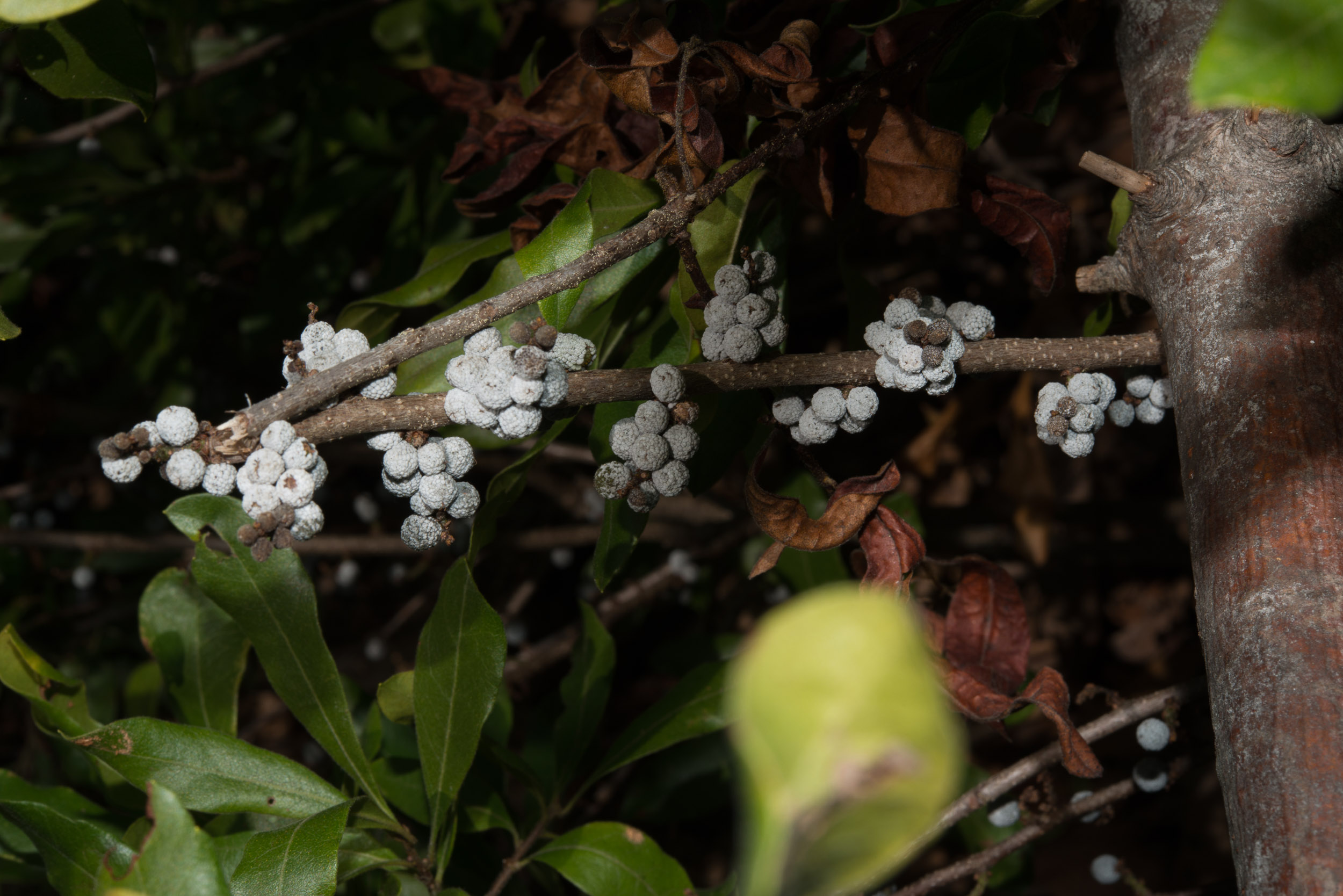
8/17/2013 · Hopkinton State Park, Hopkinton, Massachusetts · ≈ 9 × 6″ (22 × 15 cm) 

8/17/2013 · Hopkinton State Park, Hopkinton, Massachusetts · ≈ 7 × 10″ (16 × 25 cm) 

10/12/2025 · Scituate Dog Park, Scituate, Massachusetts · By Heather A. Kent 
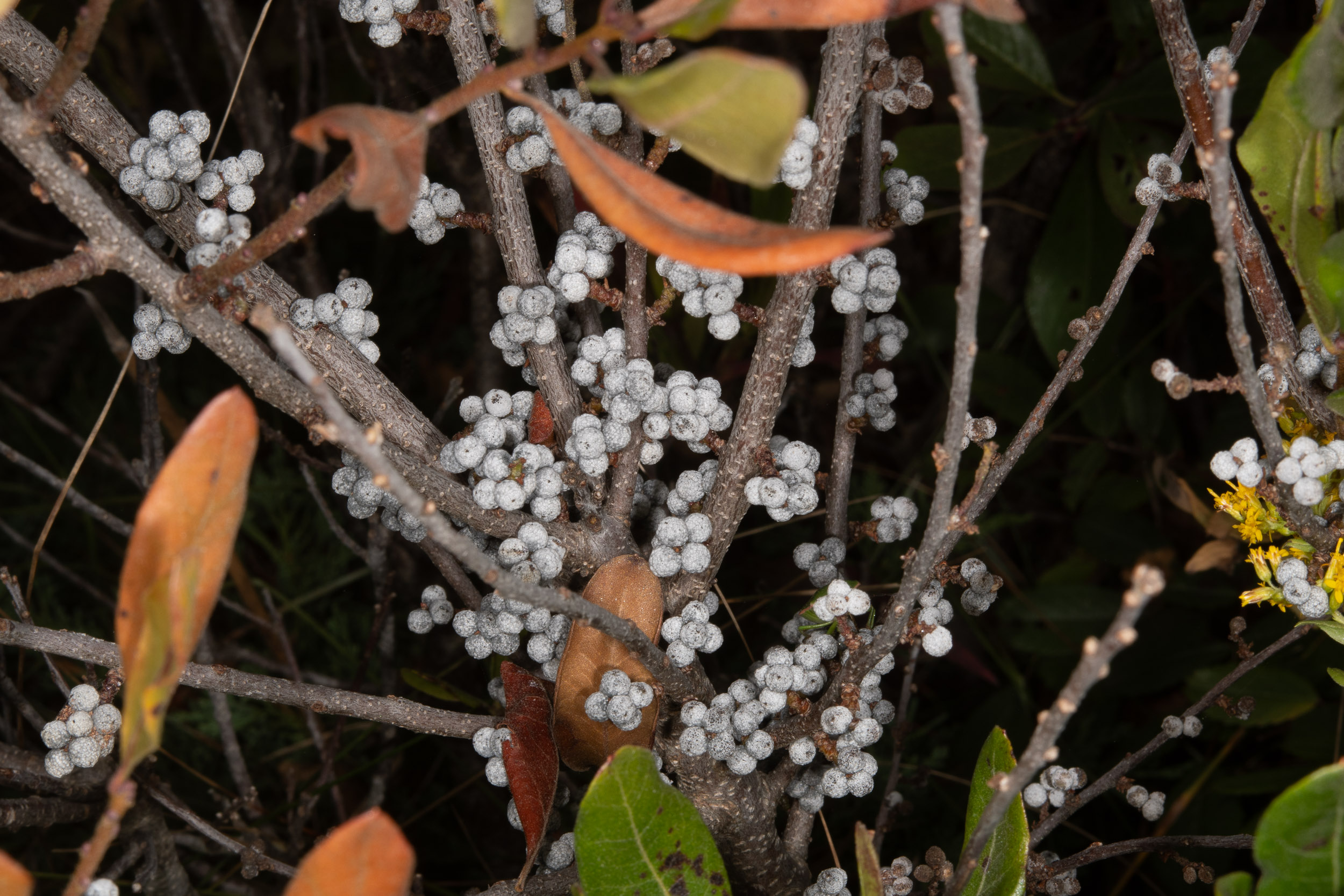
9/22/2020 · Giants’ Stairs, Bailey Island, Harpswell, Maine · ≈ 8 × 5″ (20 × 13 cm) 

6/10/2016 · Monhegan Island, Maine 

8/17/2013 · Hopkinton State Park, Hopkinton, Massachusetts · ≈ 7 × 4½″ (16 × 11 cm) 
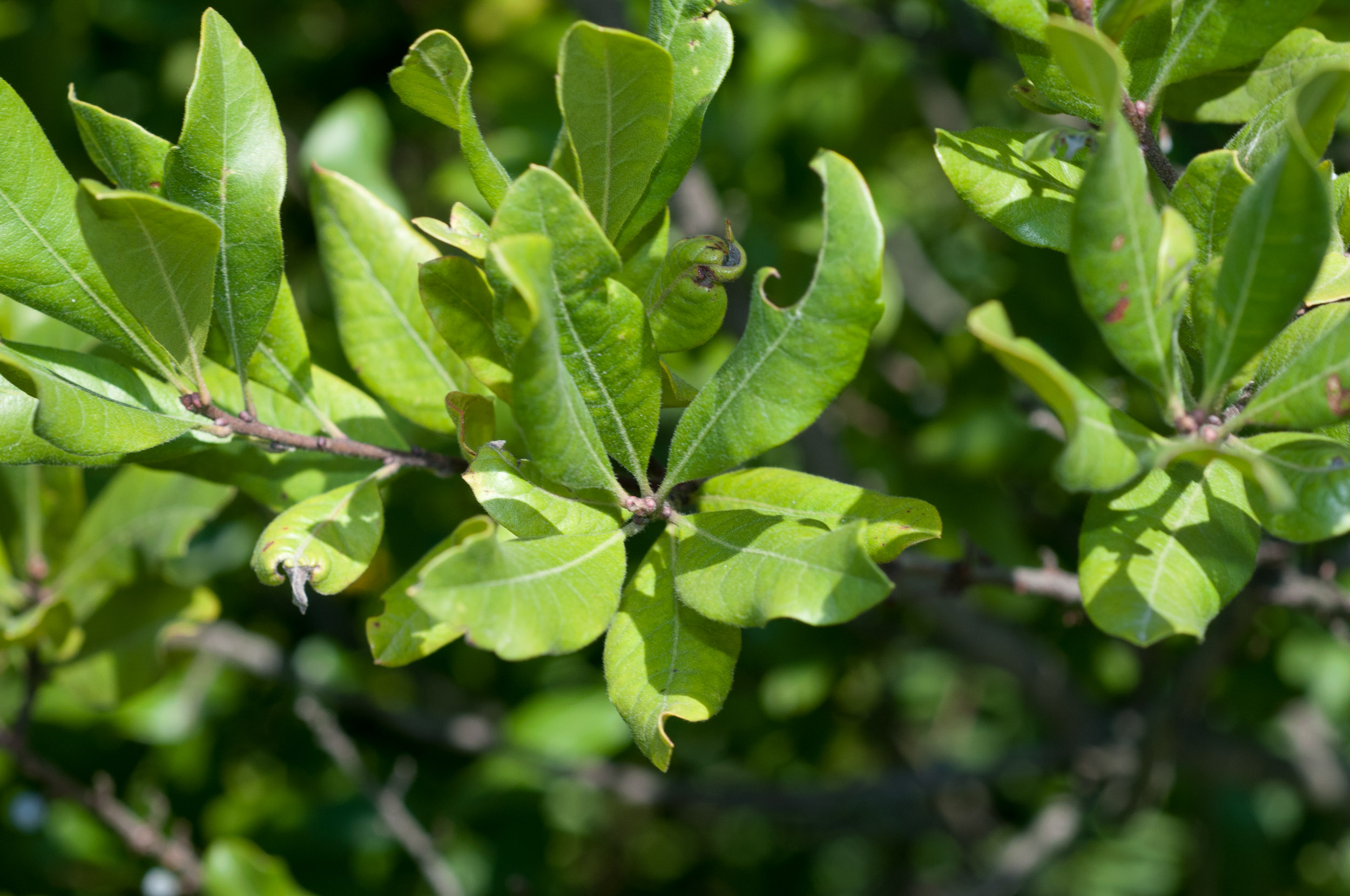
9/7/2010 · New England Botanic Garden at Tower Hill, Boylston, Massachusetts · ≈ 8 × 5″ (19 × 13 cm) 

9/20/2009 · Acadia National Park, Bar Harbor, Maine · ≈ 5 × 8″ (13 × 19 cm) 

9/7/2010 · New England Botanic Garden at Tower Hill, Boylston, Massachusetts · ≈ 8 × 5″ (19 × 13 cm) 

6/9/2016 · Monhegan Island, Maine 
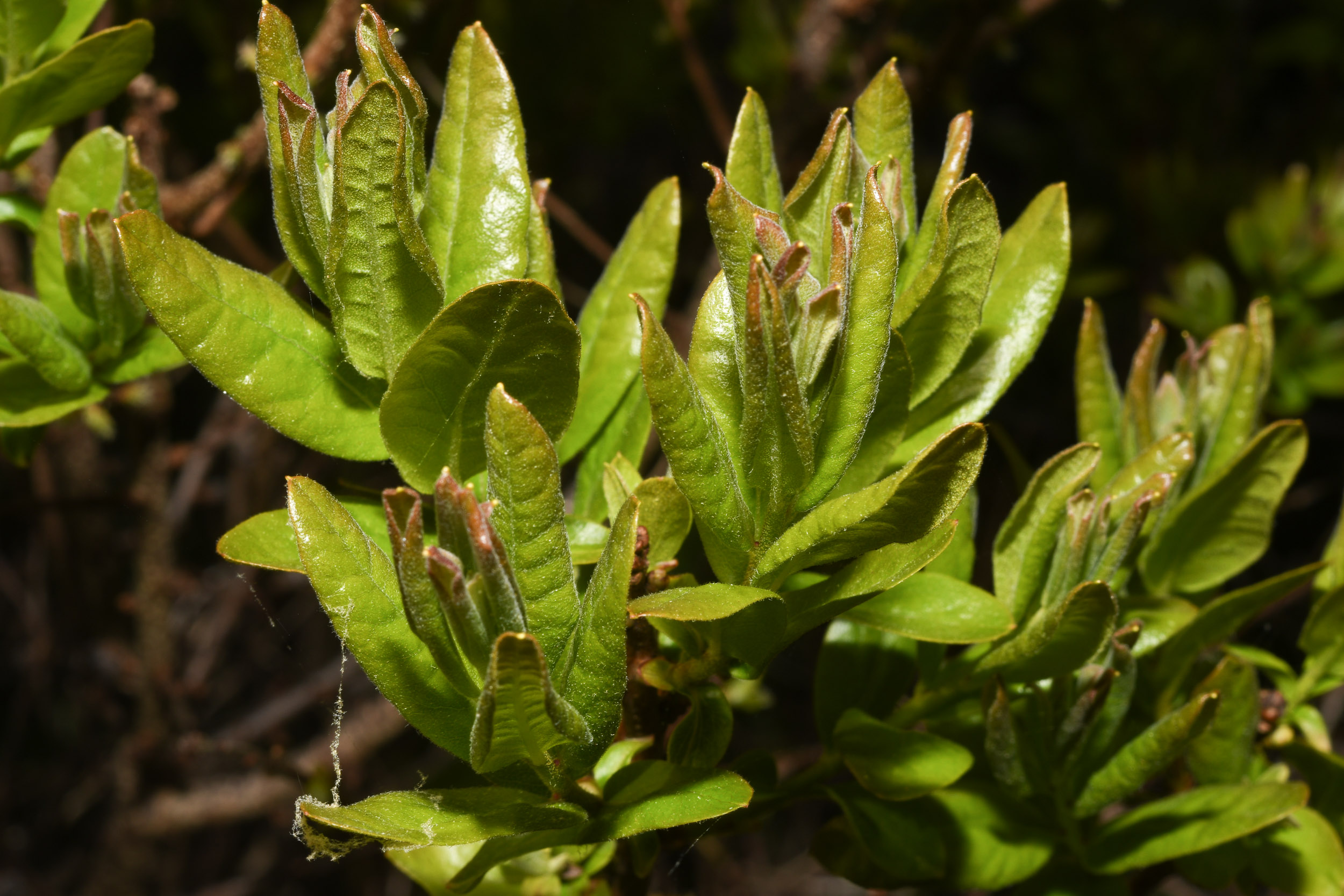
6/10/2016 · Monhegan Island, Maine 
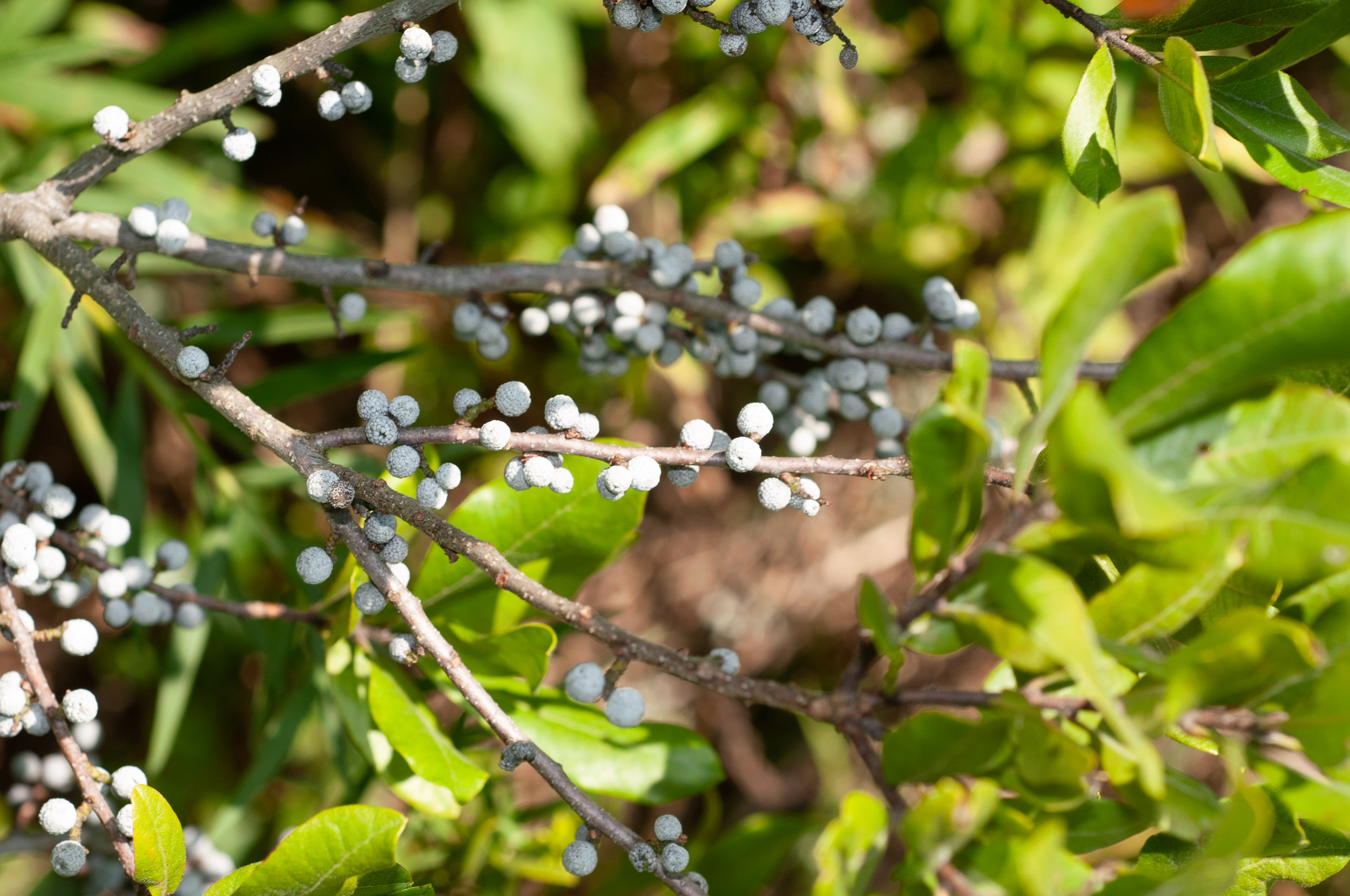
9/7/2010 · New England Botanic Garden at Tower Hill, Boylston, Massachusetts · ≈ 9 × 6″ (23 × 15 cm) 
| Kingdom | Plantae | Plants, but not fungi, lichens, or algae (from Stearn's Botanical Latin) |
| Subkingdom | Tracheobionta | Vascular plants—plants with a “circulatory system” for delivering water and nutrients |
| Division | Magnoliophyta | Flowering plants, also known as angiosperms |
| Class | Magnoliopsida | Dicotyledons—plants with two initial seed leaves |
| Subclass | Rosidae | Roses, legumes, proteas, dogwoods, hydrangeas, mistletoes, euphorbias, grapes, many more |
| Order | Fagales | Birch, she-oak, beech, walnut, bayberry, others |
| Family | Myricaceae | Bayberry (sweet gale) family |
| Genus | Morella | May derive from Morus, “mulberry” |
| Species | pensylvanica | “From Pennsylvania” |

Morella pensylvanica description by Thomas H. Kent, not updated.

© FloraFinder.org. All rights reserved.