Lonicera L.
Honeysuckle
North America native honeysuckles
Lonicera canadensis
Lonicera sempervirens


|
Lonicera L. Honeysuckle North America native honeysuckles | ||
Lonicera canadensis |
Lonicera sempervirens |
|
|---|---|---|
| Common Name | |
|
| Plant | Deciduous perennial shrubs are 3–6½′ (1–2 m) in size. Bark is light brown to brownish gray, and peels easily or hangs off. | Trumpet honeysuckle is a twining vine 3–20′ (91–609 cm) long, depending upon what it has to climb over. Bark is orange-brown, and peeling. |
| Leaves | 1–4½ ⨉ ½–1½″ (3–12 ⨉ 1.5–4 cm), opposite, light green, smooth-edged, and hairless. | Roughly oval in shape, opposite, bluish green, and 1–3″ (2.5–7.6 cm) long. Leaves at the base of flowers are fused at the base. |
| Flowers | Tubular yellow or pale yellow flowers are twinned, hanging side-by-side like two funnel-shaped bells. Each flower has five flaring, triangular lobes, five pale yellow stamens and a yellow style. Each flower is ½–¾″ (1.3–1.9 cm) long. They appear from April to June. | In clusters of 2-4, each red or orange with yellow interiors, 1–2″ (2.5–5 cm) long, trumpet-shaped. They appear from April to July. |
| Fruit | Fruits are pairs of bright red berries, each about ¼–5/16″ (6.3–8.5 mm) long, shaped like two rounded cones, and joined at the bases. I don’t think there is any other fruit that resembles these. Each fruit contains several seeds. | Berries are orange-red to deep red in color |
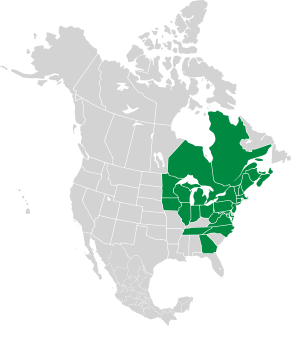
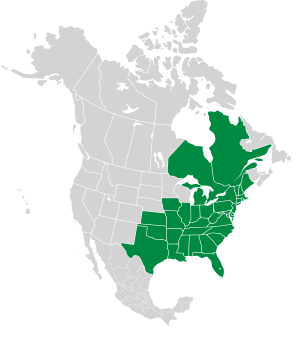
| Range/ Zones |
|
|
| Habitats | Dry to moist upland woods, and occasionally in coniferous swamps and growing along streams. | Along roadsides, stream banks and in thickets. |
Lonicera description by Thomas H. Kent, not updated.
© FloraFinder.org. All rights reserved.