Juniperus horizontalis ‘Mother Lode’
Creeping juniper, mother lode juniper, Mother Lode creeping juniper
Creeping juniper is native to northern North America. Their low, dense habit makes them popular for landscaping ground cover, and many cultivars are available. The ‘Mother Lode’ cultivar has brilliant gold foliage, becoming bronzy gold in the winter.
Plants: Shrubs are only 4″ (10 cm) tall, keeping a low profile against cold weather and spreading horizontally to form dense mats up to 10′ (3 m) around. Branches are ~1/32″ (0.7–1.2 mm) around.
Leaves: The evergreen leaves aren’t like the flattened needles of hemlocks or the thin, circularly cross-sectioned needles of pines. They somewhat resemble millipedes, with circular cross sections and overlapping, tightly interlocked scales. The leaflets occur in opposite pairs and threes and are branched into Y or X shapes. Leaflets are 1/32–¼″ long ⨉ ~1/32″ in diameter (1–8 ⨉ 1–1.5 mm)]. The foliage is dense, a bright golden color, becoming darker and more bronze-colored in the winter. The low habit and these other adaptations help cope with wind and low temperatures.
Fruits: Cones can be mistaken for berries, being roughly globose in shape and dark blue in color. A pale bluish waxy sheen on the cones lightens their color. Female cones are ⅛–¼″ (5–7 mm) in diameter. Male cones are 1/16–⅛″ (2–4 mm) long, with a cluster of yellow stamens up to ⅛″ (5 mm) long. Each plant produces only male or female cones (dioecious).
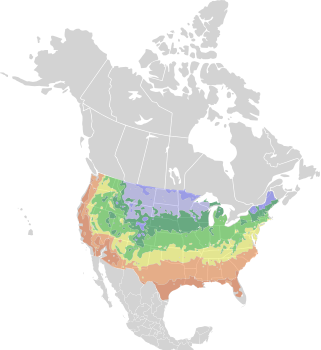
Habitats: These junipers occupy rocky or sandy soils including rock outcroppings, stony slopes, coastal cliffs, prairies, sand dunes and stream banks. At only four inches in height, this cultivar is principally planted as a groundcover.
Online References:

8/1/2009 · Coastal Maine Botanical Gardens, Boothbay, Maine 
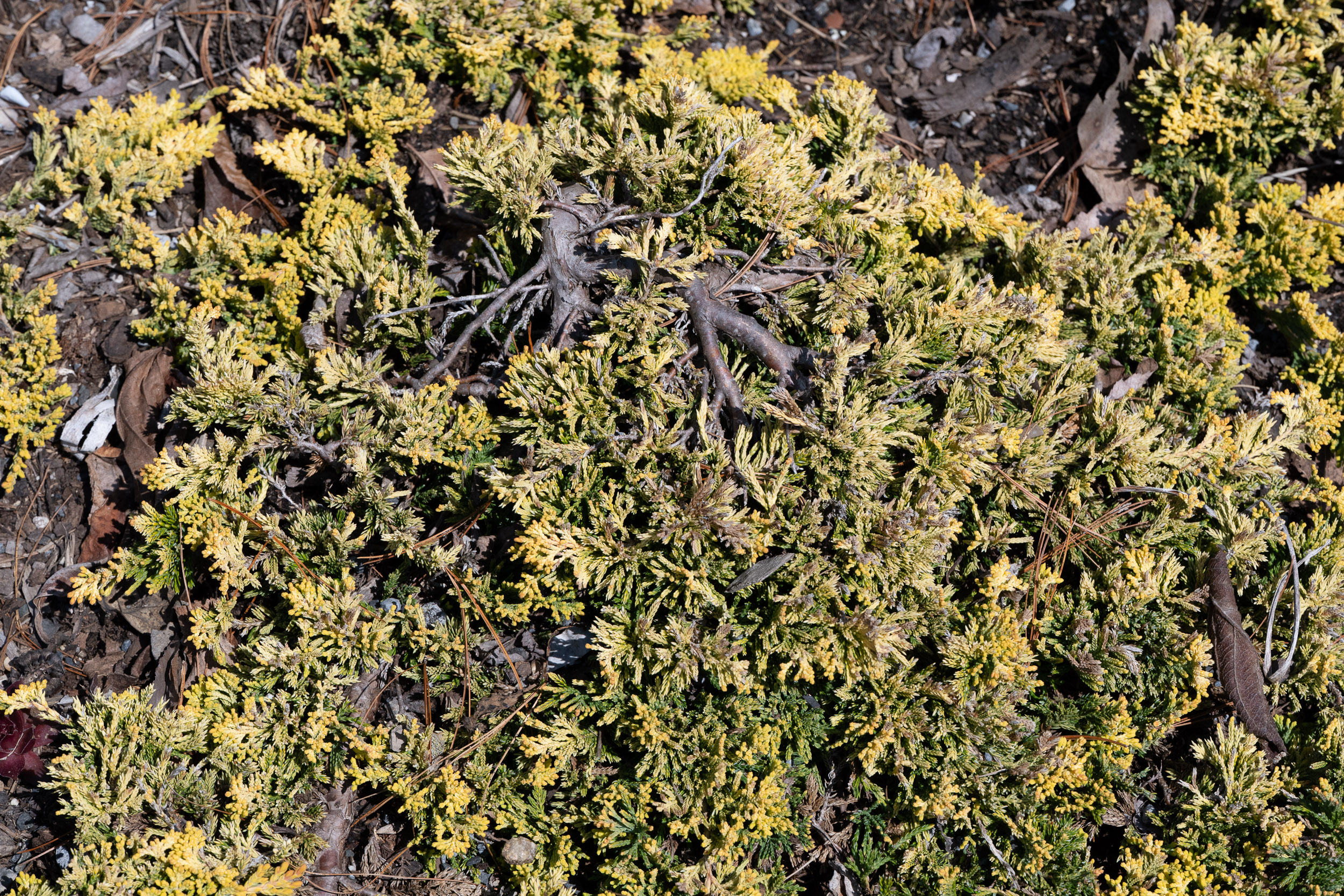
5/12/2025 · Coastal Maine Botanical Gardens, Boothbay, Maine · ≈ 1½ × 1′ (48 × 32 cm) 
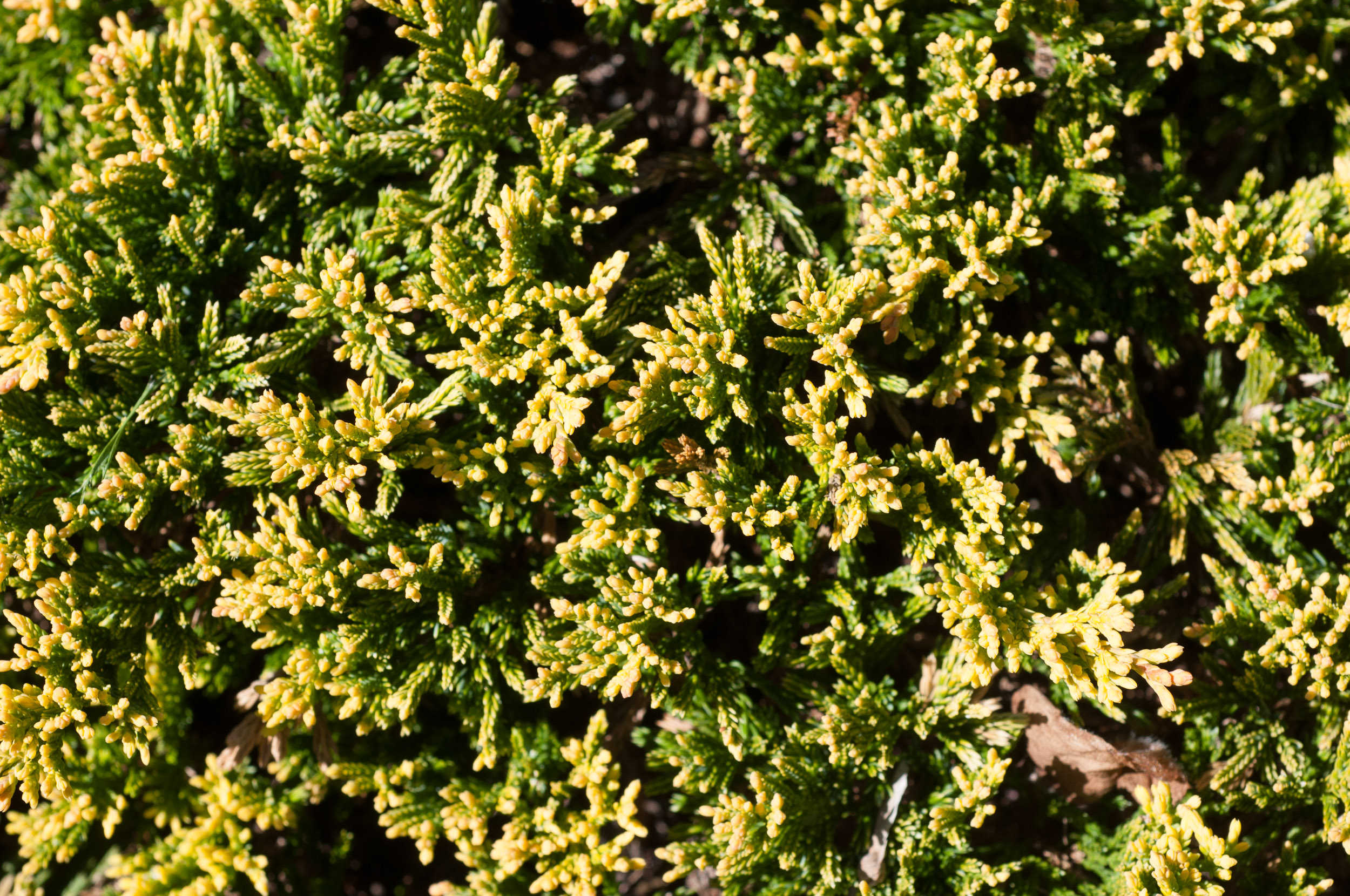
4/7/2012 · Ladew Topiary Gardens, Monkton, Maryland · ≈ 9 × 6″ (22 × 14 cm) 
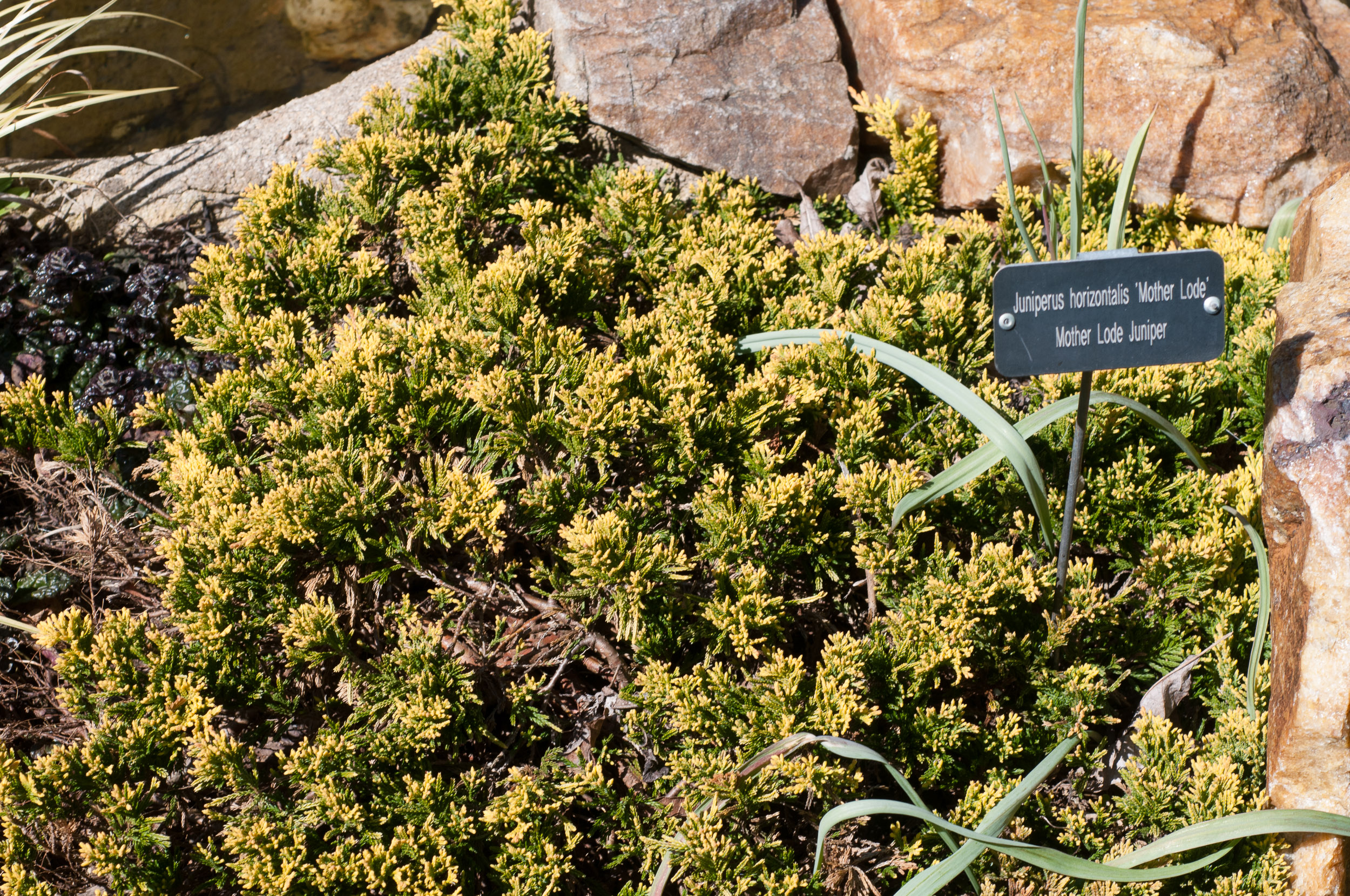
4/7/2012 · Ladew Topiary Gardens, Monkton, Maryland · ≈ 2 × 1′ (62 × 41 cm) 
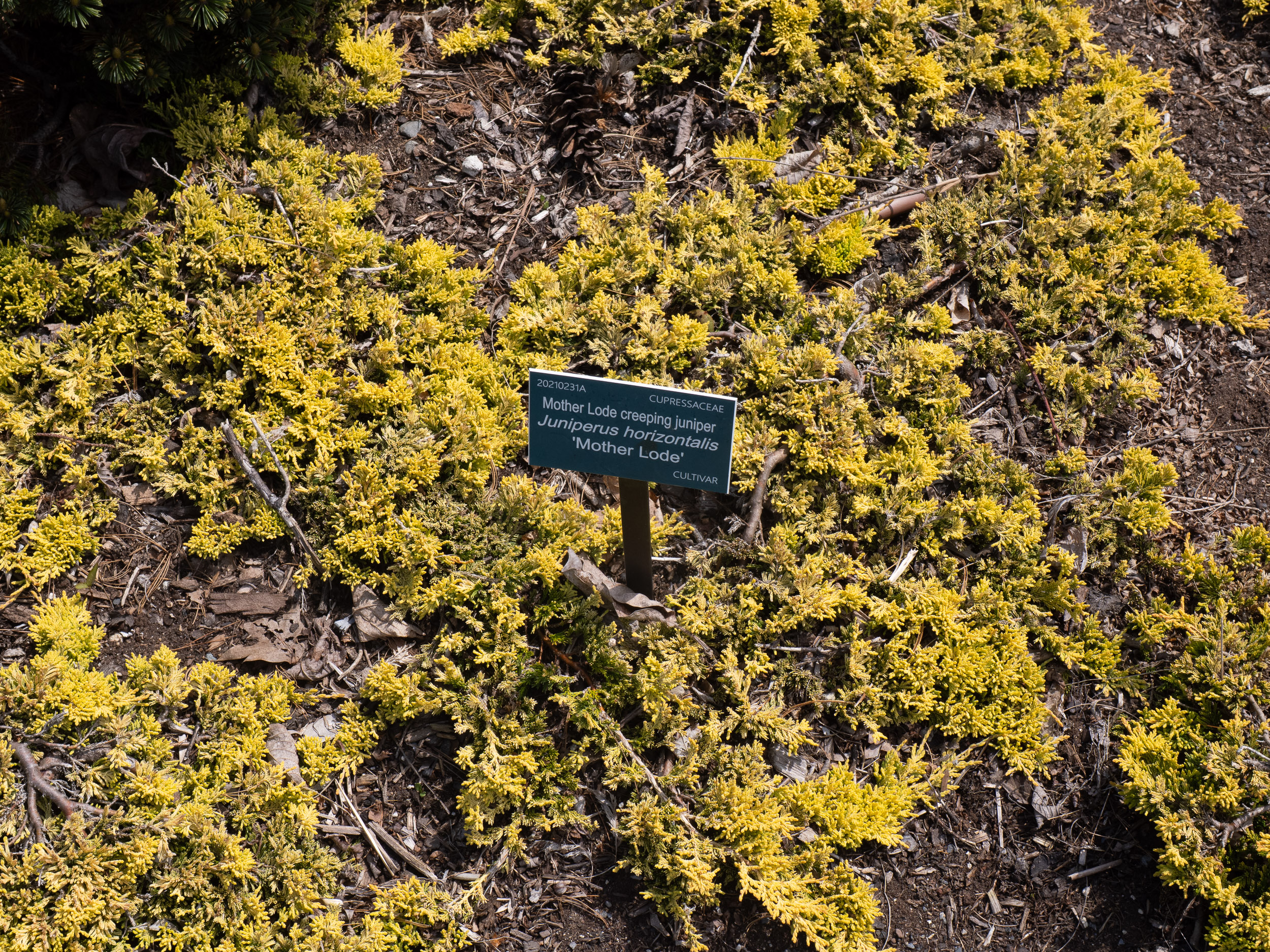
5/23/2024 · Coastal Maine Botanical Gardens, Boothbay, Maine 
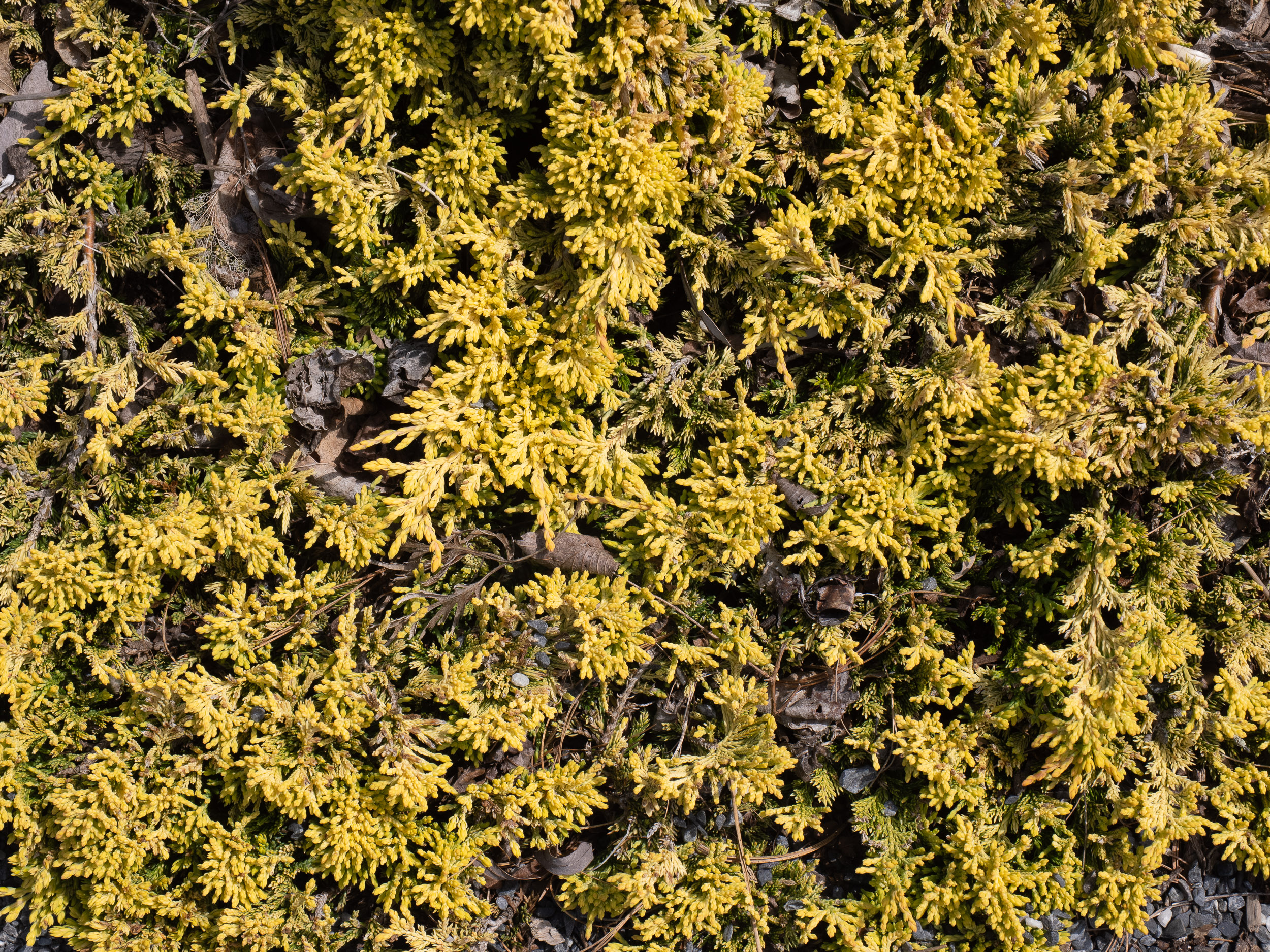
5/23/2024 · Coastal Maine Botanical Gardens, Boothbay, Maine 
| Kingdom | Plantae | Plants, but not fungi, lichens, or algae (from Stearn's Botanical Latin) |
| Subkingdom | Tracheobionta | Vascular plants—plants with a “circulatory system” for delivering water and nutrients |
| Division | Coniferophyta | Conifers—cone-bearing trees (and a few shrubs) |
| Class | Pinopsida | Gymnosperms such as cedars, Douglas-firs, cypresses, firs, junipers, kauri, larches, pines, hemlocks, redwoods, spruces, and yews |
| Order | Pinales | Cone-bearing plants: cedar, cypress, fir, juniper, larch, pine, redwood, spruce, yew, and others |
| Family | Cupressaceae | Cypres family, including junipers and redwoods |
| Genus | Juniperus | Latin for “juniper” |
| Species | horizontalis | “Horizontal,” low to the ground |
Juniperus horizontalis ‘Mother Lode’ description by Thomas H. Kent, not updated.

© FloraFinder.org. All rights reserved.