Ipomoea bona-nox L.
Ipomoea alba L.
Moonflower, moonvine, tropical white morning-glory
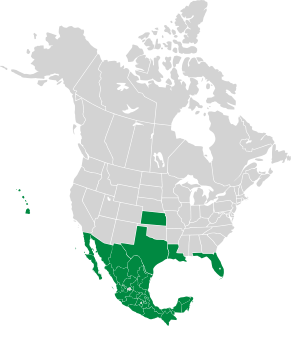
Moonflower is native to Central and South America, to Florida, and to other tropical regions worldwide.
Plants: Vines are 10–15′ high ⨉ 3–6′ around (3–4.6 m ⨉ 91–182 cm). Vines sometimes have small projections. In tropical climates they can grow much larger. They are vigorous growers and can overtake gardens. They are perennials in warmer climes, reaching up to 40′ (12 m); and annuals in cooler regions.
Leaves: Broad, usually cordate, sharp-tipped, and alternate. The deep-green leaves are 4–8″ (10–20 cm) long.
Flowers: White, fragrant, trumpet-shaped, up to 6″ (15 cm) around. They appear from July to October. Flowers open in the evening and remain open until noon the next day.
Fruits: Capsules are ¾–1″ (2–3 cm) long. When mature, they split open to release four hairless, whitish-coloured, seeds about ⅜″ (1 cm) long.
Habitats: Moist but not soggy soils, such as edges of hammocks and swamps.
Online References:
References:
McMullen, Conley K., Flowering Plants of the Galápagos, Comstock Publishing Associates, 1999, p. 295
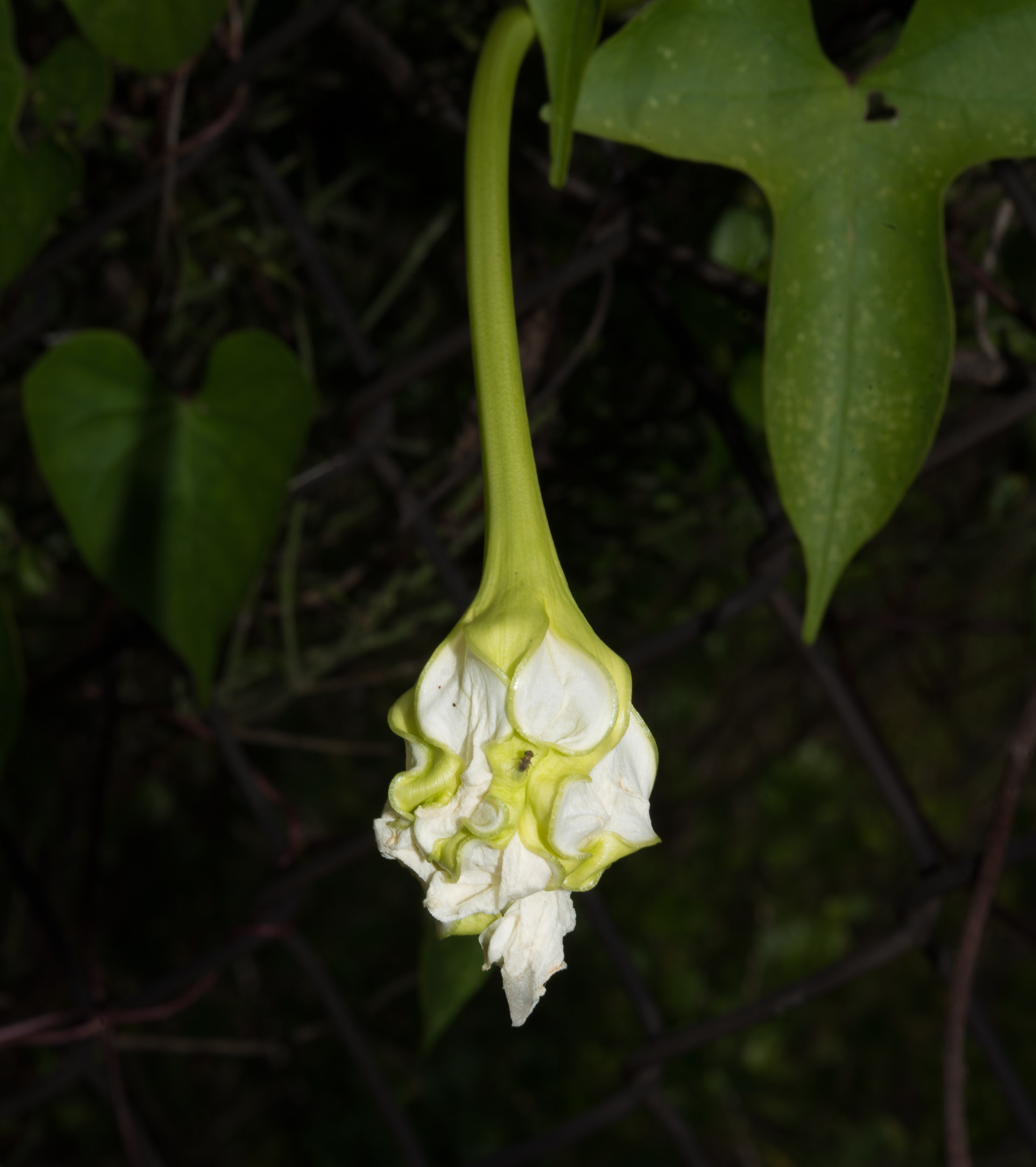
4/11/2015 · H. P. Williams Roadside Park, Everglades National Park, Florida · ≈ 6 × 6″ (14 × 15 cm) 
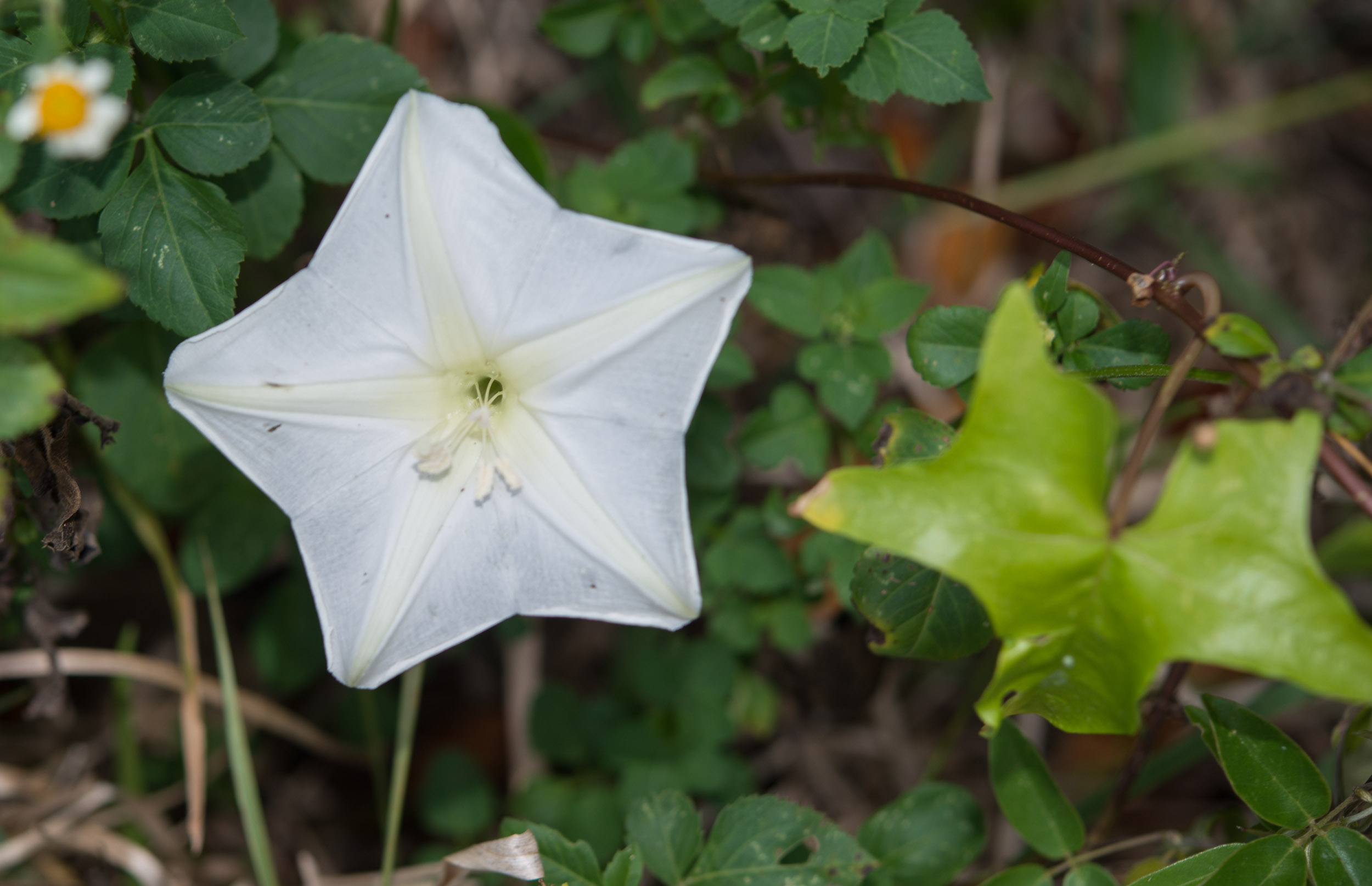
4/13/2015 · Flamingo Campground, Everglades National Park, Florida · ≈ 8 × 7″ (19 × 18 cm) 
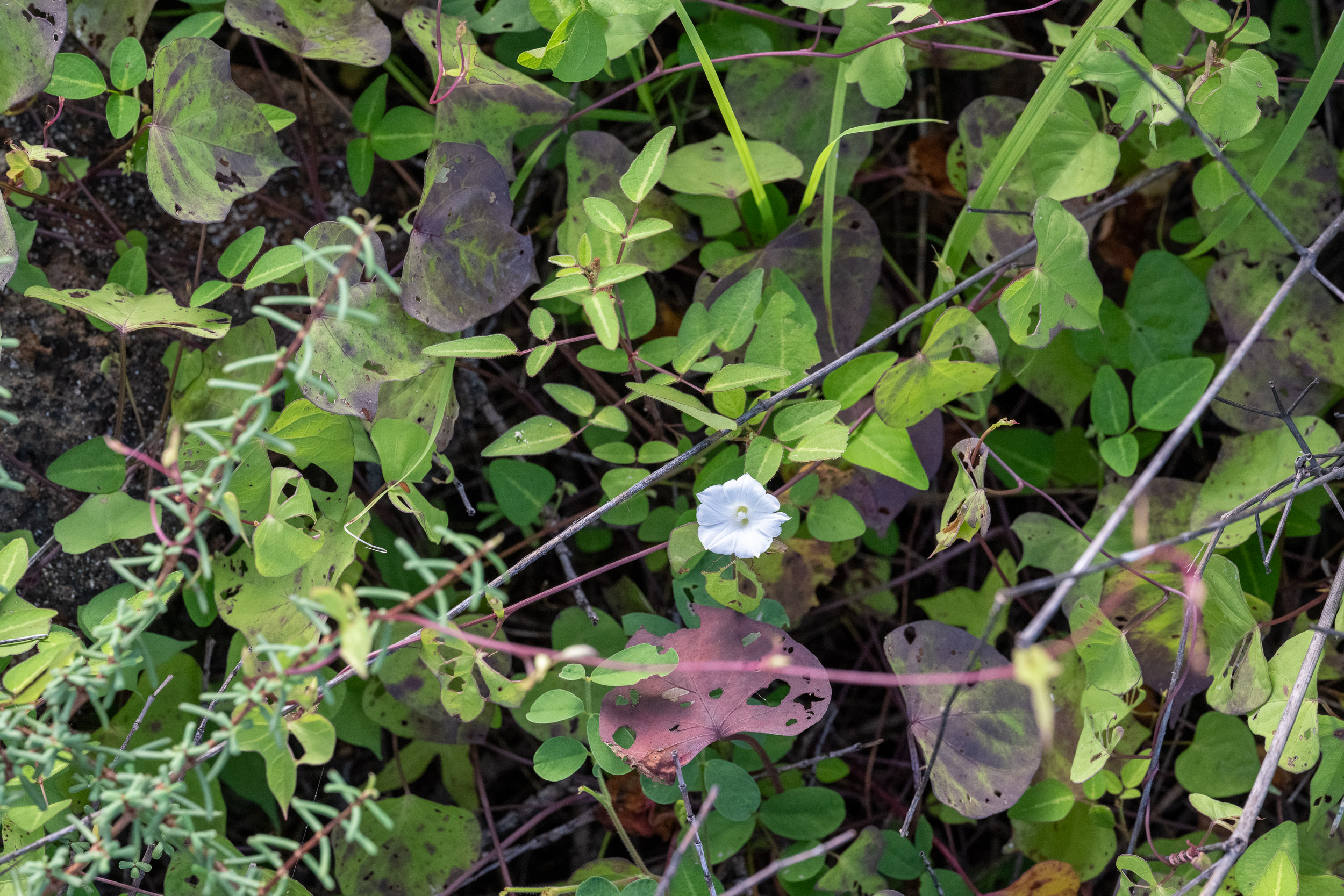
4/3/2025 · Las Bachas Beach, Santa Cruz, Galápagos Islands, Ecuador · ≈ 13 × 9″ (34 × 22 cm) 
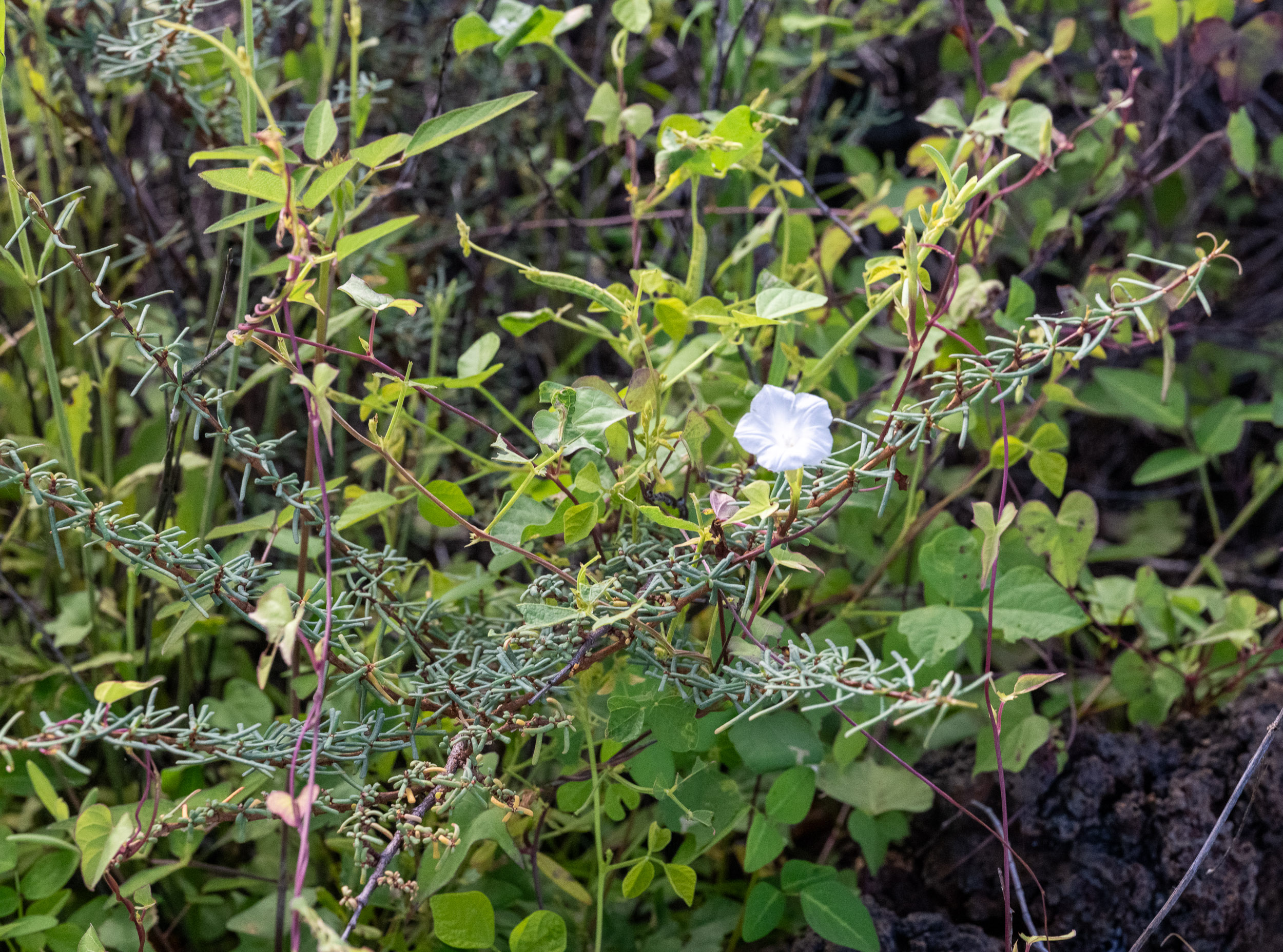
4/3/2025 · Las Bachas Beach, Santa Cruz, Galápagos Islands, Ecuador · ≈ 14 × 11″ (36 × 27 cm) 
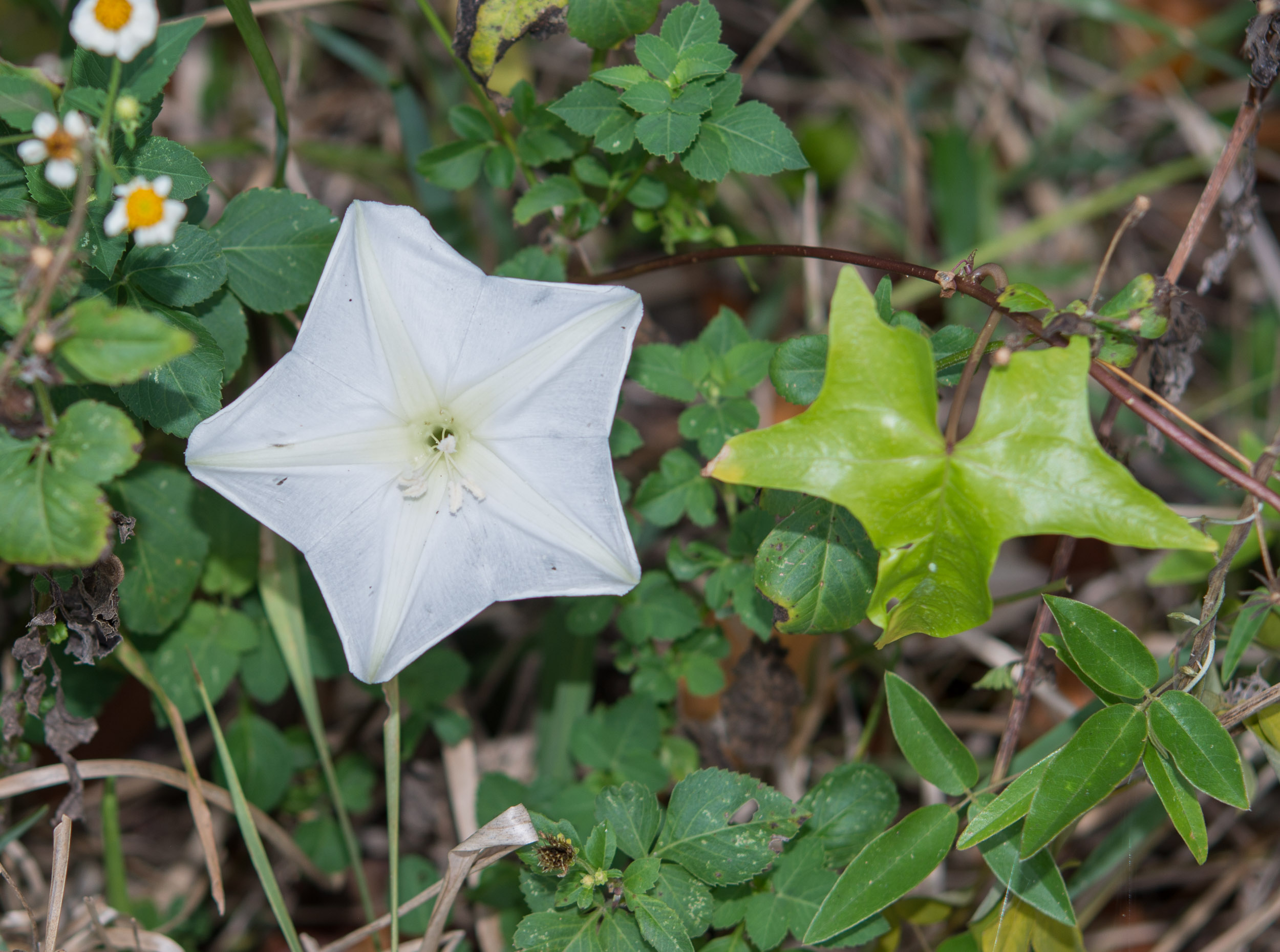
4/13/2015 · Flamingo Campground, Everglades National Park, Florida · ≈ 7 × 8″ (18 × 21 cm) 
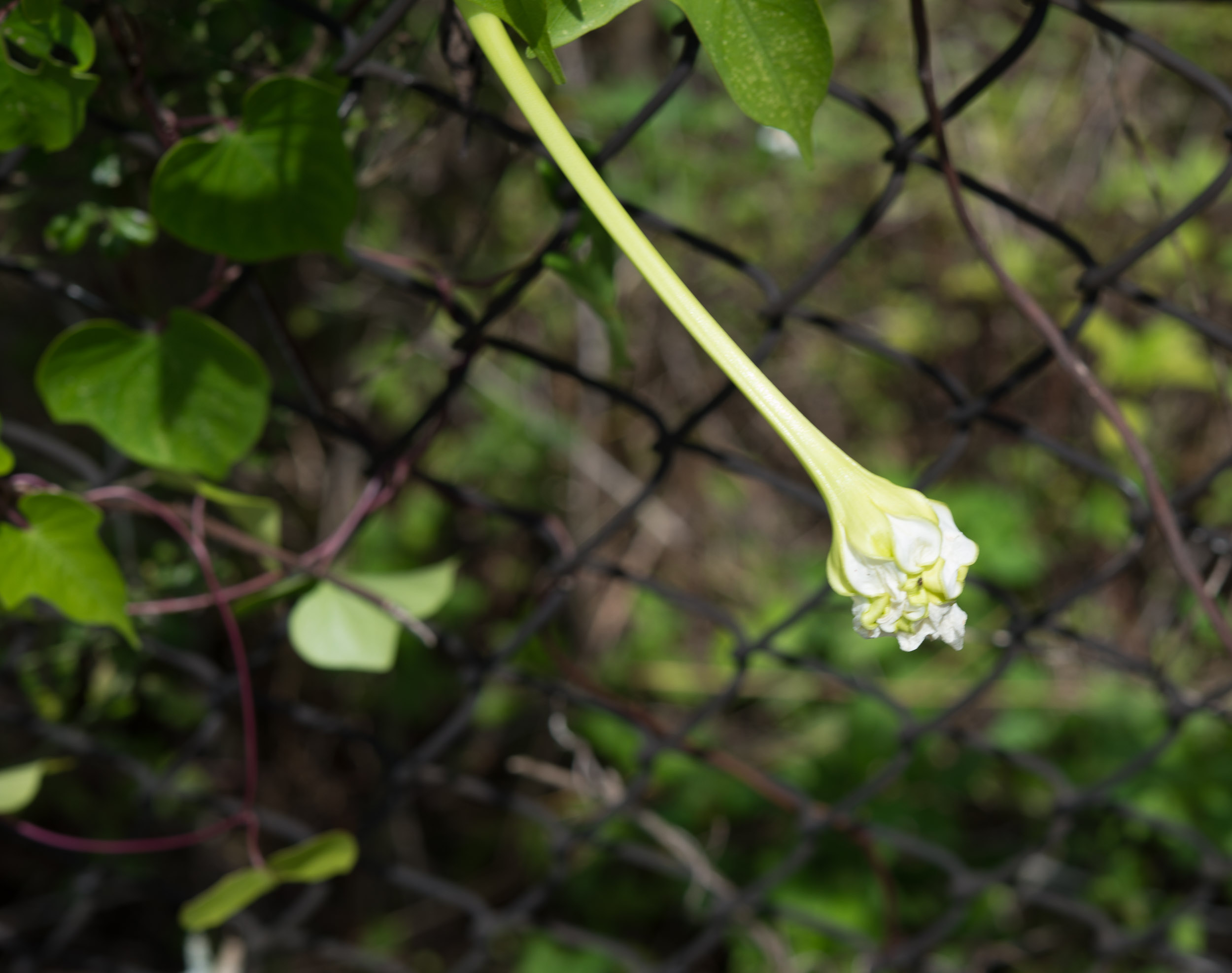
4/11/2015 · H. P. Williams Roadside Park, Everglades National Park, Florida · ≈ 10 × 8″ (26 × 20 cm) 
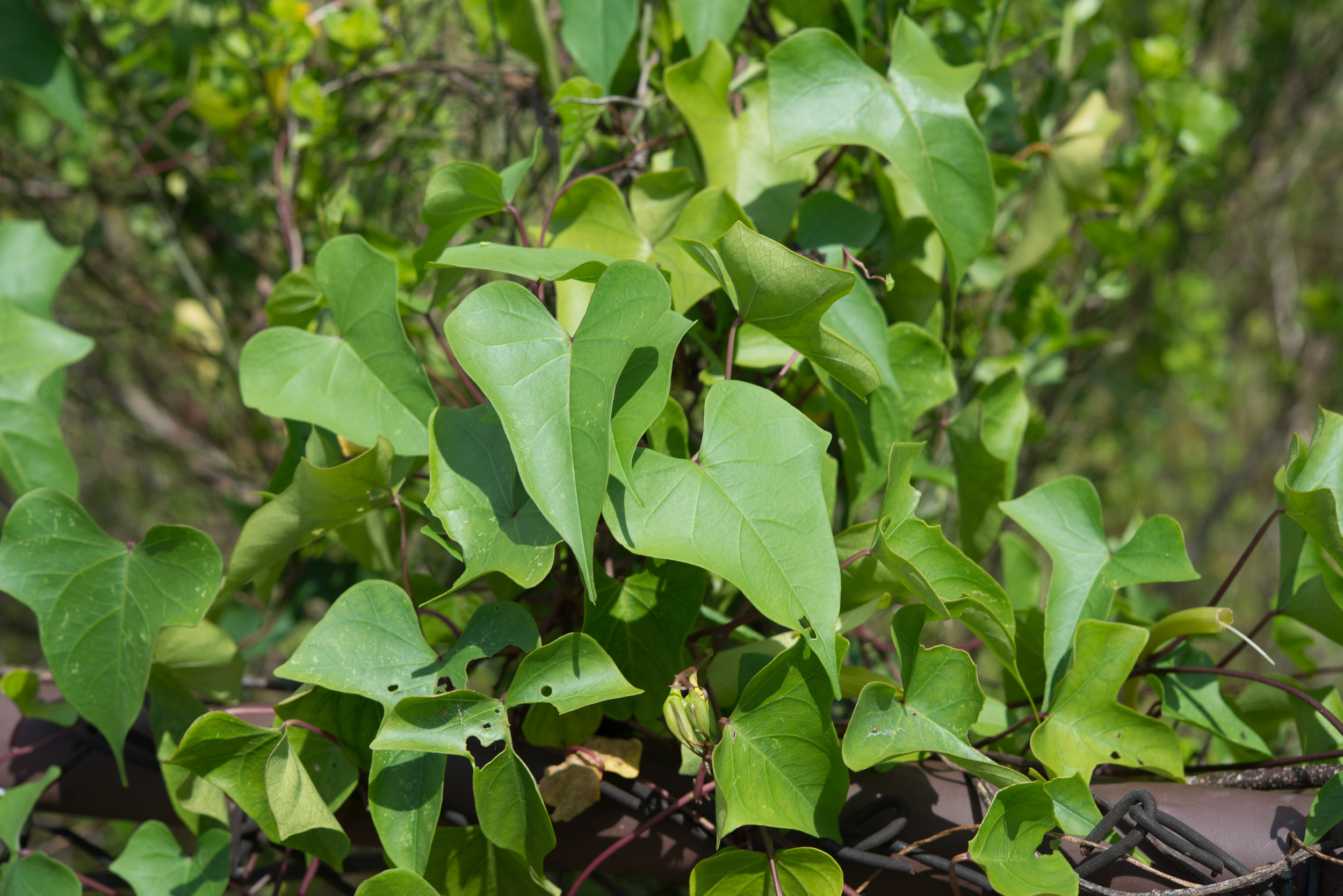
4/11/2015 · H. P. Williams Roadside Park, Everglades National Park, Florida · ≈ 15 × 10″ (37 × 25 cm) 
| Kingdom | Plantae | Plants, but not fungi, lichens, or algae (from Stearn's Botanical Latin) |
| Subkingdom | Tracheobionta | Vascular plants—plants with a “circulatory system” for delivering water and nutrients |
| Division | Magnoliophyta | Flowering plants, also known as angiosperms |
| Class | Magnoliopsida | Dicotyledons—plants with two initial seed leaves |
| Subclass | Asteridae | A large class that encompasses asters |
| Order | Solanales | Potatoes, eggplants, tomatoes, peppers, tobacco, petunias, sweet potatoes, morning glories, many others |
| Family | Convolvulaceae | Bindweed or morning glory family |
| Genus | Ipomoea | From Greek ips, “a worm,” and homoios, “like,” because of the twining vine |
| Species | alba | White |
Ipomoea alba description by Thomas H. Kent, not updated.

© FloraFinder.org. All rights reserved.