Hypericum punctatum Lam.
Spotted St. John’s-wort, spotted St. Johnswort
Spotted St. John’s-wort is a fairly uncommon North American native plant. It is named for the presence of numerous tiny black spots—glands—on new leaves.
Plants: 5–41″ (13–105 cm) tall, with hairless red or green stems. Stems often branch from the base.
Leaves: Leaves are simple (unlobed), hairless, opposite, oblong to oval elliptic, and ¾–2 ⨉ ¼–½″ (1.9–5.7 cm ⨉ 8.3–12 mm). New leaves are spotted with tiny black glands. They are typically widest somewhat past the midpoint. Leaves are usually attached to the stem (sessile), but may be on 1/32″ (1 mm) stems (petioles). Leaves turn brilliant reddish purple with age.
Flowers: Yellow, five-petaled flowers and densely clustered at stem tips, are ¼–½″ (8–15 mm) around. The sepals, most easily seen enclosing the unopened buds, are also dotted with rows of black dots. At the center of each flower is a round central ovary, from which 3 styles extend, like an inverted tripod. The tip of each style is often red. Surrounding this are more than 13 stamens. Flowers lack a scent, and appear from May to September.
Fruits: Upright, ovoid or teardrop-shaped capsule ⅛–¼″ (4–6.3 mm) long, reddish to deep purple. They split into three sections, releasing a lot of tiny seeds.
Habitats: Black soil or gravel prairies, open woodlands, savannas, river and lake banks, railroads, and roadsides.
 |
Some types of St. John’s wort. |
Online References:
Hypericum subpetiolatum E.P. Bicknell ex Small
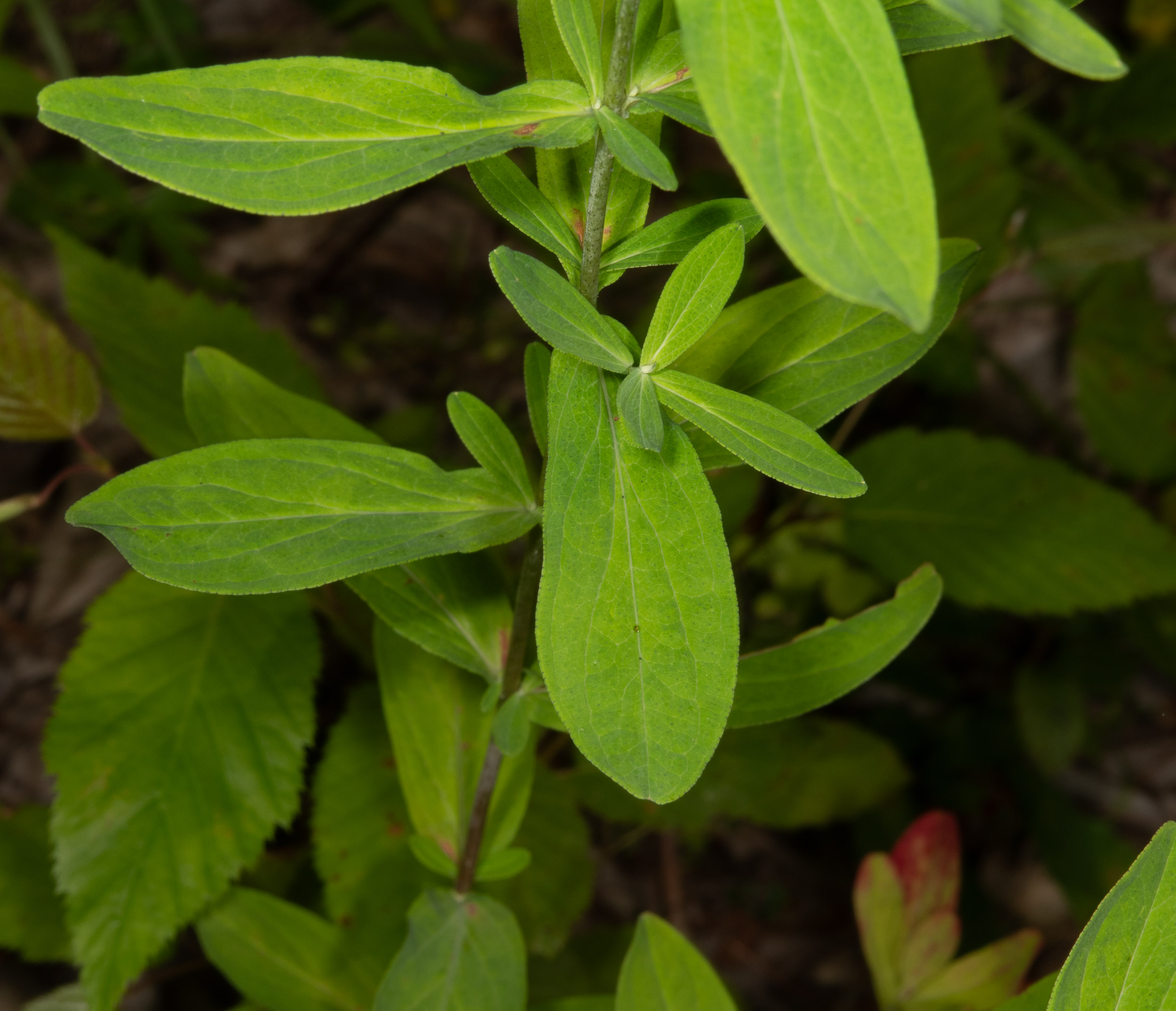
7/15/2019 · Beaver Brook Conservation Area, New Long Loop, Hollis, New Hampshire · ≈ 5 × 4″ (12 × 11 cm) 

7/14/2024 · Moh-He-Con-Nuck Nature Preserve, Selkirk, New York 

7/14/2024 · Moh-He-Con-Nuck Nature Preserve, Selkirk, New York 
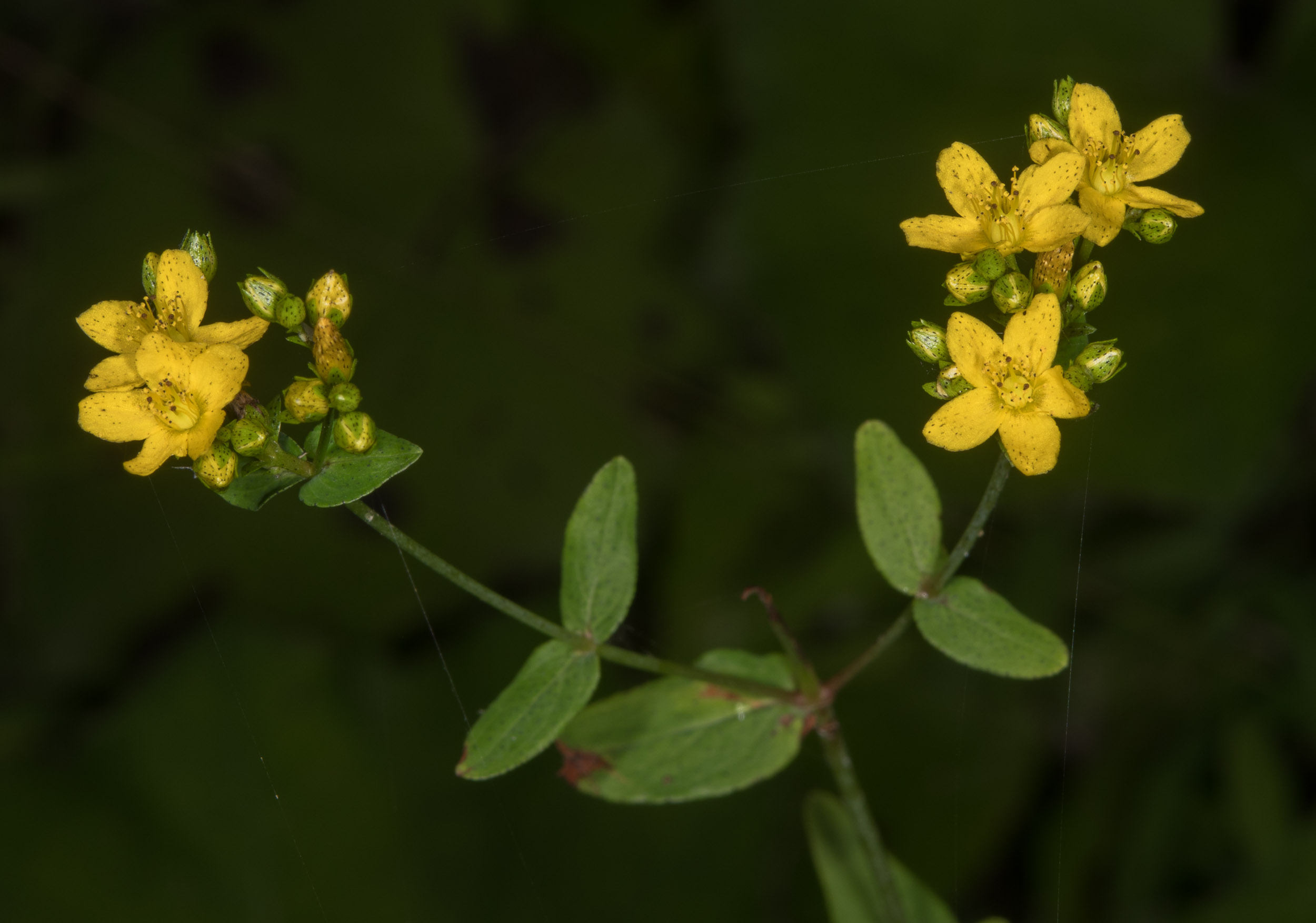
7/23/2017 · Pine Grove Furnace State Park, Pennsylvania · ≈ 3½ × 2½″ (9.5 × 6.7 cm) 

7/15/2019 · Beaver Brook Conservation Area, New Long Loop, Hollis, New Hampshire · ≈ 4 × 3″ (10 × 8.1 cm) 

7/23/2017 · Pine Grove Furnace State Park, Pennsylvania · ≈ 4 × 3½″ (10 × 9.2 cm) 
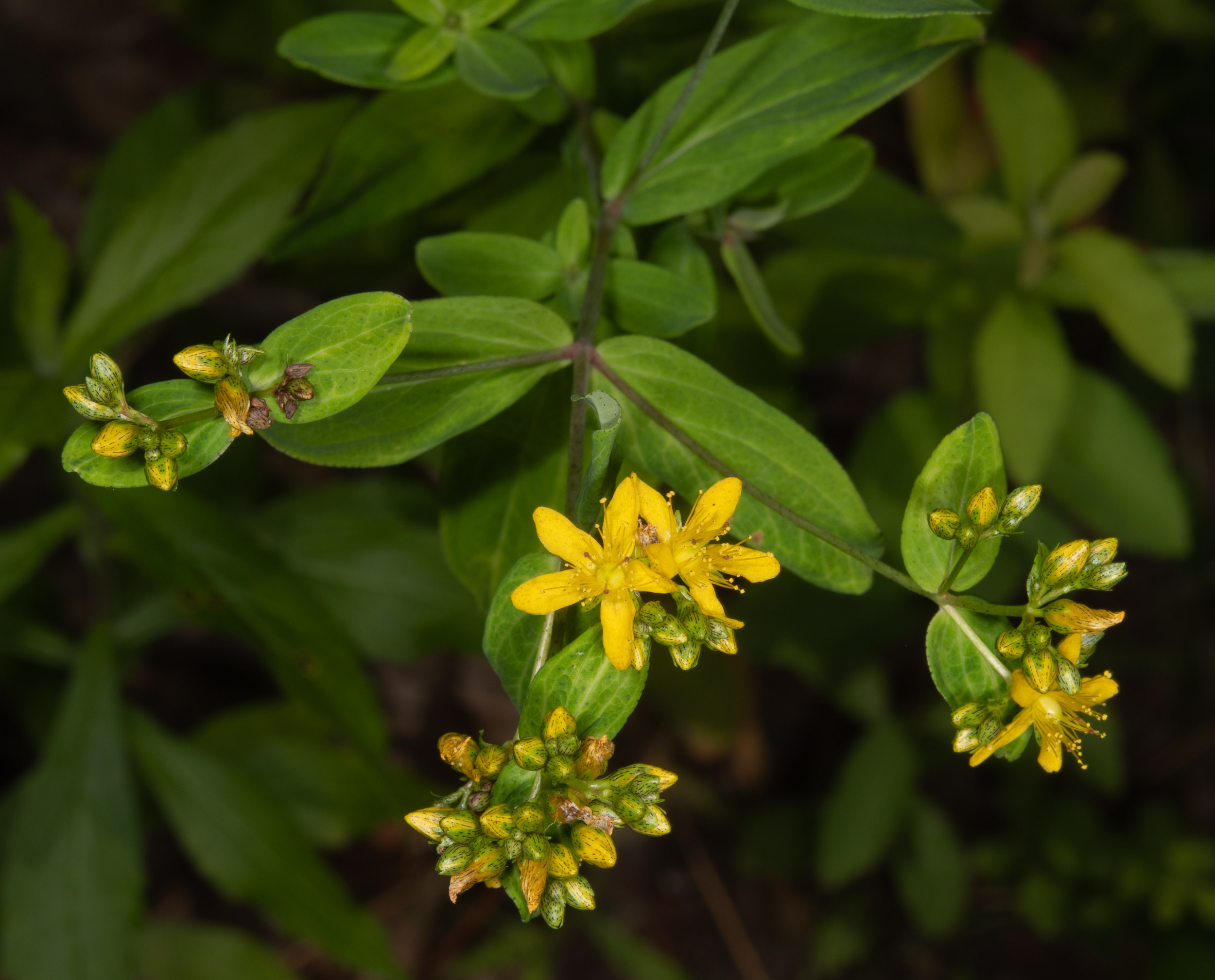
7/15/2019 · Beaver Brook Conservation Area, New Long Loop, Hollis, New Hampshire · ≈ 4 × 3½″ (11 × 8.9 cm) 

7/15/2019 · Beaver Brook Conservation Area, New Long Loop, Hollis, New Hampshire · ≈ 4½ × 3″ (11 × 8.1 cm) 
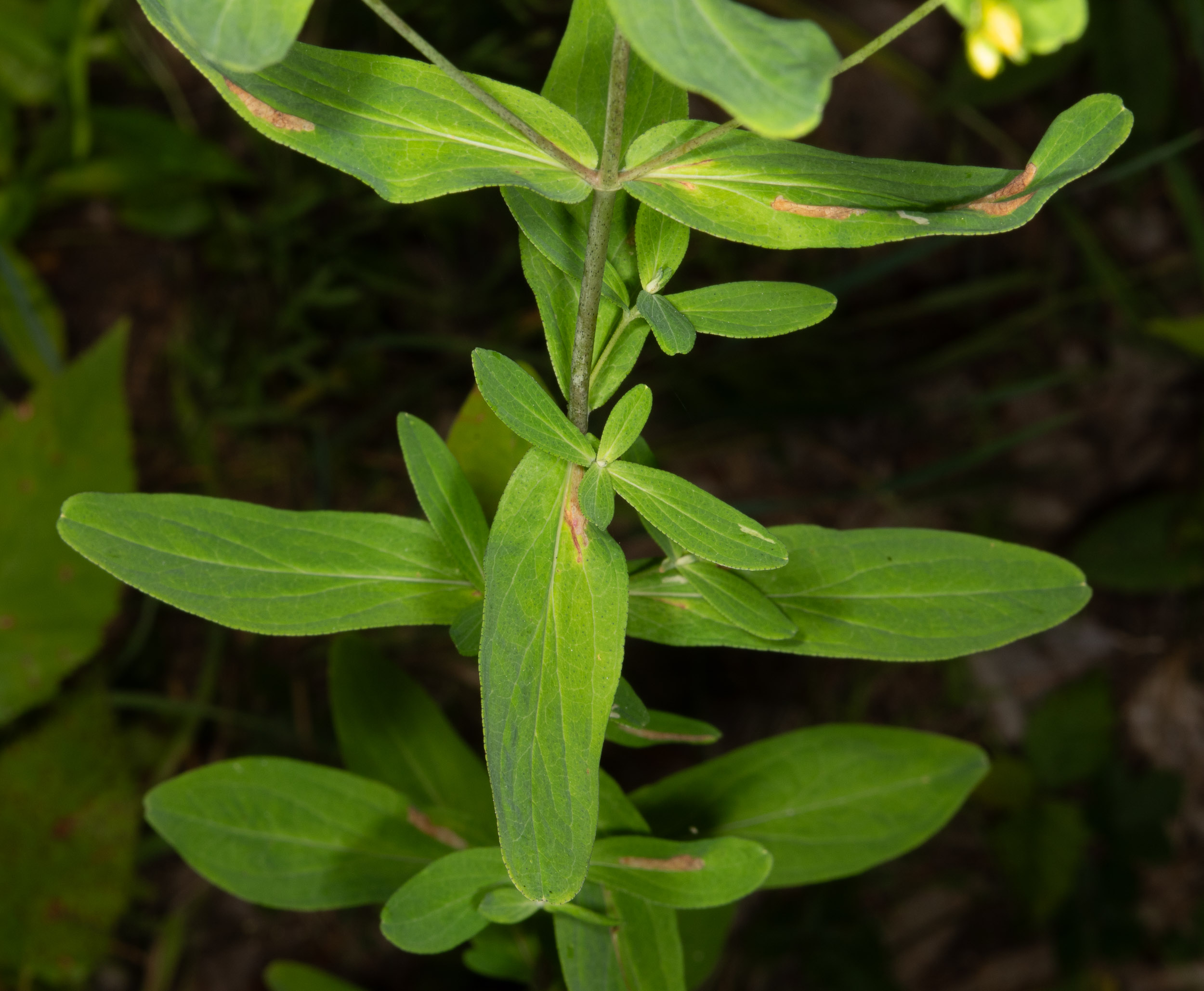
7/15/2019 · Beaver Brook Conservation Area, New Long Loop, Hollis, New Hampshire · ≈ 5 × 4″ (13 × 11 cm) 
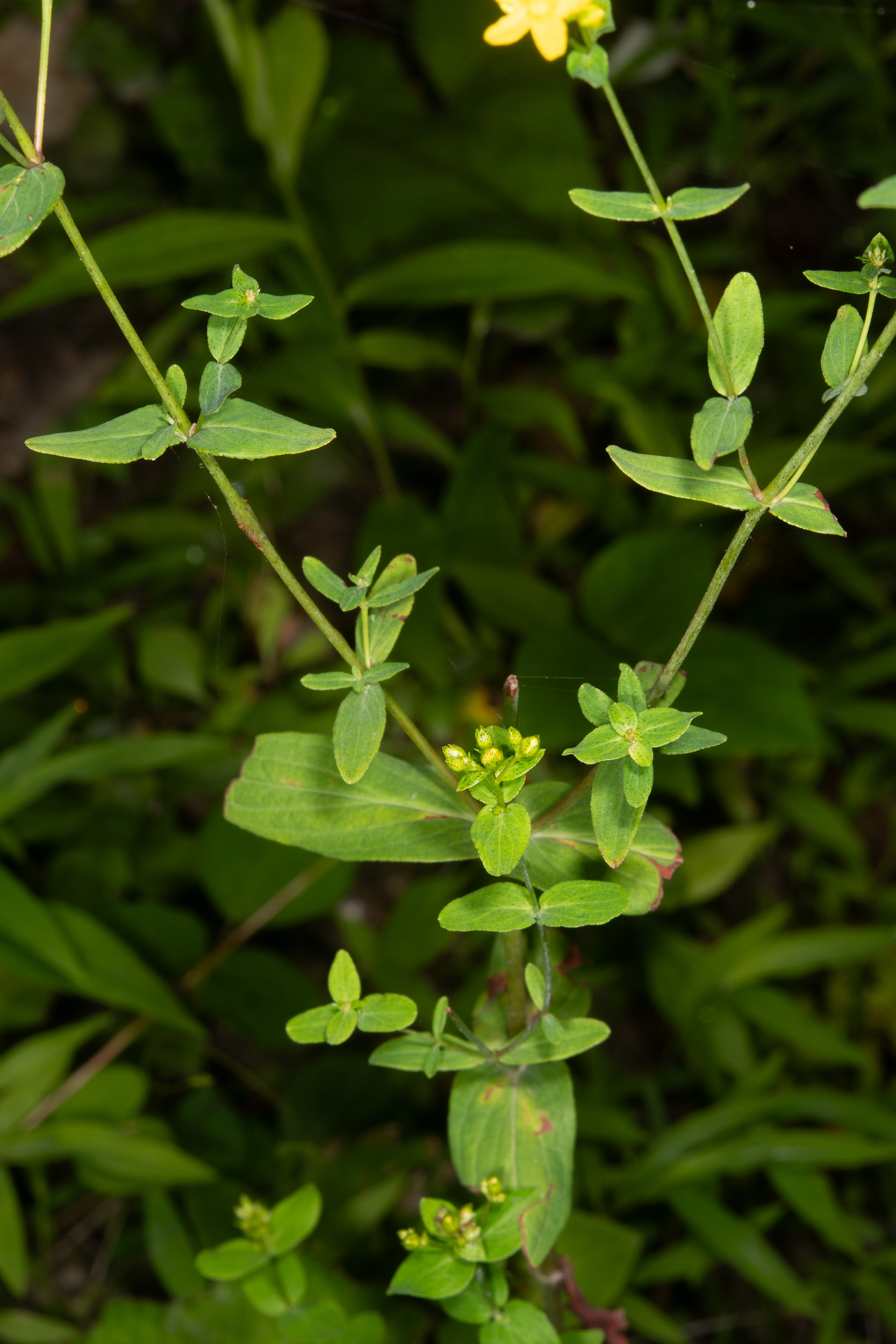
7/23/2017 · Pine Grove Furnace State Park, Pennsylvania · ≈ 4 × 6″ (11 × 16 cm) 

7/14/2024 · Moh-He-Con-Nuck Nature Preserve, Selkirk, New York 

7/14/2024 · Moh-He-Con-Nuck Nature Preserve, Selkirk, New York 
| Kingdom | Plantae | Plants, but not fungi, lichens, or algae (from Stearn's Botanical Latin) |
| Subkingdom | Tracheobionta | Vascular plants—plants with a “circulatory system” for delivering water and nutrients |
| Division | Magnoliophyta | Flowering plants, also known as angiosperms |
| Class | Magnoliopsida | Dicotyledons—plants with two initial seed leaves |
| Subclass | Rosidae | Roses, legumes, proteas, dogwoods, hydrangeas, mistletoes, euphorbias, grapes, many more |
| Order | Malpighiales | A broad group encompassing 16,000 species |
| Family | Hypericaceae | St. John’s Wort family |
| Genus | Hypericum | From ancient Greek hyper, “above,” and eikon, “picture,” from an old practice of putting flowers above a picture to ward off evil spirits |
| Species | punctatum | Spotted, referring (at least in the case of P. punctatum) to the gland-dotted calyx |
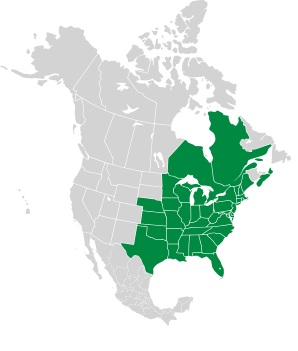
Hypericum punctatum description by Thomas H. Kent, not updated.

© FloraFinder.org. All rights reserved.