Hygrocybe coccinea
Scarlet hood, scarlet waxcap
The scarlet hood is a native of North America.
Identification: In North America, this mushroom occurs by itself or in small groups, under redwoods, other conifers, or in mixed forests. The cap, ¾–1¾″ (2–5 cm) across, is brilliant red, and waxy in appearance. The gills are reddish in color as well, though they may be much paler. Stalks are less than 4″ (10 cm) in height, and up to ¼″ (8 mm) in diameter, and red to red-orange. Creates a white spore print.
Habitats: Unimproved grasslands and woodlands.
Edibility: Unknown, but easily confused with Hygrocybe punicea, which is poisonous  at least to some people.
Online References:
References:
Arora, David, Mushrooms Demystified, Ten Speed Press, 1986, p. 114
Barron, George, Mushrooms of Northeast North America, Lone Pine Publishing, 1999, p. 270

9/20/2021 · Tarbox Preserve, Topsham, Maine  ID is uncertain

9/20/2021 · Tarbox Preserve, Topsham, Maine ID is uncertain 

9/20/2021 · Tarbox Preserve, Topsham, Maine ID is uncertain 
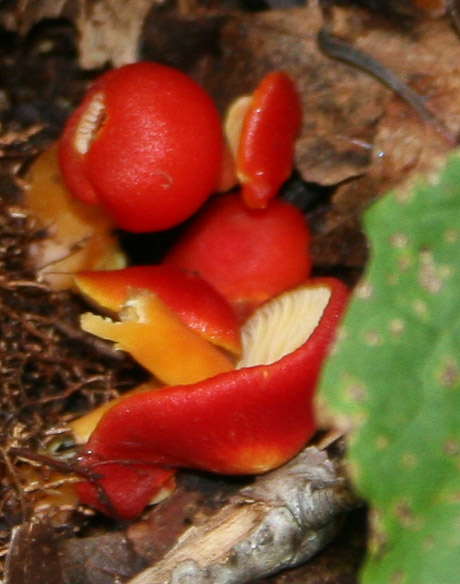
9/14/2010 · Nova Scotia, Canada · By Kathy Williamson ID is uncertain 

10/4/2012 · By Jacquelyn Boyt ID is uncertain 
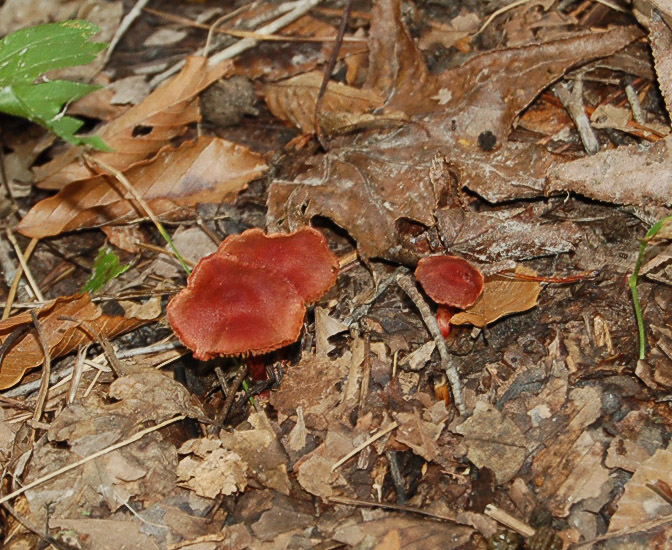
10/4/2012 · By Jacquelyn Boyt ID is uncertain 
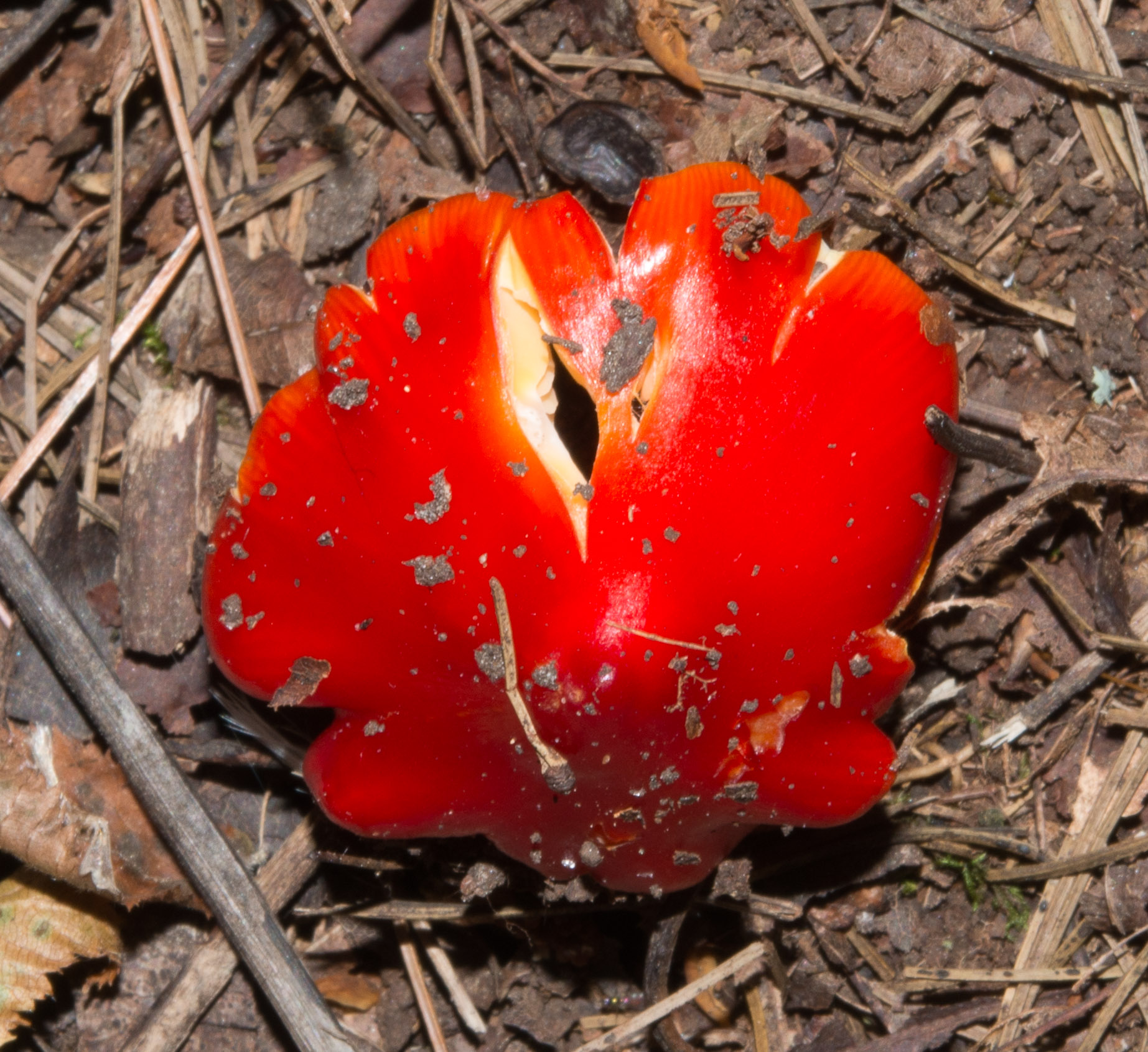
7/23/2015 · Beaver Brook Conservation Area, Hollis, New Hampshire · ≈ 2 × 2″ (6 × 5.5 cm) ID is uncertain 
| Roughly 75 people in North America are poisoned each year by mushrooms, often from eating a poisonous species that resembles an edible species. Though deaths are rare, there is no cure short of a liver transplant for severe poisoning. Don’t eat any mushroom unless you are absolutely certain of its identity! Please don’t trust the identifications on this site. We aren’t mushroom experts and we haven’t focused on safely identifying edible species. |
Hygrocybe coccinea description by Thomas H. Kent, not updated.

© FloraFinder.org. All rights reserved.