Hydrangea macrophylla (Thunb.) Ser.
Blue hydrangea, hydrangea, bigleaf hydrangea, French hydrangea
These hydrangeas are native to east Asia, though it has naturalized in many other areas of the world.
Remember litmus paper? It turns pink in acid and blue in alkaline solutions. So do bigleaf hydrangeas (except that it is the other way around: acid = blue, alkaline = pink). It is a little more complicated, but the principle is the same: there is a pigment in these hydrangeas whose color is determined by the pH of the soil (level of acidity or alkalinity), and by the presence or absence of aluminum. The color is also determined by the amount of pigment that is present in the flowers. If there is no pigment, the flowers are white. If, as with many cultivated varieties, there is a lot of pigment, the shade or pink or blue (or purple) is very intense. Here are some details.
Plants: This hydrangea forms a rounded shrub 3–6′ (91–182 cm) around. Branches emerge from the ground and rarely branch. The striking flower clusters are popular with landscapers. See this Hydrangea comparison table.
Leaves: Opposite, 4–8 ⨉ 3–6″ (10–20 ⨉ 7.6–15 cm), crinkly, with serrated leaf margins. Fall color is underwhelming.
Flowers: Huge, ball-shaped clusters, which may be white or cream-colored; or shades of pink or blue ranging from pale in natural varieties to bright in cultivated varieties. (The samples on this page are cultivars.) Flowers appear from July to August.
Fruits: A roughy globulose capsule.
Online References:
Wikimedia Commons (Hydrangeamacrophyllacultivars)

8/14/2010 · George & Jan’s, Chelmsford, Massachusetts · ≈ 12 × 8″ (31 × 20 cm) 
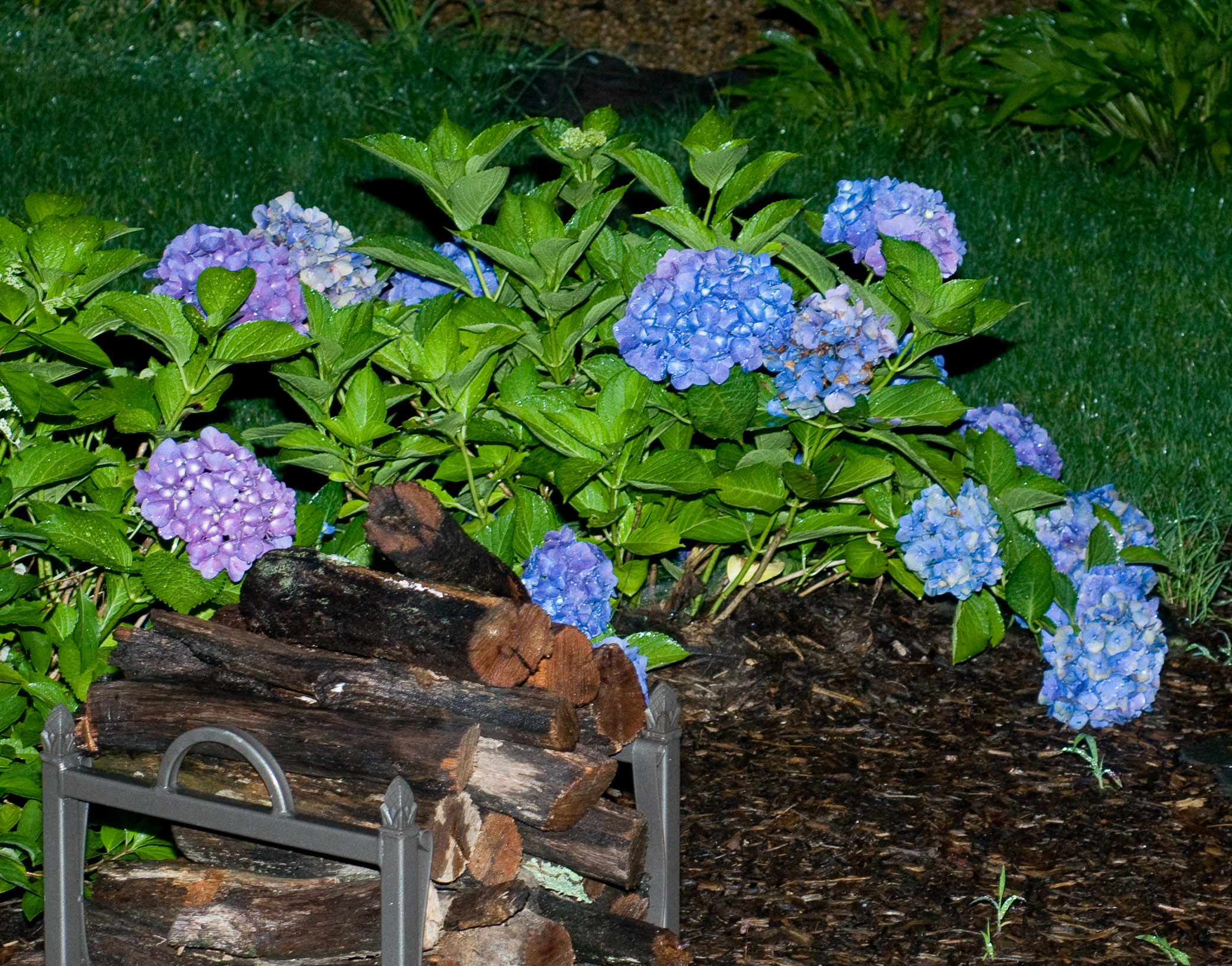
8/10/2008  ID is uncertain
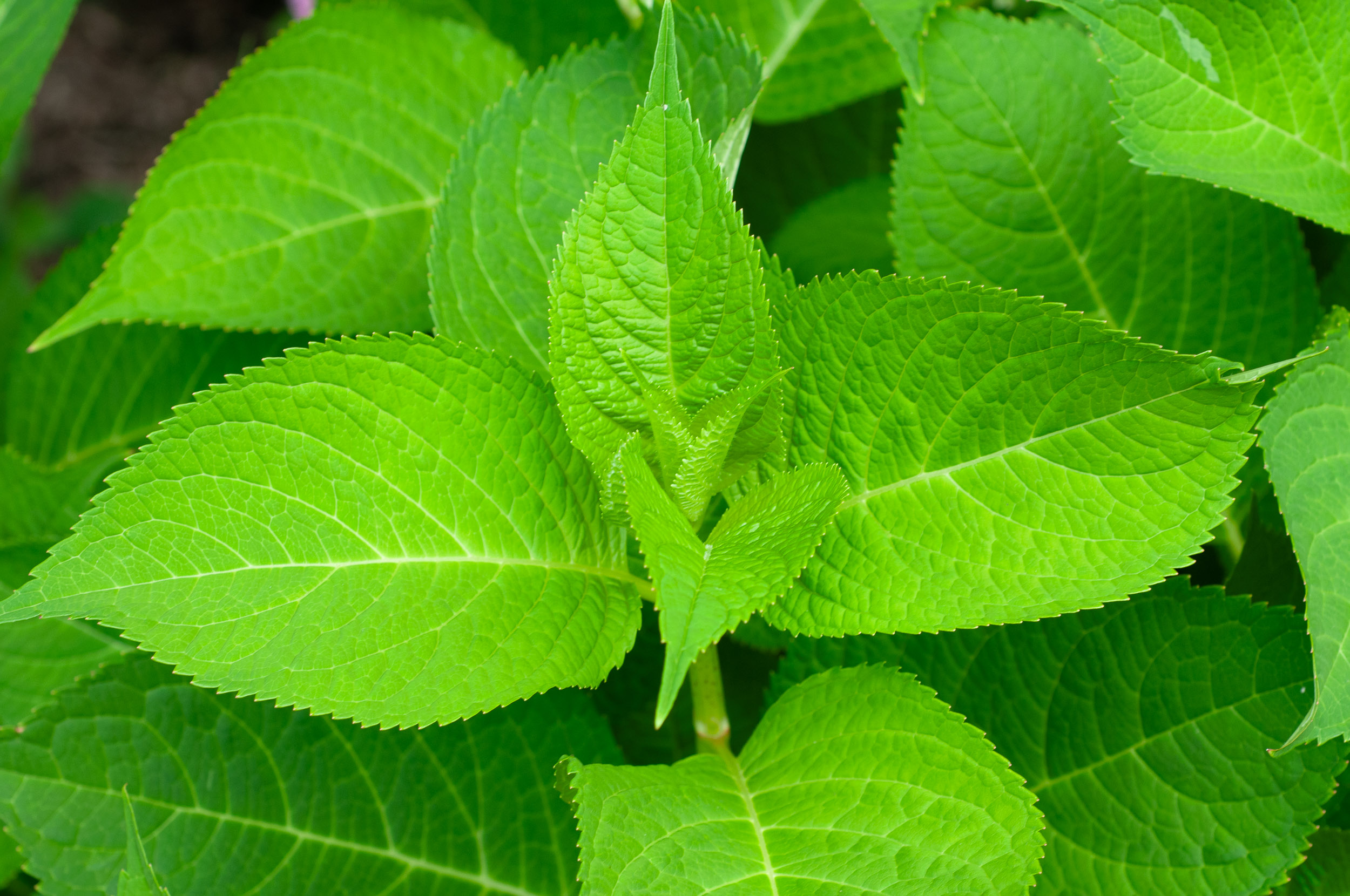
6/18/2011 · Sue and Rai’s, Phoenix, Maryland 

8/1/2009 · Gordon & Kathy’s, Prospect, Maine ID is uncertain 
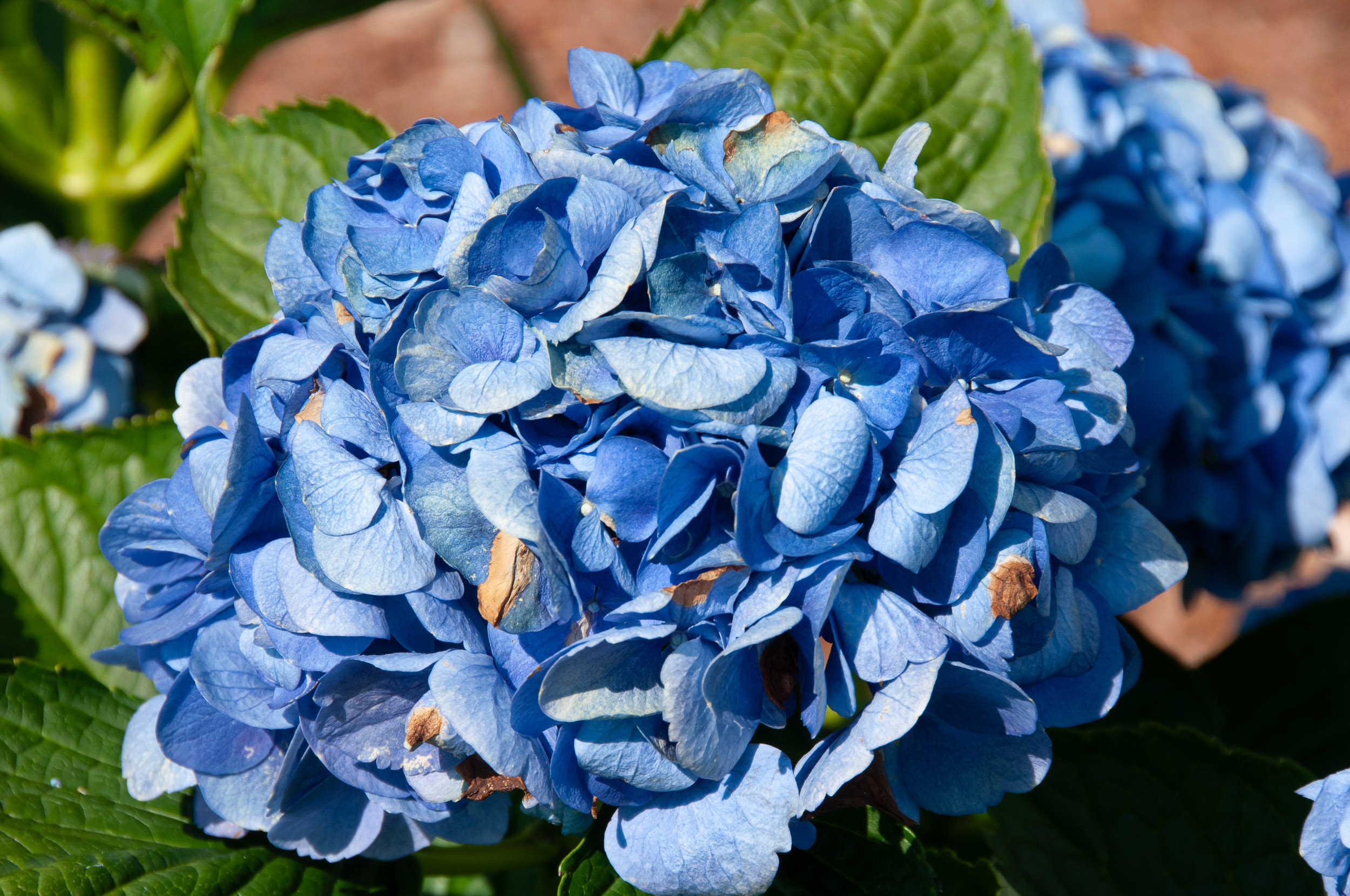
8/15/2009 · Naumanns, Chelmsford, Massachusetts · ≈ 6 × 4″ (15 × 10 cm) ID is uncertain 
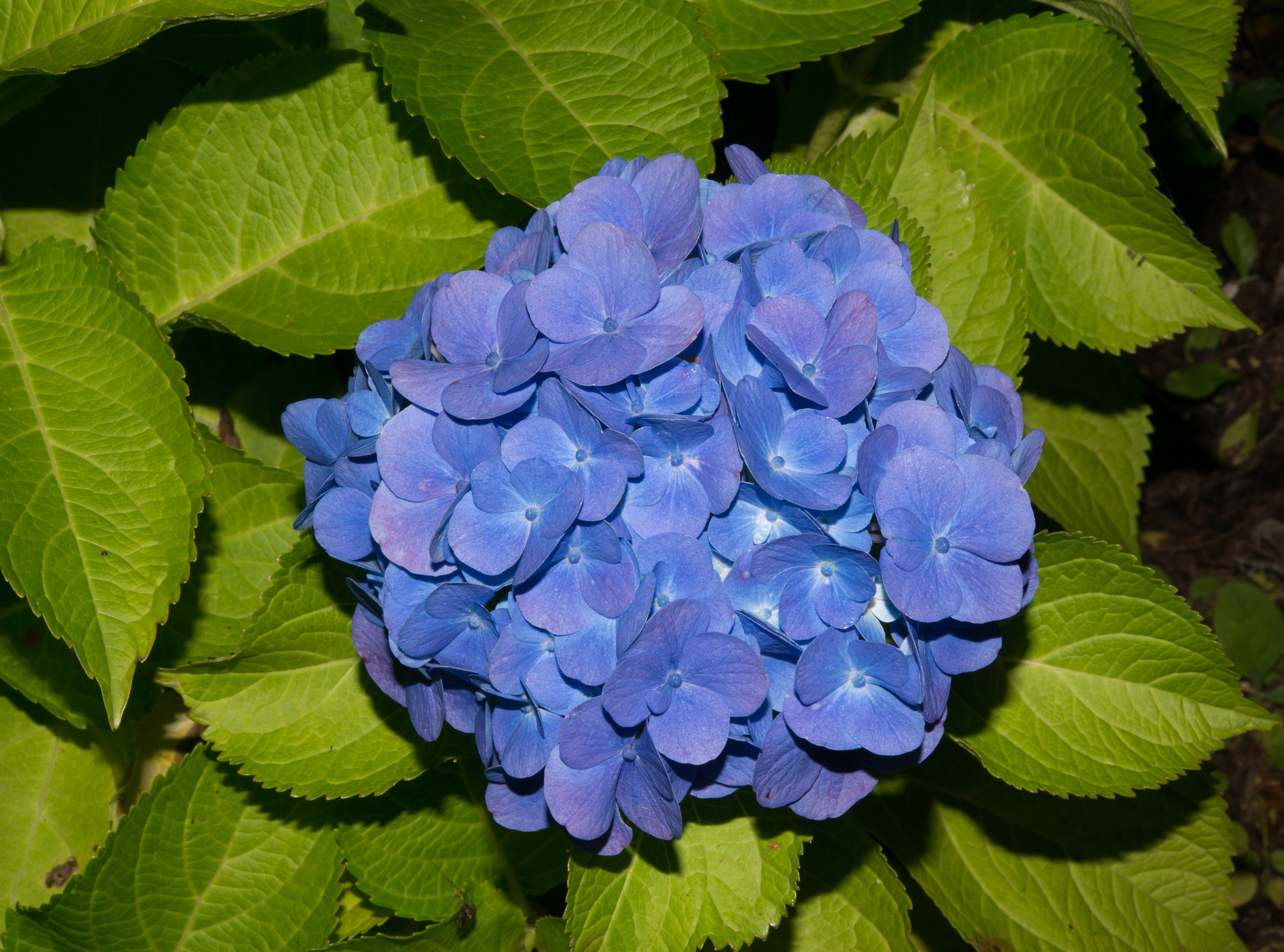
9/27/2013 · Gordon and Kathy’s, Prospect, Maine · ≈ 11 × 8″ (28 × 21 cm) 
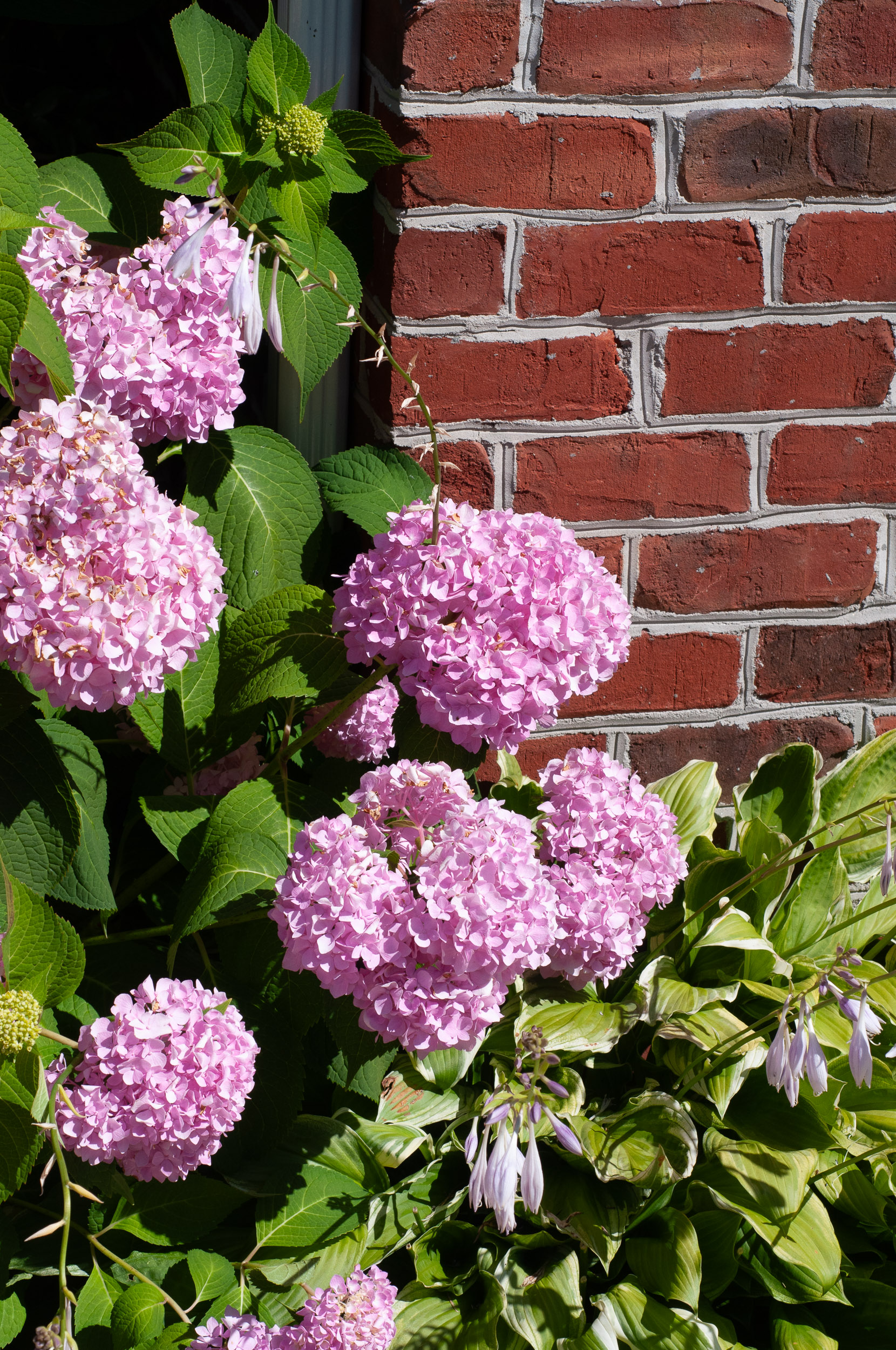
Michael Dirr developed these. · 7/2/2010 · Susan and Raimond’s, Phoenix, Maryland 
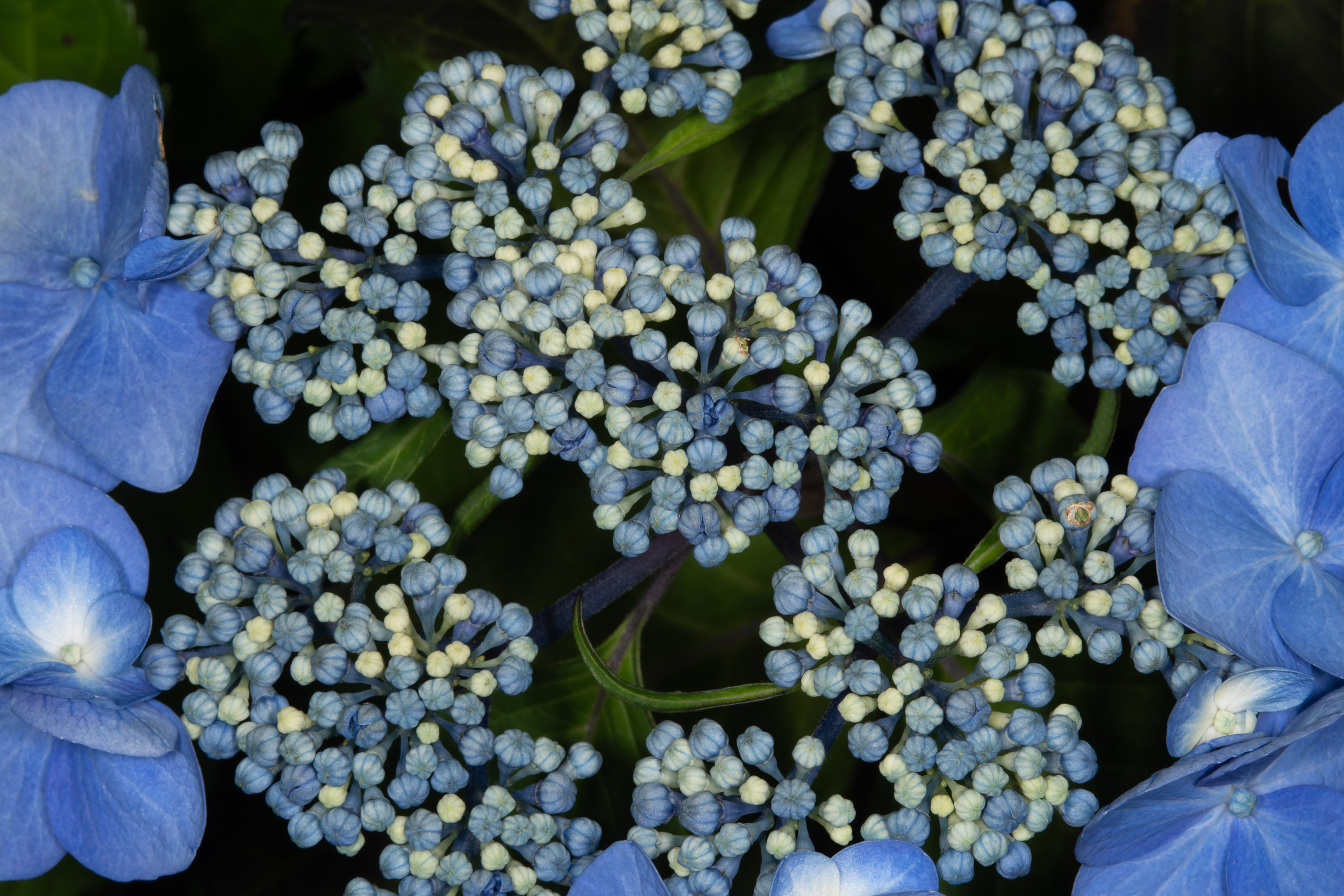
7/18/2019 · Oceanview, Falmouth, Maine · ≈ 6 × 4″ (15 × 10 cm) 
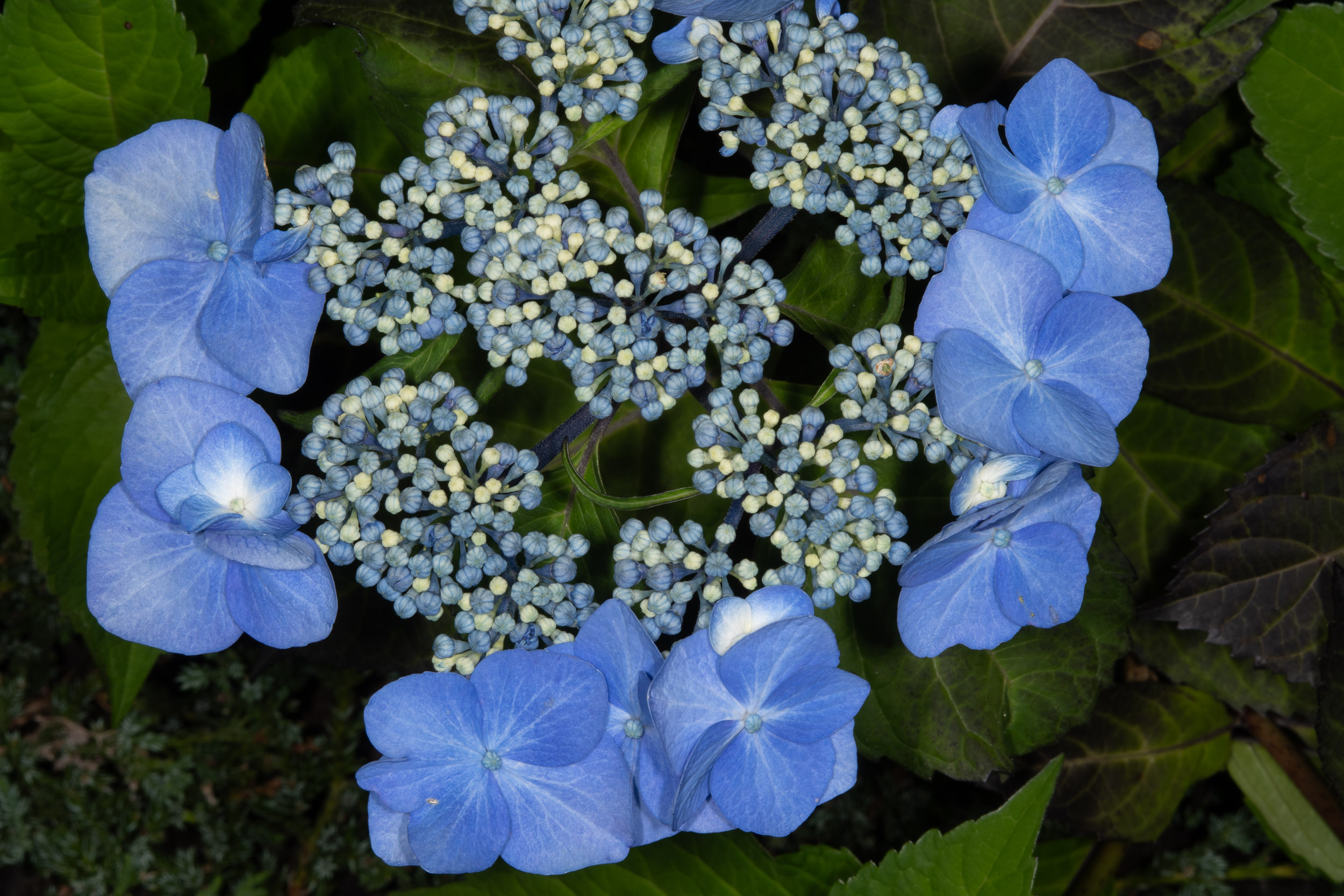
7/18/2019 · Oceanview, Falmouth, Maine · ≈ 10 × 6″ (24 × 16 cm) 
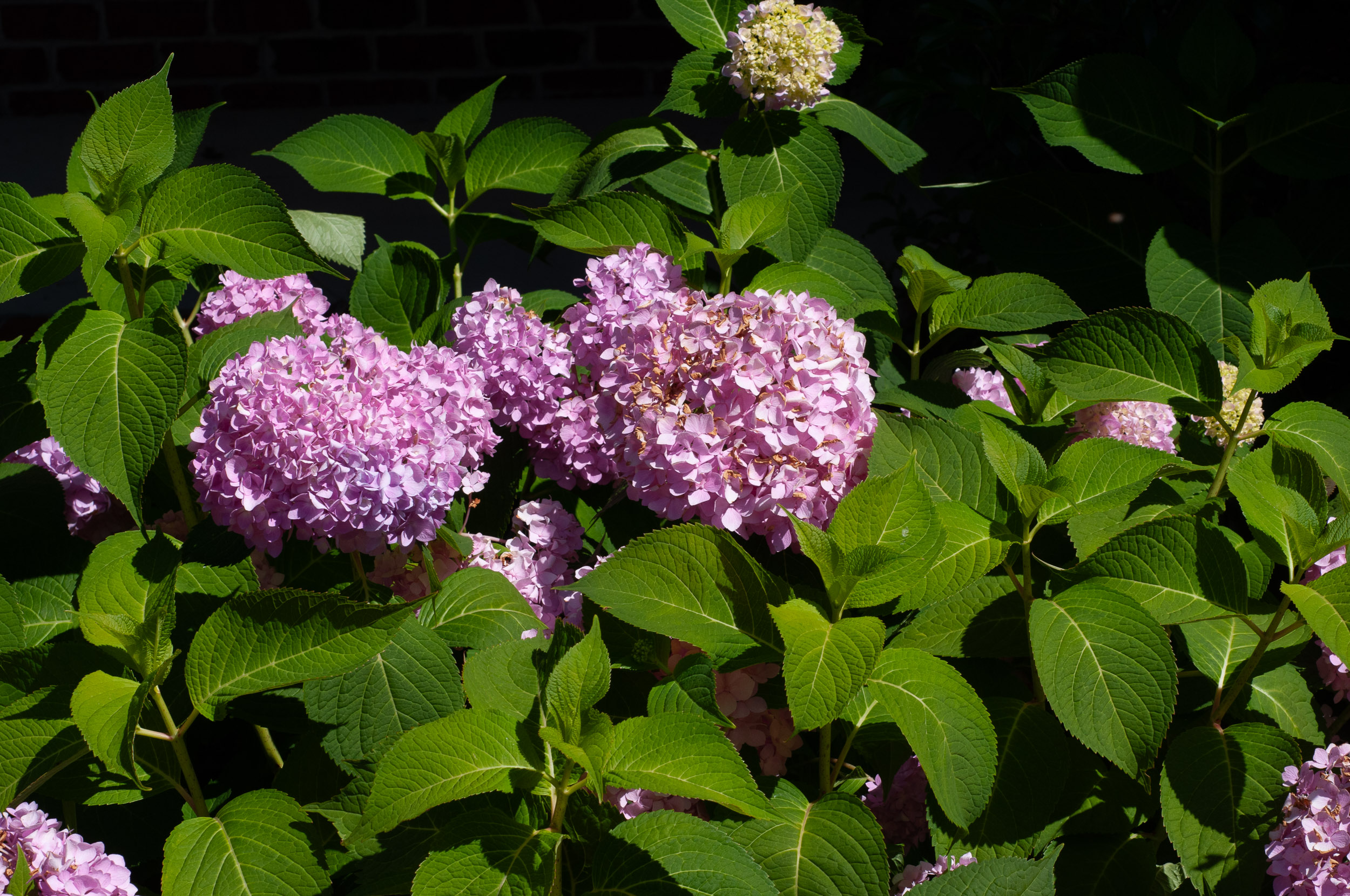
Michael Dirr developed these. · 7/2/2010 · Susan and Raimond’s, Phoenix, Maryland 
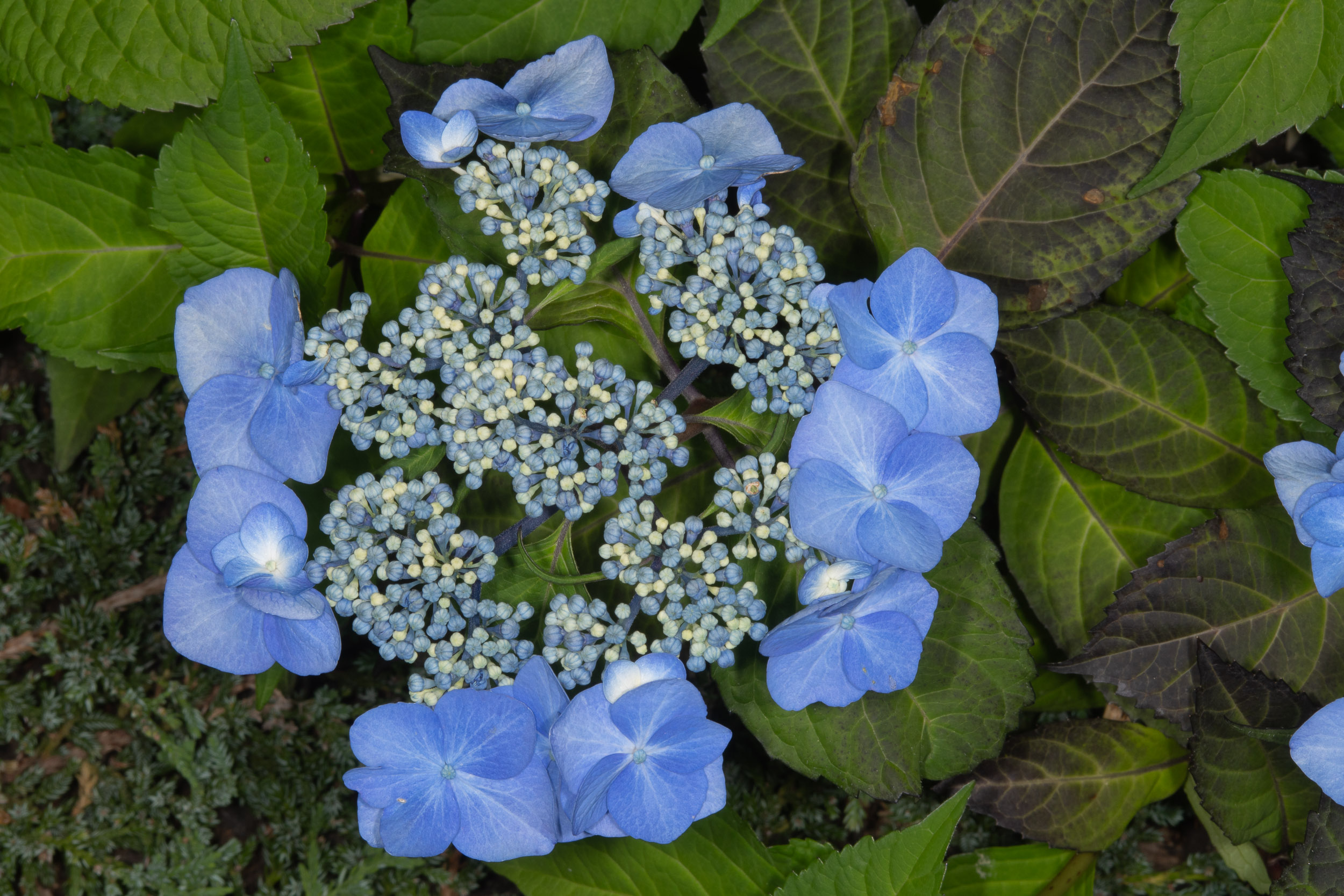
7/18/2019 · Oceanview, Falmouth, Maine · ≈ 12 × 8″ (31 × 20 cm) 
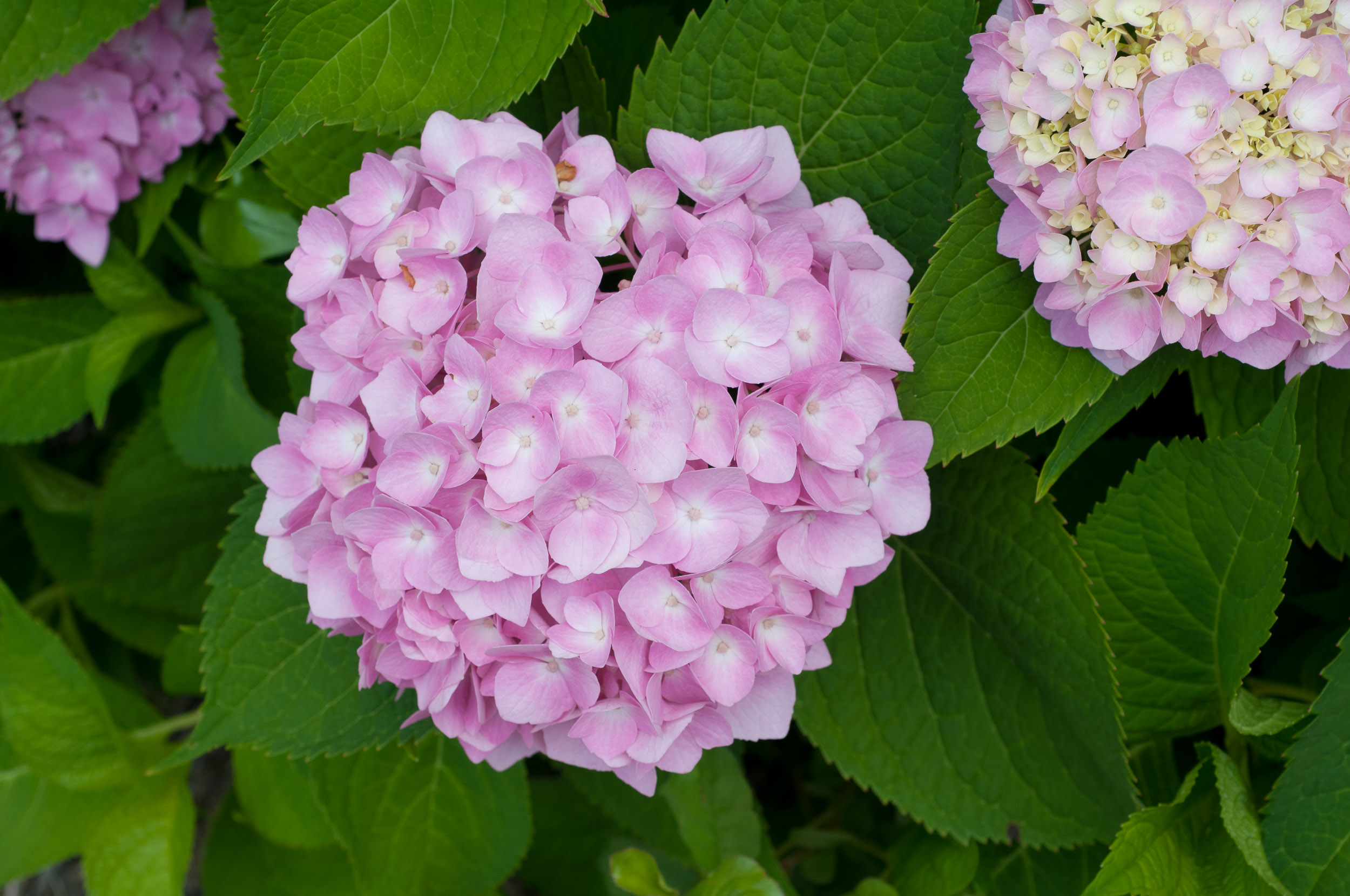
6/18/2011 · Sue and Rai’s, Phoenix, Maryland ID is uncertain 
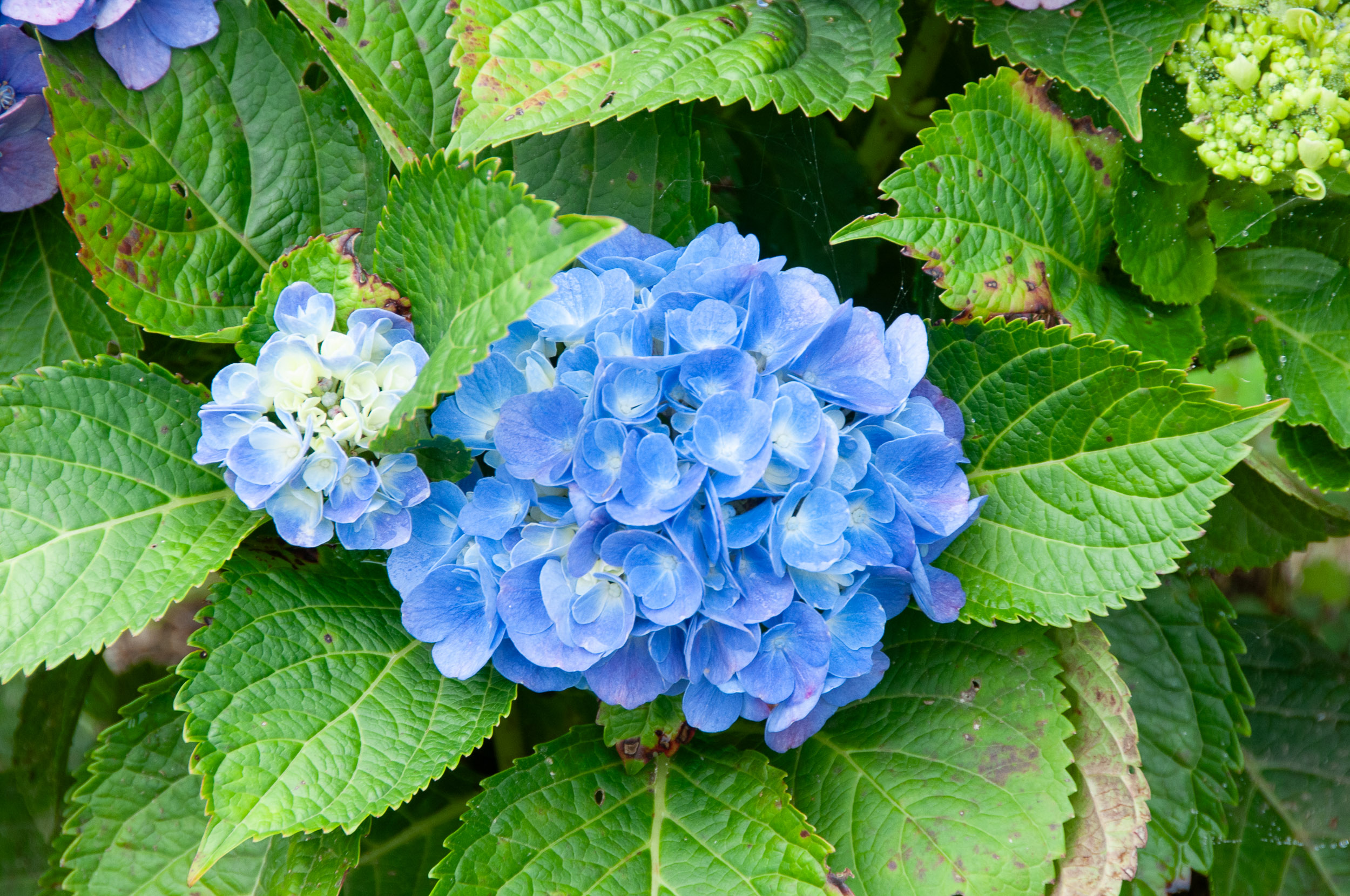
8/3/2008 · Kathy’s Flowers · ≈ 7 × 4½″ (17 × 11 cm) ID is uncertain 
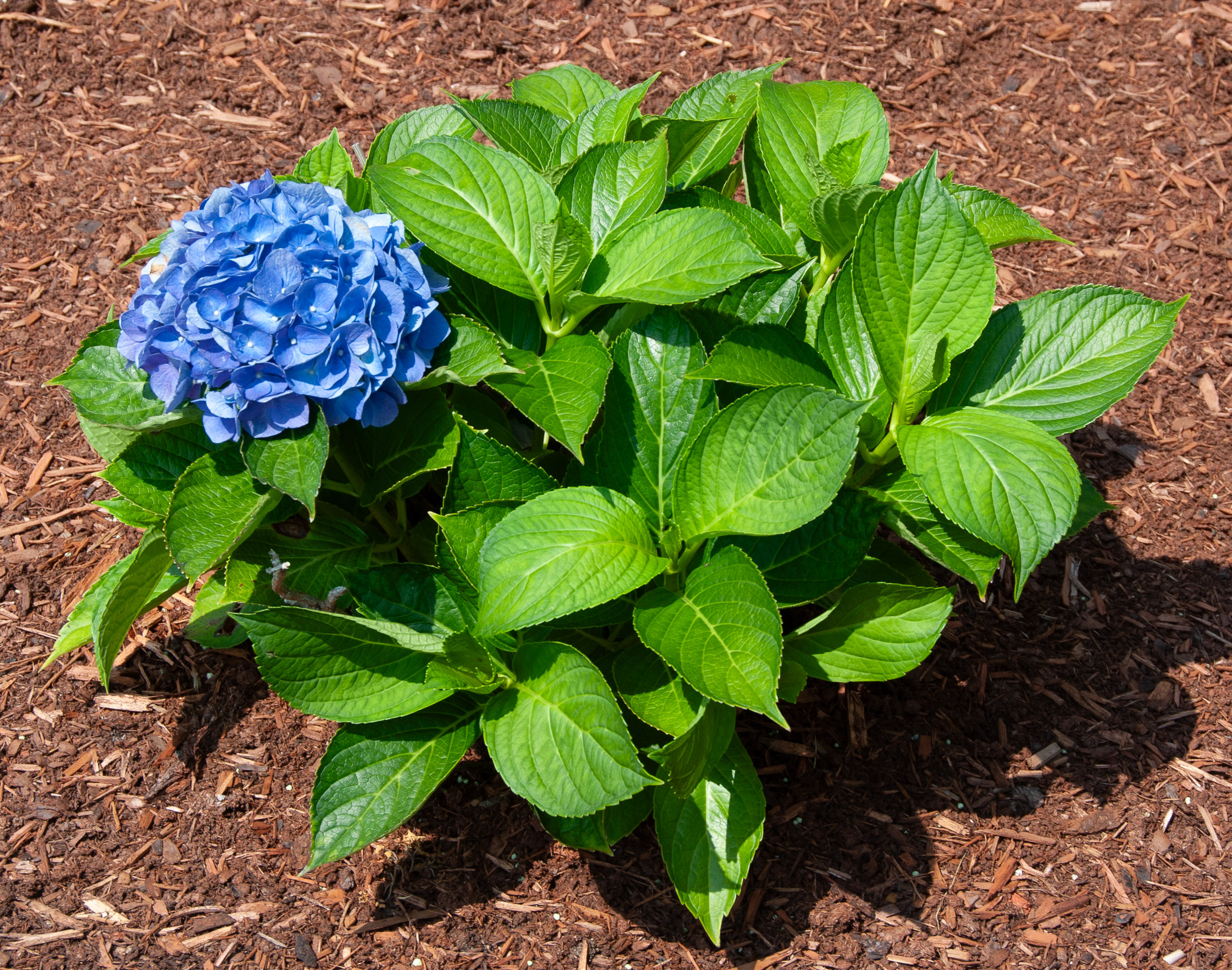
7/29/2007 · Naumanns, Chelmsford, Massachusetts 
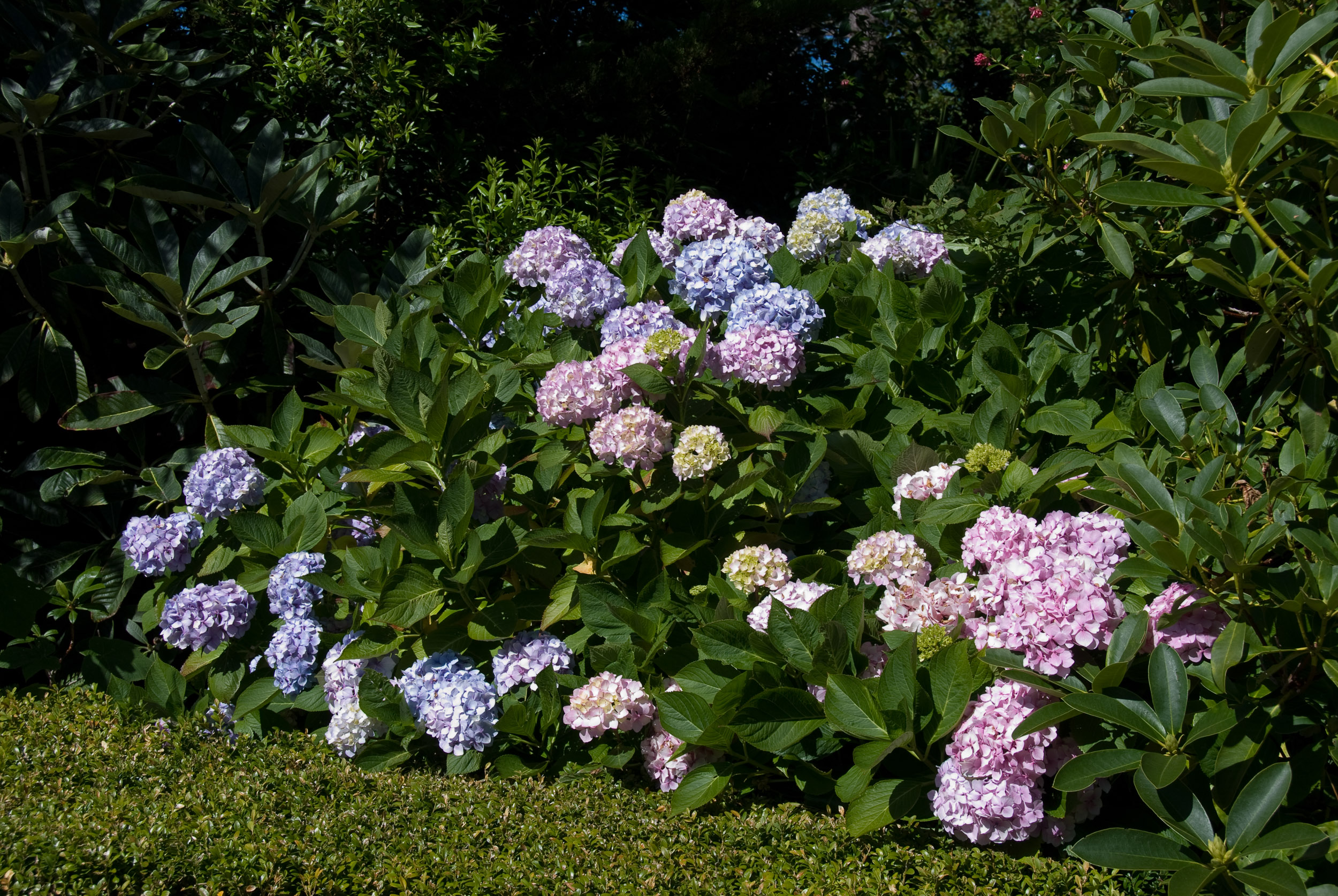
8/27/2007 · Shore Acres State Park, Cape Arago, Oregon ID is uncertain 
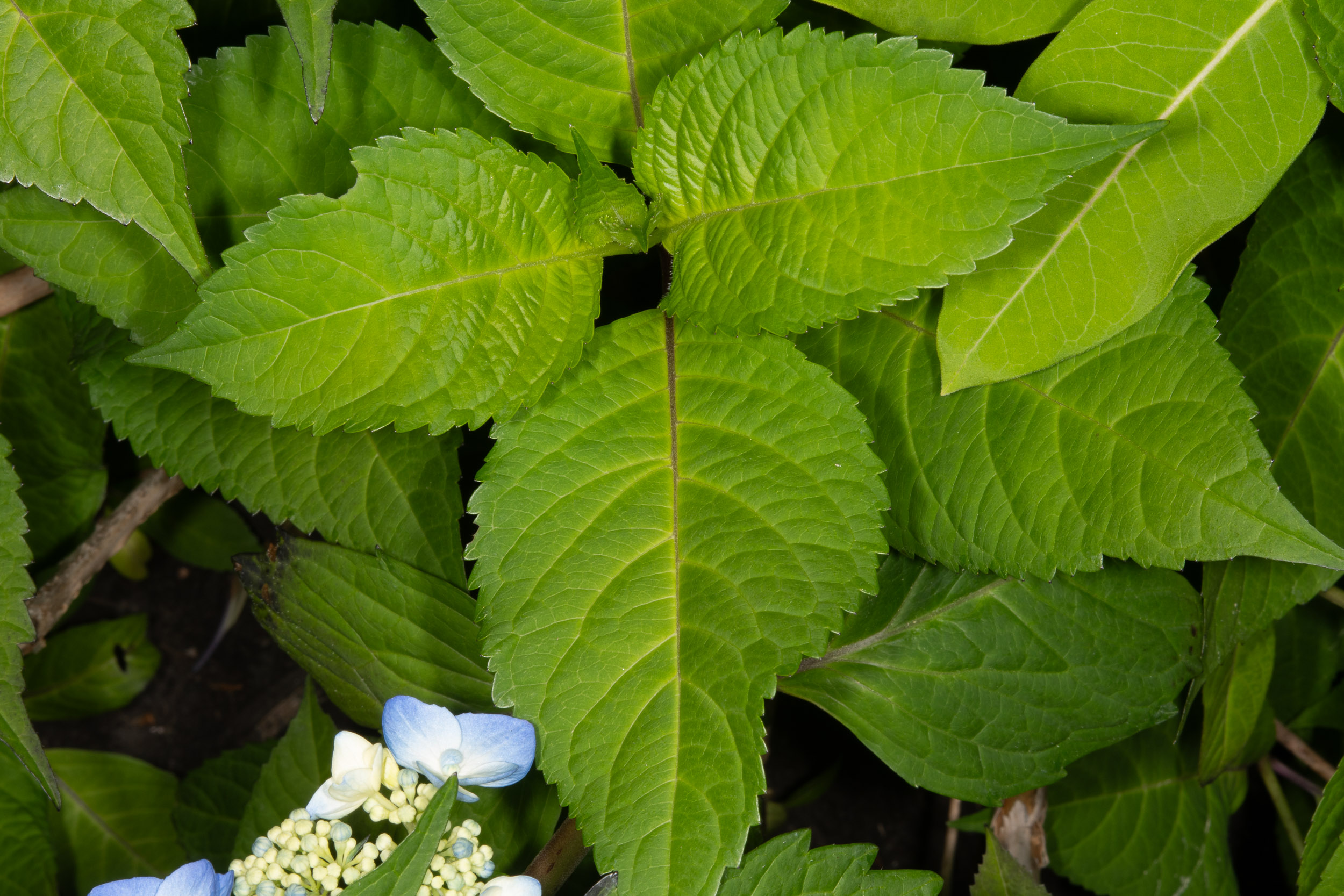
7/18/2019 · Oceanview, Falmouth, Maine · ≈ 10 × 6″ (24 × 16 cm) 
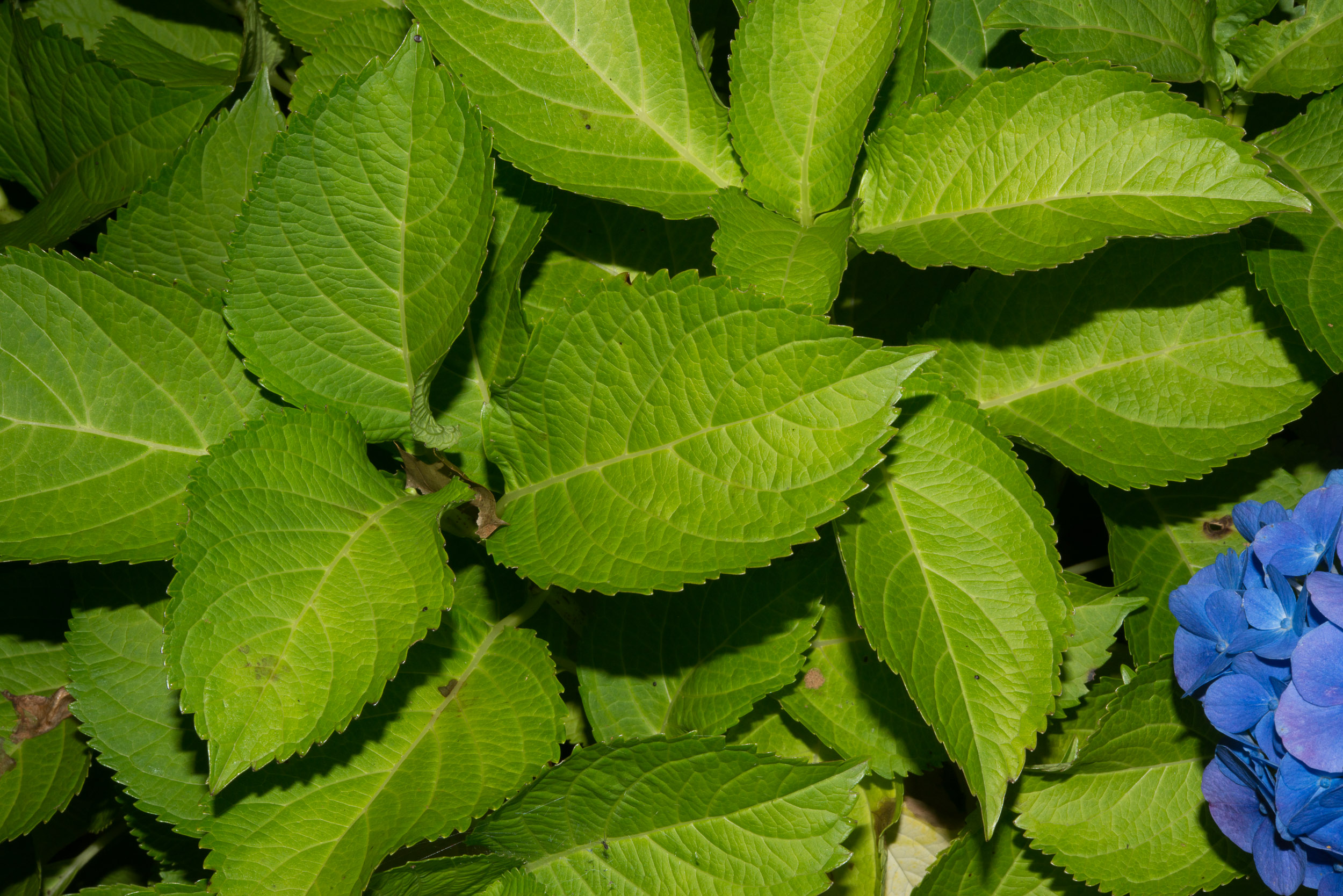
9/27/2013 · Gordon and Kathy’s, Prospect, Maine · ≈ 15 × 10″ (37 × 25 cm) 
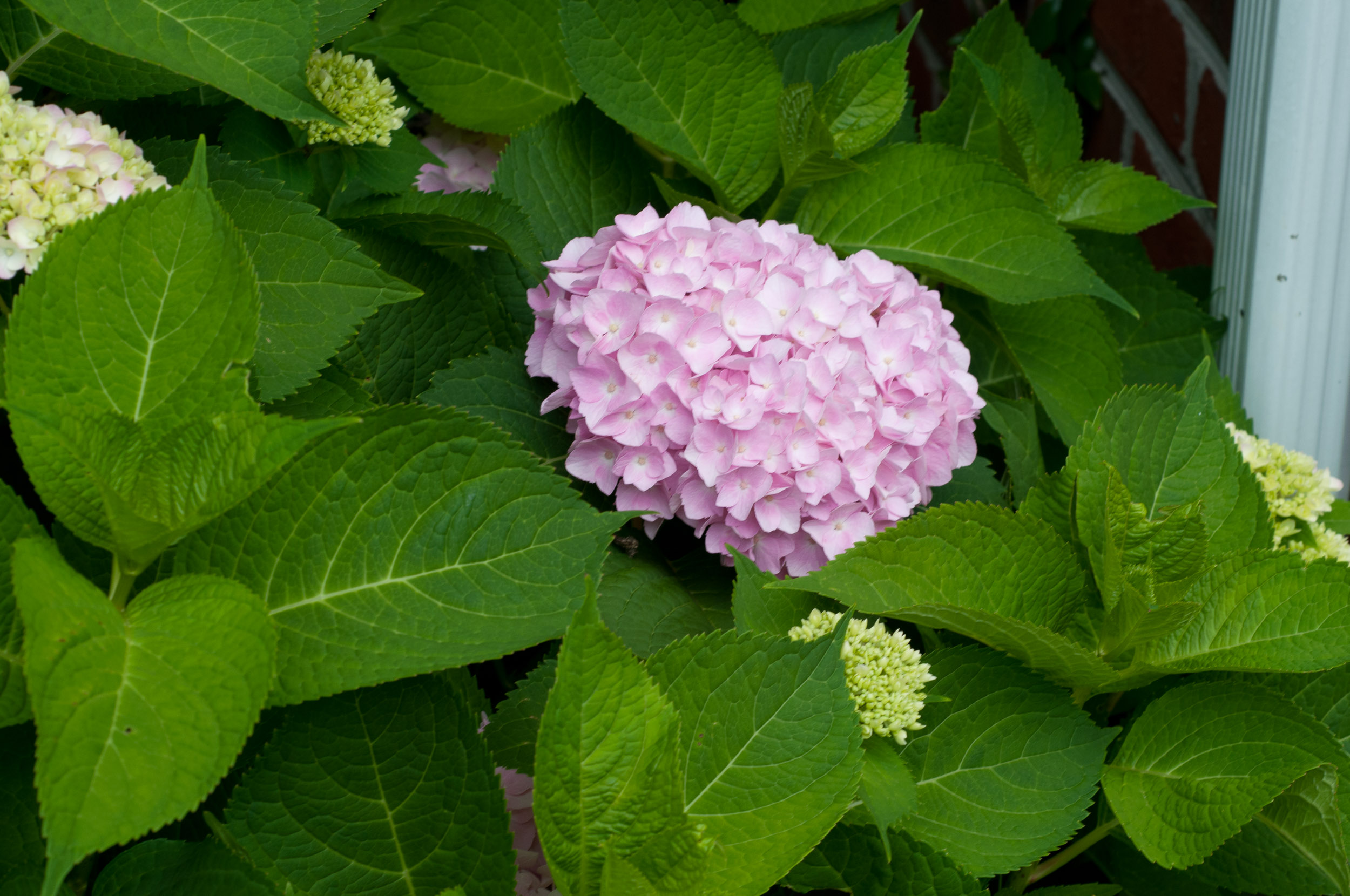
6/18/2011 · Sue and Rai’s, Phoenix, Maryland ID is uncertain 
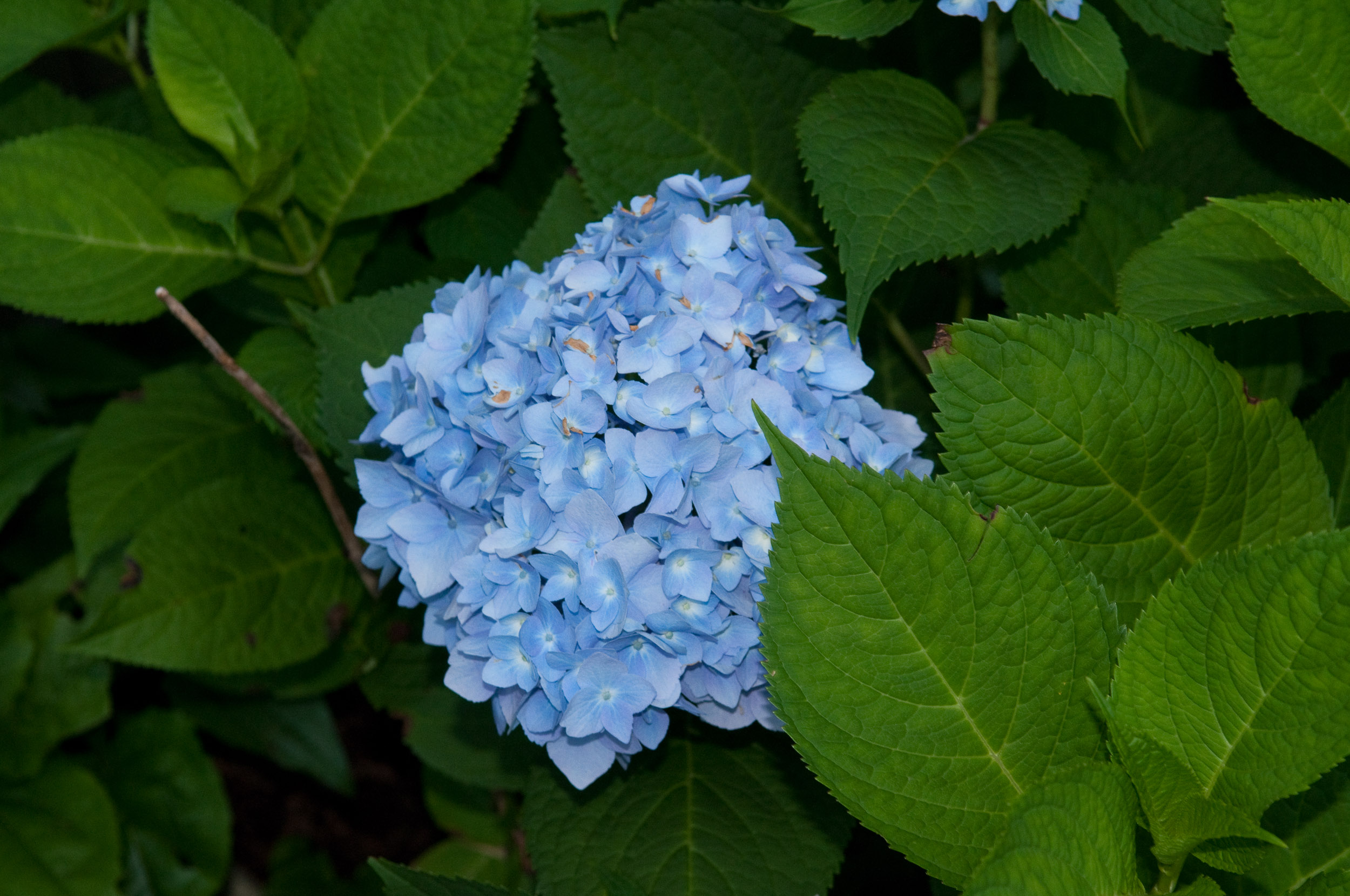
7/12/2009 · MacDonalds, Westford, Massachusetts · ≈ 1½ × 1′ (46 × 31 cm) 
| Kingdom | Plantae | Plants, but not fungi, lichens, or algae (from Stearn's Botanical Latin) |
| Subkingdom | Tracheobionta | Vascular plants—plants with a “circulatory system” for delivering water and nutrients |
| Division | Magnoliophyta | Flowering plants, also known as angiosperms |
| Class | Magnoliopsida | Dicotyledons—plants with two initial seed leaves |
| Subclass | Rosidae | Roses, legumes, proteas, dogwoods, hydrangeas, mistletoes, euphorbias, grapes, many more |
| Order | Rosales | Rose family and eight others |
| Family | Hydrangeaceae | Hydrangea family |
| Genus | Hydrangea | From Greek hydro, “water,” and angeion, “vessel” |
| Species | macrophylla | Large-leaved |
Hydrangea macrophylla description by Thomas H. Kent, not updated.

© FloraFinder.org. All rights reserved.