Hordeum distichon L.
Hordeum hexastichum L., orth. var.
Hordeum hexastichon L.
Hordeum irregulare Aberg & Wiebe
Hordeum sativum Pers.
Hordeum vulgare L. ssp. hexastichon (L.) Bonnier & Layens
Hordeum vulgare L. var. trifurcatum (Schltdl.) Alef.
Hordeum vulgare L.
Barley, common barley
Barley isn’t just any grass—it has become the fourth most important cereal crop worldwide, after wheat, corn, and rice. It has served as a staple food, beer, and liquor source in many cultures, dating back as far as 10,000 years. Barley traces its name to the Old English name bere, which traces further back to the Latin farina, or “flour.” “Barn” originally meant “barley house.”
Barley is native to Eurasia and northeast Africa. In North America, it is found in the wild when it escapes cultivation, but it doesn’t persist for very long. It appears in disturbed habitats. It is an annual.
Plants: Stems are stout, 1½–4½′ (50–140 cm).
Leaves: Leaf blades are glabrous (smooth), 3½–10 ⨉ ⅛–¾″ (9–25 cm ⨉ 6–20 mm).
Flowers: There is a small floret on each spikelet.
Fruits: Spikes are comprised of sessile, densely packed spikelets, like tiny ears of corn. “Two-row” barley has a center fertile spikelet surrounded by sterile lateral spikelets. “Six-row” barley has clusters of three sessile, fertile spikelets. Long nearly parallel upward-pointing narrow awns distinguish barley from other grasses. Awns are up to 6″ (16 cm) long.
Habitats: Originally from the fertile crescent in the Middle East, barley's cultivars are now present in almost all temperate climates.
Edibility: An important food crop for livestock and people.
Online References:
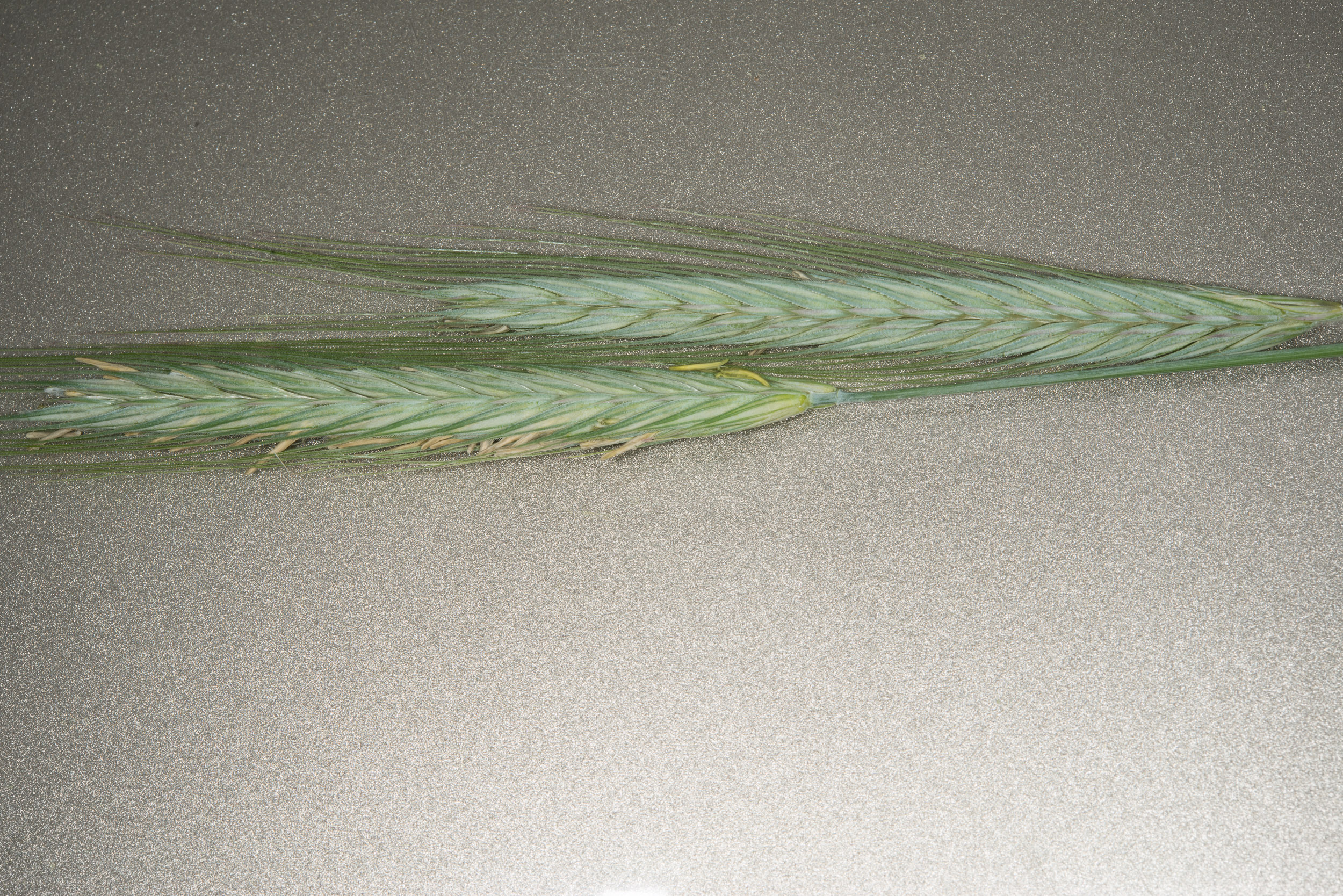
6/11/2014 · Conservation Area near Potanipo Pond, Brookline, New Hampshire · ≈ 8 × 5″ (19 × 13 cm) 
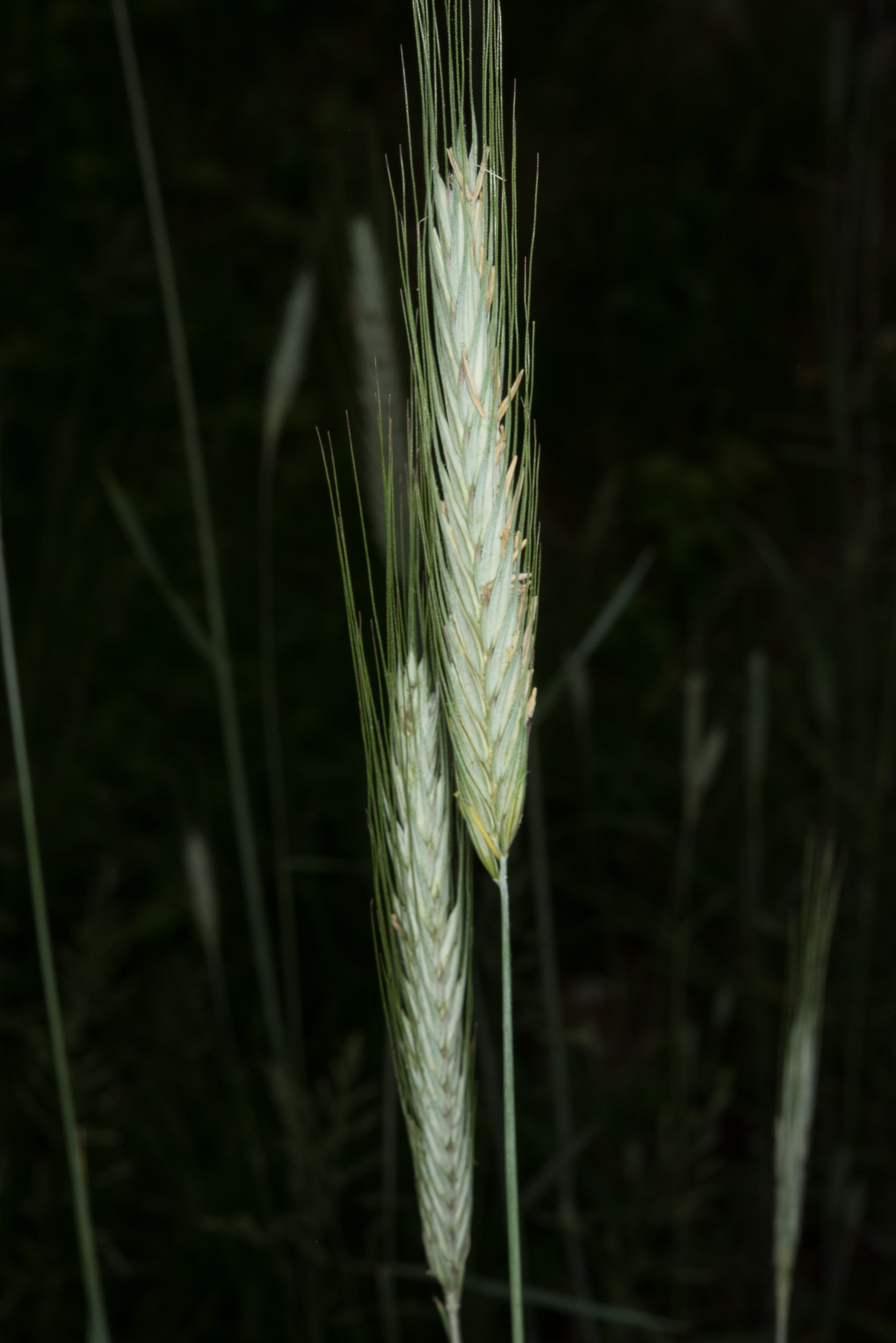
6/11/2014 · Conservation Area near Potanipo Pond, Brookline, New Hampshire · ≈ 5 × 8″ (13 × 19 cm) 

6/11/2014 · Conservation Area near Potanipo Pond, Brookline, New Hampshire · ≈ 5 × 8″ (13 × 19 cm) 
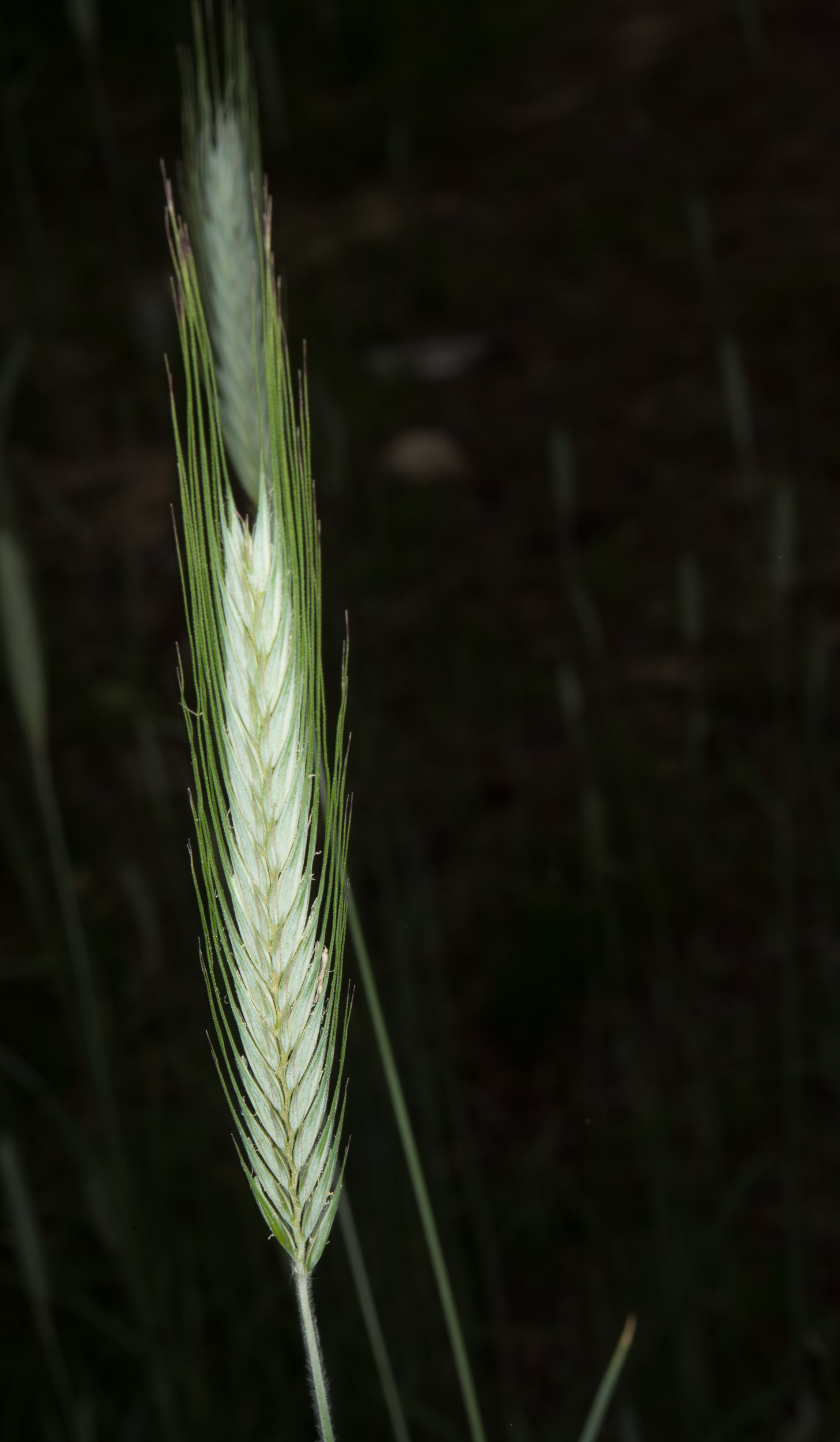
6/11/2014 · Conservation Area near Potanipo Pond, Brookline, New Hampshire · ≈ 4½ × 8″ (11 × 19 cm) 
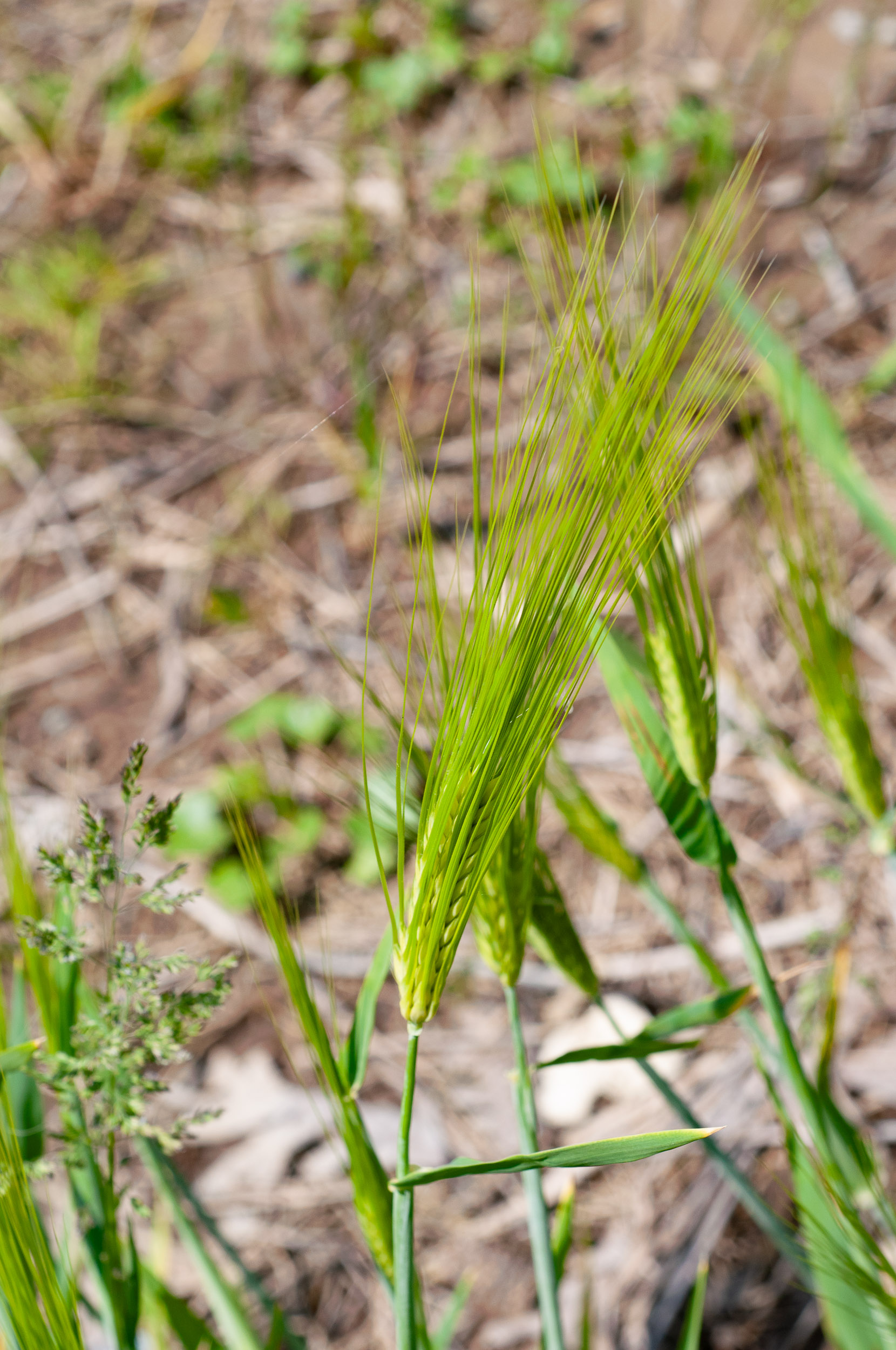
5/6/2011 · Kent Island, Maryland · ≈ 7 × 11″ (18 × 27 cm) 
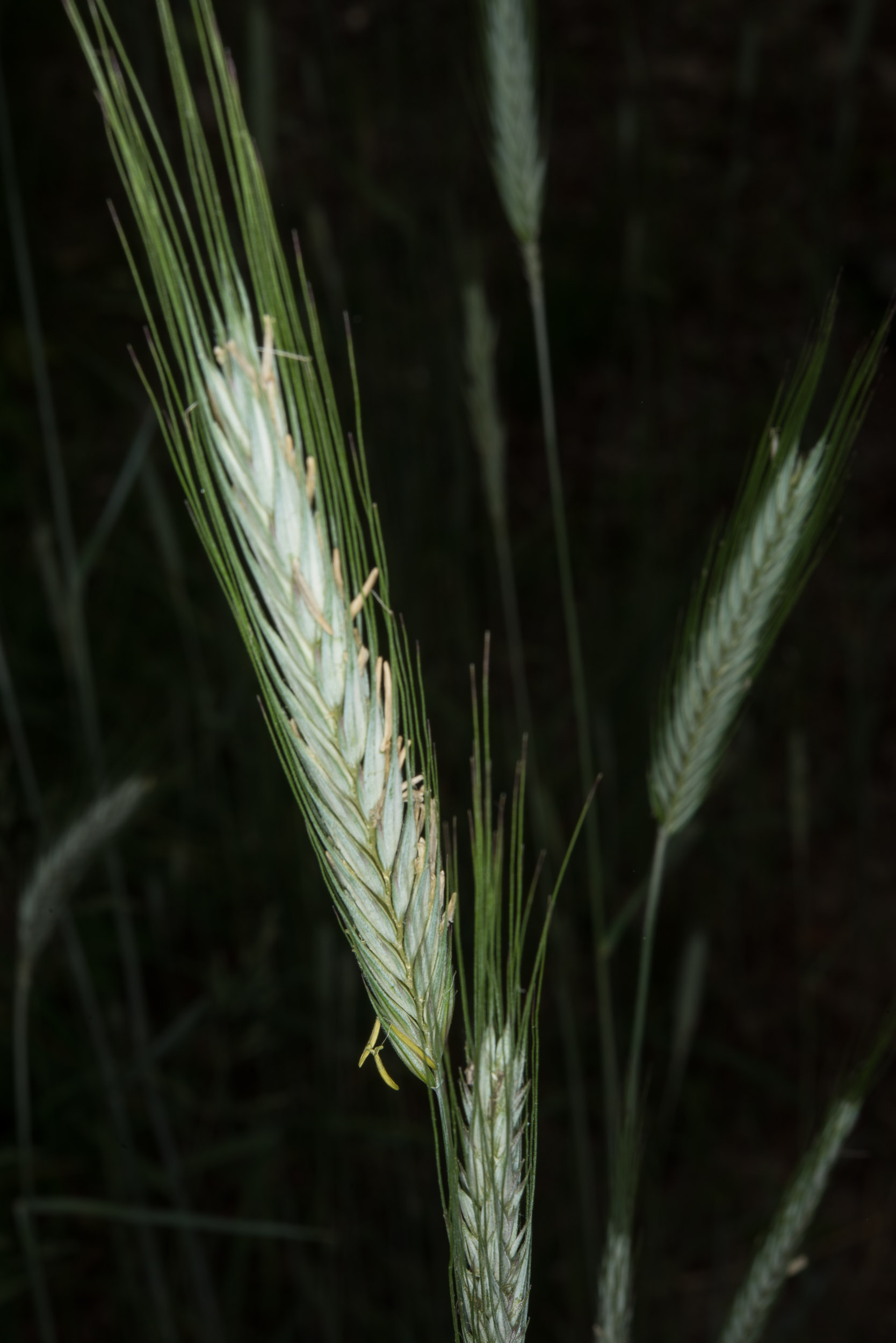
6/11/2014 · Conservation Area near Potanipo Pond, Brookline, New Hampshire · ≈ 5 × 8″ (13 × 19 cm) 

5/6/2011 · Kent Island, Maryland · ≈ 9 × 14″ (23 × 35 cm) 

5/6/2011 · Kent Island, Maryland · ≈ 8 × 12″ (20 × 31 cm) 
| Kingdom | Plantae | Plants, but not fungi, lichens, or algae (from Stearn's Botanical Latin) |
| Subkingdom | Tracheobionta | Vascular plants—plants with a “circulatory system” for delivering water and nutrients |
| Division | Magnoliophyta | Flowering plants, also known as angiosperms |
| Class | Liliopsida | Monocots (plants with a single seed leaf); includes the lily family |
| Subclass | Commelinidae | Dayflowers and spiderworts, and several others |
| Order | Cyperales | Flowering plants including grasses |
| Family | Poaceae | Grasses (but not sedges or rushes) |
| Genus | Hordeum | An ancient Latin name for barley, meaning “bristly,” for the long awns |
| Species | vulgare | Latin for “common” |
Hordeum vulgare description by Thomas H. Kent, not updated.

© FloraFinder.org. All rights reserved.
