Ficus salicaria CC Berg.
Willow leaf fig
Willow leaf ficus is popular for bonsai, but its origins are murky. Some sources claim that this species is not Ficus salicaria (also called F. nerifolia). In lieu of an alternative identity, we’ll pretend we have it right.
Plants: Plants reach 49′ (15 m) in height, with a smooth, dark gray trunk and a spreading crown.
Leaves: Lanceolate, elliptic, ovate, or some combination thereof, and 3–7 ⨉ 1–2½″ (8–18 ⨉ 3–6.5 cm) in size, on petioles ⅜–1½″ (1–4 cm) long. They are often asymmetrical in shape. Both the top and bottom of each leaf is hairless and green, with smooth edges.
Flowers: Tiny flowers form inside the fruits, so they are not visible.
Fruits: Figs ⅛–3/16″ (4–6 mm) in diameter, and are rounded, oval, or cylindrical, growing in pairs from older branches. White at first, they become yellowish-red and mottled as they ripen.
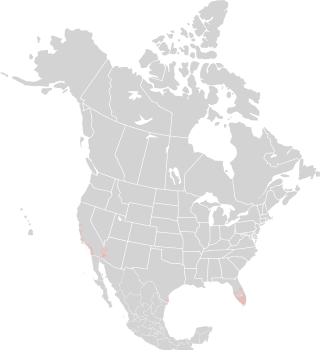
Habitats: In broad-leaved evergreen forests at altitudes of 1.1–1.8 mi (1.7–2.9 km), in Xizang in Tibet, southeastern China, Bhutan, northeastern India, Myanmar, and Nepal.
Edibility:  Toxic to livestock, causing nervous disorders
or death.
Toxic to livestock, causing nervous disorders
or death.
Online References:
Ficus neriifolia Sm.

Bonsai. · 12/12/2016 · Bonsai West, Littleton, Massachusetts · ≈ 10 × 13″ (26 × 32 cm) 
| Kingdom | Plantae | Plants, but not fungi, lichens, or algae (from Stearn's Botanical Latin) |
| Subkingdom | Tracheobionta | Vascular plants—plants with a “circulatory system” for delivering water and nutrients |
| Division | Magnoliophyta | Flowering plants, also known as angiosperms |
| Class | Magnoliopsida | Dicotyledons—plants with two initial seed leaves |
| Subclass | Rosidae | Roses, legumes, proteas, dogwoods, hydrangeas, mistletoes, euphorbias, grapes, many more |
| Order | Rosales | Rose family and eight others |
| Family | Moraceae | Mulberry/fig family |
| Genus | Ficus | A Latin name for the fig |
| Species | salicaria | Willow-leafed |
Ficus salicaria description by Thomas H. Kent, not updated.

© FloraFinder.org. All rights reserved.