Morangaya pensilis (K. Brandegee) G. D. Rowley 1974
Echinocereus pensilis (K. Brandegee) J. A. Purpus 1908
Hanging cactus, pitayita, snake cactus
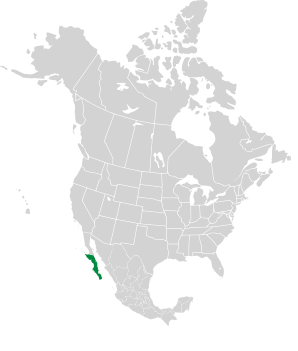
The hanging cactus is native to part of the Baja peninsula in Mexico.
Plants: These cacti form tangled mats of yellow-green branches. The stems start out erect, but may bend and hang downward. They reach 3–13′ (1–4 m) in length, and up to 1¾″ (5 cm) in diameter. Spine clusters start out with as few as 6 needles, but over time as many as 70 needles can form.
Flowers: Tubular or funnel-shaped orange-red flowers emerge from stem tips. They reach up to 1¾″ (4.5 cm) in diameter, and up to 2½″ (6.5 cm) in length.
Fruits: Globose, ½–¾″ (1.5–2 cm) in diameter.
Habitats: Mountains and rocky hills.
References:
Online References:

2/24/2010 · San Diego (Quail) Botanic Garden, Encinitas, California 
| Kingdom | Plantae | Plants, but not fungi, lichens, or algae (from Stearn's Botanical Latin) |
| Subkingdom | Tracheobionta | Vascular plants—plants with a “circulatory system” for delivering water and nutrients |
| Division | Magnoliophyta | Flowering plants, also known as angiosperms |
| Class | Magnoliopsida | Dicotyledons—plants with two initial seed leaves |
| Subclass | Caryophyllidae | Cacti, many other succulents, carnivorous plants, and leadworts |
| Order | Caryophyllales | Includes cacti, carnations, amaranths, ice plants, and many carnivorous plants |
| Family | Cactaceae | Succulent (water-storing) plants, often spiny |
| Genus | Echinocereus | Ribbed, small to medium-sized cacti |
| Species | pensilis | Hanging, or pendent. |
Echinocereus pensilis description by Thomas H. Kent, not updated.

© FloraFinder.org. All rights reserved.