Dipsacus laciniatus L.
Cutleaf teasel
Cutleaf teasel is a perennial native to Eurasia. Introduced to North America, it has become an invasive species.
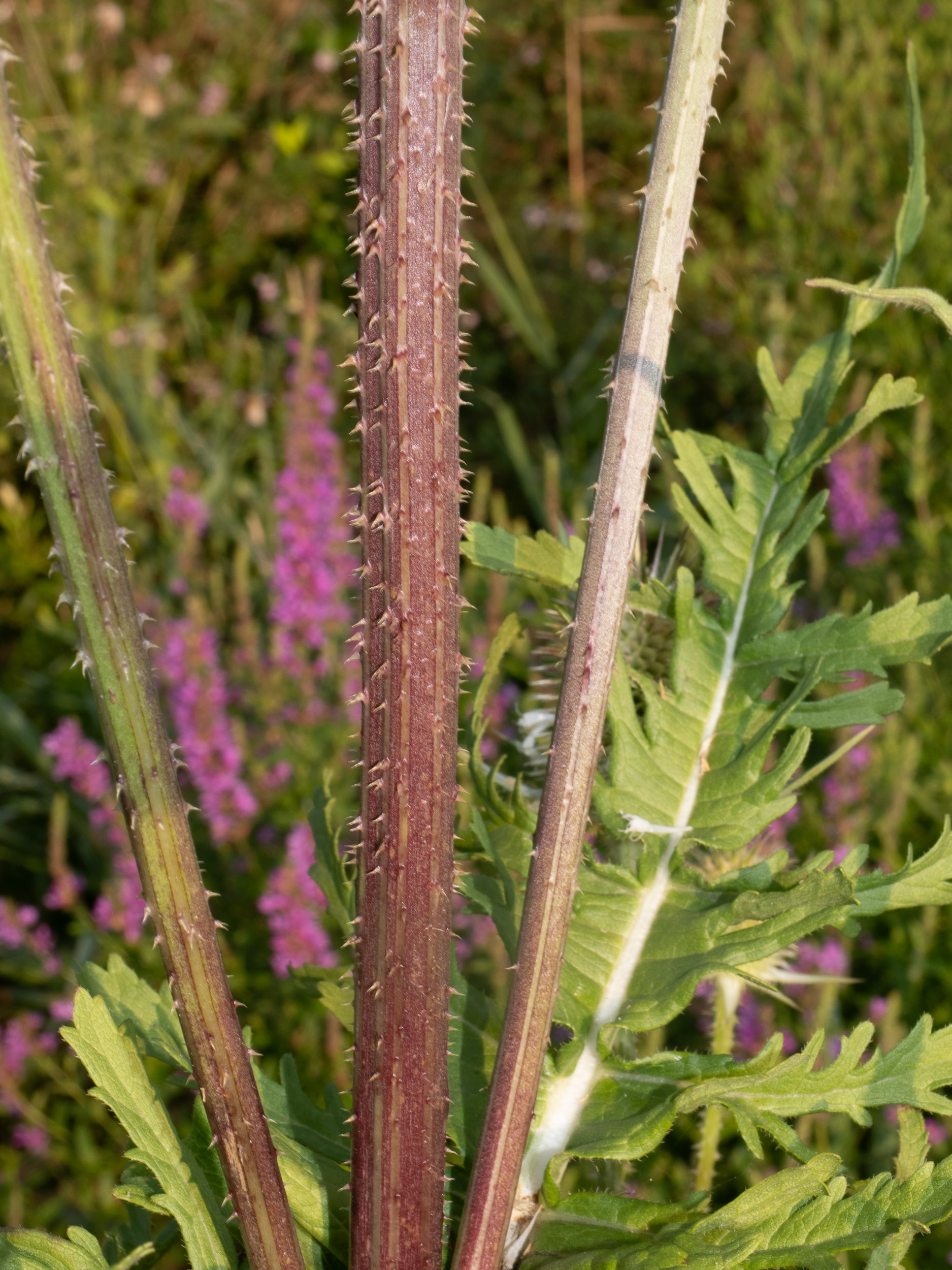
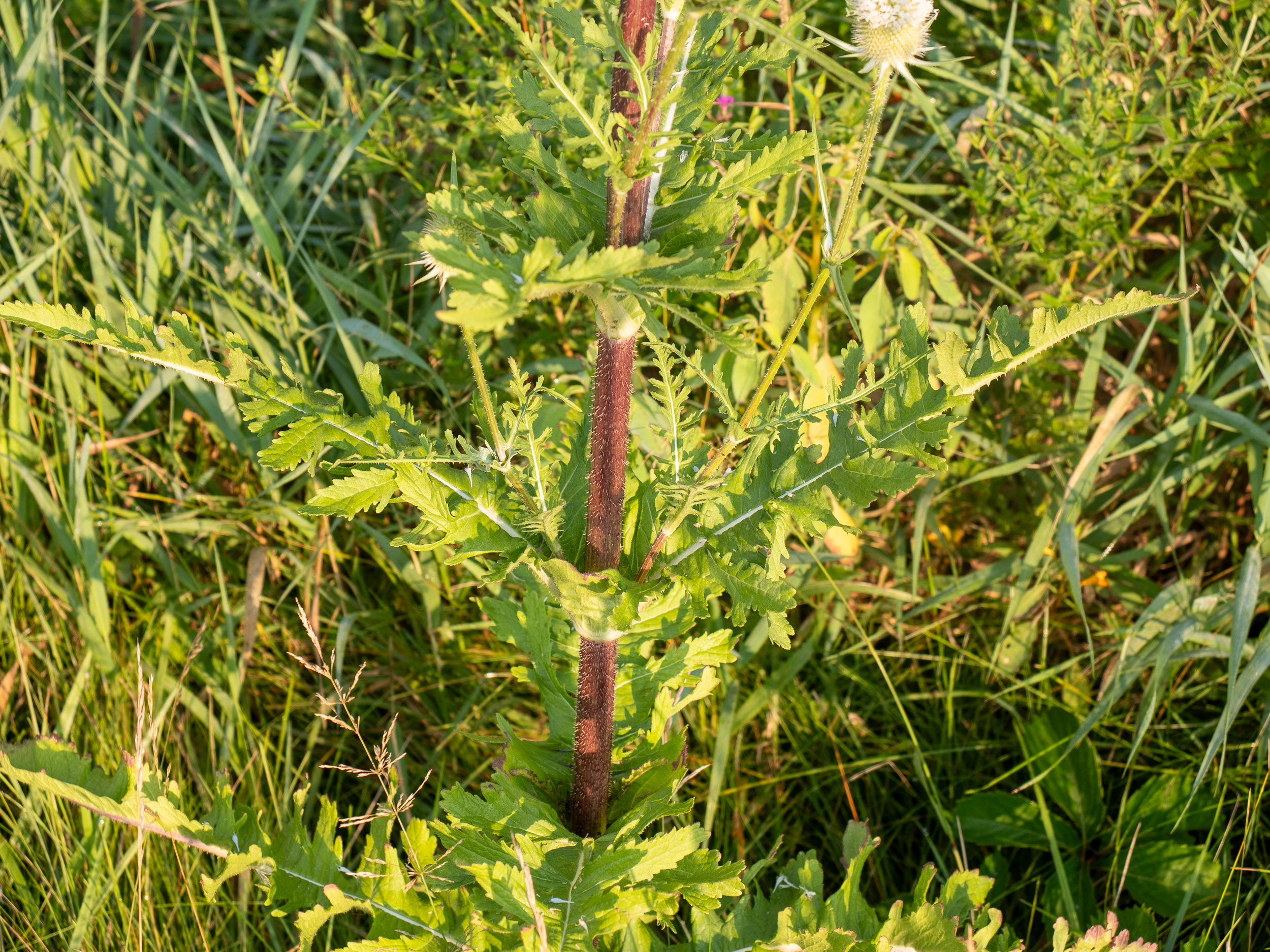
Plants: Stems are erect, multiply banched with more upward-pointing stems. They are very prickly, and green or deep red in color. Plants grow several years without flowering, then flower and die.
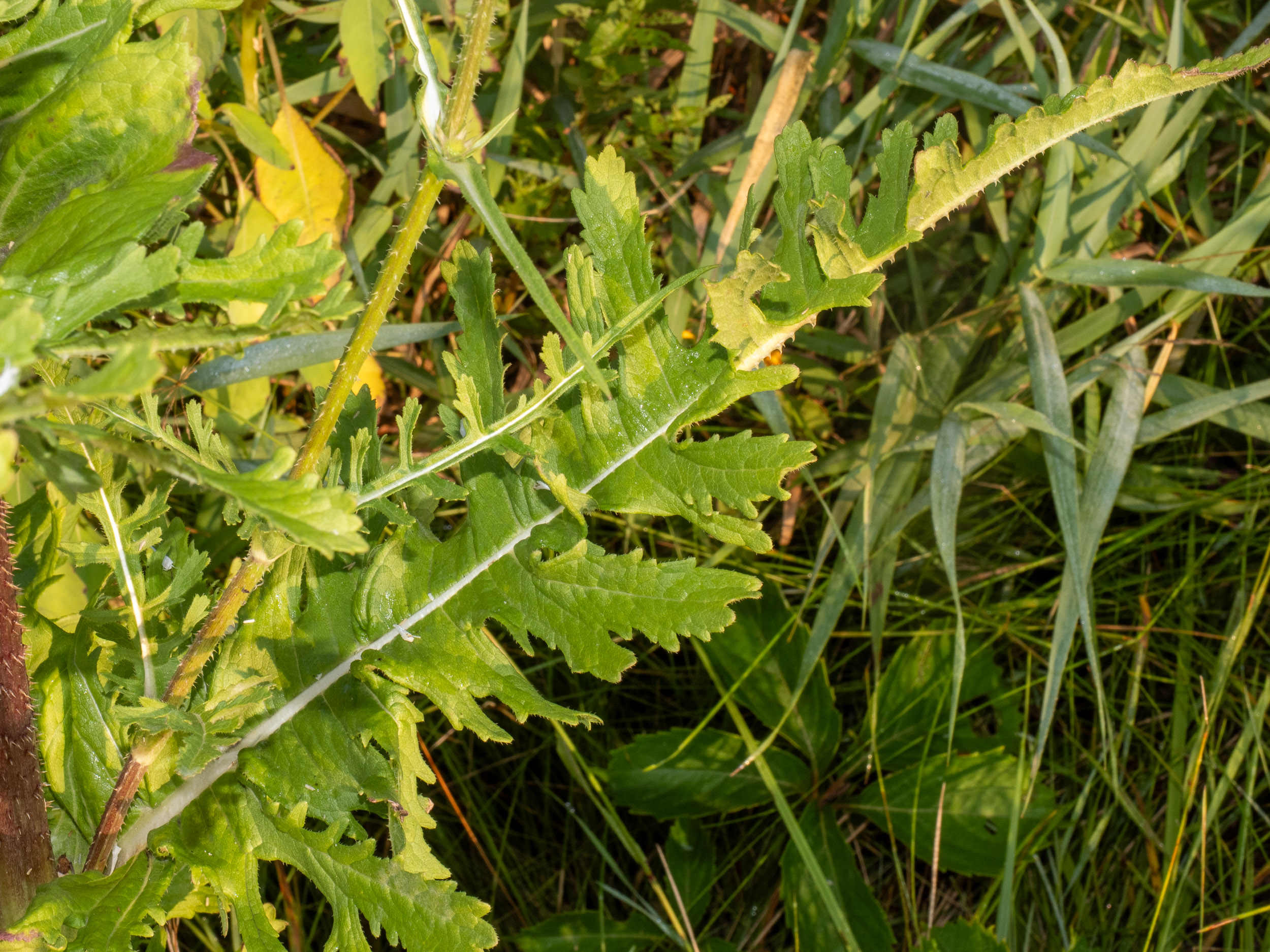
Leaves: Opposite, up to 1′ ⨉ 4″ (40 ⨉ 10 cm) near the bottom, reducing steadily in size further up the stem. Young plants that haven’t flowered yet have a basal rosette 1–2½′ (30–83 cm) across, with leaves that are lanceolate or narrowly ovate, and toothed, but not deeply lobed. Flowering plants have leaves are that divided into lobes and further divided, looking almost shredded. They wrap around the stems, forming a cup that may collect water.
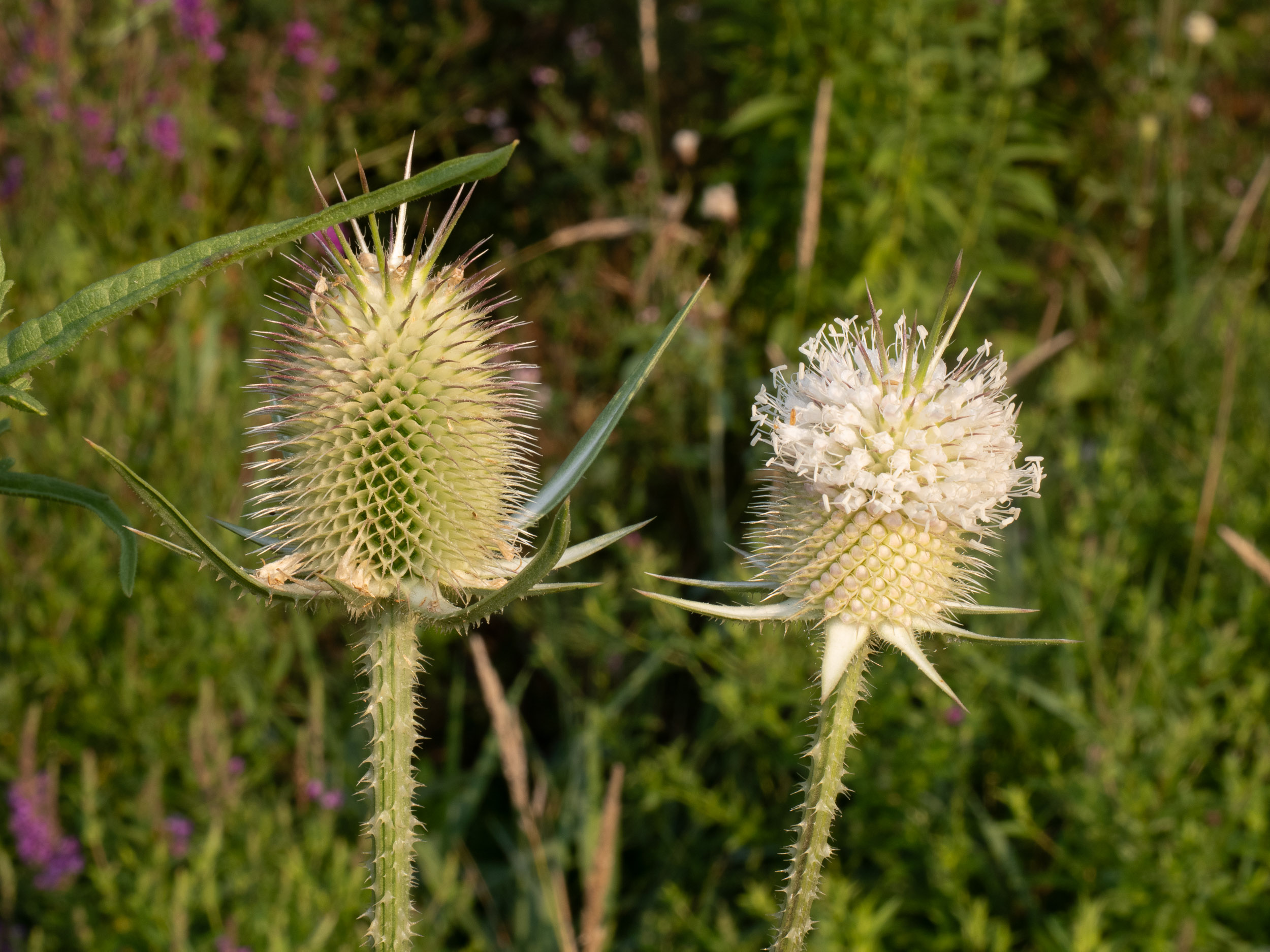
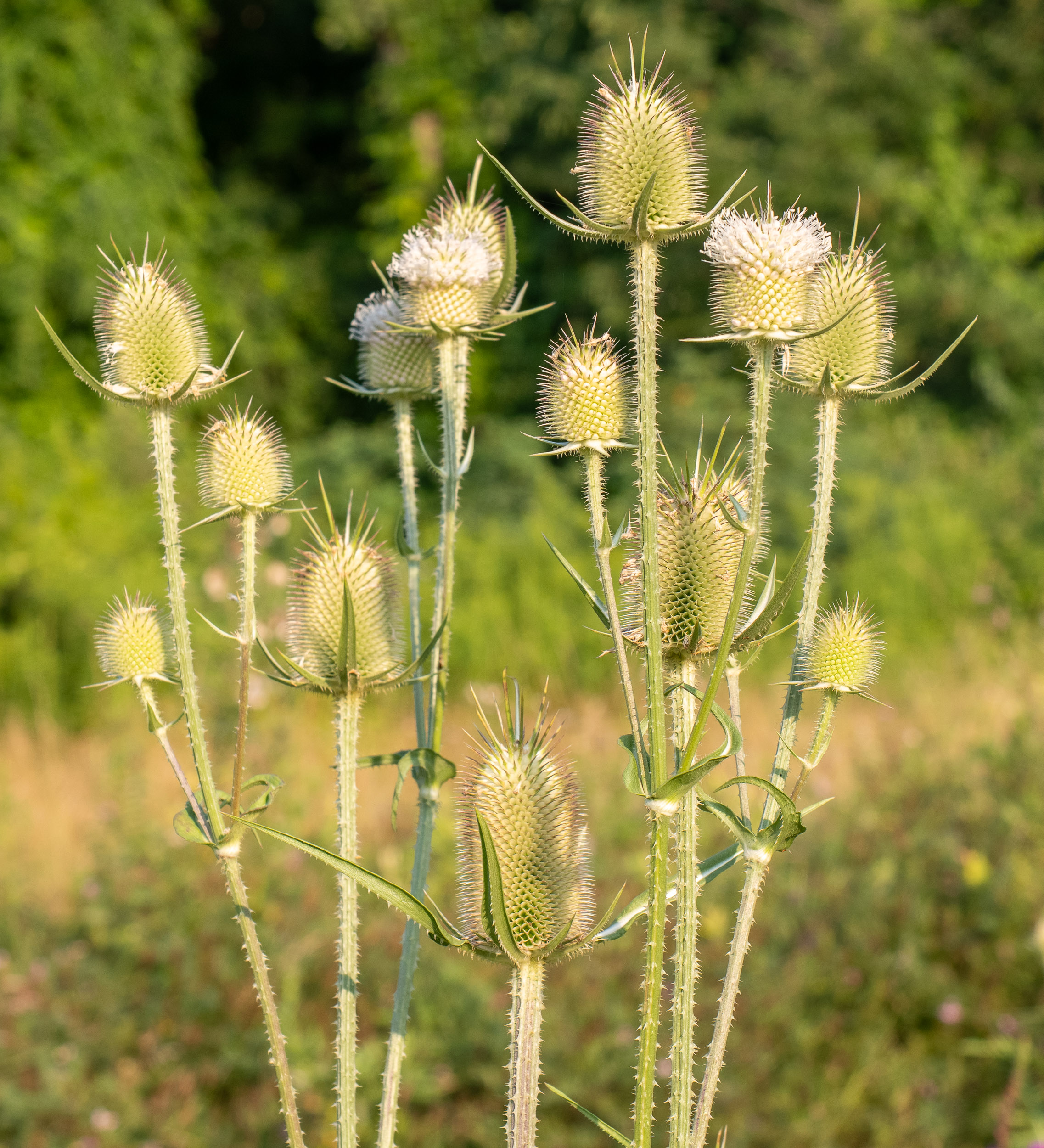
Flowers: An egg- or dome-shaped inflorescence tips each branch. Each inflorescence contains as many as 1500 flowers, and is 2–4″ long ⨉ 1½″ in diameter (5–10 ⨉ 3.8 cm). Without its flowers, it looks a bit like the head of a thistle. Flowers appear first in the middle (or bottom?) of the head, spreading upward and downward. Individual flowers only last a day, so the effect is that horizontal bands of flowers appear on the flowerheads—the entire flowerhead never blooms all at once. Flowers are white, vs. purple for common teasel.
Fruits: The large flowerheads dry to form seed repositories. Each flower is replaced by achenes about ¼″ (9 mm) long.
Habitats: Open disturbed roadsides and waste places, as well as high grade prairie and native woodlot margins.
 |
Similar species. |
Online References:
7/27/2024 · Selkirk, New York 
7/27/2024 · Selkirk, New York 

7/27/2024 · Selkirk, New York 
7/27/2024 · Selkirk, New York 
7/27/2024 · Selkirk, New York 

1/5/2026 · By Jacquelyn Boyt 
7/27/2024 · Selkirk, New York 
| Kingdom | Plantae | Plants, but not fungi, lichens, or algae (from Stearn's Botanical Latin) |
| Subkingdom | Tracheobionta | Vascular plants—plants with a “circulatory system” for delivering water and nutrients |
| Division | Magnoliophyta | Flowering plants, also known as angiosperms |
| Class | Magnoliopsida | Dicotyledons—plants with two initial seed leaves |
| Subclass | Asteridae | A large class that encompasses asters |
| Order | Dipsacales | Includes viburnum, honeysuckle, snowberry, beautybush, twinflower, many others |
| Family | Dipsacaceae | Teasel family |
| Genus | Dipsacus | From the Greek dipsa, “thirst,” from the connate (joined or attached) leaf bases that in some ssp. hold water |
| Species | laciniatus | Torn or deeply cut, referring to the fringed petals |

Dipsacus laciniatus description by Thomas H. Kent, not updated.

© FloraFinder.org. All rights reserved.