Shrubby cinquefoil, golden hardhack, bush cinquefoil
Shrubby cinquefoil is native to temperate and subarctic regions of the northern hemisphere.
Plants: 4–39″ (10–100 cm) tall. It is a densely branched,
shrub with erect branches. (D. fruticosa ssp. floribunda is shrubby, while
D. fruticosa (or
D. fruticosa ssp. fruticosa, depending upon which taxonomy
you accept) is more often prostrate.)
Bark is peeling on older stems.
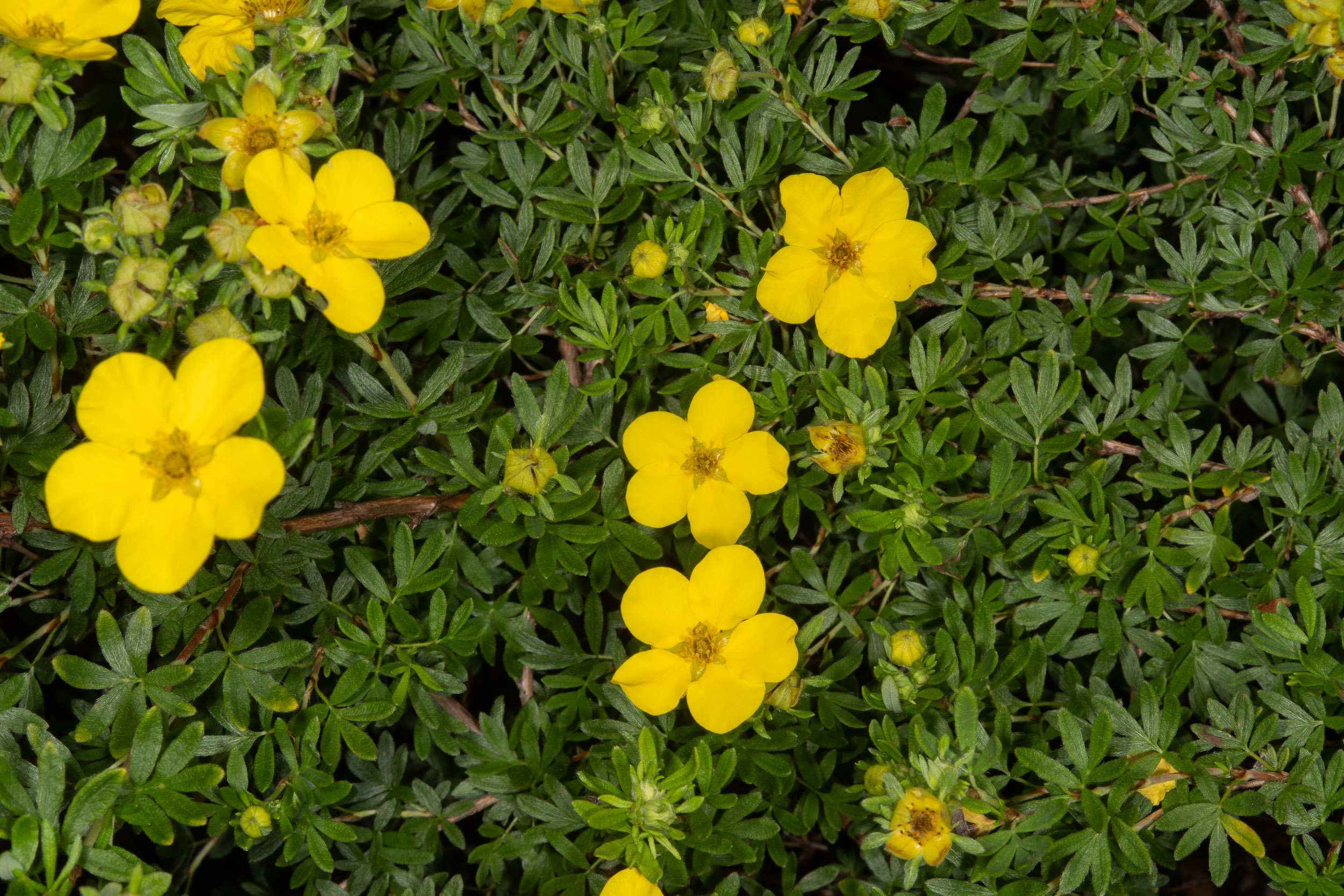
Leaves: Pinnate, alternate,
about 1″ (2.5 cm) around,
divided into 3-7 (usually 5) leaflets. Leaves have short stalks (petioles).
Leafelts are linear-oblong, ⅛–¾″ (3–20 mm) long, dark green on top and silvery
below, both surfaces covered with fine
hears.
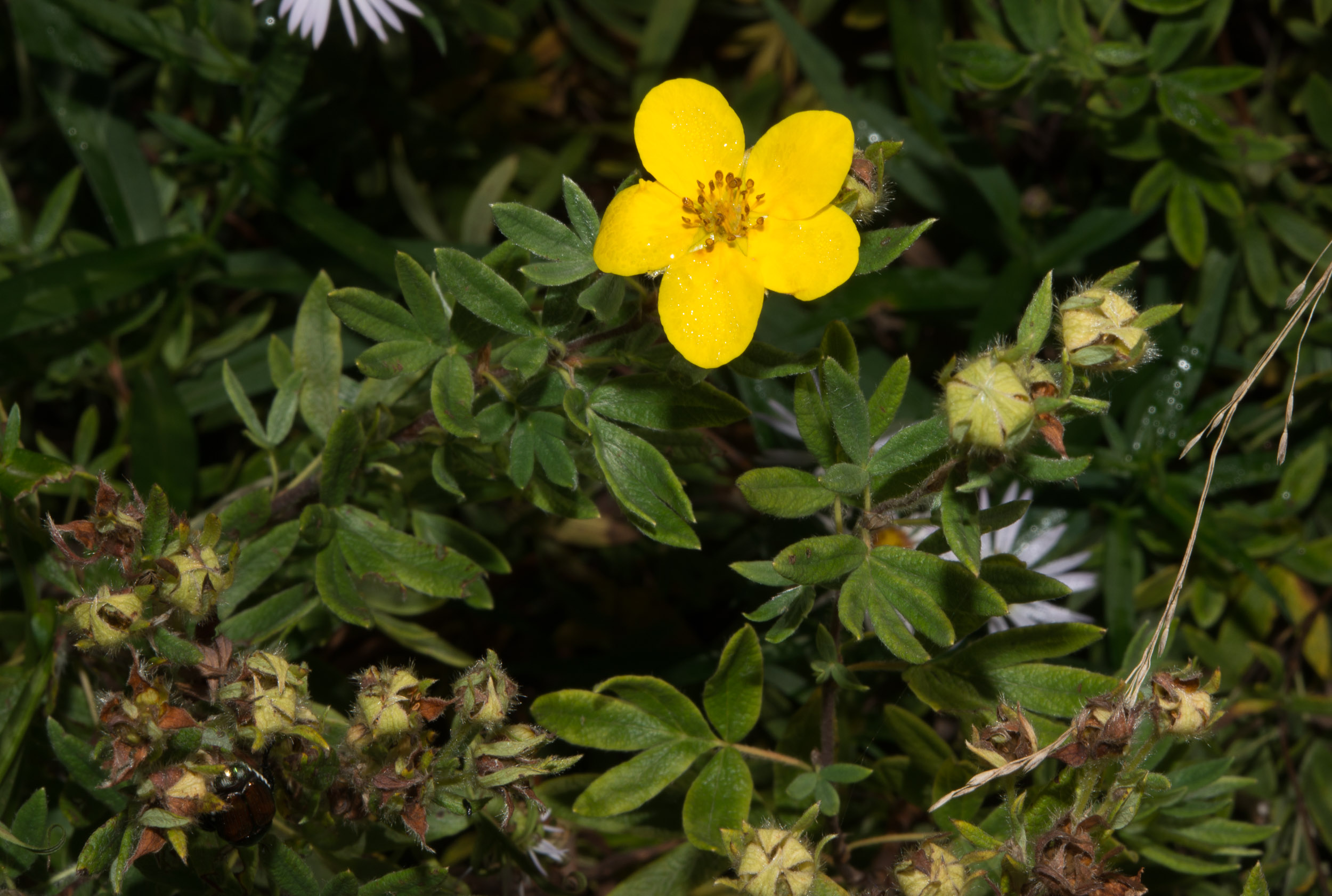
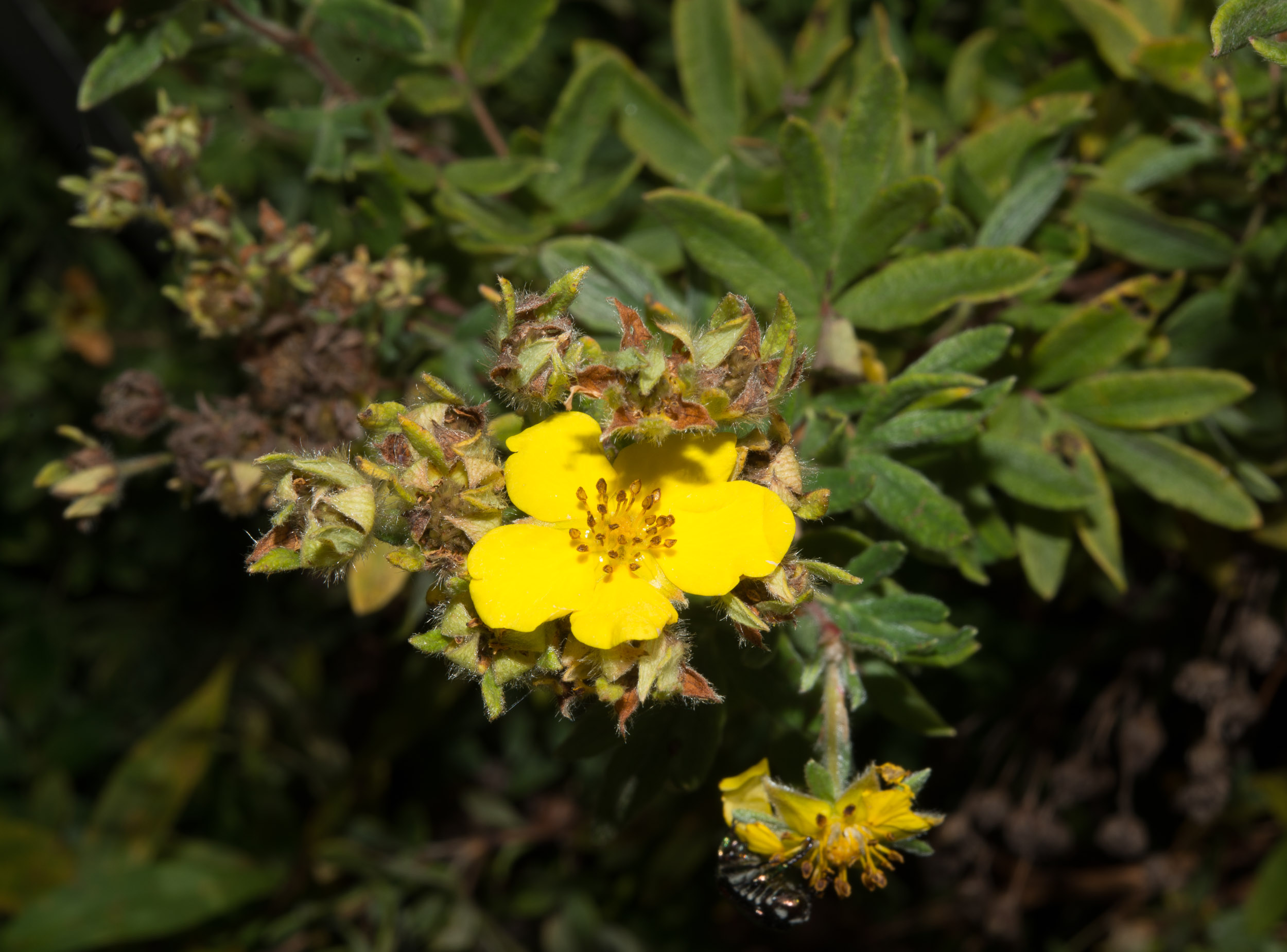
Flowers: Yellow, ¾–1½″ (1.9–3.8 cm) in diameter,
with five round partially overlapping
petals. Flower centers have 15-25 stamens with yellow anthers, and
many carpels.
They may be single or in small clusters. Stamens turn reddish as they age.
Flowers appear from Summer to early Fall.
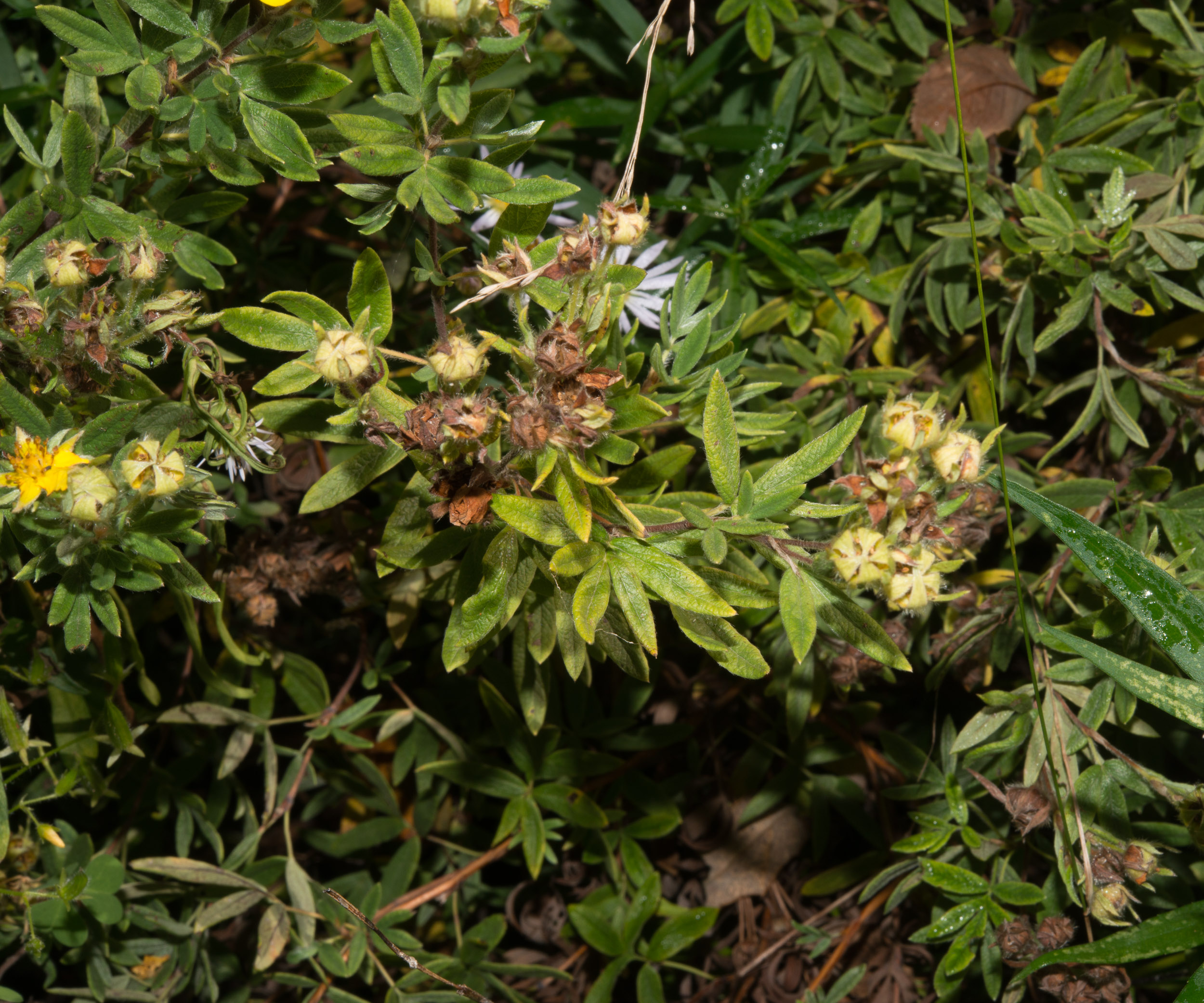
Fruits: Capsules containing hairy seeds.
Habitats: Full sun, and somewhat moist sandy or rocky calcerous soil.
Greek for “hair bearing” and perhaps refers to the hairy bark and hairy seeds
Species
fruticosa
From the Latin frutex, “a shrub,” therefore, shrubby, bushy
ssp.
floribunda
From floris, “flower,” or florere, “to flower,” with the Latin adjectival suffix -bundus used in the sense of doing or action accomplished, and thus meaning “profusely flowering, producing or having produced abundant flowers”