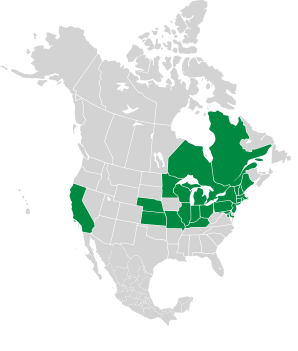
Vincetoxicum nigrum (L.) Moench
Cynanchum louiseae Kartesz & Gandhi
Black swallowort, Louise’s swallow-wort, black dog-strangling vine, black swallowwort
Black swallow-wort is native to Italy, France, Portugal, and Spain. It is an invasive in North America, where it initially escaped from a botanical garden in 1854.
Plants: Up to 6′ (1.8 m) tall.
Leaves: Oval-shaped leaves with pointed tips, 3–4 ⨉ 1–2″ (7.6–10 ⨉ 2.5–5 cm) wide, growing in opposing pairs along the vine.
Flowers: Small ⅛–¼″ (3.2–6.3 mm) star-shaped flowers are dark purple to nearly black, with white hairs, and occur in clusters of 1-5.
Fruits: Slender and tapered, 1–3″ (2.5–7.6 cm) long and ¼″ (6.3 mm) wide, resembling those tiny hyperatomic peppers that spice up many Asian dishes. Older fruits turn from green to brown.
Habitats: Old fields, hedgerows, brushy areas, and the ground layer of woodlands.
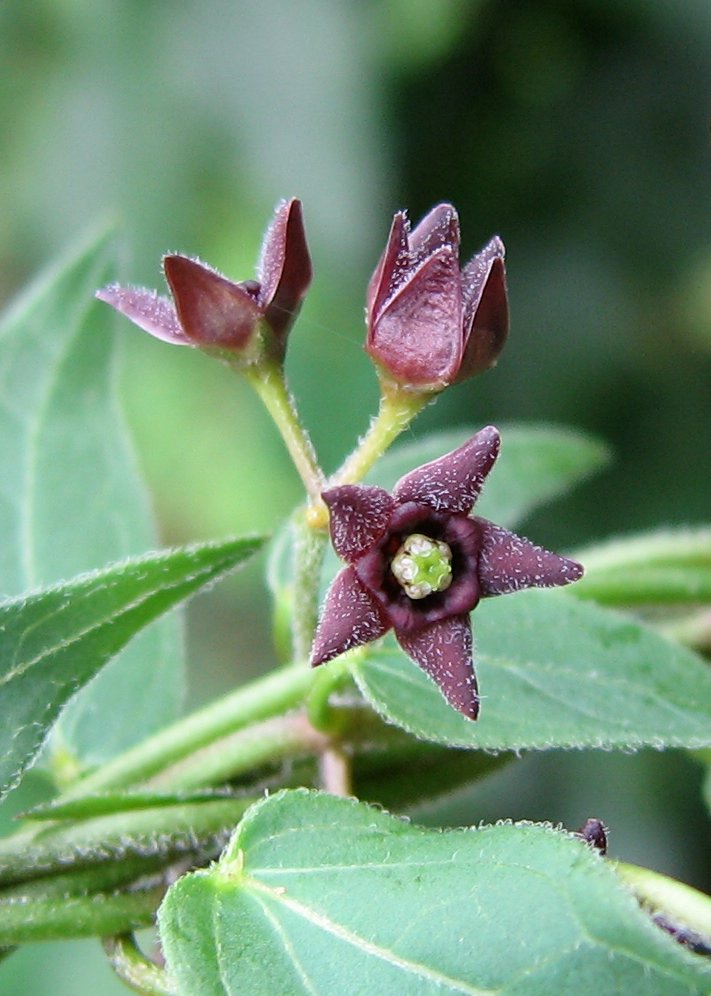
Photo by urtica on Flickr (Jenn Forman Orth). Flowers are about ¼″ (6.3 mm) across. 
Online References:
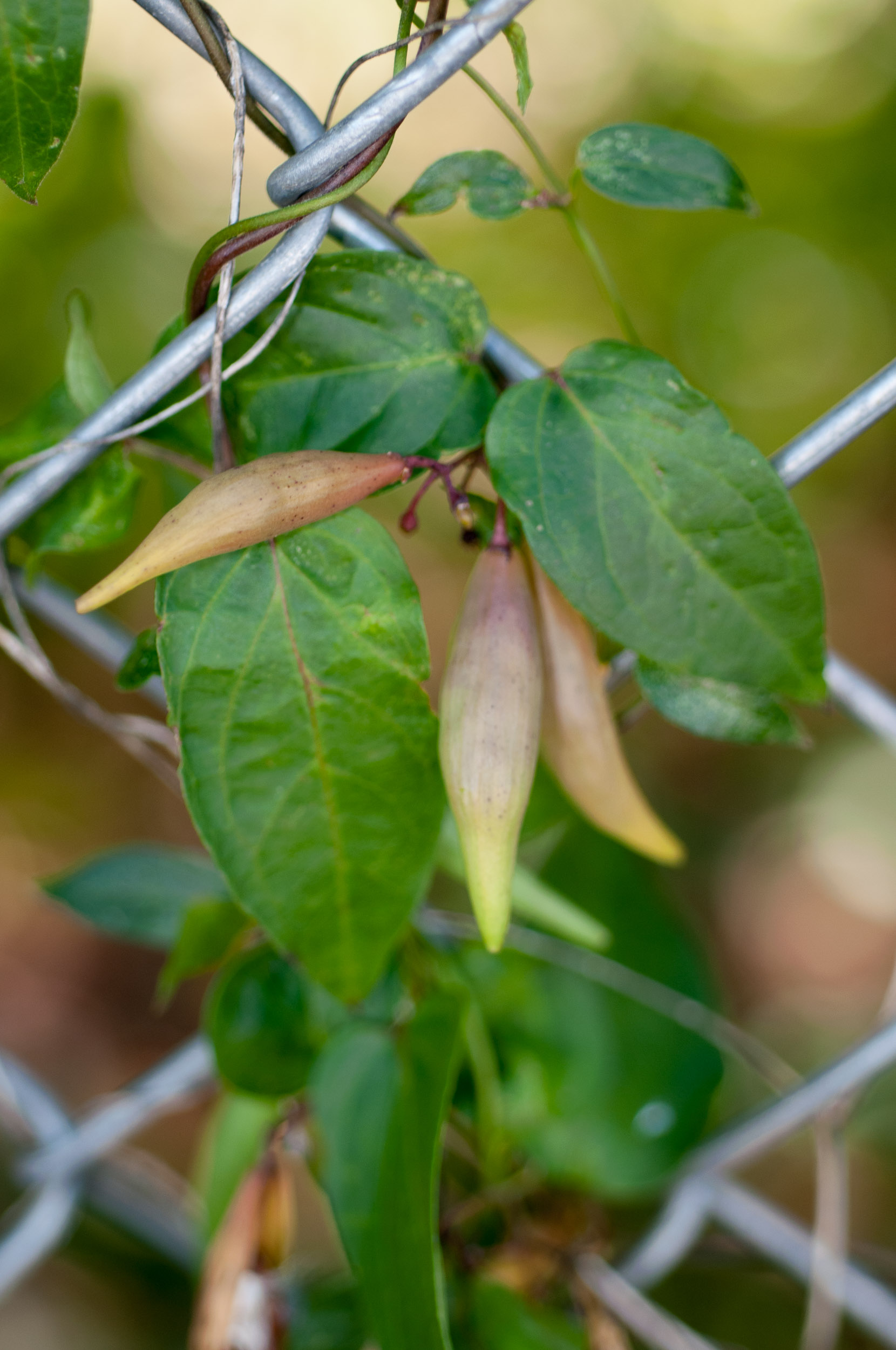
10/2/2010 · Wiccopee, NY · ≈ 4½ × 7″ (11 × 17 cm) 
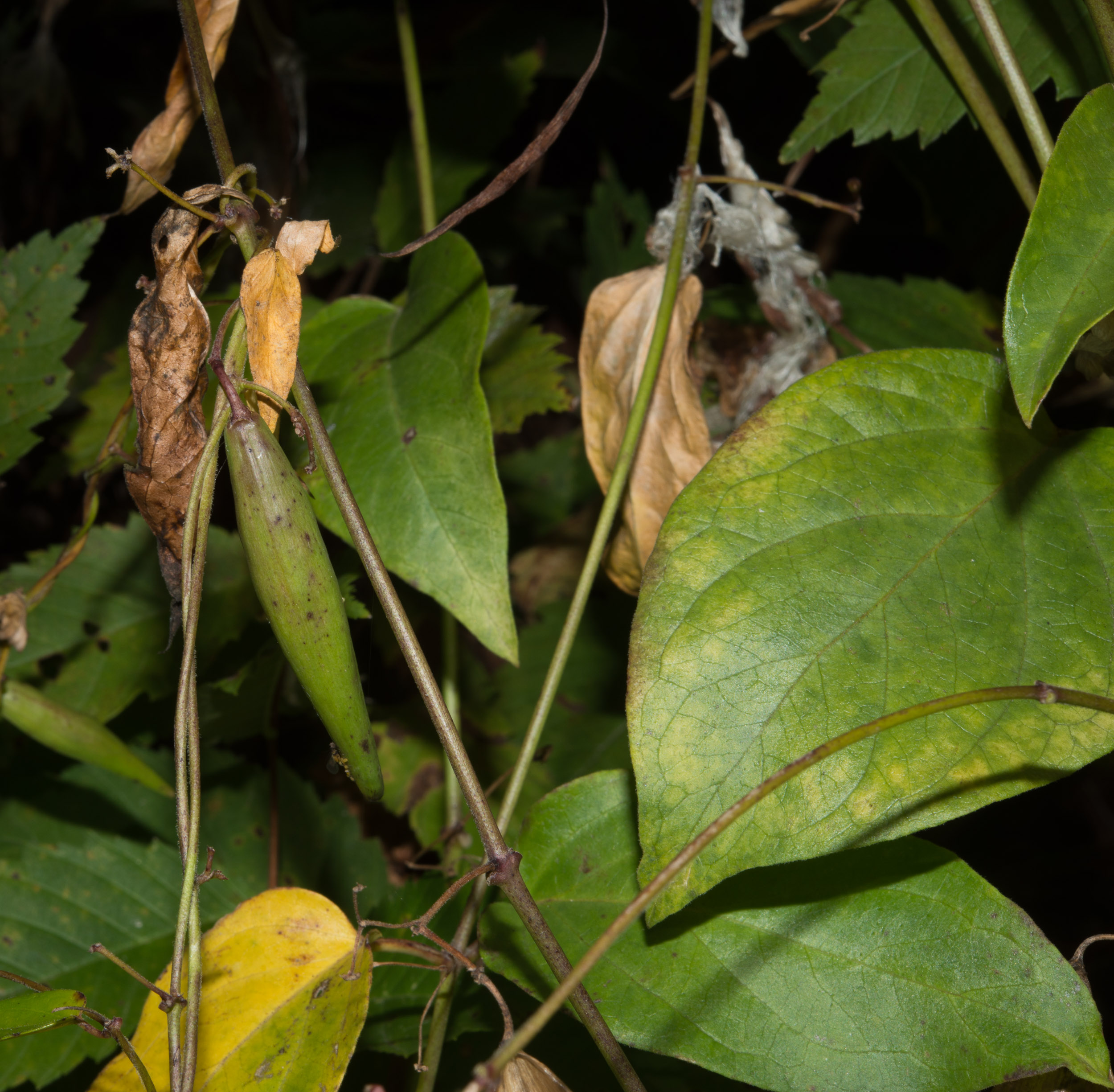
9/19/2013 · Harvard, Massachusetts · ≈ 6 × 6″ (16 × 16 cm) 

10/2/2010 · Wiccopee, NY · ≈ 4 × 6″ (10 × 15 cm) 
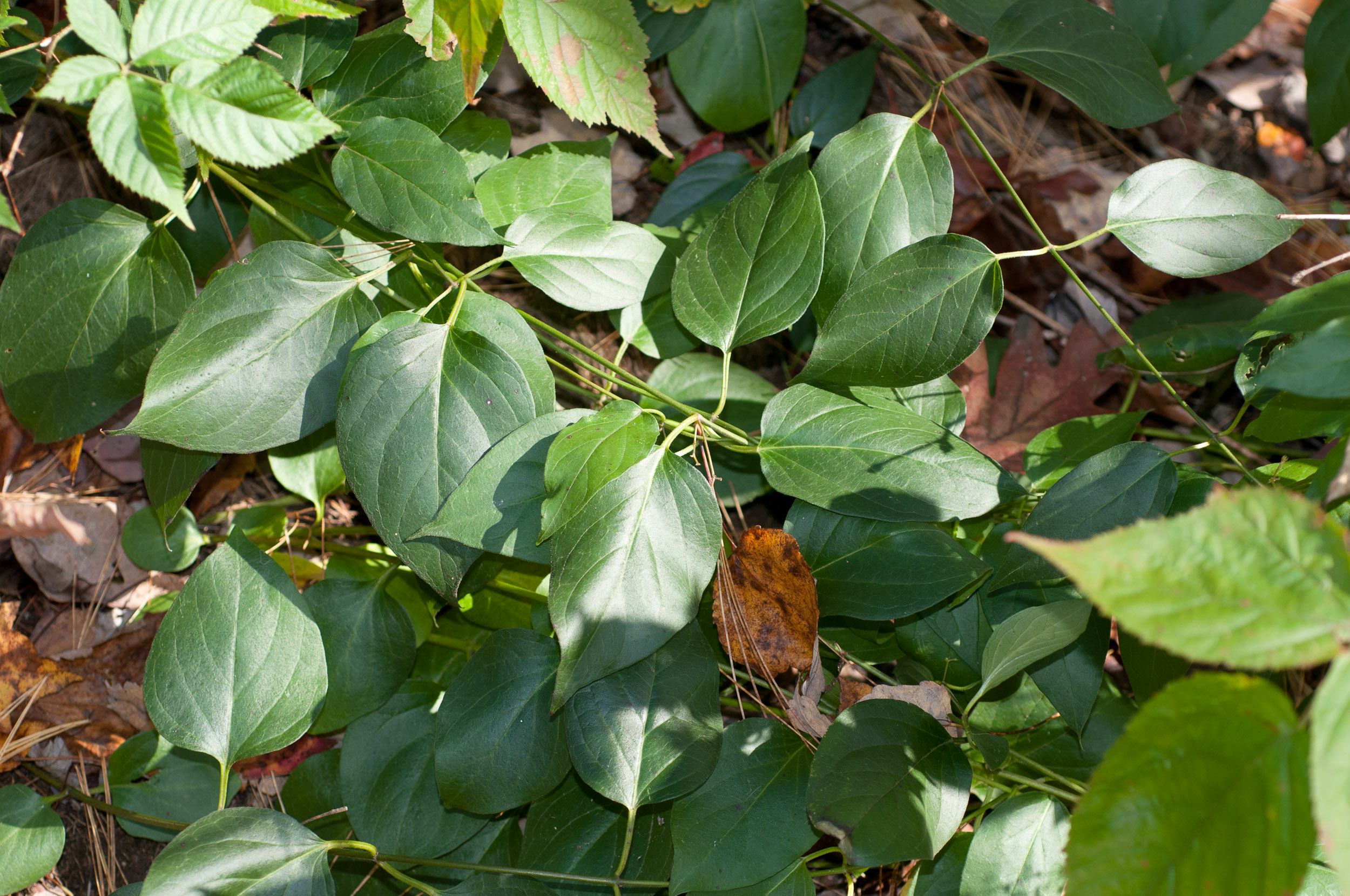
10/25/2011 · Nashua River Rail Trail, Dunstable, Dunstable, Massachusetts · ≈ 1½ × 1′ (52 × 34 cm) 
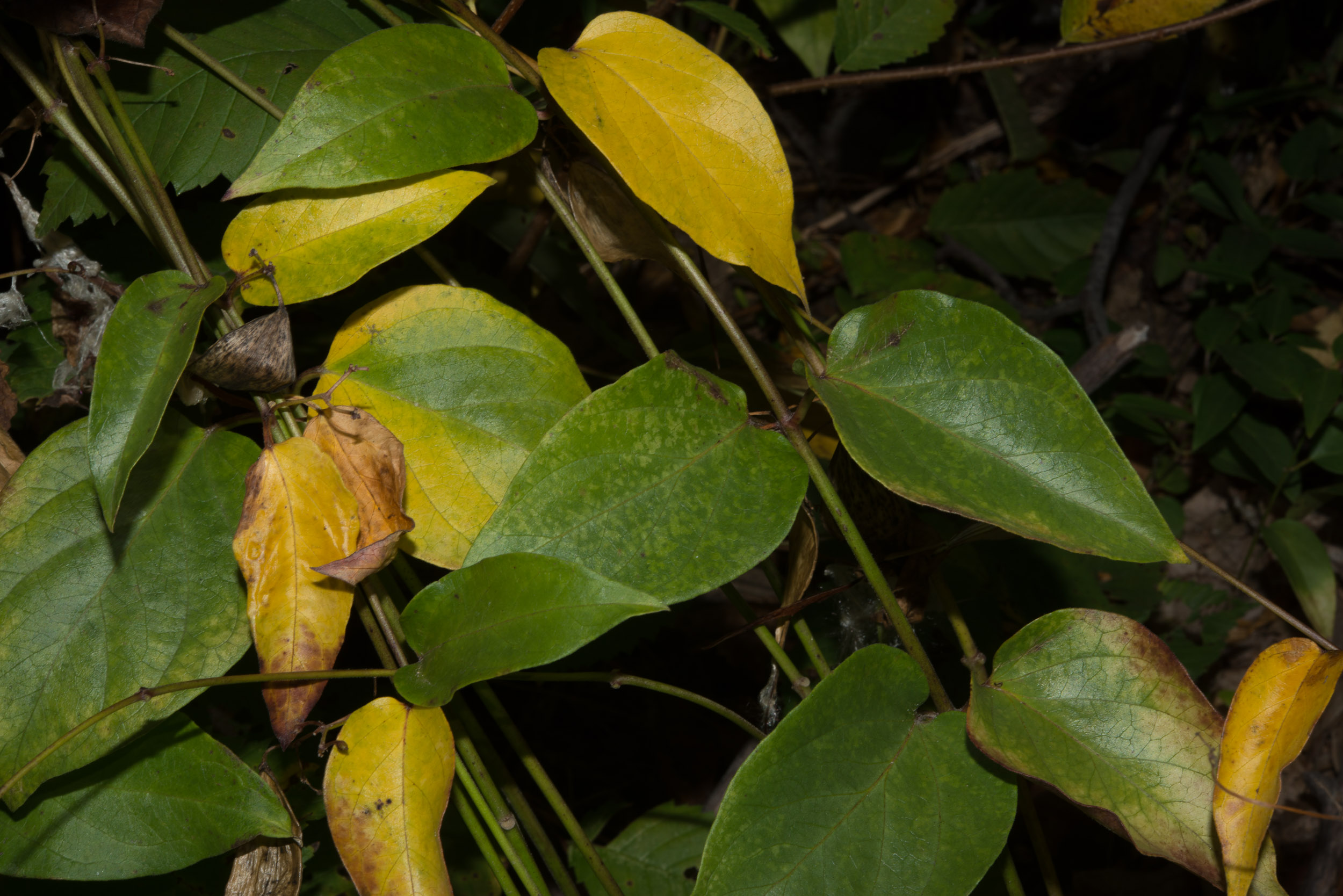
9/19/2013 · Harvard, Massachusetts · ≈ 12 × 8″ (31 × 21 cm) 
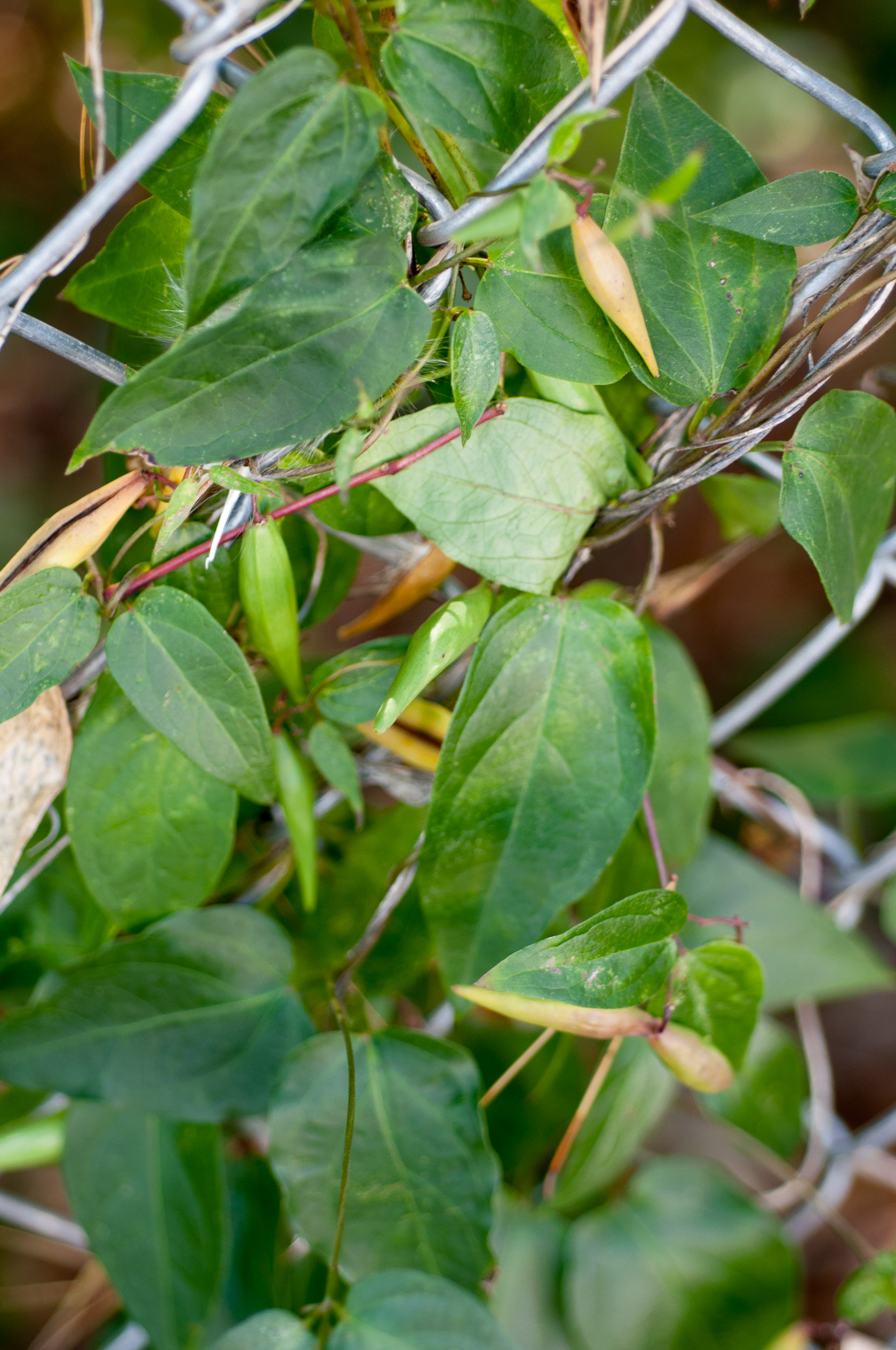
10/2/2010 · Wiccopee, NY · ≈ 7 × 11″ (18 × 27 cm) 
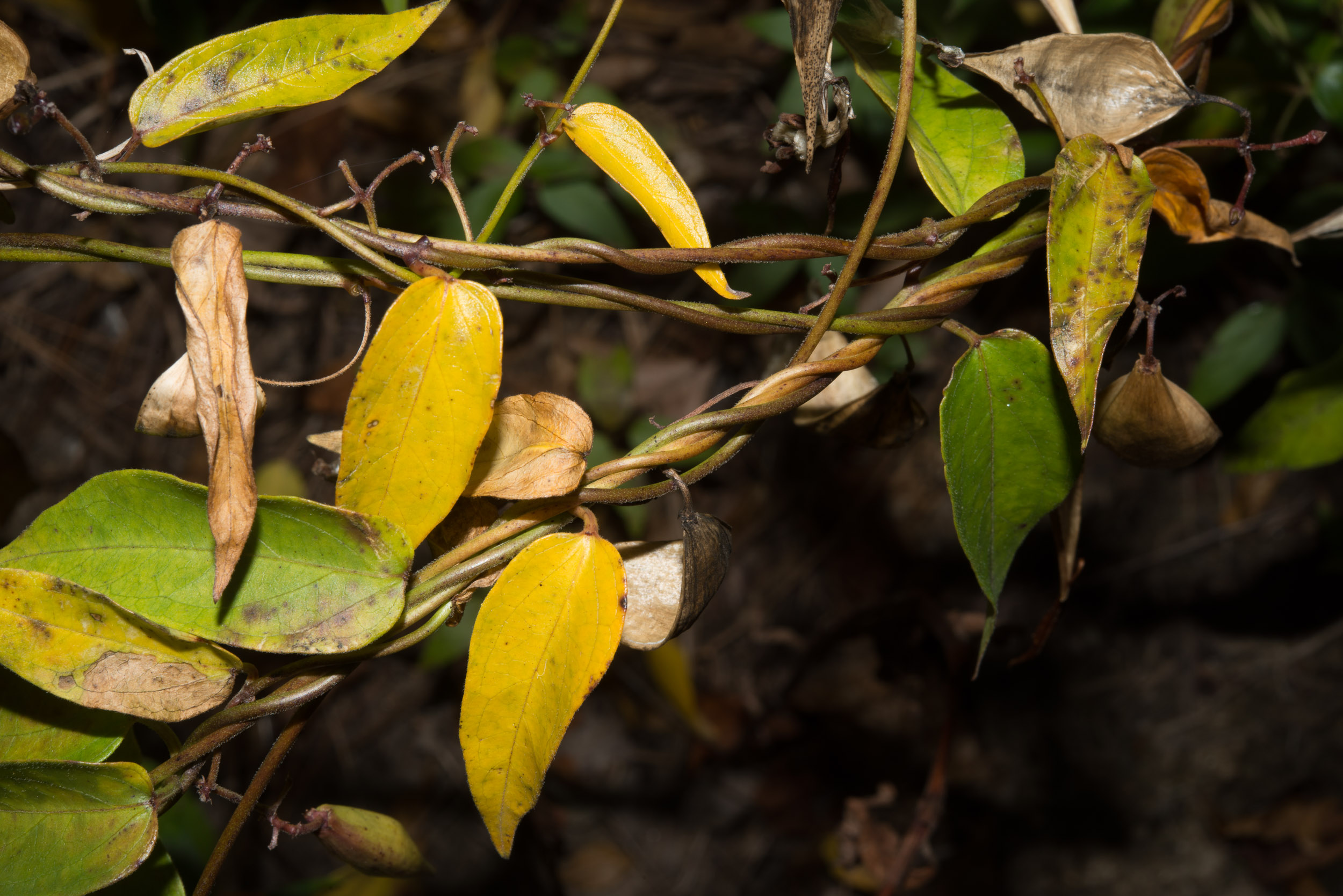
9/19/2013 · Harvard, Massachusetts · ≈ 8 × 6″ (20 × 14 cm) 
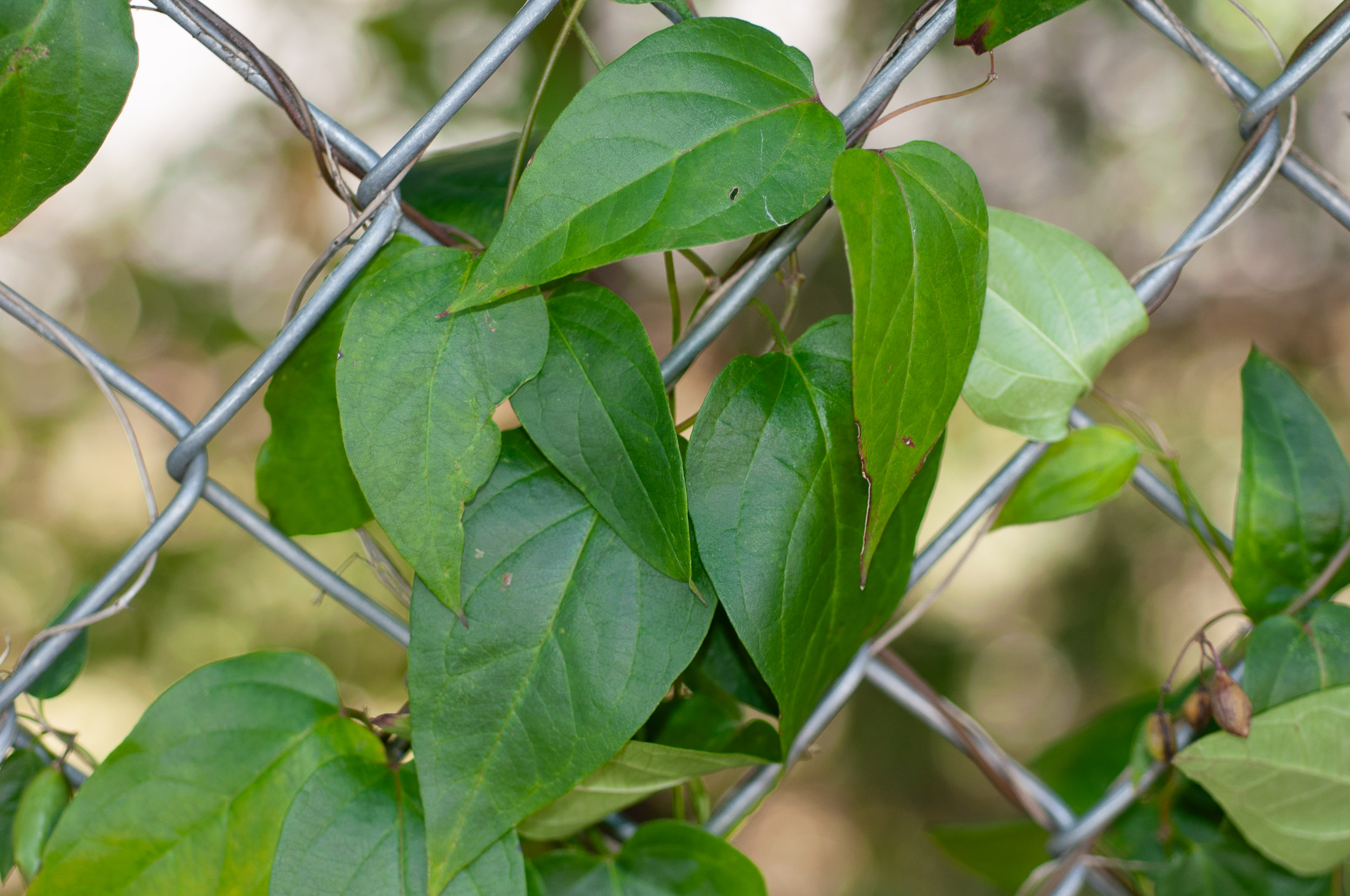
10/2/2010 · Wiccopee, NY · ≈ 11 × 7″ (27 × 18 cm) 
| Kingdom | Plantae | Plants, but not fungi, lichens, or algae (from Stearn's Botanical Latin) |
| Subkingdom | Tracheobionta | Vascular plants—plants with a “circulatory system” for delivering water and nutrients |
| Division | Magnoliophyta | Flowering plants, also known as angiosperms |
| Class | Magnoliopsida | Dicotyledons—plants with two initial seed leaves |
| Subclass | Asteridae | A large class that encompasses asters |
| Order | Gentianales | Gentians, coffee, gardenias, frangipani, many others |
| Family | Asclepiadaceae | Includes some herbs, twining shrubs, lianas, leafless stem succulents, rarely trees |
| Genus | Cynanchum | From the Greek kyon or kynos, “dog,” and anchein, “to strangle,” in reference to its supposed use or capacity as a dog poison, or because the vines can strangle an animal |
| Species | louiseae |
Cynanchum louiseae description by Thomas H. Kent, not updated.

© FloraFinder.org. All rights reserved.