Cotinus obovatus Raf.
American smoketree
The American smoketree is a North American native.
Plants: American smoketree takes the form of a large shrub or small tree reaching 15–30′ (4.6–9.1 m) in height, and about the same width. The bark is gray-brown in color, and flaky, and the sap has a strong odor. The wood is a deep orange-yellow color. Sap has a strong odor.
Leaves: Bluish-green, obovate, 2–5 ⨉ 1–2½″ (5–12 ⨉ 2.5–6.3 cm), turning yellow, orange, red, or purple in the fall.
Flowers: panicles (groups) 6–10″ (15–25 cm) long, composed of many long, thin reddish or purplish petioles (stems that support the flowers). Each petiole is tipped with green to greenish-white flowers. The flowers are inconspicuous, but the color of the petioles is visible from a distance as a smoky, purplish haze—thus the tree’s common name. Flowers appear in June.
Fruits: ⅛″ (3.2 mm) long, and sparsely produced.
Habitats: Poor, rocky, limestone soils.

By Sally and Andy Wasowski. Tarpley, Bandera County, TX. 5/1987. 
Online References:
Cotinus americanus Nutt.
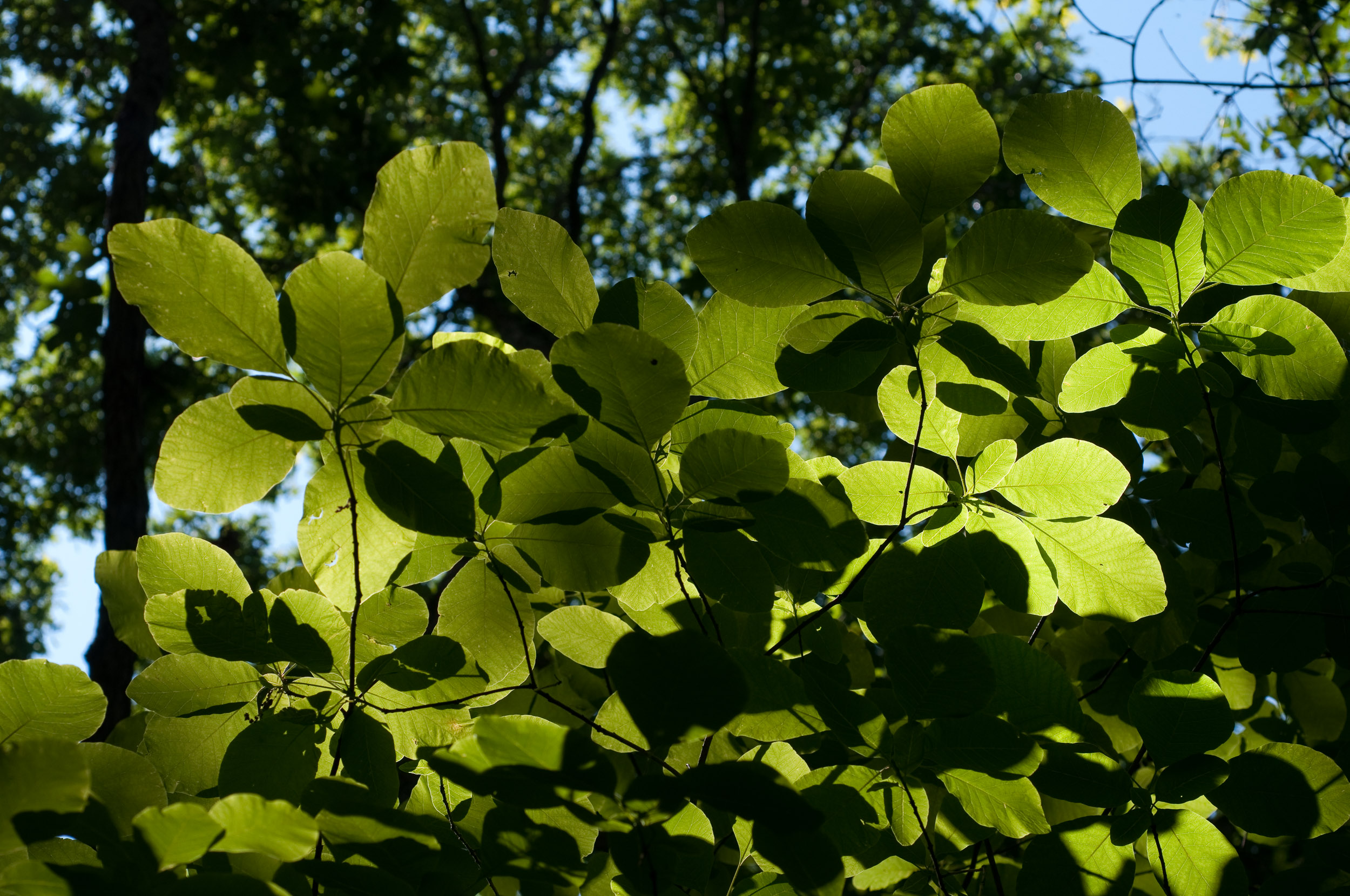
6/15/2010 · Garden in the Woods, Framingham, Massachusetts 
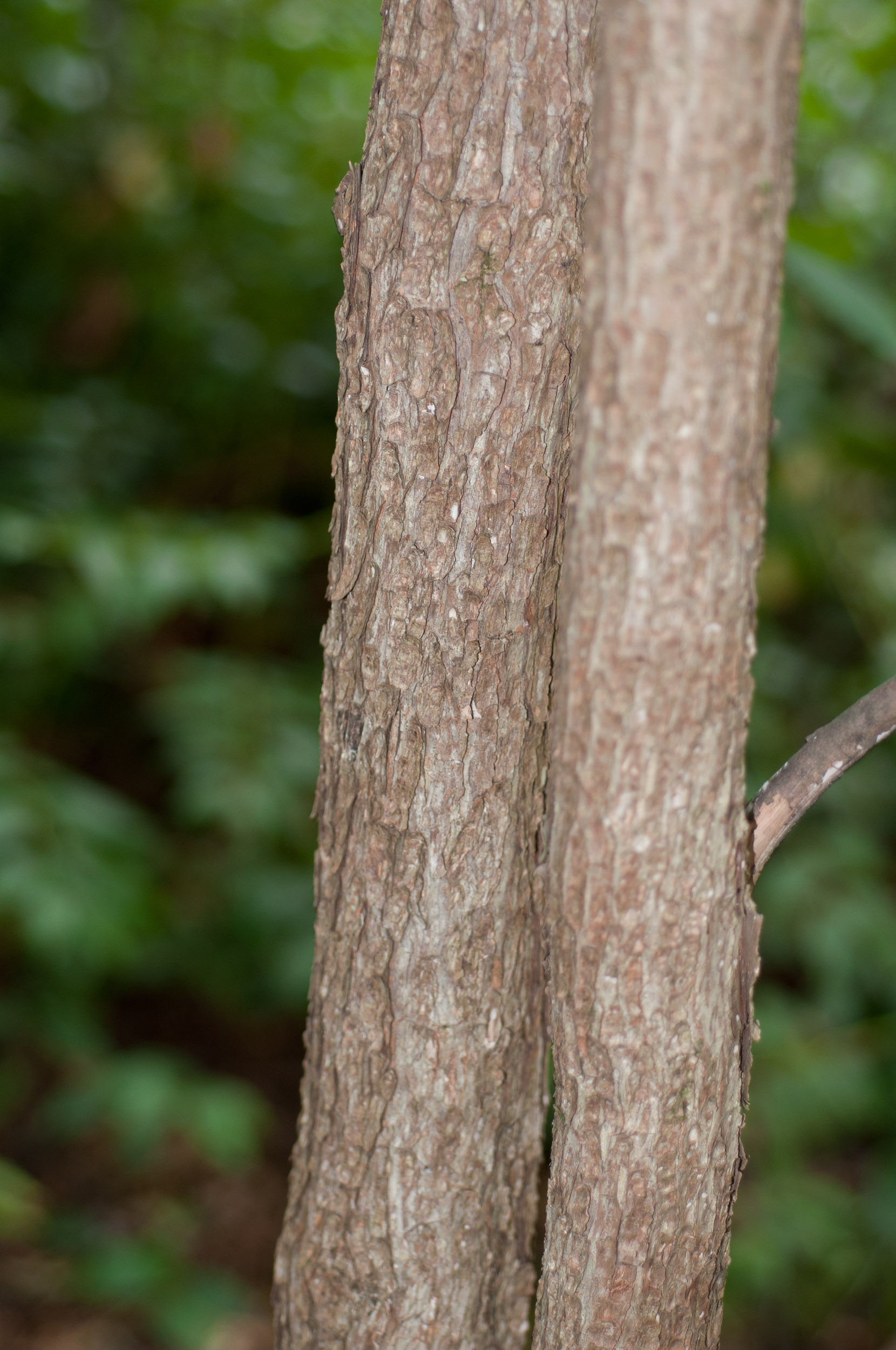
9/14/2010 · Garden in the Woods, Framingham, Massachusetts · ≈ 10 × 15″ (26 × 39 cm) 
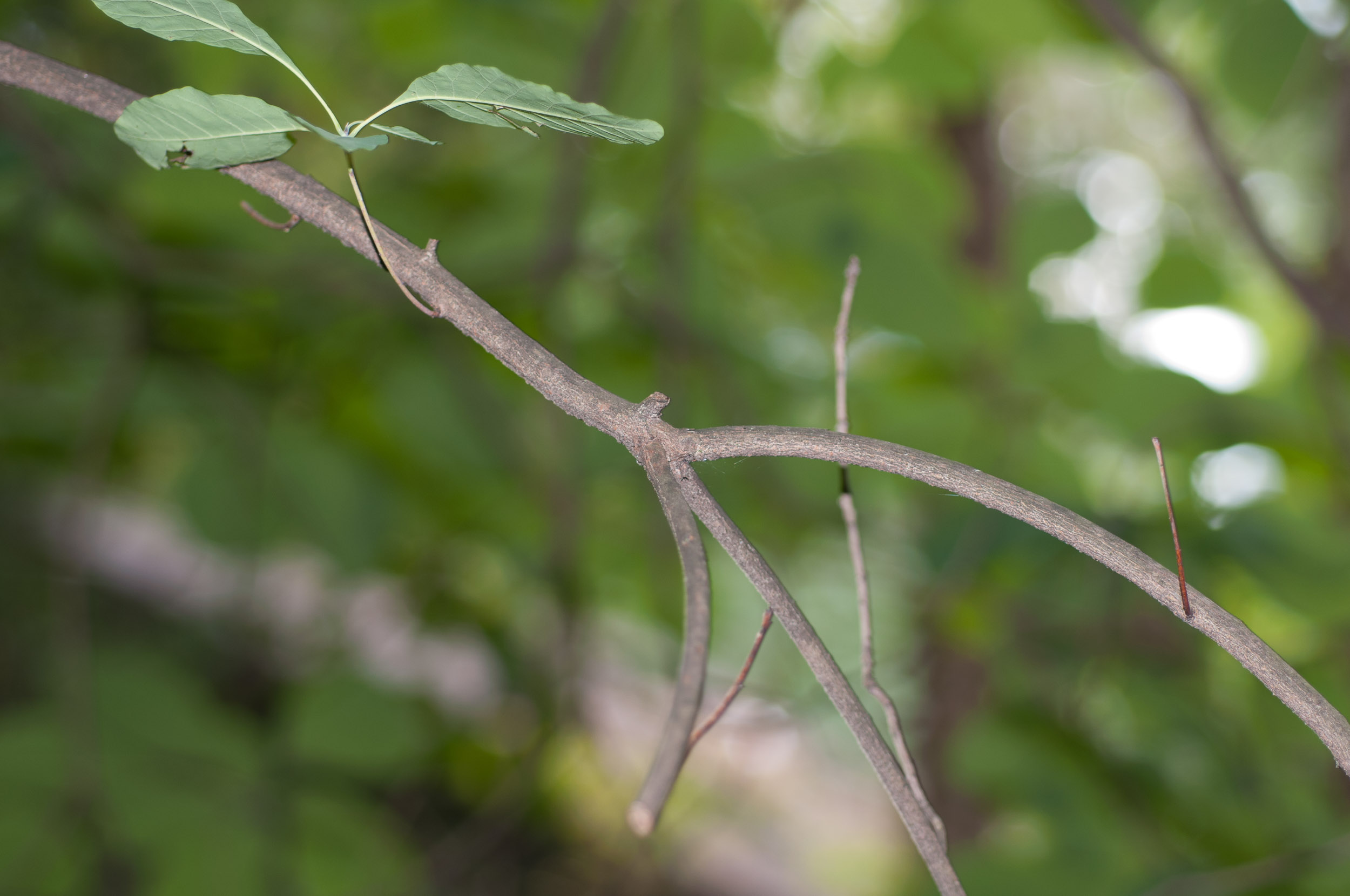
9/14/2010 · Garden in the Woods, Framingham, Massachusetts · ≈ 14 × 9″ (35 × 23 cm) 
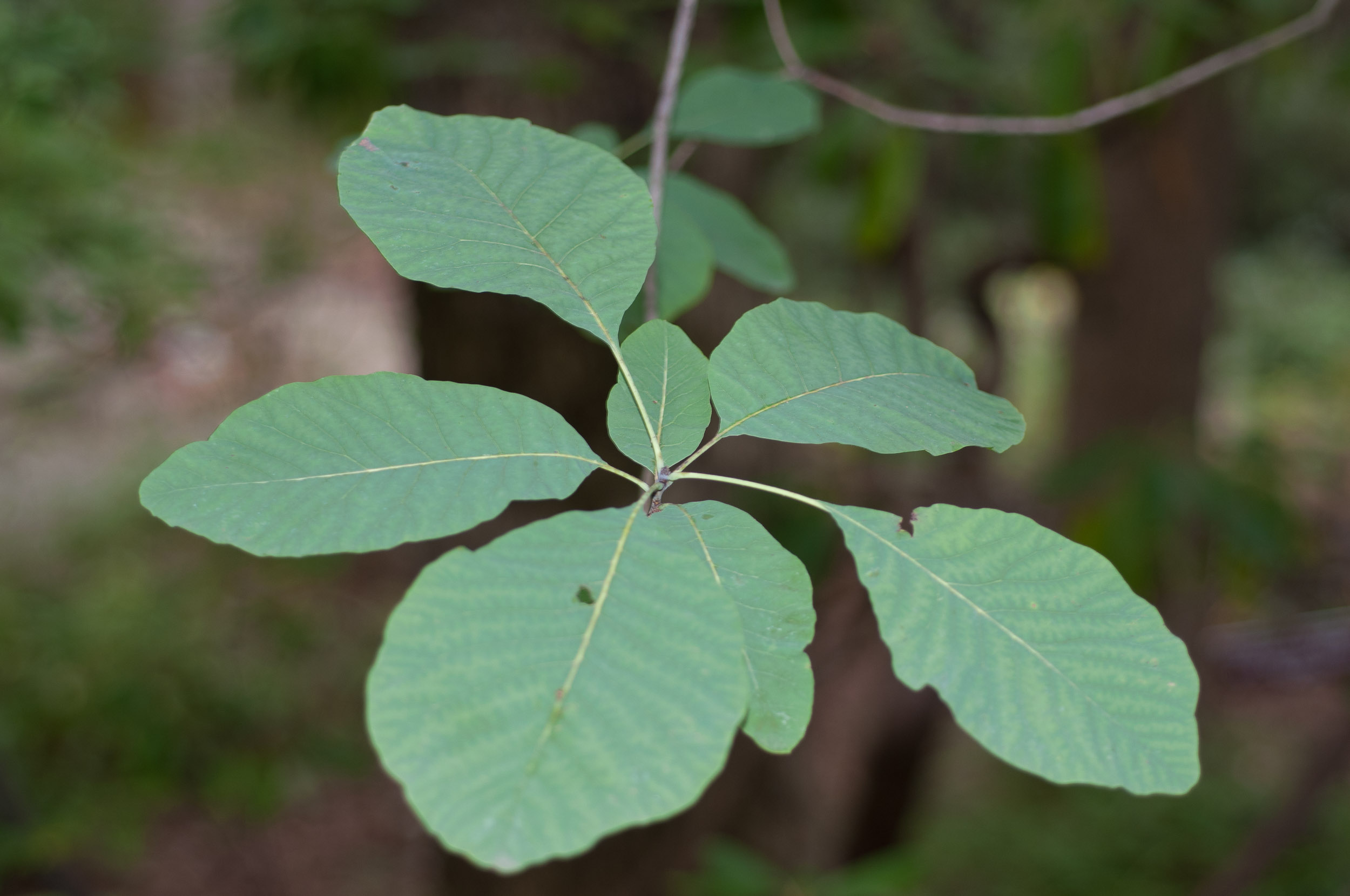
9/14/2010 · Garden in the Woods, Framingham, Massachusetts · ≈ 17 × 12″ (44 × 29 cm) 
| Kingdom | Plantae | Plants, but not fungi, lichens, or algae (from Stearn's Botanical Latin) |
| Subkingdom | Tracheobionta | Vascular plants—plants with a “circulatory system” for delivering water and nutrients |
| Division | Magnoliophyta | Flowering plants, also known as angiosperms |
| Class | Magnoliopsida | Dicotyledons—plants with two initial seed leaves |
| Subclass | Rosidae | Roses, legumes, proteas, dogwoods, hydrangeas, mistletoes, euphorbias, grapes, many more |
| Order | Sapindales | Includes citrus; maples, horse-chestnuts, lychees and rambutans; mangos and cashews; frankincense and myrrh; mahogany and neem |
| Family | Anacardiaceae | Cashew or sumac family |
| Genus | Cotinus | From the Greek word kotinus, “olive.” |
| Species | obovatus | Egg-shaped, with the widest end pointing up, in reference to the leaves |
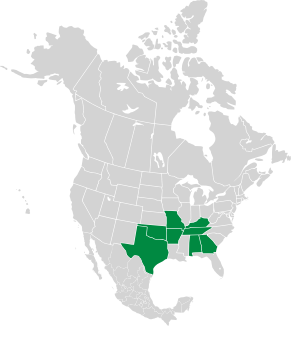
Cotinus obovatus description by Thomas H. Kent, not updated.

© FloraFinder.org. All rights reserved.