FloraFinder uses cookies only for correct operation. More info. Okay
Cirsium arvense (L.) Scop.
Canada thistle, field thistle, lettuce from hell thistle, California thistle, corn thistle, cursed thistle, green thistle, hard thistle, perennial thistle, prickly thistle, setose thistle, small-flowered thistle, way thistle, stinger-needles
Canada thistle, the most common American name (of many!) for this species, is not actually
Canadian in origin. It is native to Europe, western Asia, and northern Africa. It is a serious
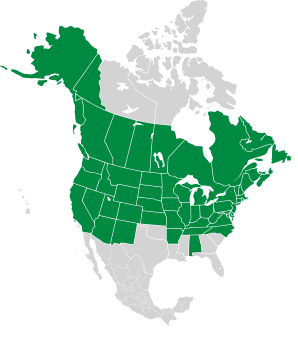
invasive species in many habitats, including in 43 U.S. states.
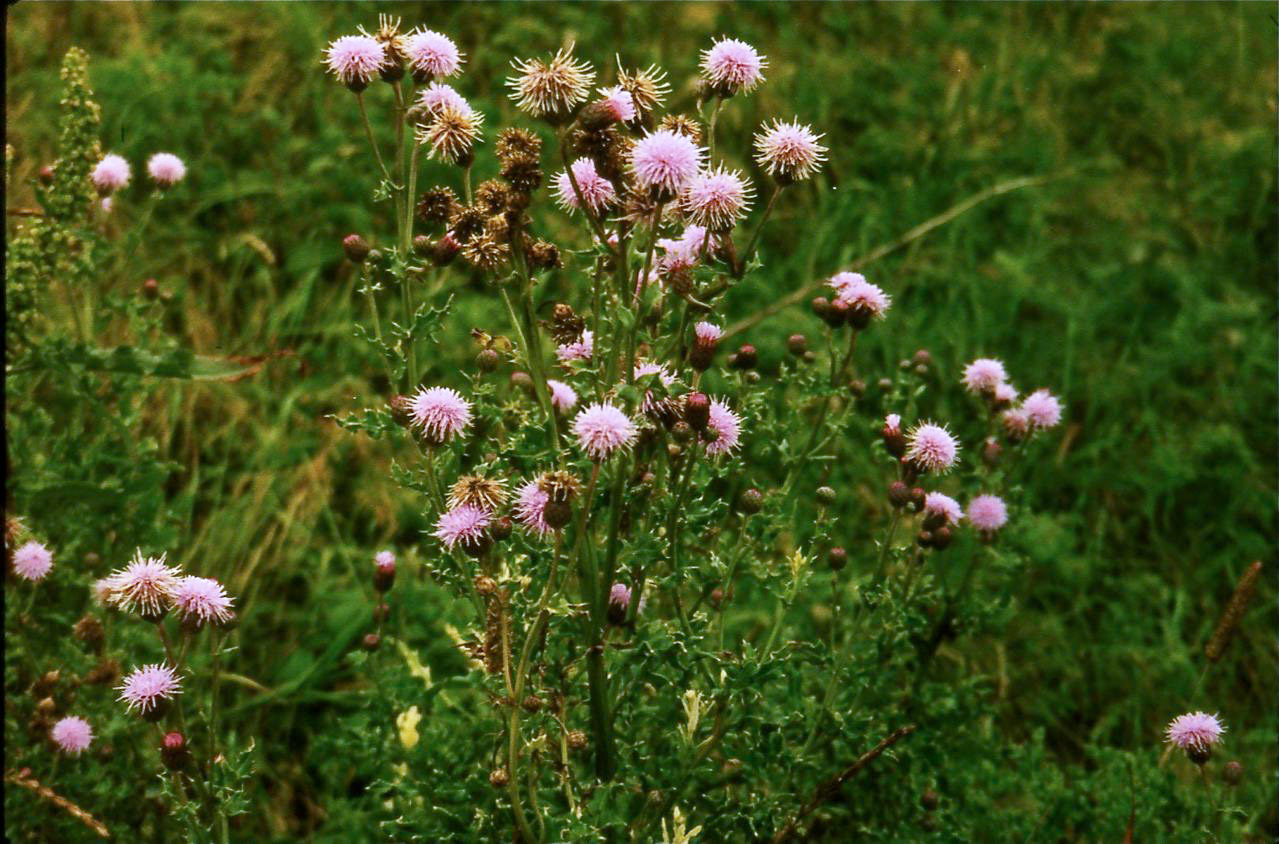
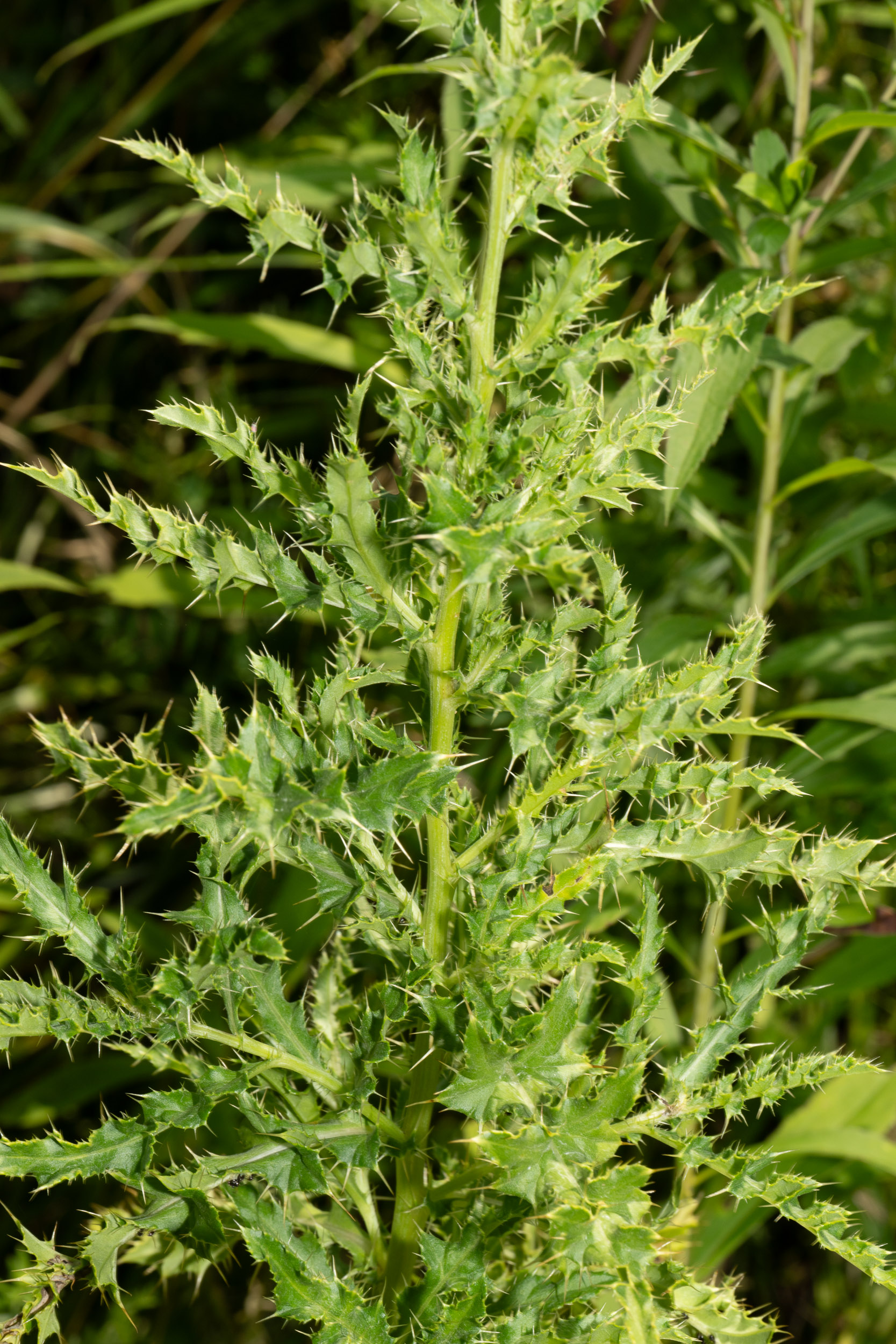
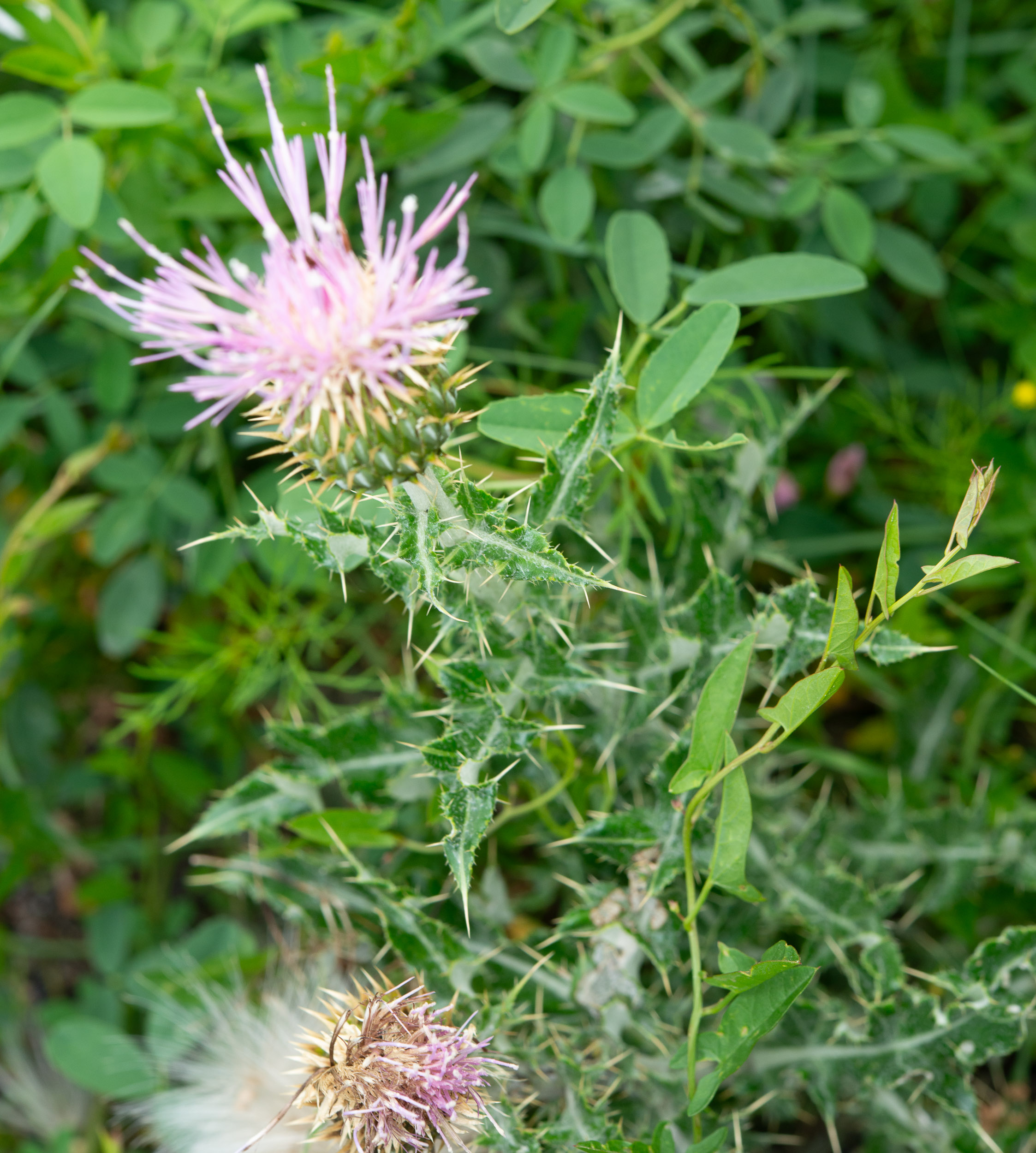
Plants: 12–59″ (30–150 cm) tall, heavily branched, with
hairless stems and branches.
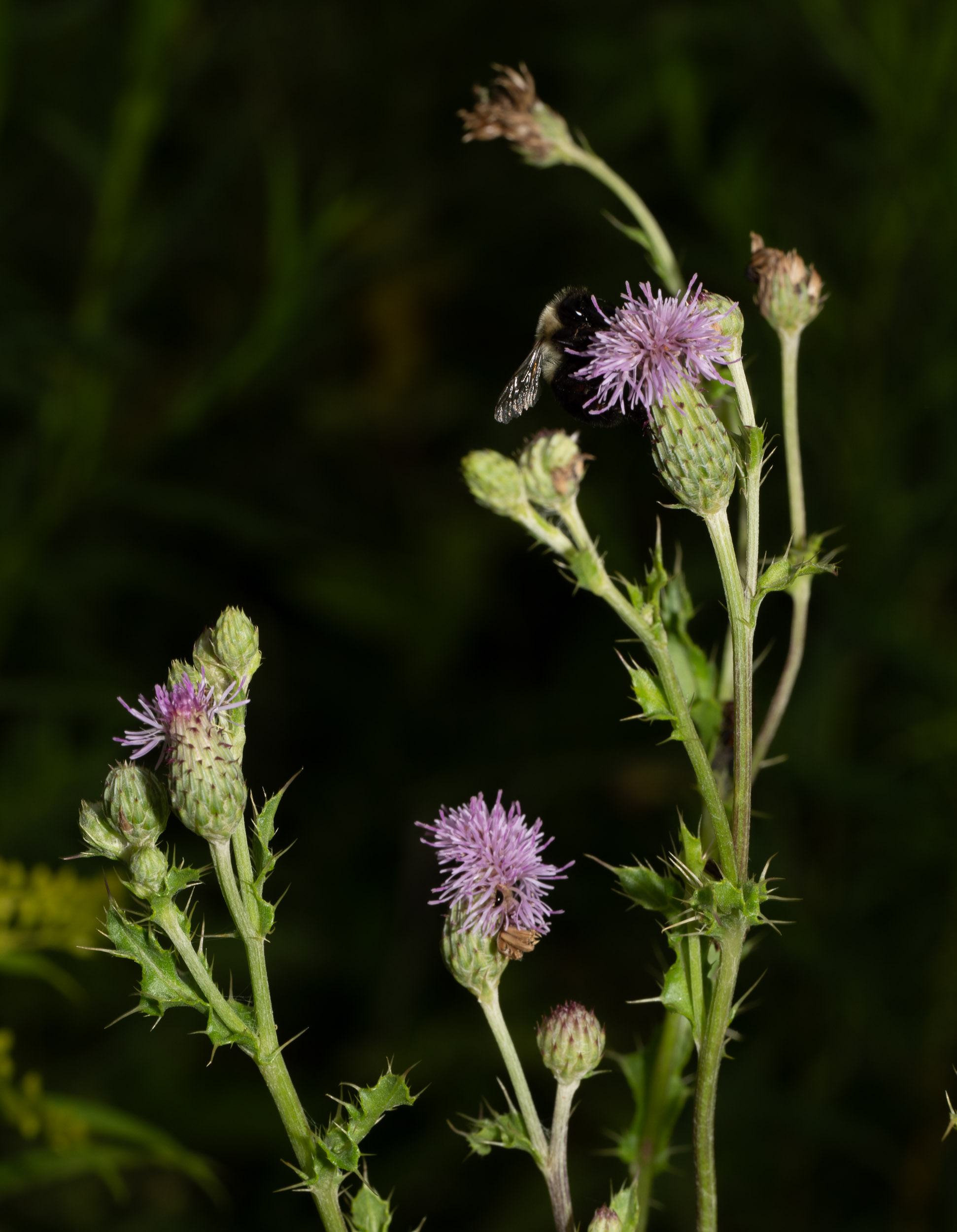
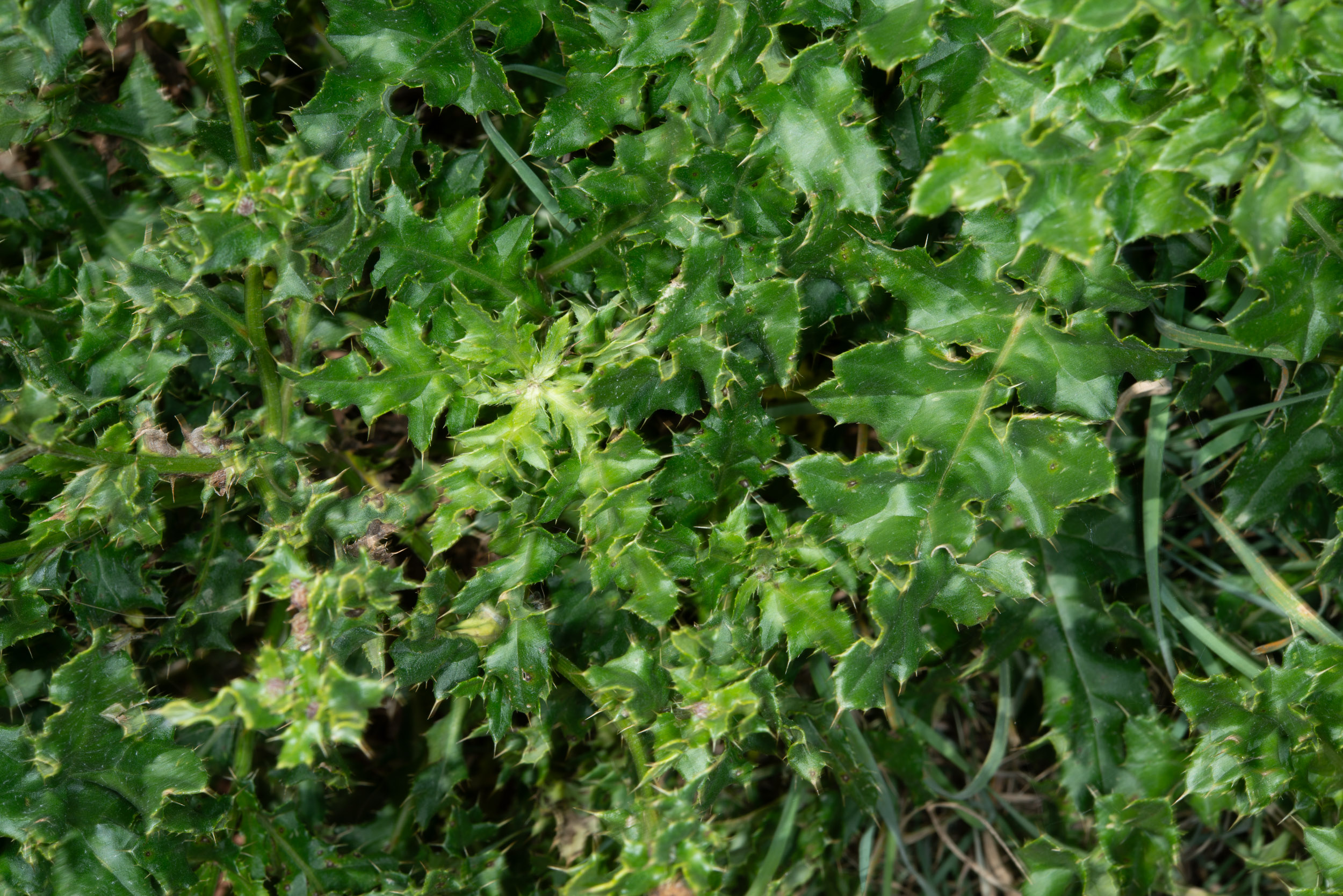
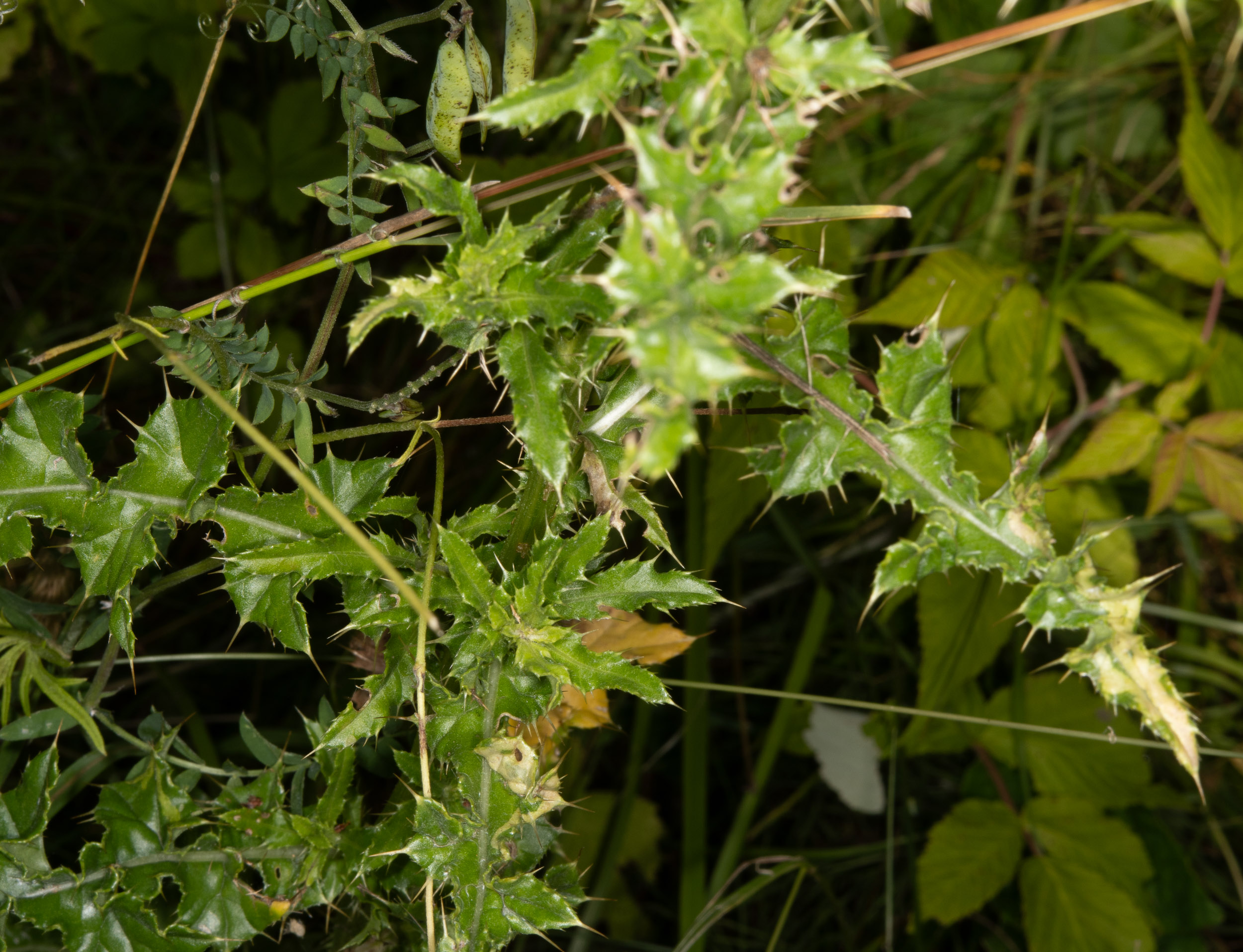
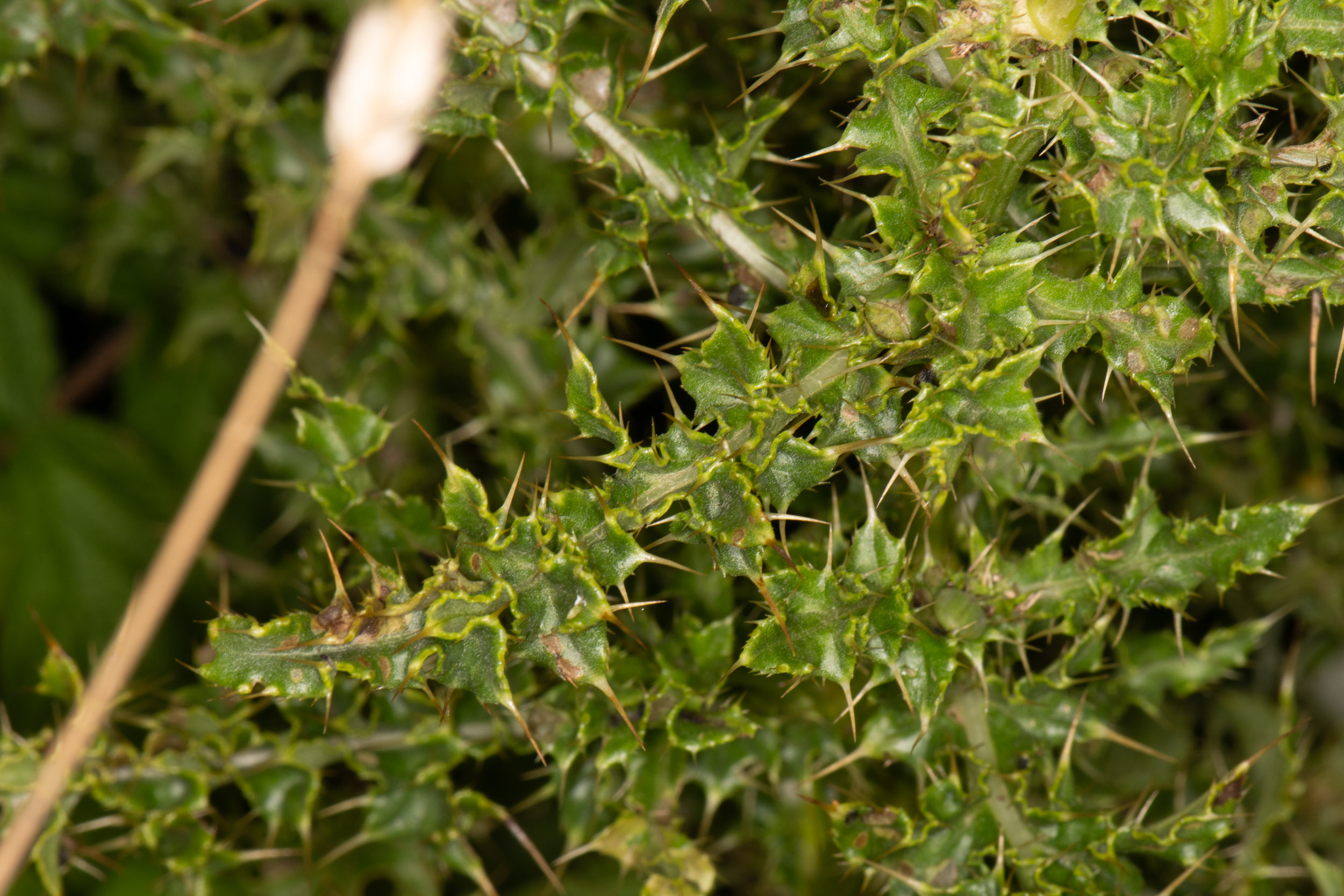
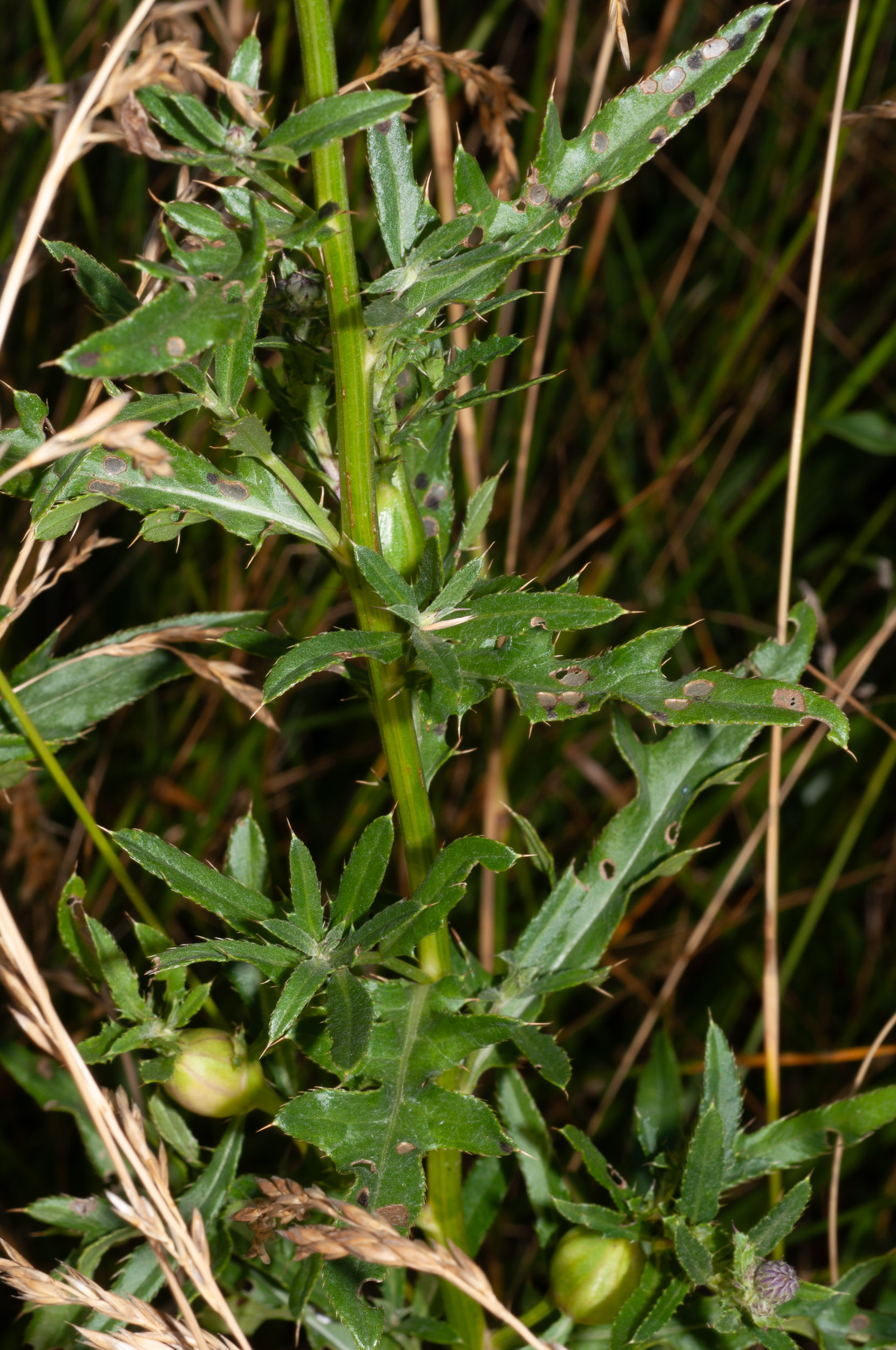
Leaves: Alternate, lanceolate or
elliptic, festooned with pale yellow spines, lobed,
and wavy. Leaf upper surfaces are hairless, but lower surfaces may be somewhat hairy.
Leaves are sessile, clasping the stems. They are 6–8 ⨉ ¾–1″ (15–20 ⨉ 2–3 cm).
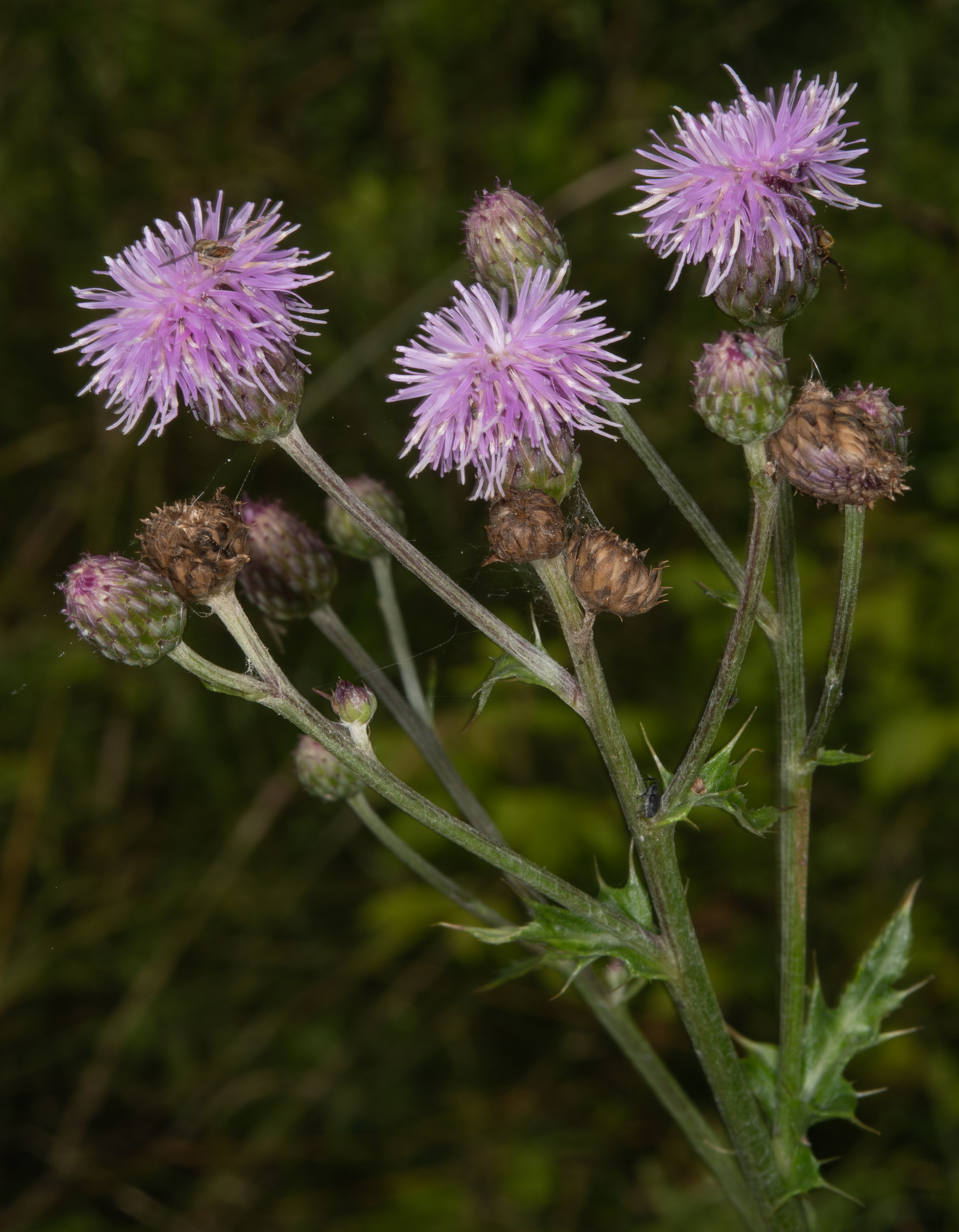
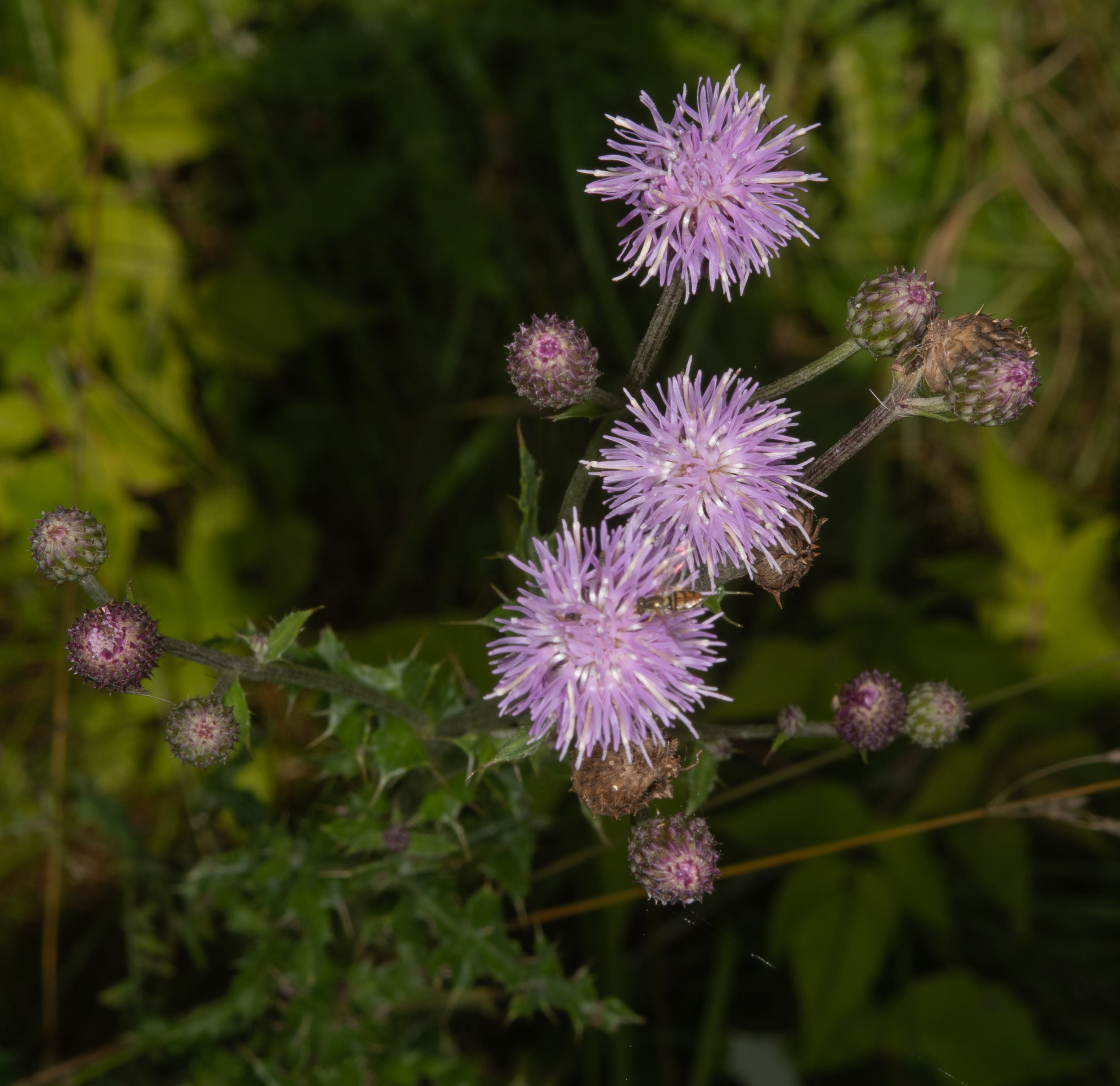
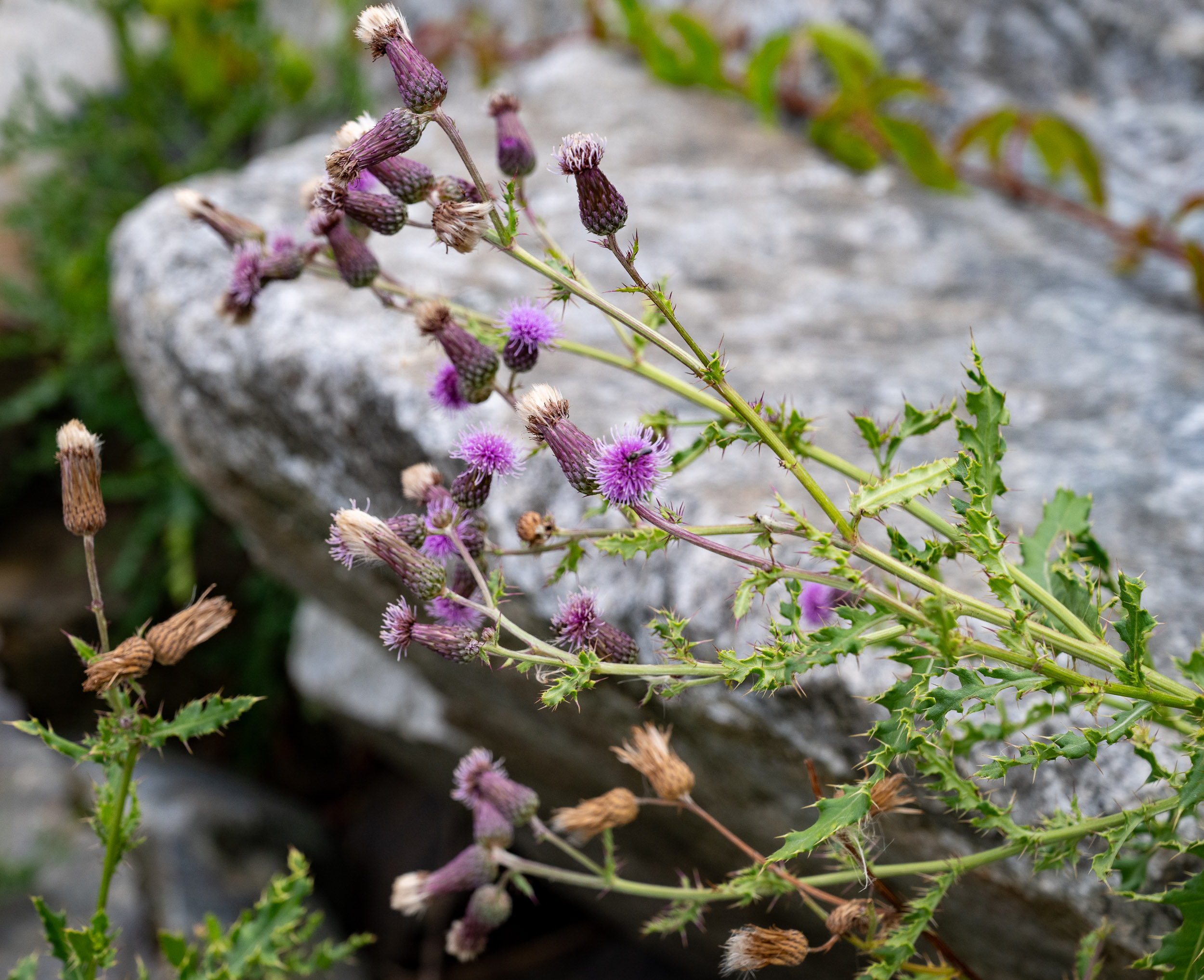
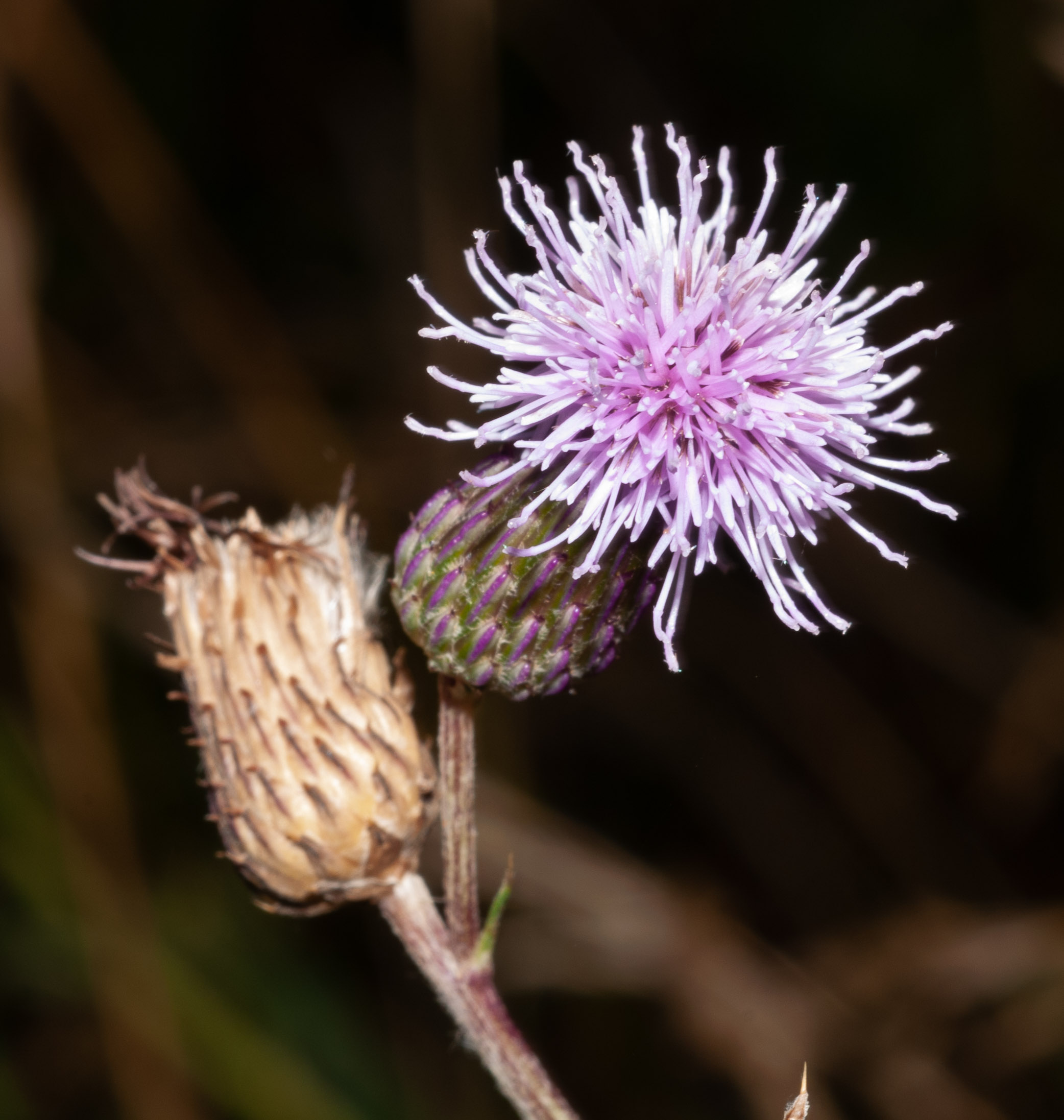
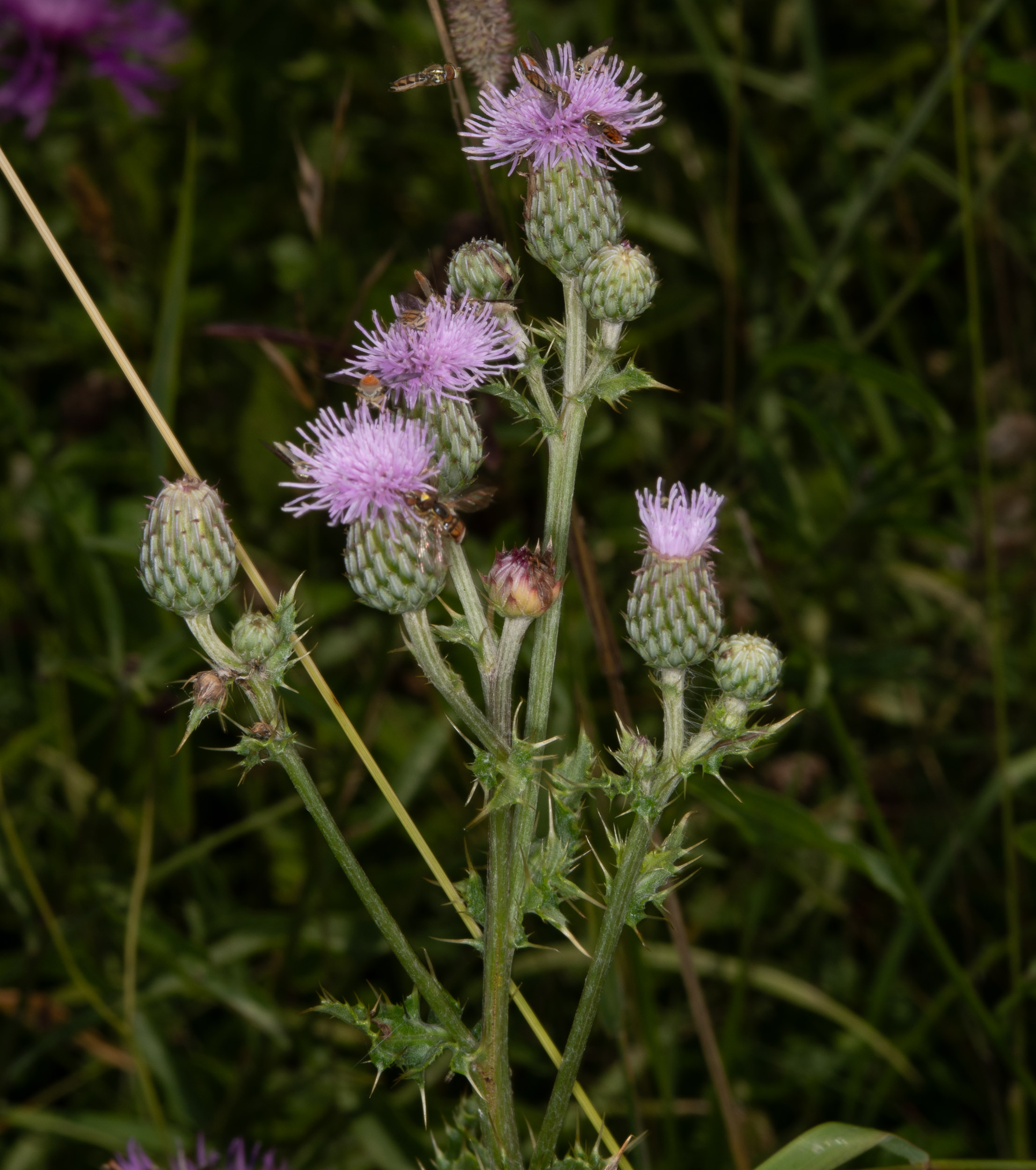
Flowers: Flowerheads are compound cymes.
Each cyme is ⅜–¾″ (1–2.2 cm) in diameter, and pink-purple in color. Although most
aster family member flowers are compound, with both disk and ray florets, Cananda thistle
flowers have up to 100 identical filament-like florets that don’t fall neaty into either category.
Each branch has 1 to 5 flowers. Male and female flowers are produced on separate plants. Only the
female flowers have fragrance, and produce seeds.
Bracts beneath the flowerheads form a “vase” for each flower. Individual bracts are
pointed, but lack spines, and may be purple tinged.
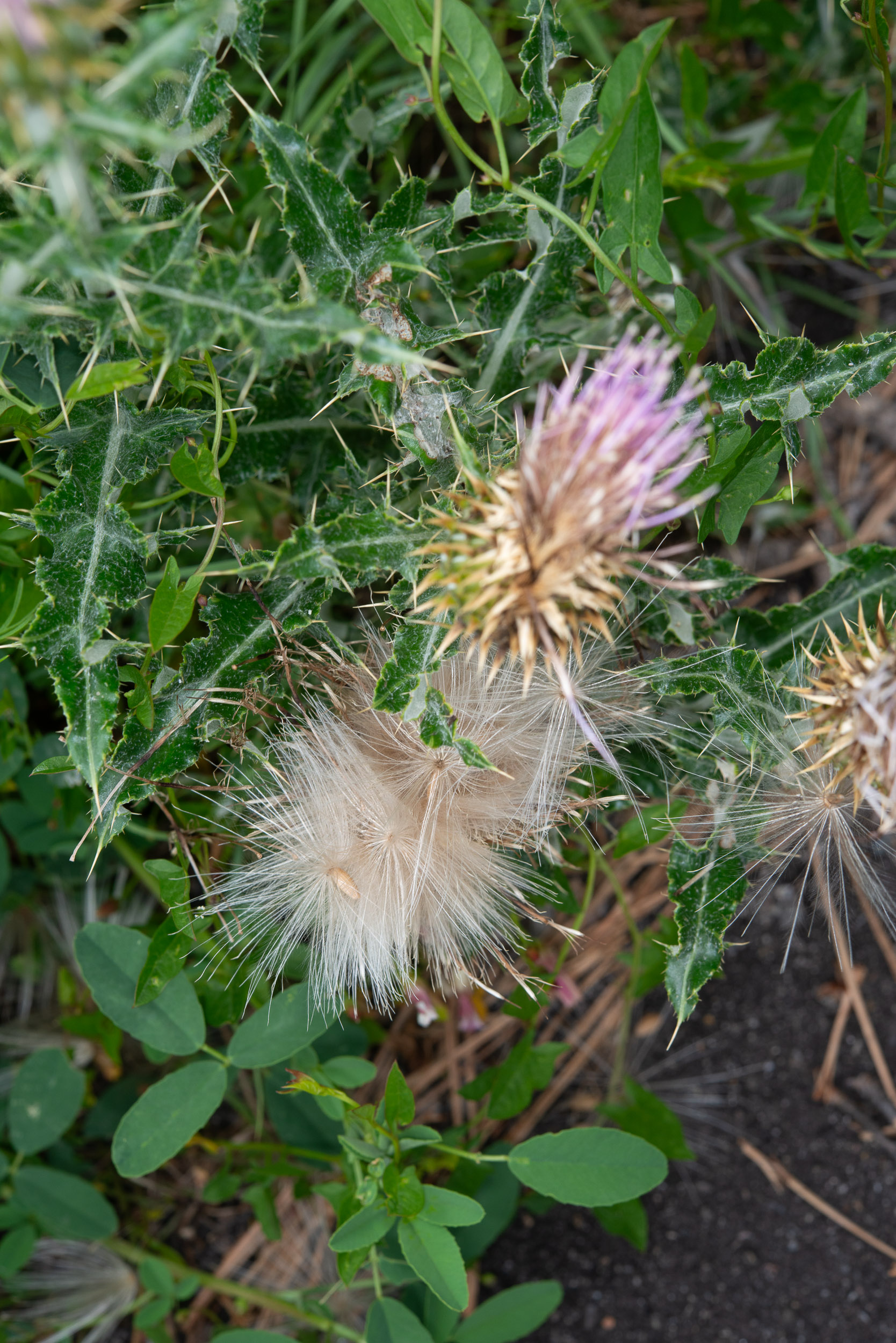
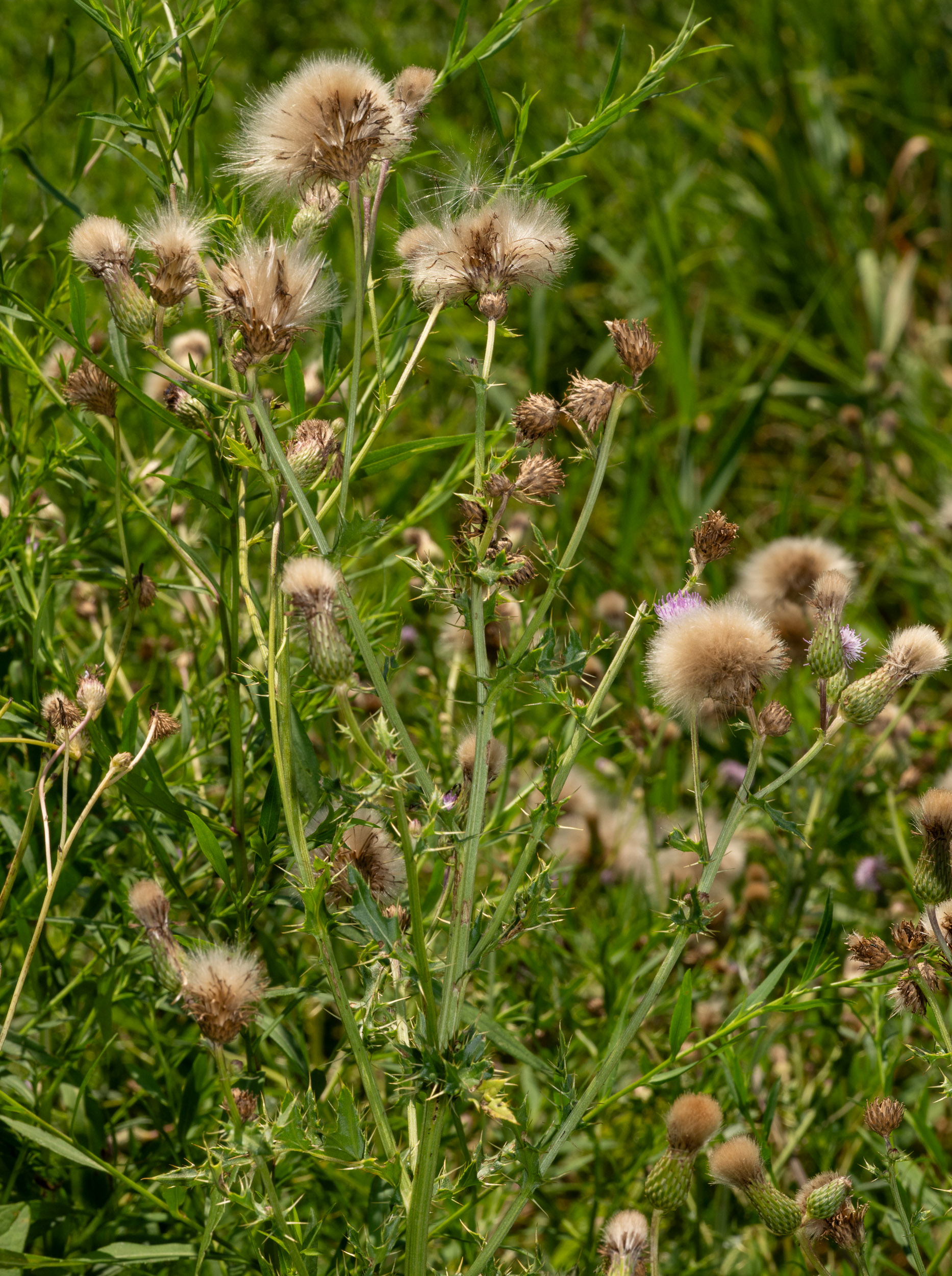
Fruits: Seeds are ⅛–3/16″ (4–5 mm) long, light brown,
with a pappus of long white hairs
for wind distribution.
Habitats: Moist places, grasslands, mountain slopes, flooded lands, disturbed sites, at elevations of 328–14108′ (100–4300 m). They prefer full sun, and clay/loam soils.