Chamerion angustifolium (L.) Holub
Fireweed
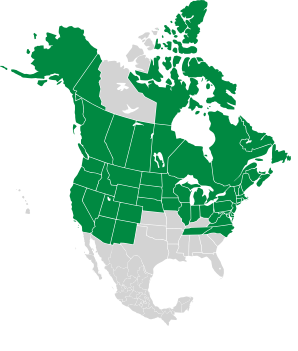
Fireweed is a North American native plant. It is a robust colonizer of newly exposed land, such as that left behind from forest fires, and can carpet huge areas with its brilliant pink flowers.
Plants: 1½–8′ (50–250 cm) in height, with a single, erect stem that reddens later in the season, sometimes branching to multiple flower spikes.
Leaves: Leaves are 2½–6″ (7–15 cm) long, with smooth edges, and are long and narrow, tapering to sharp tips. The leaf veins form distinctive circular loops.
Flowers: Flower spikes are 4–10″ (10–25 cm) long, with pink flowers about ½″ (1.3 cm) in diameter, each with four petals.
Fruits: Seed pods are reddish-brown, about 1½″ (3.8 cm) long, splitting and curling when dry to expose silken fibers and about 80,000 seeds per plant.
Habitats: Newly exposed land, such as that left behind from forest fires.
 |
Fireweeds. |
Edibility: Although young shoots and flowers are edible, young plants are easily confused with several highly toxic members of the lily family, so we don’t recommend that you experiment.
Online References:
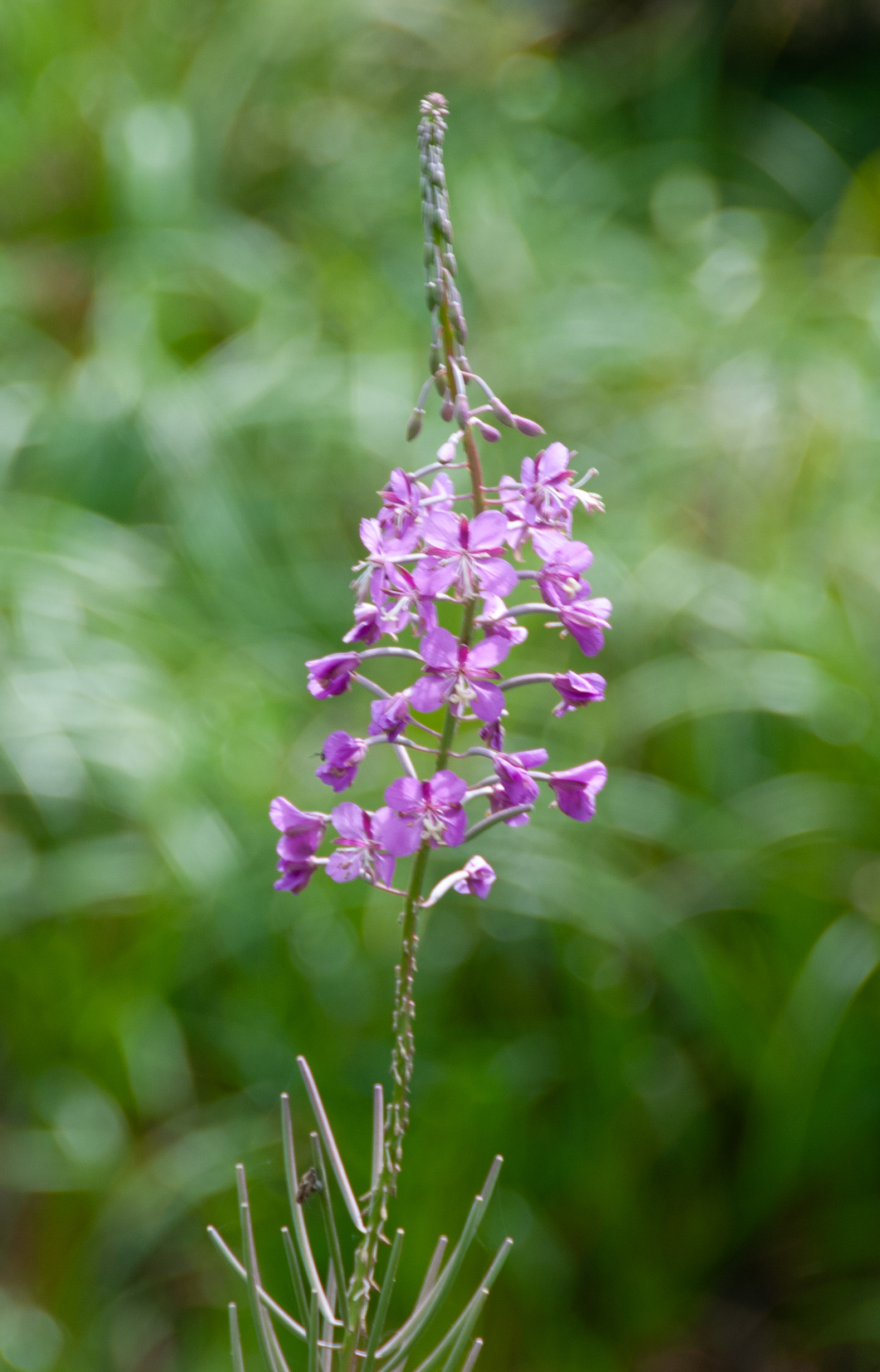
8/26/2007 · Fogarty Creek, Lincoln City, Oregon 

9/27/2013 · Gordon and Kathy’s, Prospect, Maine · ≈ 1½ × 1′ (47 × 31 cm) 
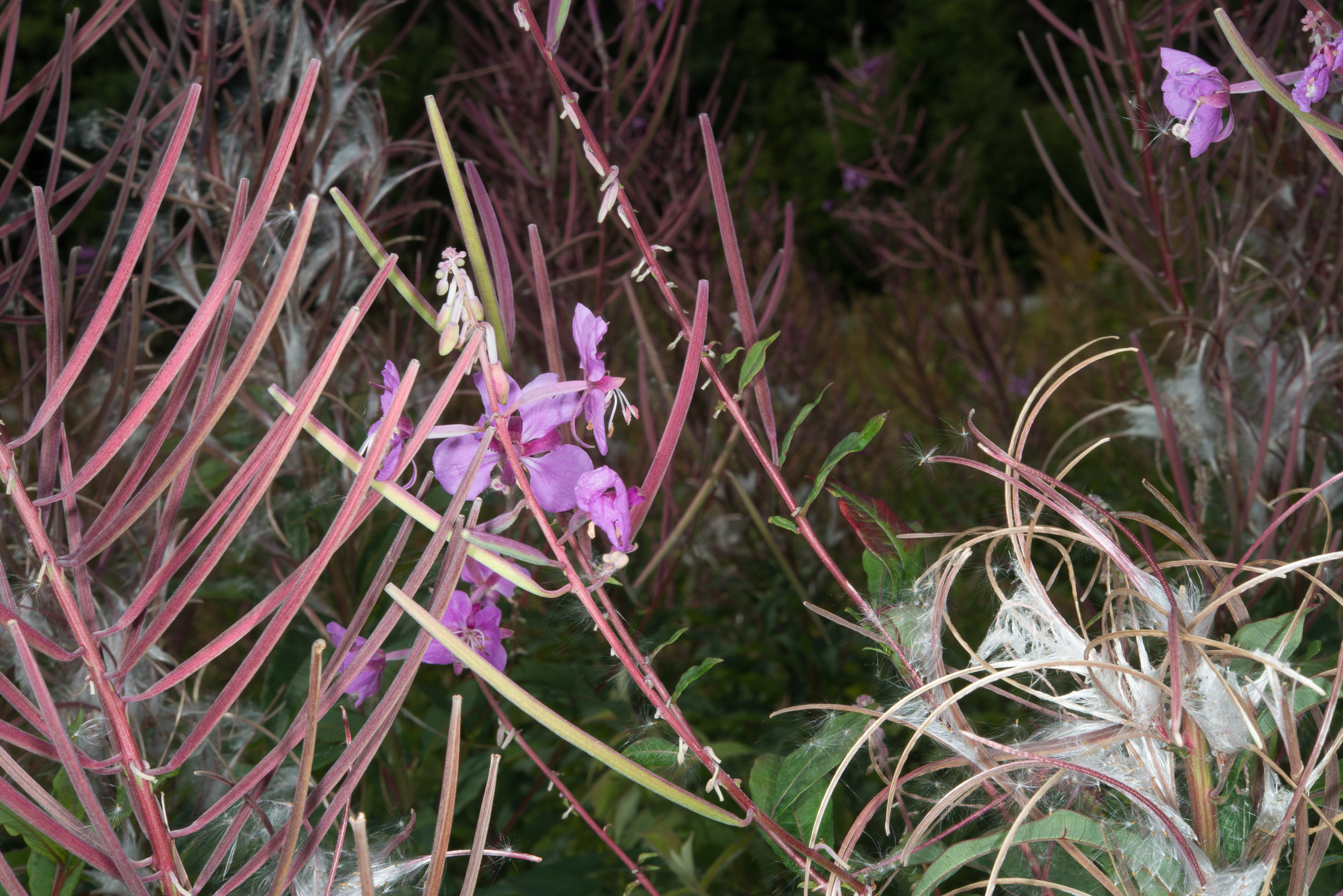
8/16/2014 · White Mountains, New Hampshire · ≈ 12 × 8″ (31 × 21 cm) 
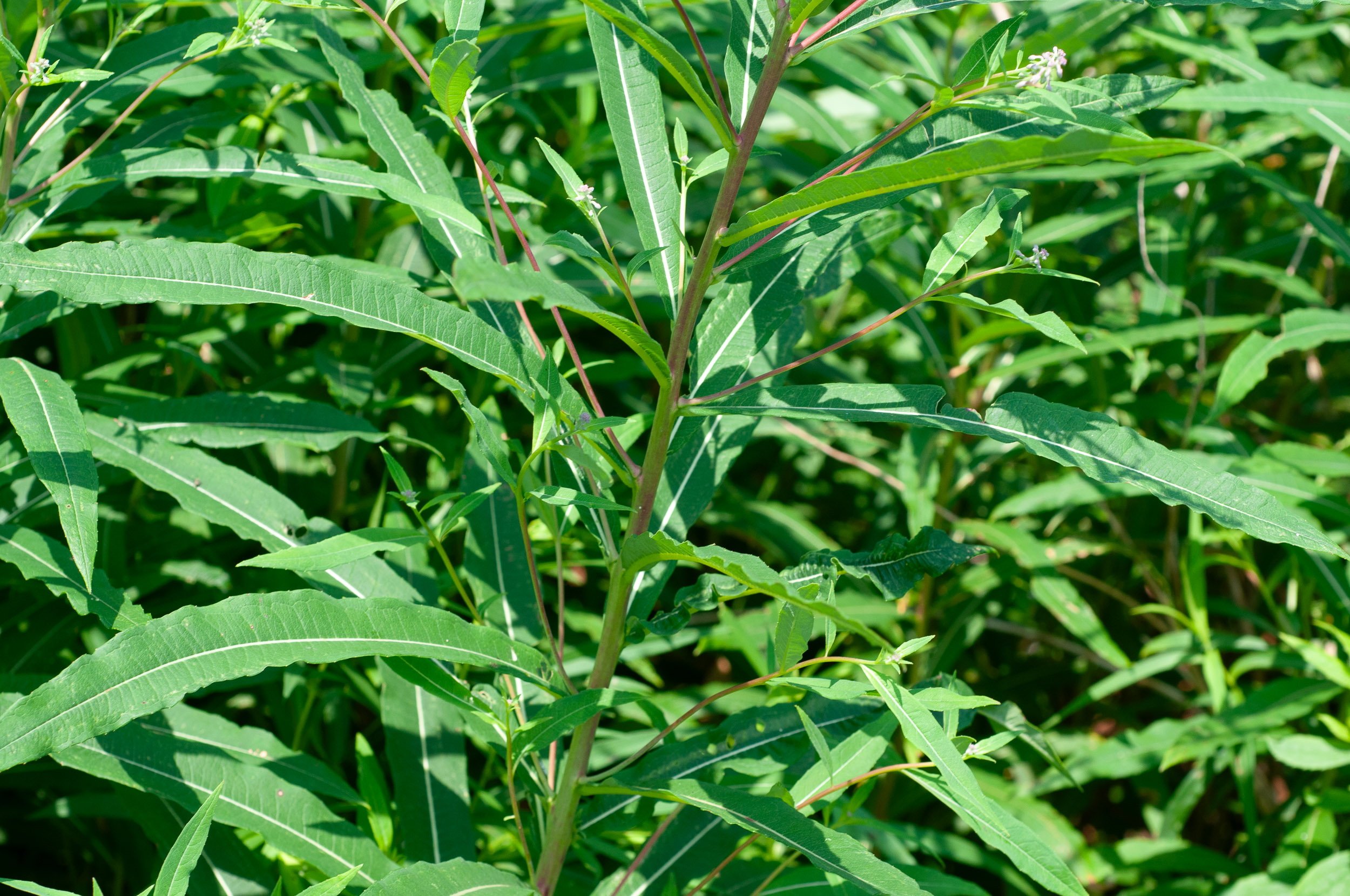
7/15/2012 · Fort Point State Park, Stockton Springs, Maine · ≈ 17 × 12″ (44 × 29 cm) 
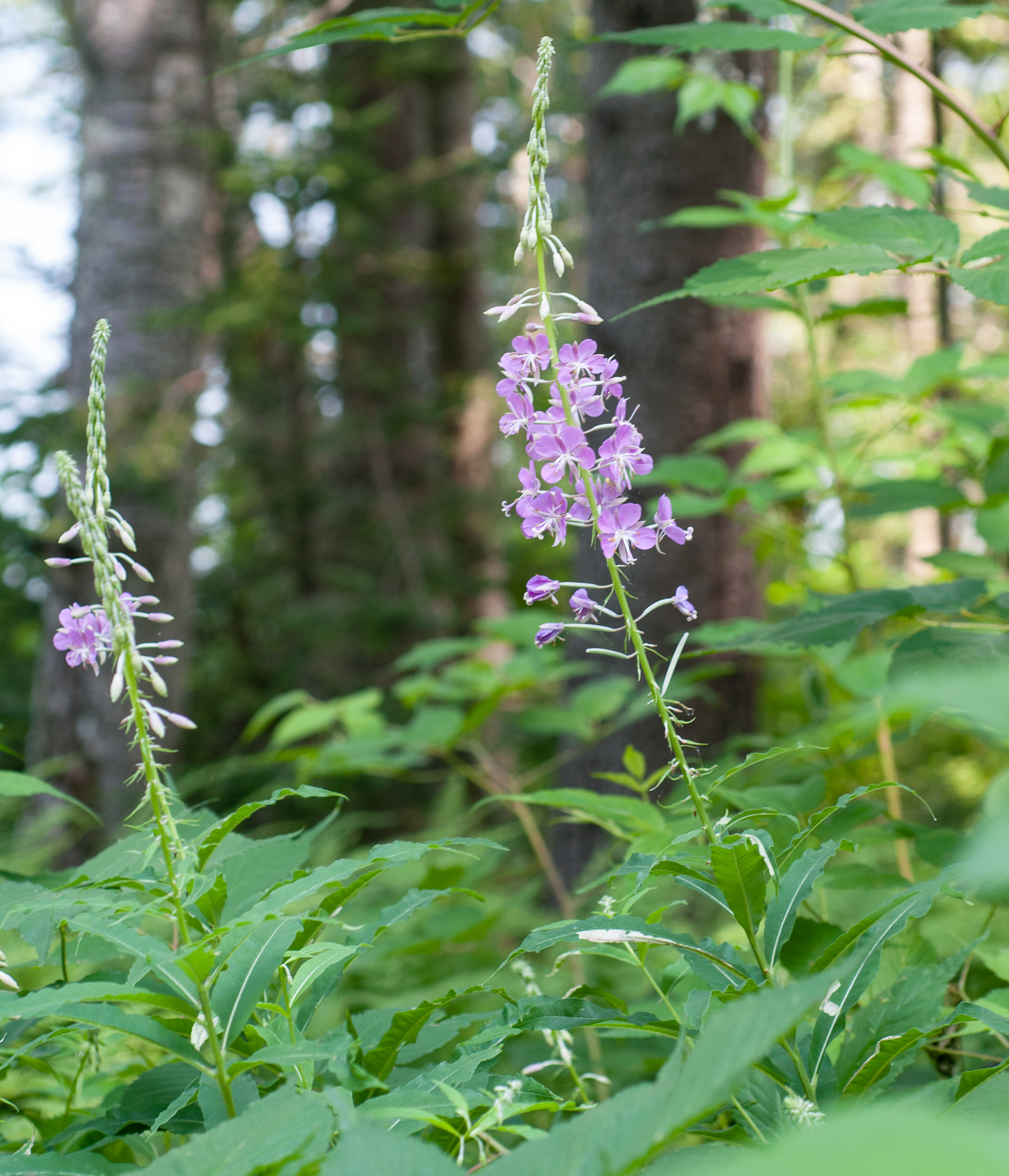
7/15/2012 · Fort Point State Park, Stockton Springs, Maine 
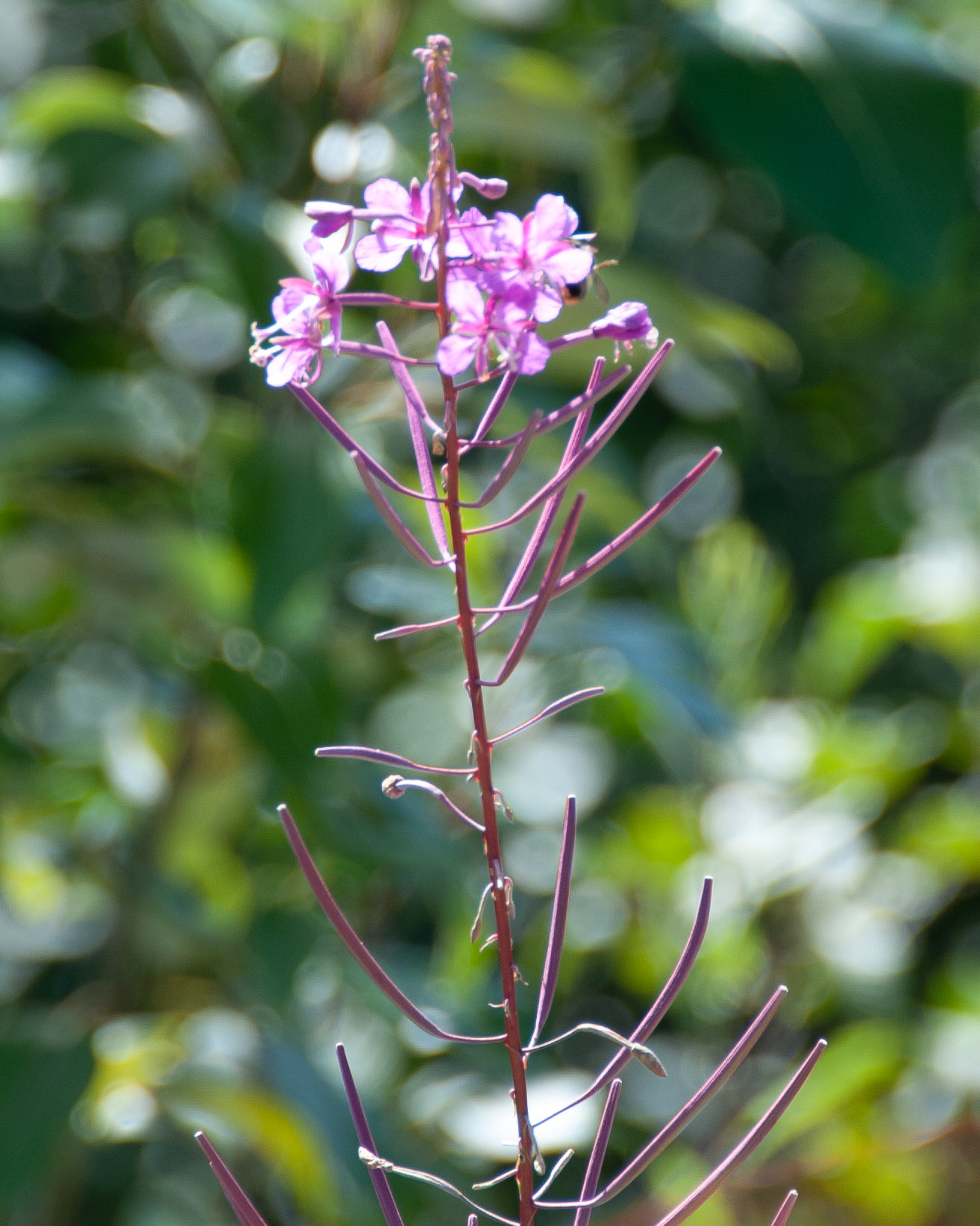
9/1/2007 · Mt. St. Helens, Washington 
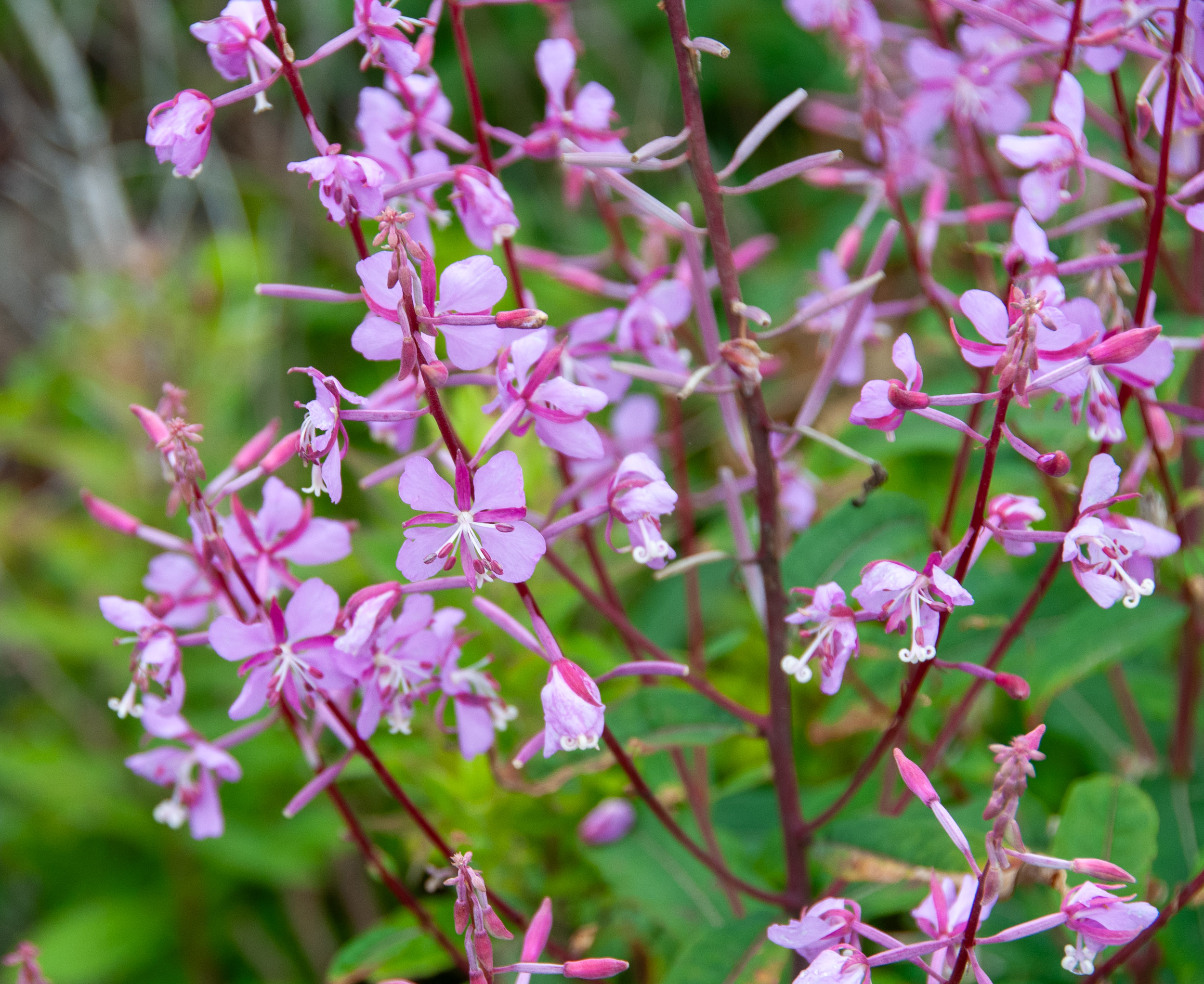
8/2/2008 · Bar Harbor, Maine · ≈ 7 × 6″ (18 × 14 cm) 
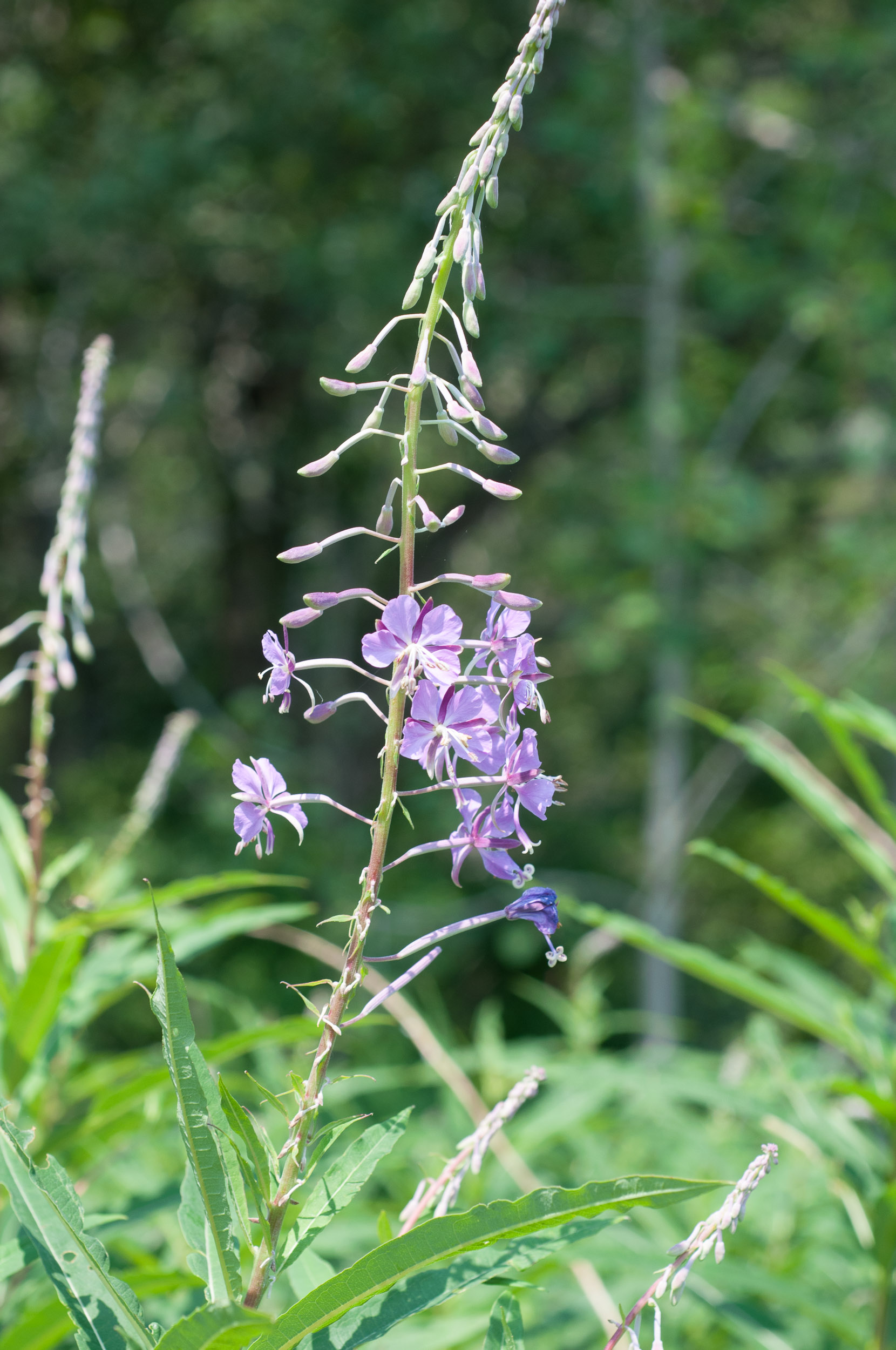
7/15/2012 · Fort Point State Park, Stockton Springs, Maine · ≈ 9 × 14″ (23 × 35 cm) 
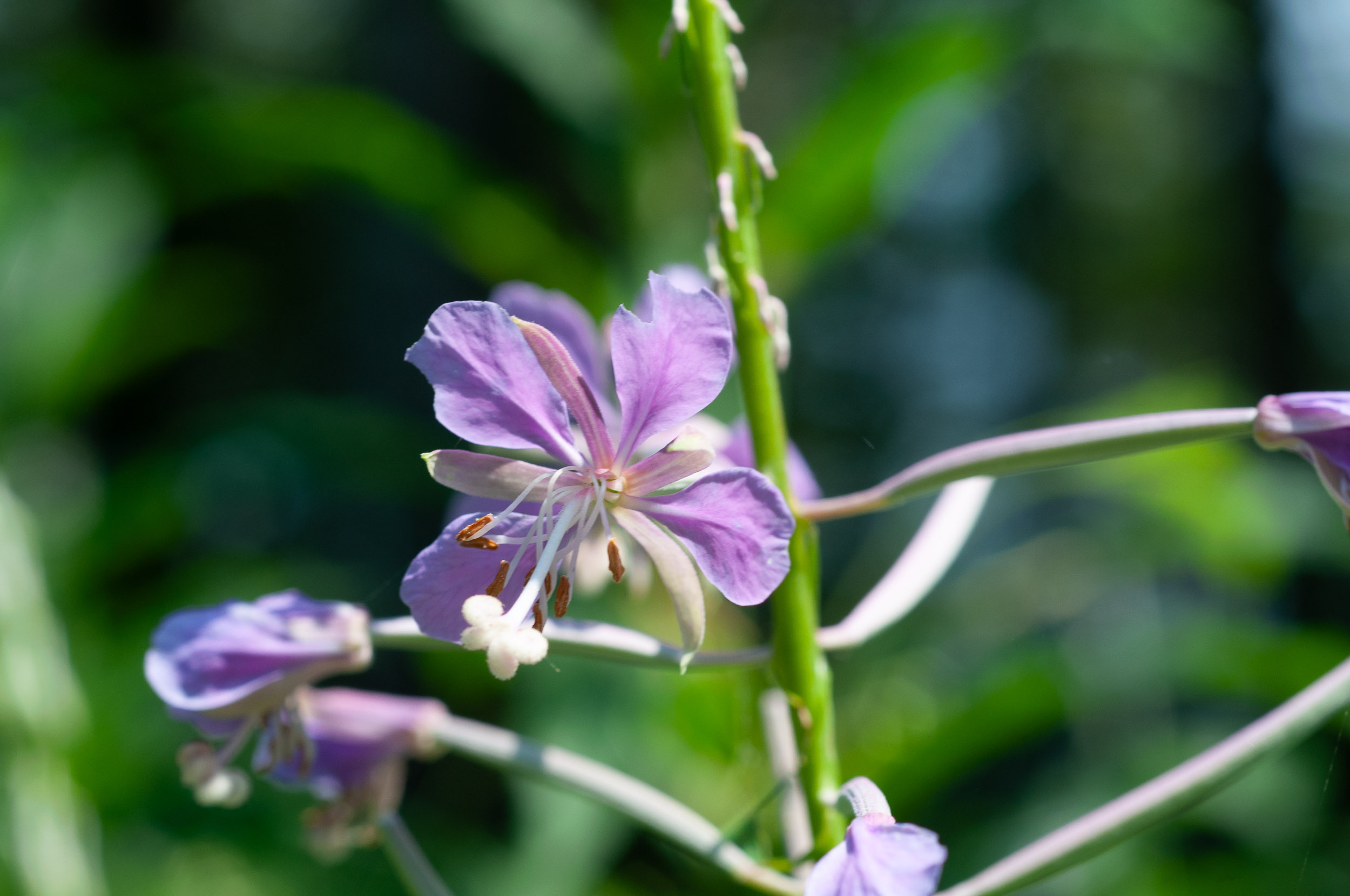
7/15/2012 · Fort Point State Park, Stockton Springs, Maine · ≈ 5 × 3½″ (13 × 9.2 cm) 
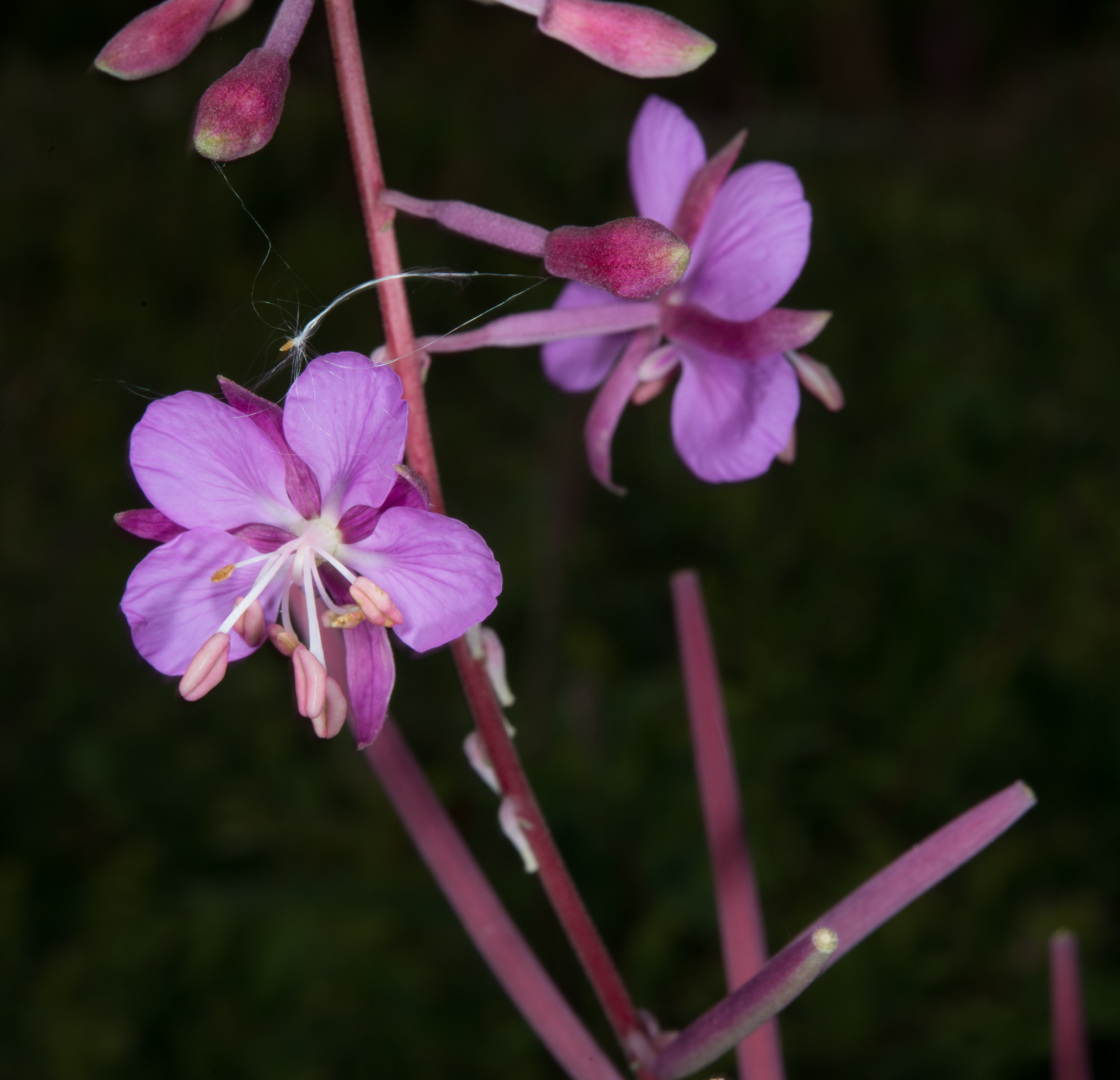
8/16/2014 · White Mountains, New Hampshire · ≈ 4 × 4″ (10 × 10 cm) 

8/25/2007 · Tillamook State Forest, Oregon 
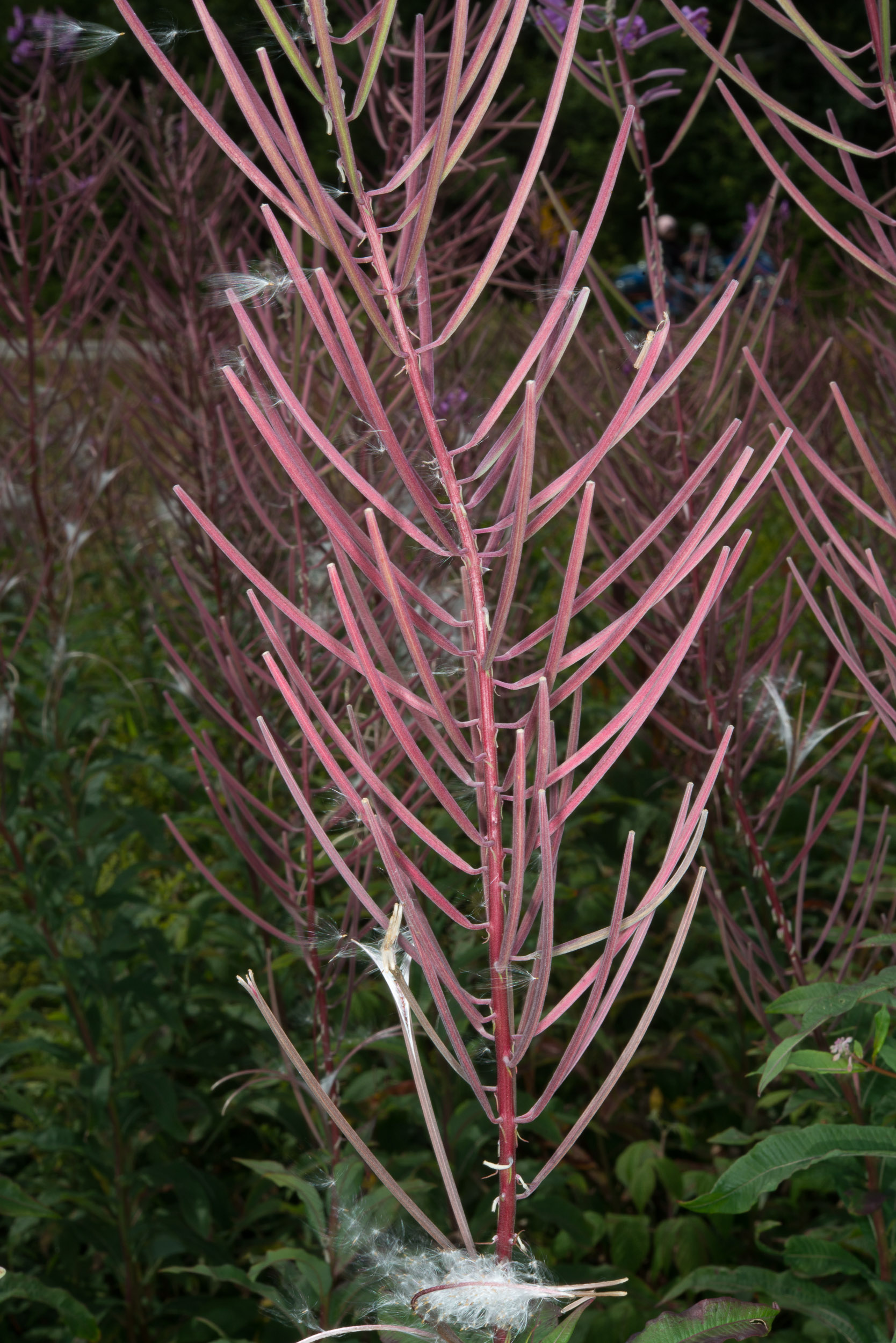
8/16/2014 · White Mountains, New Hampshire · ≈ 10 × 15″ (25 × 37 cm) 

7/15/2012 · Fort Point State Park, Stockton Springs, Maine · ≈ 6 × 9″ (15 × 23 cm) 
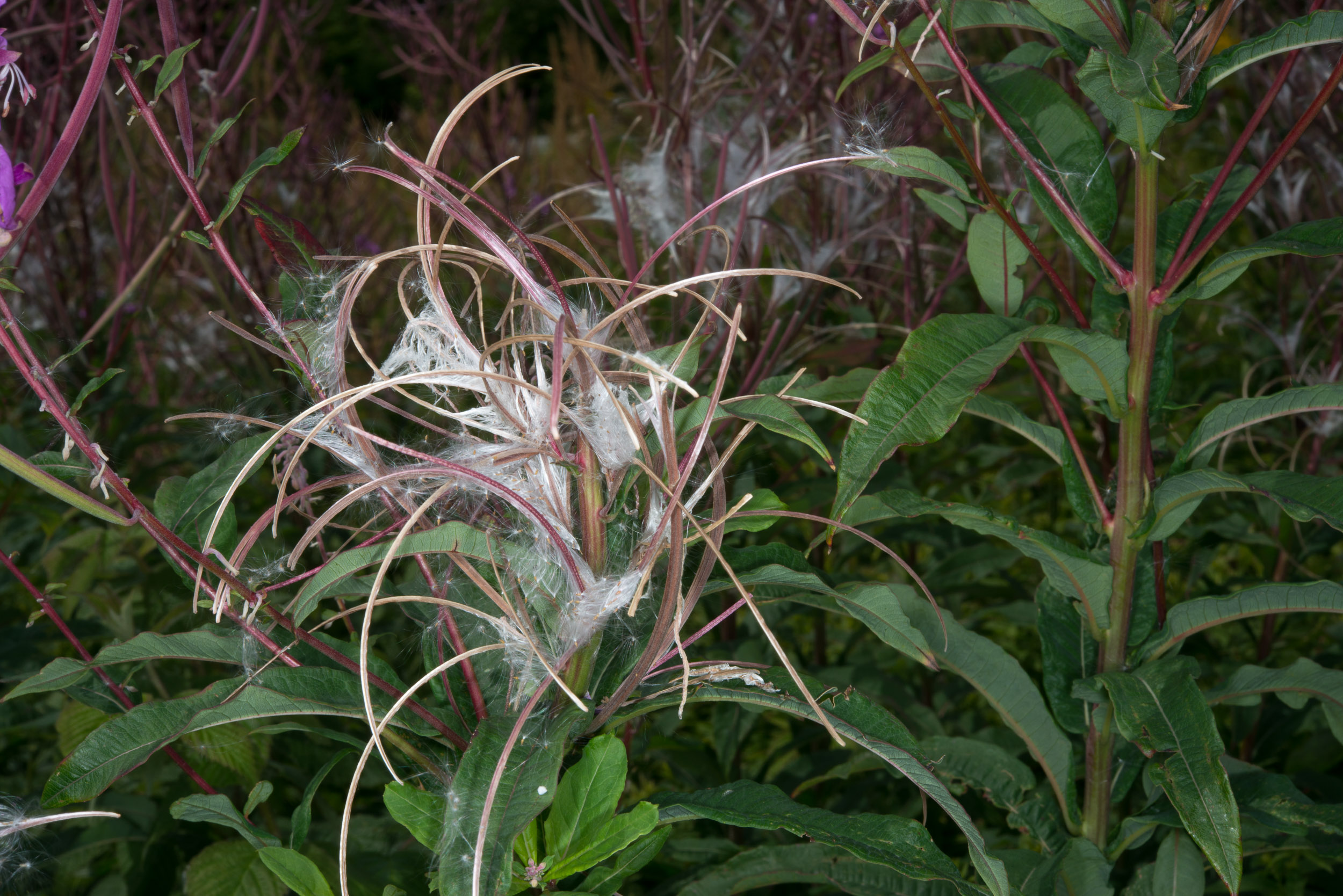
8/16/2014 · White Mountains, New Hampshire · ≈ 12 × 8″ (31 × 21 cm) 
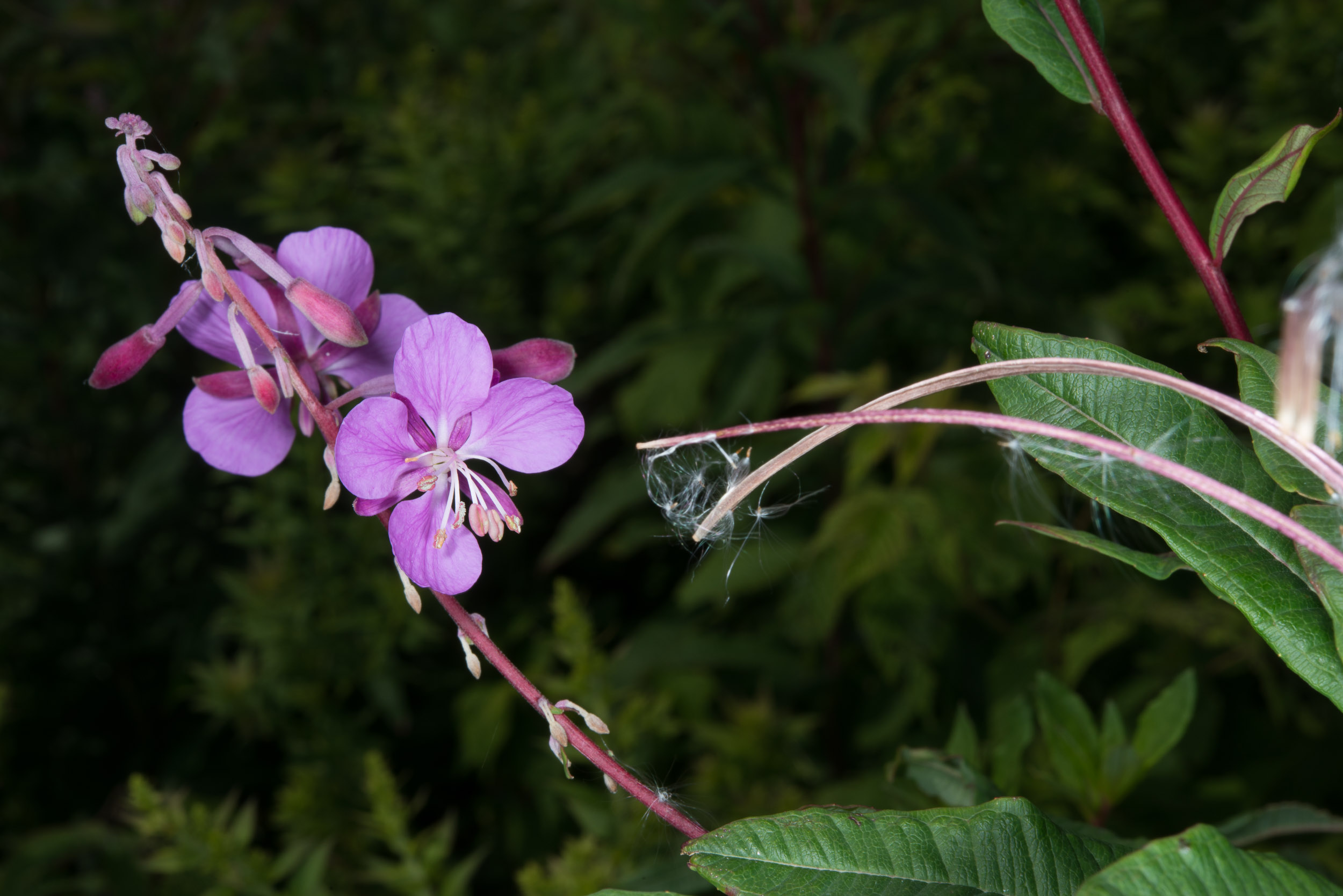
8/16/2014 · White Mountains, New Hampshire · ≈ 8 × 5″ (19 × 12 cm) 
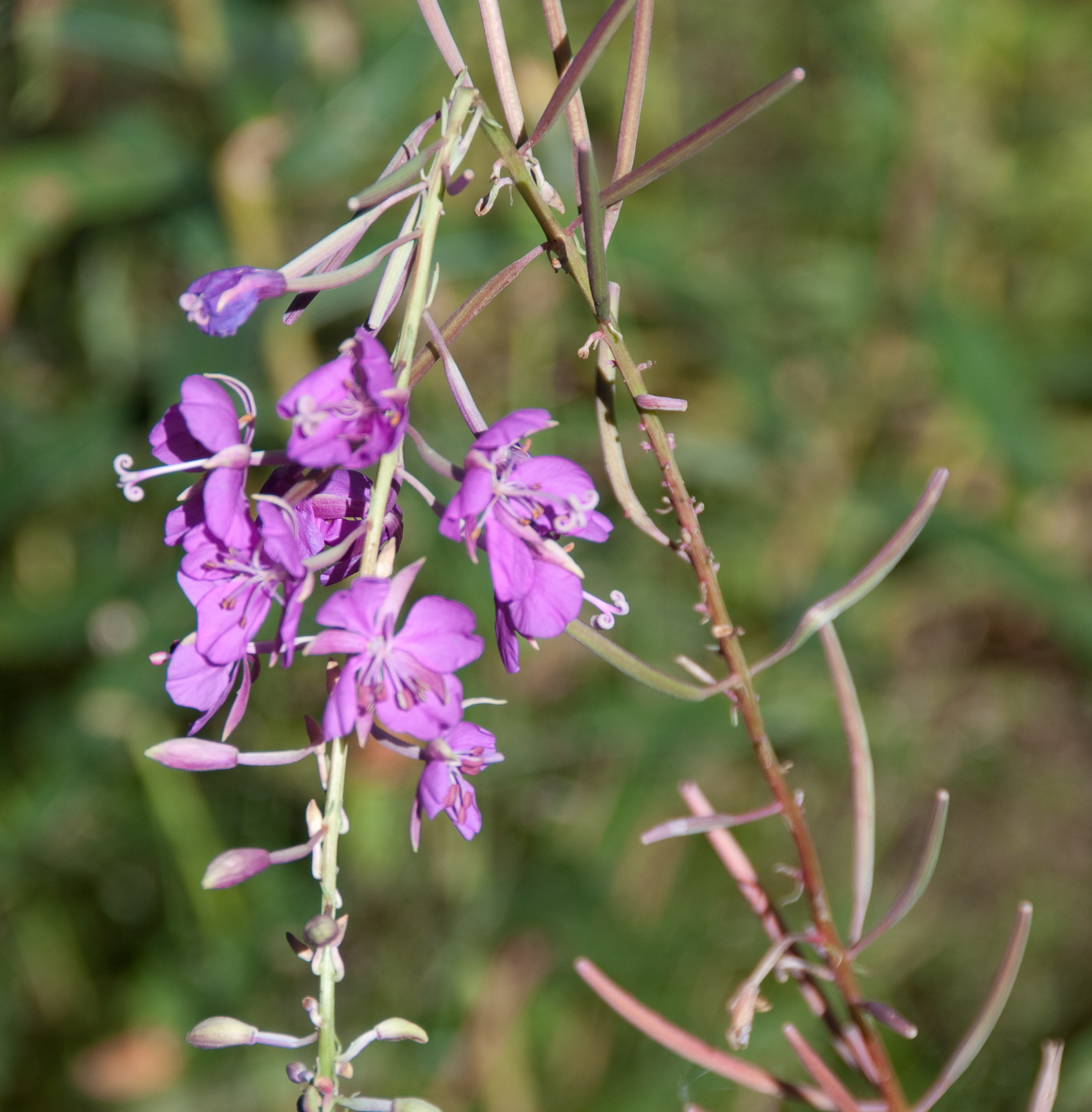
9/2/2007 · Oregon 
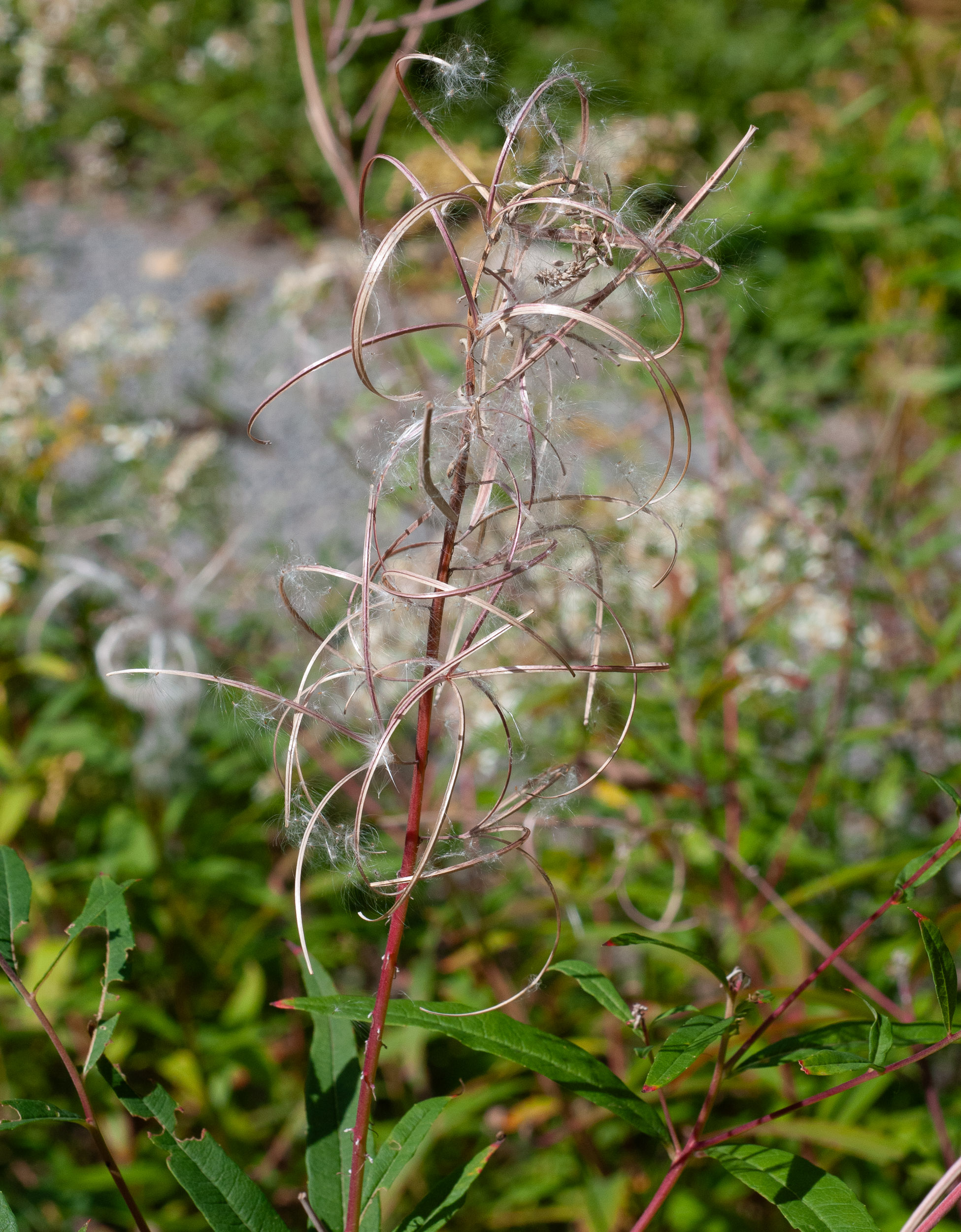
9/20/2009 · Wild Gardens of Acadia, Acadia National Park, Bar Harbor, Maine · ≈ 8 × 10″ (20 × 26 cm) 
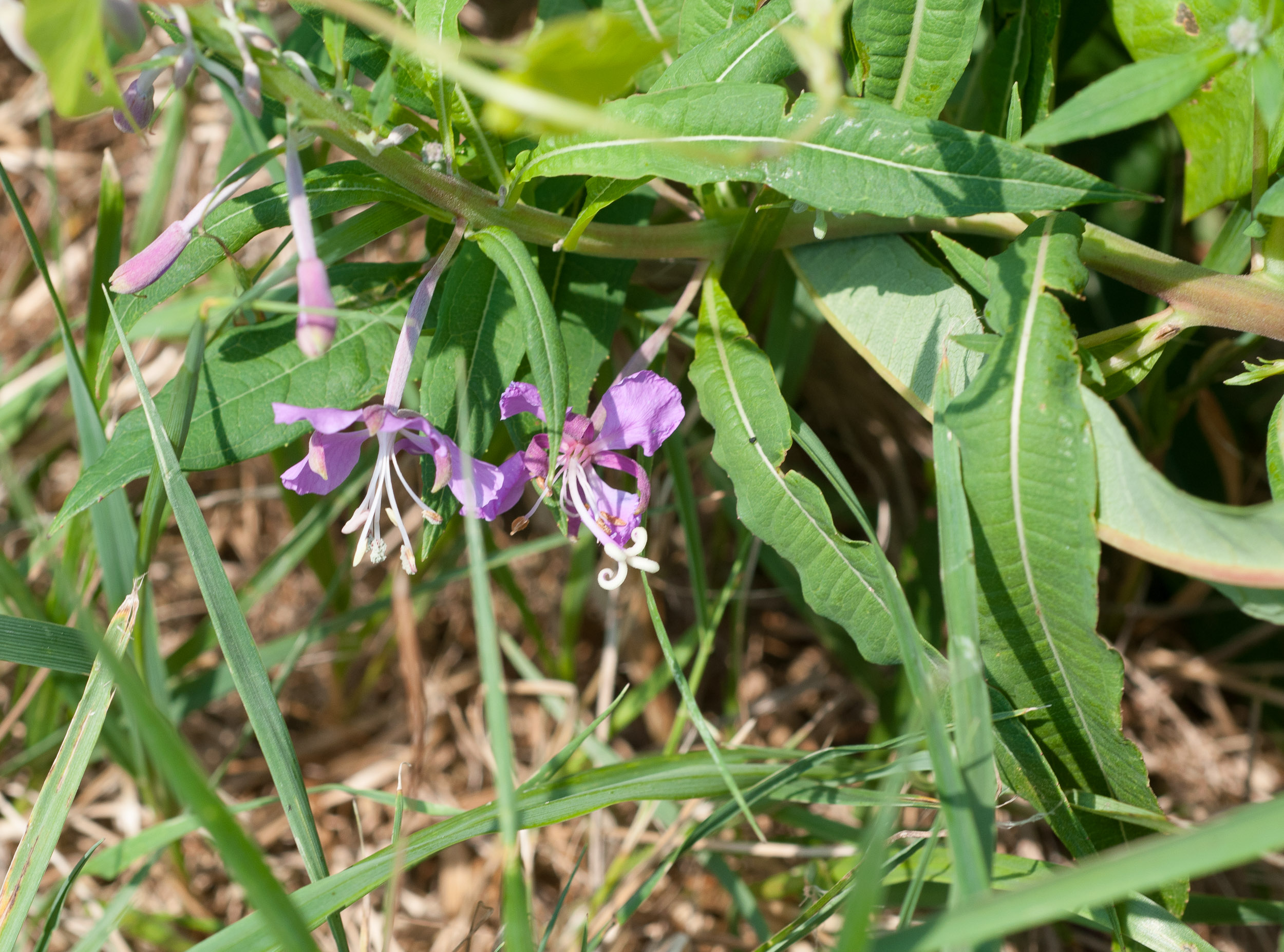
7/15/2012 · Fort Point State Park, Stockton Springs, Maine · ≈ 6 × 4½″ (15 × 11 cm) 
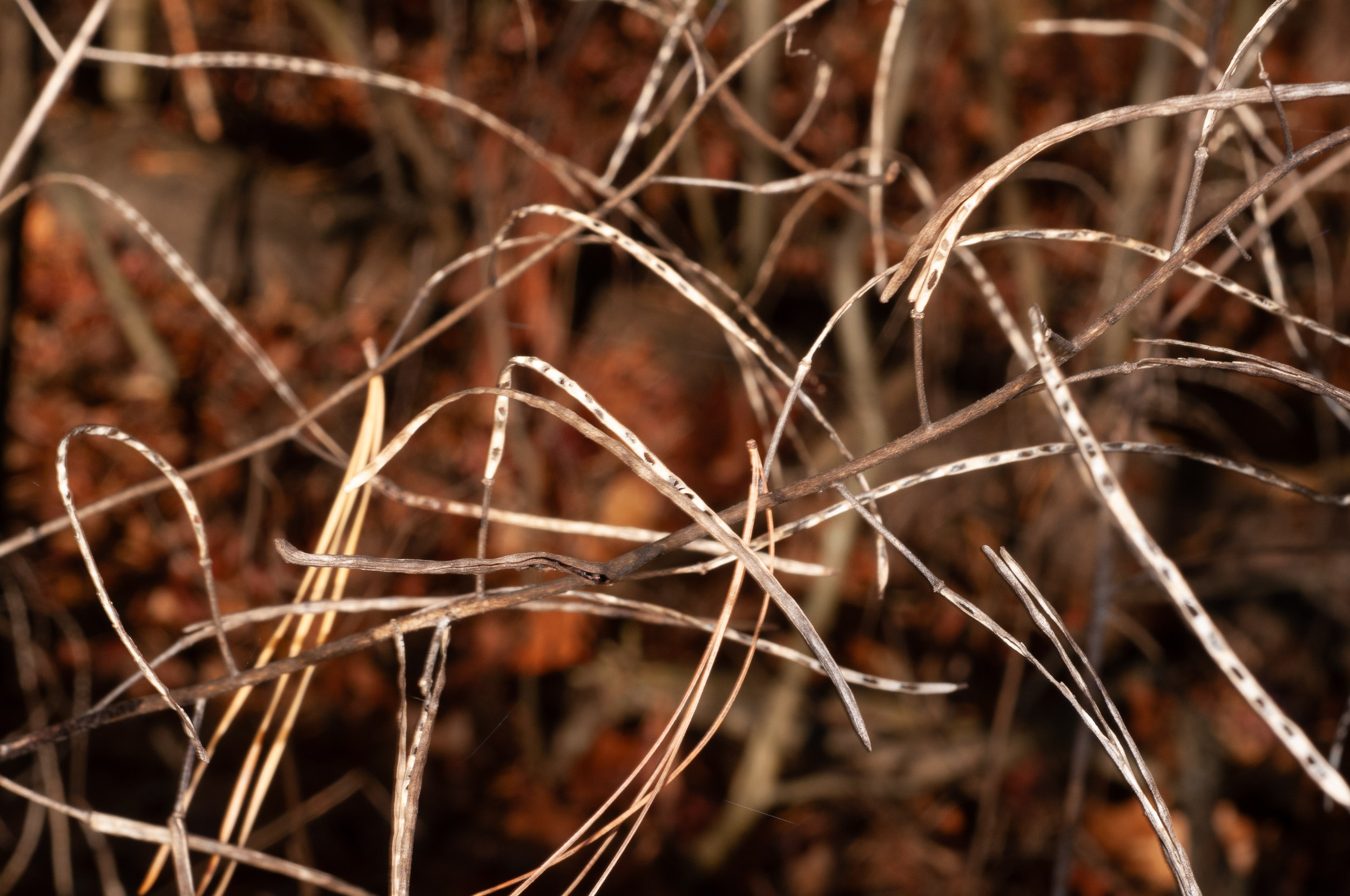
11/18/2010 · Nashua River Rail Trail, Pepperell, Massachusetts · ≈ 9 × 6″ (22 × 14 cm) 

9/20/2009 · Wild Gardens of Acadia, Acadia National Park, Bar Harbor, Maine · ≈ 10 × 14″ (26 × 34 cm) 

9/27/2013 · Gordon and Kathy’s, Prospect, Maine · ≈ 11 × 7″ (28 × 18 cm) 
| Kingdom | Plantae | Plants, but not fungi, lichens, or algae (from Stearn's Botanical Latin) |
| Subkingdom | Tracheobionta | Vascular plants—plants with a “circulatory system” for delivering water and nutrients |
| Division | Magnoliophyta | Flowering plants, also known as angiosperms |
| Class | Magnoliopsida | Dicotyledons—plants with two initial seed leaves |
| Subclass | Rosidae | Roses, legumes, proteas, dogwoods, hydrangeas, mistletoes, euphorbias, grapes, many more |
| Order | Myrtales | Includes myrtles, leadwoods, loosestrifes, pomegranates, evening primroses, many others |
| Family | Onagraceae | Willowherb/evening primrose family |
| Genus | Chamerion | From the Greek chamai, “dwarf,” and nerion, “oleander,” this is apparently a name that has replaced the invalid name Chamaenerion published by Seguier in 1754 |
| Species | angustifolium | Having narrow foliage |
Chamerion angustifolium description by Thomas H. Kent, not updated.

© FloraFinder.org. All rights reserved.