Carya glabra (Mill.) Sweet
Pignut hickory
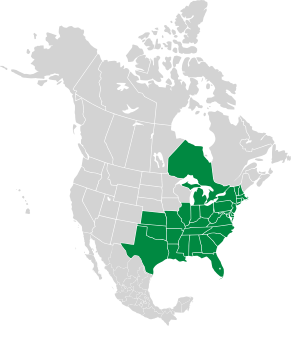
Pignut hickory is common, but not abundant, in forests in the eastern United States.
Plants: Pignut hickory is up to 60′ (18 m) high and 35′ (10 m) wide.
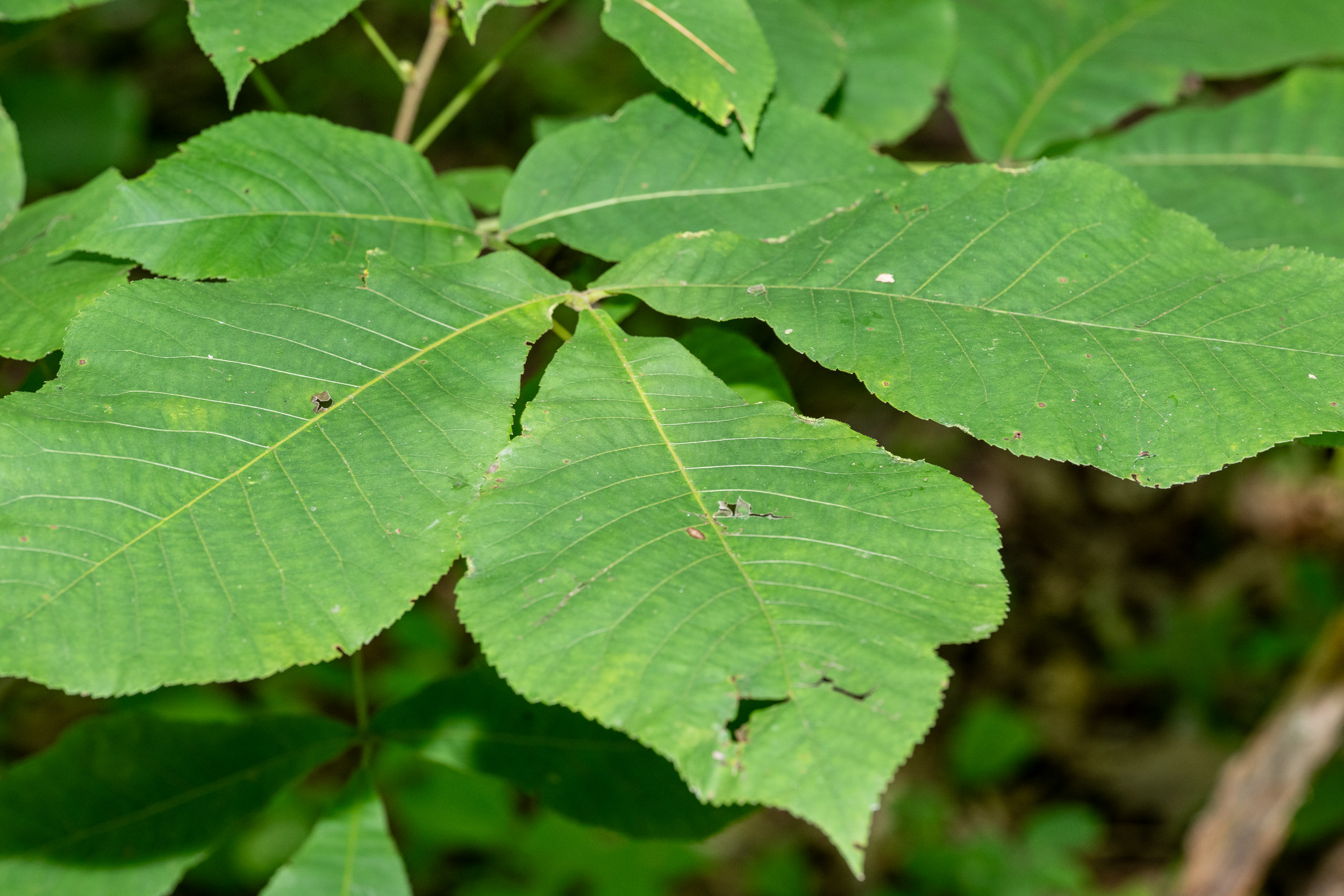
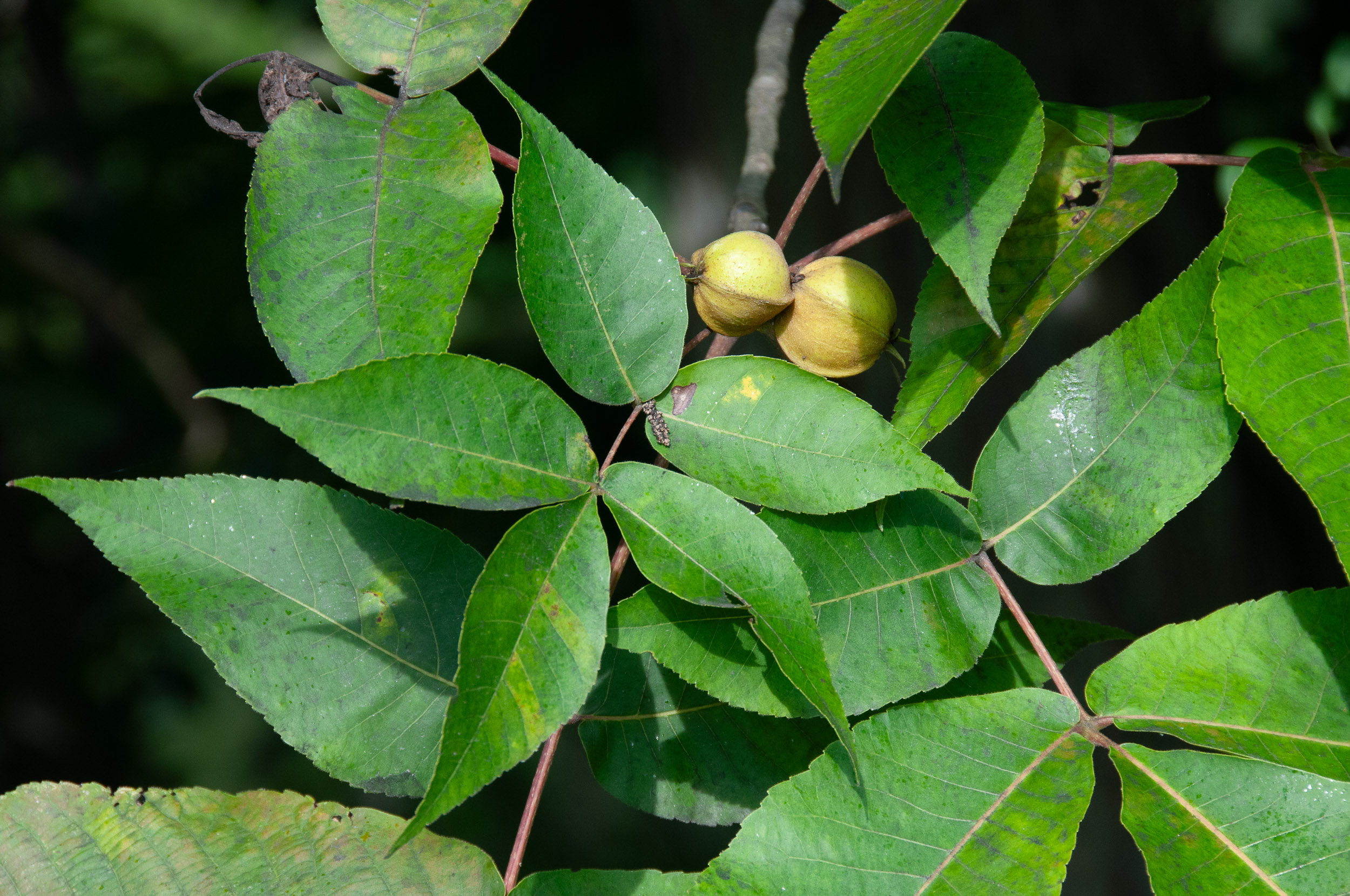
Leaves: Shiny green, bright yellow in fall, in groups of 5 or 7 leaflets.
Flowers: Male flowers are catkins
2–3″ (5–7.6 cm) long, hanging in groups of 3. Female flowers are short, clustering at the ends of branches.
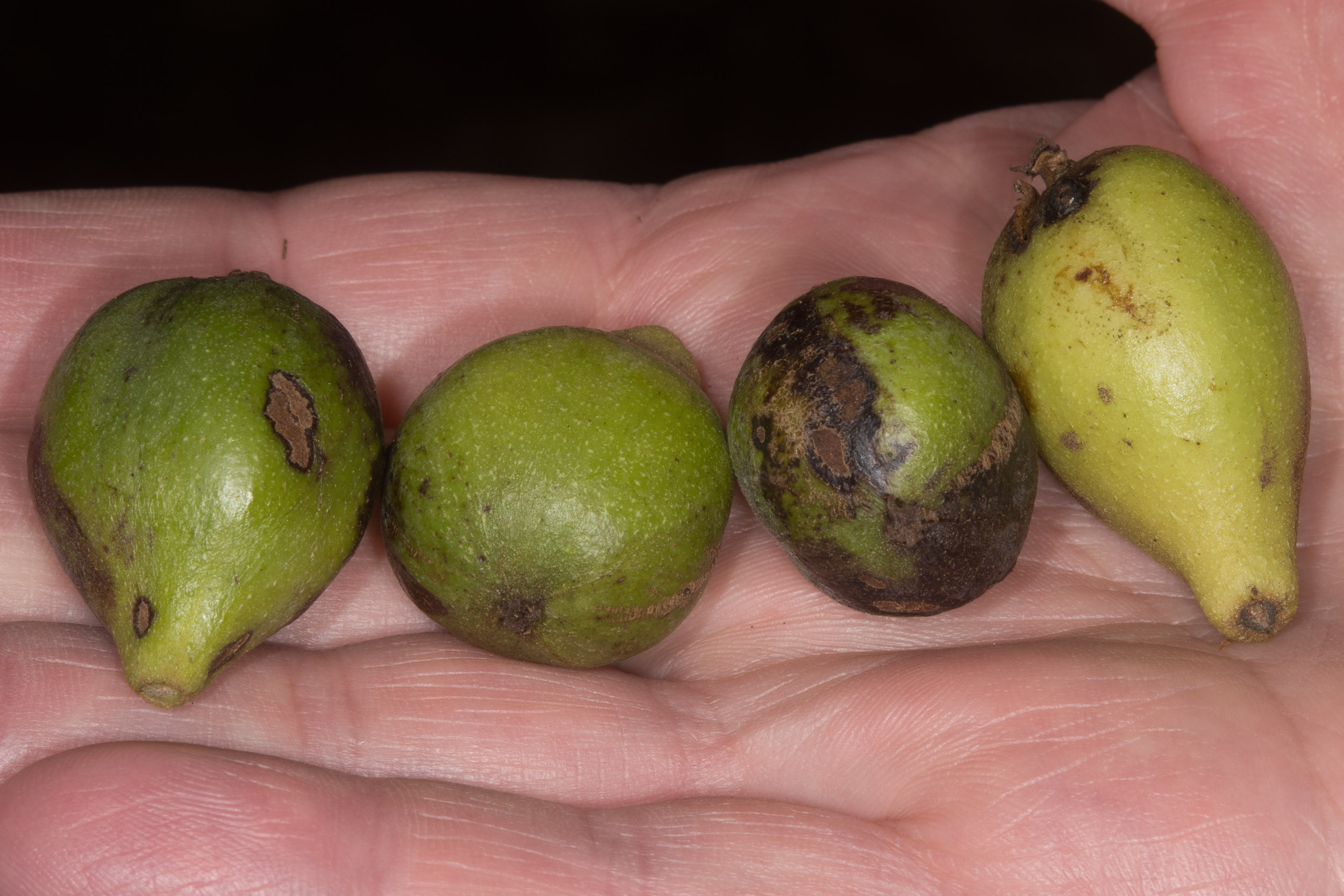
Fruits: Seeds are 1–2″ (2.5–5 cm) in diameter, enclosed in thin husks. They may be oval or pear-shaped.
Habitats: Mesic to moist soils on hillsides and
ridges.
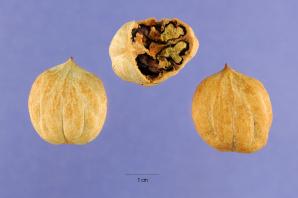
By Steve Hurst @ USDA-NRCS PLANTS Database. 
Online References:
References:
Carya glabra (Mill.) Sweet var. glabra
Carya glabra (Mill.) Sweet var. hirsuta (Ashe) Ashe
Carya glabra (Mill.) Sweet var. megacarpa (Sarg.) Sarg.
Carya leiodermis Sarg.
Carya magnifloridana Murrill
Carya microcarpa (Nutt.) Britton
Carya ovalis (Wangenh.) Sarg. var. hirsuta (Ashe) Sarg.
Carya ×ovalis (Wangenh.) Sarg. var. hirsuta (Ashe) B. Boivin, nom. illeg.
Carya porcina (F. Michx.) Nutt. ex Elliott
Hicoria austrina Small
Hicoria glabra (Mill.) Britton
Hicoria glabra (Mill.) Britton var. hirsuta Ashe
Juglans porcina F. Michx.
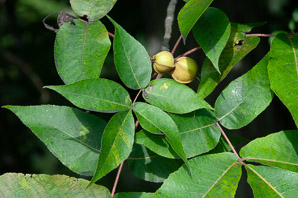
7/28/2009 · Near Nashua River Boat Ramp, Groton, Massachusetts · ≈ 10 × 7″ (26 × 17 cm)  ID is uncertain
| Kingdom | Plantae | Plants, but not fungi, lichens, or algae (from Stearn's Botanical Latin) |
| Subkingdom | Tracheobionta | Vascular plants—plants with a “circulatory system” for delivering water and nutrients |
| Division | Magnoliophyta | Flowering plants, also known as angiosperms |
| Class | Magnoliopsida | Dicotyledons—plants with two initial seed leaves |
| Subclass | Rosidae | Roses, legumes, proteas, dogwoods, hydrangeas, mistletoes, euphorbias, grapes, many more |
| Order | Fagales | Birch, she-oak, beech, walnut, bayberry, others |
| Family | Juglandaceae | Walnut family |
| Genus | Carya | Greek κάρυον, “nut” |
| Species | glabra | “Smooth or hairless” |
About plant names...
Carya glabra description by Thomas H. Kent, not updated.

© FloraFinder.org. All rights reserved.