Carex swanii (Fernald) Mack.
Swan’s sedge
Swan’s sedge is named for Charles Walter Swan, a naval surgeon and early member of the New England Botanical Club. The sedge is native to eastern North America.
|
Desperately Seeking Carex With close to 800 species in North America, and 2000 worldwide, many Carex species are difficult to identify. You might want to consult this quick guide to Carex anatomy. |
Plants: Tufts are up to 2½′ (75 cm) tall, containng both fertile and infertile shoots. Culms are three-angled, and roughly triangular in cross sectino.
Leaves: Each culm has three to five alternate leaves up to 1′ ⨉ ⅛″ (30 cm ⨉ 4 mm). The often spread sideways, but if erect, the leaves are typically taller than the inflorescence. They are finely hairy (“pubescent“).
Flowers: Inflorescences are ¾–2″ (2–6 cm) long. The terminal spike is ⅜–¾ ⨉ ⅛″ (1.1–2 cm ⨉ 4 mm). It is gynecandrous—that is, containing both male and female sections. The top of the spike is pistillate (female), and the bottom of the spike is staminate (male). The male part is an elongated cone at the base of the female part. There are one to three more entirely pistillate lateral spikes below, each ⅛–½ ⨉ 1/16–⅛″ (5–15 ⨉ 2–4 mm). The perigynia on the pistillate spikes are tightly packed and densely hairy, though it takes a hand lens to see this. Carpellate scales are as long as the perigynia, often tipped by awns. Flowers appear from May to June.
Fruits: Achenes are 1/32–1/16″ (1.4–1.8 mm) long.
Habitats: Dry woodlands, thickets, swampy woods, and forest edges. It tolerates drier conditions than many sedges, such as rocky upland woodlands, wooded slopes, upland savannas, and sandy savannas. It is often found where other ground vegetation is sparse, and in oak forests, at elevations below 3281′ (1 km).
Online References:
References:
Carex virescens Muhl. ex Willd. var. swanii Fernald
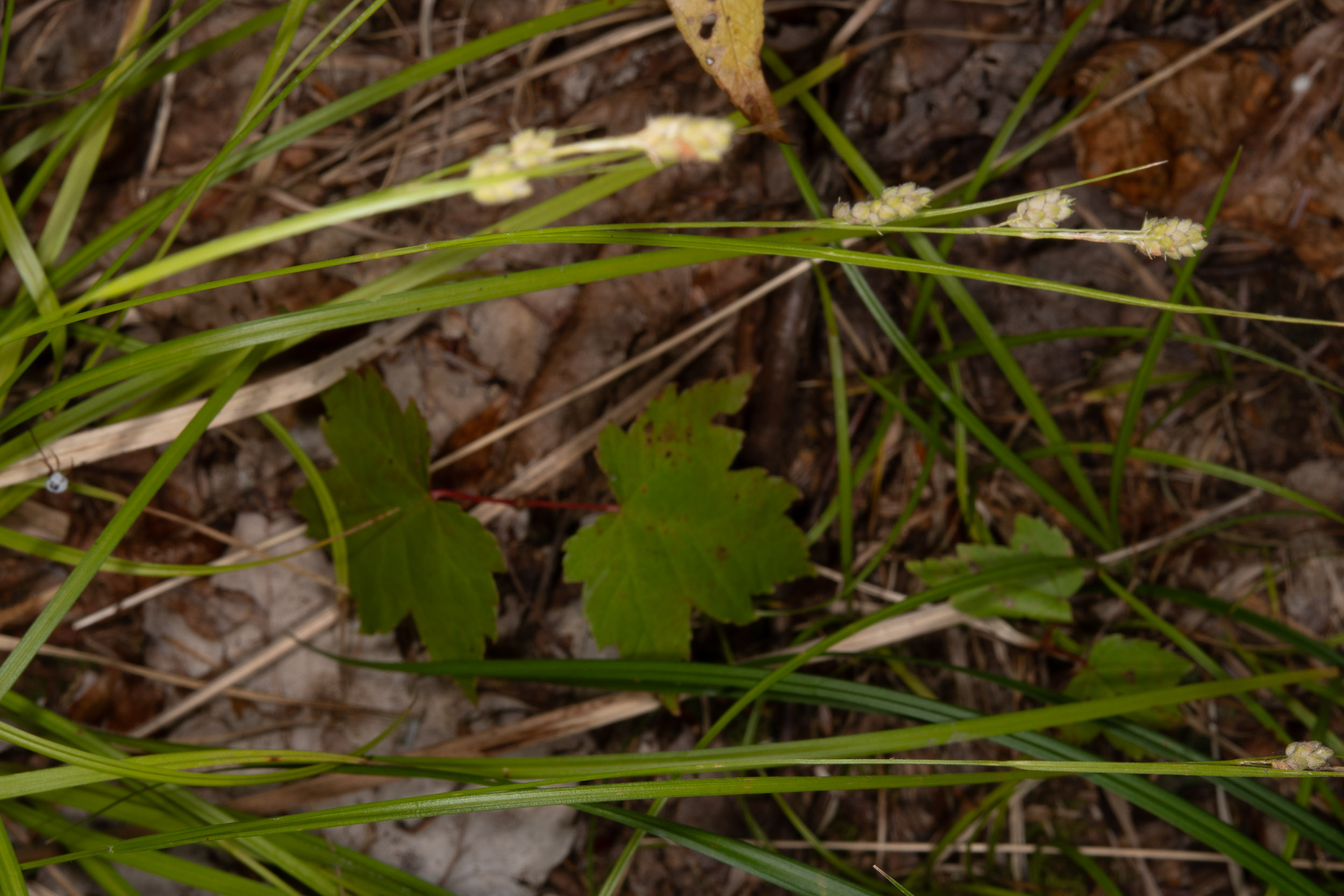
8/28/2020 · Jack’s and Litchfield Trails, Chase Reserve, Brunswick, Maine · ≈ 6 × 4″ (16 × 11 cm) 
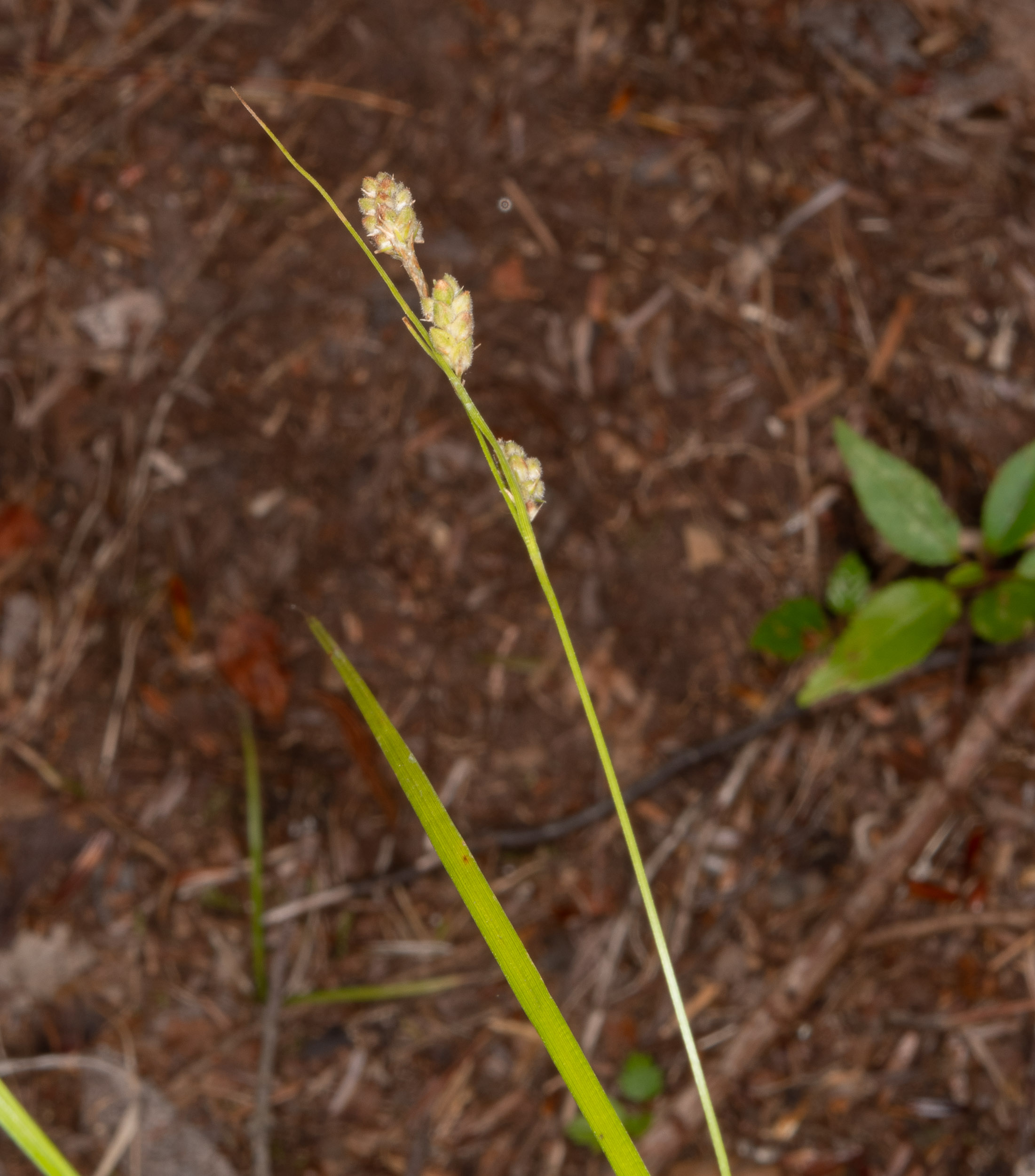
8/28/2020 · Jack’s and Litchfield Trails, Chase Reserve, Brunswick, Maine · ≈ 3 × 3½″ (8.5 × 9.7 cm) 
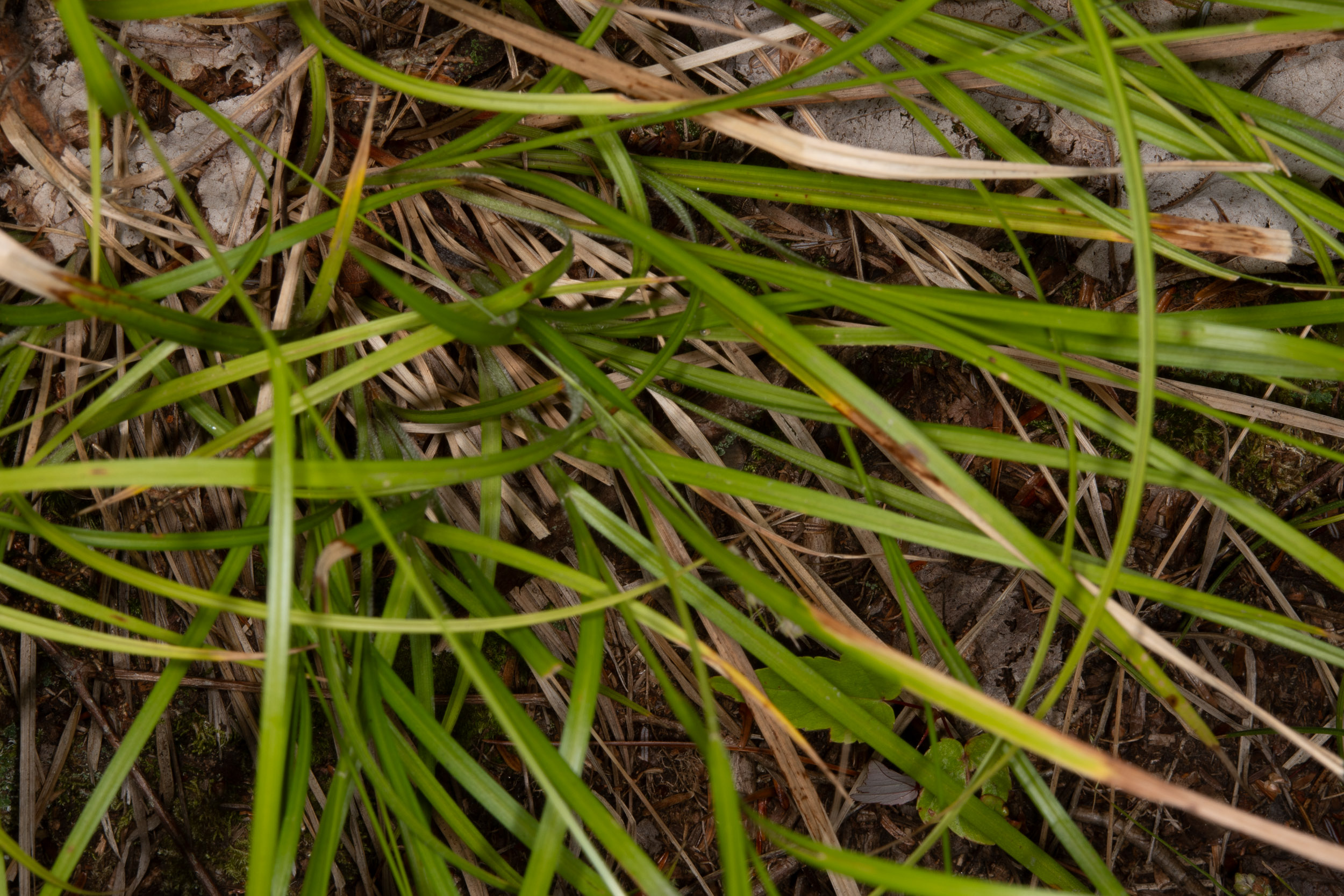
8/28/2020 · Jack’s and Litchfield Trails, Chase Reserve, Brunswick, Maine · ≈ 8 × 5″ (20 × 13 cm) 
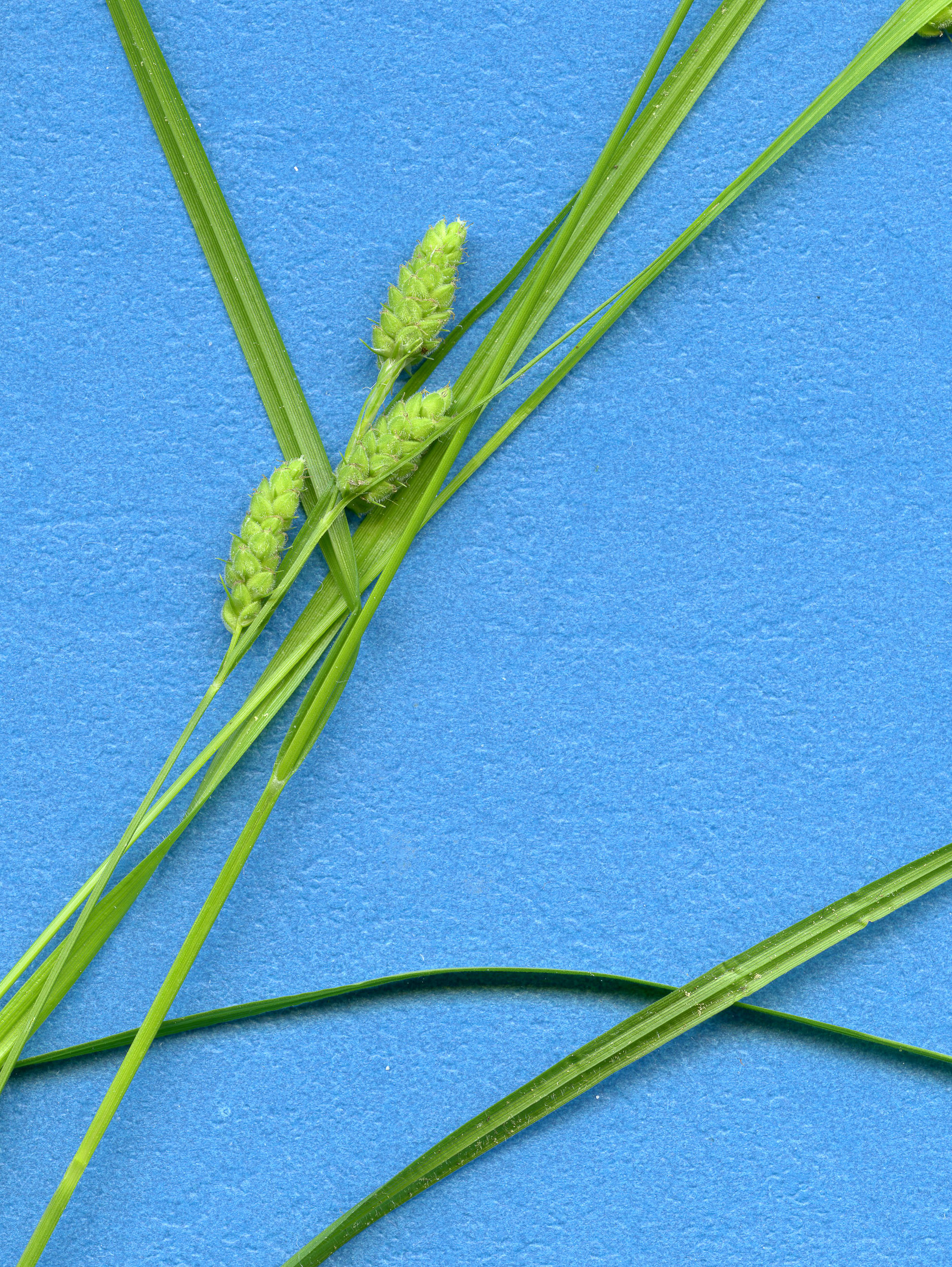
About 3" x 4". · 1/11/2026 · Townsend State Forest, Townsend, Massachusetts 
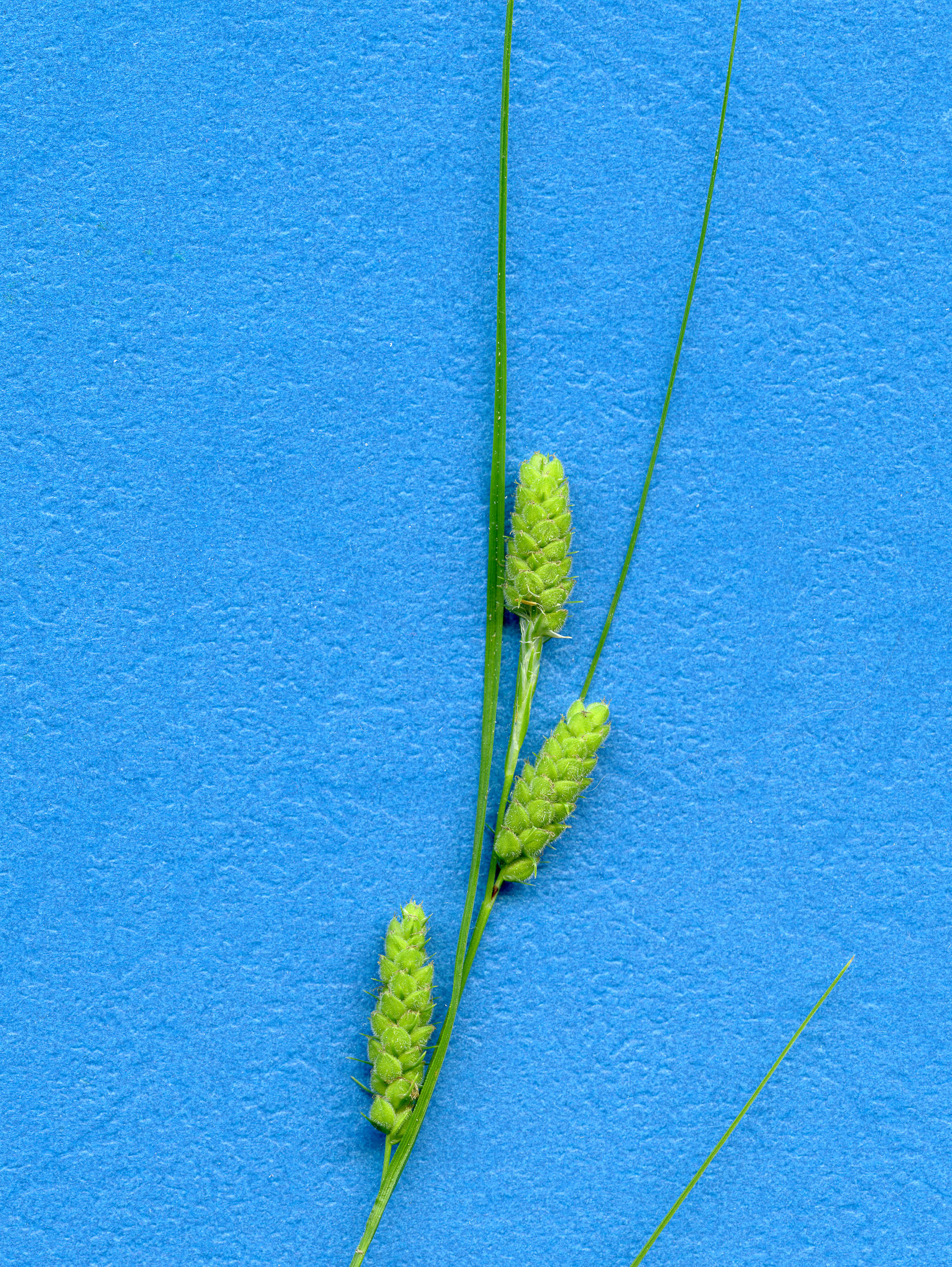
About 3" x 4". · 1/11/2026 · Townsend State Forest, Townsend, Massachusetts 

About 6" x 8". · 1/11/2026 · Townsend State Forest, Townsend, Massachusetts 
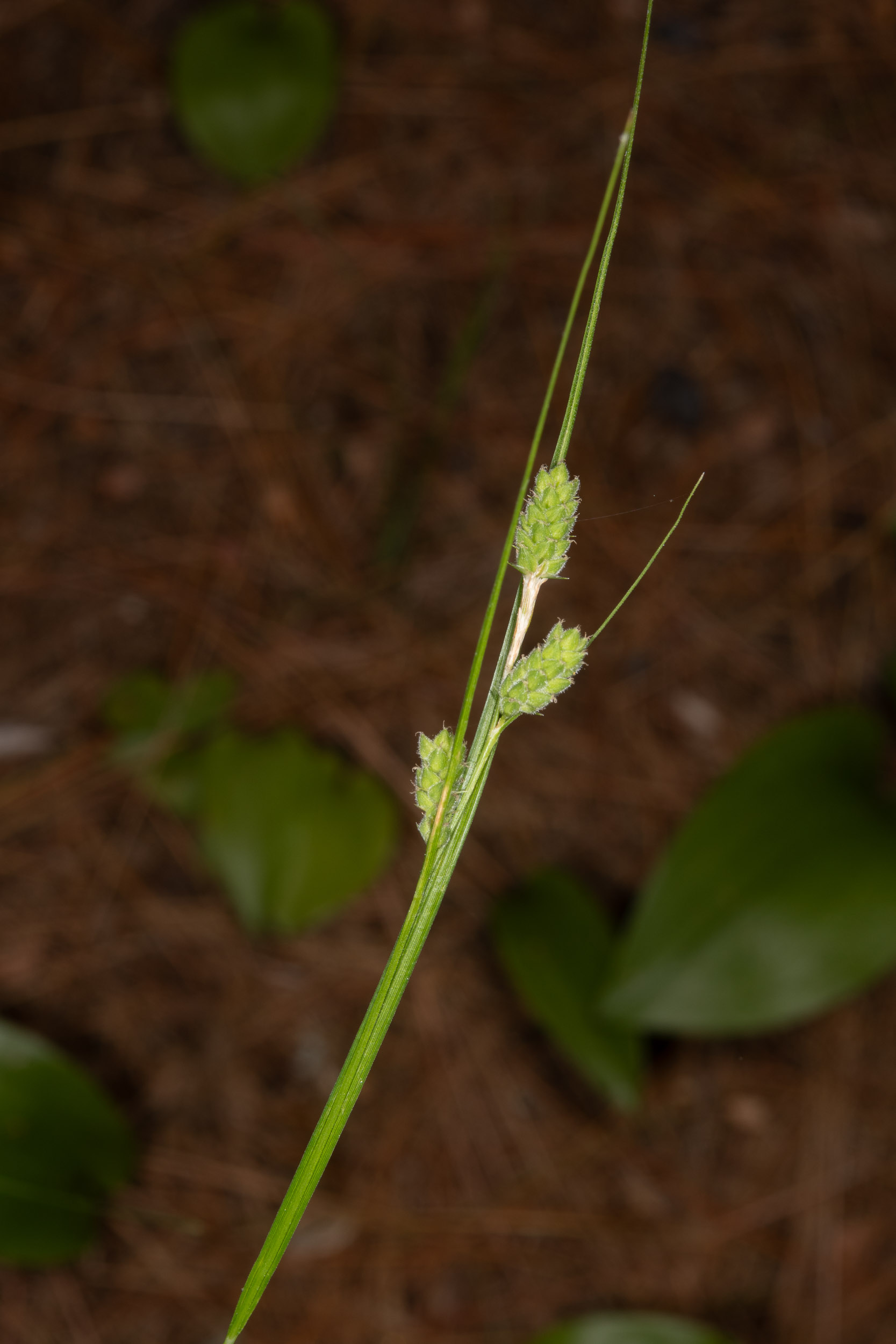
6/21/2017 · Pearl Hill State Park, Townsend, Massachusetts · ≈ 3½ × 5″ (8.7 × 13 cm) 

About 1.5" x 2". · 1/12/2026 · Townsend State Forest, Townsend, Massachusetts 
| Kingdom | Plantae | Plants, but not fungi, lichens, or algae (from Stearn's Botanical Latin) |
| Subkingdom | Tracheobionta | Vascular plants—plants with a “circulatory system” for delivering water and nutrients |
| Division | Magnoliophyta | Flowering plants, also known as angiosperms |
| Class | Liliopsida | Monocots (plants with a single seed leaf); includes the lily family |
| Subclass | Commelinidae | Dayflowers and spiderworts, and several others |
| Order | Cyperales | Flowering plants including grasses |
| Family | Cyperaceae | Sedge family |
| Genus | Carex | The “true” sedges |
| Species | swanii | For Charles Walter Swan (1838-1921), a naval surgeon and early member of the New England Botanical Club |
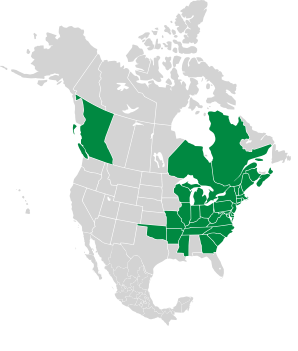
Carex swanii description by Thomas H. Kent, not updated.

© FloraFinder.org. All rights reserved.