Carex L.
Sedge
With up to 2000 species worldwide, many members of the Carex genus are devilishly difficult to distinguish. They resemble grasses and rushes, and have grasslike leaves. The reproductive structures generally look quite striking, unlike most grasses and flowers. They may appear as long thin columns, or spiky “corncobs,” or compact blobs with sharp-edged protuberances—even “cotton balls.” If you get really interested in sedges, you’ll need to master some jargon, below.
(Pending permission to use artwork...)
Each inflorescence—the flowers—tops a stem called a culm. The stem is partially wrapped in a sheath. It is often roughly triangular in cross section (three-angled or trigonous). You can feel this easily by rolling the stem between your fingers.
Carex inflorescences have both staminate (male) and pistillate (female) spikes. (They do not self-fertilize though.) Usually one or more staminate spikes occur at the top, with one or several pistillate spikes below. Often the spikes have a specialized leaf called a bract below the spike. The size and shape of any bracts is an identifying feature.
Staminate spikes have scales, but they are not often conspicuous enough to be described. Pistillate spikes, also called carpellate spikes, are comprised of groups of perigynia, often teardrop- or bag-shaped structures within which the seeds (achenes) develop. The perigynia have carpellate scales, and sometimes awns (pointed tips). Both male and female spikes produce tiny florets, but these typically appear for a short time, so they usually aren’t very helpful for identification.

An example of unusually large perigynia, from Carex intumescens. The tear-shaped structures contain the developing achenes. 
The size, shape, stiffness, and cross-sectional appearance of the grasslike leaves also help to identify species. The leaves may emerge from the base (basal), or further up the stems. Ligules, points where the leaves depart from the stem, may also be helpful. In some species, the male and female spikes are squished together, or even single spikes have both male and female regions (gynandrous or androgynous).
Online References:
References:
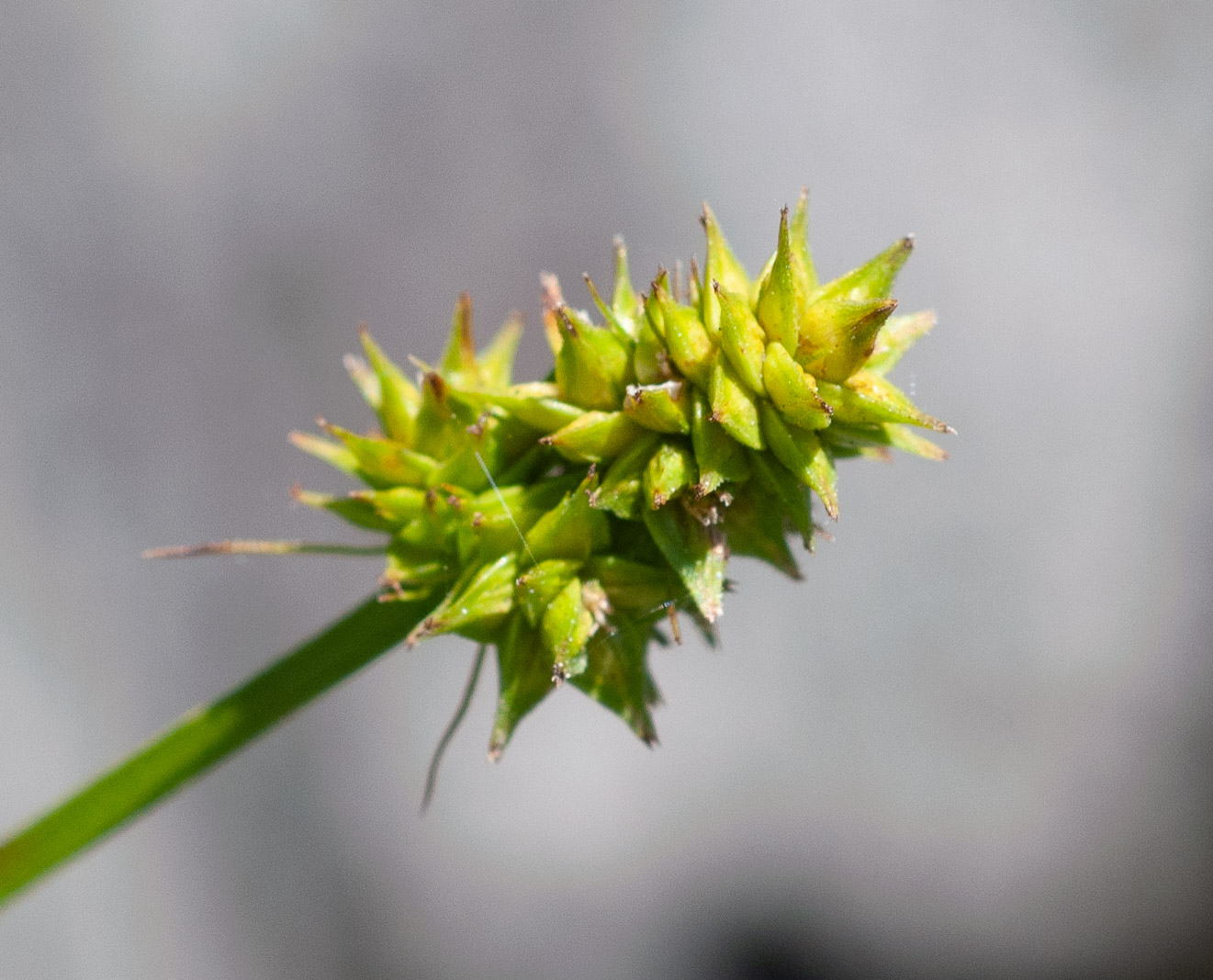
(Carex cephalophora) · 6/18/2012 · Ogunquit, Maine · ≈ 1¼ × 1″ (3.6 × 2.9 cm) 

Nodding sedge (Carex gynandra) · 6/16/2013 · Birch Point State Park, Owl’s Head, Maine · ≈ 6 × 7″ (14 × 17 cm) 
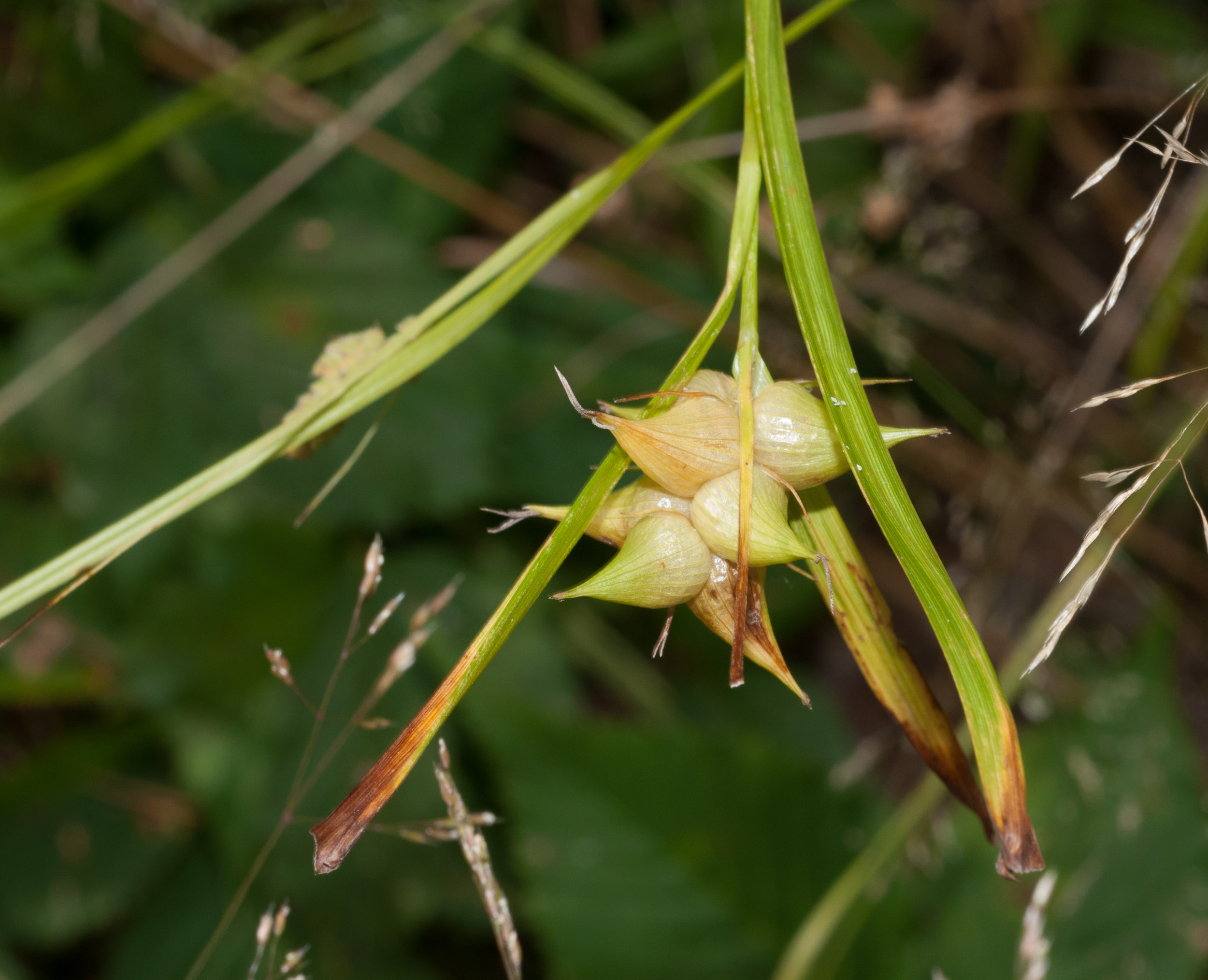
Bladder sedge (Carex intumescens) · 8/18/2010 · J. Harry Rich Woods, off Nod Rd., Groton, Massachusetts · ≈ 4½ × 3½″ (11 × 9.2 cm) 

(Carex intumescens) · 1/13/2026 · Highlands Trails, Topsham, Maine 
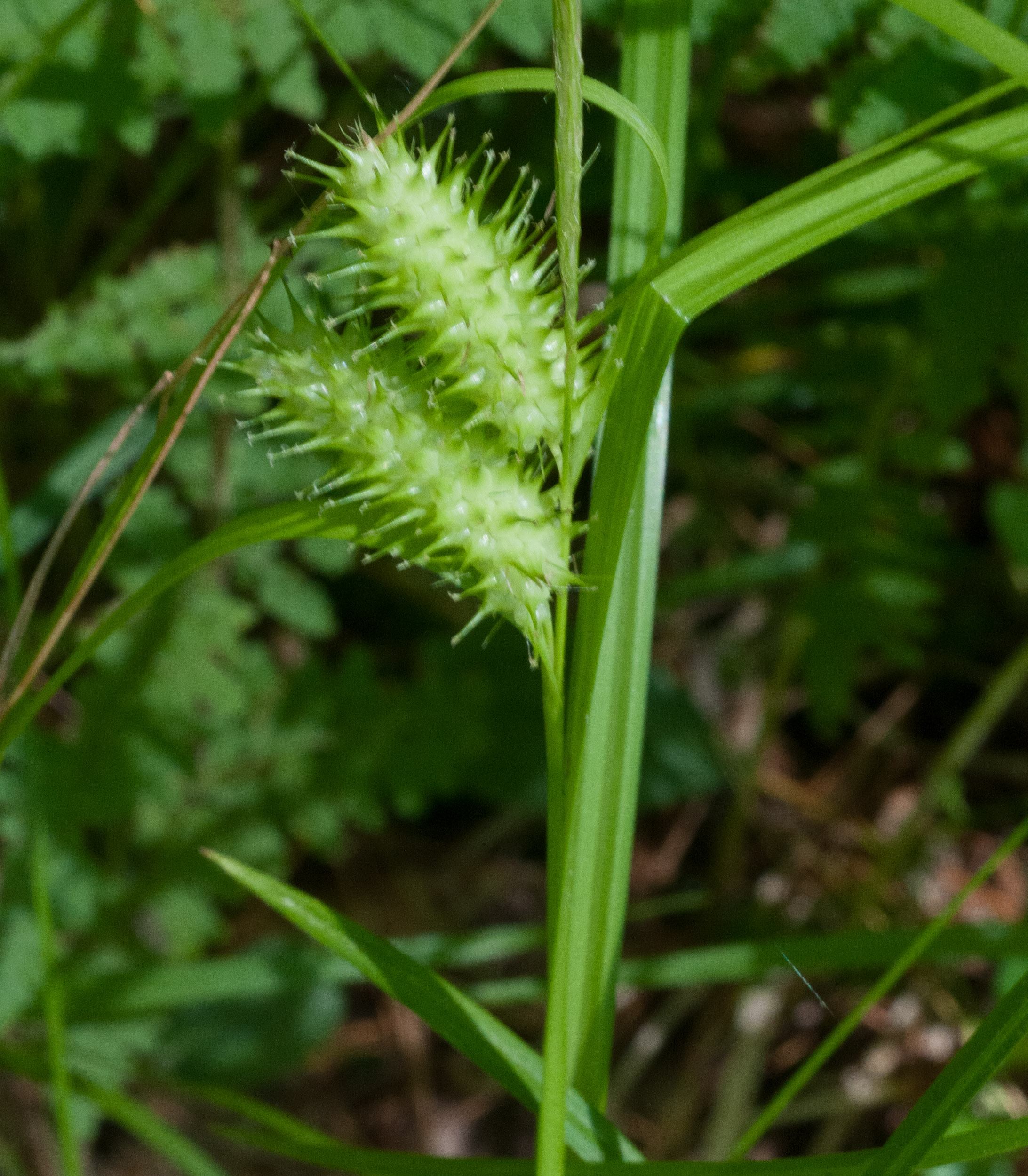
(Carex lurida) · 6/15/2012 · Townsend State Forest, Townsend, Massachusetts · ≈ 4 × 4½″ (10 × 12 cm) 

(Carex normalis) · 6/13/2016 · Nashua River Rail Trail, Groton Center, Groton, Massachusetts 
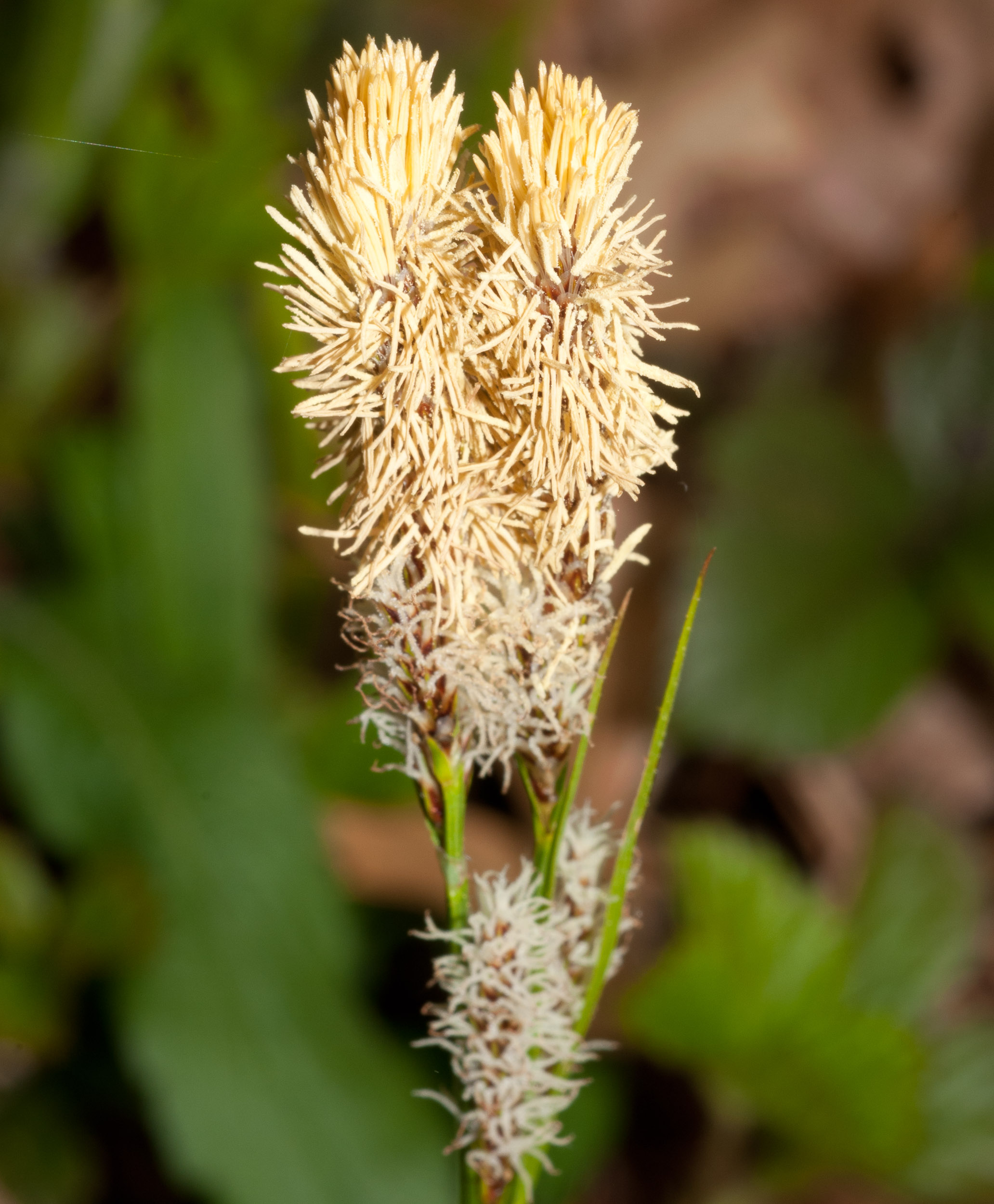
(Carex pensylvanica) · 5/2/2010 · Nashua River Rail Trail, Groton Center, Groton, Massachusetts · ≈ 3 × 2½″ (8.5 × 7 cm) 

Pointed broom sedge (Carex scoparia) · 6/9/2010 · Tom and Susan’s, Pepperell, Massachusetts 

Tussock sedge (Carex stricta) · 5/4/2017 · Nashua River Rail Trail, Groton Center, Groton, Massachusetts  ID is uncertain

(Carex swanii) · About 1.5" x 2". · 1/12/2026 · Townsend State Forest, Townsend, Massachusetts 
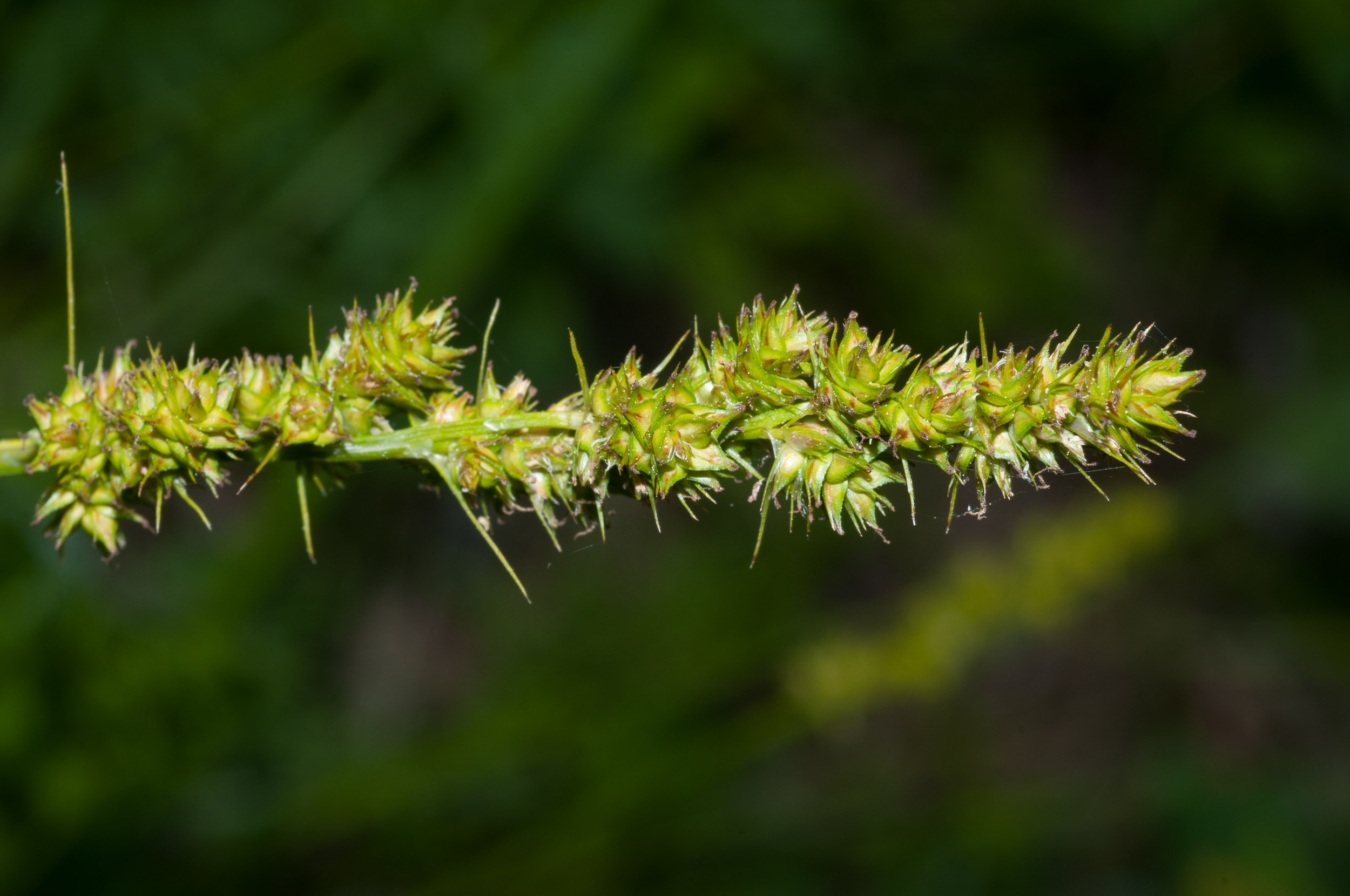
(Carex vulpinoidea) · 5/31/2010 · Mt. Lebanon St., Pepperell, Massachusetts · ≈ 4 × 3″ (10 × 7.9 cm) ID is uncertain 
| Kingdom | Plantae | Plants, but not fungi, lichens, or algae (from Stearn's Botanical Latin) |
| Subkingdom | Tracheobionta | Vascular plants—plants with a “circulatory system” for delivering water and nutrients |
| Division | Magnoliophyta | Flowering plants, also known as angiosperms |
| Class | Liliopsida | Monocots (plants with a single seed leaf); includes the lily family |
| Subclass | Commelinidae | Dayflowers and spiderworts, and several others |
| Order | Cyperales | Flowering plants including grasses |
| Family | Cyperaceae | Sedge family |
| Genus | Carex | The “true” sedges |
Carex description by Thomas H. Kent, not updated.

© FloraFinder.org. All rights reserved.