FloraFinder uses cookies only for correct operation. More info. Okay
Campanula rotundifolia L.
Bluebell, harebell, bluebell bellflower
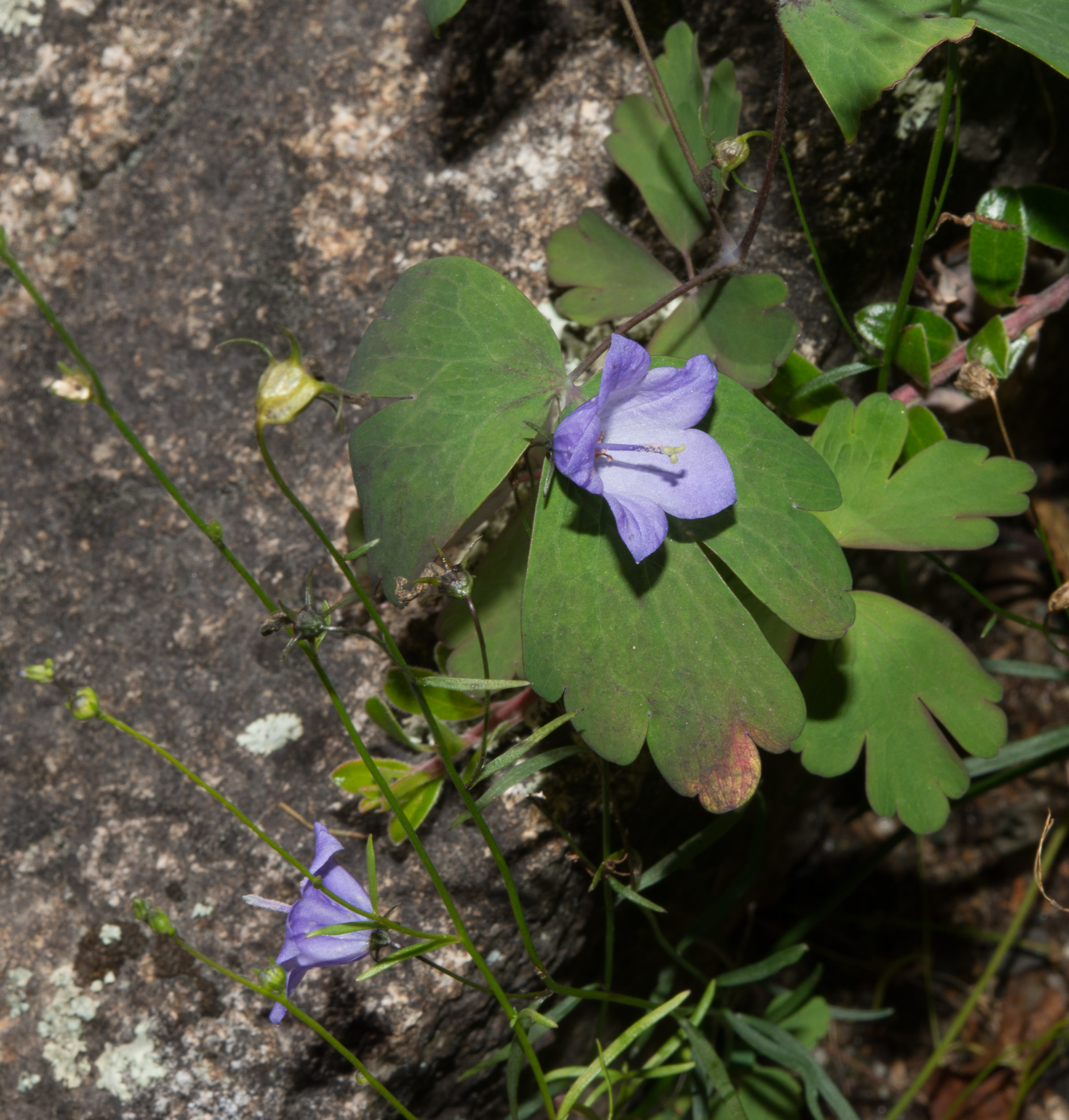
I don’t do heights. While trying to recover a frisbee from the shallow roof of my ranch house
back in my 20s, I spent a half-hour hugging the asphalt, unable to move forward or backward.
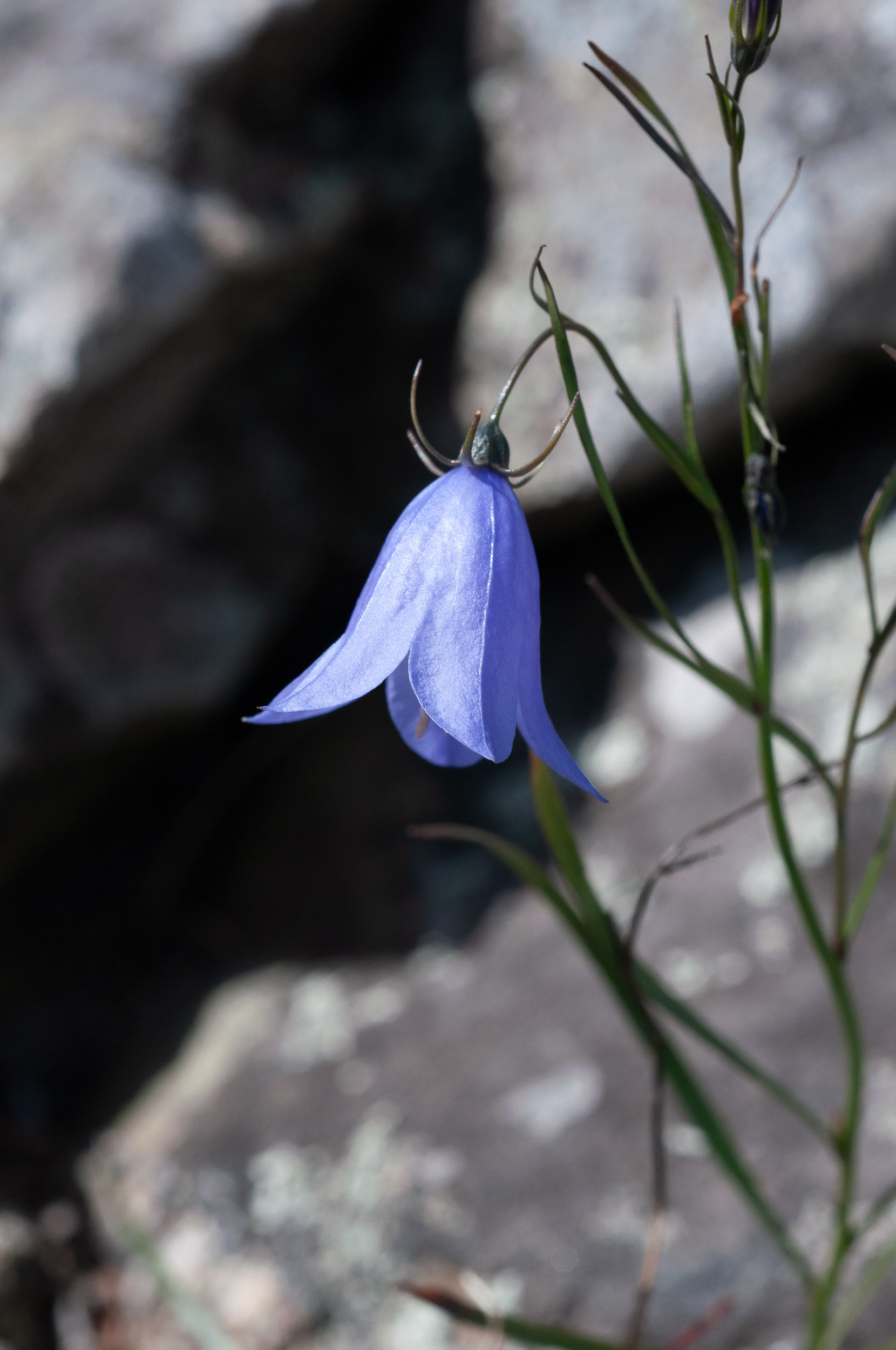
So when I spied these bluebells poking out of a granite outcrop in Acadia National Park, then
noticed the abyss underneath, it didn’t seem too likely that I would reach them. But I persevered,
bulky camera and flash swinging pendulously as I clambered over the rock faces. I inserted myself
into the deepest crack I could find and waited, avoiding the downward view, for the wind to abate.
Finally, oblivious to the personal peril, I got a few good photos. (My wife, who has no fear of heights,
reviewed my account with a touch of skepticism. “Drama king” was one term she used. But I’m sticking
to my account.)
Bluebells a North American natives. They prefer medium soils, full or partial sun, regular moisture,
and not too much heat.
Plants: 1–1½′ (30–45 cm) high.
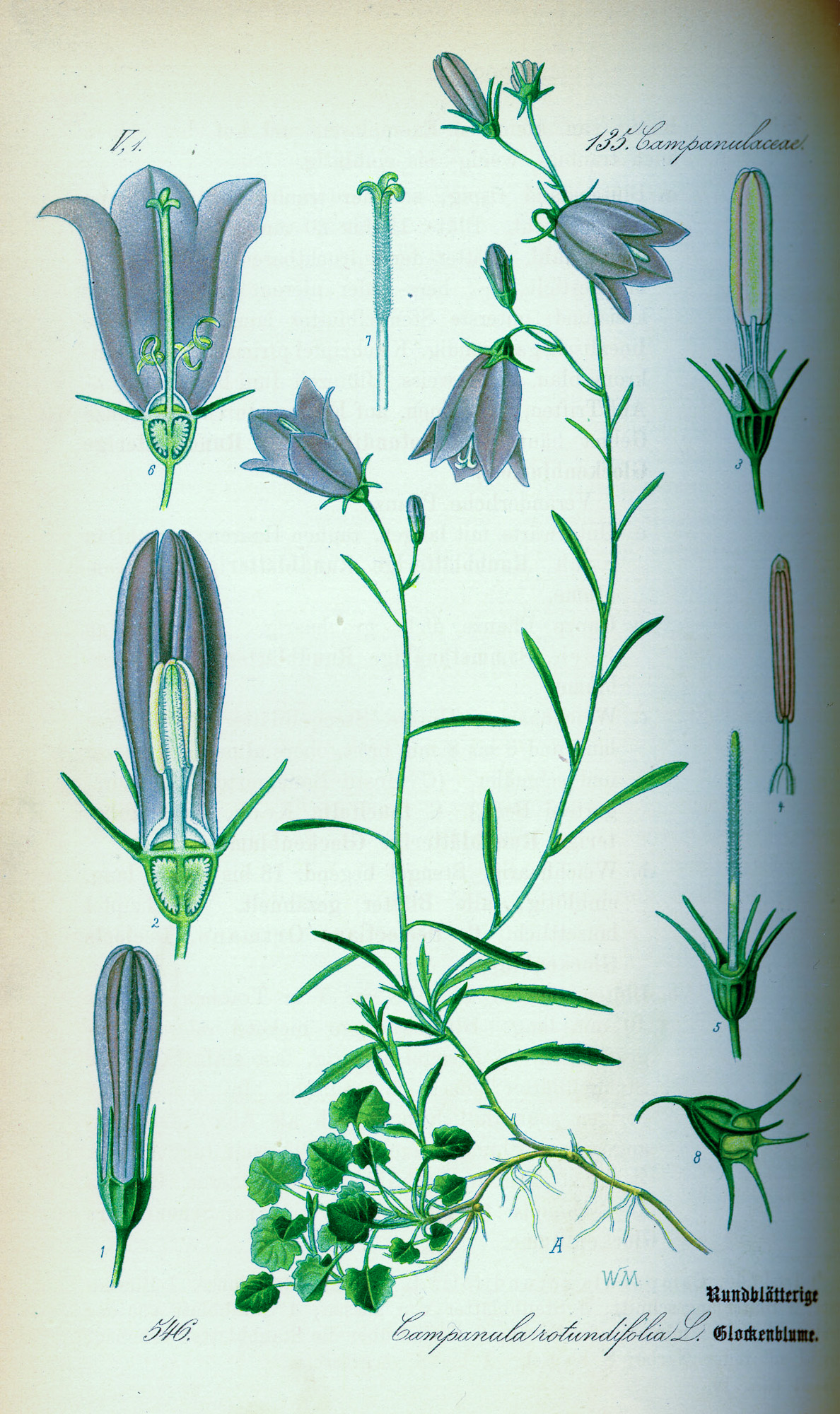
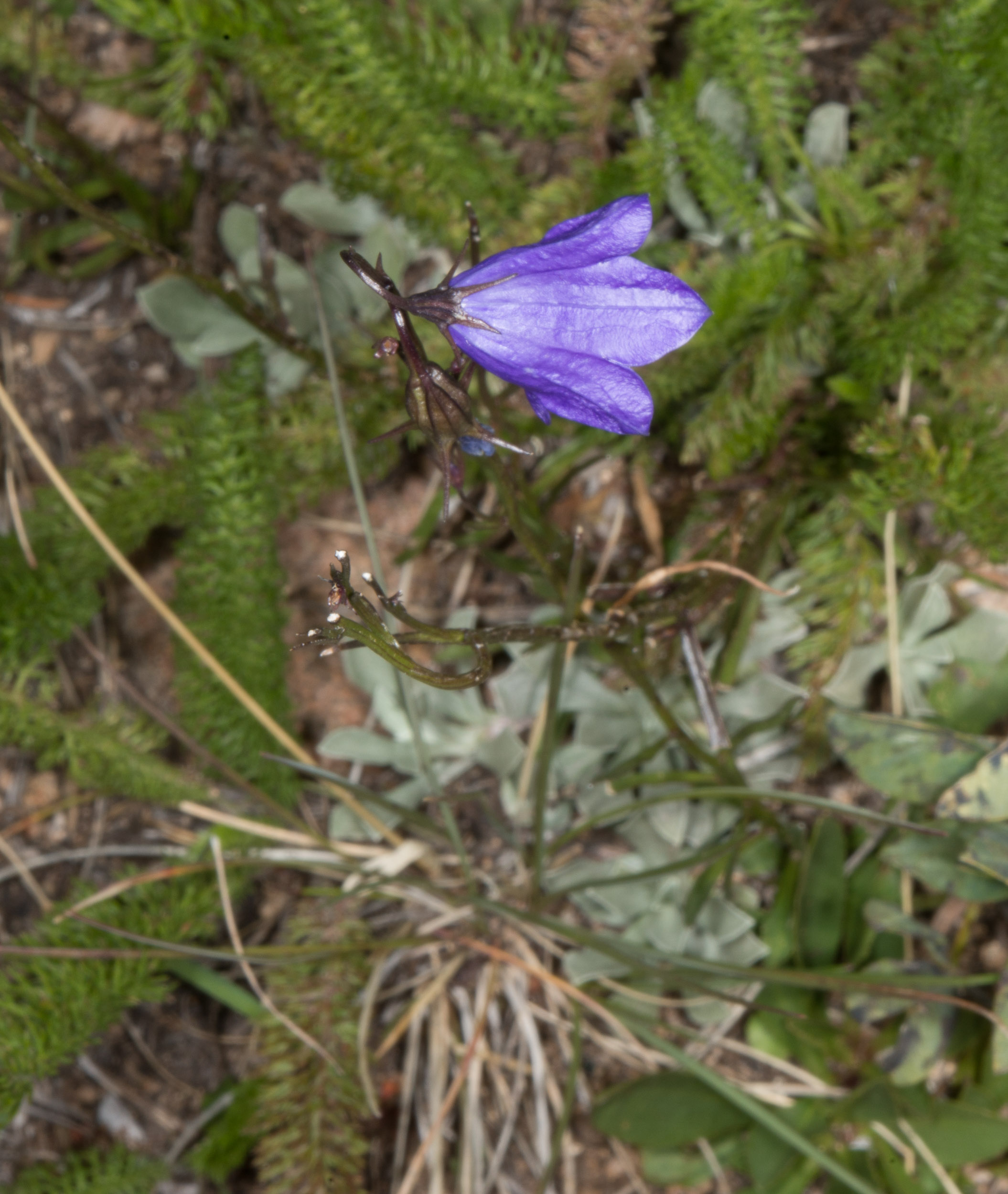
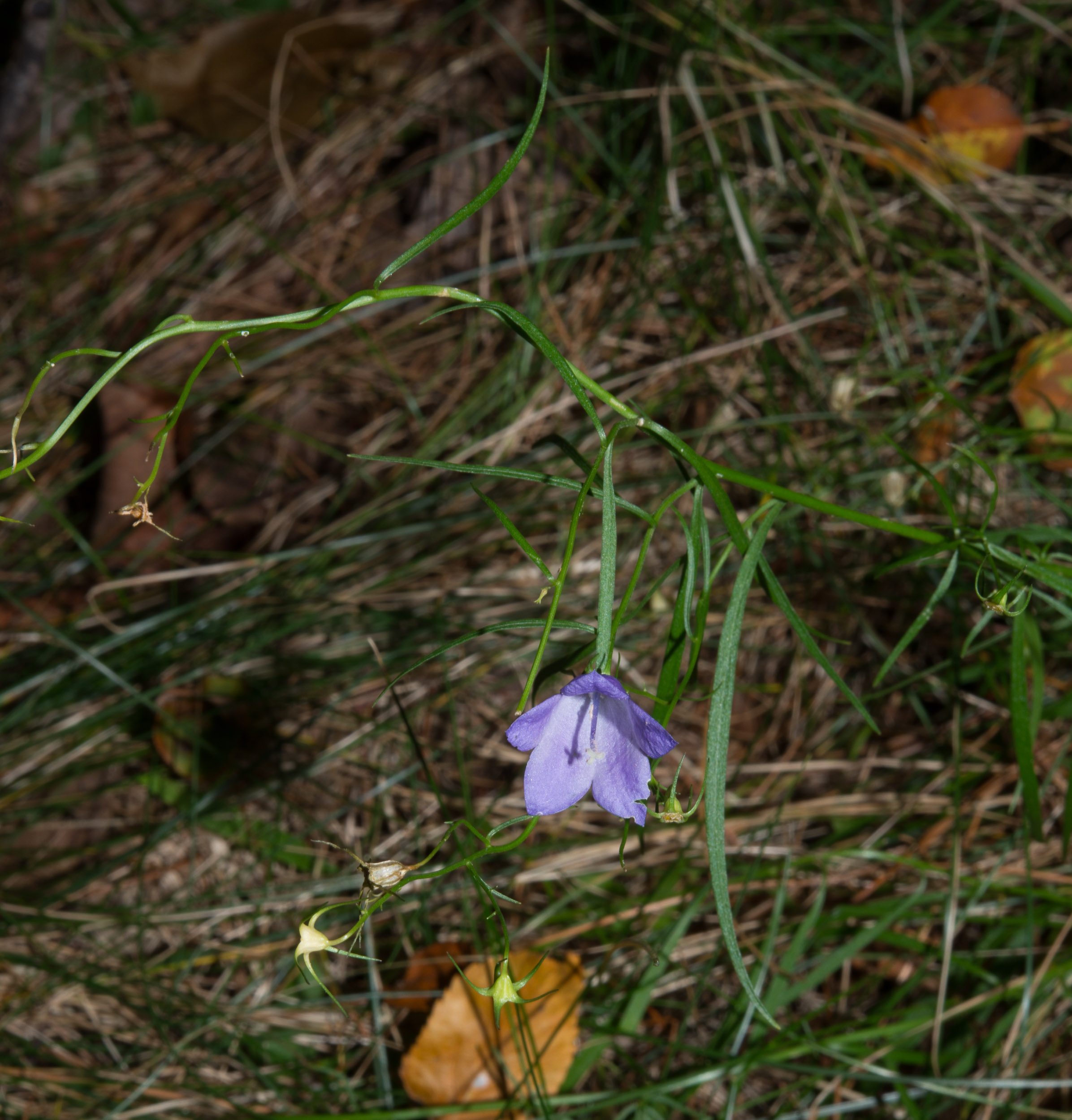
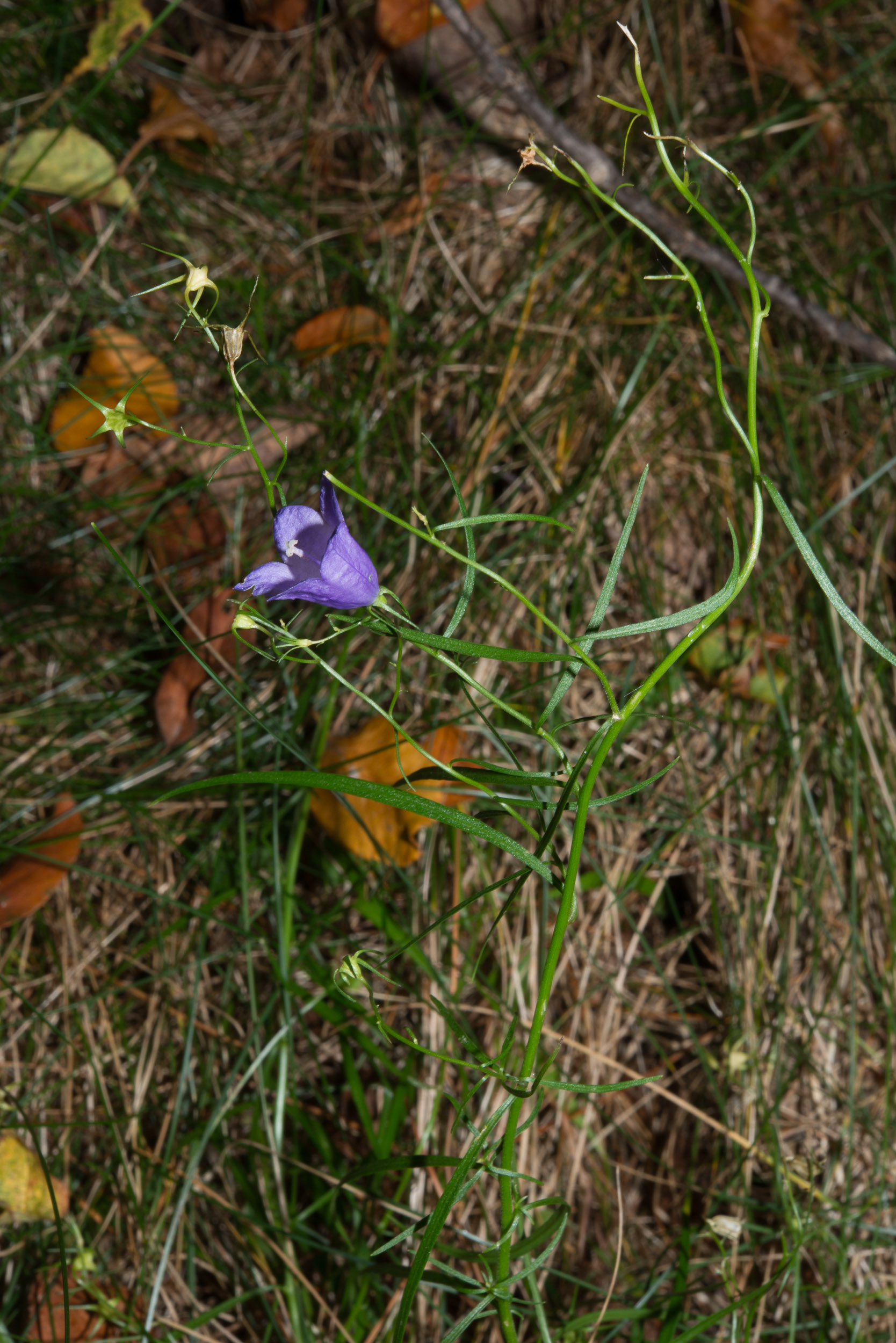
Leaves: A basal rosette has leaves that are
rounded or heart-shaped, on long petioles (stems). Flowering stems have alternate,
narrow,
linear leaves.
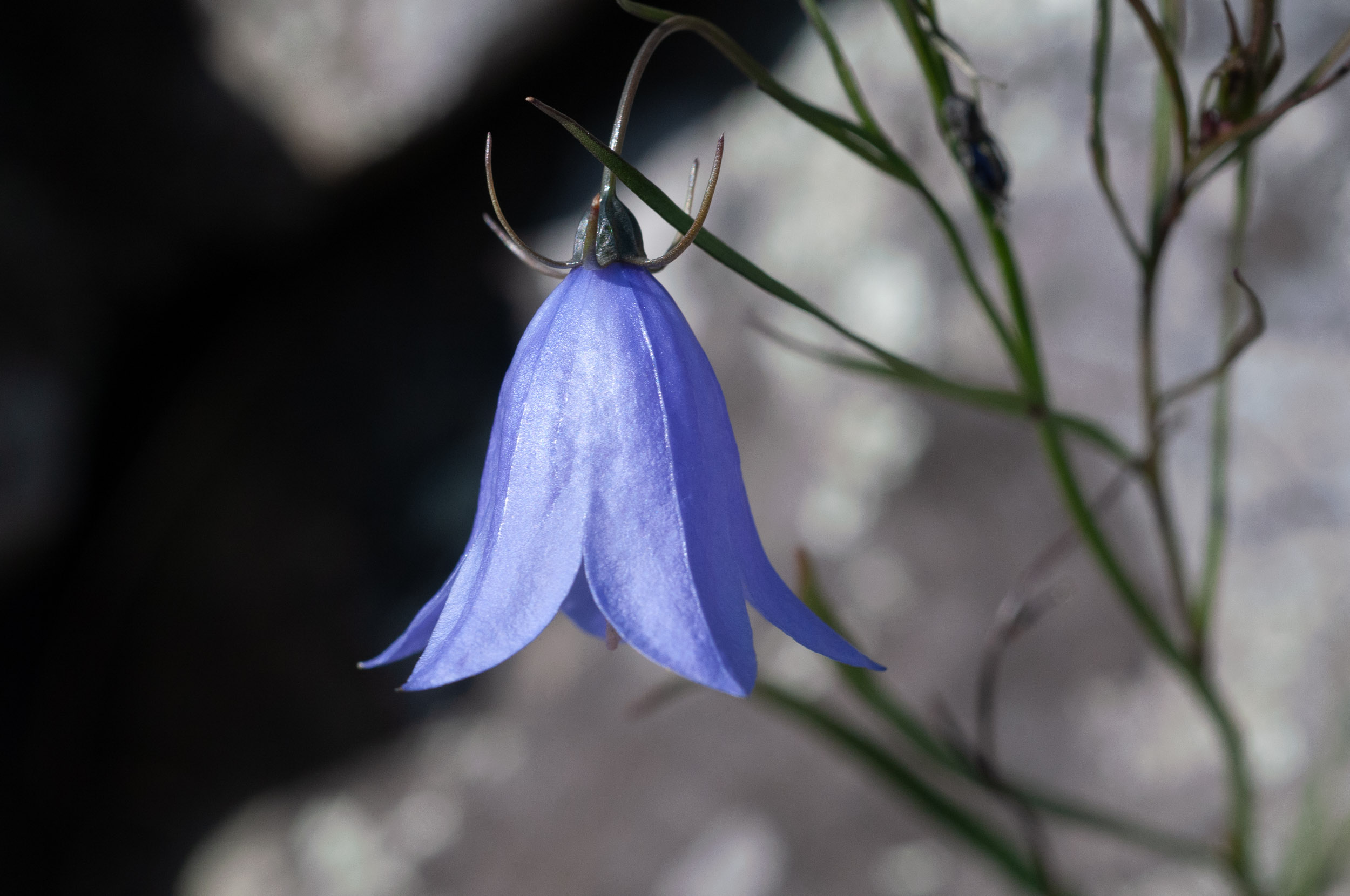
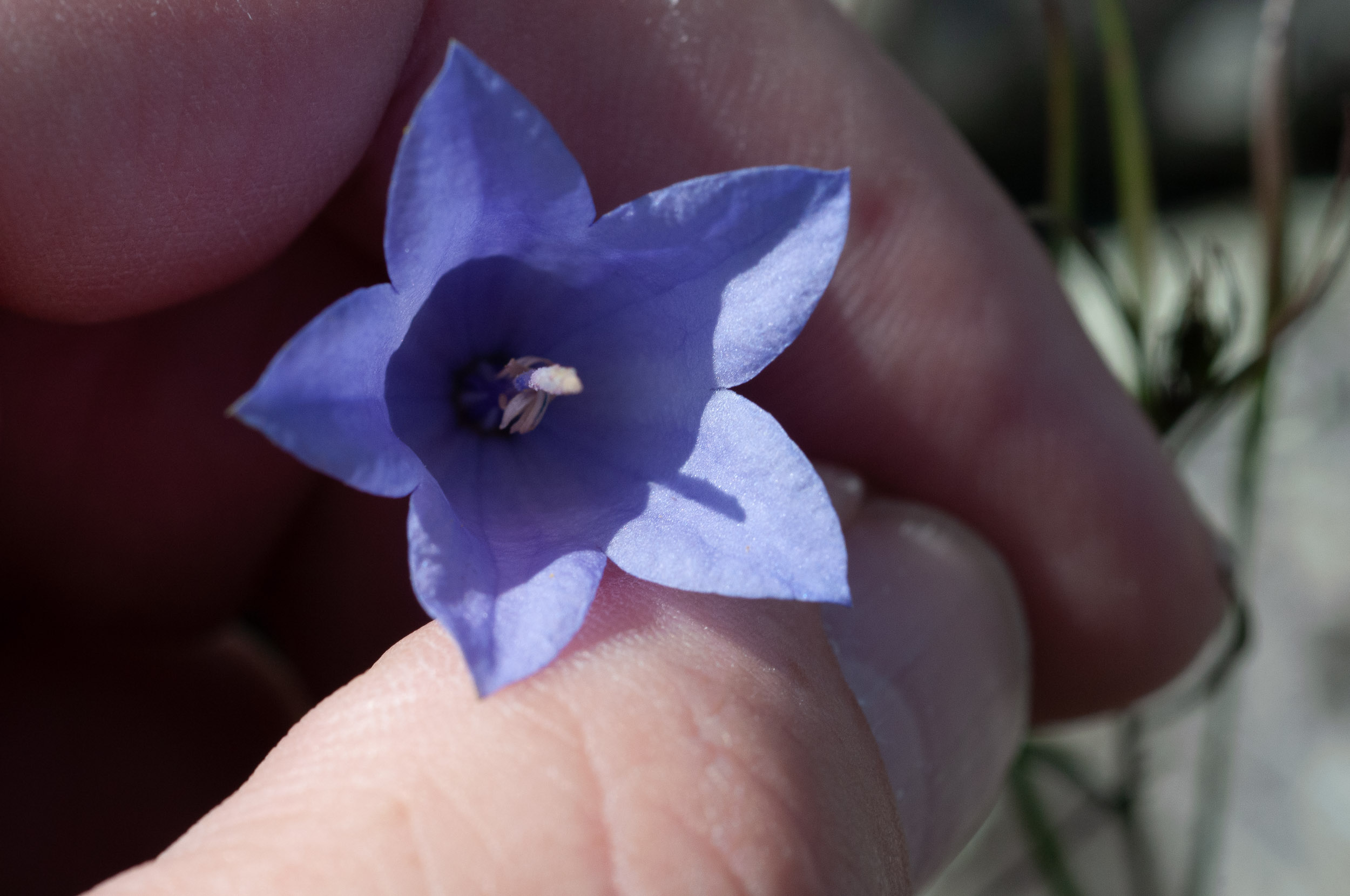
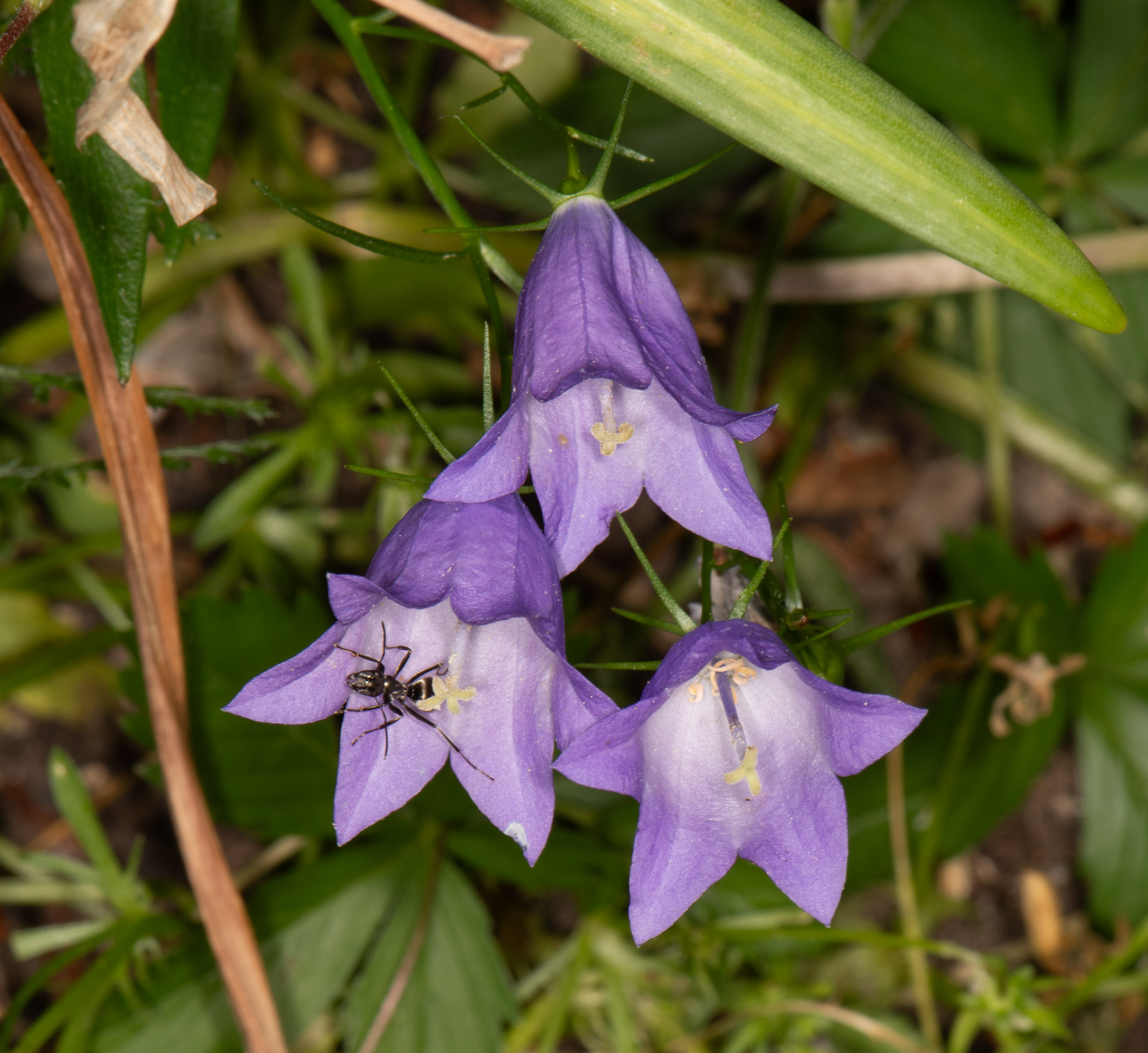
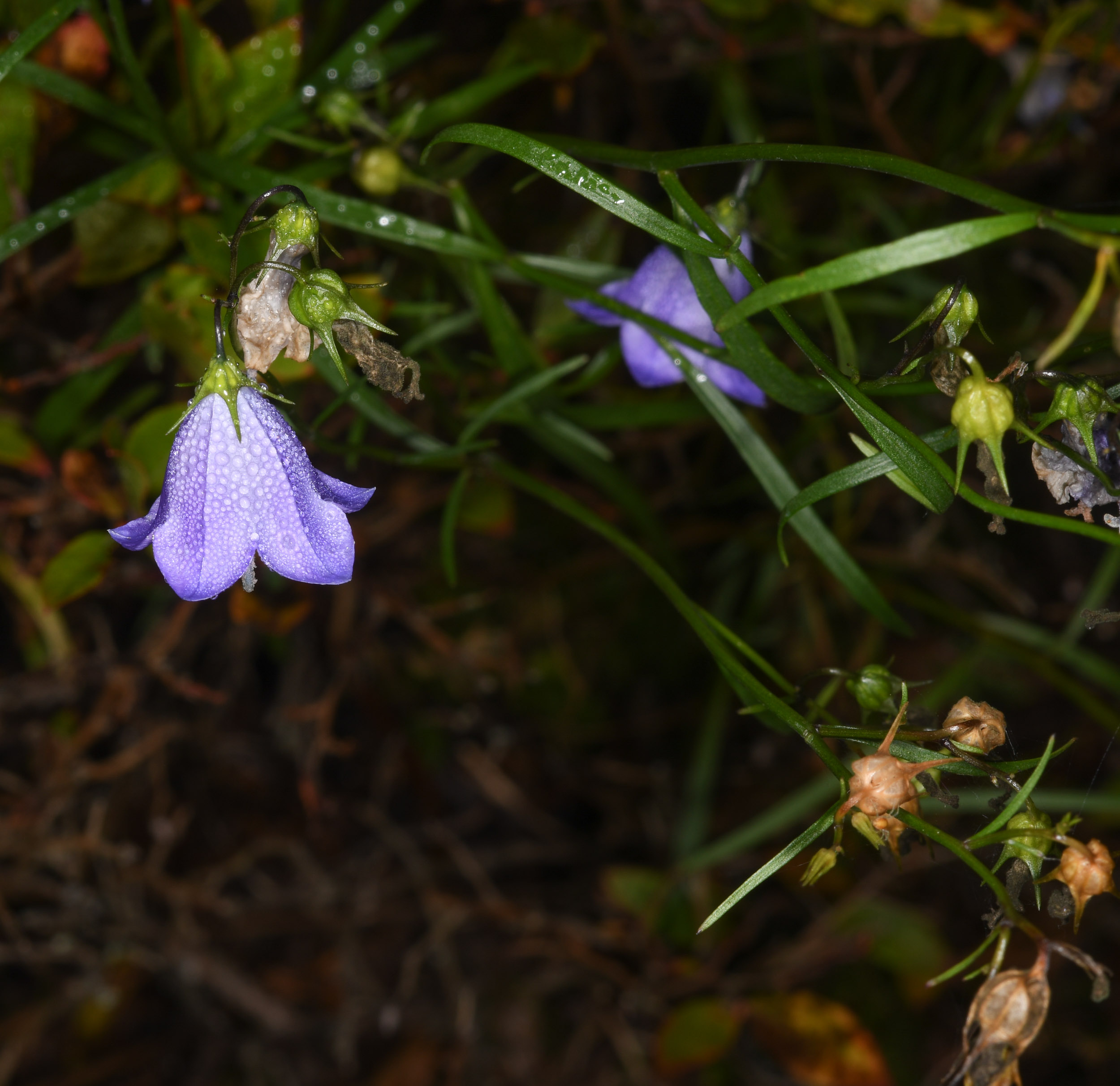
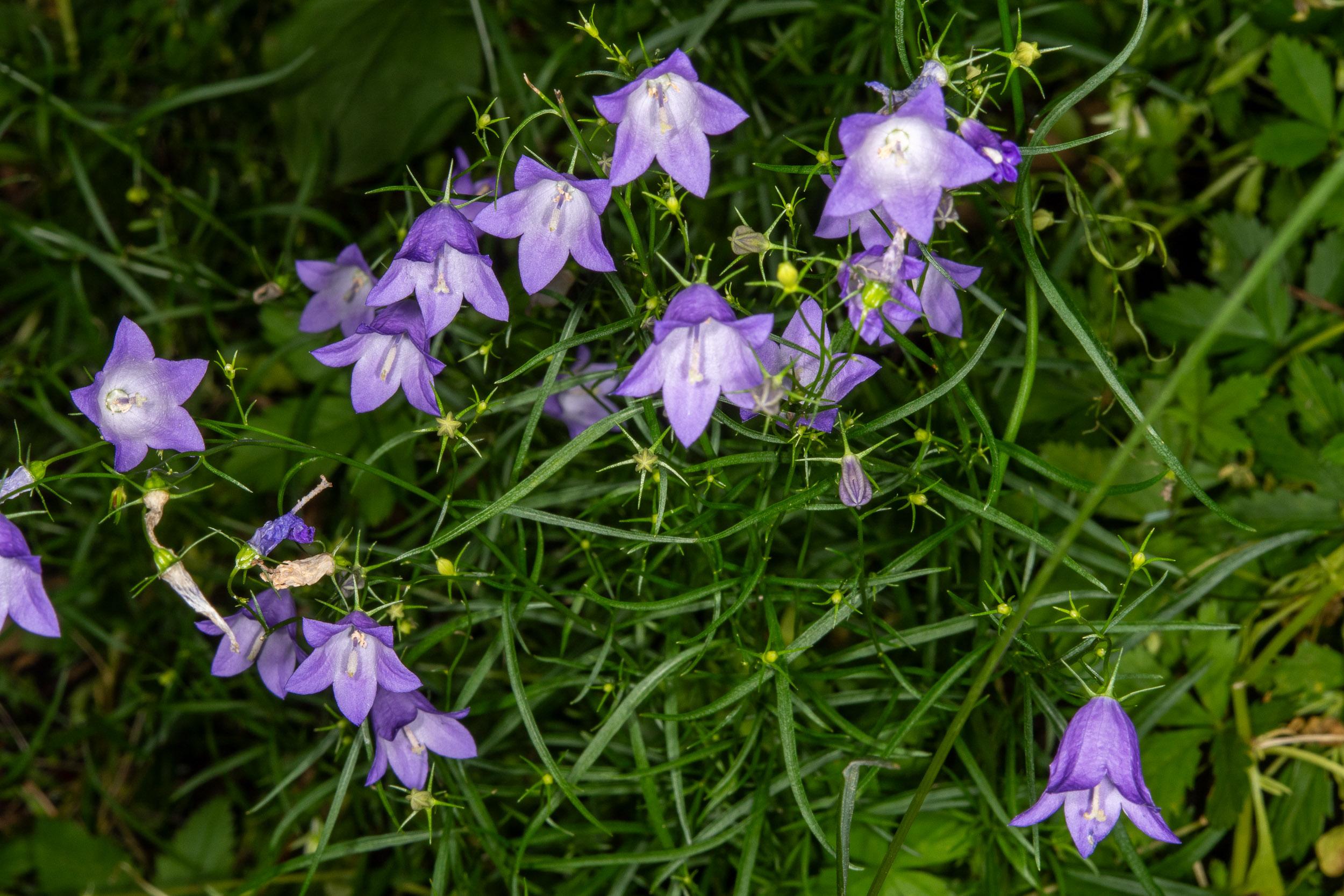
Flowers: Attractive blue, delicate-looking, nodding bell-shaped flowers. Typically they have five petals, but may have
4-7. The petals fuse together to form a beautiful blue-violet bell ⅜–1″ (1.2–3 cm) in size. Flowers may be single or in small clusters. Rarely, the flowers are pale pink or white. They appear from July to November.
Fruits: Capsules are 1/16–⅛″ (3–4 mm) in size.
Habitats: Full to partial sun; dry to moderate moisture; woods, meadows, cliffs, beaches; in sandy, gravelly soil.
From Thomé, Prof. Dr. Otto Wilhelm, Flora von Deutschland Österreich und der Schweiz., 1885
Campanula alaskana (A. Gray) W. Wight ex J.P. Anderson Campanula dubia A. DC. Campanula gieseckiana Vest ex Schult. Campanula gieseckiana Vest ex Schult. var. arctica (Lange) Böcher Campanula gieseckiana Vest ex Schult. ssp. groenlandica (Berlin) Böcher Campanula groenlandica Berlin Campanula heterodoxa Bong. Campanula intercedens Witasek Campanula petiolata A. DC. Campanula rotundifolia L. var. alaskana A. Gray Campanula rotundifolia L. var. alpina Tuck. Campanula rotundifolia L. var. arctica Lange Campanula rotundifolia L. ssp. groenlandica (Berlin) Á. Löve & D. Löve Campanula rotundifolia L. var. intercedens (Witasek) Farw. Campanula rotundifolia L. ssp. intercedens (Witasek) Á. Löve & D. Löve Campanula rotundifolia L. var. lancifolia Mert. & W.D.J. Koch Campanula rotundifolia L. var. petiolata (A. DC.) J.K. Henry Campanula rotundifolia L. var. velutina A. DC. Campanula sacajaweana M. Peck
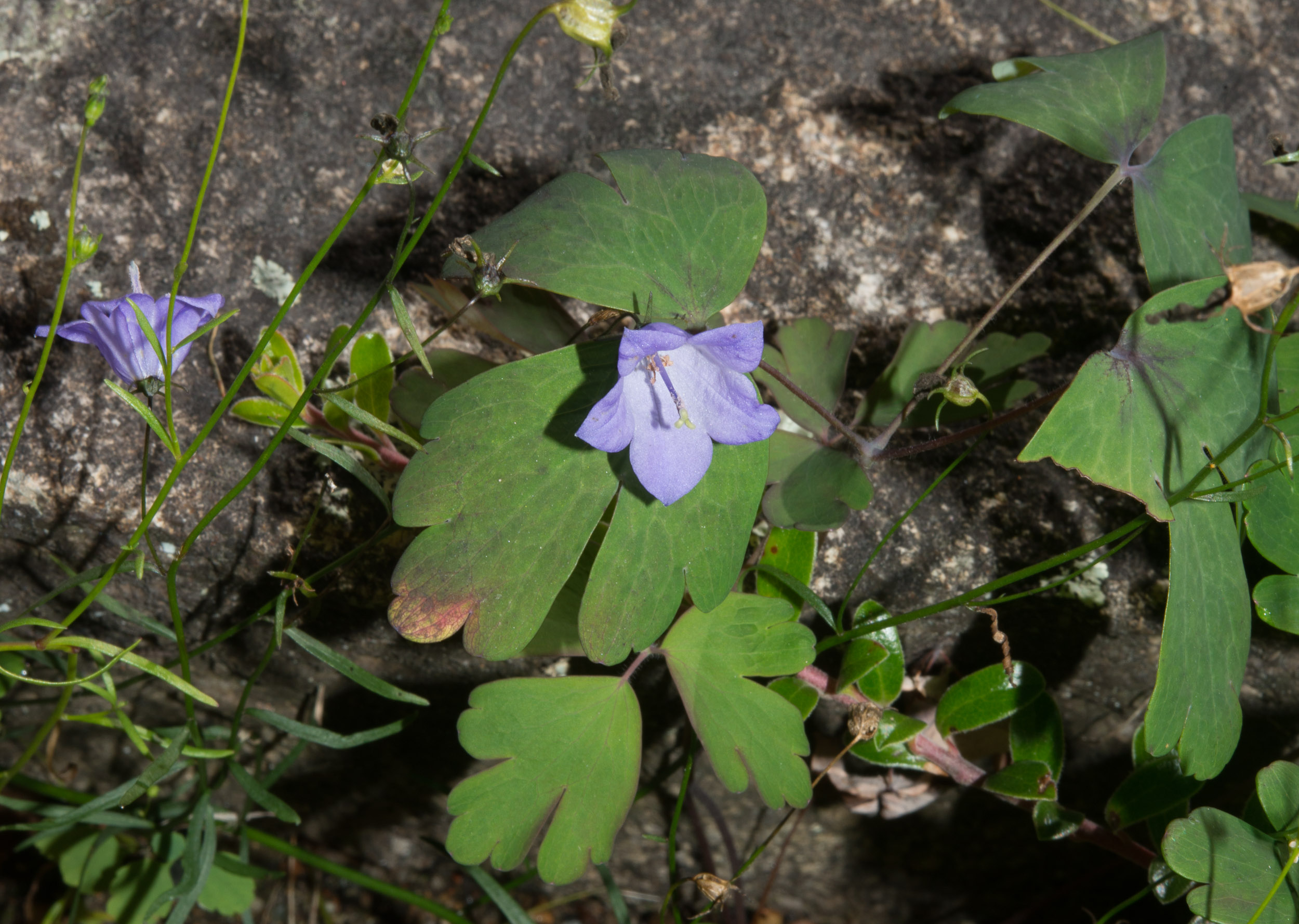
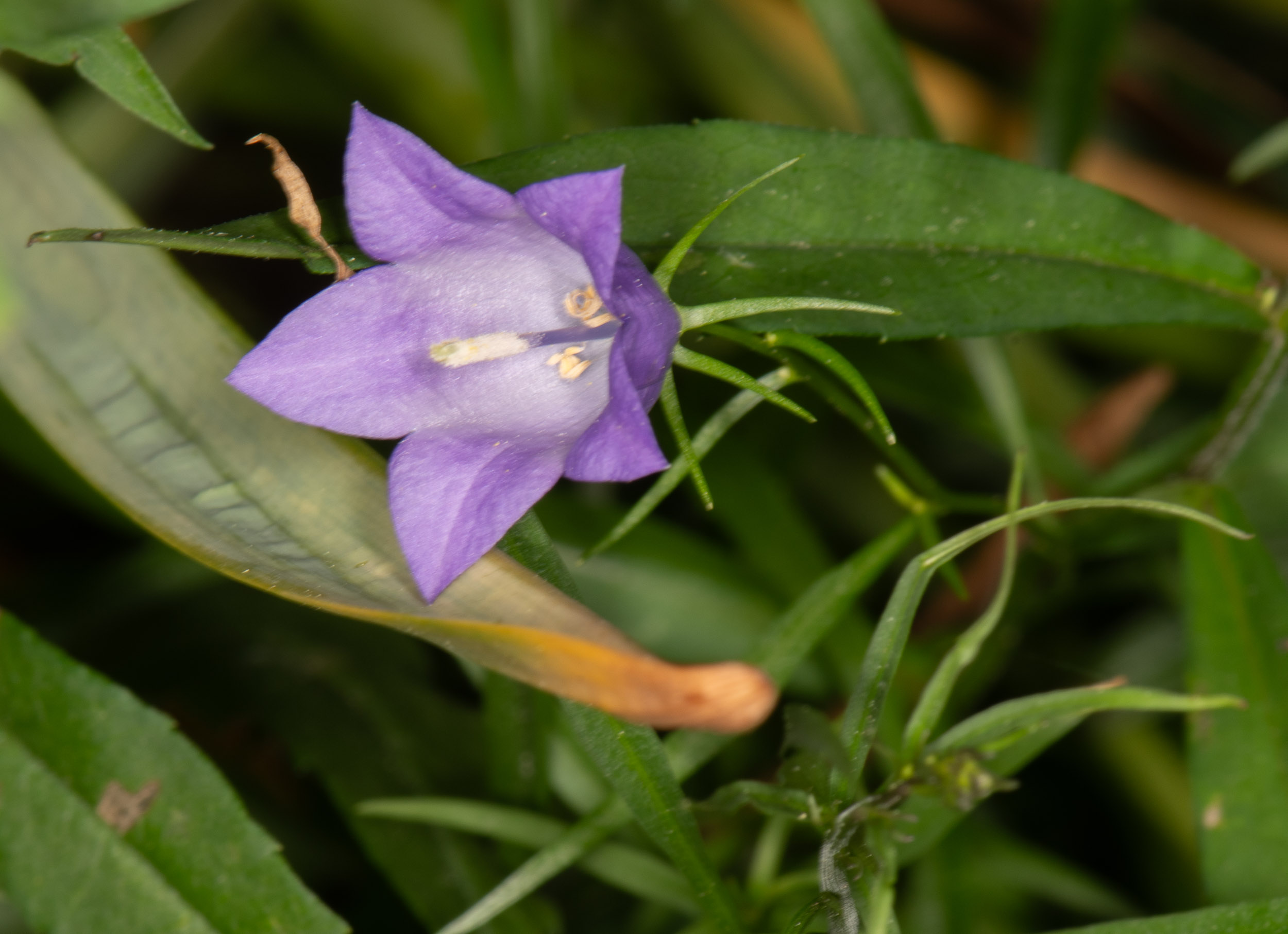
Harebell leaves are very thin, at left. The larger leaves are columbine. · 9/28/2013 · Wild Gardens of Acadia, Acadia National Park, Bar Harbor, Maine · ≈ 6 × 4½″ (16 × 11 cm)
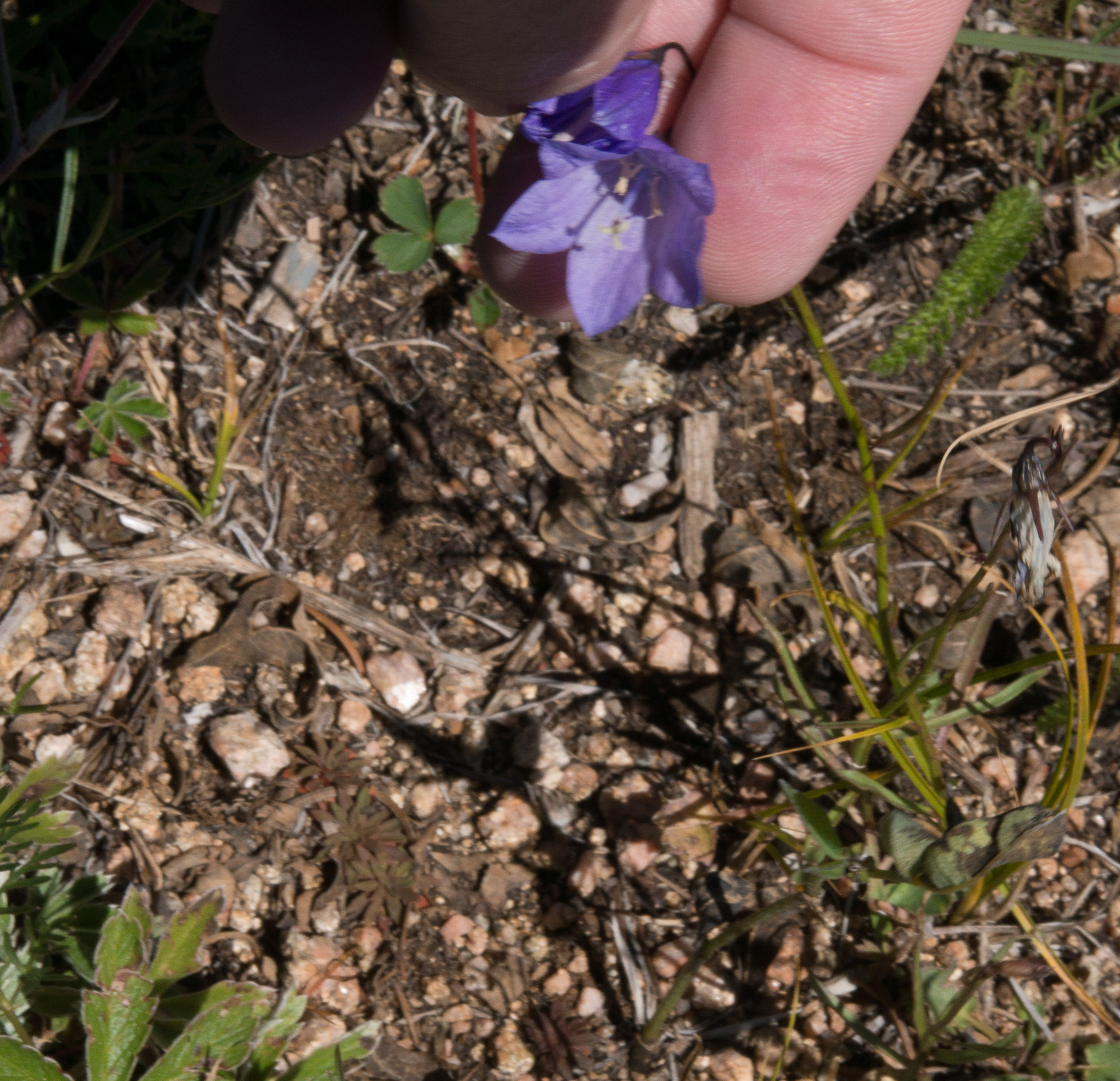
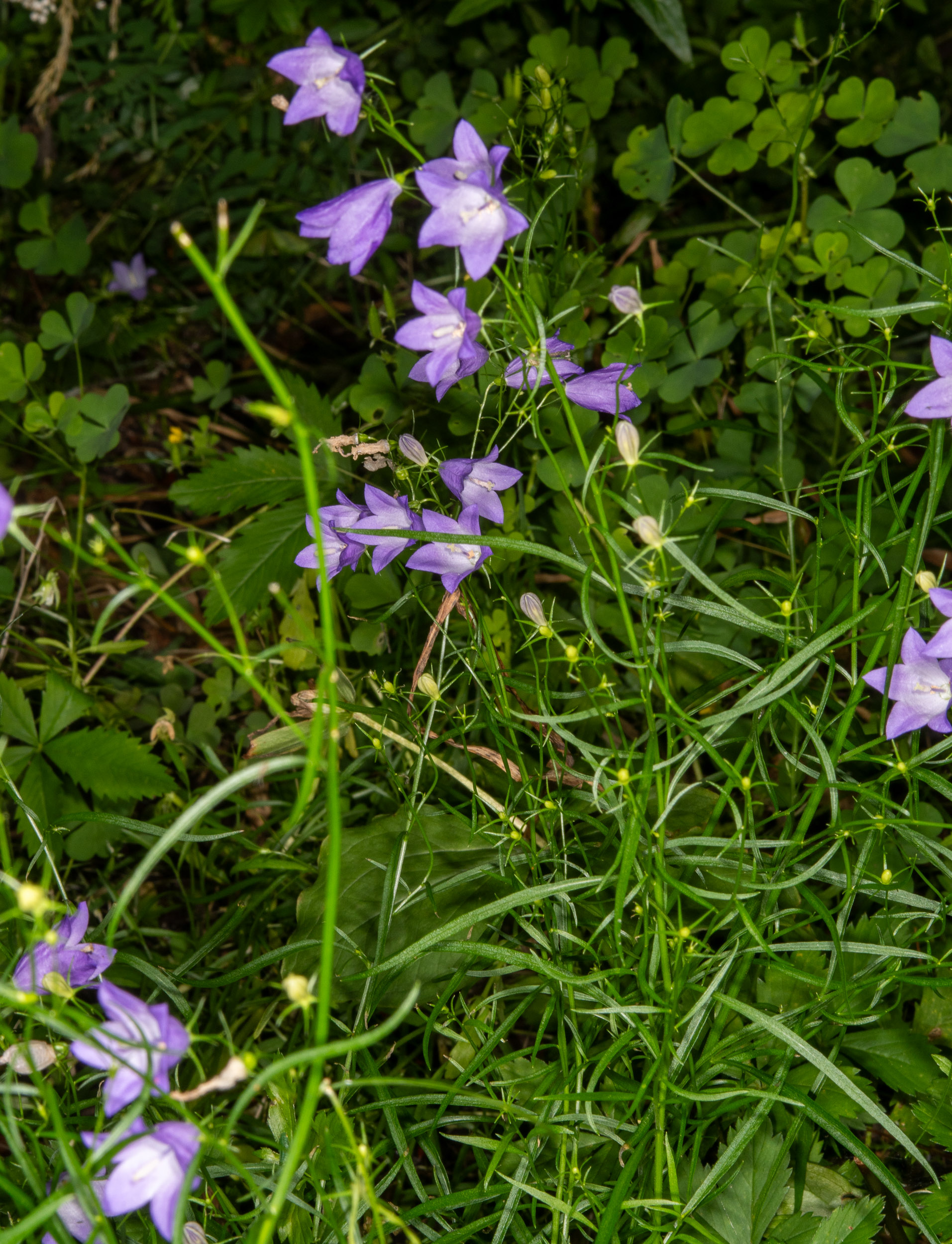
The leaves in this photo are columbine. The hareball leaves, visible at the very bottom, are very thin. · 9/28/2013 · Wild Gardens of Acadia, Acadia National Park, Bar Harbor, Maine · ≈ 5 × 5″ (12 × 13 cm)