Calopogon tuberosus (L.) Britton, Sterns & Poggenb.
Grass pink, tuberous grasspink
The tuberous grass pink is an orchid native to eastern North America. Its range extends from eastern Canada all the way to the Caribbean. “Tuberous,” because the root is a ball-shaped corm; and “grass pink” for the grasslike single leaf, narrow like those of pinks. Grass pinks prefer bogs, fens, swamps, damp meadows, grasslands, and savannas. They are uncommon, and considered endangered in Illinois, Kentucky, and Maryland, New York, and Rhode Island. They are also also classified as rare in Vermont, Delaware, Virginia, West Virginia, Arkansas, Ohio, Missouri, Oklahoma, North Carolina, Georgia, Quebec, Manitoba, and Prince Edward Island. Look, but please don’t touch!
Plants: Each plant consists of a single flowering stalk, up to 4′ (1.2 m) in height, accompanied by a single basal leaf. These are somewhat similar to Arethusa bulbosa (dragon’s mouth orchids), but tuberous grass pinks are taller, up to 4′ (1.2 m) vs. less than 1½′ (45 cm) tall. And the labellum, or lip, is uppermost, vs. lowermost on dragon’s mouth orchids. Both orchids are found in the same habitats, in the parts of their range that overlaps.
Leaves: A single, basal leaf, narrow and linear in shape, is up to 1′ (38 cm) long and 1″ (2.5 cm) wide.
Flowers: Flowers occur in groups (racemes) of 2-25 flowers, each 1–2″ (2.5–5 cm) wide. The fragrant flowers are light pink, magenta, or rarely, white. Like all orchids, they have bilateral symmetry—if you divide the flower vertically down the center, the halves are mirror images. Sepals are ⅜–⅞″ (1.2–2.5 cm) long, with a lobed labellum (lip) ⅜–⅞″ (1.1–2.3 cm) in length. The labellum is larger in proportion to the flower, as compared to other orchids. Flowers appear from May to July.
Fruits: Oblong capsules up to ⅞″ (2.5 cm) long. Fruits appear from July to September.
Habitats: Mainly a coastal species, but also occurs in the Midwest. It prefers moist places like wet meadows, calcareous fens, and acidic bogs.
These similar species are found in similar habitats:
 |
Simliar species in similar habitats. |
Online References:
References:
Clemants, Steven; Gracie, Carol, Wildflowers in the Field and Forest, Oxford University Press, 2006, p. 132
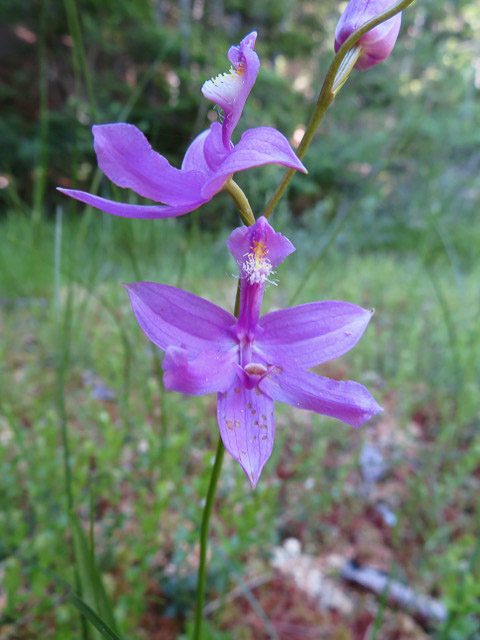
6/18/2021 · Long Reach Preserve, Harpswell, Maine · By Priscilla Seimer 
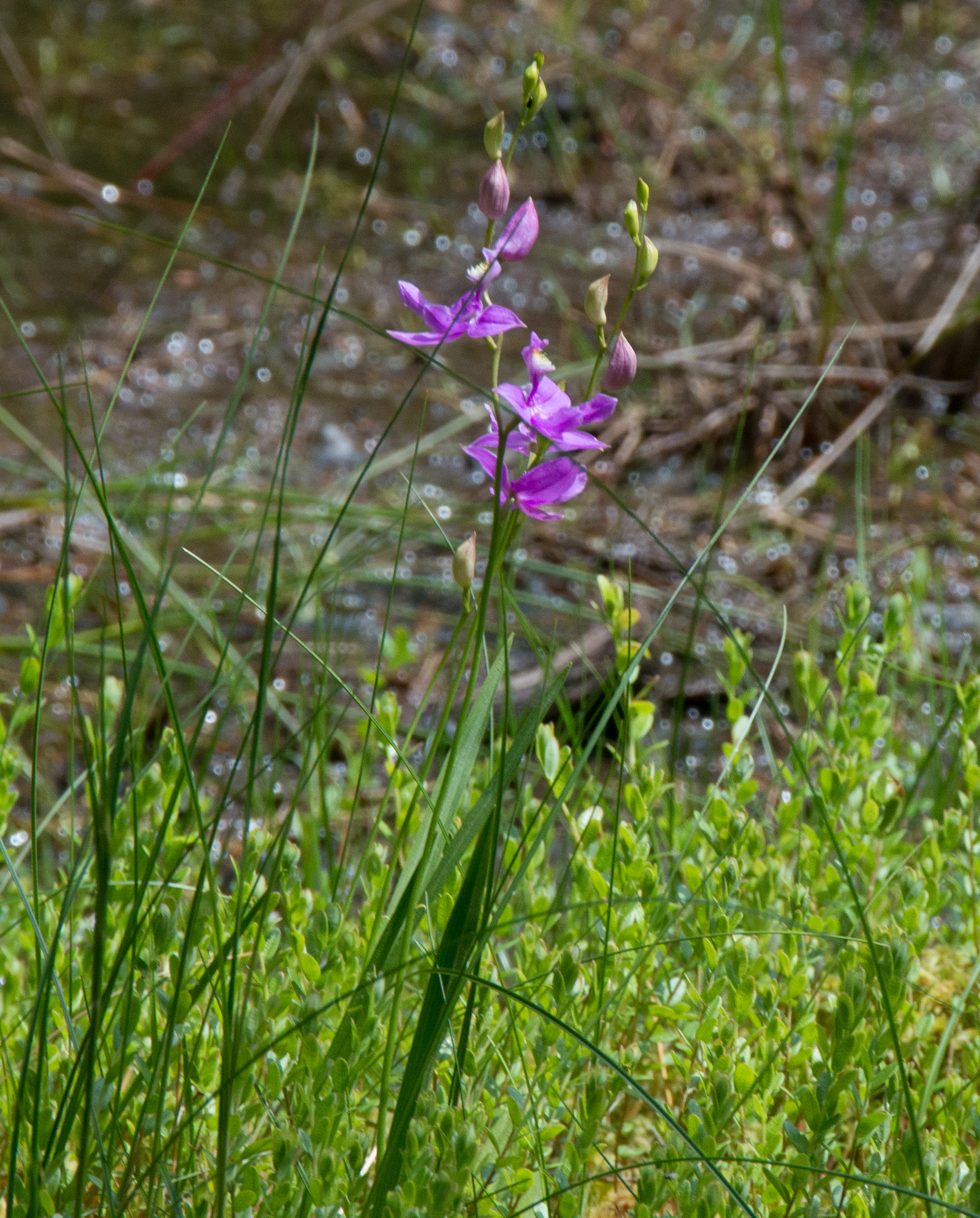
6/19/2021 · Long Reach Preserve, Harpswell, Maine 
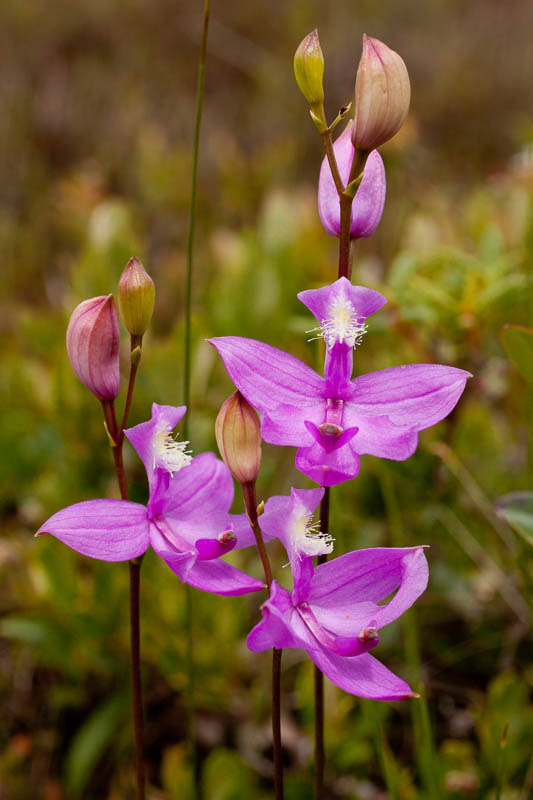
6/30/2011 · Corea Heath, Corea, Maine · By Susan Cole Kelly 
| Kingdom | Plantae | Plants, but not fungi, lichens, or algae (from Stearn's Botanical Latin) |
| Subkingdom | Tracheobionta | Vascular plants—plants with a “circulatory system” for delivering water and nutrients |
| Division | Magnoliophyta | Flowering plants, also known as angiosperms |
| Class | Liliopsida | Monocots (plants with a single seed leaf); includes the lily family |
| Subclass | Liliidae | Includes lilies, orchids, and many others |
| Order | Asparagales | A diverse group that includes asparagus |
| Family | Orchidaceae | Orchid family |
| Genus | Calopogon | From Greek kalos, “beautiful,” and pogon, “beard,” for the yellow “hairs” that attract pollinators |
| Species | tuberosus | Tuberous, alluding to the fact that the rhizomes of some species have tubers |
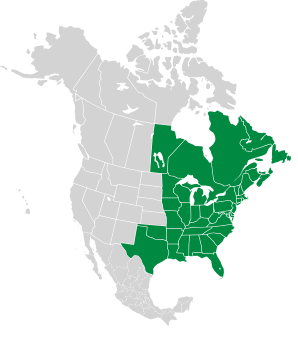
Calopogon tuberosus description by Thomas H. Kent, not updated.

© FloraFinder.org. All rights reserved.