Bursera microphylla A. Gray
Elephant tree
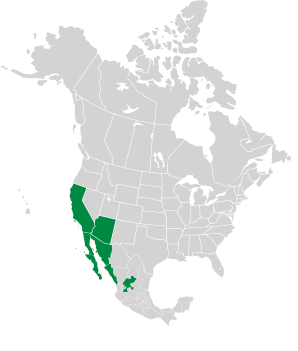
The elephant tree is native to northern Mexico and the southwestern United States. It is related to frankincense and myrrh. Although endangered in the wild, it is popular as a bonsai plant.
Plants: Small trees are 12–15′ (3.7–4.6 m) high. They have thickened trunks (“caudiciform”) that store water. Young branches have a purple color, changing to gray or white, and flaky and papery, as they grow.
Leaves: Foliage has a pleasant odor reminiscent of orange and pine. Leaves are alternate, and most pinnate or bipinnate.
Flowers: Small, star-shaped flowers are white or cream-colored.
Fruits: A drupelike capsule containing a yellow stone.
Habitats: Most of the Sonoran desert.
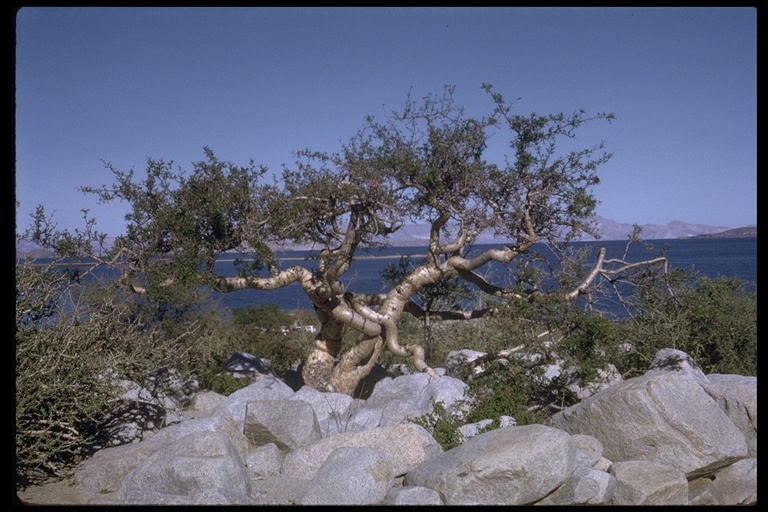
By Glenn and Martha Vargas © California Academy of Sciences. 

Pinnate leaves. By Miwasatoshi. 
Online References:
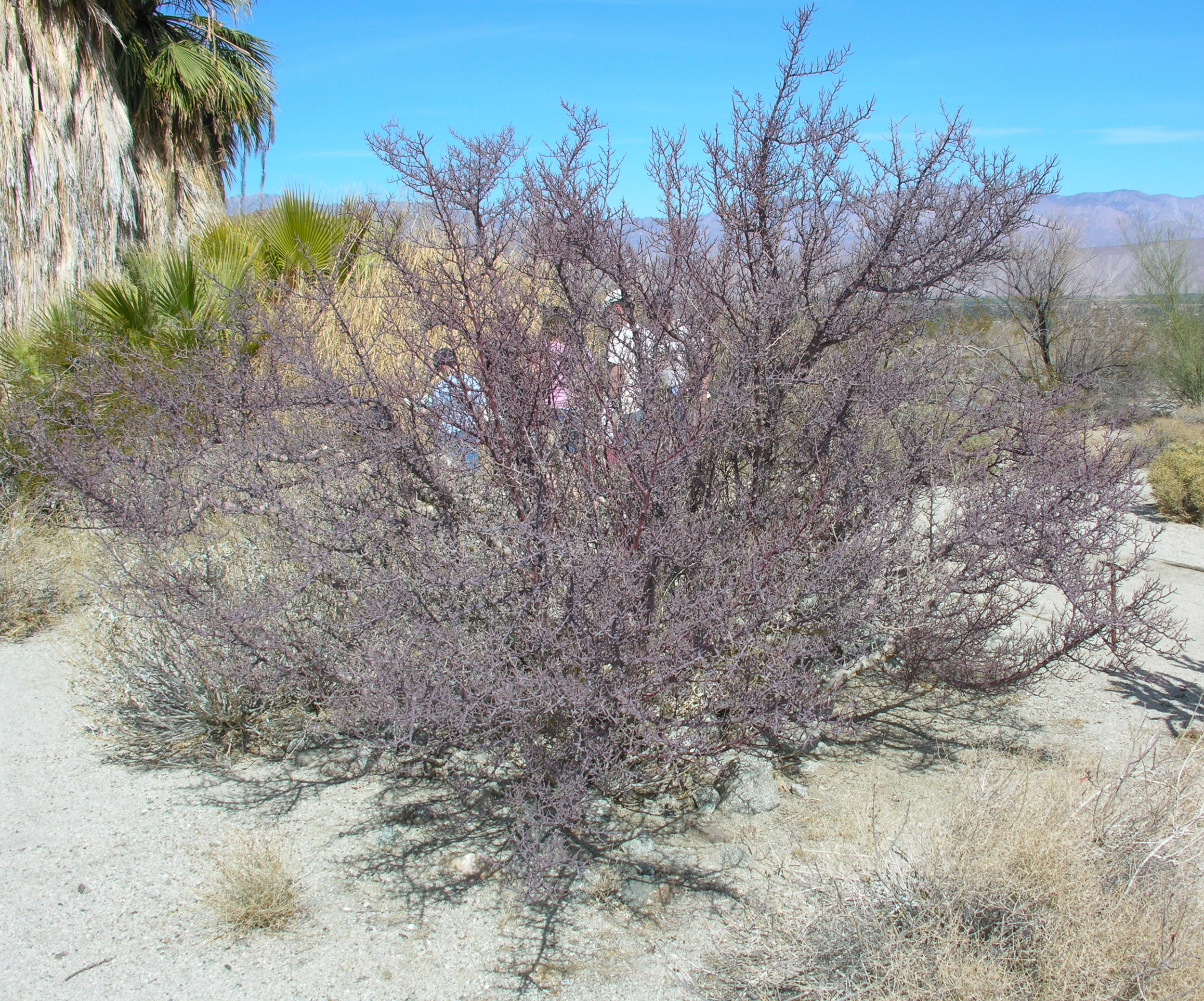
2/17/2007 · Anza-Borrego Desert State Park, California 
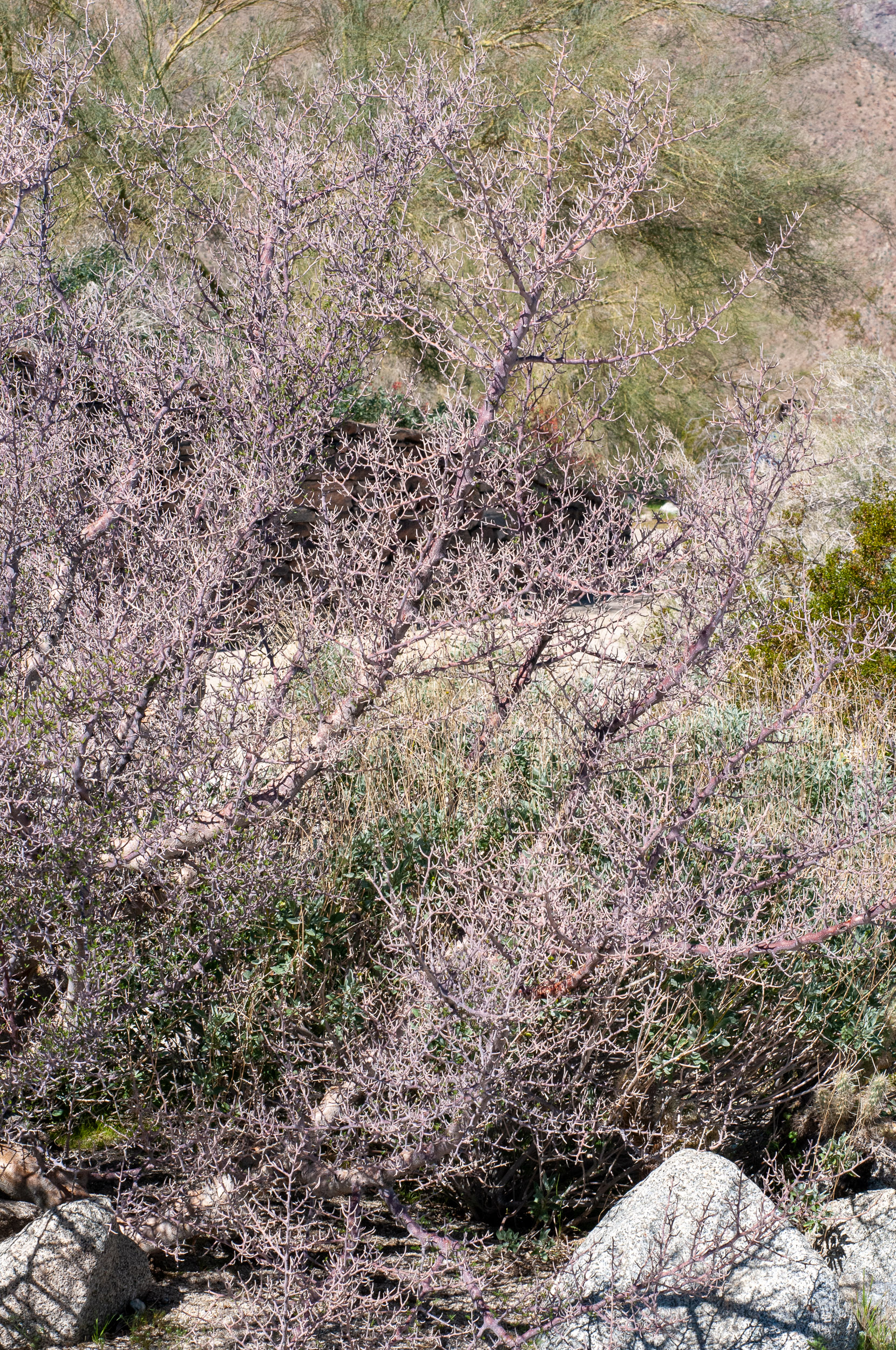
Male. · 2/28/2010 · Anza-Borrego Desert State Park, California 
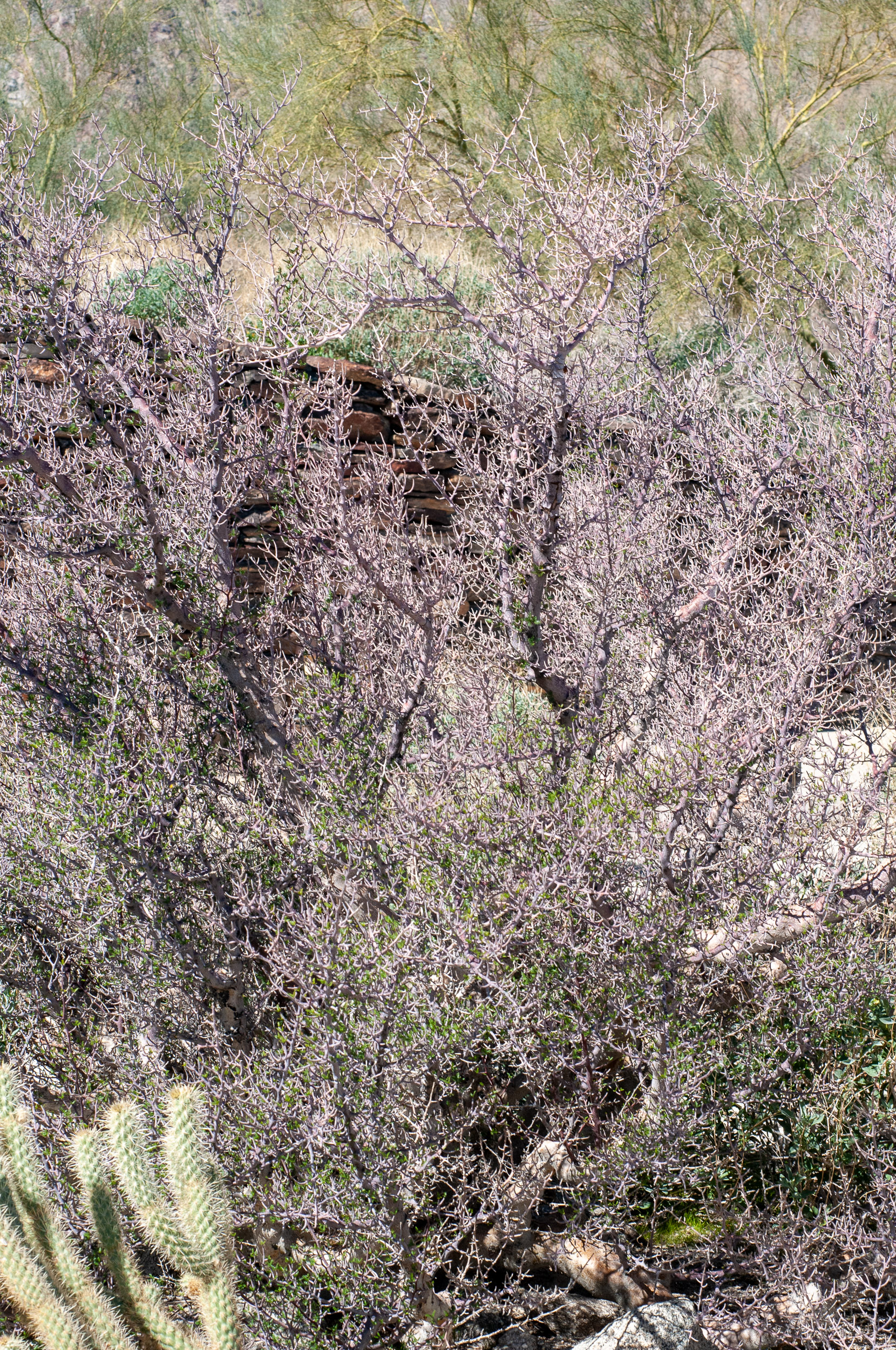
Male. · 2/28/2010 · Anza-Borrego Desert State Park, California 
| Kingdom | Plantae | Plants, but not fungi, lichens, or algae (from Stearn's Botanical Latin) |
| Subkingdom | Tracheobionta | Vascular plants—plants with a “circulatory system” for delivering water and nutrients |
| Division | Magnoliophyta | Flowering plants, also known as angiosperms |
| Class | Magnoliopsida | Dicotyledons—plants with two initial seed leaves |
| Subclass | Rosidae | Roses, legumes, proteas, dogwoods, hydrangeas, mistletoes, euphorbias, grapes, many more |
| Order | Sapindales | Includes citrus; maples, horse-chestnuts, lychees and rambutans; mangos and cashews; frankincense and myrrh; mahogany and neem |
| Family | Burseraceae | The torchwood family, the frankincense and myrrh family, or simply the incense tree family—over 500 species of tropical trees and shrubs |
| Genus | Bursera | After botanist Joachim Burser (1583-1649) |
| Species | microphylla | “Small-leaved” |
Bursera microphylla description by Thomas H. Kent, not updated.

© FloraFinder.org. All rights reserved.