Baccharis sarothroides A. Gray
Desertbroom, greasewood, rosin-bush, groundsel
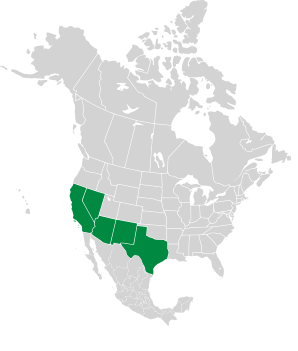
Desertbroom’s name derives from the appearance of this shrub during the summer, when its already small leaves mostly drop off to minimize water loss. (Plants that drop leaves during the summer are drought deciduous.) The resulting brown woody bush looks like a broom, and was often used for this purpose. This species is native to the American southwest and northern Mexico.
There is a cultivar of this species that is prostrate instead of bushy in appearance, useful for ground cover. But the native version is considered invasive by some, and the cultivated form may revert to the native version.
Plants: Rounded shrubs up to 13′ (4 m) high and 6′ (1.8 m) around, densely branched. Main stems are green and sharply angled, becoming brown and woody. Flower-bearing stems are green and almost leafless. Stems are resinous and very pungent.
Leaves: Green, sessile (directly attached to the stems), thick, and narrow. They are linear to oblanceolate, less than 1¼″ (3.5 cm) long and 1/32–1/16″ (1–2 mm) wide, with a single main vein.
Flowers: Abundant, rayless, puffy flowers are white to cream or tan. Plants are dioecious. Female plants produce slender showy flowers from August to November. Flowers on male plants are not showy.
Fruits: Female flowers produce seeds borne on light fuzzy “parachutes” that fill the air.
Habitats: Desert washes, roadways, and other disturbed areas, and both wet and dry habitats, at elevations below a mile.
Medical: The Seri Indians made a decoction by cooking the twigs. This tea was used to treat colds, sinus headache, and as a rub for sore muscles. (Felger, R. S. and M. B. Moser, 1985, People of the Desert and Sea. University of Arizona Press, Tucson, AZ) Such decoctions were used also to treat coughs and stomach aches. However, this species is not listed in the Physician’s Desk Reference for Herbal Medicines, so it has no substantiated medical uses.
Online References:

5/2/2018 · Cottonwood Spring, Joshua Tree National Park, California · ≈ 12 × 8″ (31 × 20 cm) 

5/2/2018 · Cottonwood Spring, Joshua Tree National Park, California · ≈ 10 × 6″ (24 × 16 cm) 
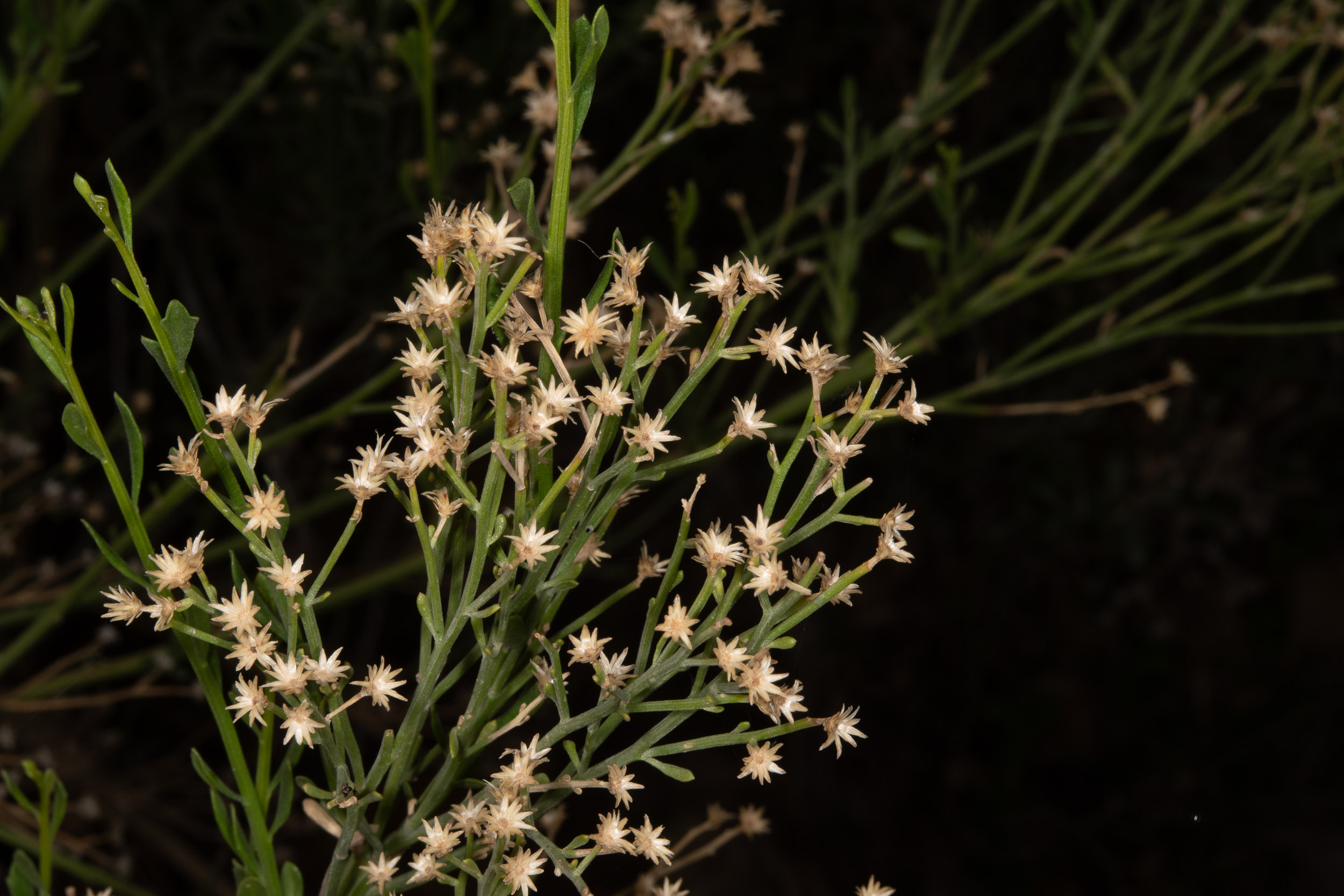
5/2/2018 · Cottonwood Spring, Joshua Tree National Park, California · ≈ 6 × 4″ (16 × 11 cm) 
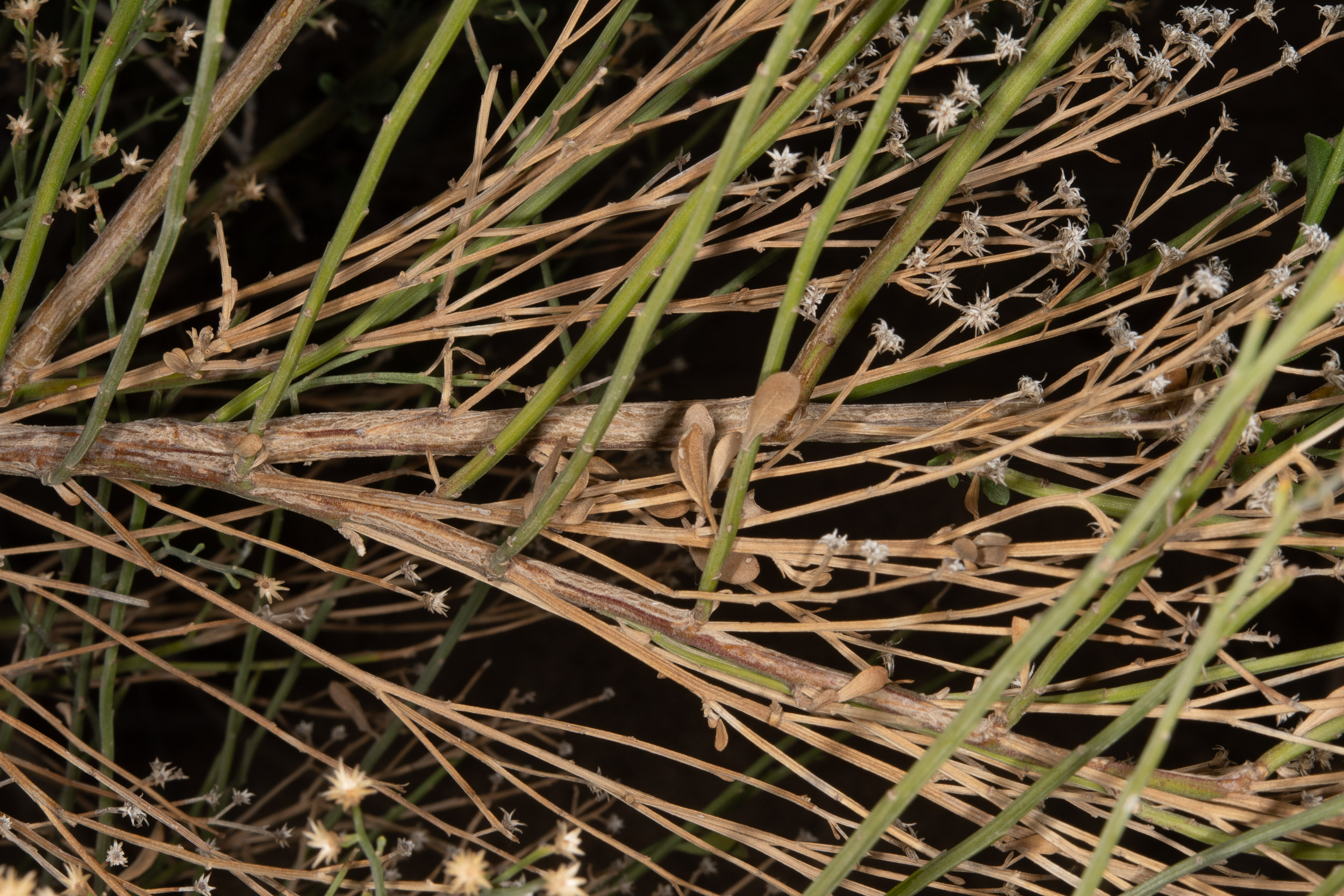
5/2/2018 · Cottonwood Spring, Joshua Tree National Park, California · ≈ 8 × 5″ (20 × 13 cm) 
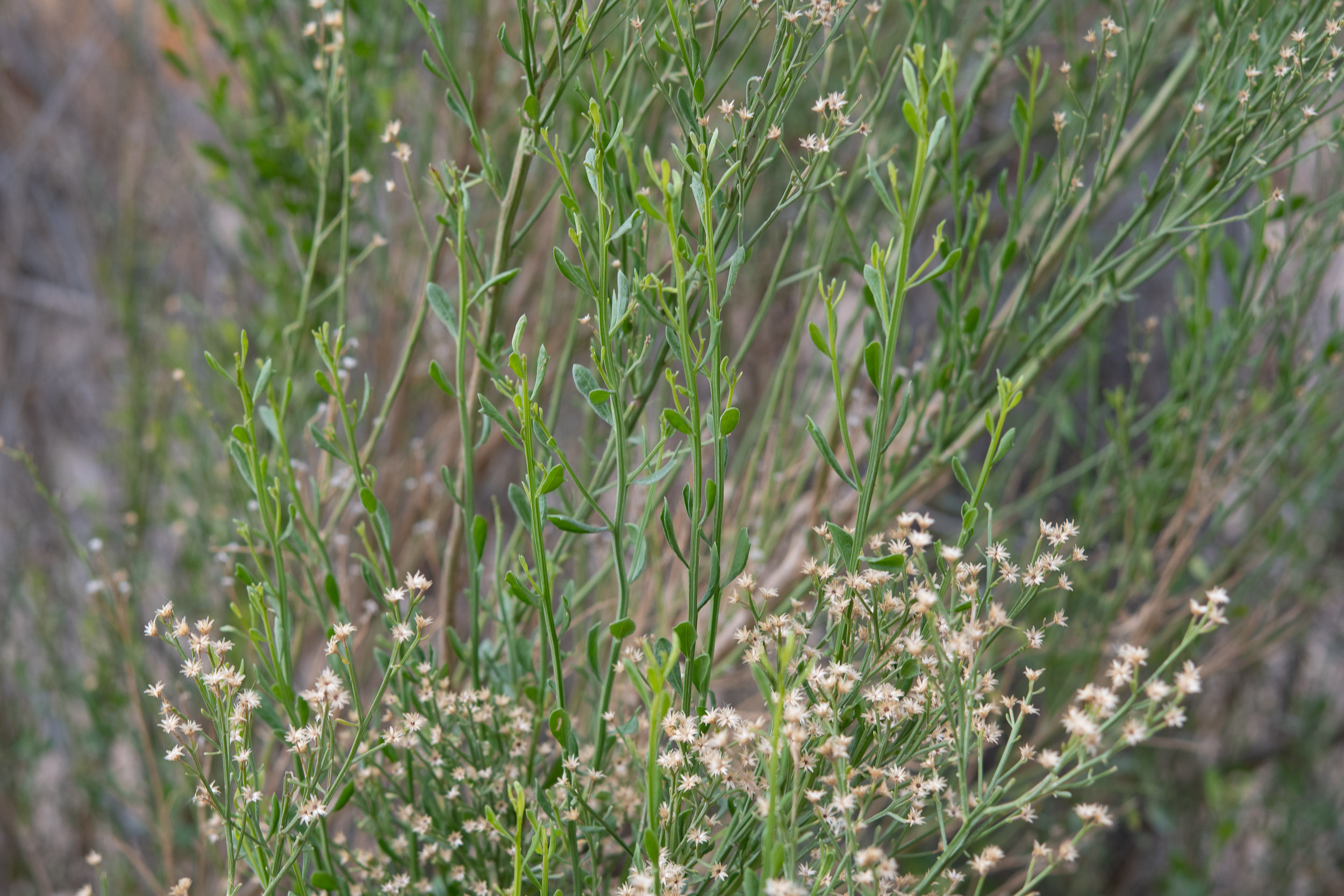
5/2/2018 · Cottonwood Spring, Joshua Tree National Park, California · ≈ 15 × 10″ (39 × 26 cm) 
| Kingdom | Plantae | Plants, but not fungi, lichens, or algae (from Stearn's Botanical Latin) |
| Subkingdom | Tracheobionta | Vascular plants—plants with a “circulatory system” for delivering water and nutrients |
| Division | Magnoliophyta | Flowering plants, also known as angiosperms |
| Class | Magnoliopsida | Dicotyledons—plants with two initial seed leaves |
| Subclass | Asteridae | A large class that encompasses asters |
| Order | Asterales | Flowering plants with a central disk flower and surrounding petals, like daisies |
| Family | Asteraceae | The aster family, which also includes daisies and sunflowers; from the Greek ἀστήρ, “star,” for the star-shaped flowers |
| Genus | Baccharis | From Greek name Bakkaris given in honor of Bacchus, the god of wine, to a plant with a fragrant root and recycled by Linnaeus |
| Species | sarothroides | Broom-like |
Baccharis sarothroides description by Thomas H. Kent, not updated.

© FloraFinder.org. All rights reserved.