Melia azadirachta L.
Azadirachta indica A. Juss.
Neem, margosa, nimtree, Indian lilac
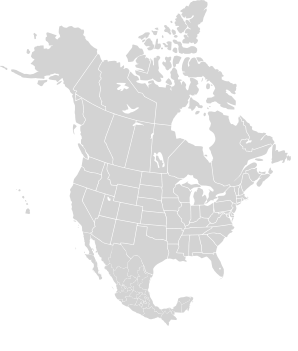
Neem is native to India and parts of Indochina, and naturalized in many other tropical and subtropical climates. It is drought-resistant, and thrives in well-drained, sandy soils. In some regions it is considered a weed, which is curious, because it produces timber, fuelwood, fodder, medicines, pesticides and oil.
Plants: Trees reach 49–66′ (15–20 m). They are evergeens, but shed many leaves during the winter. The crown may reach 66–82′ (20–25 m) around.
Leaves: Pinnate, opposite, 8–16″ (20–40 cm). 20-30 leaflets are each 1–3″ (3–8 cm) long, on short stalks. They may be even pinnate or odd pinnate.
Flowers: Panicles of white flowers are up to 10″ (25 cm) long. The flowerheads are multiply branched and may contain 250-300 flowers. Each flower is ~3/16 ⨉ ¼–⅜″ (5–6 ⨉ 8–11 mm).
Fruits: Smooth, olive-like drupes ½–1 ⨉ ⅜–½″ (1.4–2.8 ⨉ 1–1.5 cm).
Habitats: Deep, sandy, dry to medium, well-drained soils in full sun to part shade.
Medical:  Poisonous. Neem oil pressed from fruits and seeds is used
as an insecticide.
Poisonous. Neem oil pressed from fruits and seeds is used
as an insecticide.
Online References:

6/8/2024 · Anguilla · By Heather A. Kent 
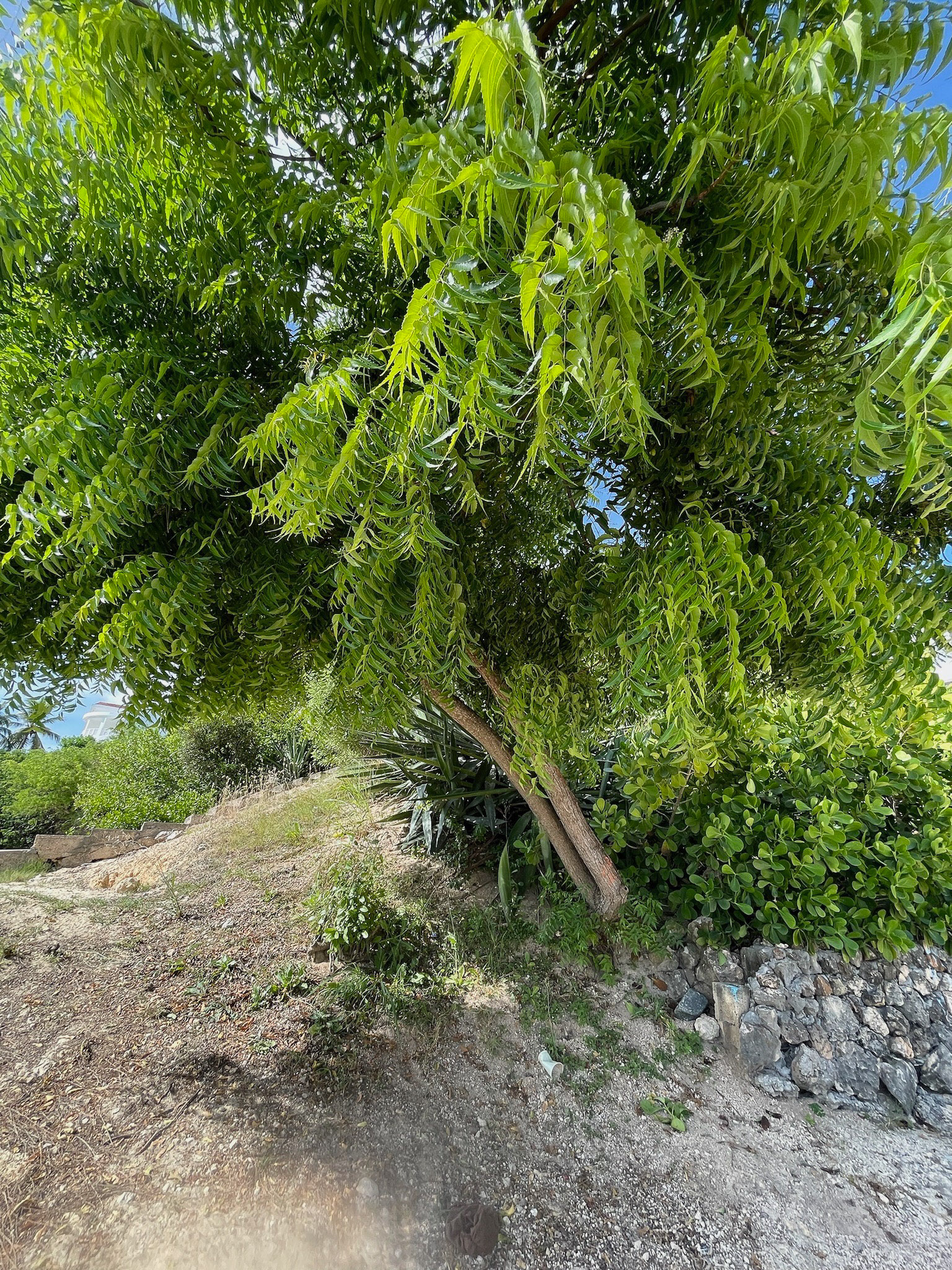
6/8/2024 · Anguilla · By Heather A. Kent 
| Kingdom | Plantae | Plants, but not fungi, lichens, or algae (from Stearn's Botanical Latin) |
| Subkingdom | Tracheobionta | Vascular plants—plants with a “circulatory system” for delivering water and nutrients |
| Division | Magnoliophyta | Flowering plants, also known as angiosperms |
| Class | Magnoliopsida | Dicotyledons—plants with two initial seed leaves |
| Subclass | Rosidae | Roses, legumes, proteas, dogwoods, hydrangeas, mistletoes, euphorbias, grapes, many more |
| Order | Sapindales | Includes citrus; maples, horse-chestnuts, lychees and rambutans; mangos and cashews; frankincense and myrrh; mahogany and neem |
| Family | Meliaceae | Mahogany family of flowering plants |
| Genus | Azadirachta | From the French azédarac, in turn from the Persian āzād dirakht (ازادرخت), “free- or noble tree.“ |
| Species | indica | Of or from or referring in some way to India |
Azadirachta indica description by Thomas H. Kent, not updated.

© FloraFinder.org. All rights reserved.