Avicennia germinans (L.) L.
Black mangrove
Black mangrove is native to seacoasts of the Americas. Red, black, and white mangroves tend to occur together, with the red mangroves closest to the water, black between, and white further inland. These species are not closely related, but they evolved to thrive in similar saline habitats.
Plants: Shrubs or small trees up to 82′ (25 m) tall. While other mangroves grow on prop roots, black mangove does not. Instead, roots are equipped with pneumatophores, emerging upward like spears from the wet ground or water, or from low on the trunk. Trunks and heartwood are dark brown to black.
Leaves: Simple, lanceolate to elliptic, opposite, glossy leaves are 1¾–6″ (4.5–15 cm) long. Each leaf is thick and leatherlike, dark green above and gray to white below. Leaves excrete excess salt, so they may appear white.
Flowers: White fragrant flowers with yellow centers appear in clusters at branch tips. Each flower has four lobes and four stamens, and is about ⅜″ (1 cm) around. They appear year round.
Fruits: Fruits—flattened capsules—drop from the tree, with seeds that germinate while the fruit floats on the water, a process called vivipary.
Habitats: Just above the high tide line in saline (but not overly saline) waters.
 |
Red, black, white, and button mangroves. |
Online References:
References:
Avicennia nitida Jacq.
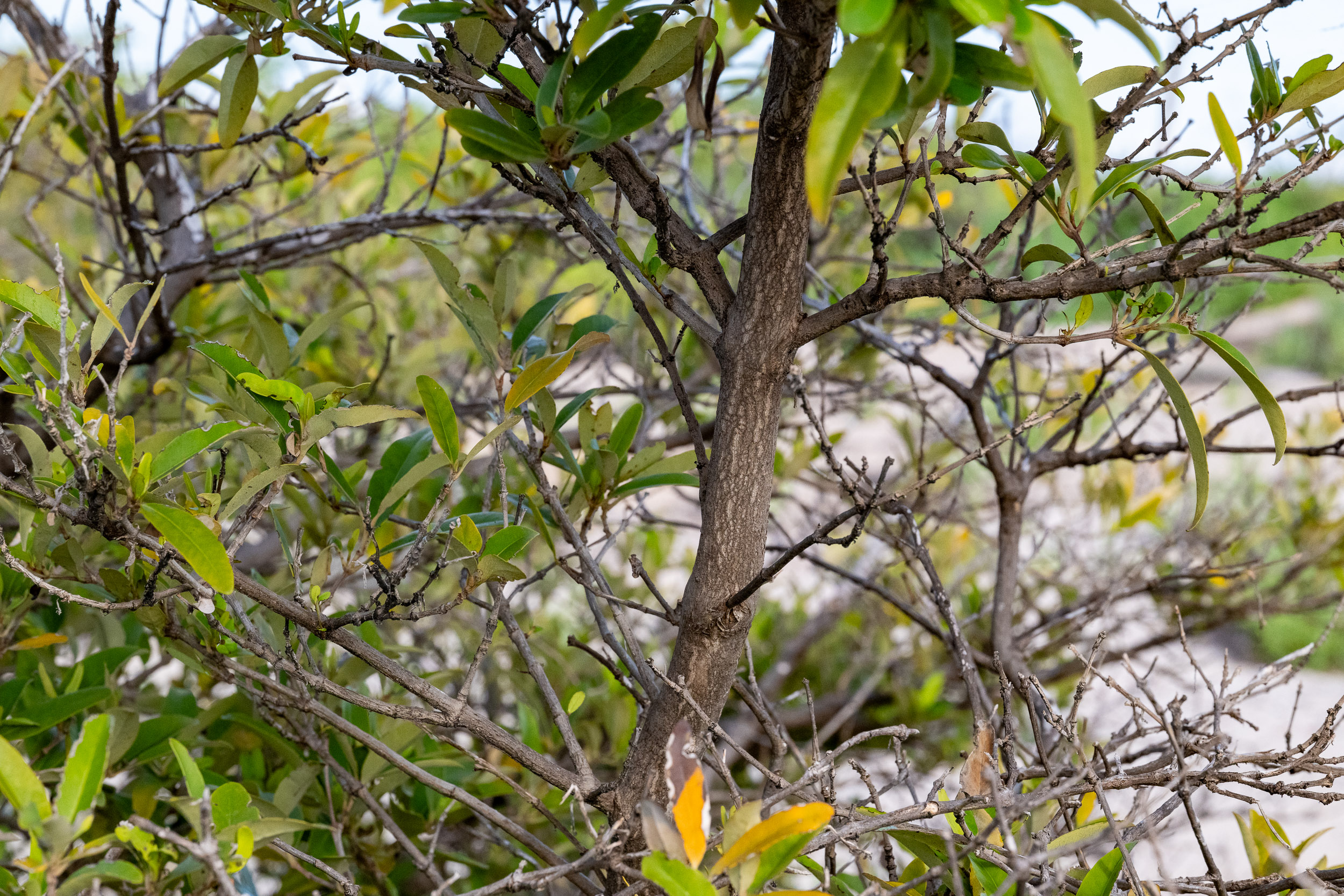
4/3/2025 · Las Bachas Beach, Santa Cruz, Galápagos Islands, Ecuador 
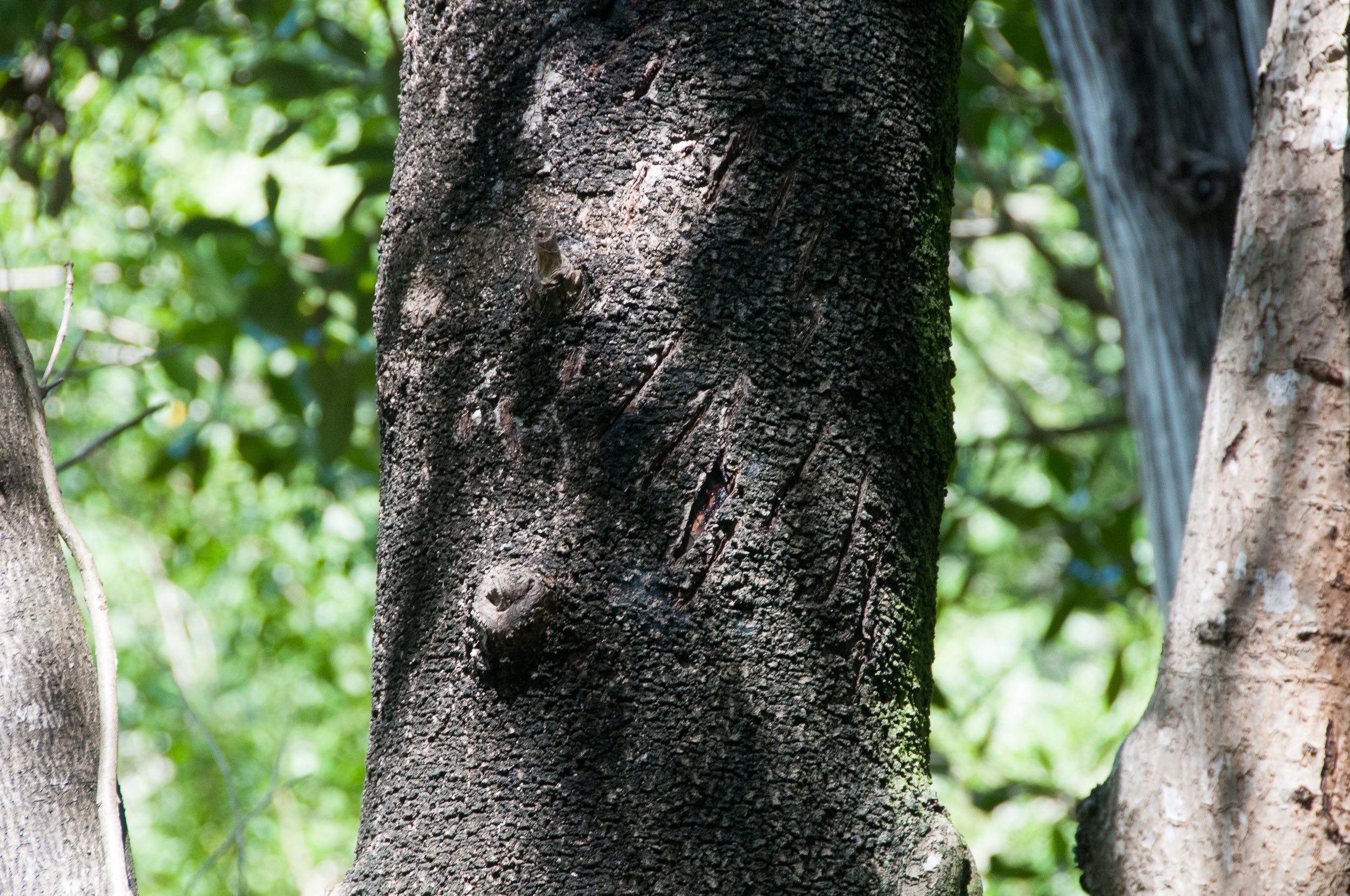
Note the bear claw scratches. · 4/10/2015 · Gulf Coast Visitor Center, Everglades National Park, Everglades City, Florida 

4/3/2025 · Las Bachas Beach, Santa Cruz, Galápagos Islands, Ecuador · ≈ 1½ × 1′ (48 × 32 cm) 
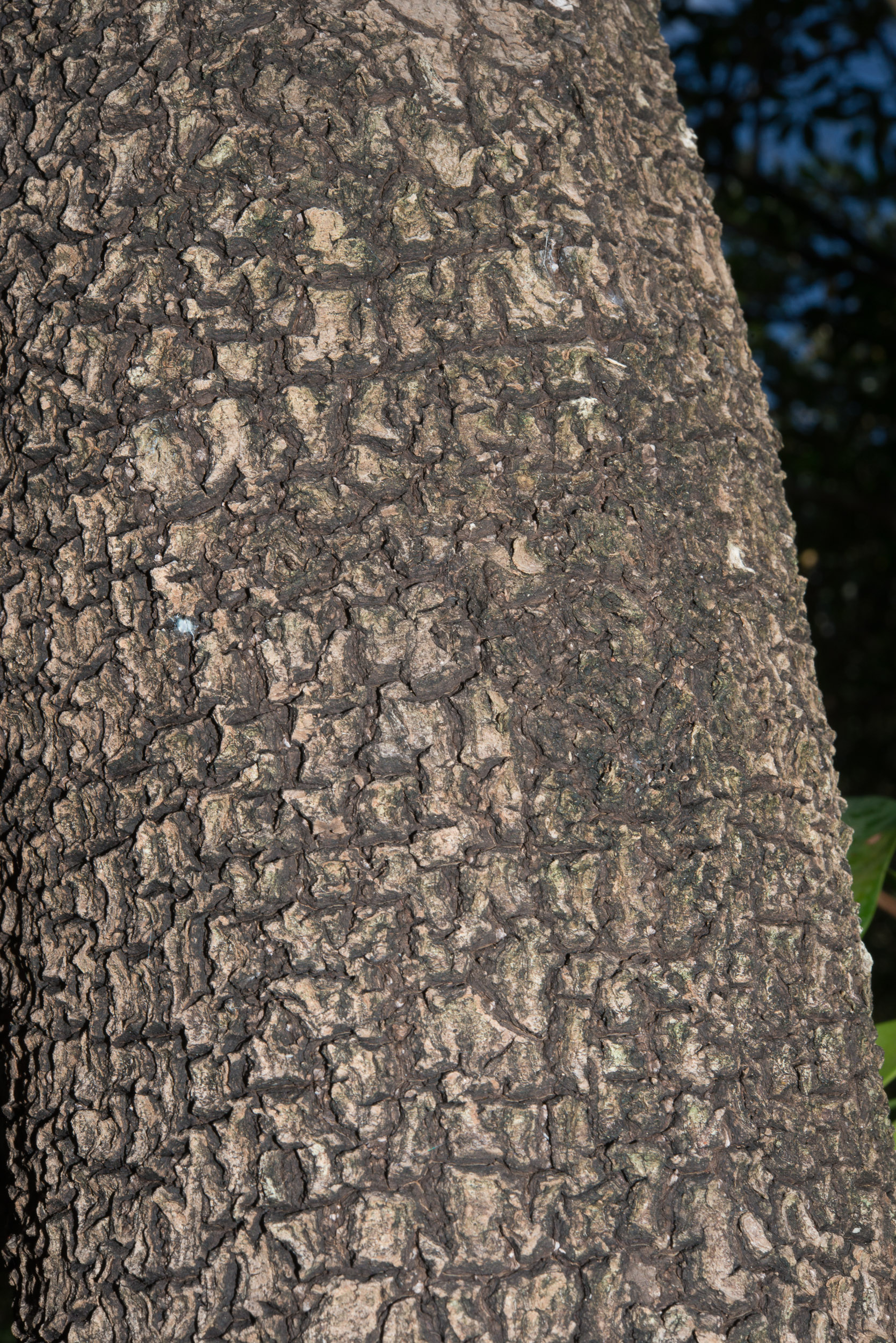
4/13/2015 · West Lake Trail, Everglades National Park, Florida · ≈ 7 × 11″ (18 × 28 cm) 
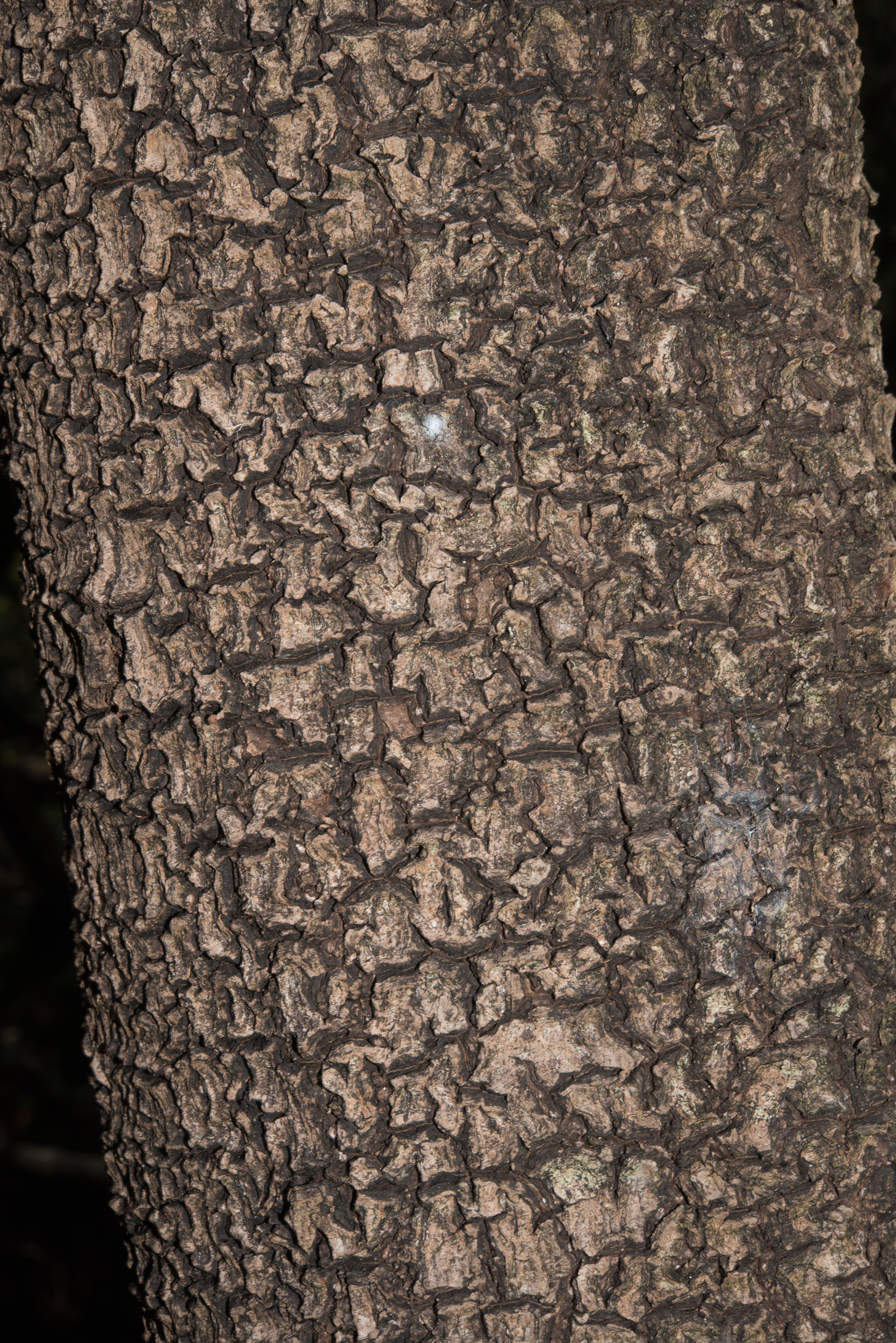
4/13/2015 · West Lake Trail, Everglades National Park, Florida · ≈ 7 × 11″ (18 × 28 cm) 

4/10/2015 · Gulf Coast Visitor Center, Everglades National Park, Everglades City, Florida 
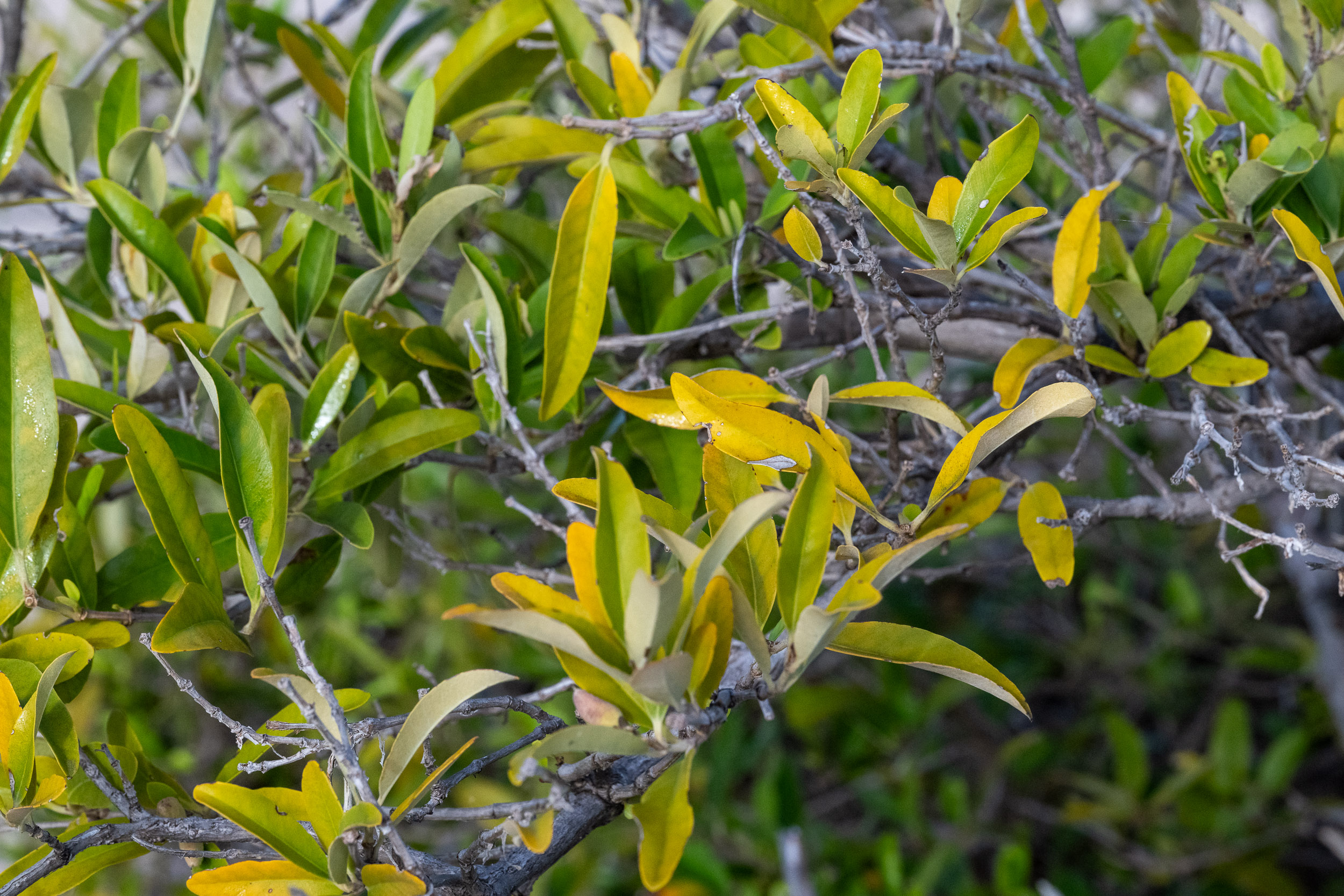
4/3/2025 · Las Bachas Beach, Santa Cruz, Galápagos Islands, Ecuador · ≈ 16 × 11″ (40 × 27 cm) 
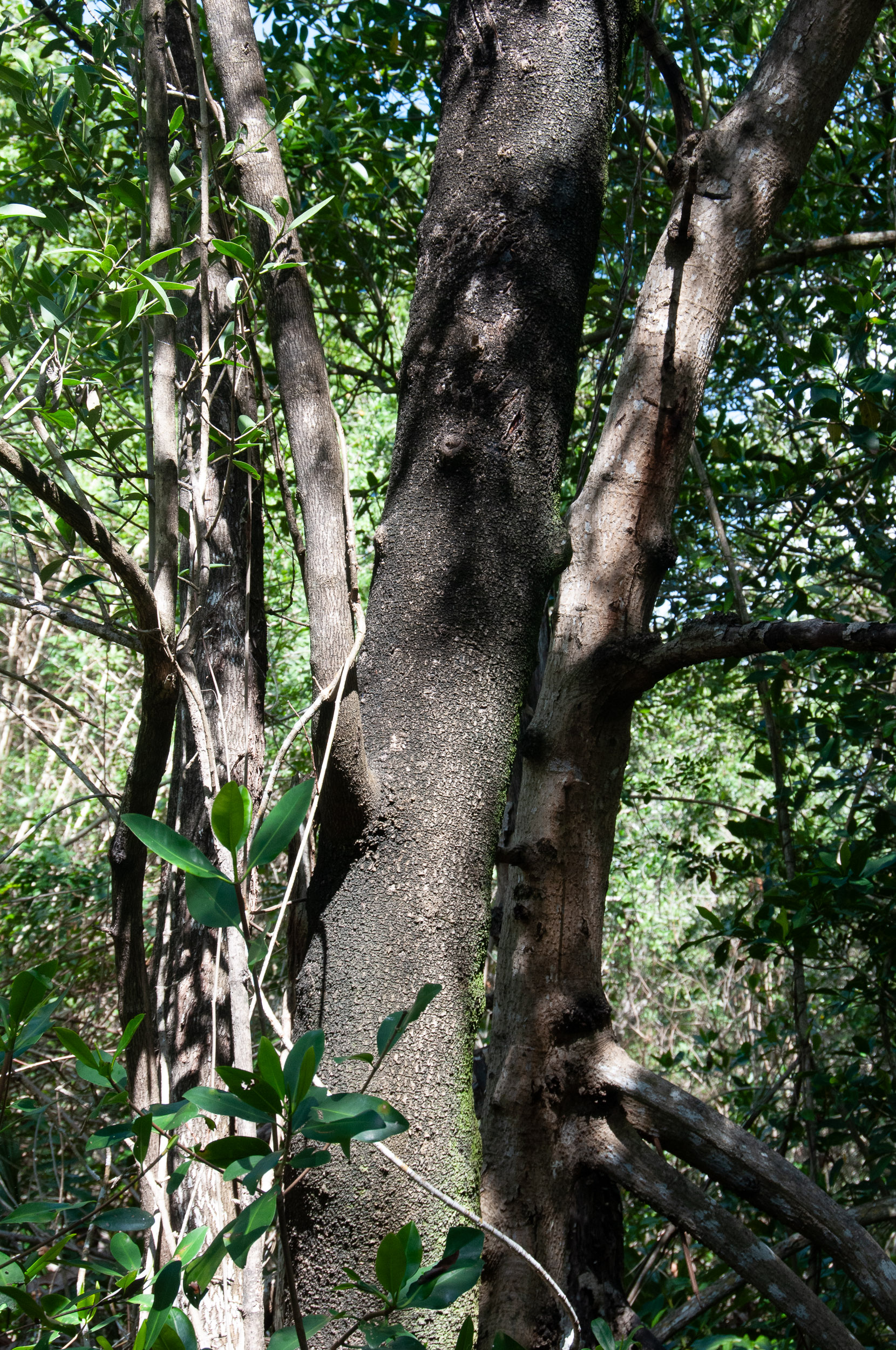
4/10/2015 · Gulf Coast Visitor Center, Everglades National Park, Everglades City, Florida 
| Kingdom | Plantae | Plants, but not fungi, lichens, or algae (from Stearn's Botanical Latin) |
| Subkingdom | Tracheobionta | Vascular plants—plants with a “circulatory system” for delivering water and nutrients |
| Division | Magnoliophyta | Flowering plants, also known as angiosperms |
| Class | Magnoliopsida | Dicotyledons—plants with two initial seed leaves |
| Subclass | Asteridae | A large class that encompasses asters |
| Order | Lamiales | Aromatic herbs and shrubs, including lavender, lilac, olive, jasmine, ash, teak, snapdragon, sesame, psyllium, garden sage, mint, basil, and rosemary |
| Family | Acanthaceae | Acanthus family, of tropical herbs and shrubs |
| Genus | Avicennia | After Avicenna (Abu Ali Al-Husayn Ibn ‘Abd Allah Ibn Sina) (980-1037), a Persian scientist and philosopher, and considered one of the greatest of the medieval Islamic physicians |
| Species | germinans | From germinō, “sprout, bud” |
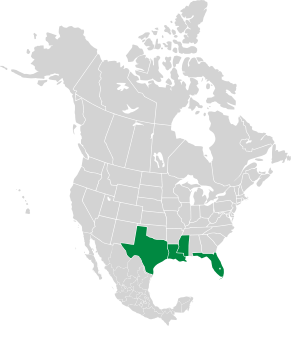
Avicennia germinans description by Thomas H. Kent, not updated.

© FloraFinder.org. All rights reserved.