Artemisia filifolia Torr.
Sand sage, sand sagebrush
[An article has not been written yet.]
Oligosporus filifolius (Torr.) W.A. Weber

8/27/2014 · Petroglyph National Monument Visitor Center, New Mexico · ≈ 7 × 11″ (18 × 28 cm) 

8/27/2014 · Petroglyph National Monument Visitor Center, New Mexico 
| Kingdom | Plantae | Plants, but not fungi, lichens, or algae (from Stearn's Botanical Latin) |
| Subkingdom | Tracheobionta | Vascular plants—plants with a “circulatory system” for delivering water and nutrients |
| Division | Magnoliophyta | Flowering plants, also known as angiosperms |
| Class | Magnoliopsida | Dicotyledons—plants with two initial seed leaves |
| Subclass | Asteridae | A large class that encompasses asters |
| Order | Asterales | Flowering plants with a central disk flower and surrounding petals, like daisies |
| Family | Asteraceae | The aster family, which also includes daisies and sunflowers; from the Greek ἀστήρ, “star,” for the star-shaped flowers |
| Genus | Artemisia | From the Greek goddess Artemis, who gave it her own name because it helped cure her (there are other possible reasons for the derivation of this name too) |
| Species | filifolia | Refers to the thread-like foliage |
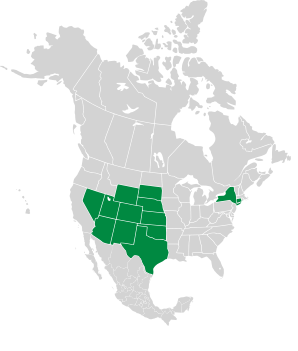
Artemisia filifolia description by Thomas H. Kent, not updated.

© FloraFinder.org. All rights reserved.