Arctium lappa L.
Burdock, greater burdock
Burrs. Burdock. I used to be terrified of them, after once watching my parents spend hours picking them out of my sister’s hair. But the system these plants use to spread their seeds is inventive. The seed pods, about ¾″ (1.9 cm) in diameter, are festooned with dozens of tiny hooks that latch onto passers-by. Burdock is native to temperate regions in Europe, the Middle East, and the Far East. It is now naturalized and common in North America.
The “Bur” in burdock is thought to be a contraction of the French bourre (from Latin burra), a lock of wool—perhaps the easiest place to find burrs. “Dock” describes the large basal leaves.
Plants: Burdock is related to thistles, and you can see this clearly in the purple (sometimes white) flower clusters, though the leaves are not prickly. The plants reach 6½′ (2 m) in height, and the flowers are beautiful at close range. The plant as a whole is somewhat ungainly though. See also Arctium minus, a smaller and more common version of this plant.
Leaves: Most of the leaves, which are dark green and wooly underneath, are large and low-lying—a basal rosette. To my mind they resemble rhubarb leaves: large, rough, and with wavy edges.
Flowers: Purple and grouped in globular capitula, grouped in clusters. They appear from July to September.
Fruits: The burrs are created when the capitula are surrounded by an involucre made out of many bracts, each curving to form a hook.
Habitats: Temperate areas throughout the world.
Edibility. Burdock roots are edible, benefitting from soaking and requiring cooking like other starches. The flower stalks are also edible, while other parts of the plant are not. In Fiery Foods That I Love, by Paul Prudhomme, the Flank Steak with Black Mushrooms recipe includes burdock roots. Sautéed, the roots are used in the several dishes, including the Japanese appetizer kinpira gobō. In some marts the roots are available from commercial growers. The roots of burdock appear very similar to those of common and highly poisonous deadly nightshade, so be careful about collection and make sure any commercial sources are trustworthy.
In 1948 George de Mestrel, a Swiss inventor and hiker, found his dog covered with burrs during a walk, and, after examining the burrs under a microscope, invented Velcro.
Online References:
Lappa major Gaertn.
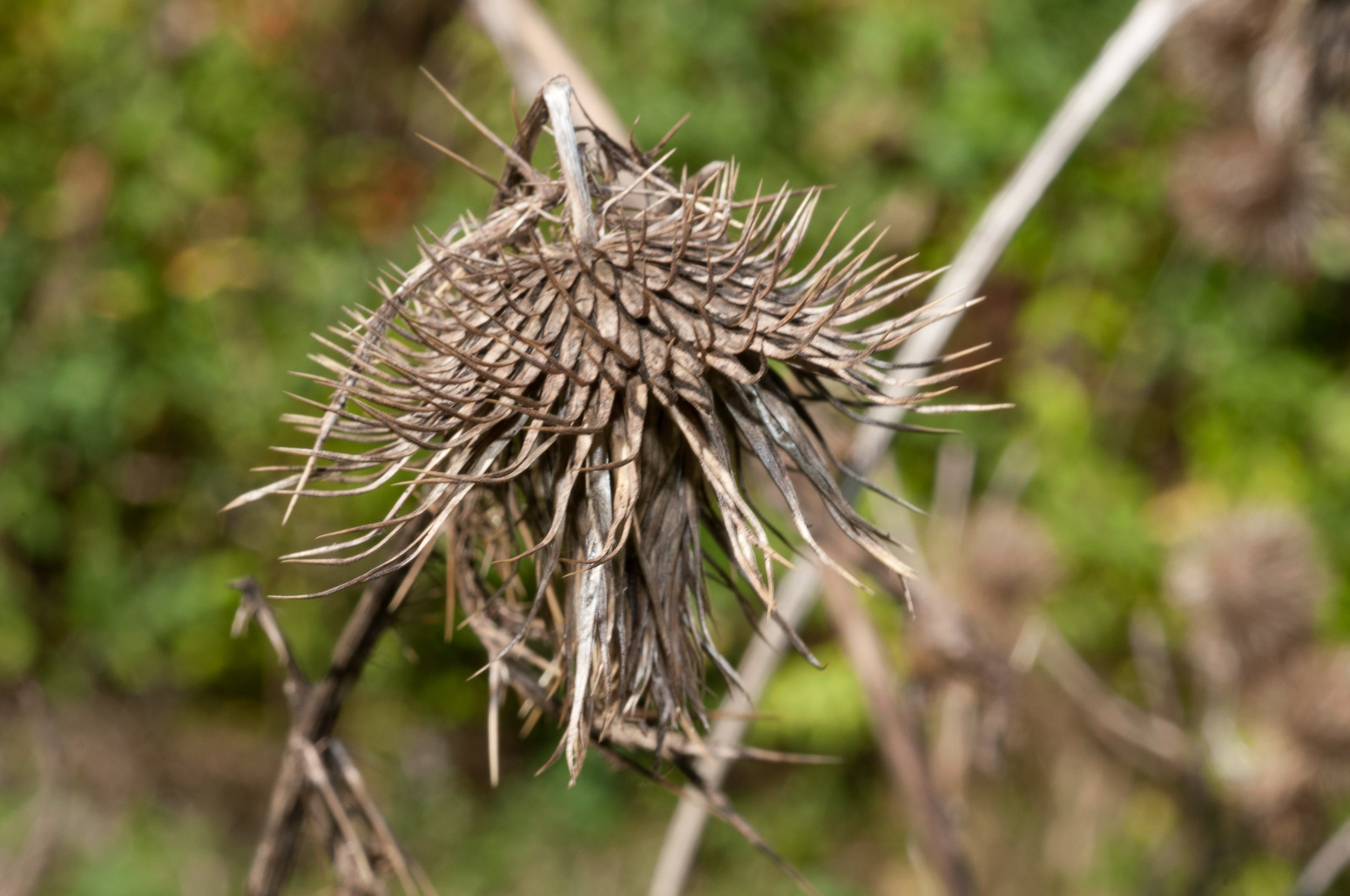
10/2/2010 · Near Huckleberry Ridge State Forest, Greenville/Orange, New York · ≈ 5 × 3½″ (13 × 9.2 cm) 

7/25/2024 · 51 Park Restaurant, Lee, Massachusetts 
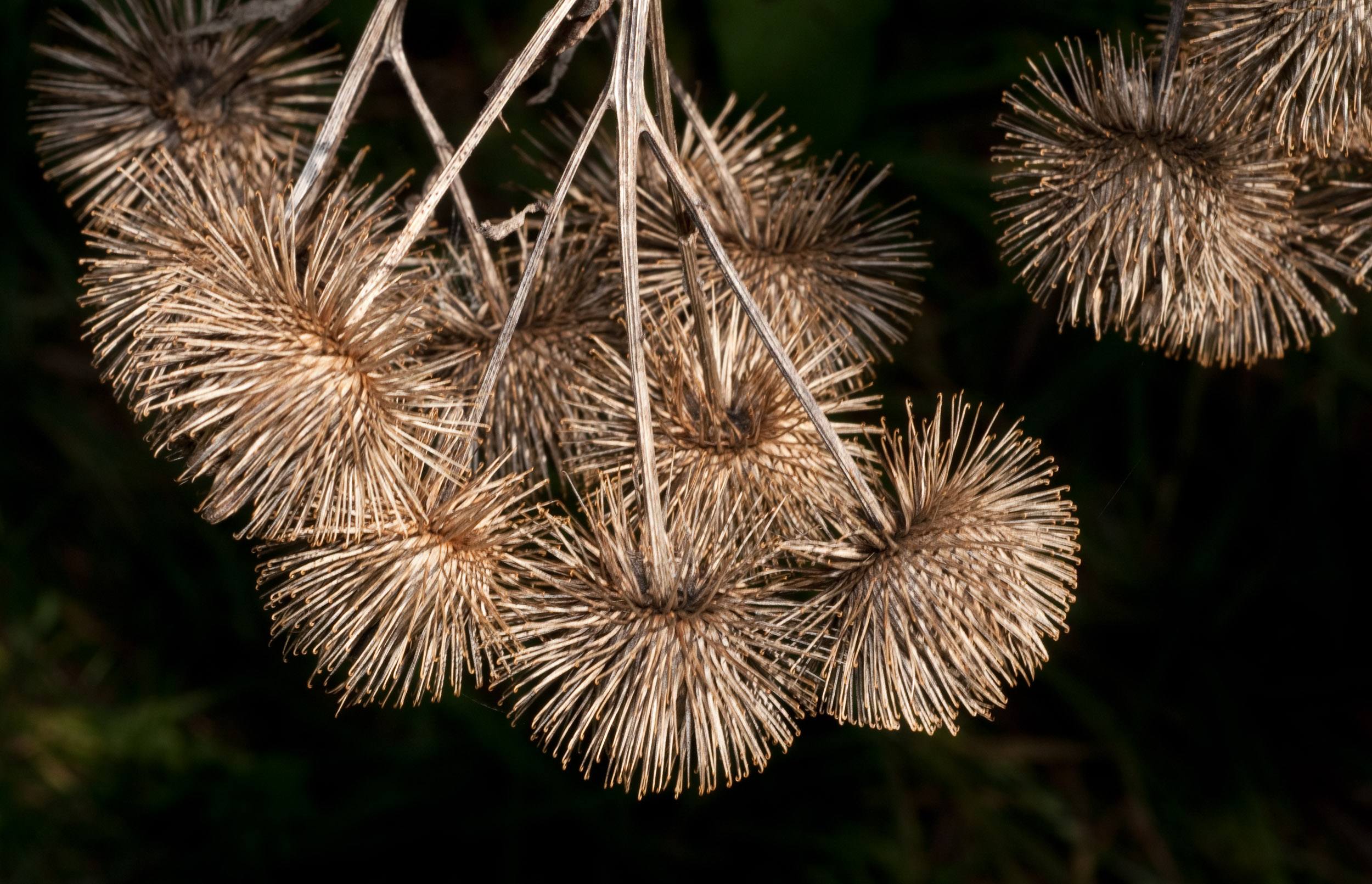
10/2/2010 · Near Huckleberry Ridge State Forest, Greenville/Orange, New York · ≈ 6 × 4″ (16 × 10 cm) 
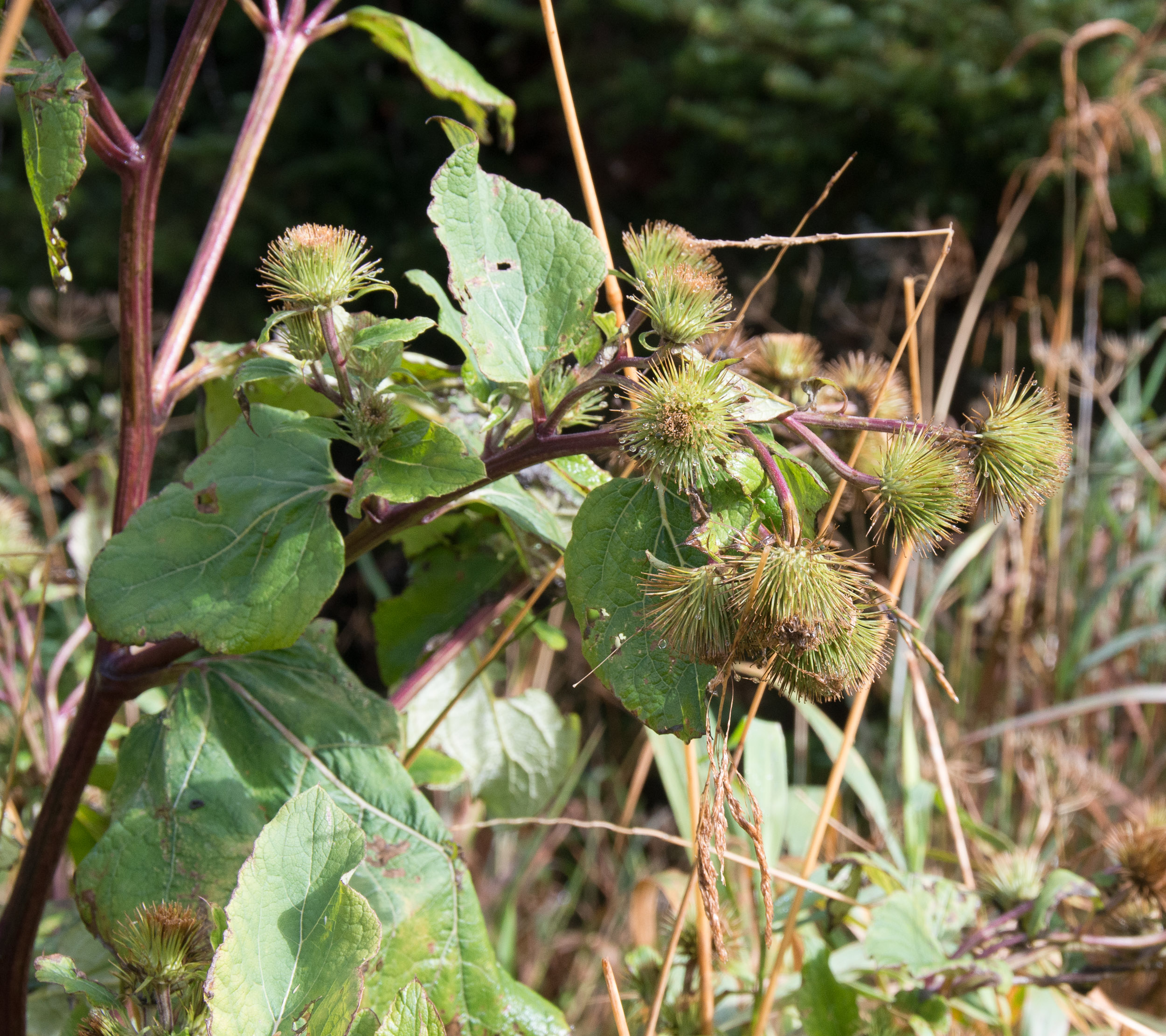
10/5/2014 · Mt. Killington, Killington, Vermont · ≈ 1½ × 1′ (43 × 38 cm) 
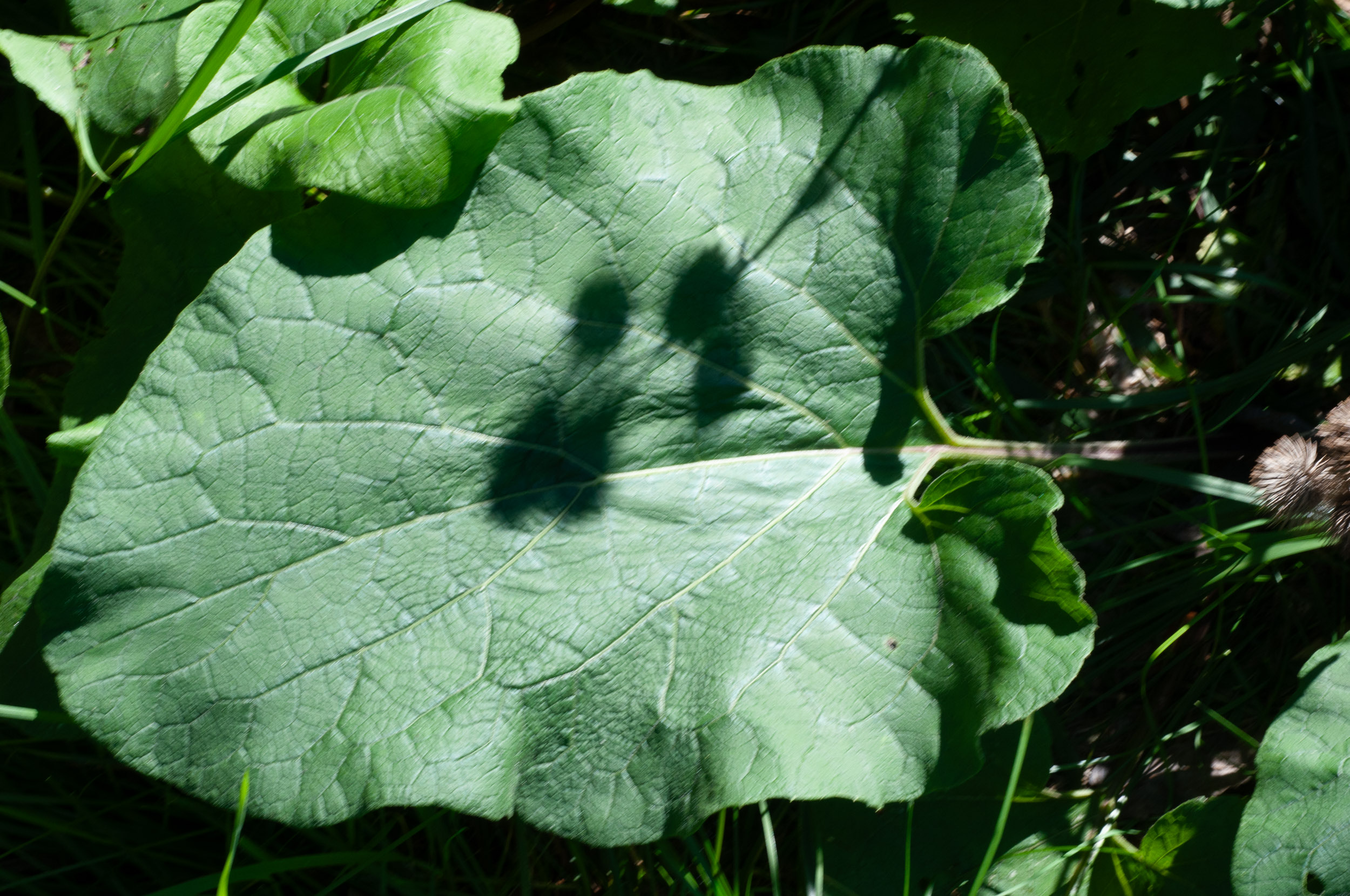
10/2/2010 · Near Huckleberry Ridge State Forest, Greenville/Orange, New York · ≈ 17 × 12″ (44 × 29 cm) 

7/25/2024 · 51 Park Restaurant, Lee, Massachusetts 

7/25/2024 · 51 Park Restaurant, Lee, Massachusetts 

7/25/2024 · 51 Park Restaurant, Lee, Massachusetts 
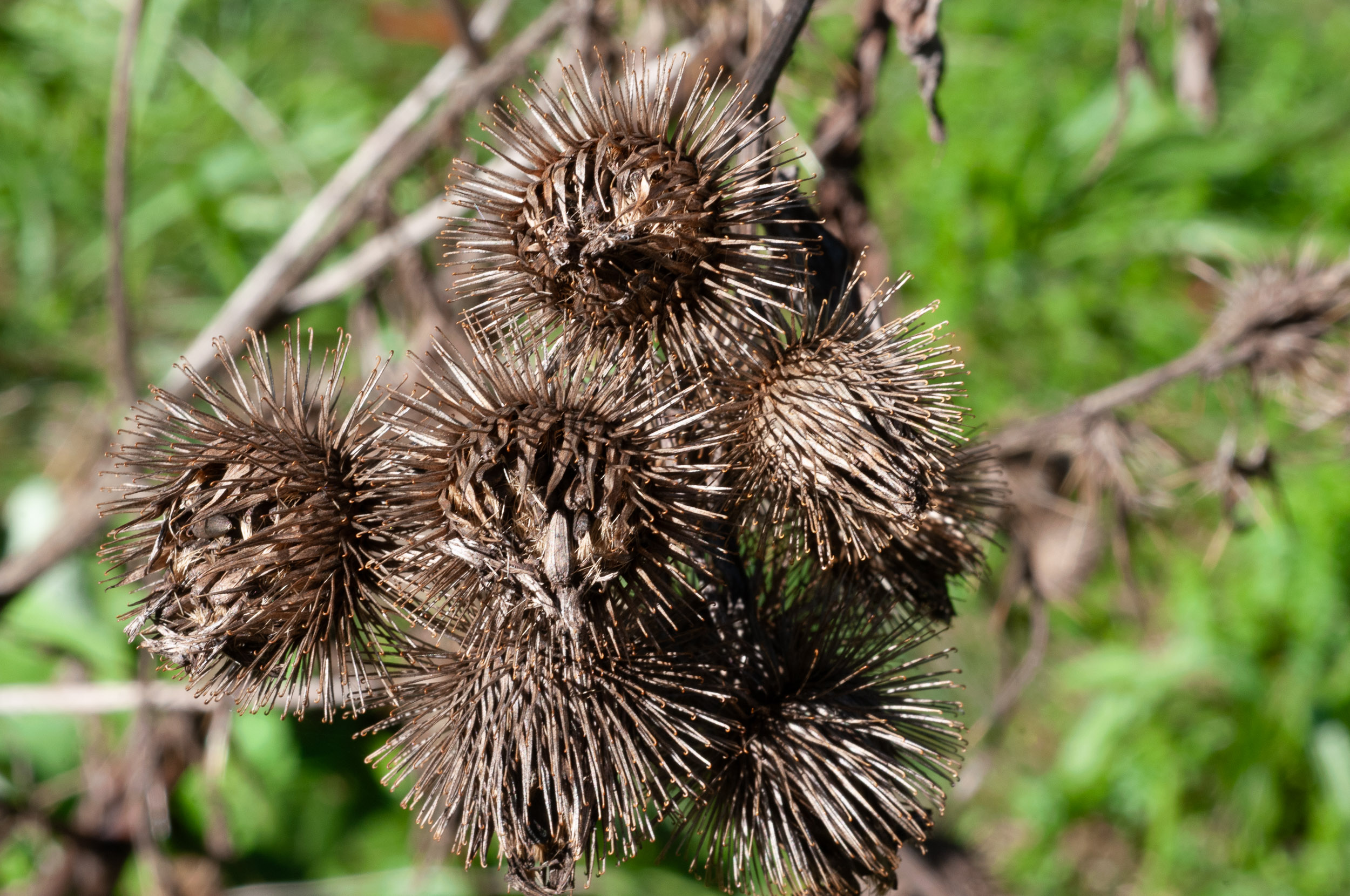
10/2/2010 · Near Huckleberry Ridge State Forest, Greenville/Orange, New York · ≈ 7 × 4½″ (17 × 11 cm) 

8/4/2006 · Sterling Falls Gorge, Stowe, Vermont  ID is uncertain
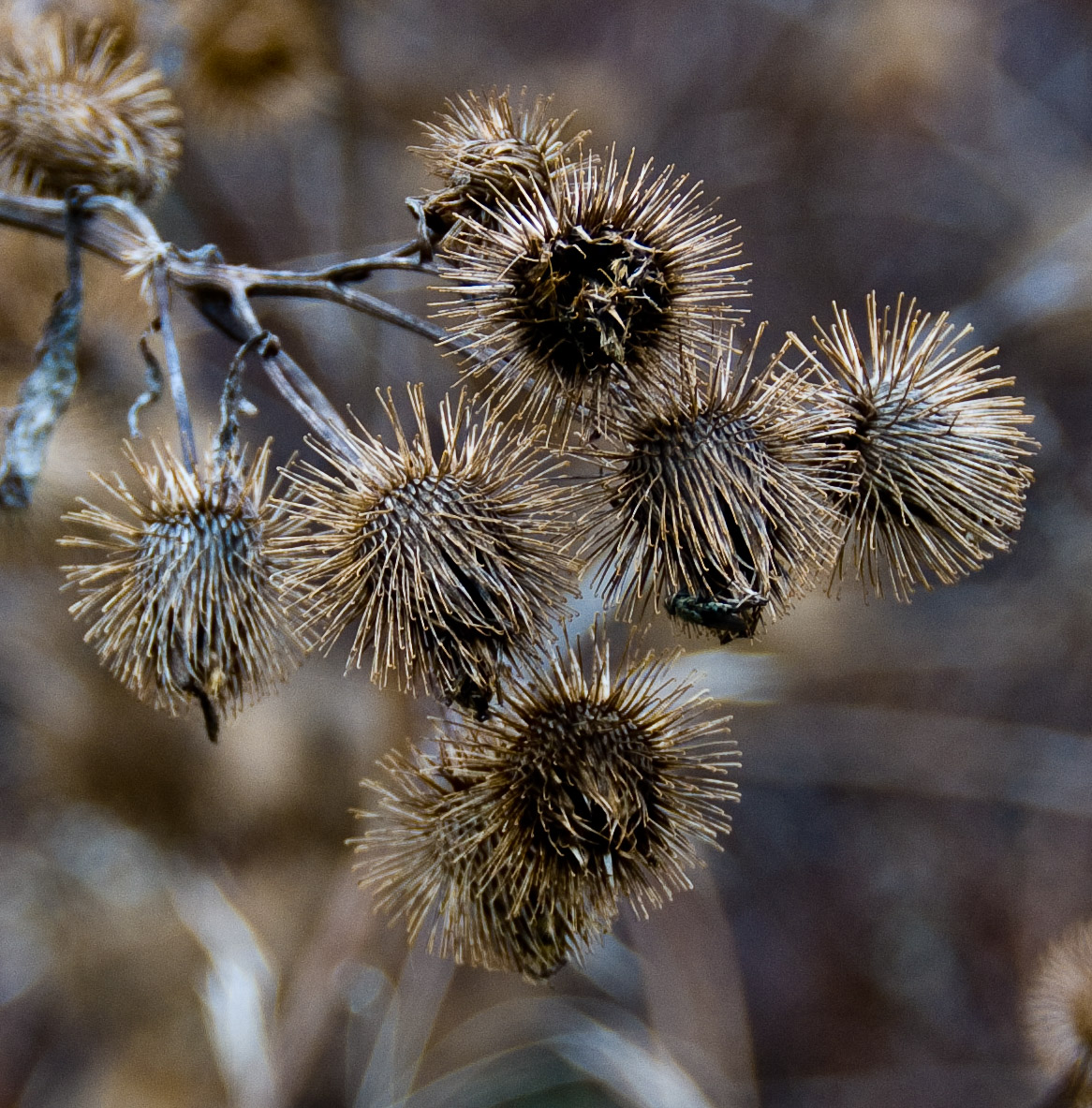
11/11/2008 · Acorn Trail, Great Brook State Park, Carlisle, Massachusetts · ≈ 4 × 4″ (10 × 10 cm) ID is uncertain 
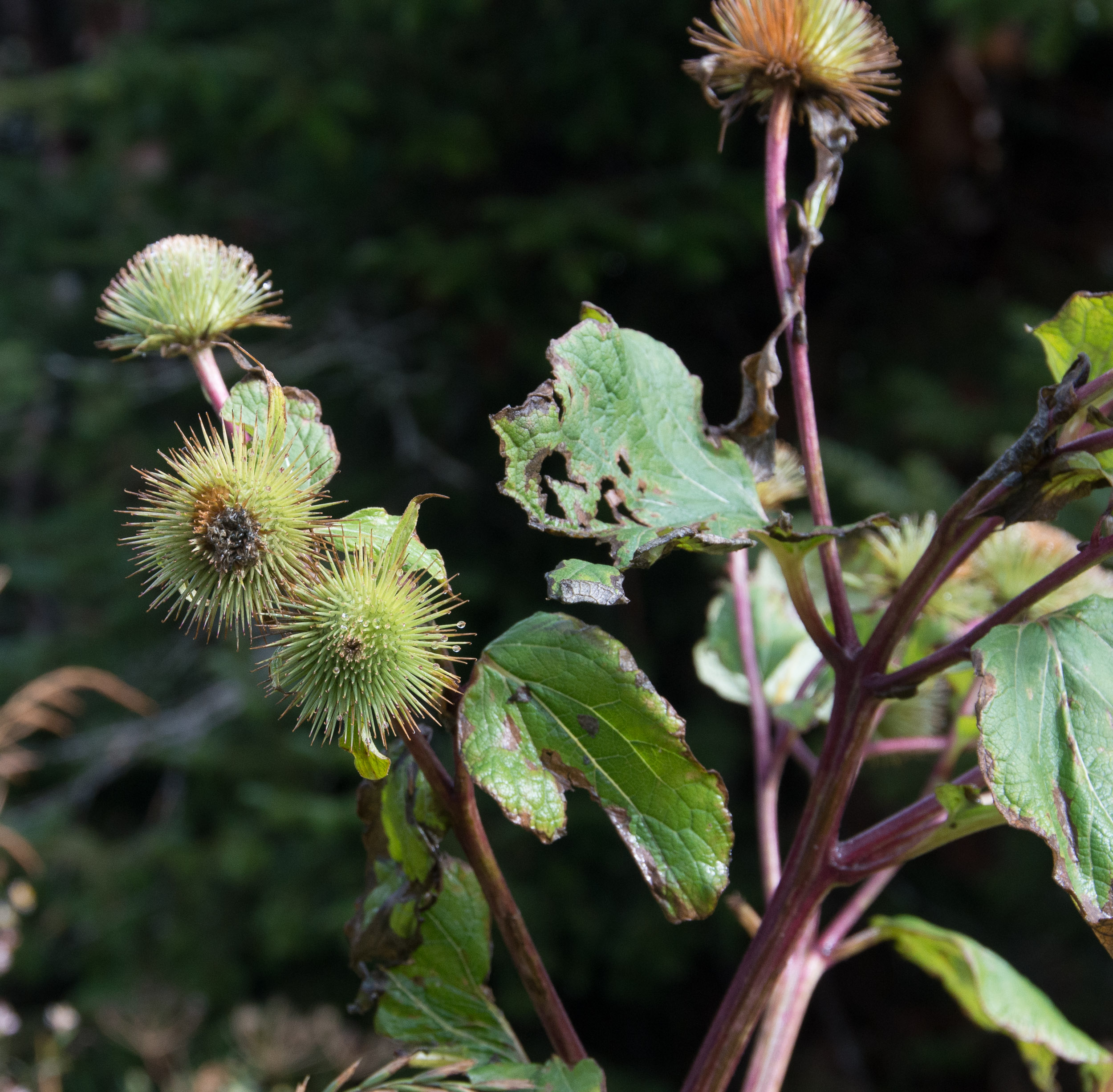
10/5/2014 · Mt. Killington, Killington, Vermont · ≈ 1 × 1′ (31 × 30 cm) 

10/5/2014 · Mt. Killington, Killington, Vermont · ≈ 1 × 1′ (31 × 40 cm) 
| Kingdom | Plantae | Plants, but not fungi, lichens, or algae (from Stearn's Botanical Latin) |
| Subkingdom | Tracheobionta | Vascular plants—plants with a “circulatory system” for delivering water and nutrients |
| Division | Magnoliophyta | Flowering plants, also known as angiosperms |
| Class | Magnoliopsida | Dicotyledons—plants with two initial seed leaves |
| Subclass | Asteridae | A large class that encompasses asters |
| Order | Asterales | Flowering plants with a central disk flower and surrounding petals, like daisies |
| Family | Asteraceae | The aster family, which also includes daisies and sunflowers; from the Greek ἀστήρ, “star,” for the star-shaped flowers |
| Genus | Arctium | From Greek arktos, “bear,” because of the roughness of the burrs |
| Species | lappa | “To seize,” also a reference to the burrs |
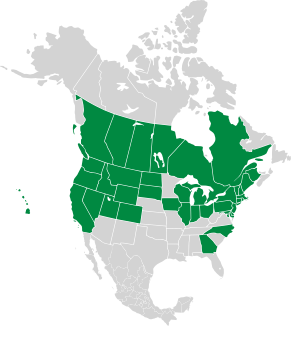
Arctium lappa description by Thomas H. Kent, not updated.

© FloraFinder.org. All rights reserved.