Alnus Mill.
Alder
Some alders compared
Alnus incana
Alnus incana ssp. rugosa
Alnus serrulata


|
Alnus Mill. Alder Some alders compared | |||
Alnus incana |
Alnus incana ssp. rugosa |
Alnus serrulata |
|
|---|---|---|---|
| Common Name | |
|
|
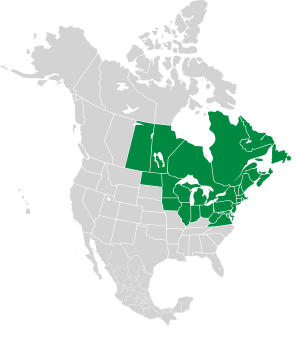
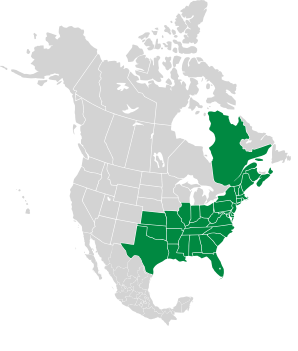
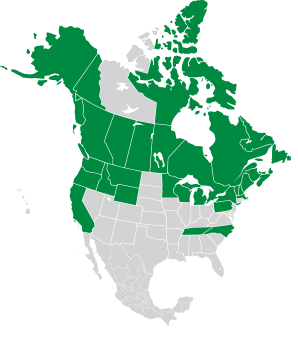
| Plant | Small to medium in size, often with multiple trunks and branches. Speckled alders grow to 12–36′ (3.7–10 m), rarely reaching 60′ (18 m), usually less than 20′ (6.1 m) tall. “Speckled” refers to the presence of many lenticels—white, or light gray or orange oval patches, wider than they are flat, on the trunk. | Trunk is speckled with lenticles—horizontal lens-shaped spots. | 8–13′ (2.5–4 m) tall, somewhat disheveled-looking trees, with many trunks and branches that form a nearly impenetrable thicket. Bark is smooth, lacking lenticels. |
| Leaves | Dark green, alternate, roughly oval, 2–4″ (5–10 cm) long, and doubly serrated. | Oval-shaped, 2½–5″ (6.3–12 cm) long, 2–4″ (5–10 cm) wide | 2–5 ⨉ 1–2½″ (5–12 ⨉ 3–7.1 cm), obovate, with rounded edges or small serrations, dark green above, paler and with fine hairs below. |
| Flowers | Male flowers are catkins 1½–3½″ (3.8–8.9 cm) long. Female flowers are cylindrical catkins attached directly to the branch, ⅛″ (4.8 mm) long. | Male flowers 2½–5″ (6.3–12 cm) long, hanging downward; female flowers about ½″ (1.3 cm) around | Bright yellow in spring, becoming brown-green, male catkins hang in groups of 2-5, and are 2–4″ (5–10 cm) long. Female flowers, also catkins, are upright, cylindrical, up to ¼″ (6.3 mm) long, and bright red or reddish-green. Flowers appear from March to April. |
| Fruit | Egg-shaped cones about ⅝ ⨉ ¼″ (1.6 cm ⨉ 7.9 mm), green at first, becoming dark brown and often persisting through the winter. | Small cones, about ⅝″ (1.6 cm), on short stalks | Small cone-like fruits called strobiles, which remain on the tree through the winter. They are up to ¾″ (1.9 cm) long, containing winged nutlets. |
| Range/ Zones |
|
|
|
| Habitats | Swamps and wetlands. | Moist areas, bordering streams, lakes and rivers; bogs and nutrient-rich swamps. | Moist soil near streams, pond margins, and riversides. |

Alnus description by Thomas H. Kent, not updated.
© FloraFinder.org. All rights reserved.