Agrimonia striata Michx.
Roadside agrimony
Roadside agrimony is native to the United States, Canada, and Saint Pierre and Miquelon.
Plants: 1–4′ (40–130 cm) tall, with stiff stems covered with a mixture of long and short hairs.
Leaves: Alternate, compound, with 3-11 leaflets and 1-4 pairs of small leaflets between the larger ones. The terminal leaflet is the largest, at 1½–4″ (3.8–10 cm) in length. Leaflets are lanceolate to elliptic, widest near the middle. Leaves are coarsely toothed, with teeth that are pointed or somewhat rounded.
Flowers: Spikes (racemes) emerge from stem tops. Each flower is ¼–5/16″ (6.3–8.5 mm) in size, yellow, with five petals and five sepals, and 5-13 stamens. Flower stalks, sepals, and bracts have a scattering of glands that appear as dots. At the base of each flower, beneath the sepals and petals, is a curious-looking structure called a hypanthium. It surrounds the base of the flower with three to four rows of green, sometimes purple-tinged, hooked bristles. Flowers appear from June to September.
Fruits: The hypanthium morphs in shape, looking a bit like an old-style shaving brush. The barbed bristles hook onto passers-by, distributing the seeds. Each hypanthium contains a single seed.
Habitats: Human-disturbed habitats, forest boundaries, meadows and fields, and woodlands.
Online References:
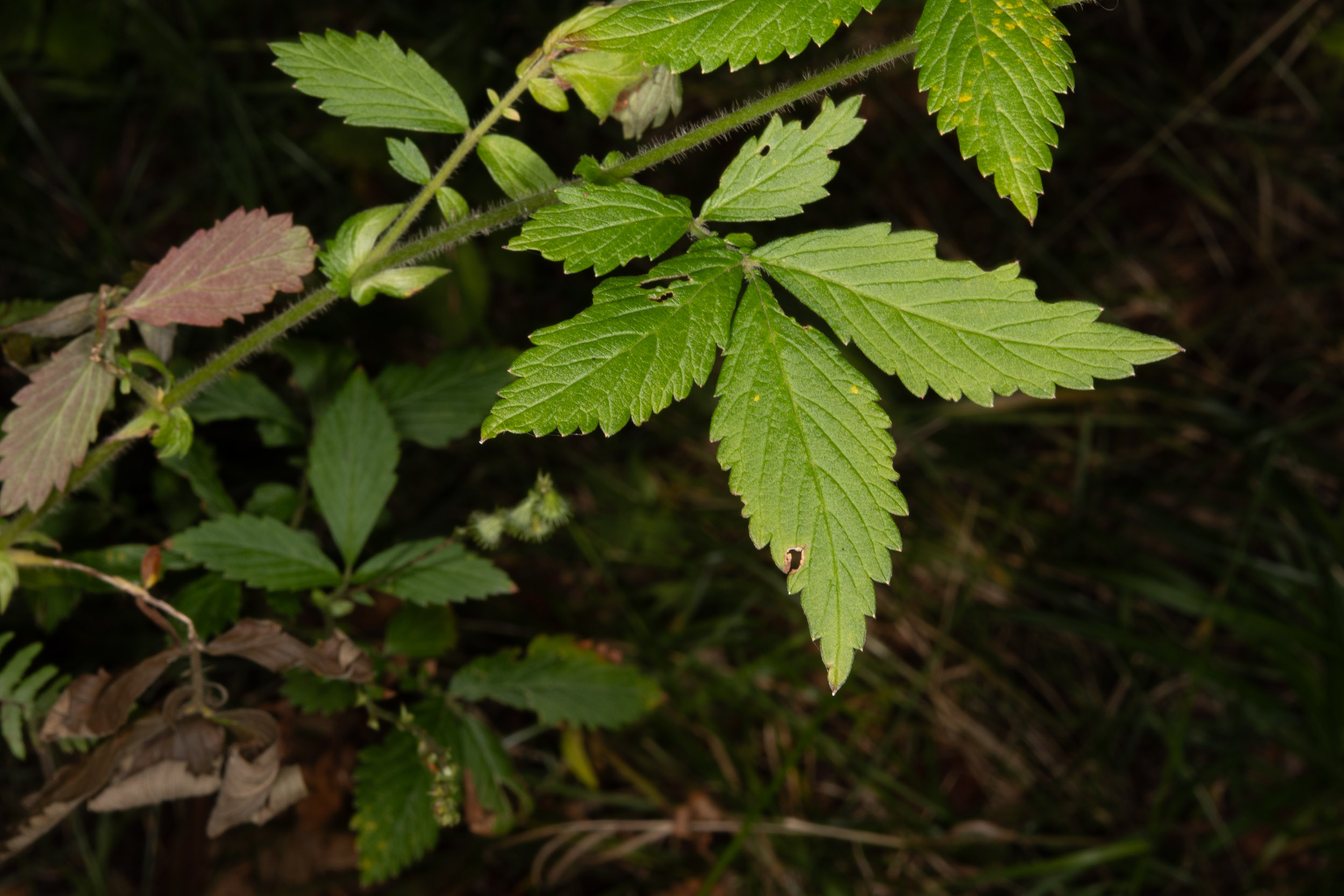
9/22/2023 · Moxie Falls, Moxie Gore, Maine · ≈ 8 × 5″ (20 × 13 cm) 
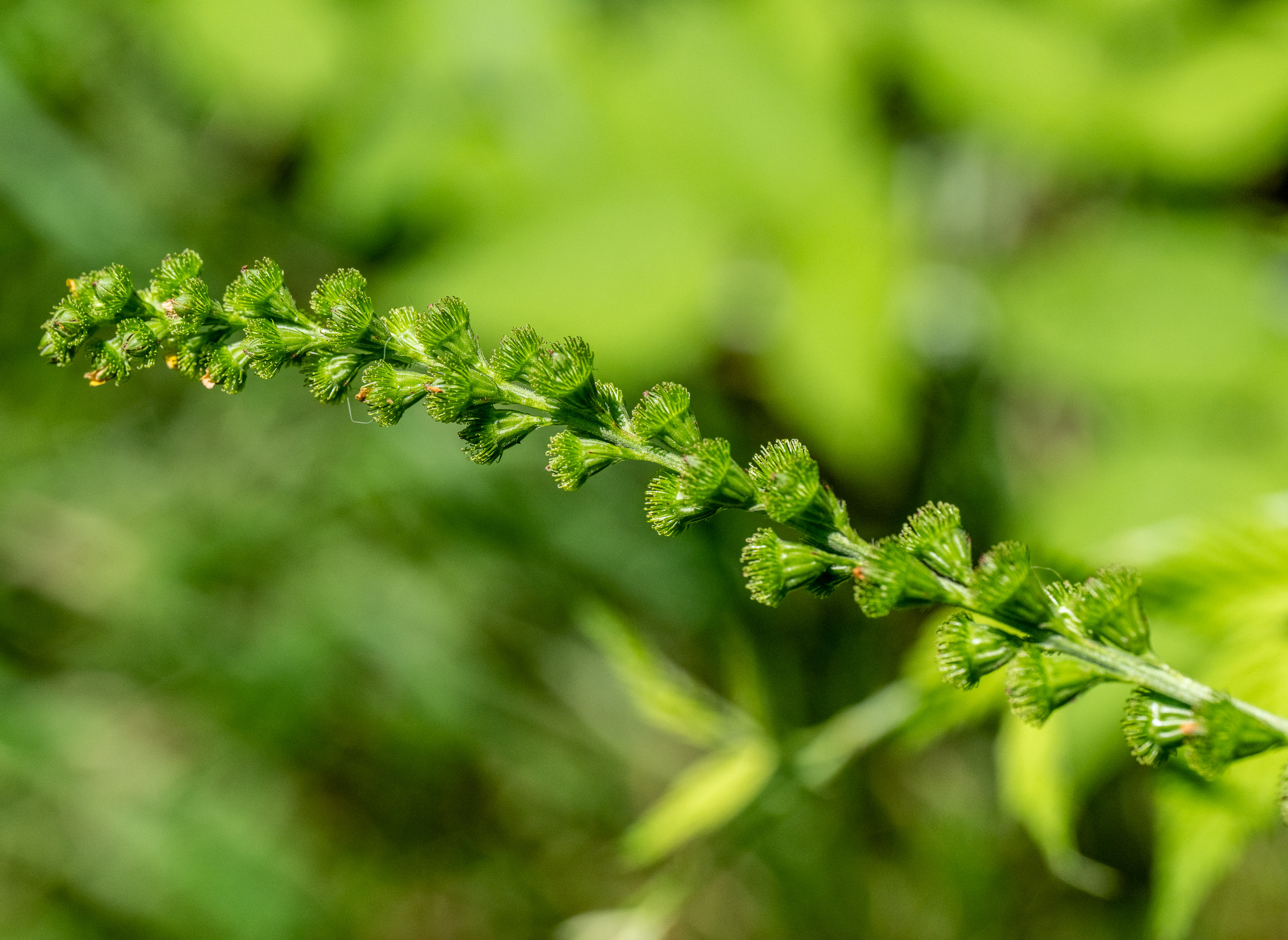
7/26/2025 · River Point Conservation Area, Falmouth, Maine · ≈ 6 × 4″ (14 × 10 cm) 

7/26/2025 · River Point Conservation Area, Falmouth, Maine · ≈ 4½ × 3″ (11 × 7.4 cm) 

7/26/2025 · River Point Conservation Area, Falmouth, Maine · ≈ 10 × 7″ (25 × 17 cm) 

10/25/2024 · River Point Conservation Area, Falmouth, Maine 
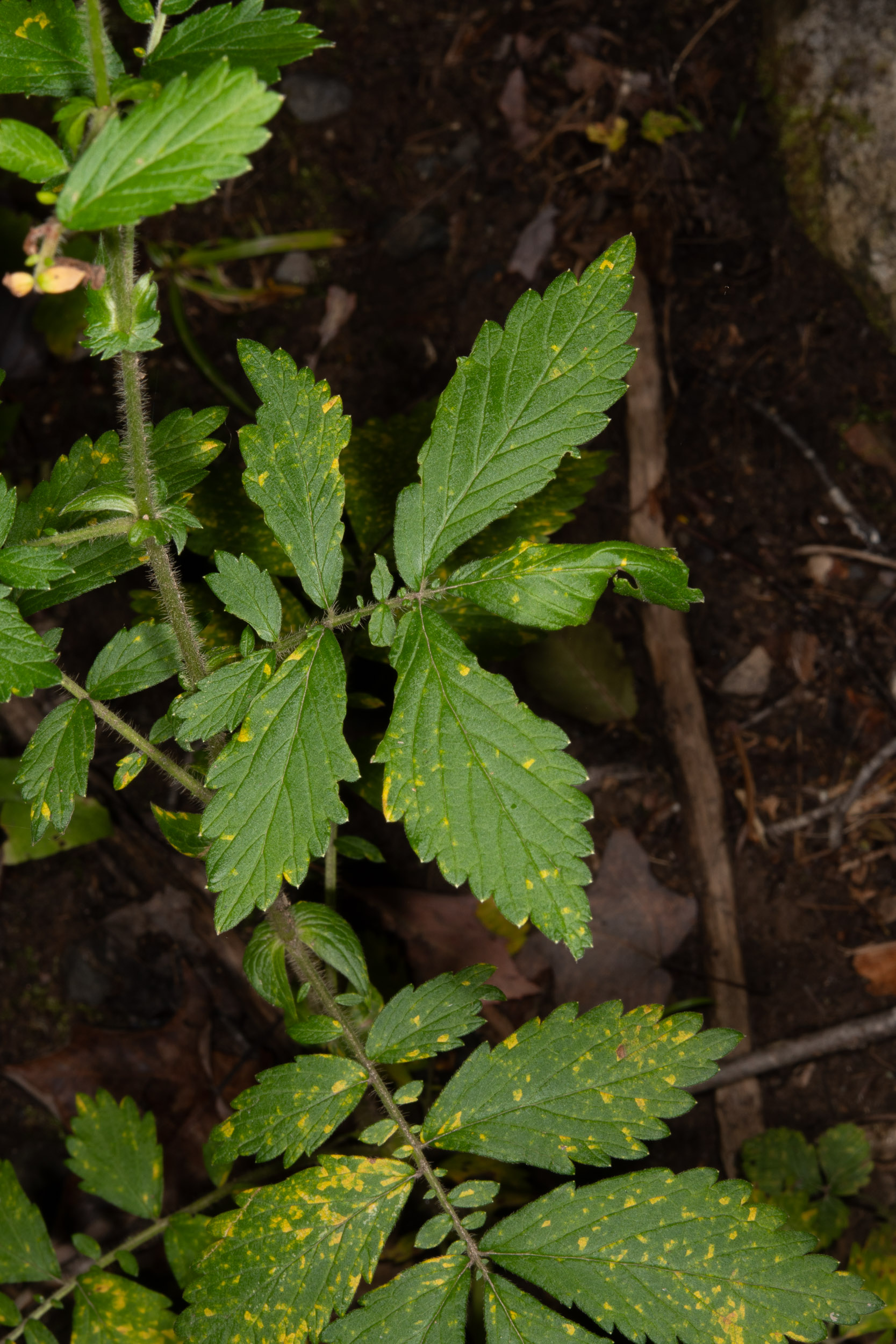
9/22/2023 · Moxie Falls, Moxie Gore, Maine · ≈ 6 × 10″ (16 × 24 cm) 
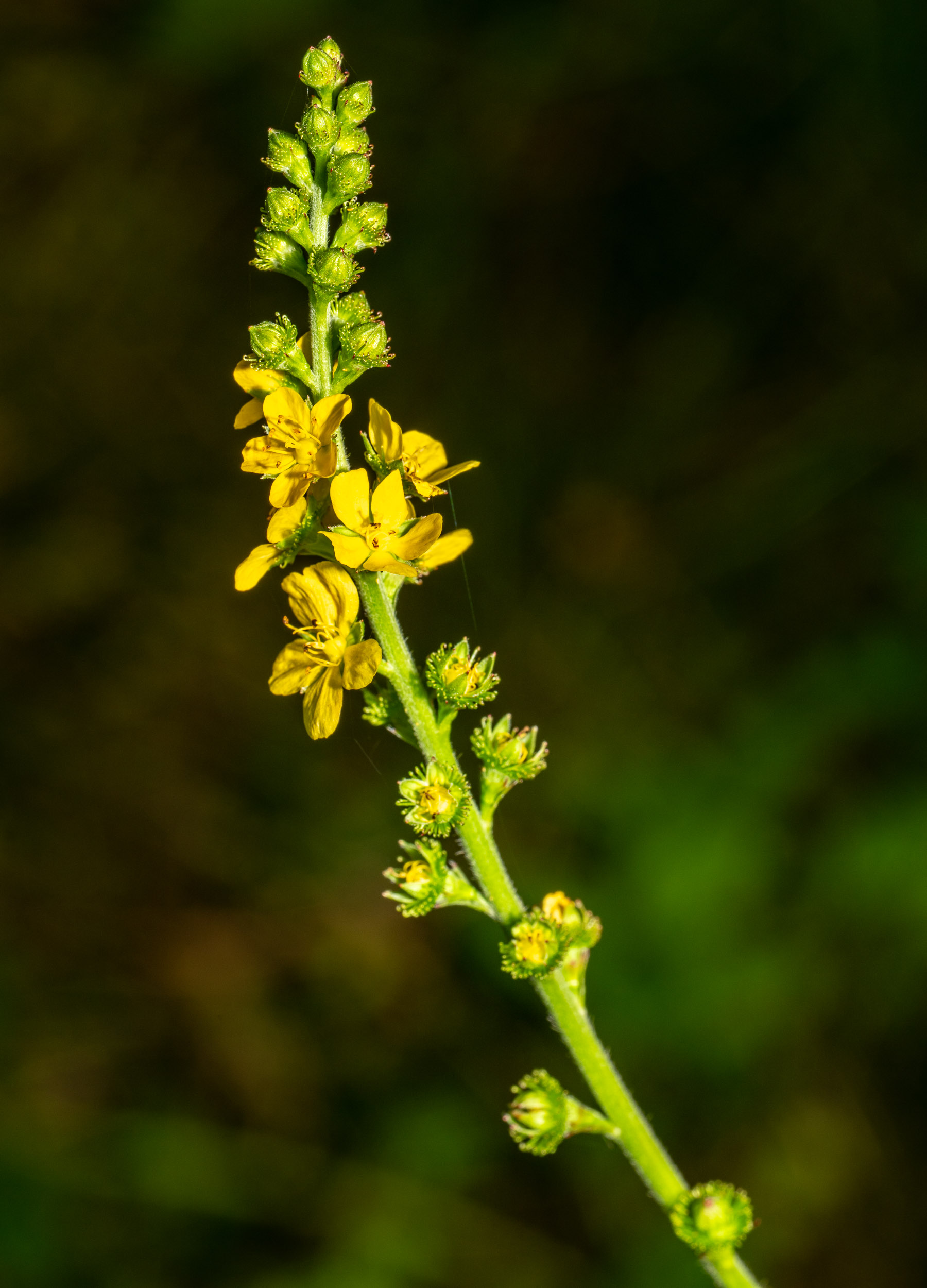
7/26/2025 · River Point Conservation Area, Falmouth, Maine · ≈ 3½ × 4½″ (8.8 × 12 cm) 

9/22/2023 · Moxie Falls, Moxie Gore, Maine · ≈ 4½ × 6″ (12 × 14 cm) 

9/22/2023 · Moxie Falls, Moxie Gore, Maine · ≈ 7 × 5″ (16 × 13 cm) 
| Kingdom | Plantae | Plants, but not fungi, lichens, or algae (from Stearn's Botanical Latin) |
| Subkingdom | Tracheobionta | Vascular plants—plants with a “circulatory system” for delivering water and nutrients |
| Division | Magnoliophyta | Flowering plants, also known as angiosperms |
| Class | Magnoliopsida | Dicotyledons—plants with two initial seed leaves |
| Subclass | Rosidae | Roses, legumes, proteas, dogwoods, hydrangeas, mistletoes, euphorbias, grapes, many more |
| Order | Rosales | Rose family and eight others |
| Family | Rosaceae | Includes apples, apricots, plums, cherries, peaches, pears, raspberries, strawberries, almonds, roses, meadowsweets, photinias, firethorns, rowans, and hawthorns; many others |
| Genus | Agrimonia | From Greek Argemone, for plants which are healing to the eyes |
| Species | striata | Striped |

Agrimonia striata description by Thomas H. Kent, not updated.

© FloraFinder.org. All rights reserved.